❌

Normal view

Meteorite that crashed through New Jersey house could hold the clues to life's origins

15 July 2026 at 19:05

A space rock exploded through a bedroom ceiling in New Jersey, and scientists have now traced its origins to a strange, briny asteroid once visited by a NASA mission.

Two years ago on July 16, 2024 in the middle of the afternoon, a sonic boom shook New York City as a fireball streaked through the sky. The culprit? A rock the size of a heavy airline bag weighing roughly 110 pounds (50 kilograms). The meteorite hurtled over the east coast before crash-landing in a house in Hillsborough, New Jersey where the homeowner found it, reeking of sulfur. In studying this meteorite, scientists think that it could have come from the surface of an asteroid where liquid saltwater could have rested, possibly providing clues to life's origins on Earth.

"In a way, you can think of it as smelling the origins of life's atmosphere," lead author and meteor astronomer Peter Jenniskens of the SETI Institute and NASA’s Ames Research Center, told Space.com.

Despite its sulfuric stench, in a stroke of absolute luck, this meteorite crashed into the right house. After traveling through our atmosphere and heating up, searing through the sky and then crashing through a roof and then a bedroom ceiling, the meteorite broke apart into pieces. The homeowner not only sprung into action to collect these pieces of space rock into jars, they did so with gloves, protecting the rocks and keeping them remarkably well-preserved.

"He had the wherewithal to put on gloves and take out jars," Jenniskens said. "And for this type of meteorite, carbonaceous chondroits, it's very important because they just suck in every moisture you can think [of]." So if he would've handled the rocks with his bare hands, oils or moisture from his hands could have completely contaminated the rock, which is common in found meteorites. The homeowner also thought to call the American Meteor Society very quickly after recovering the rocks, making these samples unusually pristine.

A fragment of the Hillsborough meteorite.

A fragment of the Hillsborough meteorite. (Image credit: SETI Institute)

Of course, some of the rocks were found to have some fiberglass and even carpet remnants on them after crashing through the roof of a house, Jenniskens said. But the integrity of the meteorites was still incredibly well-preserved for scientific investigation.

What did they find in these space rocks?

Once the rock fragments were collected, they were brought in for analysis led by co-author Mike Zolensky, a meteoriticist at NASA's Johnson Space Center. And they found the now-dubbed "Hillsborough meteorite" to be full of organic compounds created through chemical reactions with minerals also present in the rock as well as amino acids. They also found that some parts of the rocks were more altered by water than others.

They classified the meteorite as a CM1/2 carbonaceous chondrite, which are primitive meteorites that formed in the early solar system. CM2 meteorites typically come from parent asteroids that haven't been significantly altered by water while CM1 typically comes from asteroids with water. The Hillsborough meteorite doesn't fit neatly into either category, with some pieces of the rock altered by salty water.

This provided evidence that its parent asteroid must have had water, leading them to further classify this rock as a CM1/2, a category between 1 and 2. This is only the second meteorite of this type observed on Earth.

"Thanks to the homeowner’s quick reaction, these are the most pristine CM1/2 meteorites we know of," Jenniskens said in a statement.

They also found small, salty fragments inside the meteorite, leading the researchers to conclude that this rock may have come from a near-surface area of its parent asteroid, where liquid water evaporated and salt accumulated. A salty, briny asteroid.

This salty brine on the rock's parent asteroid could be an important piece to study, as researchers think that such a brine could ignite the chemical reactions between organic molecules and minerals that could create life. Some theories suggest that life on Earth began thanks to minerals and molecules deposited by crashing meteorites, and further study of such a well-preserved piece of a briny asteroid could help to put those pieces together.

And while the team doesn't know the full story behind the organic compounds and amino acids found in this rock, early analysis suggests that the amino acids present formed on the rock's parent asteroid with the help of chemical reactions in this briny environment.

Another major finding came from information from even before the crash. Thanks to reports from members of the public and footage from cameras (even doorbell cameras) across the eastern U.S., experts led by Jenniskens were able to piece together the trajectory of the object. Doppler weather radar at Newark Airport even helped to put the pieces together, detecting a long trail of pebbles stretching from Staten Island to New Jersey falling from the rock as it fell apart and out of the sky. This combined intel provided experts with the object's speed, and the direction from which it came.

In piecing together the rocks' trajectory, "we can say where they came from in the asteroid belt," Jenniskens said. "This one seemed to have come out of the inner asteroid belt."

In fact, he added that this meteorite's parent asteroid likely came from an area of the asteroid belt already observed in a flyby by NASA's Lucy mission, which is exploring the asteroids of the solar system. Could it be possible that Lucy observed the same bit of rock that ended up in a bedroom in New Jersey?

Jenniskens added that "If you hear about a meteorite fall in your area, please check your dash cams and video cameras and security ring [cameras], and even your cell phones." Who knows, you might have even accidentally captured footage that helps researchers to better understand a mysterious rock from space.

And if you live in the greater New York City area and want to get a closer look at this space rock, some of the meteorite fragments will be on display, curated at the American Museum of Natural History.

This work was described in a study published in the journal Science Advances.

Raspberry sugar spotted in interstellar space, a sweet discovery that could reveal clues about life's origins

15 July 2026 at 18:09

Is space … sweet? As it turns out, interstellar space has sugar β€” and it's the same type of sugar that's found in raspberries (and self-tanners, surprisingly).

A sugar compound called erythrulose has been found near the center of our galaxy, swirling amongst the gas and dust like grains of sugar in a cotton candy machine. More specifically, this sugar was detected in a molecular cloud in the interstellar medium, or the space between star systems in a galaxy. And while we may not be able to use this sugar to make some kind of cosmic candy, scientists think that it could hold the clues to life's origins.

"The detection of erythrulose is very exciting because it opens up the possibility of discovering in space other sugars such as ribose, which is part of RNA, and other important molecules for the origin of life," Carlos Briones, co-author of the study, said in a statement.

Now, this isn't the first time sugar has been found in space. NASA's OSIRIS-REx mission visited the asteroid Bennu and returned samples of the space rock to Earth in 2023. An analysis of those samples revealed strange black grains of material that contained sugars, sugars have been detected in meteorite samples and a study from over 25 years ago even found sugar at the center of the Milky Way.

However, this is the first time sugar has been found in the interstellar medium, and it's also the first "true sugar" found in interstellar space. The difference is that while there have been some sugar-like compounds found in space, "true" sugars have a spine of at least three carbon atoms. Erythrulose has four.

"Our work shows that sugars can form naturally in space," lead author Izaskun JimΓ©nez-Serra, an astronomer at the Center for Astrobiology in Madrid and the Spanish National Research Council, added in the statement.

This newly-spotted sugar is an exceptionally interesting find because erythrulose can change into the ingredients that create nucleic acids, and therefore life. Nucleic acids are essential to life as we know it, carrying information in cells β€” in fact, both DNA and RNA are types of nucleic acids.

Erythrulose could have "provided the feedstock for the first nucleic acids," JimΓ©nez-Serra added. "That’s why the detection of erythrulose is so relevant for the origins of life."

In interstellar space, stars and planets are born in massive molecular clouds of dust and gas. If there is indeed sugar like erythrulose in these clouds, it could find its way onto asteroids and comets, or other small bodies that might crash into planets. If those objects were to crash into a young planet, that sugar could be left behind and go on to spark life.

In fact, some scientists think that life on Earth could've been sparked by asteroids delivering the materials for life via such collisions during an era where our planet was heavily bombarded by such objects around four billion years ago. Could those space rocks have held sugar from interstellar space and delivered it to Earth, supporting the earliest iterations of life as we know it?

This work was described in a study published July 13 in the journal Nature Astronomy.

Glaciers spotted flowing across the Himalayas from space | Space photo of the day for July 15, 2026

15 July 2026 at 15:00

The Himalaya mountains from space.

Glaciers flow across the Himalaya, as seen from the International Space Station. (Image credit: NASA/Jessica Meir)

Towering glaciers flow down the Himalayas' northern slopes like icy giants cascading onto China's Tibetan Plateau.

What is it?

Back in May, from aboard the International Space Station 259 miles (417 kilometers) above Earth, NASA astronaut Jessica Meir peered out the station's windows with her camera and captured a breathtaking sight.

In that fleeting moment from space, she captured the northern slopes of the Himalaya mountains stretching into China. And atop the mountains, slow-moving rivers of glacial ice carve their way downhill.

This view shows the enormity of this mountain range, which separates Nepal from China's Tibetan Plateau. The Himalayas have the highest mountains in the world, including Mount Everest, with over 110 mountain peaks surpassing 24,000 feet (7,300 meters) of elevation above sea level. Ranging across five countries (Nepal, India, China, Bhutan and Pakistan) the mountain range is about 1,500 miles (2,400 kilometers) wide.

Why is it incredible?

With the range being so incredibly expansive, this view from space offers a unique vantage point from which we can see a large swath of the mountains in motion. Even in a helicopter, you would get a fairly localized view of individual mountains in the Himalayas. This view provides a striking scene that you cannot see from the surface of our planet.

This view is also a reminder of how important space is in our evolving understanding of climate change. As our planet continues to change and sea levels rise with warming temperatures, we can see glacial movement from space. This is an important resource to researchers fighting to better understand climate change so we can better fight it. With access to information about glaciers and how they melt, move and flow across the world, we can be better prepared to protect our planet and its inhabitants.

Honeycomb structures spotted on Mars | Space photo of the day for July 14, 2026

14 July 2026 at 15:00

Gray honeycomb material on the Martian surface.

NASA's Mars rover Curiosity spotted these "honeycomb" structures on Mars. (Image credit: NASA/JPL-Caltech/MSSS)

NASA's Curiosity rover has spotted a strange honeycomb texture on the surface of Mars. But what is it?

What is it?

Almost 14 years since landing on the Red Planet, Curiosity is still hard at work exploring. And in new observations, Curiosity has revealed an image that is certainly ... peculiar.

Curiosity went to get a closer look at an area first observed from Mars orbit, and found what appears to be a honeycomb structure in on the planet's surface. Polygonal shapes, nearly identical to one another, make up a pattern almost like a Martian wallpaper or carpet.

But what is it? Why does it look like that? What is a honeycomb doing on Mars?

Why is it incredible?

This is one of many mysteries we have yet to solve on Mars. While the team saw this area first from orbit around the planet, when the rover arrived and saw this structure they were surprised, they shared in a blog post.

In addition to the honeycomb texture, the area was littered with dark rocks and strewn around. But even these pebbles lack explanation. Did they "float" down from higher rock levels, did they launch out of Gale crater during some ancient collision or could they possibly even be meteorites from outside of Mars that ended up strewn across the surface? Researchers think any one of these explanations could be possible.

Previous, similar dark stones have been found on Mars with minerals like nickel that are common in meteorites and uncommon in Mars rocks. But are these similar? Perhaps part of a similar collision event? We don't yet know.

As researchers find new mysteries on Mars, they also continue to find new ways to investigate the unknown. With further study, they will explore both these strange honeycombs and the dark rocks scattered amongst them.

Moon landings could destroy evidence of life's origins

14 July 2026 at 11:00

Landing spacecraft on the moon could contaminate ancient clues about how life may have originated on Earth, a new study finds.

As NASA continues on with its plan of sending astronauts back to the moon with the Artemis program, researchers are exploring what possible unintended consequences may arise from humans visiting the lunar surface. For instance, Artemis IV will land astronauts near the moon's south pole and the agency has future plans for building a longer-term moon base on the lunar surface, which would require many more trips. And indeed, a new study has found the exhaust from spacecraft involved with these landings could expel enough methane to contaminate the moon's surface β€” possibly destroying molecules that could help to explain how life may have originated on Earth.

"We are trying to protect science and our investment in space," senior study author Silvio Sinibaldi, the planetary protection officer at the European Space Agency, said in a statement. "Our activity can actually hinder scientific exploration."

While experts have had concerns for some time about how rocket launches on Earth pollute our planet and atmosphere, scientists have only really considered this issue with our own planet. This is especially because we haven't been to the moon's surface in over 50 years; concerns of accidental effects of a lunar landing simply haven't been top-of-mind. That's what makes this new study so important. It points to a potential issue that could mean that future moon landings might actually be detrimental to science.

An artist's concept showing Blue Origin's lunar lander on the moon.

An artist's concept of Blue Origin's lunar lander. Lunar landings could pose a serious issue for science on the moon if methane contaminates ancient polar ices, a new study has found. (Image credit: Blue Origin)

Life's clues on the moon?

So why do we think the signs of life could be hiding on the moon? It's actually hiding in ice. Dark craters near the moon's poles, which exist in perpetual shadow, hold ancient ice. This ice is thought to contain material from asteroids and comets that smashed into the moon billions of years ago. Trapped in lunar ice to this day, these bits of ancient collisions could include what the researchers describe as "prebiotic organic molecules," or molecules that could have preceded life on Earth.

It's thought that these molecules from asteroid and comet visitors could have sparked life on Earth, and by studying those possibly trapped on the moon, researchers could be looking at the molecules that ended up combining and creating life as we know it.

The molecular history of life on Earth is pretty much nonexistent on our own planet, as it was largely destroyed by the billions of years of changes we've experienced. But the moon has remained mostly unchanged, so these wells of ice are a uniquely-preserved sampling of pre-life molecules.

"We know we have organic molecules in the solar system β€” in asteroids, for example," Sinibaldi said. "But how they came to perform specific functions like they do in biological matter is a gap we need to fill."

This ice exists in a somewhat fragile ecosystem, so left alone in darkness, this ice isn't going anywhere anytime soon. But with Artemis, NASA is planning on sending crewed landers to the moon's south pole. That might pose a problem. With computer models in this new study, researchers have shown that the methane exhaust from these landers could very quickly and permanently contaminate this ancient ice, destroying the molecular evidence sealed within.

Inside the simulations

This image shows the distribution of surface ice at the moon’s south pole (left) and north pole (right). Blue represents ice locations, and the gray scale corresponds to surface temperature.

This image shows the distribution of surface ice at the moon’s south pole (left) and north pole (right). Blue represents ice locations, and the gray scale corresponds to surface temperature, with darker gray representing colder areas and lighter shades indicating warmer ones. (Image credit: NASA)

In those computer models, the researchers simulated how methane, the main organic component expelled by planned lunar landers, would spread across the moon's surface after a landing at the south pole. While the simulations included the effects of solar wind and radiation, the moon's lack of an atmosphere caused the methane to spread incredibly quickly, reaching the moon's north pole in under two lunar days.

Within one lunar week (which is roughly seven months on Earth), over half the methane was trapped at the moon's cold polar areas, with a whopping 42% of the substance trapped at the south pole compared to 12% at the north pole. This methane could collect in the same cold pockets where ice and ancient molecules have been collected for billions of years, possibly contaminating this finite, scientific evidence.

"Their trajectories are basically ballistic," lead author Francisca Paiva, a physicist at Instituto Superior TΓ©cnico in Portugal, said in the statement. "They just hop around from one point to another."

In better news, there may be a way to circumvent some of this methane disturbance. For instance, the study suggests it's possible that by choosing colder landing sites, scientists can avoid having the methane travel as quickly or as far. Additional simulations are needed to better understand how exhaust compounds travel on the moon, however, as well as the risks that this poses for scientific investigations and if there are other materials lunar trips will involve that could contaminate the environment. Above all, the new study's team emphasizes that as we push toward future lunar exploration, it is key to balance our dreams of settling the moon with preserving its priceless history.

"We have laws regulating contamination of Earth environments like Antarctica and national parks," Paiva said. "I think the moon is an environment as valuable as those."

This work was described in a study published last year in the journal the American Geophysical Union.

Extremely Large Telescope reaches a major milestone | Space photo of the day for July 13, 2026

13 July 2026 at 15:00

Workers stand near the base of the Extremely Large Telescope.

ESO's Extremely Large Telescope shows off its impressive size after reaching a new milestone. (Image credit: ESO/Cimolai)

The Extremely Large Telescope just passed a serious milestone while coming together. But it's not done yet; the immense telescope is about to get even larger.

What is it?

The European Organization for Astronomical Research in the Southern Hemisphere (ESO)'s Extremely Large Telescope is under construction on a mountaintop in Chile.

In this new photo, we can really get an idea of the telescope's size. The snapshot was captured during a milestone moment for the crew working on the observatory. They rotated the telescope's structure around its vertical axis for the first time.

This wasn't just an exercise for the dedicated crew working on the ELT, but rather an important test. The team needed to ensure this rotational motion works smoothly to confirm it's possible to point the telescope at any area of the night sky.

Why is it incredible?

This rotation was no small feat with a telescope weighing about 7.7 million pounds (3,500 metric tons), and we can see some of the crew who made it happen posing with their handiwork. They had to first rotate the telescope by hand just centimeters at a time. This push led to auxiliary motors taking over to complete the full rotation.

At its current size, the ELT is enormous. But it will actually get bigger and heavier. Later on in the process, mirrors and science instruments will be installed, skyrocketing the telescope to over 10 million pounds (4,600 metric tons).

"For me, this is a beautiful reminder of what can be achieved when people push in the same direction, literally and figuratively,” Roberto Tamai, the ELT’s Program Manager at ESO, shown on the right in this image, said in a statement.

Tamai is shown standing next to Marco Sciarra, Executive President of Cimolai (a company working on the telescope's construction), in the middle and Pascal Martinez, ESO's Project Manager for the Dome and Main Structure of the ELT, on the left.

SpaceX launch creates colorful 'jellyfish' in the night sky | Space photo of the day for July 10, 2026

10 July 2026 at 15:00

A blue and yellow jellyfish-shaped light shines in the night sky.

A "space jellyfish" cloud lit up the early morning sky following a SpaceX Falcon 9 launch. (Image credit: SpaceX)

Is it a space jellyfish? Is it an alien? No, it's the aftermath of a SpaceX rocket launch!

What is it?

Have you ever looked up and thought, "Why is there a giant glowing jellyfish cloud in the sky?" If so, chances are that you've seen the remnants of a rocket launch, and not a surprise alien visitor.

In the early hours of July 9, SpaceX launched 29 of its Starlink broadband satellites from Florida's Cape Canaveral Space Force Station to low Earth orbit. It was the rocket's 36th flight, a record.

The rocket lifted off at 5:25 a.m. EDT (0925 GMT), and the scene it painted in the dark early-morning sky looks truly out of this world. But there is a practical, Earthly explanation.

When a Falcon 9 rocket takes off, its engines expel water vapor and carbon dioxide. As it climbs higher into the sky, the temperature drops and the water vapor quickly freezes, forming ice crystals that trail behind the rocket in the spectacular plume we're seeing here. And this view is made more colorful and striking by the sunlight of early morning.

Why is it incredible?

While this photograph's beauty speaks for itself, it is also a colorful example of how real scientific moments can spark the imagination.

Do you think it looks like a jellyfish? I think it looks like a comb jelly, which isn't actually a jellyfish but rather a different type of transparent, squishy invertebrate that drifts through the ocean. It could also look like a glowing football or even a mythological monster.

Whatever you think it looks like, while we have a real scientific explanation for why this rocket launch was followed by a giant, glowing, uniquely shaped cloud, it's still fun to use our imagination.

Supreme Court ruling on mail-in ballots ensures astronauts can vote from space β€Šβ€” or anywhere else

10 July 2026 at 13:00

A new ruling by the U.S. Supreme Court protecting voter rights could extend to astronauts living and working in space and training internationally, their families, and the multitude of NASA workers who travel to support their missions.

On Monday (June 29), the Supreme Court ruled that mail-in ballots can be counted toward a total vote even if they arrive after election day, as long as they are postmarked by election day. The ruling followed efforts by the Trump Administration to place restrictions on mail-in voting. In a new statement, the nonpartisan activist organization Astronauts for America spoke out in support of the Supreme Court's decision, which supports absentee voting.

"We don't want to see barriers put in place [that] make it more challenging for somebody to exercise their constitutional right of voting," retired NASA astronaut Wendy Lawrence told Space.com. Lawrence is a member of Astronauts for America, as well as a veteran of the U.S. Navy, where she served as a captain, engineer and helicopter pilot.

What happened?

An executive order issued by President Trump in March 2026 attempted to place a number of restrictions on voting in the country, including limitations on mail-in or absentee voting. The order directed the United States Postal Service to only transmit ballots for states that compile and submit lists of eligible mail-in voters 60 days before elections, added requirements and complications to mail-in ballots and attempted to limit who receives a ballot in the mail.

This order not only added layers to limit voting access, but it conflicted with existing procedures set by states for absentee voting. Additionally, the U.S. Constitution places the authority to change election rules and processes with Congress, not the president, though this was not the first executive order put out by Trump to attempt to change election rules, CNN has reported.

In a 5-4 ruling, the Supreme Court blocked the U.S. Postal Service from carrying out this executive order, declaring that mail-in ballots may be counted if they arrive up to five days after election day, as long as they are postmarked by election day.

"This is key to making sure we have free and fair elections, that people have the ability to cast their vote, and it's not an overwhelming burden for them to do that again," said Lawrence.

Astronauts vote (and so do the people around them)

In a statement shared on social media, Astronauts for America commented on the recent ruling.

"We at Astronauts for America are pleased to see the justices take this critical step toward safeguarding free and fair elections, and ensuring that every eligible voter has their ballot counted," the statement reads. "As astronauts, some of us cast our votes from space. As military veterans, many of us relied on voting by mail. Upholding this grace period ensures that astronauts and other Americans are able to exercise their civil rights."

"Voting is the cornerstone of our American democracy, and this is an important step forward in our battle to ensure everyone has the right to vote," the statement continued. "While the Supreme Court ruling should be celebrated, we must continue standing up for our democracy and constitutional principles."

Astronauts have used absentee voting systems for decades, and they do so regularly: Astronauts have been living in orbit on board the International Space Station continuously since November 2000. When astronauts are going to be in space during an election, NASA has a digital system that allows them to submit absentee votes. But as the statement above suggests, astronauts don't just need absentee voting during their space missions.

Astronaut training can take place all around the world, especially if there is a mission with international collaboration. Lawrence shared that, during her tenure with NASA's space shuttle program, there was a 16-month period when she had to live and train full-time in Russia. And, astronauts don't prepare for space in a vacuum. Family members like spouses might travel with them for long-term training, and there are a wide variety of mission managers and support staff for crewed missions (and their families) who might have to be on long-term travel as well.

Additionally, many astronauts like Lawrence are also military veterans who, during their service, are only able to vote through absentee voting, sometimes for years on end. While this ruling extends far past astronauts, even within the space sector, absentee voting has protected the constitutional rights of many.

NASA looks for the origins of interstellar comet 3I/ATLAS | Space photo of the day for June 24, 2026

24 June 2026 at 15:00

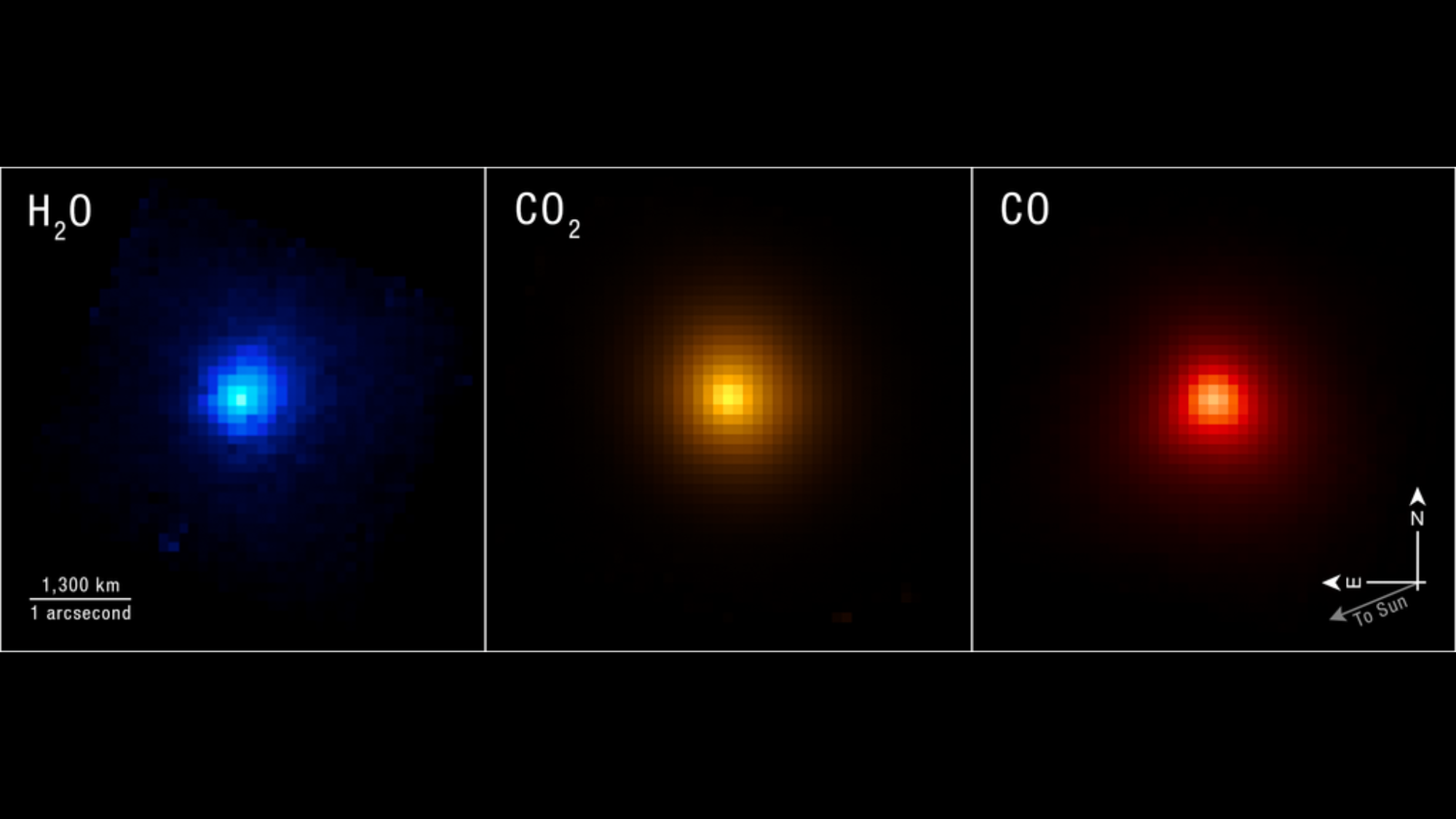
Three boxes contain a glowing center that in the left box is blue, the middle box is yellow, and the right box is red.

Researchers using JWST are finding clues about comet 3I/ATLAS' origins. (Image credit: NASA, ESA, CSA, STScI, Martin Cordiner (CUA, NASA-GSFC); Image Processing: Alyssa Pagan (STScI))

NASA's James Webb Space Telescope is finding clues that are leading scientists closer to understanding the origins of the interstellar comet 3I/ATLAS.

What is it?

Comet 3I/ATLAS captured the world's attention when it was discovered nearly a year ago on July 1, 2025. The comet was first spotted by the Asteroid Terrestrial-impact Last Alert System (ATLAS), and is only the third interstellar object every discovered.

The comet swooped through our solar system, passing by Earth at a far (and safe) distance on its tour of our cosmic neighborhood. It is on a long trajectory that will take it out of our solar system, never to return.

In observations from the James Webb Space Telescope, scientists were able to look in the direction the comet as it began moving away from the sun in December of last year. While in close proximity to our star, the sun's heat warmed the comet, making it extra bright and easy to observe.

With this view, astronomers were able to calculate some of the ratios of the chemicals present in the comet. This further highlighted that the object is from out of our solar system, as they found ratios of carbon and heavy hydrogen not found in comets in our solar system.

Researchers described their results in a new paper published June 22 in the journal Nature.

A chart exploring the new findings about 3I/ATLAS.

This graph shows some of the differences between 3I/ATLAS and comets found in our own solar system. (Image credit: NASA, ESA, CSA, Martin Cordiner (CUA, NASA-GSFC), Leah Hustak (STScI))

Why is it incredible?

Being only the third interstellar object ever found, people were excited about 3I/ATLAS. They were so excited, in fact, that conspiracies about the object sprouted up quickly. Due to it being from outside of our solar system, some claimed that the comet could be some sort of alien spaceship, similar to the initial suspicions about the interstellar object 'Oumuamua found years earlier.

But with new information coming in from space telescopes, and astronomers eager to understand this object better, these clues are leading us closer and closer to the true origins of this strange comet.

SpaceX Dragon says goodbye to the ISS | Space photo of the day for June 23, 2026

23 June 2026 at 15:00

A view out of the window of the ISS sees the SpaceX Dragon capsule with Earth in the background.

SpaceX's Dragon capsule leaves after dropping off some supplies and science at the ISS. (Image credit: NASA/Jessica Meir)

SpaceX's Cargo Dragon capsule shines in the sunlight over Earth as it departs from the International Space Station in a new image snapped from onboard the station.

What is it?

Peering through the window of the International Space Station (ISS), NASA astronaut Jessica Meir snapped a striking photo as she watched a SpaceX Cargo Dragon capsule depart from the station.

With sunbeams gleaming downward, reflecting off of the spacecraft's hull, the Dragon can be seen backing away from the station mere moments after undocking from the port on the station's Harmony module. The undocking is so recent that you can clearly see both the docking port and the hatch of the Dragon where the two connected.

The Dragon disconnected from the space station on June 16, and just one day later, parachuted into the Pacific Ocean off the coast of Southern California where it was retrieved, chock-full of cargo and finished science experiments.

Why is it incredible?

The space station has been in orbit since 1998 and continuously occupied since November, 2000. With decades of work in orbit, it can be easy to take for granted the incredible transport system that supports cutting-edge research hundreds of miles above Earth's surface.

The work done on the station is impressive, but this system is just as mind-boggling. In addition to launching and returning astronauts who perform critical maintenance and repair work on the station on top of their research duties, cargo missions keep the station stocked.

From food and clothing to medical equipment and intricate science experiments, these missions are essential for both keeping astronauts safe and healthy on station as well as continuing the progression of science in-orbit. This back-and-forth between Earth and the space station is an impressive feat, and this photo shows the system fully in-motion.

Late, great singer-songwriter Elliott Smith finds immortality as an asteroid

20 June 2026 at 11:00

An asteroid now bears the name of beloved musician Elliott Smith, thanks to one ambitious filmmaker.

Elliott Smith passed away at the age of 34 in 2003, but his impact and his music continue to connect with people around the world. And his influence has now extended to space, thanks to independent filmmaker Orlando Campopiano, who worked to get an asteroid named "Elliottsmith."

"I hope this introduces at least one new person to Elliott's brilliant discography, and I'm happy to see a permanent legacy in the stars! To have this tribute to him blessed by the estate and discoverers is also a great honor," Campopiano told Stereogum.

While listening to the song "Shooting Star," from Smith's album "From a Basement on the Hill," which was released in 2004 following his death, Campopiano had the idea to try and get an asteroid named after Smith, he told Stereogum.

He took this inspiration and ran with it, connecting with Smith's estate and working together to submit a proposal to the International Astronomical Union (IAU), which gives official names to cosmic objects, including asteroids. Maybe there are some Elliott Smith fans at the IAU, because the organization actually said yes.

With this positive response, Asteroid (861969) 2014 OS439 is now officially "Elliottsmith."

An illustrated visual of where asteroid Elliottsmith is in our solar system.

The asteroid Elliotsmith (861969) visualized in our solar system. (Image credit: NASA)

The asteroid was discovered back in 2014 by the Pan-STARRS 1 (Panoramic Survey Telescope and Rapid Response System) project in Hawai'i.

The IAU's announcement of the renaming reads: "Steven Paul 'Elliott' Smith (1969–2003) was an influential, Oscar-nominated American songwriter. His intricate music left a lasting impact on many musicians. Asteroid 861969 honors his birth date, August 6, 1969. Smith often used celestial motifs in his work, notably in the song 'Shooting Star,' which, in hindsight, symbolizes his brief but brilliant light."

As this classification states, this asteroid is more than just a random rock in the sky. Its previous, numerical name 861969 happens to perfectly mirror Smith's birthday. This cosmic alignment makes it feel like this naming was truly meant to be.

You can get a look at the asteroid's place in our solar system on the small-body website of NASA's Jet Propulsion Laboratory, which you can find here.

Menstruation in space will be studied for 1st time with 'Operation Period'

19 June 2026 at 16:00

One new mission is setting out to study menstruation in microgravity for the first time ever.

Forty-six years ago, NASA engineers asked Sally Ride if 100 tampons was the right amount to send with her for a six-day spaceflight. Though people laugh at that fact today, there has still never been any scientific study dedicated to studying menstruation in space. But a non-profit called Operation Period aims to change that. Led by Gen-Z researchers, this non-profit works to provide what its founder Manju Bangalore calls "menstrual freedom," which she says would mean everyone can have easy access to menstrual products. Meanwhile, the organization also aims to tackle the wider issues that leave people without such access in the first place. With its upcoming suborbital mission Operation Period-01 (OP-01), this ambitious team is taking their cause into microgravity. On OP-01, the mission's founder will launch to space to conduct the research themselves on a Virgin Galactic suborbital flight in 2027.

In conducting their work here on Earth, Operation Period found that "there were still some of those same gaps in spaceflight medicine," Manju Bangalore, the founder and executive director of Operation Period and research astronaut in training for OP-01, told Space.com. " I want all menstruators to be able to live life with their full dignity and reach their fullest potential, and that includes astronauts."

With a background in physics and astronomical engineering as well as with training in bioastronautics and having spent time working at NASA, Bangalore brings her love of space to this cause. She and Priya Abiram, the Director of Research at Operation Period's Redshift Lab, feel so strongly about their message, even 9 years since the pair founded their non-profit; in fact, with this mission, the two will become some of the youngest South Asian women to travel to space.

"On a personal level, I've always been fascinated by space and human space exploration. It's what's always excited me as a child, and I've kept that curiosity going," Bangalore said. "I didn't think those two missions would ever combine into this. It wasn't something I ever planned, but I'm very grateful to lead this historic mission to advance menstrual health in this way."

And just as this team is excited to bring their research into a suborbital environment, Virgin Galactic is excited to be expanding the range of microgravity science the non-profit supports. "This mission with Operation Period is a powerful example of how Virgin Galactic can continue to support real-time, in-flight scientific investigation into long-overlooked areas of human health, helping advance more inclusive and innovative exploration that delivers insight for both space and life on Earth," Virgin Galactic director of system analysis & research Amber Favaregh said in an emailed statement.

Recently, Operation Period expanded to include a research wing, and this mission will be conducted under that umbrella. The team was not yet able to share specific details on the exact protocol that will be conducted during the mission, information they said will be shared at a date closer to launch, but they did share the current issues that this research aims to begin to address.

Currently, astronauts typically choose to fully suppress their periods during their spaceflights, through hormonal IUDs or oral contraceptive pills. While that is a choice astronauts might continue to make in the future, without data to show the reality of dealing with a period in space, astronauts are left with fewer choices with their own bodies. Comprehensive data on menstruation in space will also be important if astronauts are to complete longer spaceflights or even extended stays on the moon. While the mission has not yet revealed its priorities and exactly what data it will collect, with such limited data on menstruation in space, there is a lot of knowledge to be gained.

While "the data that we have, although limited, says that it is generally safe to menstruate, in terms of long duration missions, we don't have quantitative data," Bangalore said. "We don't have enough data to continue to assist with patient resource allocation for mission planners."

Historic missteps like the "100 questions" moment with Sally Ride highlight an issue that could have big effects on future, longer-term missions. Sure, having a ridiculous number of backup products would ensure that there is no need unaddressed, mass considerations for spaceflight are extremely serious and future missions will need to have better data to know what will be needed in a microgravity environment.

And just like with other science in space, the research conducted in microgravity will also be used on Earth. The pair aim to collect menstruation data that will benefit astronauts as well as people back on our home planet. .

"I think on Earth, there's a lot of gaps right now in menstrual health research," Bangalore said. As just one example, she cited recent findings that menstrual product companies were reporting incorrect absorbency of their products because they were testing products with saline, which is very different from menstrual blood. "This was potentially leading to doctors to underdiagnosed heavy menstrual bleeding, which right now the stats say affects 20% of American menstruators," Bangalore said.

With this being the first mission of its kind, OP-01 will not answer every question that remains about menstruation and space, but it will bring data to a conversation decades in the making. "Our hope is to continue to iterate this research so that we can do future suborbital flights, as well as orbital flights, to continue to create larger data sets," Bangalore said. "I think the point of preliminary studies is to be able to know what questions to ask in the future, so we don't expect that this suborbital flight will solve everything or create all the data that we need, right, but we hope that this will be a good stepping stone."

Momentum for this research was actually sparked by many millions of views on a viral social media video in which Bangalore conducted an early version of a menstrual fluid dynamic experiment in a low-gravity environment aboard a parabolic flight.

This viral moment "ended up being a really cool kind of 'in' to continue talking about destigmatizing periods," she said. "Through that, I got to talk more about the gaps in spaceflight medicine, in terms of menstrual health."

❌