A team of conservationists has discovered and restored the tombstone of Sebastian, a formerly enslaved man who died free in 1729.
"That discovery is likely one of the oldest gravestones of a free Black person in America," Michelle Wu, the mayor of Boston, said in a July 4 speech. "It's been there all along. We just had to go look and share the story."
The stone marker is inscribed with Sebastian's chosen name, Boston, and features an image common in 17th- and early 18th-century tombstones in New England: the death's head. The symbol includes a stylized skull flanked by wings, which were possibly intended to symbolize spiritual resurrection.
On the tombstone, a simple, five-line inscription reads:
Original Inscription
HERE LYES Ye
BODY OF BOSTON
AGED 70 YEARS
DECD FEBY Ye 28
1728
Modern English
HERE LIES THE BODY OF BOSTON AGED 70 YEARS DECEASED FEBRUARY THE 28 1728
In 18th-century American writing, the word "the" was often abbreviated with a Y-shaped letter form called a "thorn" representing the "th" sound. Tombstones also frequently abbreviated "deceased" and the month. Somewhat confusingly, before 1752, the American colonies regularly used the Julian calendar, as did Britain, in which the new year started on March 25. Boston's year of death is listed on the tombstone as 1728, but his February 28 death was actually in 1729 in our modern Gregorian calendar.
Kelly Thomas, the director of the Historic Burying Grounds Initiative for the Boston Parks and Recreation Department, told WBZ News Radio that she identified the gravestone during a restoration project at the Granary Burying Ground, the city's third-oldest cemetery. Established in 1660, the cemetery includes over 5,000 graves, including the final resting places of Declaration of Independence signers Samuel Adams and John Hancock; the U.S. Revolutionary War officer Paul Revere; and Crispus Attucks, a sailor of mixed African and Indigenous ancestry who is thought to be the first American killed in the Boston Massacre.
"I was reviewing the photos of headstones, and then I noticed that the stone only had one name," rather than a first and last name, Thomas told WBZ News Radio, suggesting that Boston was either enslaved or free when he died. Based on a search of historical records, Thomas determined that Boston's enslaved name was Sebastian and that he also went by Bastian.
A surprising amount of information was recorded about Boston and his wife, Jane Lake. In 1701, they had their daughter, also named Jane, baptized at First Church in Boston, where they regularly attended worship services. But while the two were married with children, they were also both enslaved and lived in different households, historian Gloria Whiting wrote in a 2016 study.
Boston was likely freed in the early 18th century, some time after the 1702 death of John Waite, who had held him in slavery. By 1708, a list of free Black people included the name Boston, and he had gained a reputation in the city as a hardworking handyman, according to Whiting's study. He had been freed for roughly 30 years when he died in 1729 and was well-known enough to have an obituary published for him in the New-England Weekly Journal, a rare occurrence for enslaved or freed Black people in colonial America.
Wu also said that, in recent weeks, archaeologists in Boston had discovered musket balls and gun flints from the infamous Battle of Bunker Hill that took place on June 17, 1775. The battle was fought by British Crown forces and New England troops in the first stage of the American Revolutionary War.
Archaeologists in Italy have unearthed the royal tomb of a pre-Roman "warrior-prince" along with the remains of his chariot and weapons. The tomb was just one part of an extensive sixth-century B.C. burial ground and reveals new information about the funerals of elite rulers from this mysterious civilization.
The funerary complex was found in the municipality of Sirolo, a small town on the Adriatic Sea on Italy's east coast, according to a translated July 1 statement from the Superintendency of Archaeology, Fine Arts and Landscape for the Provinces of Ancona, Pesaro and Urbino.
In the sixth century B.C., an Italic group called the Piceni or Picentes lived in the area, bordered to the north by the Etruscans. The Piceni left few written records, so much of what is known about the enigmatic group comes from archaeological excavations. In 2020, a "princely tomb" complete with an iron-wheeled chariot, a cache of weapons and a helmet was discovered in the Pini cemetery. Now, archaeologists have found a second one.
At the center of a monumental circular palisade, researchers unearthed a large male burial with a wooden "currus" — a two-wheeled chariot that had been buried intact with the nobleman around 2,500 years ago. The warrior prince was also buried with a helmet and an ax, as well as several bronze vessels sealed with ceramic lids and filled with organic remains, which may represent the traces of a funeral banquet or food offerings for the afterlife.
Fragments of the two-wheeled chariot during excavation. (Image credit: Superintendency of Archaeology, Fine Arts and Landscape for the Provinces of Ancona, Pesaro and Urbino)
Next to the warrior prince was the tomb of a woman who was buried with textiles, shoes and numerous "fibulae" — ancient metal safety pins that likely fastened her clothing and burial shroud. An enormous fibula with a hunk of amber had been placed on or near her head, possibly as part of her hairstyle or a headdress. This burial is not far from the "Queen's Tomb" in the Pini necropolis, where, in 1989, archaeologists discovered a Piceni woman buried with two chariots, two mules and a large quantity of personal belongings.
While royal burials had been discovered in the Sirolo area for decades, the newly discovered cemetery surprised archaeologists because of its unprecedented shape. Previously discovered burial grounds in the territory of the Piceni were ringed with a ditch, symbolizing the separation of the dead from the living. But the newly discovered cemetery was ringed with a wooden palisade instead of a ditch, and it had been placed on a slight hill, possibly to emphasize its monumental character and symbolic value, according to the statement.
This is the the first time that archaeologists have observed "an entire aristocratic nucleus" of the Piceni, and the discovery can provide "new perspectives on the structure of the elites that led to the great Piceni center," archaeologist Stefano Finocchi, the director of the new excavation, said in the statement.
Although many of the artifacts are still being analyzed, the quantity and quality of the grave goods already recovered reveal that the "ruling groups integrated into a dense network of relationships connecting the central Adriatic with the principal centers of central Italy," Finocchi said.
From Augustus to Nero, see how much you know about ancient Rome's famous leaders with our Roman emperor quiz!
The Stargazer figurine was carved from marble around 5,000 years ago. (Image credit: Cleveland Museum of Art / Leonard C. Hanna Jr. Fund; John L. Severance Fund 1993.165 (Public Domain))
QUICK FACTS
Name: The Stargazer
What it is: A marble figurine
Where it is from: Kırşehir, Turkey
When it was made: Circa 3000 B.C.
This small, abstract sculpture of a woman, carved from milky-white marble, is known as The Stargazer because her head is tilted back and her eyes appear to stare skyward. Only about 30 figurines of this type have ever been found; all of them date to about 3000 B.C. and were crafted by a culture that left no written records of the figurines' meaning, according to art historian Amanda Mikolic.
This particular stargazer figurine was once owned by philanthropist Nelson Rockefeller, a member of the wealthy industrial family and vice president of the United States under Gerald Ford. It is now in the collection of the Cleveland Museum of Art (CMA).
The marble figurine is roughly 6.8 inches (17.2 centimeters) tall and weighs about 1 pound (454 grams). Clearly carved into human form but lacking a mouth, the statuette likely represents a woman, with the incised lines below the waist representing her pubic triangle. Her large, oval head is tilted back, and her tiny, dot-like eyes look upward.
Most stargazer figurines that have been discovered in western Anatolia (present-day Turkey) were broken at the neck before being buried in the ground millennia ago, making the CMA example one of the finest and most complete stargazer statuettes ever found.
But the meaning of the woman portrayed in The Stargazer figurine is unclear, since the culture that created it did not leave any written language explaining their art.
The figurine cannot stand on its own, suggesting that it was meant to be held or placed flat, according to Mikolic. "Deliberately rendered as female, she may be associated with fertility and abundance," she wrote. The statuette may be part of a trend of simplistic female figurines in the Mediterranean area linked to female fertility and the life cycle, such as the Cycladic figurines, according to The Getty, which has a stargazer figurine in its collection.
Regardless of the woman's specific meaning, "she must have been an important devotional object to some long-lost culture," Arielle Kozloff, former curator of ancient art at the CMA, wrote in the CMA Members Magazine.
Abstract female figurines like The Stargazer and other Neolithic examples are known to have inspired early-20th-century cubist masters, Kozloff wrote. This gives her "a sense of timelessness," according to Mikolic, "encouraging the viewer to think of humankind’s place and role in a larger cosmos."
For more stunning archaeological discoveries, check out our Astonishing Artifacts archives.
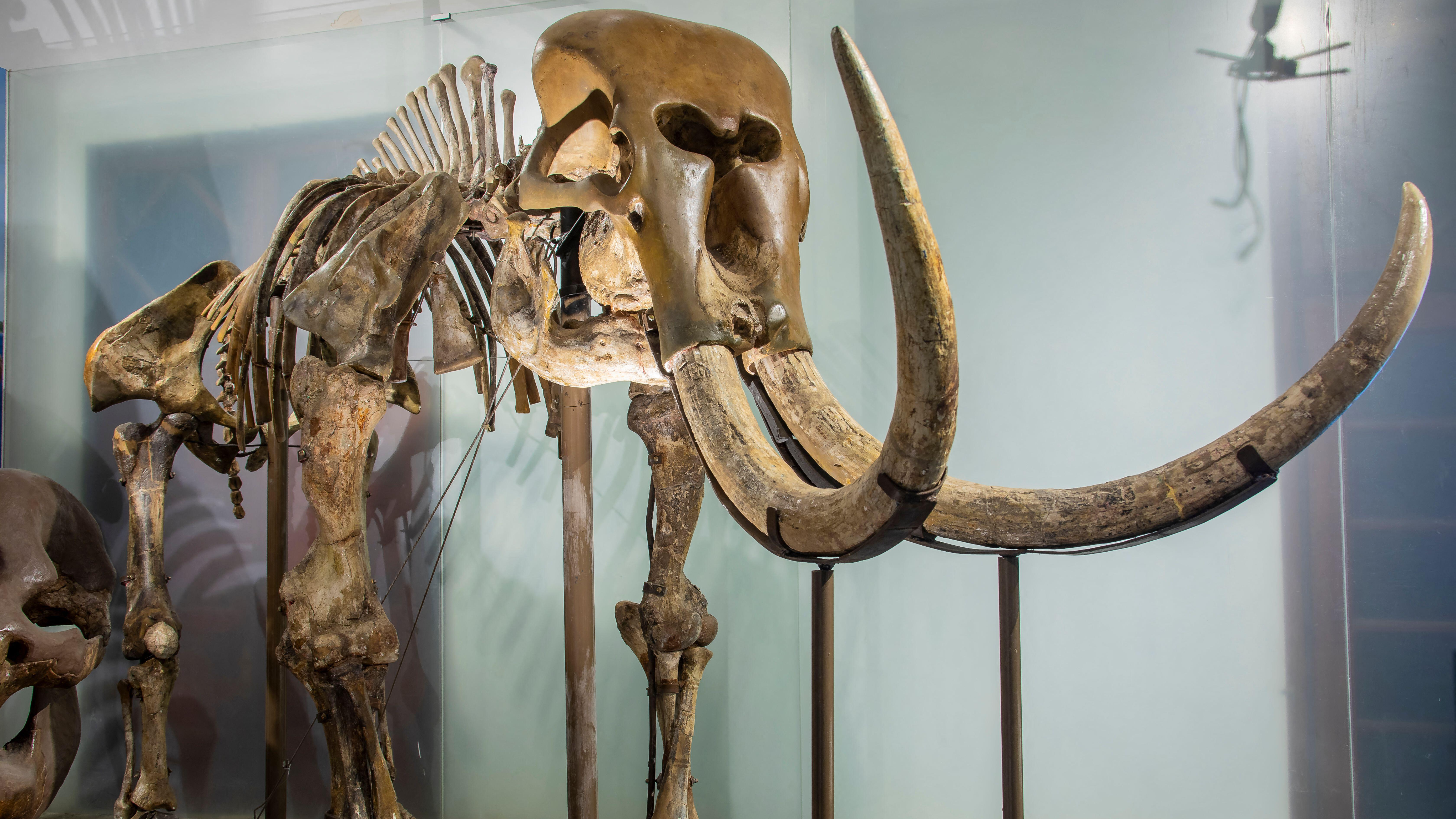
The diminutive, now-extinct humans known as the "hobbits" were scavengers who dined on dwarf elephants after Komodo dragons took the best cuts, archaeologists have discovered. The finding upends the assumption that Homo floresiensis, a human species that arrived on the Indonesian island of Flores at least 700,000 years ago, hunted big game.
First discovered in 2003, H. floresiensis has been nicknamed the hobbit because of its small size, averaging around 3 feet, 6 inches (106 centimeters) tall, along with its small brain, large teeth and big feet. But archaeologists also found stone tools, animal bones with cut marks, and charred bones that seemed to add up to sophisticated behavior common within our genus, Homo. The hobbits disappeared around 50,000 years ago as Homo sapiens began spreading around Southeast Asia.
But in a study published Friday (July 3) in the journal Science Advances, an international team of researchers questions whether the behavior of H. floresiensis was really as advanced as previously assumed.
The researchers looked at fossil bones of Stegodon florensis insularis, an extinct dwarf species of elephant relative discovered at Liang Bua cave, where bones from H. floresiensis and stone tools have also been found, to determine whether the cut marks were from hunting Stegodon meat or from scavenging the remains of the feasts of the only other carnivore on the island: the Komodo dragons (Varanus komodensis).
To distinguish the hobbit cut marks from Komodo dragon tooth marks, the researchers first conducted an experiment, feeding a goat carcass to a captive Komodo dragon at Zoo Atlanta. Then, they recovered the goat skeleton and painstakingly documented all of the marks, pits, notches and furrows the Komodo dragon's teeth made in the bones. The tooth marks were concentrated in areas with substantial amounts of goat flesh, the researchers wrote in the study, suggesting the Komodo dragon had a preference for meaty areas.
An extinct species of dwarf elephant called Stegodon florensis insularis inhabited the Indonesian island of Flores. (Image credit: Alamy)
The researchers then investigated the ancient Stegodon bones for evidence of cut marks made by H. floresiensis' stone tools and tooth marks from Komodo dragons. They found 54 cut marks on the Stegodon bones and nearly twice as many Komodo dragon tooth marks. More importantly, they discovered that the Komodo dragon marks were focused on meaty areas, while the human cut marks were made primarily in areas without a lot of meat, suggesting H. floresiensis did not hunt and kill the Stegodon.
The overall patterns of cut marks and tooth marks suggest "a combination of mostly primary access by Komodo dragons and secondary access by H. floresiensis where both predators consumed Stegodon," the researchers wrote. And the hobbits likely ate this meat raw, according to the researchers, as they found no evidence on the Stegodon bones that they had been cooked. Nor did they find any evidence of burning on over 4,000 mouse bones from the site, suggesting the previous evidence of charring was actually natural manganese staining.
A lack of hunting and fire-making technology suggests that the hobbits were not as behaviorally sophisticated as previously thought and raises questions about their ancestry, the researchers said.
The Komodo dragon (Varanus komodoensis) lived on the island of Flores and was the only other carnivore along with Homo floresiensis. (Image credit: Alamy)
It's possible that the ancestor of H. floresiensis branched from the Homo genus before humans accomplished the control of fire and hunting, study first author E. Grace Veatch, a paleoanthropologist at the University of Tübingen in Germany, told Live Science in an email.
One hypothesis for the origin of the hobbits is island dwarfism, which occurs when a large species' average body size evolves to be smaller over generations due to the limited availability of natural resources. Another theory is that hobbits descended from an earlier Homo species that was already small-bodied.
"I think our study highlights the importance of considering behavior in these debates," Veatch said. "Our study suggests that H. floresiensis evolved from a hominin population that did not require these dietary strategies [of hunting and cooking], such as a form of early Homo."
But the new study has not entirely settled the debate about the hobbits' ancestry, because very little is known about the behavior of early hominins in Southeast Asia, such as Homo erectus on Java and other areas of Sunda or Sundaland, a landmass between the South China Sea and the Indian Ocean that has been exposed off and on over the past 2.6 million years.
If H. floresiensis really did branch off from H. erectus, that would suggest many evolutionary changes occurred.
"Taking place on an island that was cut off from contact with the Sunda mainland, this evolution from Homo erectus to Homo floresiensis may have involved not just profound anatomical transformations, such as reduced body size and brain volume, but also behavioural adaptations," Adam Brumm, an archaeologist at Griffith University in Australia who was not involved in the study, told Live Science in an email.
"Flores was clearly a wild card in the story of early human evolution, the sort of place where almost anything could have happened — including, potentially, the loss of deeply-rooted hominin behaviours, such as hunting and fire use," Brumm added.
Where H. floresiensis fits in with the rest of the Homo genus is still an open question, Veatch said. "Importantly, this study highlights the contribution of taphonomy [the study of what happens to organic remains after death] to speak to these larger questions about ancestry."
What do you know about early humans? Test your knowledge with our human origins quiz!
The enigmatic Scythians, a diverse group of nomadic tribes known for their ferocity in battle, were organized around elite dynasties of powerful men and women over 2,500 years ago, a new DNA study finds. The results reveal that social inequality arose in these nomadic groups around 900 B.C., during the Iron Age.
Most of what archaeologists know about the Scythians comes from ancient Greek and Roman accounts of the accomplished equestrians and from their large, mound-shaped tombs, called kurgans, that dot the Eurasian steppe grassland. The Scythians' tattooed mummies and intricate, animal-themed jewelry were as well-known in ancient times as their women warriors, who may have inspired the myth of the Amazons. But the Scythians left no written records of their own and were likely absorbed by other cultural groups after suffering several military defeats around 200 B.C.
In a study published Friday (July 3) in the journal Science Advances, researchers sequenced DNA from 85 Iron Age Scythians to better understand how these geographically spread-out groups were related and how their society was politically structured. They discovered that elite family dynasties ruled the nomadic groups from centralized locations, revealing the origin of social inequality among the Scythians.
The researchers generated genomes from the skeletons of 38 elite and 47 non-elite people buried in kurgan tombs across 20 archaeological sites between 900 and 200 B.C. The non-elite tombs were smaller than the elite tombs, and they lacked the impressive weapons and gold artifacts of the elite tombs.
Based on DNA, the researchers discovered that elite people were 11 times more likely to be related to each other than they were to be related to non-elite people, suggesting there was a powerful extended family group that ruled the steppe nomads.
Among the elite, they discovered two pairs of biological brothers, a brother and a sister, and a parent and child. In one case, the two brothers were buried at different sites some distance apart. They also found two elite grandfathers and grandsons buried in different cemeteries. But the elite people were still buried closer together than the non-elite people were.
One of the tombs, called a kurgan, prior to excavation. (Image credit: Rinat Zhumatayev)
"It is possible that this indicates some degree of geographic centralization of the elite burials being on average closer to each other," study co-author Ainash Childebayeva, a genetic anthropologist at the University of Texas at Austin, told Live Science in an email. "For example, in Siberia there is an area known as the 'Valley of the Kings' that contains many large mounds that are likely elite of the similar time period as in our study."
The researchers also investigated the historical claim by Greek authors such as Herodotus that women held high-status positions.
"An important observation from our study was the noticeable presence of elite women," study first author Ayshin Ghalichi, an archaeogeneticist at the Max Planck Institute for Evolutionary Anthropology in Germany, said in a statement. "Nearly half of the elite individuals in our dataset were female, indicating that women held high social status within Iron Age Scythian society."
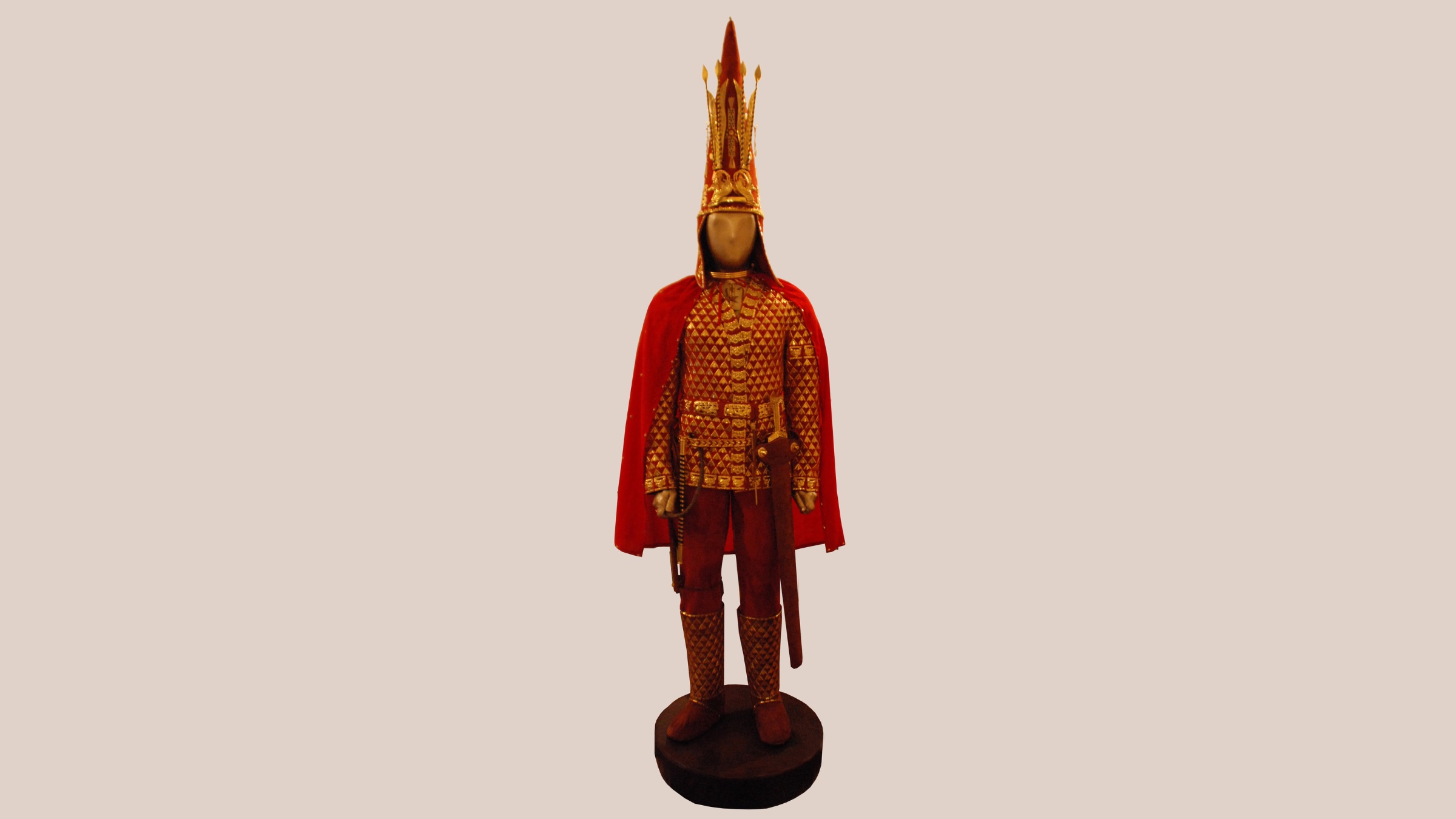
DNA evidence also solved a long-standing question about the "Golden Man." This skeleton of a teenager, discovered in 1969 in a kurgan in Kazakhstan, was found with more than 4,000 gold ornaments and a silver bowl with an inscription that has never been deciphered. Although the skeleton's sex could not be determined based on the bones, experts assumed the person was a powerful male warrior, even though women held nearly equal power among the Scythians.
"Although the data we were able to generate is low coverage, we found that the individual was a lot more likely to be genetically male than female," Childebayeva said, but "we did not identify any relatedness for the Golden Man."
The young age of the Golden Man – 17 based on his bones – and his elite burial status together provide clear evidence of elite dynastic rule, Childebayeva noted. An additional example that is "even more striking" comes from the pairing of a grandfather and his 1-year-old grandson, both buried in elite kurgans, Childebayeva said. These burials of elite children reinforce the conclusion that Iron Age steppe nomads inherited their social status.
"The results presented here further our understanding of the rise of social inequality and differentiation among ancient Eurasian nomadic groups and highlight the practices of the earliest nomadic groups of Central Eurasia in the first millennium BCE," the researchers wrote in the study.
Two brothers from the wealthy and powerful Medici family died of malaria and were not poisoned as a rumor had suggested, archaeologists have confirmed based on a DNA analysis of the brothers' skeletons. The analysis also revealed a unique, mutated strain of malaria that may hold the key to understanding the evolution of the disease in Europe.
The Medici family rose to power in the 15th century by creating the largest bank in Europe. The family used their extraordinary wealth to fund Renaissance artists and to start a political dynasty that eventually included numerous dukes, four popes and two queens of France.
In the 16th century, Cosimo I took over all of Tuscany as grand duke. But within a span of 25 years, at least five of his family members died from high fevers. This gave rise to a rumor that some of them had been poisoned with arsenic by another family member, although most people believed they died of malaria.
To get to the bottom of the 500-year-old Medici cold case, an international group of researchers tested the bones of two of Cosimo I's sons: Cardinal Giovanni de' Medici and Grand Duke Francesco I de' Medici, for the DNA of Plasmodium falciparum, the parasite that causes the deadliest form of malaria and that is transmitted by mosquitoes.
The researchers extracted ancient DNA from the bones of Cardinal Giovanni, who died in 1562 at age 19 in the same month as his mother and younger brother Garzia, and from Grand Duke Francesco I, who died at age 46 in 1587 along with his wife. The team's study was published online June 17 in the journal iScience.
Because of the almost simultaneous deaths of Grand Duke Francesco I and his wife, a rumor circulated that another brother had poisoned them over a long-standing feud. But the Medicis were known to have frequented their family villas in marshy and swampy areas of Tuscany, where malaria was prevalent well into the 20th century.
Researchers found evidence of P. falciparum in the bones of both Medici brothers, confirming reports from court physicians at the time that described the brothers as sick with "tertian fever," a type of high fever that returns every three days and is a hallmark of malaria. The medical reports also revealed the brothers were treated with bloodletting.
The name plate from the tomb of Grand Duke Francesco de' Medici, who died of malaria in 1587. (Image credit: Courtesy the University of Pisa)
"Now we can say with scientific certainty that malaria, not poisoning, killed Grand Duke Francesco de Medici," study co-author Valentina Giuffra, a medical historian at the University of Pisa, said in a statement.
But the ancient-DNA study held two additional surprises.
The Grand Duke's bones were positive not only for P. falciparum but also for Plasmodium malariae, a different parasite species that also causes malaria in humans, suggesting that both species contributed to the severe illness that killed him and his wife.
Cardinal Giovanni, on the other hand, had only P. falciparum, but the specific strain that infected him was previously unknown. The strain is similar to those found in ancient and early modern Europe, but with two mutations the researchers had never seen before, they wrote in the study.
"The study of ancient DNA offers us an opportunity not only to diagnose malaria in the remains of individuals from the past, but it also offers us a window for understanding the evolution of malaria species, Plasmodium falciparum in this case, which can help scientists better understand how the pathogen adapts over time," study first author Alexander Ochoa, an evolutionary biologist at Yale University, said in the statement.
Further analysis of the brothers' bones is needed to determine the evolutionary relationship between the strains of malaria they carried, the researchers wrote in the study.
What do you know about the bones in your body? Test your knowledge with our human skeleton quiz.
Homer's "Iliad" and "Odyssey" have inspired countless books, movies and works of art in the nearly three millennia since the epic tales were first written. This small, bronze sculpture, once attached to an ancient box, shows how the Greek epics influenced the aesthetics of the enigmatic Etruscans.
The Sleep and Death cista handle, which is in the collection of the Cleveland Museum of Art, features a set of bronze figurines welded to form a decorative handle for a cista — a small, cylindrical, lidded box used for a variety of purposes in ancient Egypt, Greece, Rome and Etruria, an ancient region in central Italy.
The handle is roughly 7.3 inches long and 7.2 inches tall (18.5 by 18.3 centimeters). The figurines represent Hypnos (the Greek god of sleep) and Thanatos (the Greek god of nonviolent death) bending to lift the body of Sarpedon, one of Zeus' sons who fought in the legendary Trojan War.
Sarpedon fought on the side of Troy, leading his men into battle against the formidable Greeks, according to Book XVI of the "Iliad." The Greek hero Patroclus entered the fray wearing Achilles' armor to trick the Trojans into thinking the greatest Greek warrior had joined the fight and scare off the Trojans. Sarpedon met Patroclus on the battlefield, and even though Zeus wanted to save his son, Sarpedon was mortally wounded. The Greeks stripped Sarpedon's body of his armor, but Zeus commanded Apollo to retrieve the corpse and deliver it to twin brothers Hypnos and Thanatos, "who bear men swiftly away" (translation by A. S. Kline).
The ancient sculptor of this piece "succeeded brilliantly in capturing the pathos and emotion in a scene from Homer's 'Iliad,'" Michael Bennett, former curator of Greek and Roman art at the Cleveland Museum of Art, said in a video. And on a technical level, the piece is much more detailed than a typical Etruscan handle; this one appears to be almost ergonomically designed, as Sarpedon's limply falling hair can be used as a finger grip, according to Bennett.
But the reason the Etruscans adapted the visual aesthetic of Homeric epic to many of their artworks, such as sculptures and wall paintings, is still unclear.
Because the Etruscan language is only partly understood, most information about this civilization, which arose around 900 B.C., comes from outside sources, such as the Greek historian Herodotus, who was writing several centuries later. Herodotus believed the Etruscans came from Lydia in Asia Minor, not too far south of Troy. Coupled with the later legend that Aeneas, a Trojan hero, wandered to Italy after the war and helped found Rome, some experts, such as linguist Robert Beekes, believe the Etruscans may derive from the Trojans or groups that fought on the Trojan side. However, a 2021 genetic study found the Etruscans may have been local.
The Etruscans may have used scenes from the Trojan War to decorate their vases and bronze boxes because they felt kinship with the antagonists in the "Iliad." But they also might have adopted the aesthetics because the Trojan War was a popular theme in Greek art at the time, and vases and other works decorated in this style reached the Etruscans through extensive trade networks. The Etruscans then put their own spin on the stories of the Trojan War, focusing in particular on scenes of death and brutality, classical archaeologist Larissa Bonfante argued in "Etruscan Myths" (2006, British Museum Press).
For more stunning archaeological discoveries, check out our Astonishing Artifacts archives.
For the first time, archaeologists have analyzed the genetic material of Homo naledi, a mysterious 300,000-year-old relative of modern humans discovered deep in a South African cave system. What they found is unique in human evolution studies: Every skeleton known from the species is female.
"I think it is fair to say that they surprised us," Lee Berger, a National Geographic explorer-in-residence, told Live Science in an email, but H. naledi "has always been an enigmatic discovery."
Since 2013, Berger has headed the Rising Star project, which discovered nearly two dozen skeletons of small-brained, two-legged creatures, which the research team named H. naledi, within a cave system in South Africa's Cradle of Humankind.
Research over the past decade has revealed that H. naledi was unusual for having a small brain and upper body, similar to earlier australopithecines like Lucy, but a face, hands and lower limbs that were more human-like. In 2023, the Rising Star team suggested H. naledi may have used fire in the cave, and in 2025, they advanced the controversial claim that H. naledi buried their dead — a complex behavior unexpected for a human relative with such a small brain.
But a new study of H. naledi teeth published Wednesday (June 24) in the journal Cell may bolster the team's interpretation of the Rising Star cave as a burial site.
An international team of experts studied 20 teeth from H. naledi skeletons using proteomic analysis, a minimally destructive technique that sequences genetic material from ancient proteins. Proteomics is a burgeoning field, especially because these proteins can last longer than DNA. The team focused on amelogenin genes (AMEL), which code for proteins in dental enamel and vary by sex. While the gene variant called AMELX is found in both males and females, another one, AMELY, is found only in biological males.
In analyzing the H. naledi teeth, the team found no AMELY genes but plenty of AMELX ones, suggesting that all of the skeletons were from females. These included the nearly complete skeleton of Neo and DH1, the main representative of the species, both originally assumed to be male.
The result is surprising because there are no known ancient human cemeteries or collections of nonhuman primate skeletons that contain only females.
"The most likely reason for these robust results are, in my opinion, cultural selection after death for burial by sex and perhaps gender," Berger said. "There are many past human societies with sex-specific burial practices," study co-author John Hawks, a paleoanthropologist at the University of Wisconsin-Madison, said in a statement, but the H. naledi skeletons "are older than any known Neanderthal or modern human burial site, and it's remarkable to see that they may all be female."
A partial jawbone with teeth from Homo naledi lies was found in the Rising Star cave system. (Image credit: Mathew Berger / Rising Star Program)
"An already weird hominin"
The discovery that everything we know about H. naledi comes from female skeletons has surprised paleoanthropologists.
"The bottom line is this is a weird result from an already weird hominin," Elizabeth Sawchuk, curator of human evolution at the Cleveland Museum of Natural History, who was not involved in the study, told Live Science in an email. "The key thing to remember is that failure to detect evidence of AMELY does not mean there are no males in the sample — it just means that none were detected."
One possible reason for the lack of this gene in H. naledi skeletons is an AMELY gene deletion that is known to occur very rarely in some modern-human populations and that has been found in one Neanderthal male. If the AMELY gene doesn't exist in this H. naledi group, then the protein profiles of males would look identical to the profiles of females.
However, "it's very unlikely that this would be the case among even half of the 20 individuals we studied or for an entire population," study co-author Enrico Cappellini, a paleoproteomics professor at the University of Copenhagen in Denmark, said in the statement. "Either scenario, namely the absence of H. naledi males in the Rising Star cave system or a systematic deletion of their AMELY gene, is fascinating and would have deep implications for a better understanding of the biology and evolution of this species."
Studies of H. naledi, a species known from a single site, "continue to yield more questions than answers," Sawchuk said. "As the authors point out, this is a surprising result that requires more investigation."
Other hominins in South Africa
A second surprising result in the proteomic analysis was that H. naledi shares a gene variant with Paranthropus robustus, a human relative with a massive face and teeth that lived in South Africa around 1 million to 2 million years ago.
Proteomic analysis of four P. robustus skeletons in 2025 proved that limited genetic material could be recovered from ancient human relatives in Africa. The new study has revealed that some members of this species and H. naledi shared a gene variant related to collagen production, which is different from the genes found in modern humans, Neanderthals and Denisovans.
While H. naledi and P. robustus inhabited the same general geographic area, it is unclear if they lived there at the same time and overlapped or if they may have had an ancestor-descendant relationship.
"It is early days for sampling fossil hominins with ancient proteins, and until we build a better, bigger sample, we just don't know" what the shared genetic variant means, Berger said.
Building a larger database of ancient proteins from other human relatives that evolved in Africa, such as Australopithecus africanusand Homo erectus, may clarify where H. naledi fits into the picture of human evolution.
"Key data are missing from H. erectus and A. africanus that would help put this evidence into context," Sawchuk said. "For now, this is another curious finding that bears further investigation."
Study lead author Palesa Madupe has pioneered techniques to extract proteins from fossils. (Image credit: Alberto Taurozzi / Rising Star Program)
What does sex change?
In 2015, Berger and colleagues named the new hominin H. naledi and described what they presumed to be male and female variants of the species based on the skeletons' sizes. In many groups of human relatives and in modern humans, males are physically larger than females, on average. This assumption led the researchers to classify the presumed male individual DH1, discovered in the Dinaledi chamber of the cave, as the main representative of the new species.
But a 2024 study was the first to question the assumption that the H. naledi skeletons came from two sexes. In that study, researchers found variation in the teeth of H. naledi that was "so low that the possibility that one sex is represented by few or no individuals in the sample cannot be excluded," they wrote.
"Our study helps resolve the long-standing mystery of why Homo naledi lacked significant variation," study first author Palesa Madupe, a researcher at the Max Planck Institute for Evolutionary Anthropology in Germany, said in the statement. "It's probably because they could have all belonged to one sex."
If the proteomic sex analysis is correct and H. naledi does not have AMELY deletion issues, it means everything we know about the species comes from females. But this doesn't mean interpretations of the species are wrong.
"The only thing that has changed is that we have never seen a male!" Berger said. "When and if we do, we will have to extend the description to include male sex characters and the likely extension of certain aspects of variation."
The researchers hope their study paves the way for more proteomic analyses of human relatives in the future.
The new analysis proves that protein analysis of fossils from the Pleistocene (2.58 million years ago to 11,700 years ago) can be done in a minimally destructive way, Madupe said. "This means potentially opening the door to a whole new way of sustainably investigating the differences between sexes in groups of extinct hominins and other animals without causing visible damage to these priceless fossils."
What do you know about early humans? Test your knowledge with our human origins quiz!
Name: Hanging lamp in the form of a sandaled right foot
What it is: A bronze oil lamp
Where it is from: Syria (Byzantine Empire)
When it was made: Fifth century
Oil lamps have been simple and popular light sources for more than three millennia. But during the Roman and Byzantine empires, many oil lamps were highly decorated works of art. This hanging lamp in the collection of the Metropolitan Museum of Art was made nearly 1,600 years ago in the shape of a human right foot wearing a sandal, likely as an early Christian symbol.
The bronze oil lamp is significantly smaller than a life-size foot, measuring just 3.25 inches (8.3 centimeters) long. Still attached to the lamp is a chain with a hook for hanging, which is over 17 inches (43.5 cm) long.
The right big toe rests against the spout of the lamp, which would have held the wick. A sandal covers the foot, its leather or cord thongs tied at the ankle. The sole of the sandal is decorated with a swastika, which in Byzantine times was known as a gammadion cross and represented good fortune.
At the back of the lamp, there is an opening at the ankle where the lamp could be filled with oil. The flat cover for the opening is topped with a cross, identifying the lamp as a Christian artifact, Vera Ostoia, a curator of medieval art at The Met, wrote in a 1969 study of objects from the The Met Cloisters.
The foot shape may have been a protective image that symbolized good health and healing, according to The Met, and it may have doubled as a symbol of Christian pilgrimage. But the symbolism may have run even deeper.
In early Christian times, oil lamps and the light they produced were metaphors for enlightenment and immortality rather than just functional, Ostoia wrote. This foot lamp may have been connected to Psalm 119:105, which reads: "Thy word is a lamp unto my feet, and a light unto my path," meaning that people should follow the word of God as their path in life.
For more stunning archaeological discoveries, check out our Astonishing Artifacts archives.
Archaeologists have discovered an iron cannonball fired by Texans at the Battle of the Alamo in 1836. This is the second intact cannonball they have discovered from the famous conflict. The first one, a bronze cannonball, was found earlier this year and was likely fired by the Mexican army.
"It's a huge deal," Tiffany Lindley, director of archaeology at the Alamo, said in a video statement from Alamo Trust. "We all thought, 'There's no way we can top it,'" she said, referring to the bronze cannonball discovered March 5, just a day before the 190th anniversary of the conflict that killed Davy Crockett, "and then we found another one."
Both cannonballs were recovered from the northeast corner of the church at the Alamo, which was originally built in 1718 as a Spanish mission and fortress in what is now San Antonio. But the Alamo is better known as the location of an 1836 battle during the Texas Revolution, in which Anglo-American settlers and Hispanic Texans known as Tejanos seceded from the Republic of Mexico.
In a 13-day siege culminating in a deadly assault on March 6, 1836, Mexican troops, commanded by Gen. Antonio López de Santa Anna, surrounded the Alamo and killed the 180 Texan rebels defending the structure, including Davy Crockett. The cry "Remember the Alamo!" was used in later skirmishes in the Texas Revolution as soldiers fought Mexican troops for independence.
The newly excavated iron cannonball was found June 2, according to a statement from Alamo Trust.
Of the two cannonballs, "the newest one is slightly larger" and was likely fired from a cannon that shot 6-pound [2.7 kilogram] cannonballs, Kolby Lanham, a senior researcher and historian at the Alamo, said in the statement. "The likelihood is that the bronze one belonged to the Mexican Army and the iron one belonged to the Texans."
Over the years, archaeologists have found numerous pieces of ammunition and shrapnel at the Alamo, Lindley said, but these cannonballs are the first examples of solid shots — spherical projectiles fired from a gun or cannon — they have ever found.
"It's just a huge kind of once-in-a-lifetime deal," Lanham said. "But obviously, it's happened twice."
The size and weight of the cannonball suggests it was fired by a cannon that shot 6-pound cannonballs. (Image credit: Alamo Trust)
The Mexican and Texan cannonballs were found near each other, so they are likely the historic remains of the two sides shooting at each other in the fateful siege nearly two centuries ago.
"Whenever they were dropped the very first time — possibly in 1836, probably — they haven't been touched since, and that's what makes them extra special," Lindley said. "I don't think you can undersell it."
The Alamo remains an active archaeological site, where experts have discovered artifacts that span its centuries of history, from Indigenous stone tools that predate the Spanish mission through the late 19th century, when the structure was converted into a general store and warehouse.
Archaeologists in Germany have unearthed an unusual burial of an injured man who was thrown into an abandoned kiln nearly 5,000 years ago. Because archaeologists don't typically find artifacts or bones in kiln pits, they suspect the man may have been a human sacrifice.
While workers were constructing a power line near Gerstewitz, a village in central Germany, archaeologists found a Corded Ware culture grave, according to a June 15 statement from the State Office for Heritage Management and Archaeology (LDA) Saxony-Anhalt.
The Corded Ware culture, named after the distinctive cord-like impressions found in their pottery, spread across Northern Europe between the Late Neolithic and the Bronze Age, around 2900 to 2050 B.C. Graves of Corded Ware people tend to follow a strict pattern: Men were buried on their right side, women were interred on their left, and everyone was buried in a crouched position facing south. But sometimes, graves deviate from this pattern.
The newly excavated grave at Gerstewitz revealed the skeleton of a man who was about 25 years old when he died. He was buried in a crouched position facing south, but rather than being placed in a grave or under a small mound, he was found in a kiln pit. This pit, essentially a hole that had been dug into the ground, held ancient evidence that people had used it to burn material, such as wood or food, or to fire clay. Additionally, the man's skull showed signs of injury.
Experts have suggested three possible explanations for the unusual burial. The skull injury may have resulted from violence, meaning someone murdered the man. Alternatively, he could have perished in a Copper Age battle lost to history. But a third possibility is that he was placed in a kiln pit as a human sacrifice.
The man buried in the kiln pit sustained an injury to his head before he died. (Image credit: dpa Picture-Alliance)
Oliver Dietrich, an archaeologist at LDA Saxony-Anhalt, wrote in the statement that, in rare cases, Corded Ware kiln pits contain cow or dog bones thought to be sacrificial offerings to unknown deities. While it's possible this man was a human sacrifice, Dietrich noted that future laboratory analysis should provide more information about the grave and the person buried there.
This is not the first time a sacrificial pit has been found in Gerstewitz. Last year, archaeologists with LDA Saxony-Anhalt discovered 12 pits ringed by a moat-like ditch. The pits were full of dog bones, human skulls and complete ceramic pots and had been sealed with the rubble of burnt houses, according to a 2025 statement about that discovery. An additional human skeleton was found buried in a converted oven pit. These finds, however, were attributed to the Salzmünde Culture (3400 to 3050 B.C.), which predated the Corded Ware people.
Other discoveries near Gerstewitz have revealed that the area was settled and occupied for over 6,000 years. The excavation there will last until at least 2027, when the power line project is expected to be completed.
What do you know about the Paleolithic, Mesolithic and Neolithic eras? Find out with our Stone Age quiz!
A clandestine excavation on the outskirts of Rome has brought to light a "splendid villa" that may have belonged to a member of the Antonine imperial family, according to archaeologists with the Special Superintendency of Rome. The remains of the first-century villa, which was previously unknown to archaeologists, include frescoed walls and mosaic floors that showcase the elite social status of the owners.
The villa was discovered at Castel di Guido, a village about 12 miles (19 kilometers) west of the ancient city walls of Rome. In ancient times, the area was known as Lorium, and it was frequented by prestigious Roman families, including the Roman emperorsHadrian, Antoninus Pius and Marcus Aurelius.
In February, the local police were alerted to illegal excavations at Castel di Guido on government-owned land, according to a June 15 translated statement from the Italian Ministry of Culture's Special Superintendency of Rome. The unauthorized excavations had been undertaken with a backhoe, which made deep cuts into the villa and left huge piles of dirt.
Superintendency archaeologists led by Alessia Contino carried out emergency excavations to document and stabilize the architecture at the site.
"Thanks to the local report and prompt intervention, it was possible to identify part of a large, previously unknown Imperial-period villa and uncover a splendid array of decorations, as well as the discovery of a statue in fine white marble," Contino said in the statement.
The excavation revealed the atrium at the entrance of the villa, two rooms decorated with frescoes and mosaics, and several other spaces related to the agricultural activities of the large, rural house. The villa was likely built in the early first century and abandoned in the third century.
Italian Ministry of Culture / Special Superintendency of RomeItalian Ministry of Culture / Special Superintendency of RomeItalian Ministry of Culture / Special Superintendency of RomeItalian Ministry of Culture / Special Superintendency of RomeItalian Ministry of Culture / Special Superintendency of RomeItalian Ministry of Culture / Special Superintendency of RomeItalian Ministry of Culture / Special Superintendency of RomeItalian Ministry of Culture / Special Superintendency of RomeItalian Ministry of Culture / Special Superintendency of RomeItalian Ministry of Culture / Special Superintendency of RomeItalian Ministry of Culture / Special Superintendency of RomeItalian Ministry of Culture / Special Superintendency of Rome
The atrium's central impluvium — a marble basin in the center of many ancient Roman houses that collected rainwater from an opening in the roof — was surrounded by a floor decorated with bands of black-and-white botanical and geometric mosaics. The rear wall of the room, about 5 feet (1.5 meters) of which was still preserved, was painted red as part of a fresco that featured multicolor panels with human figures and botanical elements.
Surrounding the large room were four smaller ones, three of which still have preserved mosaic floors. One room includes nine black-and-white geometric panels, another includes black octagons on a white background, and the third has black rectangles.
Within the villa's central basin, archaeologists found a broken statue, about 31 inches (80 centimeters) tall, depicting a bearded man wearing a short tunic and carrying a basket with birds and fruit. The statue may represent Silvanus, the Roman deity of woods and other uncultivated lands, who watched over domesticated flocks of animals. Silvanus was also a companion of Bacchus (known in Greek as Dionysus), the god of wine and ecstasy.
Archaeologists discovered a statue of the ancient Roman deity Silvanus, guardian of the flocks. (Image credit: Italian Ministry of Culture / Special Superintendency of Rome)
The scale of the villa and the quality of the mosaics and frescoes suggest that the villa's owners were Roman aristocrats and may have even been members of the imperial family, according to the statement. In the Roman Empire, elite families like the Aurelii and the Arrii — the paternal and maternal families of Antoninus Pius, who reigned from A.D. 138 to 161 — lived in Lorium. Ancient sources suggest that Antoninus Pius spent his childhood in Lorium, built his imperial palace there, and died there at age 74.
Lorium was also frequented by Emperor Hadrian, who adopted Antoninus Pius to make him his heir, and by Marcus Aurelius, who was Antoninus Pius' nephew, adopted son and son-in-law. Because of Lorium's strong connection to the Antonine imperial dynasty, numerous villas and ancient estates have previously been discovered in the region.
But the newly uncovered villa "is another important piece of the puzzle," Contino said, "opening up new perspectives for understanding and preserving our history-rich territory."
Further work on the villa and its artifacts will help archaeologists date the building more accurately and work out whether it was abandoned when the imperial household was relocated out of Lorium, according to the statement.
Although work on the villa has not been completed, the public has a chance to visit the newly excavated villa and its mosaics on June 20 through a free archaeological hike and guided tour organized by the Special Superintendency of Rome.
From Augustus to Nero, see how much you know about ancient Rome's famous leaders with our Roman emperor quiz!
An analysis of corn, cassava and coca plants discovered with sacrificed Inca children reveals they died during the reign of one of the last Inca emperors.
A new analysis of 2,000-year-old skeletons found in northern Scotland has revealed an unusual funeral ritual involving the manipulation of dead bodies.
After being notified by mischievous high school students, archaeologists uncovered a large and luxurious second-century Roman house near the Colosseum.
Archaeologists are turning their attention and research skills to far-flung places on the Earth and beyond, discovering new information about how humans survive in extreme environments.

 Login