❌

Normal view

Life on the (Red) Edge

26 May 2026 at 17:00

Earth in visible and near-infrared light

Editor’s Note: Astrobites is a graduate-student-run organization that digests astrophysical literature for undergraduate students. As part of the partnership between the AAS and astrobites, we occasionally repost astrobites content here at AAS Nova. We hope you enjoy this post from astrobites; the original can be viewed at astrobites.org.

Title: Retrieving the Red Edge on Earth-Like Planets with Heterogeneous Clouds and Surfaces
Authors: Zachary Burr et al.
First Author’s Institution: Jet Propulsion Laboratory; ETH Zurich
Status: Published in ApJ

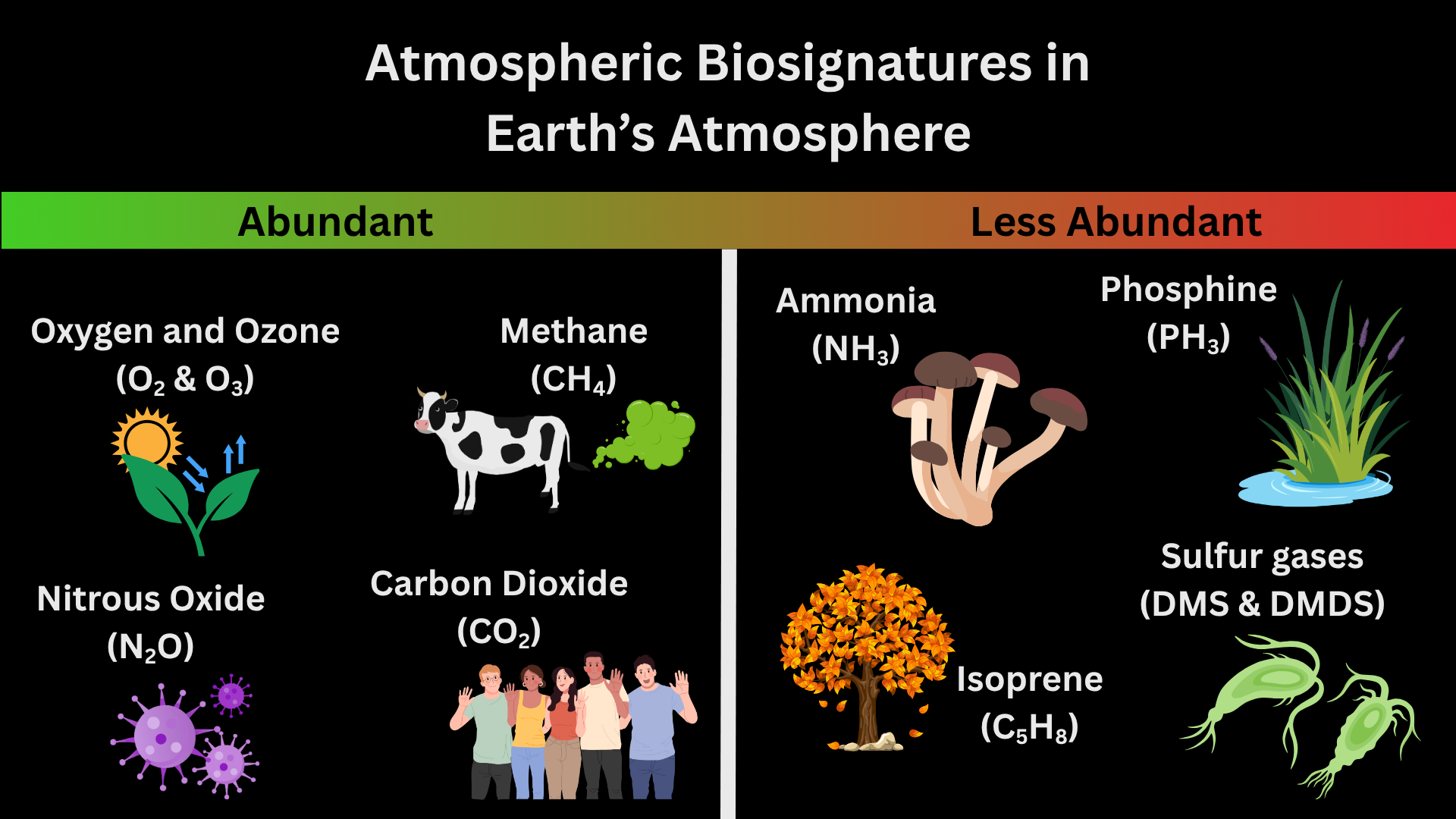
In the next 25 years, astronomers could find signs of life on other planets with the launch of the Habitable Worlds Observatory. Atmospheric signs of life, known as atmospheric biosignatures, are how astronomers currently search for life on other planets. Figure 1 shows examples of atmospheric biosignatures with pictures of each chemical’s origin on Earth. Before E.T. can phone home, though, we have to understand what chemicals make up a planet’s atmosphere. To do this, astronomers can use spectroscopy to observe a planet’s atmosphere in different wavelengths and measure the types and quantities of chemicals present.
biosignatures in Earth's atmosphere

Figure 1: Atmospheric biosignatures present in Earth’s atmosphere. More abundant biosignatures include oxygen and ozone (byproducts of photosynthesis in plants and bacteria) and nitrous oxide (byproduct of bacteria that don’t need oxygen to survive). Less abundant biosignatures include isoprene (released from the breakdown of leaves that have fallen from trees) and sulfur gases (byproducts of cyanobacteria). [Kaz Gary]

There are many ways to observe the spectrum of a planet, but the one you’re probably most familiar with is transmission spectroscopy. You can learn more about transmission spectroscopy of exoplanet atmospheres and how to model transmission spectra with these bites: 1, 2, 3. However, all of the current techniques for exoplanet spectroscopy (including transmission spectroscopy) measure the star’s light and how the planet affects the star’s light. This means it’s heavily dependent on how we model the star’s light to indirectly observe the planet’s light. The only way to take the spectrum of a planet directly is with direct imaging: the technique that the future Habitable Worlds Observatory will use to find signs of life in planetary spectra.

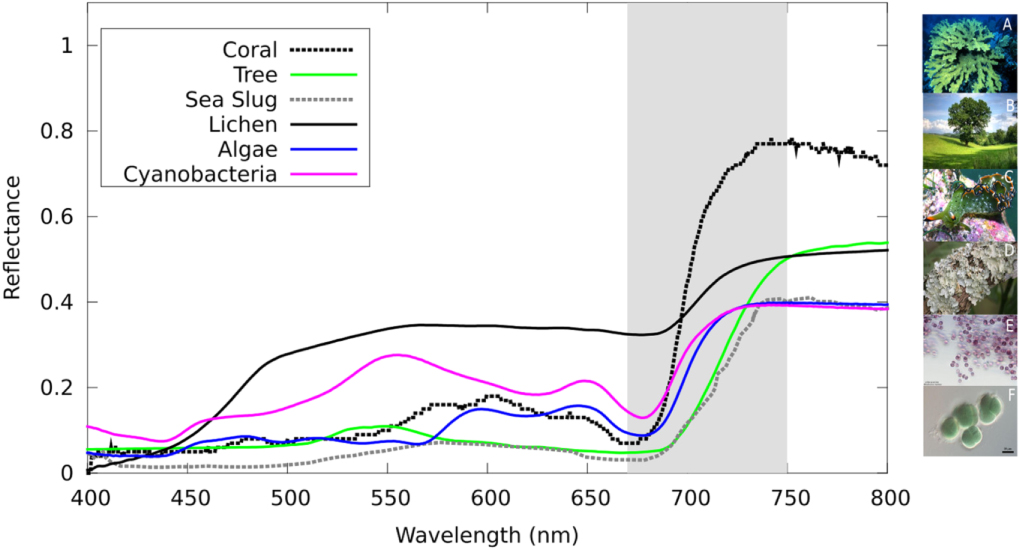
But are atmospheric biosignatures the only way to tell if life exists on other planets? Short answer: absolutely not. Let’s take Earth as an example. If we imagine Earth as a directly imaged exoplanet and take spectra of the light it reflects, you’ll find that around near-infrared wavelengths (~700 nanometers or just past the red part of the visible light spectrum), the light reflected off of Earth increases sharply. This sharp increase is called the vegetation red edge and is caused by plant and ocean life on Earth’s surface as shown in Figure 2. This is made possible because chlorophyll (the thing that makes plants green) absorbs nearly all visible light but reflects near-infrared light. The vegetation red edge is an example of a surface biosignature. In today’s article, the authors determine if the vegetation red edge will be visible in spectra of Earth-like exoplanets!
Spectra of different sources of the vegetation red edge

Figure 2: Spectra of different sources of the vegetation red edge on Earth. The vegetation red edge is highlighted in gray where the spectra rapidly increase and then level off beyond the visible light part of the spectrum. Each color represents a different source with pictures of each source on the right-hand side of the plot. [O’Malley-James and Kaltenegger 2019]

Snapshots

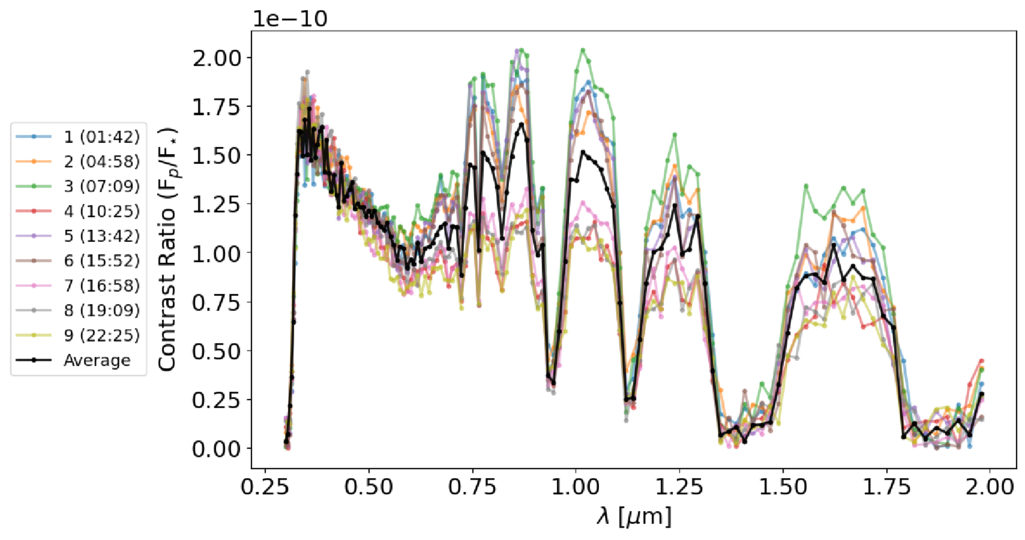
Planets rotate; that’s how we have morning, noon, and night in 24 hours guaranteed. This means that different parts of the surface will be visible at different times when we take spectra. Sometimes, we may see more ocean than land, other times not. To determine if the vegetation red edge would be visible at all points in Earth’s day, the authors simulated nine different spectra of modern-day Earth representing nine snapshots of Earth’s rotation. Additionally, they also simulated a time-averaged spectrum that shows an entire Earth day in one snapshot without the time variability. These spectra are shown in Figure 3.
Spectra of a directly imaged modern-day Earth at nine different times in its rotation

Figure 3: Spectra of a directly imaged modern-day Earth at nine different times in its rotation. The y-axis is the ratio of the planet’s signal to the star’s signal and the x-axis is wavelength in microns. Each color represents a time in UTC and the black curve represents the time-averaged spectrum. [Burr et al. 2026]

The authors then run retrieval models on all nine spectra to see if the vegetation red edge would be detectable in each spectrum, including the time-averaged one. Retrieval models take into account characteristics of the planet that would affect how light moves through its atmosphere, such as the atmospheric chemicals present and the surface gravity. They then use this information to generate possible spectral models that could fit the data. The best-fit model allows astronomers to infer what the atmosphere is made of and properties of the planet such as surface gravity. Because we are looking at Earth in visible light, much of the light from the planet is reflected. Typically, models of Earth-like planets in visible wavelengths only include atmospheric albedo: the measure of how reflective a planet’s atmosphere is. However, surface biosignatures can also be reflective as shown by the vegetation red edge. The authors use this to their advantage and introduce a surface albedo into their model that changes with the amount of desert, vegetation, and ocean visible on Earth’s surface at that time. They then further divide the nine spectra into three different types based upon the visible surface: majority land; 50% land, 50% ocean; and majority ocean. Check out the article online to see a cool animation of the Earth rotating and how the spectrum looks different at each time!

Arr! There Be… Vegetables?

After running the models, the authors were able to detect a sharp increase in the surface albedo value in every spectrum, including the time-averaged one. This result is shown in Figure 4. The authors take this result one step further in order to validate that the vegetation red edge is actually a result of surface variation of vegetation. They re-run models on each of their spectra but instead include a constant surface albedo instead of a time-varying one. This resulted in incorrectly measured radii, chemicals, and surface gravity in nearly all of the models. Without the vegetation red edge and surface features, the models could not accurately determine if life was present on Earth.
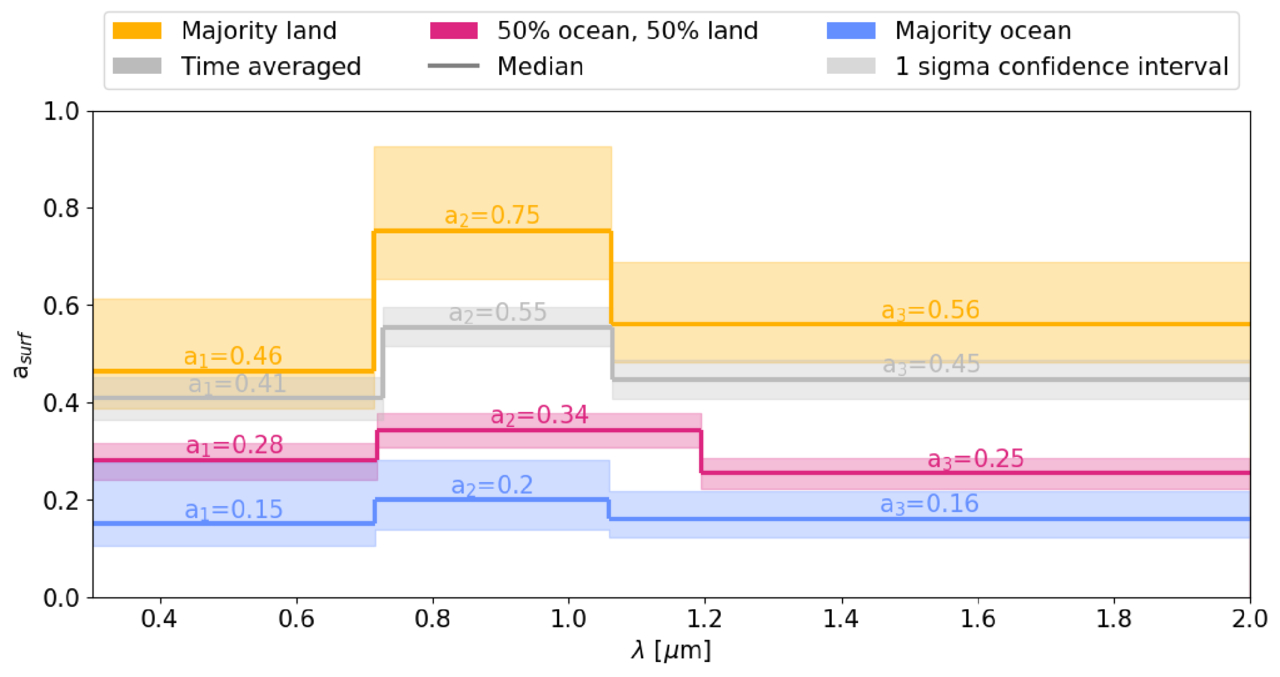
Retrieved surface albedos for the nine time-varying spectra

Figure 4: Retrieved surface albedos for the nine time-varying spectra. The surface albedo is broken down into three different values (a₁, a₂, a₃). Each of these values represents a change in the surface albedo at different wavelengths (i.e., how reflective the surface is at three different wavelengths). The nine spectra were broken down by the amount of surface that was visible at that time and color-coded for each category. The time-averaged spectrum is shown in gray. Each category of spectra was able to retrieve an increase in reflected light from the surface at vegetation red edge wavelengths. The spectra that had the majority land visible have the biggest increase in the surface albedo. This makes sense since the amount of visible vegetation is the largest with majority-land planets. [Burr et al. 2026]

For the first time (to the author’s knowledge), the vegetation red edge has been shown to be a promising and observable biosignature in Earth-like atmospheres. This study has also laid the groundwork for future work on other surface biosignatures and their potential impact on spectra of habitable planets. Confirming signs of life in multiple different ways, both on the surface and in the atmosphere, will finally allow astronomers to say we are not alone in the universe. In fact, life likes to live on the (red) edge!

Original astrobite edited by Madison VanWyngarden.

About the author, Kaz Gary:

I am a fourth-year PhD candidate at The Ohio State University with a passion for planets. My current work focuses on modeling exoplanet observations for the Habitable Worlds Observatory and understanding planetary atmospheres. Outside of research, I help develop planetarium shows and love all forms of science communication. In my free time, I enjoy playing tabletop RPGs, painting, watching terrible reality TV, and hanging out with my pet hedgehog.

The post Life on the (Red) Edge appeared first on AAS Nova.
Jupiter’s Atmosphere Holds Steady

13 March 2026 at 16:00

A close-up photograph of Jupiter. Dramatic cloud bands encircle the planet, and a large dark shadow of a nearby moon appears at left.

Jupiter’s upper atmosphere is hundreds of degrees hotter than it has any right to be, and for decades astronomers could only study it in brief, seemingly chaotic glimpses. New global maps built from years of observations have finally revealed the big picture — and it is surprisingly calm.

Order from Chaos

Although we’re well acquainted with Jupiter, having sent eight spacecraft on close passages and lived with it dominating the night sky for millennia, some of its simplest characteristics continue to puzzle us. For example, high above Jupiter’s cloud bands, temperatures exceed 800 K — far hotter than we’d expect given the meager sunlight that reaches that distance. Astronomers have long suspected that this excess is deposited by energy from the planet’s brilliant polar auroras, but previous observations provided only localized, sporadic snapshots that collectively painted a confusing picture of an ever-changing landscape.

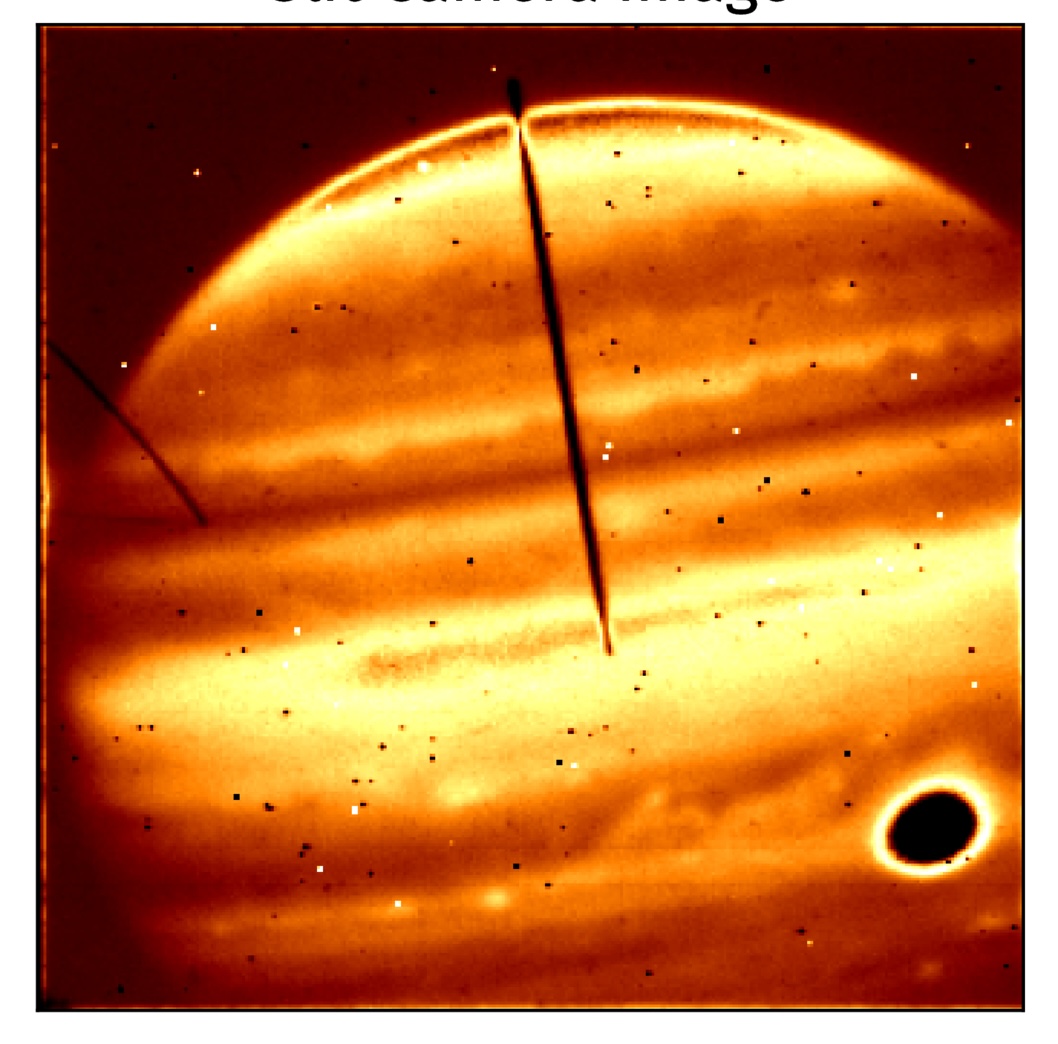
A photograph of Jupiter seen in red/orange false color with a dark stripe down the middle.

Jupiter as seen by the slit camera on the Keck telescope during one of the team’s observations. The spectrograph slit is the dark vertical band stretching from the equator to the north pole, and the Great Red Spot appears in black at the lower right. [Adapted from Roberts et al. 2026]

To truly understand how Jupiter’s upper atmosphere got so hot and whether it was actually changing over time, astronomers needed to construct a global, comprehensive map — and then do so repeatedly over several years and look for any changes. A team led by Kate Roberts (Boston University) has now assembled just this sequence using the NIRSPEC instrument at the Keck Observatory. The researchers collected over 175,000 high-resolution infrared spectra across 14 nights from 2022 to 2025; they then processed the massive dataset to extract the emission from a charged form of hydrogen, H3+. This species is a standard natural thermometer that glows at infrared wavelengths, and by mapping the spectra to their corresponding specific locations on Jupiter, the team could construct the first true global maps of Jupiter’s upper atmospheric temperature, density, and radiance.

Consistency is Key

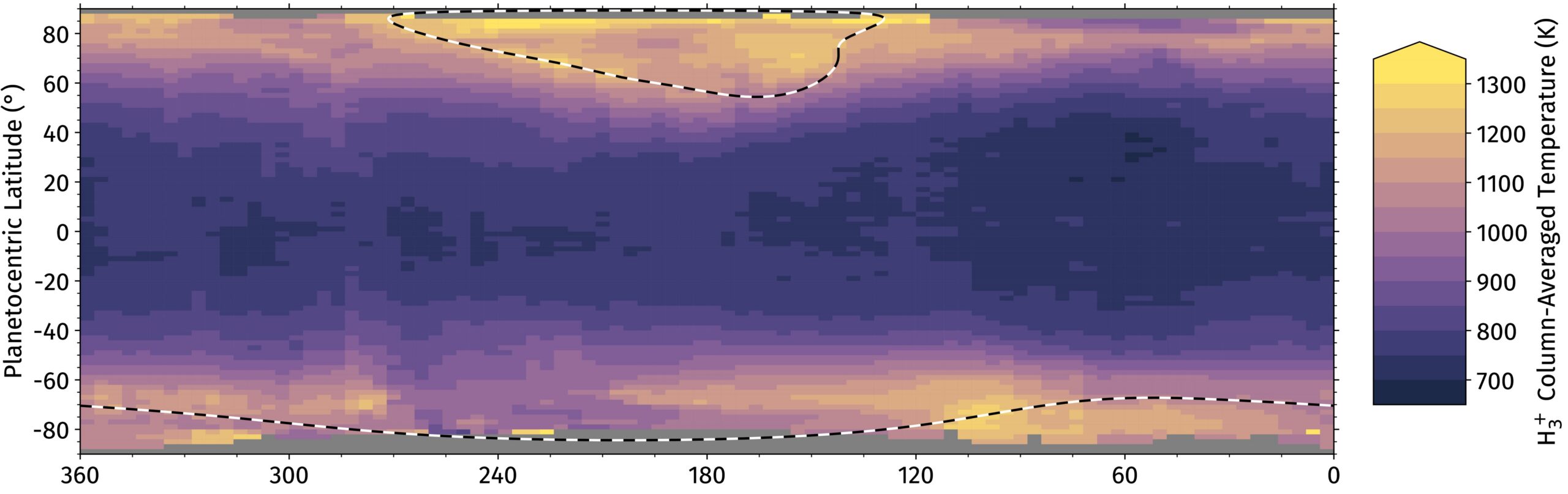
A look at how the maps evolved over time revealed striking order: the spatial patterns remained nearly constant, and the temperatures barely changed even over years. In general, the team noted that temperature decreases smoothly from the auroral regions near the poles (~1,150 K) to the equator (~750 K) at every longitude, and that although there is some night-to-night temperature variation, things stay remarkably steady over the years-long baseline.

A 2D heatmap with longitude on the bottom axis and latitude on the vertical axis. There is a general trend towards higher temperatures at higher latitudes.

A map of the average temperature of Jupiter’s upper atmosphere, as measured by the new Keck NIRSPEC data. Click to enlarge. [Adapted from Roberts et al. 2026]

What once “appeared stochastic,” the authors write, “exhibits predominantly spatial rather than temporal variability.” Earlier observations were simply sampling different longitudes at different times, mistaking geography for weather.

The conclusion that the upper atmosphere is complex but steady has implications beyond just Jupiter, as the team notes that JWST has already observed spatial patterns in the temperatures of the upper atmospheres of both Uranus and Neptune. As Roberts and colleagues note, “similar physical mechanisms could give rise to comparably stable structures” on those distant ice giants, meaning this analysis could ground our understanding of the upper atmospheres of giant worlds across the solar system.

Citation

“A Global View of Jupiter’s Upper Atmosphere Through H3+,” Kate Roberts et al 2026 ApJL 998 L13. doi:10.3847/2041-8213/ae3c9b

The post Jupiter’s Atmosphere Holds Steady appeared first on AAS Nova.

Are Water Worlds Just Made of Soot?

20 January 2026 at 17:00

illustration of K2-18b

Editor’s Note: Astrobites is a graduate-student-run organization that digests astrophysical literature for undergraduate students. As part of the partnership between the AAS and astrobites, we occasionally repost astrobites content here at AAS Nova. We hope you enjoy this post from astrobites; the original can be viewed at astrobites.org.

Title: Soot Planets Instead of Water Worlds
Authors: Jie Li et al.
First Author’s Institution: University of Michigan
Status: Published in ApJL

They Might Be Planets with a Lot of Water…

Since the discovery of PSR B1257+12 c and d in 1992 and  51 Pegasi b in 1995, we have found evidence for thousands of planets in other star systems. One of the most striking things (aside from how common planets seem to be) is how many of them are so unlike anything we had imagined we would find. Our growing list of exoplanets includes a truly remarkable variety of types, from cold rocky planets smaller than Earth to scorching hot giants bigger than Jupiter.

However, one category of planets is particularly interesting: the sub-Neptunes. These planets, smaller than Neptune but larger than Earth, are characterized by their low densities, which suggests they could be dominated by water or volatile-rich atmospheres. What makes sub-Neptunes so intriguing is that we don’t have a clear counterpart for them in our own solar system. As such, we don’t really know a lot about them other than there seem to be a lot of them out there.

Although these planets are sometimes theorised to be rocky worlds with large hydrogen–helium envelopes, they have alternatively been considered as water worlds, i.e., worlds with giant planet-wide oceans thousands of kilometres deep. The thinking goes that since water ice appears to be abundant beyond the snow line, water worlds would be a natural consequence of planet formation. And if these planets exist, some might host a temperate liquid ocean with the conditions for life.

…or They May Just Be CHON(ky)

However, today’s article suggests that these supposed water worlds may not be as wet as we think they are. They may instead be rich in what are called refractory carbonaceous materials. This term describes solids rich in carbon, hydrogen, oxygen, and nitrogen, or CHON. It is a bit of a mouthful and is often just referred to as “soot,” but it is important to remember that it is different from the black stuff you would find in ye old chimney. Soot, in this case, is a major component of comets. We know that this type of material is present around planet formation, as protoplanetary dust contains not just silicates (rock) and water ice but also a significant amount of CHON, and comets are leftovers from this dust.

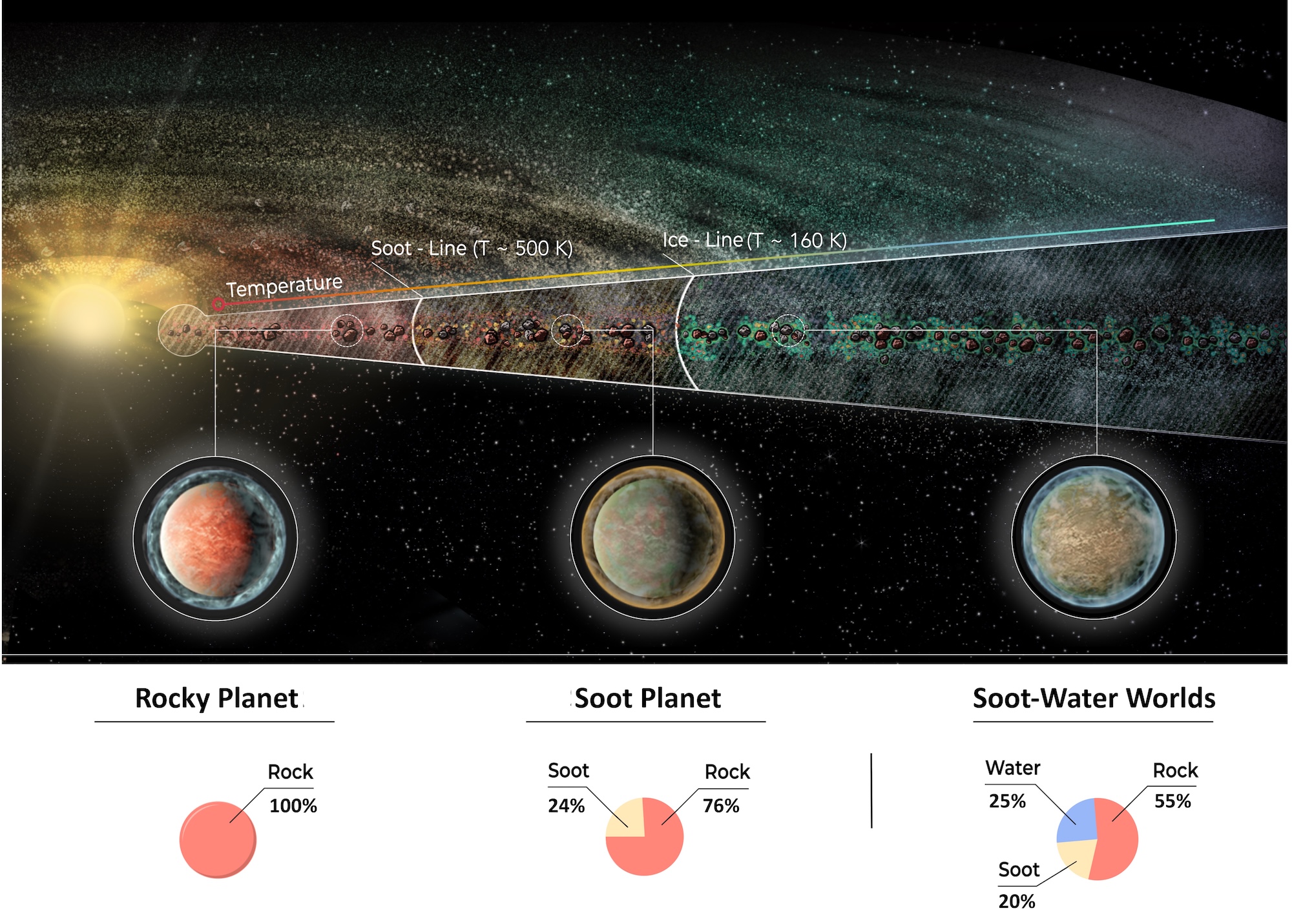
Soot is stable and remains in the solid state to much greater temperatures (∼500K) than water ice (∼160K), so the authors argue that there should be regions in the protoplanetary disk where planets accrete both rock and soot but little water. They define a “soot line” akin to the snow line and look at three archetypical planets that may form, shown in Figure 1.

illustration of rocky planets, soot planets, and soot-water planets based on their formation location

Figure 1: Illustration of a protoplanetary disk and three chemically distinct planet types that may form as the distance from the host star increases. Close in, the temperature in the disk is too high for volatiles to exist in the solid state, but farther out, the temperature drops to allow for water to freeze into ice beyond the water ice line, also known as the snow line. Between the two regions lies another where it’s cool enough for carbonaceous materials or “soot” to avoid destruction via thermally driven reactions. Depending on where planets form, they may contain a varying amount of astrophysical soot. [Li et al. 2026]

Inside the soot line, planets would be rock-rich worlds with low carbon or water content (e.g., terrestrial planets) because it is just too hot for any soot to stay together. Beyond the soot line but before the snow line, you would find carbon-rich rocky worlds (soot planets). They have low water content, as it is still too hot for water ice to exist, but these planets are rich in CHON. Beyond the snow line, a combination of rock/carbon/water worlds becomes possible, here labelled as soot-water worlds. The authors note that even though the last one has a significant fraction of water, it is distinct from traditional “water worlds” because it includes a significant component of hydrocarbon-rich material. Again, it is also important to remember that a soot world wouldn’t mean a black powder ball hanging in space, but rather a world that is composed of a lot of CHON, like Saturn’s moon Titan.

What Do the Models Say?

The authors got down to modelling planet compositions based on both observations of protoplanetary disks and the distribution of solid materials found in comets.

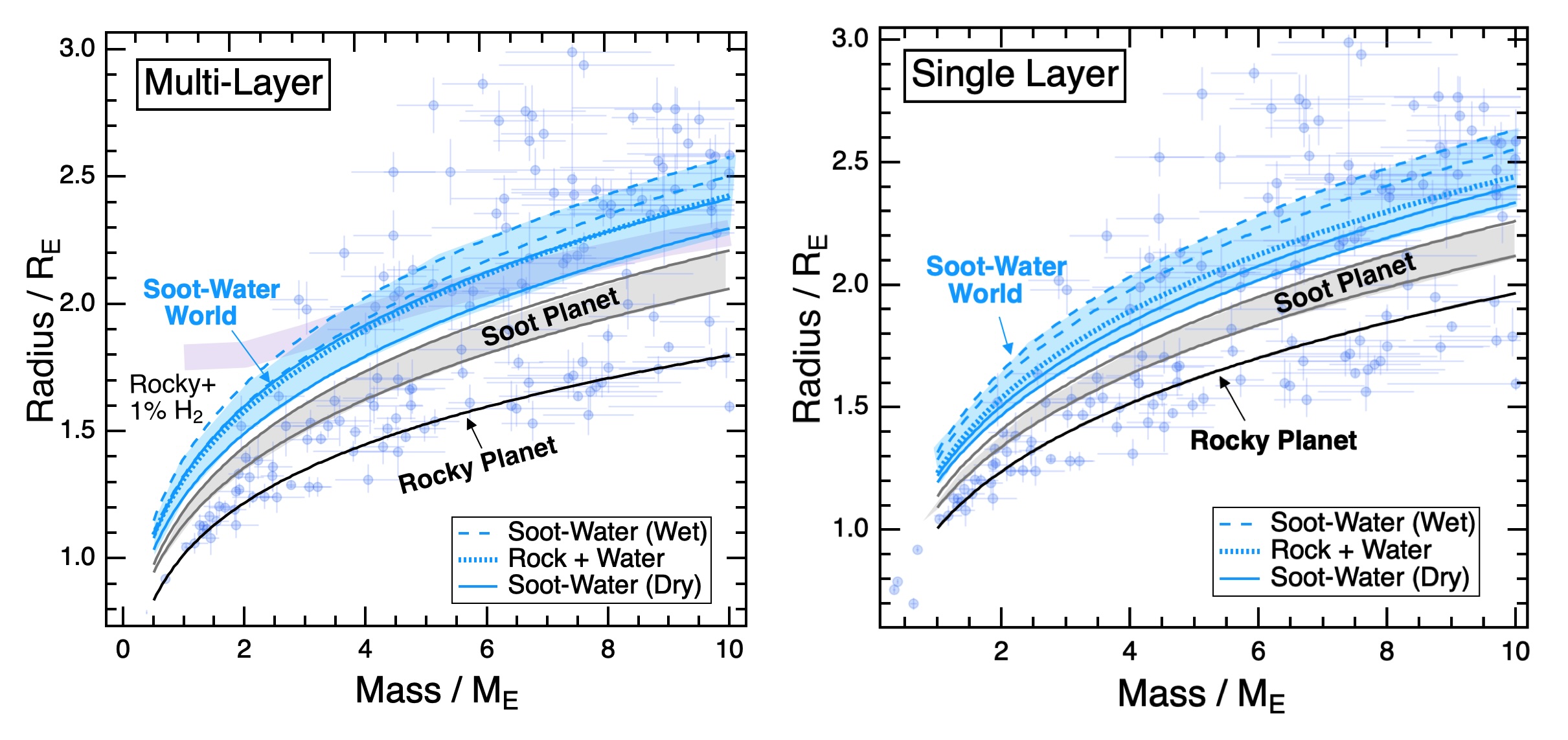
They considered two model planets. One is fully stratified, i.e., with a metallic core enclosed in a silicate mantle overlain by a hydrocarbon-rich layer and then a water-ice surface layer. The other, a single-layer mixed planet, is a hypothesised scenario where iron, silicate, soot, and water are fully mixed throughout the planet as a result of exotic chemistry from the high temperature inside the sub-Neptune planet. They expect any potential real planets to lie somewhere between the two extremes. The mass–radius relations for these models can be seen in Figure 2, where they are also compared to a number of known exoplanets, of which several fall within the models’ parameter spaces.

Mass–radius relations for model Earth-like rocky planets

Figure 2: Mass–radius relations for model Earth-like rocky planets (black curves), soot planets (gray bands), and soot-water worlds (blue bands). On the left are multi-layer planets, while on the right are single-layer planets. Overlaid are a number of exoplanets along with their respective uncertainties. Also shown as dashed lines are models for Earth-like planets with 50% rock and 50% water. These fall squarely within the same region as soot-water worlds, making the two indistinguishable from each other. [Li et al. 2026

A particularly interesting result that the authors note is that the predicted mass–radius relationship for the water worlds, which incorporates soot, is similar to that predicted previously for a 50% water planet with no carbon. That is, if you base your interpretation on the mass–radius relationship alone, it is impossible to distinguish between a world made of rock and water and a water-rich planet that incorporates a significant amount of soot.

We Might Have a Telescope That Can Help

How might we break through this impasse? Well, because significant fractions of methane and other simple hydrocarbons are expected to be released from the interior, the soot-rich planets may feature methane-rich atmospheres. These may naturally lead to the formation of hydrocarbon hazes, akin to the tholins in Titan’s atmosphere.

Looking at the atmospheres of exoplanets is one of the main mission goals of JWST. Many of the spectra from sub-Neptunes have so far been featureless, which may indicate the presence of clouds or photochemical haze. The telescope also has the ability to detect carbon-bearing species in the atmospheres of other sub-Neptunes, like with the discovery of CO2 and CH4 in the atmospheres of K2-18b and TOI-270d. Although these planets currently orbit interior to the soot lines of their respective stars, they may have originally formed farther out and later migrated inward during their evolution. Of particular interest is TOI-270d. Aside from also showing signs of water, it has a carbon-to-oxygen ratio that is moderately high for the planet, hinting that it could be a world with a considerable amount of soot.

The presence of soot may have significant implications when it comes to habitability. The planet’s core may be rich in diamond, which would impede the movement of volatiles in the mantle. This would make it challenging for the planet to generate a magnetic field and thus leaving any potential life vulnerable to cosmic radiation. However, they could also be abundant in methane and other volatile organic compounds, substances thought to be crucial for the development of prebiotic chemistry. Regardless, it is interesting that there might be something out there that is not so unlike something we know from our own solar system, a hazy supersized Titan. While the frigid moon is unlikely to show signs of life, a temperate soot-water world might be one place to look in the future.

Original astrobite edited by Sowkhya Shanbhog.

About the author, Kasper Zoellner:

I have a Master of Science in astronomy and I am currently working towards a PhD in physics and educational science. My greatest passion is the search for exoplanets and how stellar variability may influence the possibility of life. I am also interested in science outreach, education and discussing what sci-fi novel to read next!

The post Are Water Worlds Just Made of Soot? appeared first on AAS Nova.

Selections from 2025: JWST Searches for an Atmosphere on TRAPPIST-1e

26 December 2025 at 17:00

illustration of the TRAPPIST-1 system

Editor’s Note: For the remainder of 2025, we’ll be looking at a few selections that we haven’t yet discussed on AAS Nova from among the most-downloaded articles published in AAS journals this year. The usual posting schedule will resume January 2nd.

JWST-TST DREAMS: Secondary Atmosphere Constraints for the Habitable Zone Planet TRAPPIST-1 e

Published September 2025

Main takeaway:

JWST spectra of TRAPPIST-1e

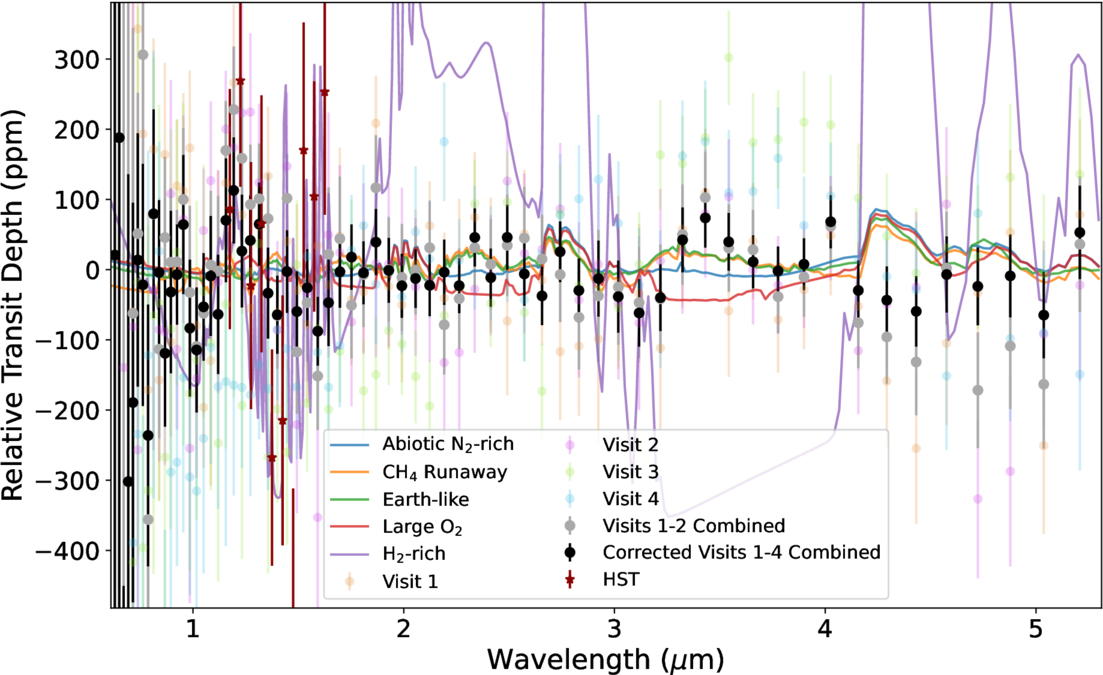
JWST spectra of TRAPPIST-1e (circles) and model outputs for several different atmospheric compositions and pressures (lines). Click to enlarge. [Glidden et al. 2025]

Ana Glidden (Massachusetts Institute of Technology) and collaborators used JWST to collect transmission spectra of the exoplanet TRAPPIST-1e. The team found evidence of stellar contamination in all of their observations, and they found that the data didn’t lean strongly in favor or against the planet having an atmosphere. Venus-like or Mars-like atmospheres were disfavored, hydrogen-rich atmospheres with traces of methane and carbon dioxide were excluded, and nitrogen-rich atmospheres with traces of methane and carbon dioxide were permitted.

Why it’s interesting:

TRAPPIST-1e is one of seven confirmed planets orbiting TRAPPIST-1, a cool M-dwarf star that is just larger than Jupiter and only 41 light-years away. All of these planets are roughly the size and mass of Earth, and as many as four of them — planets d through h — are thought to lie within the tiny star’s habitable zone. Thus, this system offers an excellent opportunity for powerful observatories like JWST to characterize the atmospheres of several potentially habitable planets. This study by Glidden’s team presents JWST’s first look at TRAPPIST-1e’s atmosphere through transmission spectroscopy.

How TRAPPIST-1 complicated the observations:

When examining an exoplanet that closely orbits its host star, special care must be taken to separate the signals from the planet and the star. This is especially tricky for active stars like TRAPPIST-1, whose surfaces are peppered with dark starspots and bright faculae. TRAPPIST-1’s surface features have contaminated observations of other planets in the system, as described in previous research, and these observations of TRAPPIST-1e were not exempt from the star’s meddling. Luckily, researchers are conducting further JWST observations that should help disentangle the star’s impact; an ongoing program will capture closely spaced transits of TRAPPIST-1e and TRAPPIST-1b, which trace nearly the same track across the star’s disk. Since TRAPPIST-1b appears to be a bare rock, any features that are shared between its spectrum and TRAPPIST-1e’s are likely to come from the star. Identifying these features will allow for better characterization of TRAPPIST-1e’s spectrum and atmosphere.

Citation

Ana Glidden et al 2025 ApJL 990 L53. doi:10.3847/2041-8213/adf62e

The post Selections from 2025: JWST Searches for an Atmosphere on TRAPPIST-1e appeared first on AAS Nova.
Weather Forecast for the Habitable Worlds Observatory: Cloudy with a Chance of Biosignatures

3 September 2025 at 17:00

Earth's clouds seen from space

Editor’s Note: Astrobites is a graduate-student-run organization that digests astrophysical literature for undergraduate students. As part of the partnership between the AAS and astrobites, we occasionally repost astrobites content here at AAS Nova. We hope you enjoy this post from astrobites; the original can be viewed at astrobites.org.

Title: Clouds Can Enhance Direct-Imaging Detection of O2 and O3 on Terrestrial Exoplanets
Authors: Huanzhou Yang, Michelle Hu, and Dorian S. Abbot
First Author’s Institution: University of Chicago
Status: Published in ApJ

In the hunt for life beyond Earth, studying exoplanet atmospheres is one of our most powerful tools. The atmosphere of an exoplanet acts as a window into its environment and allows astronomers to take a guess at what processes are shaping the planet’s climate, chemistry, and thus, its potential for habitability. The gases present in the planet’s atmosphere impart a unique spectral fingerprint on the light that passes through the atmosphere and allows us to identify what gases might be present and look for possible signs of life.

JWST is already hard at work looking at distant worlds and gathering spectroscopic data for us to analyse. It has already observed several exoplanets and recorded the light that passed through their atmospheres. This has not only sparked a debate over what could be interpreted as the first possible signs of biological activity, but has also given us a glimpse of worlds that are remarkably different from our own.

However, JWST is mostly limited to observing the atmospheres of transiting exoplanets. That means planets that orbit close to their host star and are more or less directly edge-on, as viewed from us, so that they transit across the face of the star. The only planets that the telescope is able to observe directly are big, young, and hot planets farther from their host star, at distances more resembling those of the outer planets in our solar system, like Saturn or Uranus. If only we had a telescope powerful enough to image a potentially habitable planet directly and analyse the light reflected from it.

The Habitable Worlds Observatory

This is where the Habitable Worlds Observatory (HWO) will come in. Now, I know what you are thinking. Why must astronomers always look towards greener pastures bigger telescopes when we already have perfectly functional space telescopes in orbit or practically on the launch pad? Well, it is true that the next flagship space telescope from NASA, the Nancy Grace Roman Space Telescope, is designed to directly image exoplanets and analyse their atmospheres. But space telescopes can take decades to plan and are often built on lessons learned from previous missions. Roman, with its 2.4-meter primary mirror and coronagraph, will be able to observe planets similar in size and orbital distance to Jupiter and will get us some of the way, for sure, but not all the way. At three times the mirror size, HWO, NASA’s proposed successor to Roman that is planned for the 2040s, will carry the torch even further and be able to directly image Earth-like planets in the habitable zone, where liquid water can exist on the planet’s surface.

But It Might Be Cloudy Tomorrow

This brings us to today’s article. If the HWO is going to potentially observe Earth analogues, we might expect it to run into the same issue that plagues everyone living in the UK for most of the year — clouds. Clouds in the atmosphere of an exoplanet can sometimes cause trouble when trying to analyse the light. Cloud particles scatter different wavelengths of light differently, and cloud variability creates dynamic changes in the observed brightness that can make it hard to know what exactly you are looking at. Clouds can also mean varying levels of opacity to look through depending on cloud composition, and they can hide underlying atmospheric properties such as water content beneath a thick cloud layer. For transmission spectroscopy, even a thin layer of clouds can disrupt the measurements as the light has to travel a long distance through the atmosphere. However, for direct imaging, the effect of clouds is perhaps more nuanced. While a thick cloud deck will block the signal from whatever gas lies beneath it, it will also increase the overall albedo of the planet and make it easier to detect the gas above. This means that cloud height and type are both critical variables in understanding atmospheric properties of exoplanets, which is what the authors of today’s article set out to investigate.

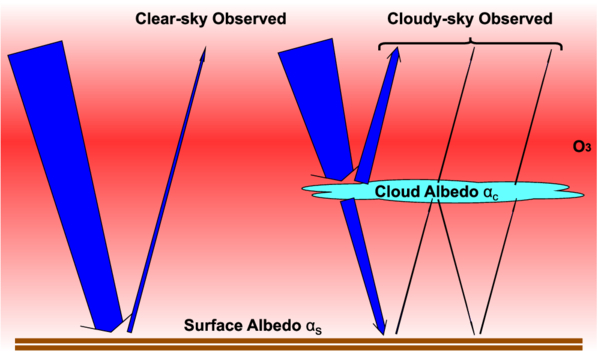
To understand how clouds affect the ability to detect signs of life on distant Earth-like planets, the authors used computer simulations. They focused on two gases, molecular oxygen (O2) and ozone (O3). Both gases are often regarded as biosignatures, although their astrobiological significance has been debated. The authors first used a tool that simulates how a telescope like the HWO might observe an Earth-like planet around a star 15 parsecs away. This tool predicts how light bounces off a planet’s surface and atmosphere, and whether the two gases would show up clearly in the reflected light. Next, they created realistic cloud conditions using a cloud microphysics model. This model calculates how clouds might form and behave depending on factors like surface pressure or how much sunlight the planet gets. With this they were able to change things like cloud height and particle size. They then combined the two tools by adding the simulated clouds into the observations model and building a mathematical model to help explain what they saw in the simulations. The sketch for their model can be seen in Figure 1.

diagram showing how clouds affect the amount of reflected light from an exoplanet

Figure 1: Clouds can affect the amount of reflected light (albedo) from the imaged planet. Depending on the cloud height and particle size, this can have a big impact on the observability of different species of gas in the atmosphere. Here the blue arrows indicate the amount of light entering the atmosphere and being reflected. The arrows get thinner from tail to head, representing absorption in the atmosphere. Depending on the presence of clouds, a varying amount is reflected back. The red colour indicates the assumed distribution of ozone, O3, which is concentrated at a high altitude. [Yang et al. 2025]

A Cloudy Sky Can Actually Be a Good Thing

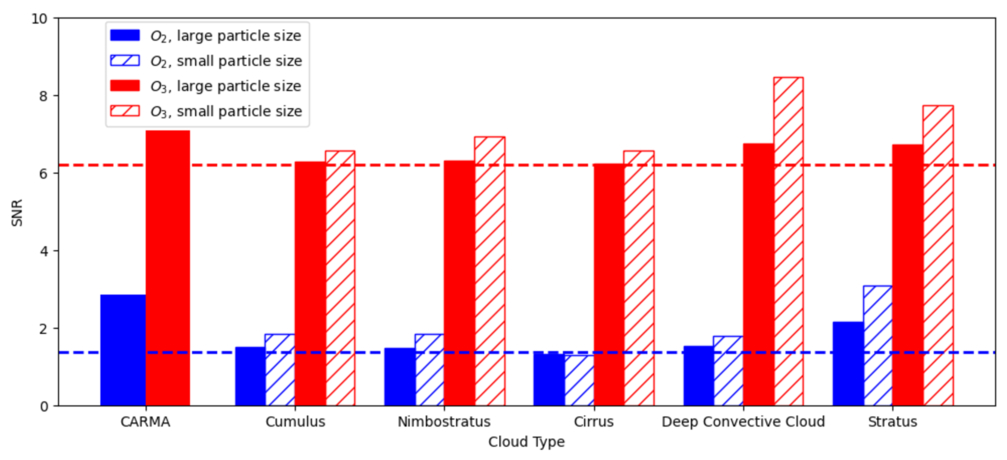
The researchers discovered that low clouds can actually make gases like oxygen and ozone easier to detect, because these clouds reflect more light without blocking the gases above them. On the other hand, high clouds can make it harder since they can hide the gases from view. They tested different cloud types using real data from Earth as seen in Figure 2. They looked at five common cloud types, like stratus (flat and low), cirrus (high and wispy), and deep convective clouds (tall, thunderstorm-like), and compared them to their model clouds (labelled as CARMA in the figure).

plot demonstrating how different types of clouds affect our ability to detect oxygen and ozone on an Earth-like exoplanet

Figure 2: The figure shows how different types of clouds affect our ability to detect oxygen (blue) and ozone (red) on an Earth-like planet. The dashed lines show the results without clouds, while the bars show what happens when clouds are present. Solid bars represent larger cloud droplets, and striped bars represent smaller ones, which reflect more light. The figure shows that most cloud types — especially low clouds like stratus and thick storm clouds — actually make it easier to detect these gases, particularly when droplets are small. Only high, thin clouds (cirrus) slightly reduce oxygen detection, and even then, the effect is small. This is the article’s main finding: while clouds can block light in some observation methods, for direct imaging of reflected light, they often help us see signs of life better. The cloud types are based on real Earth data while the authors’ simulated cloud model is labelled as CARMA. [Yang et al. 2025]

They found that most clouds improved detection, especially if the cloud droplets were small (as they reflect more light). Stratus clouds and deep convective clouds gave the strongest boost to detection, because they have a lot of water and are either low (stratus) or extend through many layers (deep convective). Ozone saw the biggest bump in detectability as it is concentrated higher in the atmosphere, which means that it is in the region above most clouds where the increased reflection from the cloud layer below makes it easier to spot. This means that unlike the case for transit spectroscopy where clouds interfere with the detection of gases, for direct observations of the reflected light, clouds may actually be a good thing. This insight into the role of clouds in exoplanet atmospheres not only refines our current understanding but also helps guide the design of future telescopes, like the HWO, and our search for life on these remote worlds.

Original astrobite edited by Maria Vincent.

About the author, Kasper Zoellner:

I have a Master of Science in astronomy and I am currently working towards a PhD in physics and educational science. My greatest passion is the search for exoplanets and how stellar variability may influence the possibility of life. I am also interested in science outreach, education, and discussing what sci-fi novel to read next!

The post Weather Forecast for the Habitable Worlds Observatory: Cloudy with a Chance of Biosignatures appeared first on AAS Nova.
Planets Around Small Stars Even Less Likely to Have Atmospheres Than Previously Thought

23 June 2025 at 17:00

Illustration of a planet around a red dwarf star

Which of the nearly 6,000 known exoplanets have atmospheres? New research suggests that small, rocky planets around the smallest and coolest stars are even less likely to hang on to their atmospheres than suggested by previous research. This result will help to guide the selection of target exoplanets for atmospheric characterization.

Approaching a Milestone

plot of the masses, orbital periods, and detection methods for currently confirmed exoplanets

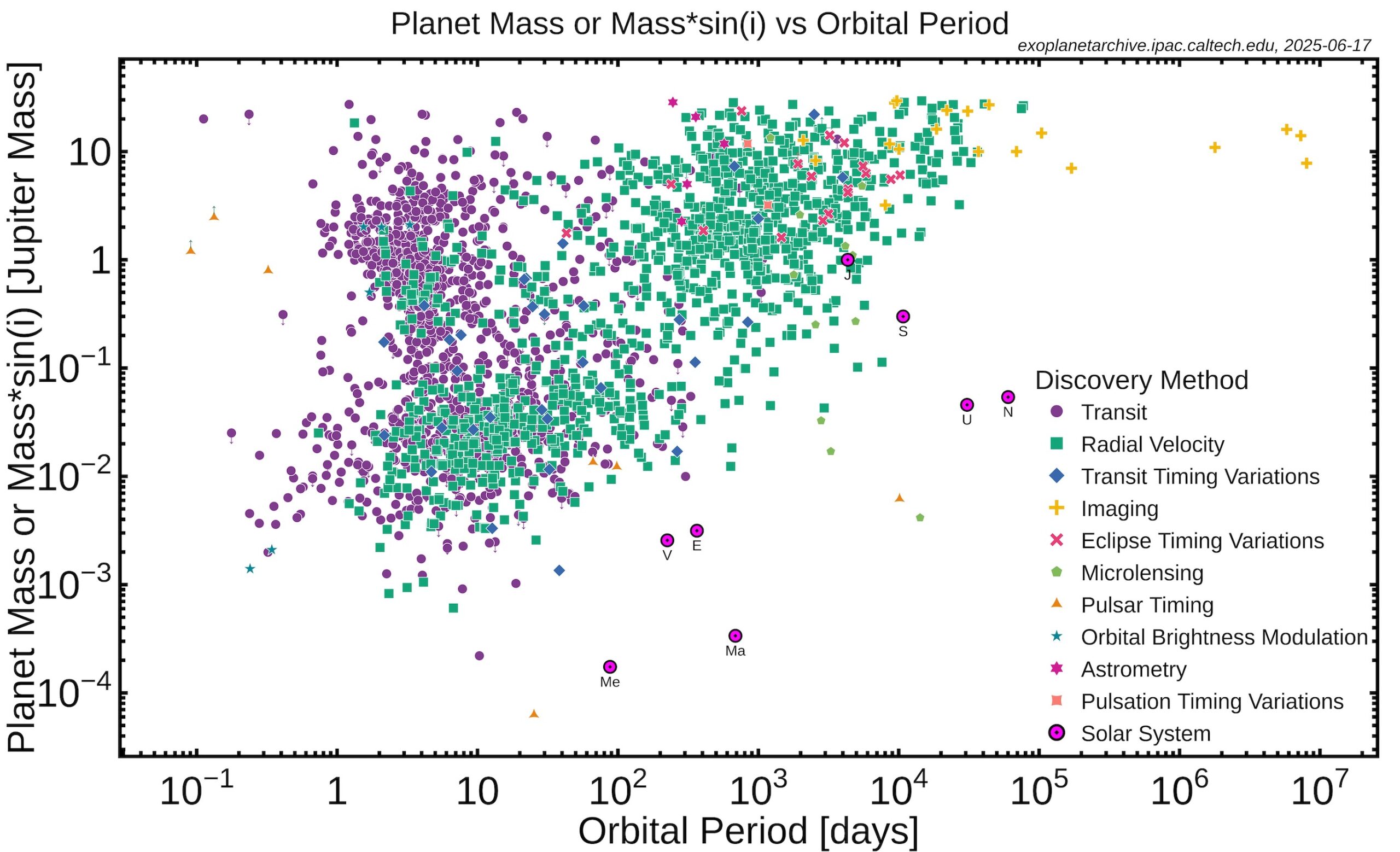
Mass, period, and detection method for confirmed exoplanets as of 17 June 2025. Click to enlarge. [Exoplanet Archive/Caltech/NASA]

Today, the Exoplanet Archive reports that humanity has discovered 5,921 exoplanets, bringing us only a handful of detections away from the remarkable milestone of 6,000 known exoplanets. Though just a small fraction of the hundreds of billions to trillions of worlds estimated to occupy our galaxy, this planet sample is ripe for the search for atmospheres, habitable surfaces, and even life. But where to look?

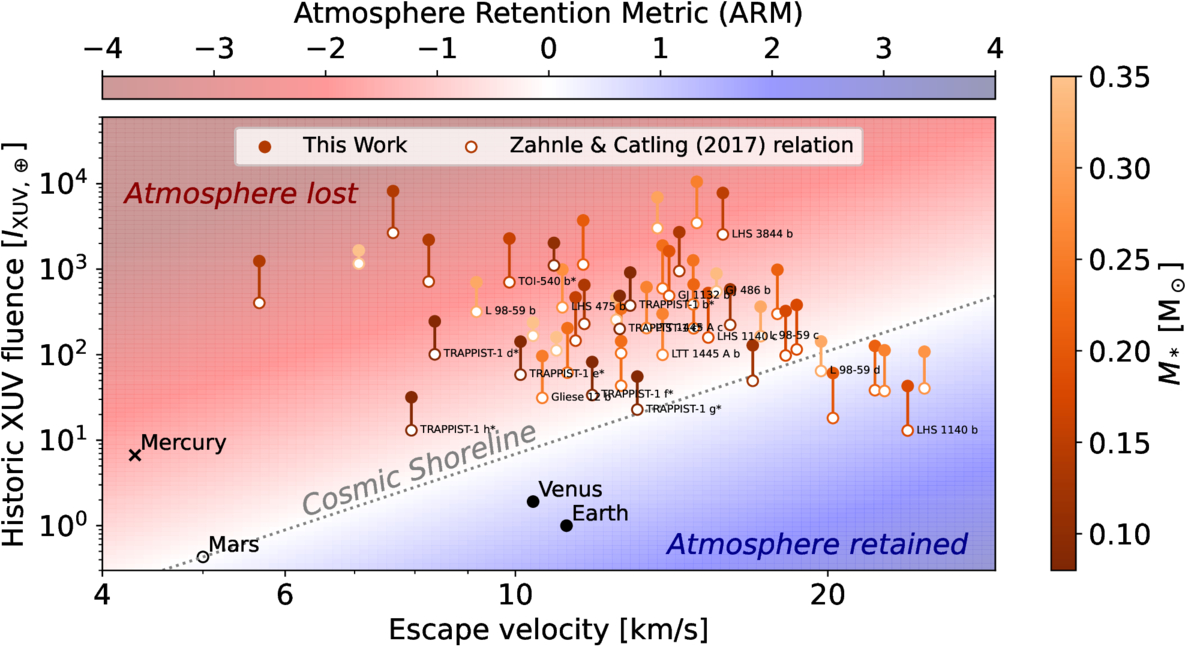
When seeking planets with atmospheres, researchers must consider how a planet has fared in its lifelong battle between gravity and radiation. Massive planets orbiting calm stars are more likely to have atmospheres than lightweight planets around active stars. Astronomers define the cosmic shoreline as the dividing line between planets with atmospheres and planets without, in terms of escape velocity and the extreme-ultraviolet flux of the star.

Charting the Cosmic Shoreline

To predict on which side of the cosmic shoreline a particular planet lies, it’s not enough to know the current extreme-ultraviolet flux of its host star. A star’s extreme-ultraviolet flux changes over time, and integrating these changes over the lifetime of a planet yields its position along the shoreline. In a new research article, Emily Pass (Massachusetts Institute of Technology) and collaborators have suggested that this integration hasn’t been performed correctly for certain planets.

plot showing the rotation periods of M dwarf stars as a function of mass

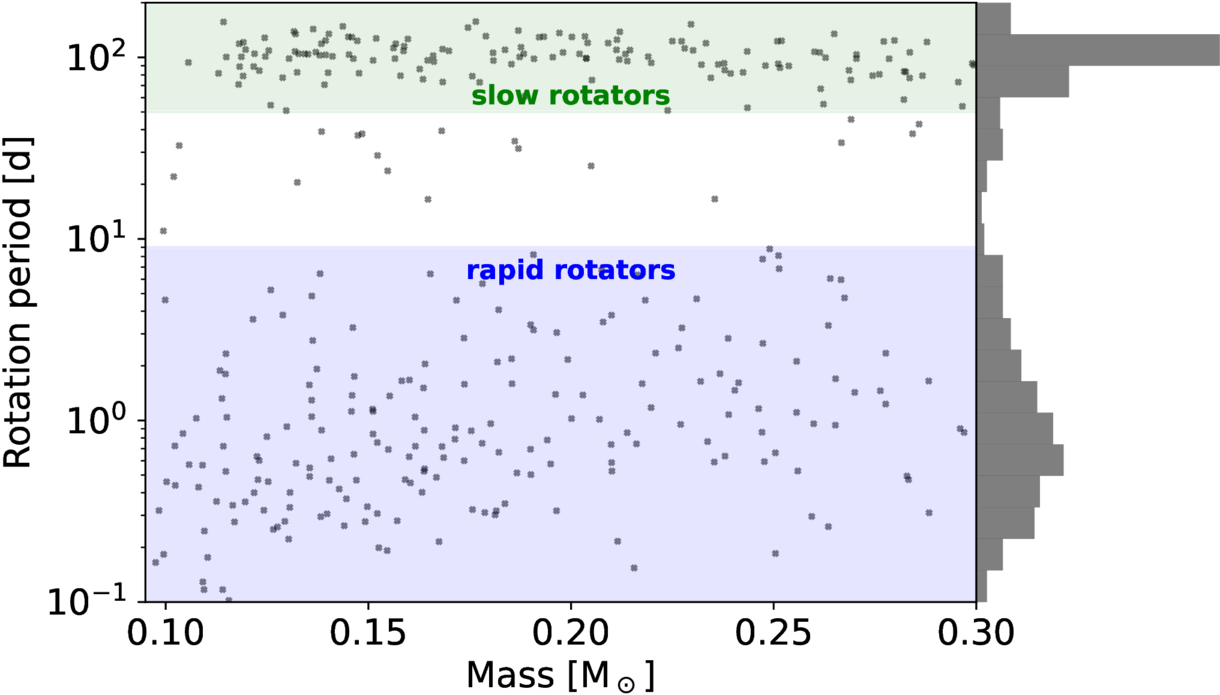
Rotation periods of M dwarfs with masses less than 0.3 solar mass. The lack of M dwarfs with rotation periods between 9 and 50 days suggests a rapid transition between the two regimes. Click to enlarge. [Pass et al. 2025]

As stars age, they spin more slowly, and this slowdown is accompanied by a decrease in atmosphere-stealing stellar activity. For all stars down through early type M dwarfs, the slowdown is uniform, but research has shown that for mid-to-late M dwarfs, the transition from fast to slow rotation is sudden. Pass and coauthors suspected that this difference could impact how much radiation the planets of mid-to-late M dwarfs receive over their lifetimes.

Crossing the Line

Pass’s team estimated the flux of mid-to-late M dwarfs during two phases of their lives: the “saturated” phase, during which the stars rotate rapidly and their high-energy flux does not scale with their rotation rate, and the “unsaturated” phase, during which the high-energy flux declines as the rotation rate slows. The team consulted the literature to find the X-ray flux of M dwarfs during the two phases, then used a statistical approach to estimate how long the stars spend in each of these phases. The team also considered the impact of stellar flares as well as the stars’ lengthy pre-main-sequence phase, during which their overall luminosity is higher than it is once the star has fully contracted and begun its main-sequence lifetime.

positions of exoplanets relative to the cosmic shoreline

Previous and new positions of known exoplanets orbiting mid-to-late M dwarfs relative to the cosmic shoreline. Click to enlarge. [Pass et al. 2025]

Ultimately, these factors mean that it’s more challenging than previously predicted for planets around mid-to-late M dwarfs to hold on to their atmospheres. This recalculation even pushed some planets from one side of the cosmic shoreline to the other. The team also noted that certain planets still tagged as potentially having atmospheres may in reality be gaseous rather than terrestrial, highlighting the need for more work to characterize these worlds and guide the selection of target exoplanets for JWST and other sensitive telescopes.

Citation

“The Receding Cosmic Shoreline of Mid-to-Late M Dwarfs: Measurements of Active Lifetimes Worsen Challenges for Atmosphere Retention by Rocky Exoplanets,” Emily K. Pass et al 2025 ApJL 986 L3. doi:10.3847/2041-8213/adda39

The post Planets Around Small Stars Even Less Likely to Have Atmospheres Than Previously Thought appeared first on AAS Nova.

Abundant but Ambiguous: Understanding the Atmospheres of Sub-Neptunes with JWST

30 May 2025 at 17:00

sub-neptune

Recent JWST observations of exoplanet GJ 3090b reveal intriguing qualities of one of the galaxy’s most abundant planet types.

Many Sub-Neptunes, Many Mysteries

Over the past 30 years, astronomers have discovered thousands of distant worlds. Within the growing exoplanet population, the sub-Neptune — a planet with a mass and radius between Earth’s and Neptune’s — has emerged as the most common planet type in the Milky Way. However, the composition and structure of these planets are not yet well understood. While sub-Neptunes orbiting Sun-like stars seem to separate into a small, rocky population and a larger, gaseous population, sub-Neptunes around cooler, lower-mass stars do not show such a clear division. 

For sub-Neptunes around Sun-like stars, the population separation between rocky and gaseous planets is inferred from a dearth of planets with radii between 1.8 and 2 times the Earth’s radius (a gap dubbed the “radius valley”). This gap provides hints to the formation and evolutionary processes that shaped the planet, but with a murkier radius valley for sub-Neptunes around lower-mass stars, their origins are more unclear. Recent observations of sub-Neptunes have revealed a diverse range of atmospheric compositions, further bolstering the need to continue exploring the galaxy’s most prevalent planet type.

gj 3090b

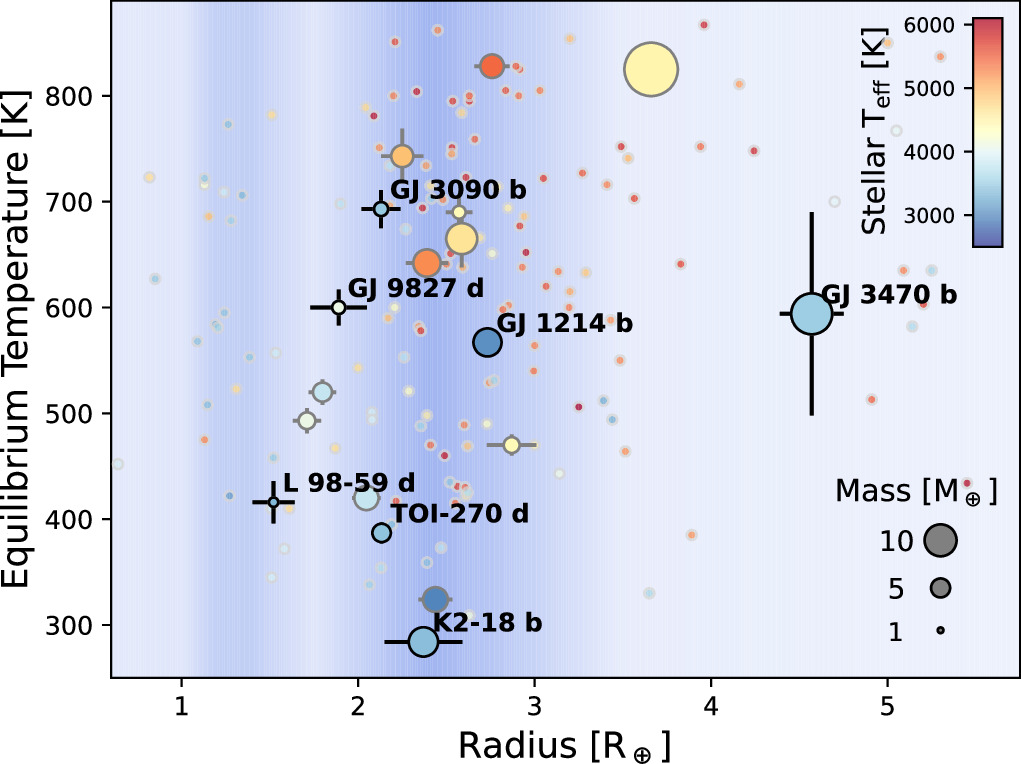
Planet equilibrium temperature versus planet radius plot showing where GJ 3090b falls with respect to the general sub-Neptune population. Click to enlarge. [Ahrer et al 2025]

JWST Observations of GJ 3090b

Aiming to add to the sample of well-characterized sub-Neptune atmospheres, Eva-Maria Ahrer (Max Planck Institute for Astronomy) and collaborators collected JWST spectroscopy of the sub-Neptune GJ 3090b. Previously discovered with the Transiting Exoplanet Survey Satellite (TESS), GJ 3090b orbits a late-type, low-mass star and has a radius that places it at the outer edge of the radius valley.

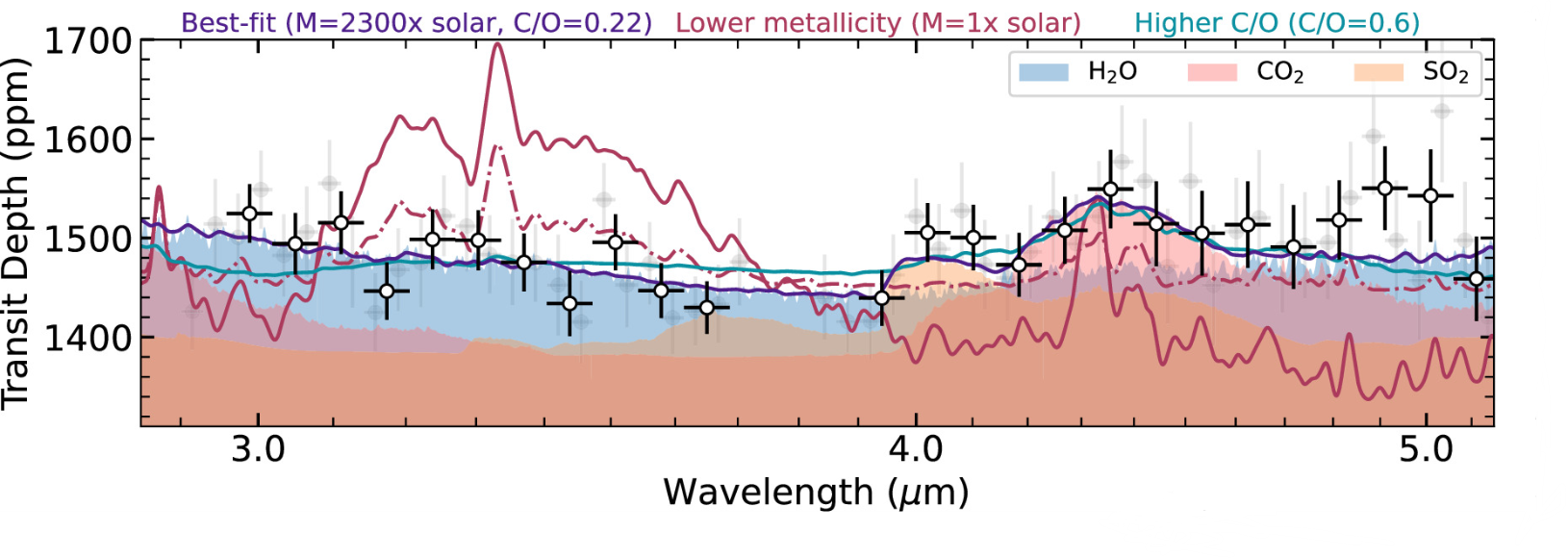
With the JWST spectroscopy, the authors search for a helium signature that traces how hydrogen and helium may be escaping the planet’s atmosphere. The authors detect a low-amplitude helium signature that suggests GJ 3090b has a metal-enriched atmosphere that slows down mass loss and weakens the helium feature. Additionally, the spectrum reveals the presence of heavy molecules like water, carbon dioxide, and sulfur dioxide, which points again to the planet’s atmosphere being metal enriched. What does this composition tell us about the planet?

spec

JWST spectrum of GJ 3090b’s atmosphere. The spectrum is best fit with a high-metallicity model. Click to enlarge. [Modified from Ahrer et al 2025]

Exploring Metal Enrichment and Planet Structure

Given the makeup of GJ 3090b’s atmosphere, the authors explore various theoretical models to understand why this planet may have a high-metallicity atmosphere. If the planet formed past its system’s snow line, where it is cool enough for water to freeze, the planet could have accreted water ice laced with enriched material. As the planet migrated inwards, the heat from the star melted the ice, allowing the enriched material to escape into the atmosphere. 

Alternatively, sub-Neptunes close to their host stars are expected to lose significant amounts of hydrogen and helium due to hydrodynamic effects. When these light elements escape the atmosphere, the remaining gas contains a higher fraction of metals as it is now less diluted with hydrogen and helium. Additionally, using structure models, the authors predict that GJ 3090b has a well-mixed core of rock and ice, further supporting the idea that it formed farther out where water could freeze and then migrated inward.

However, further high-resolution observations are needed to better constrain the true abundances of the metals in GJ 3090b’s atmosphere, which leaves the planet’s history and structure still a little hazy. With JWST opening the window for detailed atmospheric studies of exoplanets, more observations will allow astronomers to understand and characterize planets across the Milky Way.

Citation

“Escaping Helium and a Highly Muted Spectrum Suggest a Metal-enriched Atmosphere on Sub-Neptune GJ3090b from JWST Transit Spectroscopy,” Eva-Maria Ahrer et al 2025 ApJL 985 L10. doi:10.3847/2041-8213/add010

The post Abundant but Ambiguous: Understanding the Atmospheres of Sub-Neptunes with JWST appeared first on AAS Nova.

❌