 Login
The robotic penguin that makes endoscopy optional
21 June 2026 at 12:00
Researchers at the TechMed Centre of the University of Twente have built a swallowable soft robot that samples stomach fluid

NASA is developing the next generation of surface exploration technology with its Exploration Rover for Navigating Extreme Sloped Terrain (ERNEST), designed with advanced mobility and autonomy capabilities to enable access to previously off-limits regions on the Moon and Mars.
In Southern California’s Colorado Desert, NASA’s ERNEST prototype is traversing rough patches of terrain as the design team at the Jet Propulsion Laboratory (JPL) continues to dial in the rover’s advanced mobility technology.
The four-wheeled, four-foot-long rover can readily handle landscapes that would be impassable for its six-wheeled predecessors, such as Curiosity and Perseverance.
ERNEST features mesh wheels for physically traversing difficult ground, as well as an intelligent decision-making system that determines the best route to its destination. As plans for humanity’s return to the lunar surface grow more ambitious, a rover capable of traveling longer distances at higher speeds will become a necessity. This is what ERNEST is accomplishing for NASA, already showing improvement over the performance of earlier rovers by an order of magnitude, as demonstrated in one test by traveling 16 miles in 37 hours.
The ERNEST prototype is less than half the size that the JPL team expects the final build to be. Since the project began in 2022, this is the third ERNEST prototype, with the other two being only two feet long and built primarily to test various suspension iterations over simulated lunar regolith packed at various slopes. They completed fabrication of the current prototype in September 2024 and operated it remotely via joystick control.
“You could do a science road trip across the Moon — or Mars — with this vehicle,” said James Keane, a JPL planetary scientist working on lunar missions.
ERNEST was a project that grew from relatively humble beginnings: initially, it sought only to replace current rovers with a simple, low-cost alternative by tweaking the rocker-boogie suspension already in use. The new active suspension developed for ERNEST allows it to balance weight among the four wheels rather than distributing it equally across all six wheels, as in the rocker-boogie system.
“We started by postulating that we could do better in designing a planetary surface robotic mobility system,” said Hari Nayar, a JPL principal technologist leading the ERNEST team. “While the rocker-bogie system has been very successful over the past 30 years, there’s been a lot of research in that time on mobility and understanding terrain interaction.”

Powered joints in front of the rover allow it to switch between squirming, wheel-walking, and obstacle-climbing gaits to adapt to changing surface conditions. For less challenging terrain, a clutch allows the system to switch to a more energy-efficient passive suspension, conserving power for longer journeys. Each wheel is articulated to allow movement in any direction, allowing the vehicle to move completely sideways.
These major mobility advances will be a boon to mission planners, who have struggled to reach hard-to-access areas on Mars and the Moon that were previously inaccessible with previous technology.
“This testing is helping us refine the mobility hardware and autonomy software to navigate extreme distances across a wide range of terrain and lighting conditions anticipated on the Moon,” said Issa Nesnas, a principal technologist at JPL.
To move beyond operator control to autonomous decision-making, the team used an artificial intelligence technique called reinforcement learning, in which a model learns through interactions with the environment.
A virtual testing environment, running multiple simultaneous instances for months, allowed the researchers to have the rover ready to meet its environmental challenges from its first real-world test. Conducted at JPL’s Mars Yard, the initial tests featured an obstacle course of steps, slopes, ripples, and rubble. From this, and in many subsequent tests, ERNEST proved successful in navigating a range of very difficult environments.
Further improvements to the rover’s autonomy are being pursued with an eye on intelligent long-distance travel, with the rover independently switching between suspension settings.
Ryan Whalen covers science and technology for The Debrief. He holds an MA in History and a Master of Library and Information Science with a certificate in Data Science. He can be contacted at ryan@thedebrief.org, and follow him on Twitter @mdntwvlf.
The elephant’s trunk is one of the animal world’s most formidable facial appendages; it is capable of tearing a tree limb from its base and, moments later, carefully lifting a single blade of grass.
Now, this combination of strength and precision is also helping to drive robotics research.
A boneless appendage that can both move heavy logs and peel fruit like a banana, the elephant’s trunk has long been studied by engineers seeking to understand how it can perform both powerful and delicate tasks effectively. Now, in a new study published in PNAS Nexus, researchers have identified the skin, rather than the underlying muscle, as a key factor in the versatility of this pachyderm appendage.
Lucia Beccai and colleagues at the Istituto Italiano di Tecnologia studied the trunk of an adult Asian elephant that died of natural causes at Zurich Zoo in 2020. They collected 35 samples from different regions of the trunk and analyzed them using biomechanical testing, histology, various imaging techniques, and computational modeling. The team’s analysis revealed a trunk that combines two very different mechanical strategies within a single structure.
The elephant trunk acts as a muscular hydrostat, similar to an octopus tentacle or the human tongue. With no bones and over 100,000 muscles, the trunk can stretch, compress, twist, and bend in any direction. The trunk achieves this flexibility through a combination of muscle power and specialized skin architecture. The study found that the trunk’s outer surface varies in structure depending on location and the types of forces it encounters.
The researchers identified clear differences between the upper and lower surfaces of the trunk, reflecting what scientists call functional anisotropy. The trunk’s upper surface serves as a tough, protective layer, which is over three times stiffer than the underside. In contrast, the trunk’s lower surface remains soft and flexible, allowing the elephant to grip objects with delicacy and precision.
The way elephants use their trunks reflects this structural difference. The upper surface faces the environment and absorbs impacts and abrasions. The underside is used for gripping objects. Its lower stiffness allows it to adapt to the shape of objects and hold them securely. The design of the elephant trunk may offer a solution to a persistent challenge that has stumped soft-robotics engineers in balancing protection and precision by assigning each function to a different layer of skin.
Another significant finding was made beneath the gripping surface. The researchers identified dome-shaped structures known as dermal papillae. Finite element modeling suggested that these structures act as subsurface mechanical lenses, concentrating mechanical stress in regions where sensory nerves are located.
This design could solve an additional problem in robotics: touch sensors are often fragile and require protective coatings that can reduce their sensitivity. The tissue in the elephant trunk appears to protect sensory structures while still allowing mechanical signals to reach them.
For Beccai’s group, which specializes in soft robotics, the possible design template represents a huge opportunity for their field. A robotic gripping device built on this idea would feature a stiff outer shell over a flexible inner layer, with structures underneath to direct pressure to protected sensors. This setup would keep sensitive electronics shielded while still allowing for mechanical feedback from touch.
This research adds to the growing scientific interest in the elephant trunk as a model for engineering. Another 2024 study in Communications Biology found that the trunk’s dermis is reinforced by tangled collagen fibers, creating skin armor thicker than an armadillo’s shell. Together, these studies show a structure optimized at every level, from the protein fibers in the dermis to the clear split between the upper and lower surfaces.
Today’s robotic hands still struggle to balance durability with sensitivity. The elephant trunk offers biological inspiration for this challenge, providing a model for future engineering designs.
Austin Burgess is a writer and researcher with a background in sales, marketing, and data analytics. He holds an MBA, a Bachelor of Science in Business Administration, and a data analytics certification. His work focuses on breaking scientific developments, with an emphasis on emerging biology, cognitive neuroscience, and archaeological discoveries.
Industrial robots have mastered many repetitive tasks, but preparing sashimi remains a surprisingly difficult challenge. A piece of raw salmon rarely stays where it is placed. The fish deforms during handling, making it difficult for machines to deliver consistent cuts.
Researchers in Norway have developed a robotic system that can prepare sashimi with minimal human involvement. The machine tackles a task that has long challenged robots because raw fish constantly changes shape during handling.
The project highlights a broader goal in robotics. Engineers want machines to work with soft materials that do not behave predictably. Success in that area could benefit industries ranging from food processing to healthcare.
The research team at the Norwegian University of Science and Technology designed Sashimi-Bot around three robotic arms. Each arm performs a specific role. One arm stabilizes and positions the salmon before cutting begins. Another handles a chef’s knife. A third arm uses chopsticks to transfer finished slices onto a tray.
Getting the fish into the correct position proved critical. A salmon loin can shift during handling, which affects cut quality. To address that issue, the researchers trained the robot in a virtual environment. The system relied on deep reinforcement learning, an AI technique that improves performance through repeated practice. During the simulation, the robot tested countless movements and gradually learned how to arrange the fish for slicing. The researchers then transferred that knowledge to the physical robot without additional training on real salmon.
Cutting introduced another obstacle. The robot needed to know exactly when the blade reached the cutting board. That task becomes more difficult because the knife sits inside a soft robotic gripper. Small variations in the grip can affect the blade’s position during a cut.
To solve the problem, the team equipped the system with a GelSight tactile sensor. The device uses a soft gel surface and an internal camera to detect pressure changes. Those measurements provide information similar to a sense of touch.
Researchers trained the sensing system using more than 12,000 data samples collected during 157 cutting motions. The resulting model detected contact with the cutting board with 95% accuracy. It also achieved 99% precision during testing. That feedback allowed the robot to adjust its cutting motion before driving the blade too deeply into the board.
The team evaluated Sashimi-Bot using real salmon loins. During testing, the robot produced 34 slices ranging from 6 to 16 millimeters thick. Some pieces adhered to the knife after cutting, a common issue when working with raw fish. The robot successfully recovered all six of those slices directly from the blade.
Most of the remaining pieces reached the serving tray without issue. The system successfully transferred 26 of 28 slices left on the cutting board. Only two failed transfers occurred, both involving extremely thin pieces that slipped from the chopsticks.
The study was published in the journal npj Robotics.
Sensory Robotics has received safety certification for a system designed to let industrial robots operate alongside people without the protective cages commonly used on factory floors. The certification clears the way for deployment of the company’s SR-1 technology in regulated manufacturing environments across the United States and Canada.
The SR-1 system combines 3D vision technology, sensors, and real-time safety software that continuously monitors the area around robotic arms. Instead of relying on physical barriers, the system creates virtual safety zones that adjust based on human movement and machine activity.
The company says the technology can be installed on existing industrial robotic production cells, potentially allowing manufacturers to retrofit current equipment rather than replace it. The goal is to enable human workers and high-speed industrial robots to share the same workspace safely.
The certification includes cULus 1740 and ISO 13849 Performance Level d validation, standards widely recognized in industrial automation and machine safety. The approvals mark the transition of the technology from development and testing into commercial deployment.
“Without this safety certification, our technology doesn’t leave the lab, and it doesn’t reach the factory floor,” Sensory Robotics CEO Chris Edwards says. “Now, it can.”
Industrial robots have long been separated from workers by fences and cages because of the speed and force at which they operate. While collaborative robots have been designed to work closer to humans, many traditional robotic systems still require physical barriers to meet safety requirements.
Sensory Robotics says SR-1 addresses that challenge by continuously tracking people near robotic cells and adjusting robot behavior in real time.
“We designed SR-1 to continuously see people and adjust robot movements in real time,” Edwards says. “This UL certification now allows our technology to be purchased and installed on industrial robots, enabling them to safely operate alongside humans without physical barriers.”
According to the company, the certification process evaluated how the system responds to equipment failures, safety-function disruptions, and potential risks to workers. Such certifications are often required before technologies can be introduced into regulated manufacturing facilities.
The company argues that eliminating physical cages could free up factory floor space, improve workflow flexibility, and reduce production interruptions. Traditional robotic work cells often require complete shutdowns when workers enter restricted areas, creating downtime that can accumulate across large manufacturing operations.
“The goal is simple,” says chief operating officer Mark Gagas. “Keep people safe without stopping production every time someone enters a workspace. In traditional environments, a safety interruption can require a full robot shutdown and restart, sometimes taking up to 10 minutes per incident. Add that up across a production line, and those delays compound into high operational costs.”
The company says its system is already attracting interest from sectors including automotive, aerospace, logistics, manufacturing, and defense. Sensory Robotics also received a $1.25 million Department of Defense SBIR Phase II grant and additional support through the University of Cincinnati’s innovation ecosystem.
“These combined certifications are the key that unlocks real-world industrial adoption and approval for companies to purchase fenceless human-robot collaboration systems like SR-1,” Gagas says. “It means regulated manufacturing environments can now trust and deploy this technology into their robots with confidence.”
Harvard researchers found that adding a little randomness to robot movements can prevent gridlock and dramatically boost efficiency in crowded swarms. Imagine a swarm of robots sent into a tight space to handle an urgent job, such as cleaning up an oil spill or assembling complex equipment. At first, adding more robots speeds things up. [...]Researchers built Sashimi-Bot to master one of robotics’ slipperiest challenges.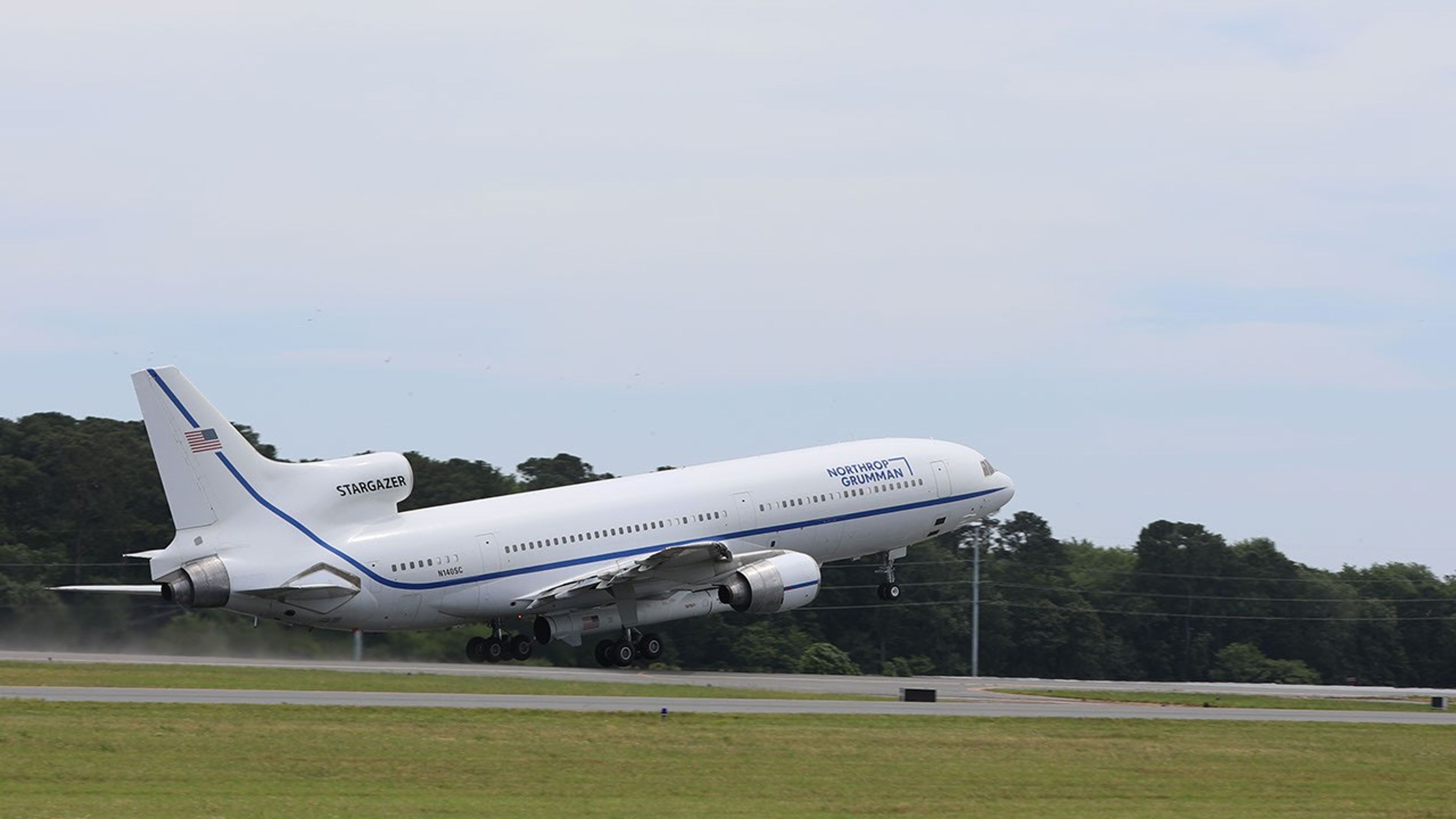
An airplane carrying a rocket loaded with a robotic spacecraft designed to raise NASA’s Neil Gehrels Swift Observatory departed the agency’s Wallops Flight Facility in Virginia on Thursday, June 18.
Stargazer, a modified L-1011 operated by Northrop Grumman, took off for Kwajalein Atoll, part of the Republic of the Marshall Islands in the South Pacific Ocean. Attached to the belly of the aircraft was one of the company’s Pegasus XL rockets with LINK inside.
NASA contracted Katalyst Space to design and build LINK to rendezvous and dock with Swift and lift it back to a higher altitude.
Spacecraft in low Earth orbit experience drag caused by our planet’s atmosphere, which gradually reduces their altitude if they do not have propulsion systems to counteract the effect.
Recent solar activity magnified this effect on Swift, which began to sink faster than anticipated.
Katalyst selected Northrop Grumman’s Pegasus XL launch vehicle as the best means of reaching Swift on a short timeline based on orbital and programmatic needs.

Later this month, Stargazer will carry the rocket to an altitude of around 40,000 feet before releasing it.
After several seconds in free-fall, Pegasus XL will fire the first of its three-stage rocket motors, delivering LINK into orbit in about 10 minutes.
Learn more about the Swift mission at:
https://science.nasa.gov/mission/swift/swift-boost-mission/
By Jeanette Kazmierczak
Goddard Space Flight Center, Greenbelt, Md.
The post Aircraft Carrying Swift Boost Satellite Takes off From NASA Wallops appeared first on NASA Science.
A single transistor that behaves like a brain cell in the deep freeze could help unlock the next generation of quantum computers and space exploration systems. Researchers at the University of Hong Kong (HKU) have developed a new type of brain-inspired electronic hardware that can operate at temperatures close to absolute zero. The breakthrough could [...]NASA’s Jet Propulsion Laboratory (JPL) has developed a 4-foot-long, four-wheeled prototype designed for high-speed, long-distance autonomous exploration on the Moon and Mars.
Dubbed Exploration Rover for Navigating Extreme Sloped Terrain (ERNEST), it underwent field tests in the Colorado Desert. The robotic rover successfully traveled 16 miles over 37 hours with minimal human intervention.
“This testing is helping us refine the mobility hardware and autonomy software to navigate extreme distances across a wide range of terrain and lighting conditions anticipated on the Moon,” said Issa Nesnas, a principal technologist at JPL.
For the last thirty years, NASA has used a mechanical setup called the “rocker-bogie” suspension system. It is the architecture behind every Mars rover from Sojourner to Perseverance that keeps their wheels grounded.
But it has some problems. Send a passive rover up a loose, sandy slope steeper than 15 degrees, and it will likely get stuck, spin its wheels, or risk a catastrophic tip-over.
The ERNEST prototype introduces an innovative active suspension system that manages its own weight distribution.
Equipped with four steerable wheels and a front-powered gimbal, the rover can navigate extreme terrain using unique gaits like squirming, wheel-walking, obstacle-climbing, and even driving sideways.
Plus, a built-in clutch mechanism allows ERNEST to switch back to a passive mode when efficient, less-demanding driving is needed, blending high-capability mobility with energy conservation.
The 4-foot-long prototype is a testbed designed to advance both robotic autonomy and extreme terrain mobility for future Moon and Mars missions.
ERNEST achieves higher speeds and longer driving distances through its enhanced independent decision-making and a unique ability to lift its individual mesh wheels over obstacles that would trap current Mars rovers.
Ultimately, these technological improvements will inform the design of next-generation rovers capable of exploring previously inaccessible, rough extraterrestrial landscapes.
During recent testing, the vehicle clocked speeds up to 0.6 mph (1 kph) over 37 hours of driving across seven days — an order of magnitude faster than the autonomous navigation speeds of Curiosity and Perseverance.
“You could do a science road trip across the Moon — or Mars — with this vehicle,” said James Keane, a JPL planetary scientist working on lunar missions.
Using reinforcement learning, computers ran thousands of hours of virtual simulations over single weekends, punishing the virtual rover with impossible physics scenarios until it learned the optimal way to climb, crawl, and survive.
The software was then loaded directly into the physical rover. Engineers took it out into the desert heat and turned it loose. ERNEST handled the rest.
The team even ran the rover through the deep, confusing shadows of dusk and dawn. This simulated the extreme lighting conditions future astronauts and robots will face at the Moon’s south pole.
Building on this success, a new project will merge ERNEST’s active suspension control with long-range intelligent navigation. This will allow the rover to plan paths, deciding when to climb surmountable obstacles and when to steer clear of major hazards.
It will help to prepare future missions for the most rugged landscapes on the Moon and Mars.

Canadian robotics company Sanctuary AI has reported a significant achievement in industrial automation.
The firm said its system achieved a task success rate of more than 99.5 percent during a complex wire-plugging task for a global Tier 1 automotive supplier.
The operation completed in 2.54 seconds, meeting the customer’s live-production benchmarks and demonstrating high-speed, reliable performance in a manufacturing setting.
Sanctuary AI said the milestone highlights its strategy of deploying Physical AI on commercial robots to speed industrial adoption and support future industrial humanoids.
The achievement reflects Sanctuary AI’s strategy of deploying its Physical AI platform on existing and next-generation industrial robotic systems, rather than waiting for widespread commercialization of humanoid robots. This hardware-agnostic approach enables the company’s AI models to operate across different robotic platforms while accelerating adoption in manufacturing environments.
Sanctuary AI demonstrated high-performance Physical AI capabilities in an industrial manufacturing environment, achieving a task success rate exceeding 99.5 percent in a complex wire-plugging operation for a global Tier 1 automotive supplier. The system completed the task with a cycle time of 2.54 seconds, matching the throughput requirements of the customer’s live production line and meeting established industrial performance benchmarks.
The deployment focused on a plug-insertion process involving flexible wire assemblies moving along a conveyor. Such tasks are particularly challenging for automation because the cables can bend, twist, and shift position dynamically during transport, requiring continuous perception, adaptation, and precise manipulation.
According to the firm, the AI-powered robotic system successfully detected, tracked, aligned, and inserted the connectors while maintaining production-line speed and reliability.
“Manipulating a flexible wire into a moving target on a live conveyor is exactly the kind of contact-rich dexterity problem that has kept tasks like this out of reach for traditional automation. Solving it required models built around performance from day one with reliability, cycle time, and safety measured against real production benchmarks,” said Olivia Norton, co-founder and CTO of Sanctuary AI, in a statement.
Sanctuary AI develops Physical AI systems designed to enable robots to perform complex tasks in real-world industrial environments. Unlike traditional industrial automation, which relies on fixed programming for repetitive operations, Sanctuary AI’s approach combines advanced perception, reasoning, and manipulation capabilities, allowing robots to adapt to changing conditions and handle tasks that require dexterity and decision-making.
The company’s Physical AI platform processes information from cameras, sensors, and robotic actuators to understand its surroundings and execute actions in real time. This enables robots to identify objects, track movement, plan motions, and manipulate components with a high degree of precision. The technology is particularly suited to manufacturing environments where variations in object position, orientation, or movement make conventional automation difficult.
A key feature of Sanctuary AI’s strategy is its hardware-agnostic design. The AI can be deployed on existing industrial robotic systems as well as future robotic platforms, reducing the need for specialized hardware. This allows manufacturers to integrate advanced AI capabilities into current production lines while preserving existing infrastructure investments.
The platform is designed to automate labor-intensive tasks, including assembly, material handling, inspection, and component insertion. By combining real-time perception, motion planning, and adaptive control, Sanctuary AI aims to help factories improve productivity, maintain consistent quality, address labor shortages, and prepare for the next generation of intelligent industrial robots.
“By focusing on a performance-first approach to Physical AI models, we’re delivering value to customers today, on an AI platform that will also scale to the next generation of general-purpose systems,” said Norton, in a statement.
Sen. Bernie Sanders has unveiled a proposal that would give Americans a direct financial stake in the country’s booming artificial intelligence industry. The Vermont independent introduced legislation Thursday that would create a national sovereign wealth fund tied to major AI companies. Under the proposal, the federal government would hold a 50% ownership stake in qualifying AI firms and distribute annual payments to U.S. citizens.
Sanders argues that today’s AI systems rely heavily on content, knowledge, and creative works produced by generations of people. Because AI companies benefit from that collective human output, he says the public should share in the industry’s financial gains. The legislation, called the American AI Sovereign Wealth Fund Act, comes as lawmakers debate how to regulate AI and address concerns about wealth concentration in the technology sector.
The proposal would apply to AI companies generating more than $200 million in annual revenue. Those firms would become subject to a system that grants the public a significant ownership interest through a federally managed investment fund. Sanders estimates the fund could reach a value of roughly $7 trillion based on current valuations of leading U.S. AI developers.
The future of AI must not be decided behind closed doors by billionaires seeking to maximize their power and profit.
— Sen. Bernie Sanders (@SenSanders) June 18, 2026
It should be decided by the American people.
That's why I'm introducing the American AI Sovereign Wealth Fund Act. pic.twitter.com/sbC0YMT90f
The senator says the structure would allow Americans to benefit directly from one of the fastest-growing industries in the economy. He projects that citizens could initially receive annual payments of around $1,000. Those payouts could increase as the AI sector expands.
Speaking to reporters, Sanders said the payments would likely grow if AI companies continue generating larger profits. He also suggested future revenue could help support public priorities such as healthcare, education, and housing.
At the center of the proposal is Sanders’ belief that AI companies derive value from information created by society as a whole. The legislation argues that AI models train on vast amounts of human-created material, including books, journalism, software code, scientific research, artwork, videos, and other forms of knowledge.
Sanders contends that a small group of technology executives now captures most of the economic benefits generated from those resources. Supporters of the measure compare AI to publicly owned natural resources. In that view, companies extracting value from a shared asset should return a portion of that wealth to the public.
The bill takes inspiration from sovereign wealth funds already operating across the United States and around the world. States such as Texas and New Mexico have long used investment funds supported by natural resource revenues to finance public programs, particularly education. Dozens of countries, including Norway, China, and the United Arab Emirates, also operate sovereign wealth funds that manage public assets and investments.
If Congress approves the legislation, a seven-member independent commission would oversee the fund. The president would nominate commissioners, while the Senate would confirm them.
The commission would represent public interests in qualifying AI companies and manage the government’s ownership stake. While the proposal faces significant political hurdles, it adds a new dimension to the growing debate over who should benefit from the economic gains created by artificial intelligence.
A Seattle-based robotics company has developed a three-foot-tall humanoid robot designed for use in public attractions and venues.
The AI-powered robot named Codey can navigate autonomously, engage in conversations without remote human control, and make independent decisions.
While not yet capable of performing complex physical tasks such as fetching objects, Codey is being developed for future roles in healthcare, education, and hospitality.
The company says the robot is designed to interact naturally with people, particularly children, in public-facing environments.
Codey is designed to serve as an interactive companion in public-facing environments. Standing about three feet tall, the robot features glowing hazel eyes, expressive facial animations, and a friendly appearance intended to engage users, particularly children.
Powered by AI, Codey can navigate autonomously, hold conversations, and make basic decisions without requiring a remote human operator. Unlike many robots that rely heavily on teleoperation, Codey is designed to function independently, enabling more natural and responsive interactions with people. The robot uses a combination of sensors, onboard computing, and AI software to understand its surroundings and communicate with users in real time.
Mind Children plans to conduct pilot studies this year in museums, hotels, and art galleries to gather data and refine Codey ahead of mass production. One of the company’s near-term objectives is to enable the robot to perform simple physical tasks, such as pressing buttons. A second-generation version of Codey is scheduled for release in 2027. To support development, Mind Children has launched a crowdfunding campaign and has raised more than $600,000 toward its $1 million funding target.
In the longer term, Codey is expected to be introduced into healthcare, education, and hospitality settings. Potential applications include assisting visitors with information, providing companionship, supporting learning activities, and helping organizations deliver more engaging customer experiences.
At the core of Mind Children’s robotics platform is Hyperon, the decentralized artificial general intelligence (AGI) framework developed by SingularityNET. The system is designed to give robots advanced cognitive capabilities that go beyond traditional rule-based automation, enabling them to reason, learn, adapt, and make decisions in dynamic real-world environments.
By integrating Hyperon into its humanoid robots, Mind Children aims to create machines capable of understanding context, processing complex information, and responding more naturally to human interactions. The framework incorporates knowledge representation, reasoning engines, and human-inspired motivation systems that help robots prioritize tasks, pursue goals, and adapt their behavior based on changing circumstances. This approach is intended to move robots closer to exhibiting flexible, human-like intelligence rather than performing only pre-programmed actions.
Unlike conventional AI systems that rely on centralized computing and data control, Hyperon operates within SingularityNET’s decentralized ecosystem. This architecture allows AI services, knowledge resources, and computational capabilities to be distributed across a network, promoting collaboration, scalability, and interoperability among different AI agents and robotic platforms.
The partnership between Mind Children and SingularityNET positions the company among the first developers pursuing embodied decentralized AGI—an emerging field that combines advanced artificial intelligence with physical robotic systems. The goal is to create autonomous robots capable of perceiving, reasoning, learning, and interacting with the physical world while continuously improving their capabilities through decentralized intelligence networks.
