More than 1.5 billion people around the world are expected to watch the 2026 FIFA World Cup finals. With so many fans carefully watching every pass, tackle and goal, referees are under enormous pressure to make the right decisions. To help them, FIFA is using advanced artificial intelligence and computer vision technology to improve the […]
The crypto platform claims you can “pay anyone to do anything,” from quitting a job on camera to getting a memecoin-themed tattoo. But it mostly seems like people trying to scam each other.
The crypto platform claims you can “pay anyone to do anything,” from quitting a job on camera to getting a memecoin-themed tattoo. But it mostly seems like people trying to scam each other.
After nearly five years of development, the team behind Earth’s Black Box has confirmed that the massive climate-recording structure will be set up in Tasmania by December 2026.
Launched by the Australian non-profit Rouser Lab in 2021, the project’s goal is to create a permanent archive of environmental data that will document humanity’s response to the climate crisis for future generations.
According to a report by The Guardian, key parts are already being assembled. The structure will be set up near a remote airfield in Tasmania, where it will run nonstop and collect data about the planet’s health.
Massive structure designed to survive disasters
Earth’s Black Box is often compared to the flight data recorders found in airplanes, but it is much bigger. The structure will be 52 feet (16 meters) long and 13 feet (4 meters) high, made from reinforced steel and concrete.
Rouser Lab says the structure is being built to handle extreme conditions. The project website states it is “designed to withstand every possible threat including cyclone, earthquake, fire, flood or attack.”
The aim is to build an archive strong enough to survive major disasters that could impact modern society. Tasmania’s remote location was chosen partly because the island is relatively stable both geologically and politically.
The facility will run on its own using a solar power system on the roof. Thirty-six solar panels, covered with toughened glass, will provide electricity for the storage systems inside.
Continuous stream of environmental records
The archive will collect and store large volumes of information from organizations worldwide. Sources will include space agencies, weather agencies, and universities that track environmental conditions and climate trends.
Information will be sent to the system via the internet and added to the project’s Vital Index. This database will hold measurements, datasets, and records that track the planet’s condition over time.
Project organizers describe the archive is a living record, not just a static collection. New information will be added all the time, building a timeline of environmental changes and how people respond.
“The purpose of the device is to provide an unbiased account of the events that lead to the demise of the planet, hold accountability for future generations, and inspire urgent action,” the Earth’s Black Box website states. “How the story ends is completely up to us.”
Five years of quiet development
Since the project was first announced, Rouser Lab has given only a few updates. Because of this long silence, some people wondered if Earth’s Black Box was mainly a symbolic effort to highlight climate issues.
Jonathan Kneebone, the group’s artistic director, recently said that a lot of work has been happening behind the scenes. He told The Guardian that the team had been “evolving the design, data storage systems, source materials, web platform—as well as developing funding models to sustain the project into the future.”
Rouser Lab calls itself an experimental environmental communications agency, not a scientific institution. Still, the group has kept working to get the project built and installed.
Questions remain about its long-term impact
The broader vision behind Earth’s Black Box is more than just saving data. Rouser Lab hopes that future civilizations will be able to look at the archive and learn from the environmental choices made today.
The organization is also working on another big idea called Climate S.O.S. This project would include a 164-foot-tall (50-meter-tall) techno-obelisk with a radio telescope meant to send a distress signal into space.
For now, Earth’s Black Box is meant to serve as what Rouser Lab describes as an “objective real-time archive for scientists, students, journalists and the public.”
It is still unclear if the installation will become a key research tool, since there are already many open climate databases around the world. Still, supporters think the large, visible structure could help bring public attention back to climate change and the long-term effects of today’s environmental choices.
Sen. Bernie Sanders has unveiled a proposal that would give Americans a direct financial stake in the country’s booming artificial intelligence industry. The Vermont independent introduced legislation Thursday that would create a national sovereign wealth fund tied to major AI companies. Under the proposal, the federal government would hold a 50% ownership stake in qualifying AI firms and distribute annual payments to U.S. citizens.
Sanders argues that today’s AI systems rely heavily on content, knowledge, and creative works produced by generations of people. Because AI companies benefit from that collective human output, he says the public should share in the industry’s financial gains. The legislation, called the American AI Sovereign Wealth Fund Act, comes as lawmakers debate how to regulate AI and address concerns about wealth concentration in the technology sector.
Public stake in AI
The proposal would apply to AI companies generating more than $200 million in annual revenue. Those firms would become subject to a system that grants the public a significant ownership interest through a federally managed investment fund. Sanders estimates the fund could reach a value of roughly $7 trillion based on current valuations of leading U.S. AI developers.
The future of AI must not be decided behind closed doors by billionaires seeking to maximize their power and profit.
The senator says the structure would allow Americans to benefit directly from one of the fastest-growing industries in the economy. He projects that citizens could initially receive annual payments of around $1,000. Those payouts could increase as the AI sector expands.
Speaking to reporters, Sanders said the payments would likely grow if AI companies continue generating larger profits. He also suggested future revenue could help support public priorities such as healthcare, education, and housing.
Collective value argument
At the center of the proposal is Sanders’ belief that AI companies derive value from information created by society as a whole. The legislation argues that AI models train on vast amounts of human-created material, including books, journalism, software code, scientific research, artwork, videos, and other forms of knowledge.
Sanders contends that a small group of technology executives now captures most of the economic benefits generated from those resources. Supporters of the measure compare AI to publicly owned natural resources. In that view, companies extracting value from a shared asset should return a portion of that wealth to the public.
Model draws from funds
The bill takes inspiration from sovereign wealth funds already operating across the United States and around the world. States such as Texas and New Mexico have long used investment funds supported by natural resource revenues to finance public programs, particularly education. Dozens of countries, including Norway, China, and the United Arab Emirates, also operate sovereign wealth funds that manage public assets and investments.
If Congress approves the legislation, a seven-member independent commission would oversee the fund. The president would nominate commissioners, while the Senate would confirm them.
The commission would represent public interests in qualifying AI companies and manage the government’s ownership stake. While the proposal faces significant political hurdles, it adds a new dimension to the growing debate over who should benefit from the economic gains created by artificial intelligence.
On today’s Uncanny Valley, we dive into the dysfunction in Meta’s newly formed AI unit and why it’s been driving already-low employee morale even further into the ground.
On today’s Uncanny Valley, we dive into the dysfunction in Meta’s newly formed AI unit and why it’s been driving already-low employee morale even further into the ground.
For thousands of years, farmers have prepared their fields for planting by overturning the soil. It helps them the manage the moisture, nutrients and flow of air underfoot. But modern farming’s deep plowing and heavy machinery often do more harm than good, researchers report.
All that soil turnover disrupts the natural paths that water takes to percolate into the root zone. And this is not a problem just for growing crops. Breaking down the network of pores that water wants to move through also makes the soil less resilient to flooding and drought. So concludes a team of scientists in the April 16 Science.
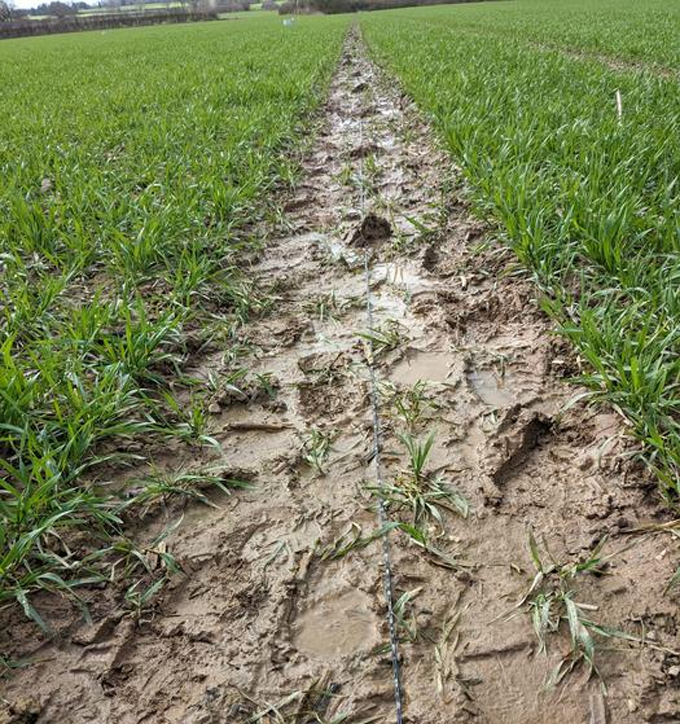
A fiber-optic cable, here laid along the relatively bare soil, was able to pick up tiny seismic signals. They’d been triggered by the movement of rainwater in the soil below.Marine Denolle
Qibin Shi is a geophysicist with the Chinese Academy of Sciences in Beijing. He was part of a team that fashioned a dense array of sensors out of fiber-optic cables. Such cables find use in more than just high-speed internet. They also can become powerful tools for seismology — and not just for earthquakes. They’re proving sensitive enough to detect even the tiny vibrations triggered as water moves through soil.
Shi’s group installed these cables along the edges of 27 plots of land at a university test farm in Newport, England. The plots were treated one of three ways. Nine went unplowed. Another nine were tilled to a depth of 10 centimeters (4 inches). The last nine were turned over to a depth of 25 centimeters (almost 10 inches). Within each group, plowing machinery of different weights were used. Why? The heavier they are, they more they can compact the soil.
For three days in March 2023, the team used its seismic-sensing system to track how the plots responded to rain. Rainwater didn’t seep down much on plots with the most compacted and deeply plowed soil. Instead, it tended to pool near the surface. Here, it could evaporate swiftly once the sun came out.
Water moved down and around more easily in the plots that were less compacted and less deeply plowed.
To understand what was happening, Shi’s team created a computer program that modeled the water’s movements. Rain, they found, moves through porous soil in a way that sort of mimics what happens to blood in capillaries — the body’s tiniest blood vessels. This process is known as capillary action.
Scientists used fiber-optic cables to study how turning over the soil in spring will affect rainwater’s ability to infiltrate the soil at this research site in Newport, England.Marine Denolle/University of Washington
Like our capillaries, the tiny, tunnel-like airways between specks of soil are very thin. Gravity does not drive water’s flow through these holes. Instead, as water tries to alternately adhere to soil particles and bind to other water molecules, it gets caught in a push-pull action. And that moves it. When those narrow pathways get disturbed or crushed, however, the suction forces strengthen, impairing the water’s flow.
Fiber-optic sensing could offer farmers a quick and inexpensive way to monitor soil moisture on a large scale, Shi’s team says. Such monitoring also could provide real-time warnings of natural hazards, such as flooding and soil liquefaction during an earthquake (when saturated ground can suddenly turn unstable due to shaking).
We're about six weeks out from the debut of Spider-Man: Brand New Day, the follow-up to 2021’s No Way Home. It's been five years since Spidey graced the big screen, so naturally, Sony Pictures has released a new trailer to build audience anticipation.
(Spoilers for No Way Home below.)
No Way Homeended on a pretty bleak note, with Peter Parker (Tom Holland) asking Doctor Strange (Benedict Cumberbatch) to erase him from everyone’s memory to protect the multiverse, including MJ (Zendaya).
From Amazon’s Off Campus to Netflix’s upcoming Icebreakers, the recent spate of hetero hockey romances shows Hollywood learned the wrong lessons from Heated Rivalry.

 Login