 Login
How Artificial Intelligence Is Changing Content Creation and Research
16 June 2026 at 21:30
Artificial intelligence has moved from a distant idea into daily work. Writers use it to draft outlines. Marketers

In a groundbreaking advancement that could reshape the landscape of bioelectronic medicine, researchers have developed a wirelessly powered, bioresorbable electrical stimulation system with unprecedented programmable control over stimulation waveforms. This innovation integrates tissue-penetrating near-infrared (NIR) light to modulate electrical currents with precision, harnessing a novel bioresorbable silicon phototransistor as the cornerstone of its operation. Pioneering beyond earlier monophasic pulse devices, this technology allows for the delivery of monophasic, biphasic, and polyphasic stimulation patterns, significantly enhancing the versatility and therapeutic potential of implantable electrical stimulators designed to dissolve harmlessly after use.
Traditional electrical stimulators implanted in biological tissues have largely relied on wired connections or bulky batteries, impeding patient mobility and often necessitating additional surgeries for device removal. Bioresorbable devices emerged as a solution to these challenges by safely degrading in the body over time, eliminating the risks associated with permanent implants. However, these earlier systems primarily delivered monophasic pulses, limiting therapeutic precision and adaptability in complex treatments. The innovation reported by Kim, Seo, Wang, and colleagues introduces a new paradigm by integrating wireless power transfer via NIR light and programmable waveform control within a fully bioresorbable platform, thus extending the functional range and easing the clinical management of bioelectronic therapies.
Central to this system is the incorporation of bioresorbable silicon phototransistors engineered to serve as optoelectronic modulators within the electrical circuitry. When illuminated by externally applied near-infrared light that penetrates deep into biological tissues, these phototransistors effectively adjust current flows at critical circuit nodes. This optical modulation capability replaces conventional electronic control elements, which often rely on persistent power sources or invasive wiring, thereby enabling the device to operate autonomously while still allowing fine-tuning of stimulation parameters through non-contact optical inputs.
The adoption of near-infrared light as the wireless power and control mechanism is particularly significant. NIR light possesses the ability to penetrate through several centimeters of tissue without causing damage, providing a safe and efficient transmission channel between the external controller and the implanted device. This feature supports programmability in situ, empowering clinicians to tailor electrical stimulation waveforms dynamically after device implantation. Precisely controlling the shape, amplitude, and timing of the electrical pulses is crucial for optimizing therapeutic outcomes in applications such as neuroregeneration and cardiac pacing.
The research team demonstrated the remarkable versatility of their bioresorbable system by successfully delivering a variety of stimulation waveforms. Monophasic pulses, which are unidirectional current flows, serve as a baseline therapy. More complex biphasic and polyphasic waveforms, which alternate current direction and comprise multiple phases respectively, have been shown to minimize tissue damage and improve efficacy in various biosignaling contexts. The ability to generate these sophisticated patterns expands the therapeutic range of the device, potentially enabling treatments that were previously inaccessible using bioresorbable technologies.
In demonstrating practical utility, the device was tested in both small and large animal models, validating its capacity for clinically relevant electrical stimulation regimes. The system was effectively employed in single- and dual-chamber cardiac pacing, a critical intervention for managing arrhythmias and heart block. Through controlled electrical stimulation, the device could synchronize cardiac contractions, a feat crucial for restoring efficient cardiac output. These trials highlight the translational potential of the technology for future human applications, situating it as a promising alternative to current electronic pacemakers that require permanent implantation and battery replacements.
Further extending the functional scope, the researchers utilized the bioresorbable stimulator to activate phrenic neuromuscular pathways to either induce or block diaphragmatic movements. The phrenic nerve controls diaphragmatic excursion, essential for respiration, and its modulation has significant implications for respiratory therapies, such as in patients with spinal cord injuries or central hypoventilation syndromes. By enabling wireless, programmable neurostimulation of the phrenic nerve, the technology offers a minimally invasive approach to manage life-sustaining respiratory functions, with the added benefit of device degradation after the therapeutic window.
The bioresorbable nature of the silicon phototransistors and associated electronics assures that after fulfilling their therapeutic role, the devices gradually dissolve into biocompatible byproducts. This process circumvents the complications related to device explantation surgeries, reducing patient risk and healthcare costs. Moreover, the materials chosen minimize inflammatory responses and tissue irritation, facilitating seamless integration with host biology during the operational phase.
The engineering behind this system represents an intersection of materials science, optoelectronics, and biomedical engineering. The architecture leverages the semiconducting properties of silicon in thin-film, bioresorbable form, combined with circuit design optimized for minimal power consumption and maximal efficiency during NIR irradiation. These multidisciplinary innovations collectively overcome longstanding barriers in the fabrication of transient electronic implants capable of sophisticated programmable functionality.
Controlling the stimulation waveforms via light permits remote adjustment without physical connections, paving the way for real-time therapeutic modulation responsive to patient status or physiological signals. Future iterations could incorporate feedback mechanisms by integrating bioresorbable sensors that monitor tissue response, creating closed-loop systems for personalized medicine. This dynamic adaptability could be transformative in managing chronic conditions requiring variable and responsive electrical stimulation protocols.
This research also addresses one of the fundamental challenges of implantable devices: power delivery. The optical wireless power transfer circumvents the need for bulky batteries or explant procedures, offering renewed device miniaturization potential. Coupled with programmable phototransistors, these innovations enable multifunctional implants that conform to soft tissues and degrade harmlessly, a trifecta crucial for implantation in sensitive organs like the heart and nervous system.
The ability to deliver polyphasic waveforms through a single bioresorbable receiver unit is particularly noteworthy. Conventionally, generating these complex waveforms requires sophisticated circuitry and stable power sources, neither of which are trivial to implement in resorbable devices. The research showcases how optical control unlocks this capability without sacrificing bioresorbability or wireless operation, representing a paradigm shift in transient biomedical electronics.
The successful application of this device in large animal cardiac models bridges a critical gap toward clinical translation. Such models replicate human physiological scales and complexities far more closely than small animals, validating both the efficacy and safety of the system under conditions analogous to human therapies. This demonstration is an essential milestone on the path toward human clinical trials and eventual regulatory approval.
Moreover, the phrenic nerve stimulation experiments illustrate the broader applicability beyond cardiac pacing. Neuromuscular control via electrical stimulation has vast clinical relevance, from restoring motor function to modulating organ systems. The biodegradable, wireless nature of this system makes it especially suited for temporary therapeutic interventions, such as post-surgical recovery or transient disease states, where permanent implants would be unnecessary or undesirable.
While this work represents a major leap forward, ongoing challenges remain, including further optimization of device longevity relative to treatment durations, refinement of light delivery systems to maximize tissue penetration and minimize off-target effects, and integration with advanced biocompatible materials to tailor resorption timelines. Addressing these will be key to broadening the range of clinical applications and ensuring patient safety across diverse scenarios.
Overall, this wirelessly powered, light-controlled, bioresorbable stimulation system emerges as a versatile platform poised to transform bioelectronic therapies. Its elegant combination of programmable polyphasic waveform delivery, wireless operation via near-infrared light, and full bioresorbability addresses critical limitations of current implantable stimulators. By enabling sophisticated, minimally invasive, and transient electrical stimulation paradigms, this technology advances the frontiers of regenerative medicine, cardiac therapy, and neuromodulation, marking a significant milestone in the evolution of biomedical devices.
Subject of Research: Wireless bioresorbable electrical stimulation device with programmable waveform control using near-infrared light
Article Title: A wirelessly powered, light-controlled, bioresorbable stimulation system with programmable polyphasic waveforms
Article References:
Kim, J.U., Seo, S.G., Wang, H. et al. A wirelessly powered, light-controlled, bioresorbable stimulation system with programmable polyphasic waveforms. Nat Electron (2026). https://doi.org/10.1038/s41928-026-01655-8
Image Credits: AI Generated
DOI: https://doi.org/10.1038/s41928-026-01655-8
In an ambitious new study published in the Journal of Exposure Science and Environmental Epidemiology, researchers report compelling evidence linking long-term exposure to outdoor air pollution with an increased risk of ovarian and endometrial cancers. This groundbreaking investigation harnesses a large prospective cohort to unravel the intricate relationship between environmental pollutants and gynecologic malignancies, offering a critical perspective on public health implications that extend far beyond respiratory diseases.
Air pollution has long been recognized as a major contributor to cardiovascular and respiratory conditions, but its potential carcinogenic effects on reproductive organs have remained underexplored. The study conducted by Ammons, Fisher, Madrigal, and colleagues seeks to fill this gap by focusing on two of the most common gynecologic cancers – ovarian and endometrial cancer – and evaluating the impact of chronic exposure to ambient air pollutants. By analyzing data from thousands of participants over an extended period, the researchers embarked on an epidemiologic journey to quantify risks associated with particulate matter and other airborne toxins.
The cohort employed in this study includes a diverse population sampled across multiple geographic regions, allowing researchers to capture variations in pollution levels and their corresponding cancer incidences. Utilizing cutting-edge exposure assessment techniques, the team mapped pollutant concentrations at individual residences with unprecedented accuracy. These methods integrated satellite data, ground-level monitors, and atmospheric modeling to deliver robust, spatially resolved exposure metrics. Such advances surpass prior limitations inherent in ecological and self-reported exposure assessments, lending unprecedented credibility to the findings.
Delving into the biological plausibility of how air pollution could influence the pathogenesis of ovarian and endometrial cancers, the researchers propose several mechanistic pathways. Persistent exposure to fine particulate matter (PM2.5) and polycyclic aromatic hydrocarbons (PAHs) may induce systemic inflammation, oxidative stress, and hormonal dysregulation. These factors could disrupt the delicate microenvironment of reproductive tissues, promoting DNA damage, aberrant cell signaling, and ultimately malignant transformation. The findings echo mounting laboratory evidence that airborne pollutants can act as endocrine disruptors, complicating hormonal balance crucial for gynecologic health.
Statistical analyses revealed that the risk for endometrial and ovarian cancers escalates in tandem with pollutant concentration levels. Notably, women residing in urban areas with higher vehicular emissions and industrial activities exhibited significantly greater cancer risks compared to those in less polluted settings. After adjusting for known confounders such as age, BMI, smoking status, and reproductive history, the association remained robust, underscoring the independent contribution of chronic air pollution exposure to cancer pathogenesis.
Importantly, this research highlights a disproportionately higher vulnerability among subgroups, including postmenopausal women and those with pre-existing metabolic disorders. These populations may experience exacerbated inflammatory responses or impaired detoxification pathways, amplifying carcinogenic potential. Such differential susceptibility underscores the urgency for targeted interventions and personalized public health strategies to mitigate the undue burden of pollution-induced cancers.
Beyond its epidemiological insights, the study calls attention to the glaring disparities in environmental exposures driven by socioeconomic and racial factors. Marginalized communities situated near highways, factories, and waste sites confront a compounded risk landscape for gynecologic cancers due to cumulative environmental and social stressors. Addressing these inequities demands integrated policy responses encompassing urban planning, emission regulation, and healthcare accessibility.
From a preventive medicine standpoint, these findings compel a re-evaluation of current cancer risk models and screening guidelines to incorporate environmental exposure metrics. Recognizing air pollution as a modifiable risk factor opens avenues for novel primary prevention strategies including community-level emission reductions, green space expansion, and personal behavior modifications. Public awareness campaigns and healthcare provider education must integrate these environmental determinants to holistically address cancer prevention.
Moreover, the study’s prospective cohort design strengthens the causal inference between pollution and cancer development, circumventing biases typical of retrospective analyses. Continuous monitoring and follow-up of the cohort will enable future research to delineate critical exposure windows, dose-response relationships, and potential synergistic effects with other carcinogens. Such longitudinal data is vital for refining risk assessments and tailoring interventions.
The multidisciplinary collaboration driving this research showcases the essential convergence of epidemiology, environmental science, oncology, and biostatistics in addressing complex health challenges. It underscores the power of leveraging big data and sophisticated modeling to uncover subtle yet impactful health hazards lurking within everyday environments. The authors advocate for sustained funding and cross-sector partnerships to expand these investigations globally, given the universal prevalence of air pollution.
As air quality deteriorates worldwide amidst urbanization and industrial growth, this study serves as a timely warning of the hidden costs borne by women’s health. It challenges policymakers, scientists, and clinicians alike to rethink environmental determinants as integral components of cancer etiology and control. The evidence presented marks a significant stride toward recognizing air pollution not only as a respiratory threat but also as a stealthy contributor to oncologic morbidity.
Crucially, these findings could galvanize international efforts to adhere to stricter air quality standards and accelerate transitions to clean energy sources. Reducing exposure to harmful pollutants would yield multifaceted benefits including diminishing cancer risks, improving cardiovascular health, and enhancing overall quality of life. The research invites a paradigm shift wherein environmental stewardship aligns squarely with cancer prevention goals.
In conclusion, the pioneering work by Ammons and colleagues elucidates how invisible toxins permeating the air we breathe insidiously influence the development of ovarian and endometrial cancers. Their rigorous approach and comprehensive analyses illuminate a previously underrecognized dimension of cancer risk, compelling a broad re-examination of environmental health policies and clinical practices. As the global burden of cancer continues to rise, addressing modifiable environmental exposures emerges as an indispensable frontier in safeguarding women’s health for generations to come.
Subject of Research: Long-term outdoor air pollution exposure and its association with ovarian and endometrial cancer risk.
Article Title: Long-term outdoor air pollution and risk of ovarian and endometrial cancers in a large prospective cohort.
Article References:
Ammons, S., Fisher, J.A., Madrigal, J.M. et al. Long-term outdoor air pollution and risk of ovarian and endometrial cancers in a large prospective cohort. J Expo Sci Environ Epidemiol (2026). https://doi.org/10.1038/s41370-026-00901-7
Image Credits: AI Generated
DOI: 10.1038/s41370-026-00901-7 (15 June 2026)
In recent years, the global medical community has observed an alarming rise in the incidence of congenital hypothyroidism (CH), a condition characterized by insufficient thyroid hormone production in newborns. This endocrine disorder, if undiagnosed or untreated, can lead to profound developmental delays and intellectual disabilities. Against this backdrop, a landmark study published in Pediatric Research sheds new light on the long-term administration and cessation patterns of levothyroxine—a synthetic thyroid hormone replacement—in patients assumed to have CH. This nationwide cohort investigation, spanning over a decade, provides unprecedented insights into treatment paradigms and patient management on a population scale.
The study meticulously tracked levothyroxine usage across a broad demographic, encompassing thousands of newborns clinically suspected of congenital hypothyroidism. Using comprehensive health databases, researchers were able to delineate initiation rates, dosage adjustments, duration of therapy, and the critical junctures at which discontinuation occurs. They highlight how early diagnosis, often through neonatal screening programs, has revolutionized patient outcomes but also raised new questions regarding optimal treatment length and criteria for safely discontinuing therapy.
One of the foundational aspects explored in this investigation is the temporal trend of levothyroxine initiation. The data convincingly demonstrate a marked increase in the frequency of diagnoses and subsequent treatment initiation over the 10-year observation period. This escalation aligns with heightened screening sensitivity and revised diagnostic thresholds, suggesting that what was once considered atypical or borderline hypothyroidism is now more frequently targeted for intervention. Such shifts bring about complex clinical decisions around the balance between necessary hormone supplementation and potential overtreatment.
In delineating the course of levothyroxine administration, the study underscores that a significant subset of patients undergoes treatment discontinuation, reflecting evolving clinical judgments based on follow-up evaluations. These discontinuations often result from confirmatory testing that challenges the initial diagnosis or reveals transient hypothyroidism, a condition that resolves spontaneously without lifelong hormone dependency. Understanding when and how to discontinue therapy safely remains a cornerstone in preventing unnecessary treatment burden and its accompanying risks.
Moreover, the investigation probes into the demographic and clinical determinants influencing levothyroxine discontinuation. Variables such as age at diagnosis, initial thyroid function test results, and the presence of thyroid dysgenesis or dyshormonogenesis significantly sway therapeutic decisions. The study’s granular stratification reveals that patients with milder biochemical abnormalities or transient hypothyroidism are more likely to cease treatment within the first few years of life, emphasizing the importance of individualized care pathways.
Intriguingly, the analysis also touches upon the challenges in differentiating permanent congenital hypothyroidism from transient cases during the neonatal period. These diagnostic ambiguities are amplified by biochemical fluctuations, maternal thyroid conditions, and environmental factors such as exposure to iodine or goitrogens. The study’s extensive dataset allows for a nuanced understanding of these confounders, paving the way for refined diagnostic algorithms and personalized monitoring protocols.
The ramifications of sustained levothyroxine therapy extend beyond hormone replacement; they encompass metabolic, cardiovascular, and neurodevelopmental domains, especially if treatment is misaligned with the patient’s true thyroid status. Over-replacement can lead to iatrogenic thyrotoxicosis, while under-treatment perpetuates hypothyroid sequelae. This cohort study underscores the imperative for vigilant clinical and biochemical monitoring, leveraging advances in assay technologies and genetic profiling to tailor interventions precisely.
From a public health perspective, the rising levothyroxine use in presumed CH presents implications for healthcare resource allocation, long-term follow-up infrastructure, and parental counseling. National screening programs must adapt to integrate not only early detection but also robust tracking systems that ascertain treatment necessity, effectiveness, and safety over time. This study’s nationwide scope lends critical data to guide policy refinements and equity considerations in thyroid disease management.
Furthermore, the researchers advocate for a paradigm shift towards dynamic therapeutic frameworks, where treatment initiation is complemented by scheduled re-evaluations to determine the persistence of hypothyroidism. By promoting trial discontinuations under strict supervision, clinicians can limit unnecessary exposure to levothyroxine, thereby mitigating potential adverse effects and preserving health system sustainability.
Equally important, the study highlights gaps in current clinical guidelines, which often lack consensus on precise criteria for levothyroxine cessation. These ambiguities contribute to variability in practice and patient outcomes. The authors call for concerted efforts among endocrinologists, neonatologists, and healthcare policymakers to develop evidence-based protocols informed by longitudinal data such as theirs.
In terms of methodology, the utilization of expansive health claims and prescription data validates the reliability and real-world applicability of the findings. The analytical approach, employing survival analysis and multivariate regression modeling, unravels complex patterns of drug utilization and discontinuation, while adjusting for confounding factors. This rigorous epidemiological framework sets a benchmark for future pharmacoepidemiological research in pediatric endocrinology.
It is also noteworthy that the study addresses psychosocial dimensions indirectly, recognizing that parents and caregivers play pivotal roles in adherence and decision-making regarding levothyroxine therapy. Long-term treatment regimens can strain families emotionally and financially, underscoring the need for supportive care models and transparent communication strategies.
The implications of the rising incidence of CH—and correspondingly, levothyroxine use—also evoke considerations about environmental and genetic influences driving this trend. Although not the primary focus, the comprehensive data collected may inspire ancillary investigations into prenatal exposures, epigenetic modifications, and population-based genetic predispositions contributing to this public health challenge.
Ultimately, this landmark investigation by Kim, Woo, Lee, and colleagues portrays a nuanced portrait of levothyroxine use in presumed congenital hypothyroidism, emphasizing the dual imperatives of timely treatment and judicious discontinuation. Their ten-year nationwide cohort analysis unearths critical trends that will undoubtedly inform clinical practice, guideline development, and health policy designed to optimize outcomes for affected infants and children worldwide.
As pediatric endocrinology advances, the insights gleaned from this study serve as a timely reminder of the complexity underlying ostensibly straightforward diagnoses. The nuanced interplay between biochemical parameters, diagnostic certainty, patient heterogeneity, and long-term treatment strategies requires clinicians to balance evidence-based medicine with individualized care. This study not only contributes pivotal epidemiological evidence but also catalyzes a re-examination of management philosophies in congenital hypothyroidism.
In conclusion, the increasing incidence of congenital hypothyroidism and the corresponding escalation in levothyroxine use illuminate a critical area for continued research and healthcare innovation. The ten-year nationwide cohort study effectively captures the evolving landscape of diagnosis, treatment, and discontinuation, reinforcing the need for integrated multidisciplinary approaches. By fostering personalized medicine approaches grounded in large-scale data analysis, healthcare systems can aspire toward improved thyroid health in newborns and beyond.
Subject of Research: Use and discontinuation patterns of levothyroxine treatment in patients with presumed congenital hypothyroidism over ten years in a nationwide cohort.
Article Title: Levothyroxine use and discontinuation in presumed congenital hypothyroidism: a 10-year nationwide cohort study.
Article References:
Kim, S.Y., Woo, H.A., Lee, E.H. et al. Levothyroxine use and discontinuation in presumed congenital hypothyroidism: a 10-year nationwide cohort study. Pediatr Res (2026). https://doi.org/10.1038/s41390-026-05153-7
Image Credits: AI Generated
DOI: 16 June 2026


When a whale dies, a very special natural phenomenon can come alive. The carcass might float at the surface for some time, attracting sharks and other predators. As it becomes weathered, it may start to sink, falling through the water until it eventually settles on the seafloor, where deep-sea scavengers feast upon it. The scientific […]
The post A 5.3-million‑year‑old whale graveyard has been found on the floor of the Indian Ocean appeared first on Knowridge Science Report.
The aftermath of a supernova, a stellar explosion, is usually a slowly fading cloud of hot gas. So when astronomers pointed NASA’s Chandra X-ray Observatory at the nearby galaxy Messier 83 (M83), they did not expect to find a population of supernova remnants, or the debris from these explosions, showing dramatic changes in their brightness. The new results were presented at the American Astronomical Society meeting in Pasadena, California, and published in The Astrophysical Journal.
The galaxy M83, located about 15 million light-years from Earth, is forming stars at a high rate. Researchers analyzed 14 years of Chandra data of the galaxy, spanning 2000 to 2014.
Using this extensive set of data, the researchers caught surprising variations in the X-ray brightness of sources previously identified as supernova remnants. The researchers expected supernova remnants older than a century or so to fade gradually in X-rays, but not change dramatically in brightness.
The team found that roughly half of the 22 X-ray sources associated with supernova remnants in their sample showed changes in X-ray brightness over the 14-year span of observations — a result that was completely unexpected.
“We knew that individual X-ray sources could vary dramatically,” said Andrea Prestwich, of the Catholic University of America who led the study. “But finding that so many supernova remnants were behaving this way was a real surprise. Something unusual is going on in these objects. Pinpointing the cause remains a challenge, as M83’s distance limits the detail we can observe.”
One of the 22 variable supernova remnants has a straightforward explanation: SN 1957D, the debris from a supernova first observed nearly 70 years ago, is ramming into material surrounding the explosion site, producing the observed X-ray flares. But this cannot explain the rest of the sample. There is no evidence to suggest that all 22 remnants were formed within the last century. Something else must be driving the variability.
The most likely explanation is that the team has uncovered a population of stellar survivors stars that lived through their partner’s destruction in a supernova explosion. In this scenario, each variable X-ray source began as a pair of massive stars orbiting each other. The more massive star collapsed and exploded as a supernova, leaving behind a black hole or ultra-dense neutron star. Its companion survived.
“It may be that this galaxy contains a collection of supernova remnants where one massive star survives the supernova and becomes locked into an orbit with a black hole or neutron star,” said co-author Michael McCollough of the Center for Astrophysics | Harvard & Smithsonian (CfA). “The neutron star or black hole can then start pulling material from the massive star’s surface.”
That infalling material is superheated by the intense gravitational pull, producing the X-rays Chandra detects. These types of systems, known as high-mass X-ray binaries (HMXBs), are among the most variable X-ray sources in the universe. Researchers say they may be the cause of the variations seen in M83’s supernova remnants.
Astronomers have known about HMXBs for decades, but the difference with this group in M83 is their connection to supernova remnants. Previously, only a handful of supernova remnants associated with HMXBs had been identified across observations of all galaxies. It is unprecedented to find more than 20 strong candidates in just one galaxy.
The authors found that the variable supernova remnants are in regions with higher concentrations of massive stars than in other parts of the galaxy, increasing the chances of a link between the remnants and HMXBs.
There is another possible explanation: Instead of pulling in material from a companion star, the black hole or neutron star may be recapturing some of the material blasted outward by the original explosion.
“This could be an example of cosmic recycling, where debris from the explosion falls back onto the very object the supernova created,” said co-author Roy Kilgard of Wesleyan University. “And it’s quite possible that both explanations are at play — different sources in our sample may have different origins.”
These results are not unique to M83. A follow-up study of the nearby star-forming galaxy M51 by Zoe Hoiland of Vassar College and Kilgard has uncovered a similar population of variable X-ray sources associated with supernova remnants, suggesting that such systems may be a feature of galaxies undergoing vigorous star formation.
The Chandra data for M83 began with single observations in 2000 and 2001, followed by 10 observations from 2010 to 2011 and another observation in 2014.
NASA’s Marshall Space Flight Center in Huntsville, Alabama, manages the Chandra program. The Smithsonian Astrophysical Observatory’s Chandra X-ray Center controls science operations from Cambridge, Massachusetts, and flight operations from Burlington, Massachusetts.
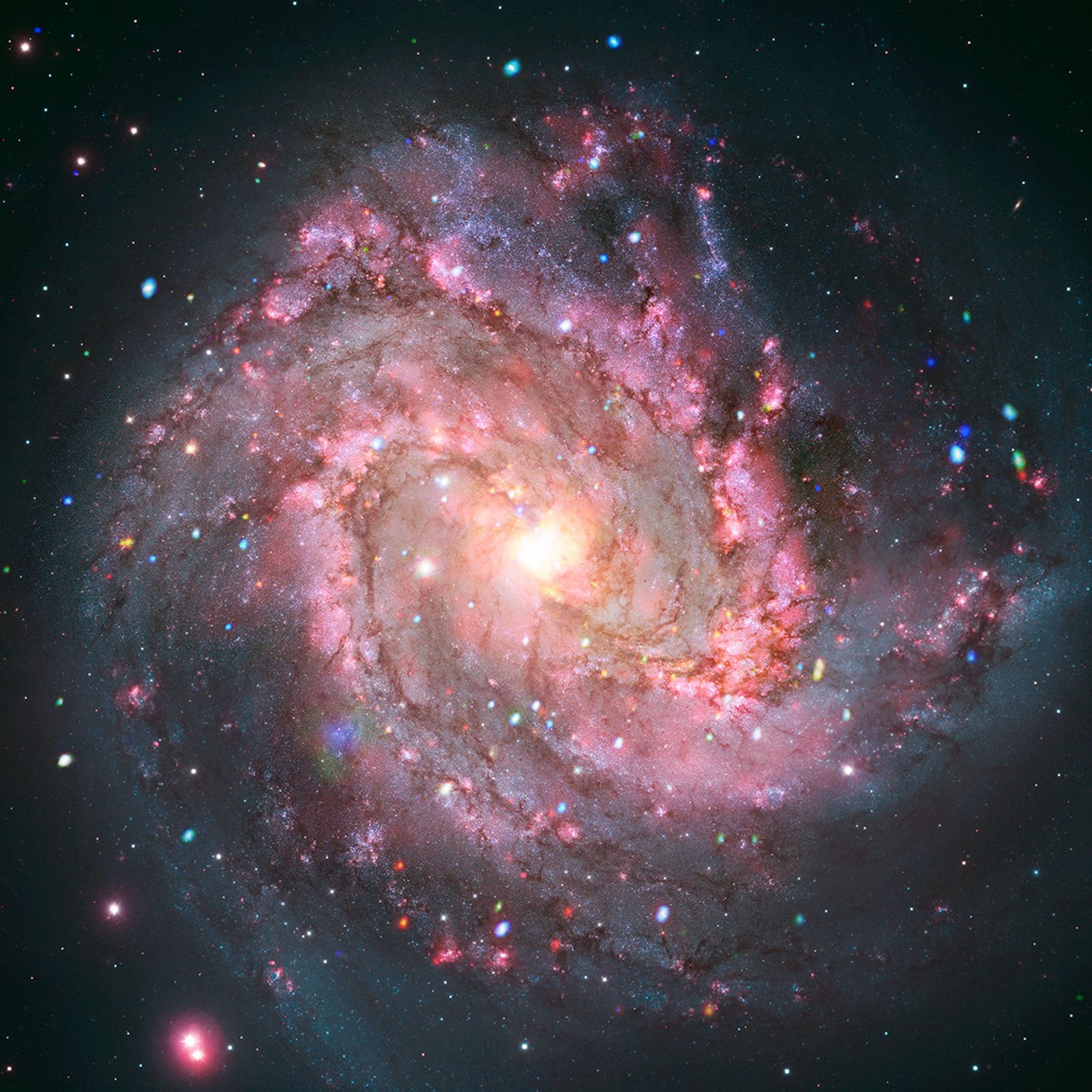
This release features a composite image of the nearby galaxy Messier 83, and short timelapse videos of two curious supernova remnants hidden inside.
In the composite image, Messier 83, or M83, is shown to have a spiral structure, viewed straight on. At the center is a brilliant white and yellow pool of light. From that light, spiral arms of hot pink cloud corkscrew out in wide, sweeping arches. The galaxy is covered in a faint grey haze, and flecked with red, green, blue, white, and yellow dots.
In an annotated version of the composite image, two tiny dots to our lower right of center are highlighted by white circles. These are two of the supernova remnants being considered by researchers. Each is examined further in a separate timelapse video.
Over a 14-year period from 2000 to 2014, astronomers pointed NASA’s X-ray observatory at the M83 galaxy. They discovered that about half of the X-ray sources believed to be supernova remnants, the aftermath of stellar explosions, were exhibiting dramatic changes in brightness. This result was entirely unexpected.
Those changes in brightness are highlighted in the timelapse videos. In each video, a series of static images flashes by, focused on one of the two X-ray sources once believed to be supernova remnants. In the videos, the X-ray sources appear as bright blue blobs with glowing cores. But in each image, taken months or years apart, the shapes change, as does the intensity of the blue color, and the brightness of the core. By presenting the substantively different images of the same objects one after another in quick succession, short timelapse videos are created.
The most likely explanation for the changes in brightness is that the team has uncovered a population of stellar survivors, stars that lived through an orbiting partner’s destruction in a supernova explosion. Material is being pulled from the surviving star onto the black hole or neutron star that formed in the supernova, a process known to cause rapid changes in X-ray brightness.
Read more from NASA’s Chandra X-ray Observatory
To learn more about NASA’s Chandra mission, visit:
https://science.nasa.gov/chandra
Megan Watzke
Chandra X-ray Center
Cambridge, Mass.
617-496-7998
mwatzke@cfa.harvard.edu
Joel Wallace
Marshall Space Flight Center, Huntsville, Alabama
256-544-0034
joel.w.wallace@nasa.gov
The Chandra X-ray Observatory is the world’s most powerful X-ray telescope.
Webb is the premier observatory of the next decade, serving thousands of astronomers worldwide. It studies every phase in the…
Since its 1990 launch, the Hubble Space Telescope has changed our fundamental understanding of the universe.
Universe
The aftermath of a supernova, a stellar explosion, is usually a slowly fading cloud of hot gas. So when astronomers pointed NASA’s Chandra X-ray Observatory at the nearby galaxy Messier 83 (M83), they did not expect to find a population of supernova remnants, or the debris from these explosions, showing dramatic changes in their brightness. The new results were presented at the American Astronomical Society meeting in Pasadena, California, and published in The Astrophysical Journal.
The galaxy M83, located about 15 million light-years from Earth, is forming stars at a high rate. Researchers analyzed 14 years of Chandra data of the galaxy, spanning 2000 to 2014.
Using this extensive set of data, the researchers caught surprising variations in the X-ray brightness of sources previously identified as supernova remnants. The researchers expected supernova remnants older than a century or so to fade gradually in X-rays, but not change dramatically in brightness.
The team found that roughly half of the 22 X-ray sources associated with supernova remnants in their sample showed changes in X-ray brightness over the 14-year span of observations — a result that was completely unexpected.
“We knew that individual X-ray sources could vary dramatically,” said Andrea Prestwich, of the Catholic University of America who led the study. “But finding that so many supernova remnants were behaving this way was a real surprise. Something unusual is going on in these objects. Pinpointing the cause remains a challenge, as M83’s distance limits the detail we can observe.”
One of the 22 variable supernova remnants has a straightforward explanation: SN 1957D, the debris from a supernova first observed nearly 70 years ago, is ramming into material surrounding the explosion site, producing the observed X-ray flares. But this cannot explain the rest of the sample. There is no evidence to suggest that all 22 remnants were formed within the last century. Something else must be driving the variability.
The most likely explanation is that the team has uncovered a population of stellar survivors stars that lived through their partner’s destruction in a supernova explosion. In this scenario, each variable X-ray source began as a pair of massive stars orbiting each other. The more massive star collapsed and exploded as a supernova, leaving behind a black hole or ultra-dense neutron star. Its companion survived.
“It may be that this galaxy contains a collection of supernova remnants where one massive star survives the supernova and becomes locked into an orbit with a black hole or neutron star,” said co-author Michael McCollough of the Center for Astrophysics | Harvard & Smithsonian (CfA). “The neutron star or black hole can then start pulling material from the massive star’s surface.”
That infalling material is superheated by the intense gravitational pull, producing the X-rays Chandra detects. These types of systems, known as high-mass X-ray binaries (HMXBs), are among the most variable X-ray sources in the universe. Researchers say they may be the cause of the variations seen in M83’s supernova remnants.
Astronomers have known about HMXBs for decades, but the difference with this group in M83 is their connection to supernova remnants. Previously, only a handful of supernova remnants associated with HMXBs had been identified across observations of all galaxies. It is unprecedented to find more than 20 strong candidates in just one galaxy.
The authors found that the variable supernova remnants are in regions with higher concentrations of massive stars than in other parts of the galaxy, increasing the chances of a link between the remnants and HMXBs.
There is another possible explanation: Instead of pulling in material from a companion star, the black hole or neutron star may be recapturing some of the material blasted outward by the original explosion.
“This could be an example of cosmic recycling, where debris from the explosion falls back onto the very object the supernova created,” said co-author Roy Kilgard of Wesleyan University. “And it’s quite possible that both explanations are at play — different sources in our sample may have different origins.”
These results are not unique to M83. A follow-up study of the nearby star-forming galaxy M51 by Zoe Hoiland of Vassar College and Kilgard has uncovered a similar population of variable X-ray sources associated with supernova remnants, suggesting that such systems may be a feature of galaxies undergoing vigorous star formation.
The Chandra data for M83 began with single observations in 2000 and 2001, followed by 10 observations from 2010 to 2011 and another observation in 2014.
NASA’s Marshall Space Flight Center in Huntsville, Alabama, manages the Chandra program. The Smithsonian Astrophysical Observatory’s Chandra X-ray Center controls science operations from Cambridge, Massachusetts, and flight operations from Burlington, Massachusetts.
This release features a composite image of the nearby galaxy Messier 83, and short timelapse videos of two curious supernova remnants hidden inside.
In the composite image, Messier 83, or M83, is shown to have a spiral structure, viewed straight on. At the center is a brilliant white and yellow pool of light. From that light, spiral arms of hot pink cloud corkscrew out in wide, sweeping arches. The galaxy is covered in a faint grey haze, and flecked with red, green, blue, white, and yellow dots.
In an annotated version of the composite image, two tiny dots to our lower right of center are highlighted by white circles. These are two of the supernova remnants being considered by researchers. Each is examined further in a separate timelapse video.
Over a 14-year period from 2000 to 2014, astronomers pointed NASA’s X-ray observatory at the M83 galaxy. They discovered that about half of the X-ray sources believed to be supernova remnants, the aftermath of stellar explosions, were exhibiting dramatic changes in brightness. This result was entirely unexpected.
Those changes in brightness are highlighted in the timelapse videos. In each video, a series of static images flashes by, focused on one of the two X-ray sources once believed to be supernova remnants. In the videos, the X-ray sources appear as bright blue blobs with glowing cores. But in each image, taken months or years apart, the shapes change, as does the intensity of the blue color, and the brightness of the core. By presenting the substantively different images of the same objects one after another in quick succession, short timelapse videos are created.
The most likely explanation for the changes in brightness is that the team has uncovered a population of stellar survivors, stars that lived through an orbiting partner’s destruction in a supernova explosion. Material is being pulled from the surviving star onto the black hole or neutron star that formed in the supernova, a process known to cause rapid changes in X-ray brightness.
Read more from NASA’s Chandra X-ray Observatory
To learn more about NASA’s Chandra mission, visit:
https://science.nasa.gov/chandra
Megan Watzke
Chandra X-ray Center
Cambridge, Mass.
617-496-7998
mwatzke@cfa.harvard.edu
Joel Wallace
Marshall Space Flight Center, Huntsville, Alabama
256-544-0034
joel.w.wallace@nasa.gov
The Chandra X-ray Observatory is the world's most powerful X-ray telescope.
Webb is the premier observatory of the next decade, serving thousands of astronomers worldwide. It studies every phase in the…
Since its 1990 launch, the Hubble Space Telescope has changed our fundamental understanding of the universe.
Universe
The post NASA’s Chandra Finds Unexpected Fireworks in Aftermath of Stellar Explosions appeared first on NASA Science.
A 12 year-old girl dubbed 'Sophie of Dundee' who was arrested after police initially believed a Bulgarian man's claims that she had called him a "f**ing migrant" has been vindicated after he was found guilty of assault.
The post 12 Year-Old ‘Sophie of Dundee’ Who Was Vilified and Arrested on Word of Bulgarian Man is Vindicated as He is Found Guilty of Assault appeared first on The Daily Sceptic.
Using data from NASA’s Chandra X-ray Observatory, astronomers may have found a supernova remnant in an intriguing neighborhood in the middle of our galaxy. A paper describing these new findings published in The Astrophysical Journal.
Supernova remnants are the expanding remains of exploded stars and provide elements – like iron, oxygen, and silicon – that are critical for the formation of planets and for life as we know it to form and flourish.
This new supernova remnant, if confirmed, would be one of the closest ever discovered to the supermassive black hole at the central region of the Milky Way galaxy, an exotic region crammed with massive stars, long threads of magnetic fields and dense clouds of gas orbiting rapidly around the Galactic Center.

A new composite image of this region contains X-rays from Chandra and ESA’s (European Space Agency’s) XMM-Newton mission (shown in blue) as well as radio data from the MeerKAT telescope (shown in red) in South Africa. These have been combined with an optical image from the Pan-STARRS telescopes in Hawaii (red, green, and blue). The plane of the galaxy runs horizontally from left to right in the image, and the central black hole is off to the left of the image.
The evidence for the new supernova remnant, located about 26,000 light-years from Earth, comes from X-ray data from Chandra and XMM-Newton. The X-ray data reveals a “blob” of X-ray emission that may come from the remains of a massive star that self-destructed as a supernova, buried within the larger cloud of expanding gas.
The location of this suspected supernova remnant in the image is labeled with a circle.
It is in a bubble of gas that has had electrons stripped away from hydrogen – called an “H II region” – surrounding a massive, young star. This bubble is a bright source of radio emission called Sagittarius C.
If this is indeed a supernova remnant, then it is expanding at about two million miles per hour and is at least about 1,700 years old. Previously, observations with NASA’s now-retired SOFIA (Stratospheric Observatory for Infrared Astronomy) mission had shown evidence for an expanding shell of gas surrounding Sagittarius C. This gave astronomers a hint that a stellar explosion had occurred in the same spot.
The long filaments seen in the radio image are caused by energetic particles travelling along magnetic fields that are mostly directed perpendicular to the plane of the galaxy.
The nuclear fusion engines of stars create elements from hydrogen and helium that were abundant at the beginning of the universe. When stars explode at the end of their lives as supernovae, they send these newly synthesized elements into interstellar space and provide material for the next generation of stars and planets.
The team of astronomers searched the X-ray data for signs of increased amounts of key elements in the remnant, which would have been caused by the stellar explosion blasting them into space. While they did not see an enhancement, this could imply that the stellar debris has already mixed with the surrounding gas.
An alternative explanation for the X-ray blob is that the hot gas comes from a collection of massive stars in the region. The authors of the recent study don’t think this explanation is likely, because the X-ray emission from the blob is more than ten times brighter than the X-ray emission of large, known stellar clusters with bright, massive stars.
An additional image shows data from NASA’s James Webb Space Telescope added to the X-ray and radio data. The light blue color represents infrared light from gas in the H II region, and the darker blue depicts X-rays from the supernova remnant candidate, on the right side of the image. X-rays near the center of the image are associated with the H II region, possibly caused by material blown away by massive stars that has heated gas to millions of degrees, producing X-rays.

The study’s authors are Zhenlin Zhu and Mark Morris of the University of California, Los Angeles; Gabriele Ponti of Italy’s National Institute for Astrophysics; and Ping Zhou of Nanjing University in China.
NASA’s Marshall Space Flight Center in Huntsville, Alabama, manages the Chandra program. The Smithsonian Astrophysical Observatory’s Chandra X-ray Center controls science operations from Cambridge, Massachusetts, and flight operations from Burlington, Massachusetts.
This release features a composite image of colorful, overlapping clouds, which suggests to astronomers that a supernova remnant may be buried in gas near the center of our Milky Way galaxy.
Set against a backdrop packed with distant stars and other specks of light are two distinct, overlapping clouds. The larger, visually dominant cloud, is red and multifaceted. It has an irregular shape, and features patches of different textures, including pockets that resemble wispy smoke, tangles of faint red veins, and clear streaking lines. This large cloud of expanding gas represents radio data from the MeerKAT telescope in South Africa.
Overlapping with that red cloud is a cloudy blue blob representing X-ray data from NASA’s Chandra X-ray Observatory and ESA’s XMM-Newton. Astronomers suggest that this blue blob of X-ray emissions is the remains of a massive star destroyed by a supernova.
Read more from NASA’s Chandra X-ray Observatory
To learn more about NASA’s Chandra mission, visit:
https://science.nasa.gov/chandra
Megan Watzke
Chandra X-ray Center
Cambridge, Mass.
617-496-7998
mwatzke@cfa.harvard.edu
Joel Wallace
Marshall Space Flight Center, Huntsville, Alabama
256-544-0034
joel.w.wallace@nasa.gov
Chandra X-ray Observatory
The Imaging X-ray Polarimetry Explorer (IXPE) is NASA’s first mission to study the polarization of X-rays.
Webb is the premier observatory of the next decade, serving thousands of astronomers worldwide. It studies every phase in the…
Since its 1990 launch, the Hubble Space Telescope has changed our fundamental understanding of the universe.
The post NASA’s Chandra Discovers Possible Supernova Remnant in Galactic Center appeared first on NASA Science.
Using data from NASA’s Chandra X-ray Observatory, astronomers may have found a supernova remnant in an intriguing neighborhood in the middle of our galaxy. A paper describing these new findings published in The Astrophysical Journal.
Supernova remnants are the expanding remains of exploded stars and provide elements – like iron, oxygen, and silicon – that are critical for the formation of planets and for life as we know it to form and flourish.
This new supernova remnant, if confirmed, would be one of the closest ever discovered to the supermassive black hole at the central region of the Milky Way galaxy, an exotic region crammed with massive stars, long threads of magnetic fields and dense clouds of gas orbiting rapidly around the Galactic Center.
A new composite image of this region contains X-rays from Chandra and ESA’s (European Space Agency’s) XMM-Newton mission (shown in blue) as well as radio data from the MeerKAT telescope (shown in red) in South Africa. These have been combined with an optical image from the Pan-STARRS telescopes in Hawaii (red, green, and blue). The plane of the galaxy runs horizontally from left to right in the image, and the central black hole is off to the left of the image.
The evidence for the new supernova remnant, located about 26,000 light-years from Earth, comes from X-ray data from Chandra and XMM-Newton. The X-ray data reveals a “blob” of X-ray emission that may come from the remains of a massive star that self-destructed as a supernova, buried within the larger cloud of expanding gas.
The location of this suspected supernova remnant in the image is labeled with a circle.
It is in a bubble of gas that has had electrons stripped away from hydrogen – called an “H II region” – surrounding a massive, young star. This bubble is a bright source of radio emission called Sagittarius C.
If this is indeed a supernova remnant, then it is expanding at about two million miles per hour and is at least about 1,700 years old. Previously, observations with NASA’s now-retired SOFIA (Stratospheric Observatory for Infrared Astronomy) mission had shown evidence for an expanding shell of gas surrounding Sagittarius C. This gave astronomers a hint that a stellar explosion had occurred in the same spot.
The long filaments seen in the radio image are caused by energetic particles travelling along magnetic fields that are mostly directed perpendicular to the plane of the galaxy.
The nuclear fusion engines of stars create elements from hydrogen and helium that were abundant at the beginning of the universe. When stars explode at the end of their lives as supernovae, they send these newly synthesized elements into interstellar space and provide material for the next generation of stars and planets.
The team of astronomers searched the X-ray data for signs of increased amounts of key elements in the remnant, which would have been caused by the stellar explosion blasting them into space. While they did not see an enhancement, this could imply that the stellar debris has already mixed with the surrounding gas.
An alternative explanation for the X-ray blob is that the hot gas comes from a collection of massive stars in the region. The authors of the recent study don’t think this explanation is likely, because the X-ray emission from the blob is more than ten times brighter than the X-ray emission of large, known stellar clusters with bright, massive stars.
An additional image shows data from NASA’s James Webb Space Telescope added to the X-ray and radio data. The light blue color represents infrared light from gas in the H II region, and the darker blue depicts X-rays from the supernova remnant candidate, on the right side of the image. X-rays near the center of the image are associated with the H II region, possibly caused by material blown away by massive stars that has heated gas to millions of degrees, producing X-rays.
The study’s authors are Zhenlin Zhu and Mark Morris of the University of California, Los Angeles; Gabriele Ponti of Italy’s National Institute for Astrophysics; and Ping Zhou of Nanjing University in China.
NASA’s Marshall Space Flight Center in Huntsville, Alabama, manages the Chandra program. The Smithsonian Astrophysical Observatory’s Chandra X-ray Center controls science operations from Cambridge, Massachusetts, and flight operations from Burlington, Massachusetts.
This release features a composite image of colorful, overlapping clouds, which suggests to astronomers that a supernova remnant may be buried in gas near the center of our Milky Way galaxy.
Set against a backdrop packed with distant stars and other specks of light are two distinct, overlapping clouds. The larger, visually dominant cloud, is red and multifaceted. It has an irregular shape, and features patches of different textures, including pockets that resemble wispy smoke, tangles of faint red veins, and clear streaking lines. This large cloud of expanding gas represents radio data from the MeerKAT telescope in South Africa.
Overlapping with that red cloud is a cloudy blue blob representing X-ray data from NASA’s Chandra X-ray Observatory and ESA’s XMM-Newton. Astronomers suggest that this blue blob of X-ray emissions is the remains of a massive star destroyed by a supernova.
Read more from NASA’s Chandra X-ray Observatory
To learn more about NASA’s Chandra mission, visit:
https://science.nasa.gov/chandra
Megan Watzke
Chandra X-ray Center
Cambridge, Mass.
617-496-7998
mwatzke@cfa.harvard.edu
Joel Wallace
Marshall Space Flight Center, Huntsville, Alabama
256-544-0034
joel.w.wallace@nasa.gov
Chandra X-ray Observatory
The Imaging X-ray Polarimetry Explorer (IXPE) is NASA’s first mission to study the polarization of X-rays.
Webb is the premier observatory of the next decade, serving thousands of astronomers worldwide. It studies every phase in the…
Since its 1990 launch, the Hubble Space Telescope has changed our fundamental understanding of the universe.
The pharmaceutical cabinet of the future might look a lot like a garden.Rice is one of the world’s most important foods, providing a daily source of calories for nearly half of the global population. It is also an important source of magnesium, a mineral that helps support healthy muscles, nerves, bones, and energy production in the human body. Scientists have long known that magnesium plays an important […]
The post Scientists discover a key protein that makes rice more nutritious and tastier appeared first on Knowridge Science Report.
