 Login
Instagram LIBEROU a função mais pedida do feed! #AssistênciaTec #instagram
13 June 2026 at 22:00

#Instagram #Meta #InstagramTips #RedesSociais #Tecnologia #SocialMedia #DicasInstagram #AtualizacaoInstagram #FeedInstagram #Shorts #TecMundo

A copy of Super Mario Bros., still in the box and sealed with its original sticker, just sold at Heritage Auctions for $3 million. That absolutely crushes the previous record of $2 million, also for a copy of Super Mario Bros., in 2021. That sale also came hot on the heels of a controversial auction of Super Mario 64 for $1.56 million.
Part of what drove the price of this particular copy so high is that, according to Heritage Auctions, instead of shrink-wrap, this 19895 second run was sealed with a glossy sticker, which was discontinued shortly after. The site claims it's the earliest known sealed copy of the game in existence. It's also gr …

Hidden underground around the world lie 110 quadrillion kilometers of arbuscular mycorrhizal fungal networks—webs of ultra-thin threads that, if connected in a single line, would stretch almost a billion times the distance between the Earth and the sun, according to new research published in Science on Thursday.
These fungal communities form intimate relationships with the roots of plants, which they provide with nutrients like phosphorus and nitrogen in exchange for carbon, 1 billion tons of which the networks sequester underground annually, previous research has found. If the fungal network wasn’t storing it, that carbon would be warming the atmosphere.
But those networks have never been mapped globally until now. The new study led by Society for the Protection of Underground Networks, or SPUN, an organization founded to map mycorrhizal fungi networks, used a combination of literature review, soil samples from around the globe, machine learning and laboratory testing to estimate the distribution and mass of these systems and map where they are densest.
© HHelene via Getty Images
Plant biologist and author Beronda Montgomery has penned a groundbreaking work that weaves together botanical science with African American history in her book “When Trees Testify.” The memoir combines Montgomery’s expertise as a Ph.D. research scientist with deeply personal reflections on how trees have served as silent witnesses to pivotal moments in Black American experiences.
Montgomery’s unique perspective as both a botanist and storyteller reveals the profound ways trees have been intertwined with African American history—from the cotton fields of slavery to the hanging trees of lynching to the shade trees that sheltered civil rights gatherings. Her scientific background allows her to examine these connections through both an emotional and ecological lens, showing how the natural world has absorbed and preserved traces of human history.
The book represents an innovative approach to environmental storytelling, demonstrating how botanical knowledge can illuminate social and historical narratives often overlooked in traditional environmental literature. Montgomery’s work highlights the importance of diverse voices in environmental science and conservation, showing how different cultural perspectives can enrich our understanding of the natural world. Her research suggests that trees themselves become repositories of memory, their growth rings and cellular structures literally incorporating the atmospheric conditions—and human activities—of their lifespans.
This intersection of environmental science and social history offers readers a fresh perspective on both fields, encouraging deeper consideration of how human and natural histories are inseparably connected.
The post Botanist Explores Deep Connections Between Trees and Black American History in New Memoir first appeared on EnviroLink Network.
In a remarkable display of community conservation efforts, a team of eight volunteers successfully rescued a massive 172-pound male loggerhead sea turtle named Bowser from the Navarre Beach Fishing Pier over the weekend. The dramatic operation required coordinated teamwork as the volunteers used ropes and pulleys to hoist the endangered turtle approximately 35 feet above the Gulf of Mexico waters to safety.
The rescue represents part of a growing trend of sea turtle emergencies occurring in areas where human activity and marine wildlife increasingly overlap. Scott Dexter, who coordinated the rescue effort, led the team through the careful extraction process, emphasizing the physical demands of saving such large marine creatures. Loggerhead sea turtles are listed as a threatened species under the Endangered Species Act, making each rescue operation critical for the species’ survival.
Florida’s extensive volunteer network has become essential in protecting sea turtle populations along the state’s coastline. These dedicated conservationists respond to distress calls involving turtles that become entangled in fishing equipment, injured by boat strikes, or trapped in human-made structures. The volunteers often work in challenging conditions, requiring both physical strength and specialized knowledge of marine biology to ensure successful rescues.
As coastal development continues to expand and recreational fishing activities increase, the intersection between human activities and sea turtle habitats creates more frequent rescue scenarios. These volunteer efforts highlight the crucial role that community-based conservation plays in protecting endangered marine species and maintaining healthy ocean ecosystems.
The post Florida Volunteers Launch Dramatic Rescue Operation for 172-Pound Endangered Sea Turtle first appeared on EnviroLink Network.
Space Exploration Technologies, better known simply as SpaceX, became a publicly traded company on Friday nearly a quarter of a century after it was founded.
The company began trading on the NASDAQ exchange in New York City at $135 a share, valuing SpaceX at nearly $1.8 trillion. By the end of the trading day the company's shares were selling at $160.95, a respectable increase of more than 19 percent.
On paper, SpaceX founder Elon Musk became the world's first trillionaire, with his personal stake in the company valued at more than $700 billion. Because of the company's stock options plan, thousands of current and former employees became overnight millionaires. Employees at SpaceX have worked remarkably hard over the last 24 years, and now they will be richly compensated for having done so.
© Spencer Platt/Getty Images
One of the world’s most active ransomware groups exploited a critical vulnerability in Oracle’s PeopleSoft software suite and used it to target about 100 customers and extort at least one of them to pay up in exchange for not leaking stolen data, researchers said.
The group, tracked as ShinyHunters, had been exploiting the PeopleSoft vulnerability for more than two weeks before Oracle flagged it. CVE-2026-35273, as the vulnerability is tracked, carries a severity rating of 9.8 out of 10, making the former zero-day one of the year’s most critical vulnerabilities to be exploited.
Google’s Mandiant security team said it’s an SSRF (server-side request forgery), a vulnerability that allows attackers to send requests from a susceptible server to systems used by the targeted organization. Oracle said the SSRF is remotely exploitable, and the company has issued a stopgap mitigation but has yet to fully patch the flaw. Google has confirmed that victims are receiving extortion demands.
© Mesut Dogan
Founded during the US Civil War to provide advice to the government, the National Academies of Science have become one of the most prestigious scientific organizations. Its primary function is to prepare comprehensive reports on scientific and technological issues, aided by its ability to attract top talent from across the country.
Those reports have not been afraid to weigh in on matters of public controversy and risk offending powerful groups, which it has managed to do without losing the respect of the governmental organizations that fund these reports. But this year, there have been increasing signs that the Academies' ability to dodge political firestorms has reached its limit. Yesterday, a deeply reported story from Politico explained the breakdown between the National Academies and Republican politicians.
The National Academies is preparing an expert report on attribution of weather events to human-driven climate change, and fossil fuel companies are worried it will lead to findings of liability in the many cases where those companies are being sued.
© csfotoimages
A flight testing success story
Moon craters and their surrounding areas are high-value destinations for lunar missions since they may contain important resources and valuable science targets. However, these sites are also home to dangers such as steep slopes that are difficult to see in the challenging lighting conditions. As a result, selecting landing sites on lunar surfaces is a critical component for NASA’s CLPS (Commercial Lunar Payload Services) missions. A new technology tested through NASA’s Flight Opportunities program is set to go to the Moon and help provide a safe and precise landing.
Astrobotic Technology’s Hazard Detection (HD) Lidar system scans and analyzes the terrain in real-time, enabling landers to autonomously map and select the safest landing sites. Lidar stands for light detection and ranging. The Pittsburgh-headquartered company will use its HD Lidar system when its Griffin lunar lander delivers science and technology payloads to the Moon during its CLPS delivery to the lunar south pole.
With Flight Opportunities support, Astrobotic first tested an engineering model of its advanced HD Lidar sensor in November 2024, confirming its ability to select a safe landing site by detecting and avoiding slopes, rough areas, and potential hazards. This flight test provided the Astrobotic team valuable data on the system’s performance, which was later leveraged by a second flight test in March 2026 with an integrated hazard detection and guidance, navigation, and control (GNC) system to further validate the system ahead of its first lunar mission scheduled for later this year. These flight tests helped the company advance the technology for use on its CLPS mission.
Preparing for Griffin Mission One | Flight testing lidar hazard detection video | Additional information
The Astrobotic Griffin Mission One will launch aboard a SpaceX Falcon Heavy rocket from Launch Complex 39A at NASA’s Kennedy Space Center in Florida to deliver NASA payloads to the lunar south pole.
Astrobotic’s HD Lidar system is designed to detect hazards as small as 5.9 inches (15 cm) and slopes greater than 10° to identify potential hazards, such as craters or large rocks. During the lander’s final descent phase, the spacecraft performs a stationary hover at an altitude of 100 meters — about the height of a 30-story building — while pointing its lidar toward the intended landing site. During the hover, the lidar scans the terrain, applies motion correction to account for changes in the spacecraft’s position and attitude, and processes the results into a hazard map used to identify the safest available landing location. The spacecraft then maneuvers to the selected landing site and proceeds with touchdown.
Astrobotic’s HD Lidar system works in tandem with its terrain relative navigation (TRN) sensor system, which takes live photos of the surface and compares them to an onboard map derived from orbital images to determine the spacecraft’s location above the lunar surface. In preparation for the CLPS mission, Astrobotic fully integrated its HD Lidar and TRN camera into its Griffin lander and demonstrated a successful soft landing simulation using Astrobotic’s Griffin Mission One production flatsat — a platform built with engineering models of the actual flight avionics.
NASA’s Flight Opportunities program supported testing of Astrobotic’s HD Lidar as part of its mission to demonstrate promising technologies for space exploration, scientific discovery, and the expansion of space commerce. During the flight test on Nov. 11, 2024, an engineering model of the HD Lidar sensor successfully collected data over Astrobotic’s Lunar Surface Proving Ground while mounted on the company’s Xodiac reusable vertical takeoff vertical landing rocket. During the flight, the HD Lidar system processed the 3D lidar point cloud data into a terrain hazard map and helped verify lidar communications, settings, and controls under relevant conditions.
This flight test enabled Astrobotic to make a significant advancement in demonstrating space exploration technology capabilities, and the company applied lessons from this test directly to its lunar lander missions.
The post Hazard Detection Lidar System Goes to the Moon appeared first on NASA Science.
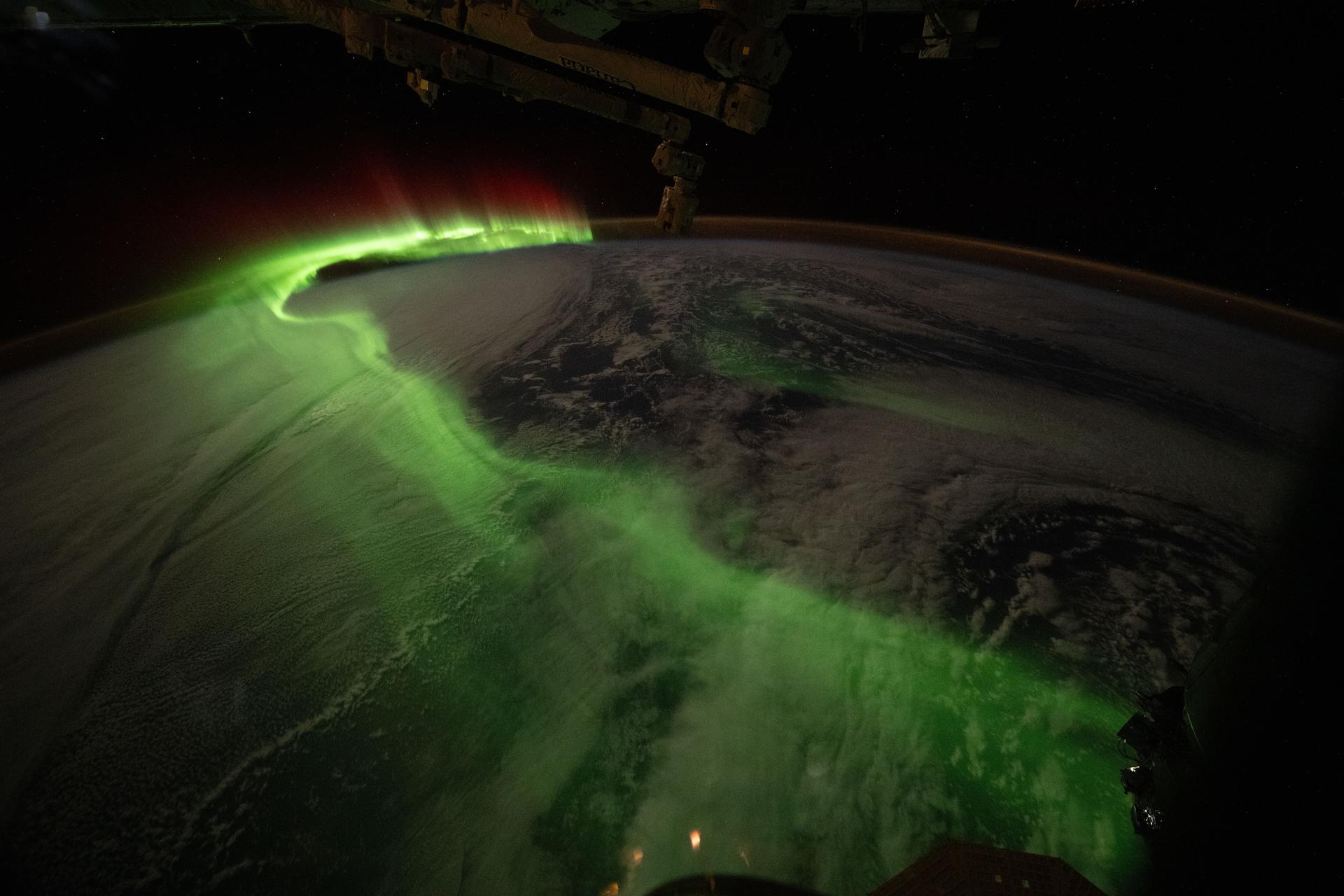
Space agriculture, stem cells, and cargo operations wrapped up the week aboard the International Space Station. The Expedition 74 crew also conducted blood tests and installed a new food processor as a U.S. cargo spacecraft nears the end of its mission.
Launching a spacecraft on Earth packed with enough food for a yearslong crew mission or sending resupply ships to replenish a crew beyond low Earth orbit is prohibitive. Therefore, growing plants aboard a spacecraft is key to sustaining crews on long-duration missions to the Moon, Mars, and beyond. As a result, NASA and its international partners have been exploring growing crops in space to enable crews to feed themselves without support from Earth. NASA flight engineer Chris Williams contributed to the ongoing space agriculture research at the end of the week and configured a microscope to observe plant cell division in microgravity. Insights may lead to improved methods of growing food in space as well as on lunar and planetary surfaces.
Low Earth orbit may also be the next frontier for biomedical manufacturing as doctors seek to overcome the limitations of gravity on the ground. NASA flight engineer Jessica Meir harvested blood stem cells inside the Kibo laboratory module’s Life Science Glovebox (LSG) that have been growing aboard the orbital outpost since the arrival of a SpaceX Dragon cargo craft on May 17. Next, she looked at the density and viability of the live cells using the KERMIT fluorescent microscope. Researchers are exploring space-designed cell therapies to treat serious medical conditions such as blood cancers and immune diseases.
Dragon is due to depart the International Space Station at 12:05 p.m. EDT on Tuesday, June 16, to return the stem cell samples, including several tons of completed science experiments and lab hardware, for analysis on Earth. Live coverage of Dragon’s undocking and departure begins at 11:45 a.m. on NASA+.
Williams and Meir also partnered with flight engineers Jack Hathaway of NASA and Sophie Adenot of ESA (European Space Agency) packing Dragon with return cargo together throughout Friday. The quartet will intensify their cargo transfers early next week when they begin loading Dragon with sensitive research samples packed inside portable science freezers for preservation, retrieval, and analysis on Earth.
Williams and Meir began their Friday shift collecting blood samples for spinning in a centrifuge then stowing in a science freezer for future analysis. Hathaway removed a research freezer from inside Kibo’s Life Science Glovebox used the day before to preserve bacteria samples for genetic and chemical analysis. Adenot also spent some time assisting Meir during the stem cell operations then tested a new food processor in the Columbus laboratory module by cooking a Mediterranean dish.
The station’s three cosmonauts, station commander Sergey Kud-Sverchkov and flight engineers Sergei Mikaev and Andrey Fedyaev enjoyed an off-duty day on Friday.
Learn more about station activities by following the space station blog, @space_stationon X, as well as the ISS Facebook and ISS Instagram accounts.
Get the latest from NASA delivered every week. Subscribe here.
The post Botany and Biology Research Wrap Up Week as Dragon Preps for Earth Return appeared first on NASA Science.
Archival data from the Chandra X-ray Observatory and the Very Large Telescope reveal the temperature, density, and thermal energy of the wind from a low-luminosity active galactic nucleus.
The post The Spatially Resolved Hot Gas Properties of NGC 1266’s Active Galactic Nucleus–Driven Outflow appeared first on AAS Nova.
Whether you’re planning a backyard barbeque or a World Cup watch party, Govee’s Table Lamp Classic can help set the mood with color-changing lighting effects. Right now it’s down to just $59.99 ($20 off) at Amazon, which is its best price yet.
The rechargeable lamp can last up to 30 hours on a single charge, so it should have enough power to last for multiple hangouts. It’s easy to carry to wherever you need a little extra light. Just bear in mind the lamp isn’t weather resistant, so you’ll want to keep it away from the pool and bring it inside if it’s going to rain. It’s also not particularly bright, shining at up to 500 lumens at peak brightness.
The lamp supports adjustable color temperatures ranging from a warm 2700K glow to a cooler 6500K. It also offers dozens of preset scenes and colorful lighting effects — even one that can sync to your music. If you want something more personalized, Govee’s app even lets you generate custom lighting effects with AI.
Better yet, you don’t have to leave your seat to make changes. The lamp supports Matter and works with major smart home platforms, allowing you to control it with your voice or through Govee’s app.
Dear Astrophysics Strategic Technology & Research Accelerator (ASTRA) community members-
As we prepare for our Ad ASTRA Community Science workshop, we are writing to share important updates regarding the agenda structure and instructions for abstract submissions.
The Community Science (Ad ASTRA) Workshop is organized by the NASA Astrophysics Division to engage the community in identifying future large, strategic astrophysics missions. Structured over three thematic days—Science, Capabilities and Implementation, and Community Discussion—the workshop provides a comprehensive framework to connect scientific priorities with technological readiness and mission implementation. Across all three days, plenaries, panels, breakout sessions, and poster contributions are designed to maximize community interactions and discussion. The outcomes of the workshop will help NASA prioritize mission concepts and shape a balanced, forward-looking astrophysics portfolio that is consistent with the Astro2020 recommendations and existing and future science gaps.
To best serve the community and facilitate meaningful collaboration, we are splitting the mission concept presentations into two distinct focuses: Science on Day 1, and Capabilities and Implementation on Day 2. We are relying on you—the concept teams and the broader community—to submit abstracts for both days. We are also offering the option to present mission concepts as posters, and will offer the opportunity to present as posters any abstracts for which there is insufficient room in the parallel sessions.
Please review the detailed agenda structure and submission guidelines below:
Day 1: Science Focus
Day 2: Mission Concepts – Capabilities and Implementation
Day 3 & Workshop Outcome
A primary goal of this workshop is to refine a draft “science-to-capabilities” matrix, which will be built using inputs from your submitted ASTRA mission concept documents. During the Day 1 and 2 breakout sessions, moderators will capture key discussion points to present during end-of-day summary panels. On Day 3 of the workshop, we will hold a plenary discussion to recap the week and collaboratively revise the “science-to-capabilities” matrix. Together as a community, we will add, refine, and prioritize science questions, mapping them to mission concepts.
Key Upcoming Dates:
We look forward to your abstract submissions and to a highly collaborative and productive workshop!
Best regards,
The Ad ASTRA Workshop Organizing Committee
Subscribe to your community email news list
We will never share your email address.
The post Ad ASTRA Community Science Workshop Updates appeared first on NASA Science.
Dear Physics of the Cosmos (PhysCOS) community members-
As we prepare for our Ad ASTRA Community Science Workshop, we are writing to share important updates regarding the agenda structure and instructions for abstract submissions.
The Community Science (Ad ASTRA) Workshop is organized by the NASA Astrophysics Division to engage the community in identifying future large, strategic astrophysics missions. Structured over three thematic days—Science, Capabilities and Implementation, and Community Discussion—the workshop provides a comprehensive framework to connect scientific priorities with technological readiness and mission implementation. Across all three days, plenaries, panels, breakout sessions, and poster contributions are designed to maximize community interactions and discussion. The outcomes of the workshop will help NASA prioritize mission concepts and shape a balanced, forward-looking astrophysics portfolio that is consistent with the Astro2020 recommendations and existing and future science gaps.
To best serve the community and facilitate meaningful collaboration, we are splitting the mission concept presentations into two distinct focuses: Science on Day 1, and Capabilities and Implementation on Day 2. We are relying on you—the concept teams and the broader community—to submit abstracts for both days. We are also offering the option to present mission concepts as posters, and will offer the opportunity to present as posters any abstracts for which there is insufficient room in the parallel sessions.
Please review the detailed agenda structure and submission guidelines below:
Day 1: Science Focus
Day 2: Mission Concepts – Capabilities and Implementation
Day 3 & Workshop Outcome
A primary goal of this workshop is to refine a draft “science-to-capabilities” matrix, which will be built using inputs from your submitted ASTRA mission concept documents. During the Day 1 and 2 breakout sessions, moderators will capture key discussion points to present during end-of-day summary panels. On Day 3 of the workshop, we will hold a plenary discussion to recap the week and collaboratively revise the “science-to-capabilities” matrix. Together as a community, we will add, refine, and prioritize science questions, mapping them to mission concepts.
Key Upcoming Dates:
We look forward to your abstract submissions and to a highly collaborative and productive workshop!
Best regards,
The Ad ASTRA Workshop Organizing Committee
Subscribe to your community email news list
We will never share your email address.
The post Ad ASTRA Community Science Workshop Updates appeared first on NASA Science.
As the 2026 FIFA World Cup begins in North America, Hyundai Motor Company has launched its biggest mobility and robotics operation for a global sporting event. The company has sent over 1,500 vehicles and advanced robots to support logistics, security, and facility management in the United States, Canada, and Mexico.
This project is a big step forward in Hyundai’s partnership with FIFA and shows how robotics and autonomous technology are becoming more common at large public events. Four custom Spot robot dogs from Boston Dynamics, which is owned by Hyundai Motor Group, are leading the effort.
The main technology on show is four Spot robot dogs working at two key tournament locations. Hyundai confirmed the robots will be at the International Broadcast Center in Dallas and at stadiums in New York and New Jersey.
These robot dogs can navigate busy, complex spaces independently while performing different tasks. According to Hyundai, Spot will patrol, carry out real-time inspections, and help monitor areas where large crowds are expected during the tournament.
This is the first time Spot robot dogs are being used at a FIFA World Cup, making it an important milestone for Hyundai as FIFA’s Official Robotics Partner.
The company views the tournament as an opportunity to demonstrate how robots can help venue staff and security teams manage large crowds and complex event setups.
Wherever the game goes.
— Hyundai Worldwide (@Hyundai_Global) June 5, 2026
Hyundai is ready for the FIFA World Cup 2026
Industrial robots have long been used in factories, where conditions are highly controlled. But event venues are much more unpredictable and challenging.
World Cup stadiums and broadcast centers will welcome thousands of visitors, staff, and media. These busy places are always changing, so robots need to move around people, obstacles, and ongoing events.
The tournament is a real-world test for autonomous technology in places where safety, reliability, and constant monitoring matter most. Experts see this as a key step in bringing robots into new roles beyond factories.
This move is part of a larger trend, as more tech companies look for practical ways to use autonomous systems in public places.
In addition to its robotics program, the company is managing a large transportation effort to support logistics across all 16 host cities.
It is providing a fleet of 994 passenger vehicles and 506 buses. These vehicles transport teams, tournament officials, media representatives, and operational staff throughout the competition.
The fleet features a variety of Hyundai and Genesis models, so organizers can choose vehicles that meet their specific needs.
Selected vehicles are also available in hybrid versions as part of Hyundai’s broader push toward electrified mobility technologies.
The FIFA World Cup 2026 is expected to be the biggest edition of the tournament in history, creating unprecedented transportation and operational demands across three countries.
Managing movement between venues, training facilities, hotels, and media centers will require extensive coordination. Hyundai’s combined deployment of vehicles and robotics is intended to help address those challenges while showcasing technologies that could play larger roles in future global events.
At the 2026 World Cup, the refs on the field and the officials on the sidelines will be able to use an abundance of tech to help call penalties, spot offside violations, and make other consequential decisions.
The video assistant referee system, known as VAR, and the semi-automated offside technology (SAOT) have been used in soccer for years. But the setup at this summer's World Cup represents some of the most advanced uses of adjudication tech to date—not just in soccer, but across all high-level sports.
During each match, the pitch will be awash in sensors, cameras, and new computer vision software. One especially notable advancement this year is the use of digital twins. Every player in the World Cup has had their body scanned by a computer. The digital twin of any athlete—which precisely matches their height, limb length, and shoe size—can be dropped into a virtual simulation of the game to determine their exact position relative to the ball, boundary lines, and other players. Officials can use all of this data to help spot infractions, determine penalties, and smooth out the edges of the beautiful game.
© Luke Hales/Getty Images
Mobile World Live brings you our top three picks of the week as Apple reset its AI ambitions at WWDC, OpenAI edged closer to a stock market debut and French operators agreed a €20.4 billion deal to carve-up SFR.
Apple lands Siri AI at WWDC as Cook takes a bow
What happened: During its annual WWDC event, Apple reset its AI strategy, unveiled a revamped AI-powered Siri and spotlighted new child-safety controls as Tim Cook delivered his final keynote as CEO.
Why it matters: Apple SVP of software Craig Federighi said, “truly helpful AI must be centred around you and your needs”, positioning privacy, personal context and deeper app integration as core pillars of the AI-enhanced Siri. The launch gives Apple a chance to overwrite a damaging run of Siri AI delays described internally as “ugly and embarrassing”. Ben Wood, chief analyst at CCS Insight, said “Apple had to address its shortcomings in AI, and WWDC provided some answers”, but added the company must deliver “a meaningfully better everyday experience, not just parity with rivals”. He noted many features will already be familiar to Android and third-party AI app users, adding iPhone users are “more likely to upgrade for better battery life, an improved camera or a bigger screen rather than to get AI”. However, challenges have already emerged. The AI-upgraded Siri and Apple Intelligence features have already been delayed indefinitely in the European Union (EU) over competition laws and blocked in China over local AI regulations.
On child safety, Wood called Apple’s push “a welcome and timely move” as concerns about online harm grow among regulators but said “stronger cross-industry safeguards need to be built into operating systems at a deeper platform level”. Cook’s farewell added weight to the event as he declared the iPhone will “continue to be the centre of people’s digital lives”, adding, “the best is still ahead”.
OpenAI lines up stock market debut
What happened: OpenAI confidentially filed paperwork for a US IPO, becoming the latest AI company to move towards a listing as the sector’s biggest players race to raise fresh funds.
Why it matters: The ChatGPT-maker stated it had submitted a draft registration statement to the US Securities and Exchange Commission (SEC), adding, “we expect it to leak so we’re just announcing it”. It did not disclose the size, price or timing of the listing and cautioned a debut may not be imminent “because there are things we want to do that are likely easier as a private company”. OpenAI explained the decision involves “a complicated set of trade-offs”, but the filing gives it “the option to go public sooner if that ends up being best”. Reuters reported the company is targeting a valuation of up to $1 trillion, with a debut possible as early as September. The filing puts OpenAI into a crowded and expensive AI listings race; rival Anthropic confidentially filed for its own US IPO last week, while SpaceX launched a blockbuster listing. Aviva Investors’ head of multi-asset Sunil Krishnan told the BBC all firms all have a “vast need for cash” as “no one wants to be last” in a space where access to capital could prove crucial as companies fund AI chips, infrastructure and model training. Harrison Rolfes, senior research analyst at PitchBook, argued OpenAI’s $1 trillion listing is “a bet on a company that has never been profitable, in a market it is currently losing, with a cost structure it cannot change for at least another year”. He added this is “all while racing a direct competitor through the same SEC process in the same quarter.” Rolfes concluded: “There is no scenario where OpenAI pricing after a profitable Anthropic favours OpenAI.”
Bouygues, Orange, Free agree €20B SFR carve up
What happened: Bouygues Telecom, Free-Iliad Group and Orange signed a memorandum of understanding with Altice France to acquire and carve up SFR in a deal valuing the operator at €20.4 billion, setting the stage for a major reset of France’s telecoms market.
Why it matters: Under terms outlined in April, Bouygues will take 42% of SFR’s assets, Free-Iliad 31% and Orange 27%. SFR’s consumer mobile and fixed broadband operations will be divided between the three operators, while Bouygues will take control of the B2B unit. Completion is targeted for H2 2027, subject to regulatory clearance. Kester Mann, director, consumer and connectivity at CCS Insight, noted the move marks the biggest potential shake-up in French telecoms since Iliad entered the mobile market in 2012, cutting the number of major operators from four to three and reshaping competition. He said the agreement appears “a successful outcome for all parties” as Bouygues, Orange and Iliad all gain “important new assets in their pursuit of greater scale”, while removing a key rival will “reduce the competitive intensity of the market”. However, the biggest challenge will be to regulators show the deal will deliver “positive outcomes to the French market”. He noted that while that would once have been “a herculean task”, recent approvals in the UK and Spain suggest Europe’s stance on consolidation is softening.
The post The Friday File: Apple; OpenAI; SFR appeared first on Mobile World Live.
Welcome to Edition 8.45 of the Rocket Report! Even though we are now two weeks removed from the catastrophic loss of the New Glenn rocket and its LC-36A launch pad, it continues to dominate discussion in the space community. This week, NASA said it nominally plans to fly Blue Origin's test lander on New Glenn for the Artemis III mission, but officials quietly acknowledged that other launch vehicles, including Vulcan and the Falcon Heavy, could also get the job done. We'll obviously be watching closely.
As always, we welcome reader submissions, and if you don't want to miss an issue, please subscribe using the box below (the form will not appear on AMP-enabled versions of the site). Each report will include information on small-, medium-, and heavy-lift rockets as well as a quick look ahead at the next three launches on the calendar.
Isar raises funding, announces new launch date. German launch startup Isar Aerospace announced this week that it had closed a 270 million euro Series D to "drive global scaling and ramp up serial production," European Spaceflight reports. The company also said the previously delayed second launch attempt of its Spectrum rocket would now take place sometime between June 15 and June 21.
© Stoke Space
