 Login
What NASA Needs to Stay on Track for the Moon
13 June 2026 at 10:02
The agency gave a rosy update on Artemis III, a test flight for its goal to return humans to the moon, but experts say the timeline is ambitious.

Pioneer 10 holds the titles for many “firsts”: It was NASA’s first mission to the outer planets, the first spacecraft to fly beyond Mars, the first to traverse the asteroid belt, and the first to fly past Jupiter. It was also the first spacecraft placed on a trajectory to escape the solar system into interstellarContinue reading "June 13, 1983: Pioneer 10 leaves solar system"
The post June 13, 1983: Pioneer 10 leaves solar system appeared first on Astronomy Magazine.

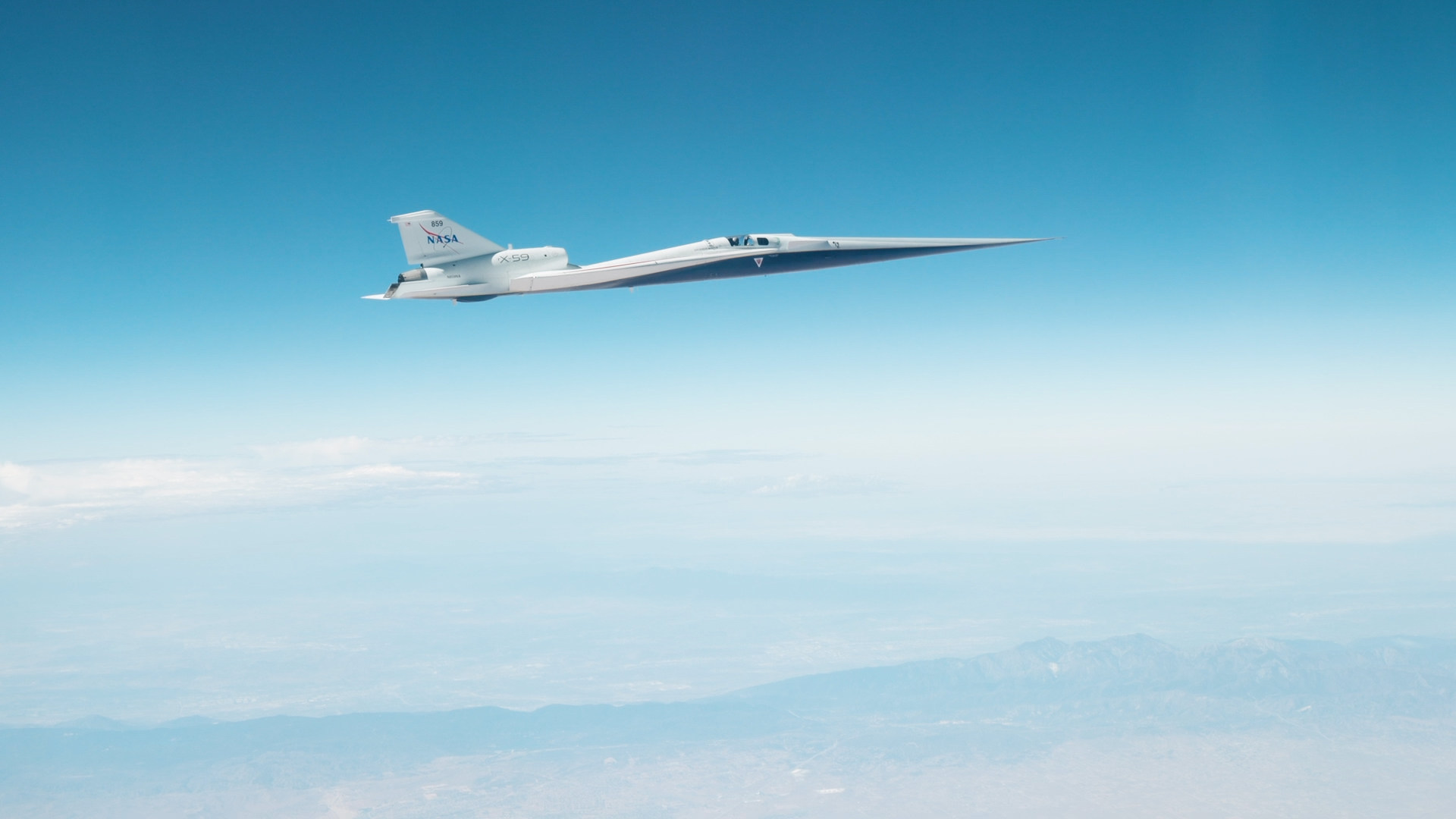
NASA’s X-59 experimental aircraft reached a major milestone Friday, June 12, flying Mach 1.4 (about 924 mph) and an altitude of 55,000 feet, the conditions required for the aircraft to make future flights critical to its mission.
The X-59 still has months of performance testing ahead, but after those are complete, NASA’s Quesst mission will fly the aircraft over several U.S. communities to collect data on public perception of the quiet sonic thump it will make at supersonic speeds. Those community overflights will include flights at Mach 1.4 and 55,000 feet.
The milestone comes just days after the X-59’s first supersonic flight. That flight showed the aircraft performed as expected at Mach 1.1, but Friday’s mission conditions flight was an even more critical step for NASA.
The aircraft’s team has steadily expanded the aircraft’s flight envelope by evaluating its performance at a variety of speeds and altitudes, and having its pilots take on a battery of maneuvers.

The X-59 was designed to fly supersonic without causing a loud sonic boom. However, for these early supersonic flights it has been accompanied by a NASA F-15 research aircraft, a traditional supersonic jet that causes booms obscuring any noise the X-59 makes. During upcoming flights, a shock-sensing probe mounted to the F-15 will gather measurements of the X-59’s shock wave signature, an early measure of its supersonic performance.
After the team conducts more tests at a variety of altitudes and conditions to complete envelope expansion, the X-59 will enter the acoustic validation phase of Quesst. During this phase, researchers will thoroughly measure the aircraft’s supersonic acoustic signature — the quiet thump it’s designed to make — to confirm it is performing as intended.
Each flight brings NASA one step closer to flying the X-59 over communities and gathering feedback that could help shape the future of commercial supersonic flight over land.

The post NASA’s X-59 Reaches Speed, Altitude for Future Quiet Supersonic Flights appeared first on NASA Science.

Born in 1888, artist and illustrator Chesley Bonestell became famous for his realistic paintings of space. His work spanned decades and many formats and publications; perhaps most influential was his collaboration with Wernher von Brain on the 1952–54 Collier’s series, “Man Will Conquer Space Soon!” By making the stuff of science fiction seem achievable, his artwork helpedContinue reading "June 11, 1986: Chesley Bonestell dies"
The post June 11, 1986: Chesley Bonestell dies appeared first on Astronomy Magazine.
The new undergarment is built to keep astronauts cool, breathing and moving.When NASA added a low Earth orbit test flight to the Artemis program in February, pushing the lunar landing from Artemis 3 to Artemis 4, it left the details sparse. On Tuesday, the agency filled them in. At a press conference, NASA named the four-person crew for Artemis 3, a 2027 Earth-orbit test flight thatContinue reading "Meet the astronauts flying on Artemis 3"
The post Meet the astronauts flying on Artemis 3 appeared first on Astronomy Magazine.
