PC gamer salva mulher de tiro? Parece roteiro de filme, mas essa história aconteceu de verdade. Uma bala atravessou a parede de uma casa e teve sua trajetória desviada por um computador gamer, evitando uma tragédia. Segundo o relato, o disparo teria sido causado por um cachorro que mexeu em uma arma. Entenda todos os detalhes desse caso impressionante.
Palavras-chave: PC gamer, tiro, bala desviada, computador gamer, curiosidades, tecnologia, Reddit, hardware, memória RAM, história real.
One of the world’s most active ransomware groups exploited a critical vulnerability in Oracle’s PeopleSoft software suite and used it to target about 100 customers and extort at least one of them to pay up in exchange for not leaking stolen data, researchers said.
The group, tracked as ShinyHunters, had been exploiting the PeopleSoft vulnerability for more than two weeks before Oracle flagged it. CVE-2026-35273, as the vulnerability is tracked, carries a severity rating of 9.8 out of 10, making the former zero-day one of the year’s most critical vulnerabilities to be exploited.
Google’s Mandiant security team said it’s an SSRF (server-side request forgery), a vulnerability that allows attackers to send requests from a susceptible server to systems used by the targeted organization. Oracle said the SSRF is remotely exploitable, and the company has issued a stopgap mitigation but has yet to fully patch the flaw. Google has confirmed that victims are receiving extortion demands.
Founded during the US Civil War to provide advice to the government, the National Academies of Science have become one of the most prestigious scientific organizations. Its primary function is to prepare comprehensive reports on scientific and technological issues, aided by its ability to attract top talent from across the country.
Those reports have not been afraid to weigh in on matters of public controversy and risk offending powerful groups, which it has managed to do without losing the respect of the governmental organizations that fund these reports. But this year, there have been increasing signs that the Academies' ability to dodge political firestorms has reached its limit. Yesterday, a deeply reported story from Politico explained the breakdown between the National Academies and Republican politicians.
The National Academies is preparing an expert report on attribution of weather events to human-driven climate change, and fossil fuel companies are worried it will lead to findings of liability in the many cases where those companies are being sued.
Enabling landers to autonomously identify the safest sites to touch down
Moon craters and their surrounding areas are high-value destinations for lunar missions since they may contain important resources and valuable science targets. However, these sites are also home to dangers such as steep slopes that are difficult to see in the challenging lighting conditions. As a result, selecting landing sites on lunar surfaces is a critical component for NASA’s CLPS (Commercial Lunar Payload Services) missions. A new technology tested through NASA’s Flight Opportunities program is set to go to the Moon and help provide a safe and precise landing.
Astrobotic Technology’s Hazard Detection (HD) Lidar system scans and analyzes the terrain in real-time, enabling landers to autonomously map and select the safest landing sites. Lidar stands for light detection and ranging. The Pittsburgh-headquartered company will use its HD Lidar system when its Griffin lunar lander delivers science and technology payloads to the Moon during its CLPS delivery to the lunar south pole.
With Flight Opportunities support, Astrobotic first tested an engineering model of its advanced HD Lidar sensor in November 2024, confirming its ability to select a safe landing site by detecting and avoiding slopes, rough areas, and potential hazards. This flight test provided the Astrobotic team valuable data on the system’s performance, which was later leveraged by a second flight test in March 2026 with an integrated hazard detection and guidance, navigation, and control (GNC) system to further validate the system ahead of its first lunar mission scheduled for later this year. These flight tests helped the company advance the technology for use on its CLPS mission.
The Astrobotic Griffin Mission One will launch aboard a SpaceX Falcon Heavy rocket from Launch Complex 39A at NASA’s Kennedy Space Center in Florida to deliver NASA payloads to the lunar south pole.
Astrobotic’s HD Lidar system is designed to detect hazards as small as 5.9 inches (15 cm) and slopes greater than 10° to identify potential hazards, such as craters or large rocks. During the lander’s final descent phase, the spacecraft performs a stationary hover at an altitude of 100 meters — about the height of a 30-story building — while pointing its lidar toward the intended landing site. During the hover, the lidar scans the terrain, applies motion correction to account for changes in the spacecraft’s position and attitude, and processes the results into a hazard map used to identify the safest available landing location. The spacecraft then maneuvers to the selected landing site and proceeds with touchdown.
Astrobotic’s HD Lidar system works in tandem with its terrain relative navigation (TRN) sensor system, which takes live photos of the surface and compares them to an onboard map derived from orbital images to determine the spacecraft’s location above the lunar surface. In preparation for the CLPS mission, Astrobotic fully integrated its HD Lidar and TRN camera into its Griffin lander and demonstrated a successful soft landing simulation using Astrobotic’s Griffin Mission One production flatsat — a platform built with engineering models of the actual flight avionics.
Astrobotic’s Griffin lunar lander inside the company’s integration facility. The lander uses Hazard Detection Lidar technology tested with support of NASA’s Flight Opportunities program.
Astrobotic
Advancing Hazard Detection Lidar Through Flight Testing
NASA’s Flight Opportunities program supported testing of Astrobotic’s HD Lidar as part of its mission to demonstrate promising technologies for space exploration, scientific discovery, and the expansion of space commerce. During the flight test on Nov. 11, 2024, an engineering model of the HD Lidar sensor successfully collected data over Astrobotic’s Lunar Surface Proving Ground while mounted on the company’s Xodiac reusable vertical takeoff vertical landing rocket. During the flight, the HD Lidar system processed the 3D lidar point cloud data into a terrain hazard map and helped verify lidar communications, settings, and controls under relevant conditions.
This flight test enabled Astrobotic to make a significant advancement in demonstrating space exploration technology capabilities, and the company applied lessons from this test directly to its lunar lander missions.
Flight test planning using simulated scans from Xodiac historical flight data and Lidar Hazard Detection scan settings in simulation.
Astrobotic
The Hazard Detection Lidar payload, as integrated on the top of Xodiac. The lidar is the box on the left pointed down towards the ground; This pointing angle enables it to view the surface of the Lunar Surface Proving Ground during the flight test.
Astrobotic
Astrobotic’s Griffin lunar lander is seen inside the company’s integration facility.
Astrobotic
Learn More About Flight Opportunities
More Technology Transitions
Learn about other technologies that have advanced their readiness through testing with Flight Opportunities.
Access Flight Testing
Learn more about how to flight test your technology, instrument, or experiment with the Flight Opportunities program.
Flight Providers
Learn about the commercial flight providers that engage with the Flight Opportunities program.
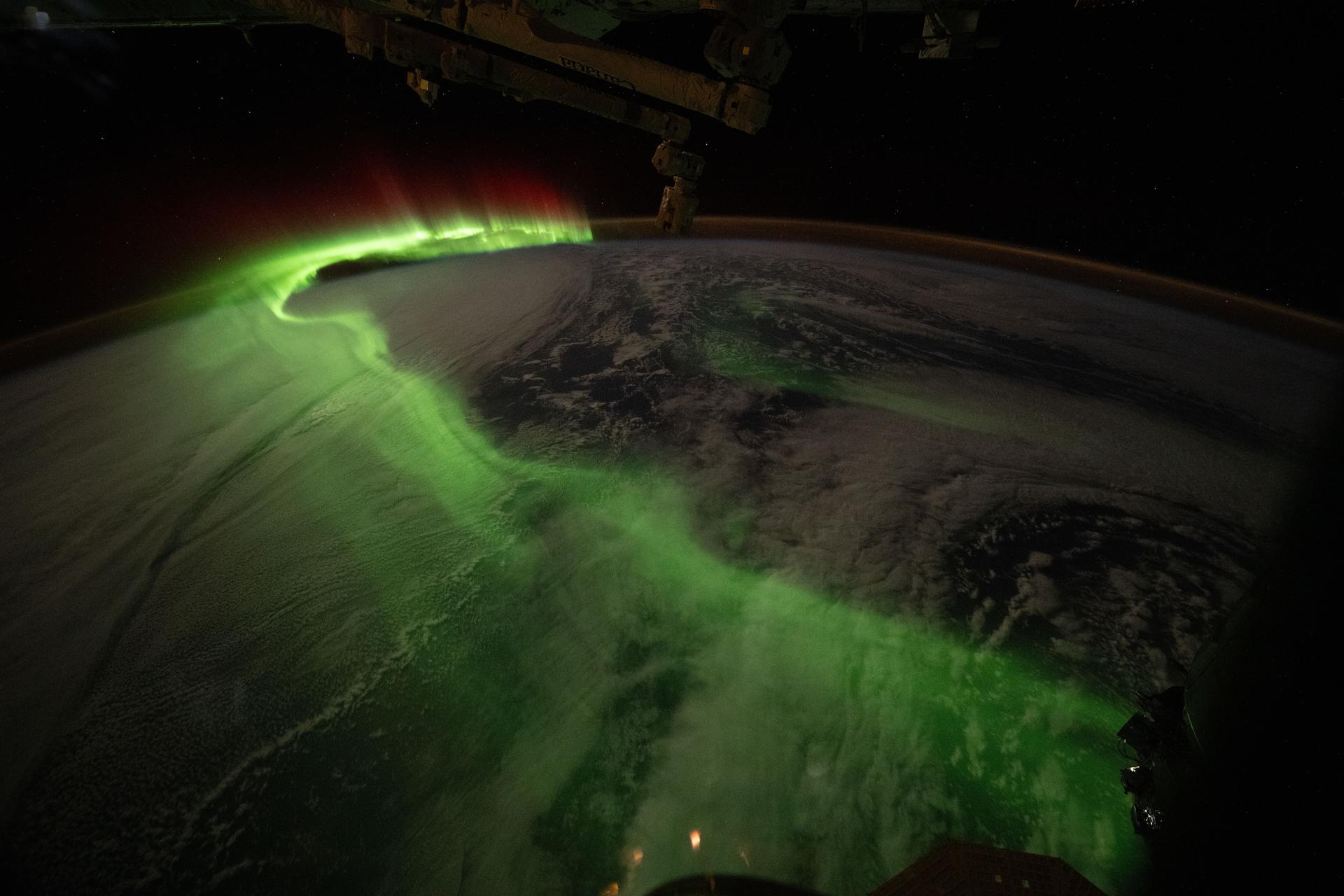
The aurora australis arcs over Earth during an active solar event in this photograph taken at approximately 11:32 p.m. local time from the International Space Station as it orbited 271 miles above the Indian Ocean southwest of Perth, Australia.
NASA/Jessica Meir
Space agriculture, stem cells, and cargo operations wrapped up the week aboard the International Space Station. The Expedition 74 crew also conducted blood tests and installed a new food processor as a U.S. cargo spacecraft nears the end of its mission.
Launching a spacecraft on Earth packed with enough food for a yearslong crew mission or sending resupply ships to replenish a crew beyond low Earth orbit is prohibitive. Therefore, growing plants aboard a spacecraft is key to sustaining crews on long-duration missions to the Moon, Mars, and beyond. As a result, NASA and its international partners have been exploring growing crops in space to enable crews to feed themselves without support from Earth. NASA flight engineer Chris Williams contributed to the ongoing space agriculture research at the end of the week and configured a microscope to observe plant cell division in microgravity. Insights may lead to improved methods of growing food in space as well as on lunar and planetary surfaces.
Low Earth orbit may also be the next frontier for biomedical manufacturing as doctors seek to overcome the limitations of gravity on the ground. NASA flight engineer Jessica Meir harvested blood stem cells inside the Kibo laboratory module’s Life Science Glovebox (LSG) that have been growing aboard the orbital outpost since the arrival of a SpaceX Dragon cargo craft on May 17. Next, she looked at the density and viability of the live cells using the KERMIT fluorescent microscope. Researchers are exploring space-designed cell therapies to treat serious medical conditions such as blood cancers and immune diseases.
Dragon is due to depart the International Space Station at 12:05 p.m. EDT on Tuesday, June 16, to return the stem cell samples, including several tons of completed science experiments and lab hardware, for analysis on Earth. Live coverage of Dragon’s undocking and departure begins at 11:45 a.m. on NASA+.
Williams and Meir also partnered with flight engineers Jack Hathaway of NASA and Sophie Adenot of ESA (European Space Agency) packing Dragon with return cargo together throughout Friday. The quartet will intensify their cargo transfers early next week when they begin loading Dragon with sensitive research samples packed inside portable science freezers for preservation, retrieval, and analysis on Earth.
Williams and Meir began their Friday shift collecting blood samples for spinning in a centrifuge then stowing in a science freezer for future analysis. Hathaway removed a research freezer from inside Kibo’s Life Science Glovebox used the day before to preserve bacteria samples for genetic and chemical analysis. Adenot also spent some time assisting Meir during the stem cell operations then tested a new food processor in the Columbus laboratory module by cooking a Mediterranean dish.
The station’s three cosmonauts, station commander Sergey Kud-Sverchkov and flight engineers Sergei Mikaev and Andrey Fedyaev enjoyed an off-duty day on Friday.
Archival data from the Chandra X-ray Observatory and the Very Large Telescope reveal the temperature, density, and thermal energy of the wind from a low-luminosity active galactic nucleus.
Whether you’re planning a backyard barbeque or a World Cup watch party, Govee’s Table Lamp Classic can help set the mood with color-changing lighting effects. Right now it’s down to just $59.99 ($20 off) at Amazon, which is its best price yet.
The rechargeable lamp can last up to 30 hours on a single charge, so it should have enough power to last for multiple hangouts. It’s easy to carry to wherever you need a little extra light. Just bear in mind the lamp isn’t weather resistant, so you’ll want to keep it away from the pool and bring it inside if it’s going to rain. It’s also not particularly bright, shining at up to 500 lumens at peak brightness.
The lamp supports adjustable color temperatures ranging from a warm 2700K glow to a cooler 6500K. It also offers dozens of preset scenes and colorful lighting effects — even one that can sync to your music. If you want something more personalized, Govee’s app even lets you generate custom lighting effects with AI.
Better yet, you don’t have to leave your seat to make changes. The lamp supports Matter and works with major smart home platforms, allowing you to control it with your voice or through Govee’s app.
A few more Verge-approved deals
JBL’s Charge 6 Bluetooth speaker is on sale in gray for $79.95 ($70 off) at Woot with a 90-day warranty, which is its best price to date. The speaker is rugged, with an IP68 waterproof and dustproof rating, plus it can double as a power bank, making it a great companion for outdoor adventures. It can last up to 28 hours on a single charge, and delivers good sound quality via Bluetooth. The Charge 6 supports lossless audio playback over USB-C.
The Moto Tag is on sale for $19.99 ($10 off) at Amazon, which matches its all-time low and is the best price we’ve seen since February. The excellent Bluetooth tracker works with Google’s Find Hub network and stands out from other Android-friendly alternatives by offering ultra-wideband support. On compatible phones like Samsung’s Galaxy S26, that means it can help you track down misplaced items with precise, turn-by-turn-style guidance, similar to Apple’s AirTag.
The Keurig K-Elite Single Serve Coffee Maker is down to just $99.99 (about $110 off) with code HAPPYDAD at Keurig, which is its best price of the year and $10 shy of its all-time low. The machine can brew five cup sizes from four to twelve ounces and features an iced coffee setting that starts with a hotter brew to extract more flavor from the K-Cup before cooling things down so as to not melt your ice completely. It also comes with a large 75-ounce water reservoir allowing you to make up to eight cups before having to refill, along with an on-demand hot water function for tea and oatmeal.
Dear Astrophysics Strategic Technology & Research Accelerator (ASTRA) community members-
As we prepare for our Ad ASTRA Community Science workshop, we are writing to share important updates regarding the agenda structure and instructions for abstract submissions.
The Community Science (Ad ASTRA) Workshop is organized by the NASA Astrophysics Division to engage the community in identifying future large, strategic astrophysics missions. Structured over three thematic days—Science, Capabilities and Implementation, and Community Discussion—the workshop provides a comprehensive framework to connect scientific priorities with technological readiness and mission implementation. Across all three days, plenaries, panels, breakout sessions, and poster contributions are designed to maximize community interactions and discussion. The outcomes of the workshop will help NASA prioritize mission concepts and shape a balanced, forward-looking astrophysics portfolio that is consistent with the Astro2020 recommendations and existing and future science gaps.
To best serve the community and facilitate meaningful collaboration, we are splitting the mission concept presentations into two distinct focuses: Science on Day 1, and Capabilities and Implementation on Day 2. We are relying on you—the concept teams and the broader community—to submit abstracts for both days. We are also offering the option to present mission concepts as posters, and will offer the opportunity to present as posters any abstracts for which there is insufficient room in the parallel sessions.
Please review the detailed agenda structure and submission guidelines below:
Day 1: Science Focus
Science Questions: Day 1 will focus on open science priorities and questions from strategic documents (Astro 2020 Decadal Survey, Enduring Quests – Daring Visions from 2014) and more recent science questions that the mission concepts submitted to ASTRA will address.
Abstract Submission: Presentations for Day 1 are not restricted to mission concept team members. We strongly encourage other scientists in the community to submit abstracts presenting important science questions and to use this opportunity to connect with concept teams.
Breakout Sessions: These sessions will be organized by science themes (Compact Objects and Energetic Phenomena, Cosmology, Galaxies, Exoplanets & Astrobiology, Stars and Stellar Populations). Moderators will present a summary of the panel discussions at the end of Day 1.
Day 2: Mission Concepts – Capabilities and Implementation
Focus: Day 2 is focused on implementation, capabilities, and technologies (software and hardware) relevant to the ASTRA submitted mission concepts. A summary of the Innovation for Astrophysics Missions Workshop (May 2026) will inform discussions regarding industry and other capabilities and opportunities that may be leveraged.
Breakout Sessions: These sessions will be organized by capability groups, which will be determined once the submitted mission concept documents are reviewed.
Format & Goals: Breakout sessions will feature a mix of presentations and flexible discussion. The goal is for teams with concepts at varying maturity levels to collaborate, find commonalities, and strengthen their respective capability groups.
Abstract Submission Note: Teams may submit multiple abstracts for these sessions if their concept spans different capabilities (e.g., requiring both UV and X-ray technologies).
Day 3 & Workshop Outcome
A primary goal of this workshop is to refine a draft “science-to-capabilities” matrix, which will be built using inputs from your submitted ASTRA mission concept documents. During the Day 1 and 2 breakout sessions, moderators will capture key discussion points to present during end-of-day summary panels. On Day 3 of the workshop, we will hold a plenary discussion to recap the week and collaboratively revise the “science-to-capabilities” matrix. Together as a community, we will add, refine, and prioritize science questions, mapping them to mission concepts.
Key Upcoming Dates:
24 June 2026: Abstract submission deadline (link). If you have already submitted an abstract and would like to modify it based on the guidelines above, please delete your previous contribution and send another submission.
Dear Physics of the Cosmos (PhysCOS) community members-
As we prepare for our Ad ASTRA Community Science Workshop, we are writing to share important updates regarding the agenda structure and instructions for abstract submissions.
The Community Science (Ad ASTRA) Workshop is organized by the NASA Astrophysics Division to engage the community in identifying future large, strategic astrophysics missions. Structured over three thematic days—Science, Capabilities and Implementation, and Community Discussion—the workshop provides a comprehensive framework to connect scientific priorities with technological readiness and mission implementation. Across all three days, plenaries, panels, breakout sessions, and poster contributions are designed to maximize community interactions and discussion. The outcomes of the workshop will help NASA prioritize mission concepts and shape a balanced, forward-looking astrophysics portfolio that is consistent with the Astro2020 recommendations and existing and future science gaps.
To best serve the community and facilitate meaningful collaboration, we are splitting the mission concept presentations into two distinct focuses: Science on Day 1, and Capabilities and Implementation on Day 2. We are relying on you—the concept teams and the broader community—to submit abstracts for both days. We are also offering the option to present mission concepts as posters, and will offer the opportunity to present as posters any abstracts for which there is insufficient room in the parallel sessions.
Please review the detailed agenda structure and submission guidelines below:
Day 1: Science Focus
Science Questions: Day 1 will focus on open science priorities and questions from strategic documents (Astro 2020 Decadal Survey, Enduring Quests – Daring Visions from 2014) and more recent science questions that the mission concepts submitted to ASTRA will address.
Abstract Submission: Presentations for Day 1 are not restricted to mission concept team members. We strongly encourage other scientists in the community to submit abstracts presenting important science questions and to use this opportunity to connect with concept teams.
Breakout Sessions: These sessions will be organized by science themes (Compact Objects and Energetic Phenomena, Cosmology, Galaxies, Exoplanets & Astrobiology, Stars and Stellar Populations). Moderators will present a summary of the panel discussions at the end of Day 1.
Day 2: Mission Concepts – Capabilities and Implementation
Focus: Day 2 is focused on implementation, capabilities, and technologies (software and hardware) relevant to the ASTRA submitted mission concepts. A summary of the Innovation for Astrophysics Missions Workshop (May 2026) will inform discussions regarding industry and other capabilities and opportunities that may be leveraged.
Breakout Sessions: These sessions will be organized by capability groups, which will be determined once the submitted mission concept documents are reviewed.
Format & Goals: Breakout sessions will feature a mix of presentations and flexible discussion. The goal is for teams with concepts at varying maturity levels to collaborate, find commonalities, and strengthen their respective capability groups.
Abstract Submission Note: Teams may submit multiple abstracts for these sessions if their concept spans different capabilities (e.g., requiring both UV and X-ray technologies).
Day 3 & Workshop Outcome
A primary goal of this workshop is to refine a draft “science-to-capabilities” matrix, which will be built using inputs from your submitted ASTRA mission concept documents. During the Day 1 and 2 breakout sessions, moderators will capture key discussion points to present during end-of-day summary panels. On Day 3 of the workshop, we will hold a plenary discussion to recap the week and collaboratively revise the “science-to-capabilities” matrix. Together as a community, we will add, refine, and prioritize science questions, mapping them to mission concepts.
Key Upcoming Dates:
24 June 2026: Abstract submission deadline (link). If you have already submitted an abstract and would like to modify it based on the guidelines above, please delete your previous contribution and send another submission.
As the 2026 FIFA World Cup begins in North America, Hyundai Motor Company has launched its biggest mobility and robotics operation for a global sporting event. The company has sent over 1,500 vehicles and advanced robots to support logistics, security, and facility management in the United States, Canada, and Mexico.
This project is a big step forward in Hyundai’s partnership with FIFA and shows how robotics and autonomous technology are becoming more common at large public events. Four custom Spot robot dogs from Boston Dynamics, which is owned by Hyundai Motor Group, are leading the effort.
Spot robot dogs head to World Cup venues
The main technology on show is four Spot robot dogs working at two key tournament locations. Hyundai confirmed the robots will be at the International Broadcast Center in Dallas and at stadiums in New York and New Jersey.
These robot dogs can navigate busy, complex spaces independently while performing different tasks. According to Hyundai, Spot will patrol, carry out real-time inspections, and help monitor areas where large crowds are expected during the tournament.
This is the first time Spot robot dogs are being used at a FIFA World Cup, making it an important milestone for Hyundai as FIFA’s Official Robotics Partner.
The company views the tournament as an opportunity to demonstrate how robots can help venue staff and security teams manage large crowds and complex event setups.
— Hyundai Worldwide (@Hyundai_Global) June 5, 2026
Testing robotics beyond factory floors
Industrial robots have long been used in factories, where conditions are highly controlled. But event venues are much more unpredictable and challenging.
World Cup stadiums and broadcast centers will welcome thousands of visitors, staff, and media. These busy places are always changing, so robots need to move around people, obstacles, and ongoing events.
The tournament is a real-world test for autonomous technology in places where safety, reliability, and constant monitoring matter most. Experts see this as a key step in bringing robots into new roles beyond factories.
This move is part of a larger trend, as more tech companies look for practical ways to use autonomous systems in public places.
Fleet of more than 1,500 vehicles
In addition to its robotics program, the company is managing a large transportation effort to support logistics across all 16 host cities.
It is providing a fleet of 994 passenger vehicles and 506 buses. These vehicles transport teams, tournament officials, media representatives, and operational staff throughout the competition.
The fleet features a variety of Hyundai and Genesis models, so organizers can choose vehicles that meet their specific needs.
Selected vehicles are also available in hybrid versions as part of Hyundai’s broader push toward electrified mobility technologies.
Supporting the largest World Cup ever
The FIFA World Cup 2026 is expected to be the biggest edition of the tournament in history, creating unprecedented transportation and operational demands across three countries.
Managing movement between venues, training facilities, hotels, and media centers will require extensive coordination. Hyundai’s combined deployment of vehicles and robotics is intended to help address those challenges while showcasing technologies that could play larger roles in future global events.
At the 2026 World Cup, the refs on the field and the officials on the sidelines will be able to use an abundance of tech to help call penalties, spot offside violations, and make other consequential decisions.
The video assistant referee system, known as VAR, and the semi-automated offside technology (SAOT) have been used in soccer for years. But the setup at this summer's World Cup represents some of the most advanced uses of adjudication tech to date—not just in soccer, but across all high-level sports.
During each match, the pitch will be awash in sensors, cameras, and new computer vision software. One especially notable advancement this year is the use of digital twins. Every player in the World Cup has had their body scanned by a computer. The digital twin of any athlete—which precisely matches their height, limb length, and shoe size—can be dropped into a virtual simulation of the game to determine their exact position relative to the ball, boundary lines, and other players. Officials can use all of this data to help spot infractions, determine penalties, and smooth out the edges of the beautiful game.
Mobile World Live brings you our top three picks of the week as Apple reset its AI ambitions at WWDC, OpenAI edged closer to a stock market debut and French operators agreed a €20.4 billion deal to carve-up SFR.
Apple lands Siri AI at WWDC as Cook takes a bow
What happened: During its annual WWDC event, Apple reset its AI strategy, unveiled a revamped AI-powered Siri and spotlighted new child-safety controls as Tim Cook delivered his final keynote as CEO.
Why it matters: Apple SVP of software Craig Federighi said, “truly helpful AI must be centred around you and your needs”, positioning privacy, personal context and deeper app integration as core pillars of the AI-enhanced Siri. The launch gives Apple a chance to overwrite a damaging run of Siri AI delays described internally as “ugly and embarrassing”. Ben Wood, chief analyst at CCS Insight, said “Apple had to address its shortcomings in AI, and WWDC provided some answers”, but added the company must deliver “a meaningfully better everyday experience, not just parity with rivals”. He noted many features will already be familiar to Android and third-party AI app users, adding iPhone users are “more likely to upgrade for better battery life, an improved camera or a bigger screen rather than to get AI”. However, challenges have already emerged. The AI-upgraded Siri and Apple Intelligence features have already been delayed indefinitely in the European Union (EU) over competition laws and blocked in China over local AI regulations.
On child safety, Wood called Apple’s push “a welcome and timely move” as concerns about online harm grow among regulators but said “stronger cross-industry safeguards need to be built into operating systems at a deeper platform level”. Cook’s farewell added weight to the event as he declared the iPhone will “continue to be the centre of people’s digital lives”, adding, “the best is still ahead”.
What happened: OpenAI confidentially filed paperwork for a US IPO, becoming the latest AI company to move towards a listing as the sector’s biggest players race to raise fresh funds.
Why it matters: The ChatGPT-maker stated it had submitted a draft registration statement to the US Securities and Exchange Commission (SEC), adding, “we expect it to leak so we’re just announcing it”. It did not disclose the size, price or timing of the listing and cautioned a debut may not be imminent “because there are things we want to do that are likely easier as a private company”. OpenAI explained the decision involves “a complicated set of trade-offs”, but the filing gives it “the option to go public sooner if that ends up being best”. Reuters reported the company is targeting a valuation of up to $1 trillion, with a debut possible as early as September. The filing puts OpenAI into a crowded and expensive AI listings race; rival Anthropic confidentially filed for its own US IPO last week, while SpaceX launched a blockbuster listing. Aviva Investors’ head of multi-asset Sunil Krishnan told the BBC all firms all have a “vast need for cash” as “no one wants to be last” in a space where access to capital could prove crucial as companies fund AI chips, infrastructure and model training. Harrison Rolfes, senior research analyst at PitchBook, argued OpenAI’s $1 trillion listing is “a bet on a company that has never been profitable, in a market it is currently losing, with a cost structure it cannot change for at least another year”. He added this is “all while racing a direct competitor through the same SEC process in the same quarter.” Rolfes concluded: “There is no scenario where OpenAI pricing after a profitable Anthropic favours OpenAI.”
What happened: Bouygues Telecom, Free-Iliad Group and Orange signed a memorandum of understanding with Altice France to acquire and carve up SFR in a deal valuing the operator at €20.4 billion, setting the stage for a major reset of France’s telecoms market.
Why it matters: Under terms outlined in April, Bouygues will take 42% of SFR’s assets, Free-Iliad 31% and Orange 27%. SFR’s consumer mobile and fixed broadband operations will be divided between the three operators, while Bouygues will take control of the B2B unit. Completion is targeted for H2 2027, subject to regulatory clearance. Kester Mann, director, consumer and connectivity at CCS Insight, noted the move marks the biggest potential shake-up in French telecoms since Iliad entered the mobile market in 2012, cutting the number of major operators from four to three and reshaping competition. He said the agreement appears “a successful outcome for all parties” as Bouygues, Orange and Iliad all gain “important new assets in their pursuit of greater scale”, while removing a key rival will “reduce the competitive intensity of the market”. However, the biggest challenge will be to regulators show the deal will deliver “positive outcomes to the French market”. He noted that while that would once have been “a herculean task”, recent approvals in the UK and Spain suggest Europe’s stance on consolidation is softening.
Welcome to Edition 8.45 of the Rocket Report! Even though we are now two weeks removed from the catastrophic loss of the New Glenn rocket and its LC-36A launch pad, it continues to dominate discussion in the space community. This week, NASA said it nominally plans to fly Blue Origin's test lander on New Glenn for the Artemis III mission, but officials quietly acknowledged that other launch vehicles, including Vulcan and the Falcon Heavy, could also get the job done. We'll obviously be watching closely.
As always, we welcome reader submissions, and if you don't want to miss an issue, please subscribe using the box below (the form will not appear on AMP-enabled versions of the site). Each report will include information on small-, medium-, and heavy-lift rockets as well as a quick look ahead at the next three launches on the calendar.
Isar raises funding, announces new launch date. German launch startup Isar Aerospace announced this week that it had closed a 270 million euro Series D to "drive global scaling and ramp up serial production," European Spaceflight reports. The company also said the previously delayed second launch attempt of its Spectrum rocket would now take place sometime between June 15 and June 21.
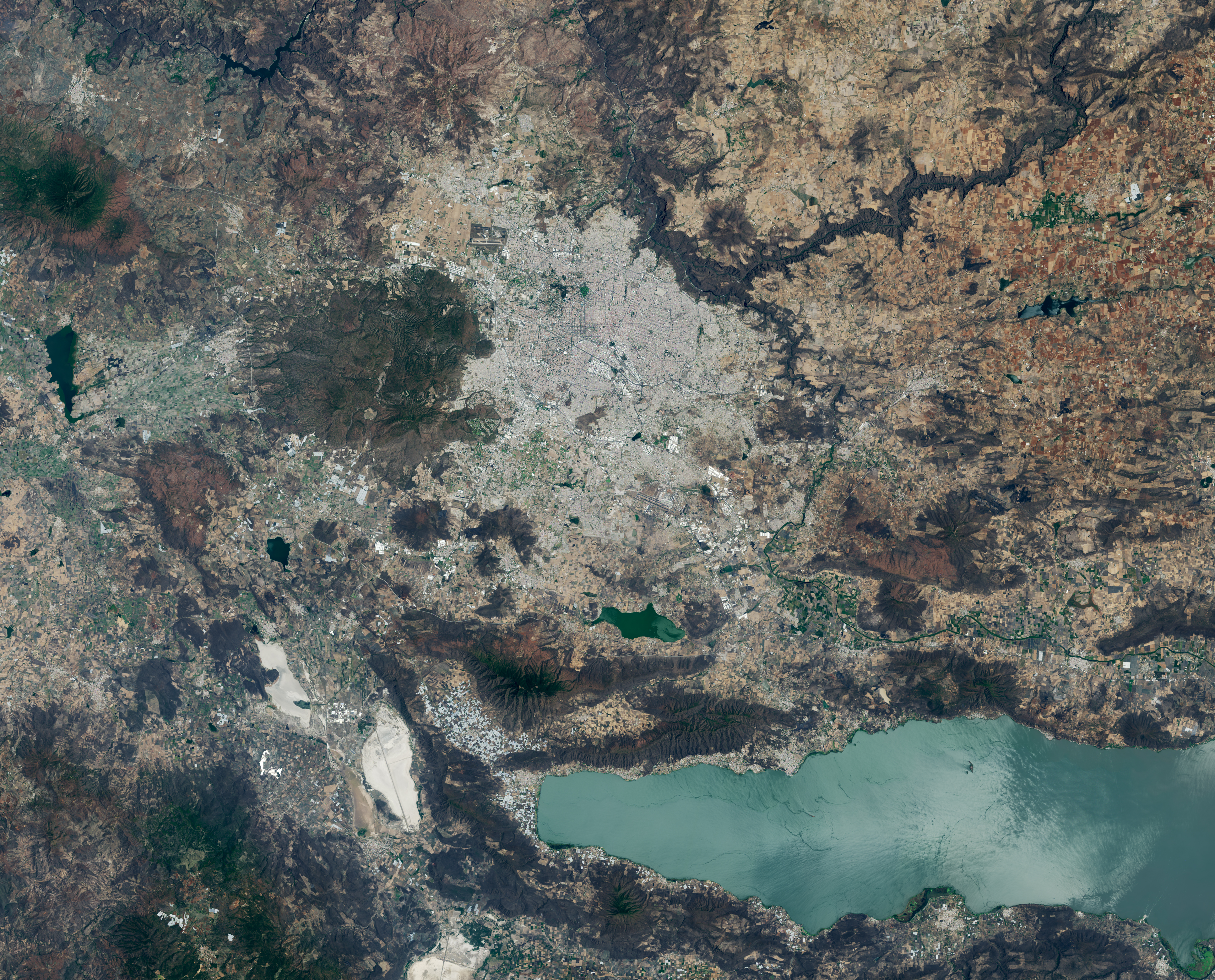
A pair of Landsat images shows 40 years of westward urban expansion from Guadalajara, Mexico. The Thematic Mapper on Landsat 5 captured the left image in 1986; the Operational Land Imager on Landsat 8 captured the right image in 2026.
A pair of Landsat images shows 40 years of westward urban expansion from Guadalajara, Mexico. The Thematic Mapper on Landsat 5 captured the left image in 1986; the Operational Land Imager on Landsat 8 captured the right image in 2026.
NASA Earth Observatory / Lauren Dauphin
A pair of Landsat images shows 40 years of westward urban expansion from Guadalajara, Mexico. The Thematic Mapper on Landsat 5 captured the left image in 1986; the Operational Land Imager on Landsat 8 captured the right image in 2026.
A pair of Landsat images shows 40 years of westward urban expansion from Guadalajara, Mexico. The Thematic Mapper on Landsat 5 captured the left image in 1986; the Operational Land Imager on Landsat 8 captured the right image in 2026.
NASA Earth Observatory / Lauren Dauphin
April 13, 1986
April 27, 2026
April 13, 1986 – April 27, 2026
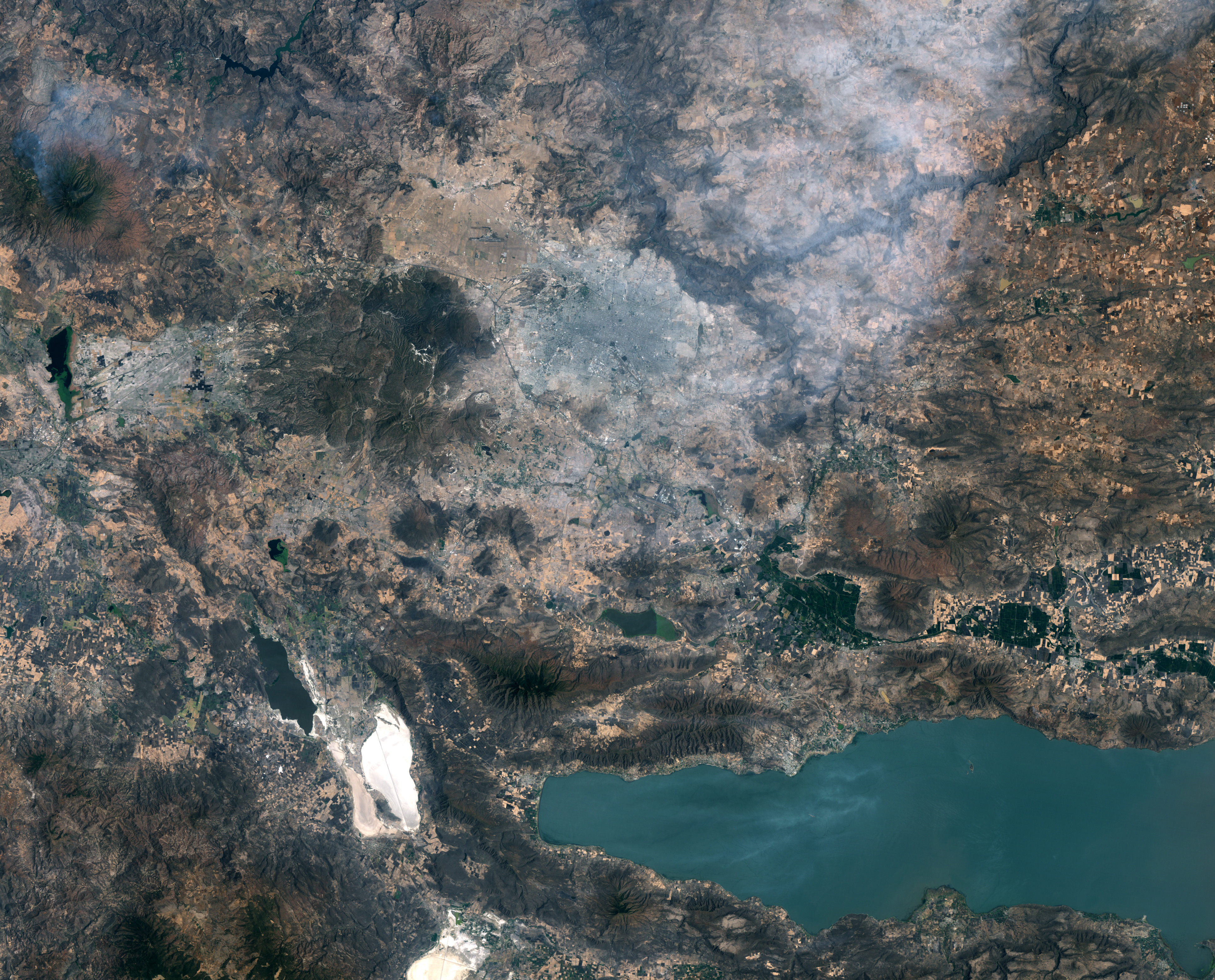
A pair of Landsat images shows 40 years of westward urban expansion from Guadalajara, Mexico. The TM (Thematic Mapper) on Landsat 5 captured the left image in 1986; the OLI (Operational Land Imager) on Landsat 8 captured the right image in 2026.
Guadalajara, Mexico, was quite a different place when it last hosted World Cup games 40 years ago. The city welcomed matches in June 1986 and did so again in 2026, when South Korea faced Czechia at Guadalajara Stadium in the opening round of the 2026 FIFA World Cup.
In 1986, Guadalajara Stadium had not yet been built in Zapopan, the fast-growing municipality just northwest of Guadalajara. Many of that year’s World Cup matches were held instead at Jalisco Stadium in northeastern Guadalajara. It was in that stadium that France defeated Brazil in a penalty shootout in the 1986 quarterfinals, in what is widely regarded as one of the most memorable World Cup games of all time.
As seen in the Landsat images above, the land where Guadalajara Stadium (also called Estadio Akron) now sits was farmland in 1986. The new stadium, built in 2010 to host Mexico’s Club Deportivo Guadalajara, or Chivas, lies near the Sierra la Primavera volcanic complex, a rugged landscape full of lava flows, volcanic domes, steam vents, and hot springs. The architects who designed the stadium took inspiration from the nearby volcanic terrain, creating a structure that rises from a grassy earthen berm meant to resemble the flanks of a volcano, topped with a white roof reminiscent of a volcanic cloud.
About 95,000 years ago, the volcanic system underneath Sierra la Primavera produced a massive eruption that caused a caldera 11 kilometers (7 miles) in diameter to slump downward. Water filled the depression for tens of thousands of years, but tectonic uplift and the accumulation of sediment eventually led to the demise of the lake. Erosion wore away the softer surrounding rock over time, leaving harder, erosion-resistant volcanic rocks within the circular feature that now stand high above the surrounding terrain.
Starting about 60,000 years ago, several lava domes erupted along the southern edge of the caldera. The youngest of them, Cerro del Colli, formed about 30,000 years ago, leaving the dome-shaped feature just south of the stadium and contributing to a broader landscape dotted with other volcanic domes and cinder cones.
Today, much of the original caldera has been preserved as a forested area known as La Primavera Biosphere Reserve, even as development has partially encircled it during the past 40 years. The population of the Guadalajara metro area has grown from about 2.7 million in 1986 to more than 5.5 million now, with particularly rapid growth in Zapopan, a burgeoning tech hub sometimes billed as “Mexico’s Silicon Valley.” A prominent development visible in Landsat images is Guadalajara Technology Park, one of several new industrial parks in Zapopan. New greenhouses have also come to the area en masse, including south of the reserve, where they are mostly used to grow fruits and vegetables.
World Cup fever runs particularly high in Guadalajara, which is hosting World Cup matches for the third time. During Brazil’s legendary title run in 1970, when Pelé led the team, Jalisco Stadium was the venue for Brazil’s first-round, quarterfinal, and semifinal matches. To commemorate him, the city in May 2026 erected a 9.5-meter (31-foot) bronze statue of the iconic football (soccer) player.
Even the animals at Guadalajara Zoo are taking part in the festivities, with elephants, gorillas, giraffes, capybaras, pumas, and macaws “predicting” match winners by choosing between food, shirts, boxes, soccer balls, and other items. A puma named Muluk predicted South Korea would beat Czechia by sniffing and moving a ball, one newspaper reported.
Guadalajara will host four first-round matches: South Korea vs. Czechia on June 12, Mexico vs. South Korea on June 18, Colombia vs. Democratic Republic of the Congo on June 23, and Uruguay vs. Spain on June 26.
NASA Earth Observatory images by Lauren Dauphin, using Landsat data from the U.S. Geological Survey. Story by Adam Voiland.
A pair of Landsat images shows 40 years of westward urban expansion from Guadalajara, Mexico. The Thematic Mapper on Landsat 5 captured the left image in 1986; the Operational Land Imager on Landsat 8 captured the right image in 2026.
A pair of Landsat images shows 40 years of westward urban expansion from Guadalajara, Mexico. The Thematic Mapper on Landsat 5 captured the left image in 1986; the Operational Land Imager on Landsat 8 captured the right image in 2026.
NASA Earth Observatory / Lauren Dauphin
A pair of Landsat images shows 40 years of westward urban expansion from Guadalajara, Mexico. The Thematic Mapper on Landsat 5 captured the left image in 1986; the Operational Land Imager on Landsat 8 captured the right image in 2026.
A pair of Landsat images shows 40 years of westward urban expansion from Guadalajara, Mexico. The Thematic Mapper on Landsat 5 captured the left image in 1986; the Operational Land Imager on Landsat 8 captured the right image in 2026.
NASA Earth Observatory / Lauren Dauphin
April 13, 1986
April 27, 2026
April 13, 1986 – April 27, 2026
A pair of Landsat images shows 40 years of westward urban expansion from Guadalajara, Mexico. The TM (Thematic Mapper) on Landsat 5 captured the left image in 1986; the OLI (Operational Land Imager) on Landsat 8 captured the right image in 2026.
Guadalajara, Mexico, was quite a different place when it last hosted World Cup games 40 years ago. The city welcomed matches in June 1986 and did so again in 2026, when South Korea faced Czechia at Guadalajara Stadium in the opening round of the 2026 FIFA World Cup.
In 1986, Guadalajara Stadium had not yet been built in Zapopan, the fast-growing municipality just northwest of Guadalajara. Many of that year’s World Cup matches were held instead at Jalisco Stadium in northeastern Guadalajara. It was in that stadium that France defeated Brazil in a penalty shootout in the 1986 quarterfinals, in what is widely regarded as one of the most memorable World Cup games of all time.
As seen in the Landsat images above, the land where Guadalajara Stadium (also called Estadio Akron) now sits was farmland in 1986. The new stadium, built in 2010 to host Mexico’s Club Deportivo Guadalajara, or Chivas, lies near the Sierra la Primavera volcanic complex, a rugged landscape full of lava flows, volcanic domes, steam vents, and hot springs. The architects who designed the stadium took inspiration from the nearby volcanic terrain, creating a structure that rises from a grassy earthen berm meant to resemble the flanks of a volcano, topped with a white roof reminiscent of a volcanic cloud.
About 95,000 years ago, the volcanic system underneath Sierra la Primavera produced a massive eruption that caused a caldera 11 kilometers (7 miles) in diameter to slump downward. Water filled the depression for tens of thousands of years, but tectonic uplift and the accumulation of sediment eventually led to the demise of the lake. Erosion wore away the softer surrounding rock over time, leaving harder, erosion-resistant volcanic rocks within the circular feature that now stand high above the surrounding terrain.
Starting about 60,000 years ago, several lava domes erupted along the southern edge of the caldera. The youngest of them, Cerro del Colli, formed about 30,000 years ago, leaving the dome-shaped feature just south of the stadium and contributing to a broader landscape dotted with other volcanic domes and cinder cones.
Today, much of the original caldera has been preserved as a forested area known as La Primavera Biosphere Reserve, even as development has partially encircled it during the past 40 years. The population of the Guadalajara metro area has grown from about 2.7 million in 1986 to more than 5.5 million now, with particularly rapid growth in Zapopan, a burgeoning tech hub sometimes billed as “Mexico’s Silicon Valley.” A prominent development visible in Landsat images is Guadalajara Technology Park, one of several new industrial parks in Zapopan. New greenhouses have also come to the area en masse, including south of the reserve, where they are mostly used to grow fruits and vegetables.
World Cup fever runs particularly high in Guadalajara, which is hosting World Cup matches for the third time. During Brazil’s legendary title run in 1970, when Pelé led the team, Jalisco Stadium was the venue for Brazil’s first-round, quarterfinal, and semifinal matches. To commemorate him, the city in May 2026 erected a 9.5-meter (31-foot) bronze statue of the iconic football (soccer) player.
Even the animals at Guadalajara Zoo are taking part in the festivities, with elephants, gorillas, giraffes, capybaras, pumas, and macaws “predicting” match winners by choosing between food, shirts, boxes, soccer balls, and other items. A puma named Muluk predicted South Korea would beat Czechia by sniffing and moving a ball, one newspaper reported.
Guadalajara will host four first-round matches: South Korea vs. Czechia on June 12, Mexico vs. South Korea on June 18, Colombia vs. Democratic Republic of the Congo on June 23, and Uruguay vs. Spain on June 26.
NASA Earth Observatory images by Lauren Dauphin, using Landsat data from the U.S. Geological Survey. Story by Adam Voiland.
NASA Award Boosts Space Technology Research Capabilities
NASA is introducing a new funding opportunity to accelerate academic research and technology development. The Minority University Research and Education Project Space Technology Artemis Research (M‑STAR) application window opened Thursday and will remain open through 11:59 p.m. EDT on Tuesday, Aug. 11.
The research funded through this award supports the agency’s priorities for exploring the Moon, Mars, and deep space, while strengthening eligible institutions in the future of space exploration. Through M-STAR, institutions are encouraged to grow their scientific and engineering capabilities, enhance faculty and student engagement in aerospace research, and expand their ability to compete for future federal and commercial research awards.
Administered by NASA’s Office of STEM Engagement, this initiative contributes to NASA’s Space Technology Mission Directorate, and supports the agency’s broader mission to develop innovative technologies that improve space transportation, human exploration, robotic discovery, and the growing space economy.
NASA’s Office of STEM Engagement fosters an ecosystem across education, industry, and government to cultivate a well‑prepared talent pool, while the agency’s Space Technology Mission Directorate develops the transformative space technologies that enable future NASA missions and ensure U.S. leadership in aerospace. Together, they accelerate mission readiness by aligning cutting edge technological innovation with the workforce needed to carry it forward.
For complete eligibility information, help session registration, and to submit an M-STAR proposal, visit:
Listen to this audio excerpt from Elkin Norena, resident management officer, NASA’s Space Launch System Program:
0:00 / 0:00
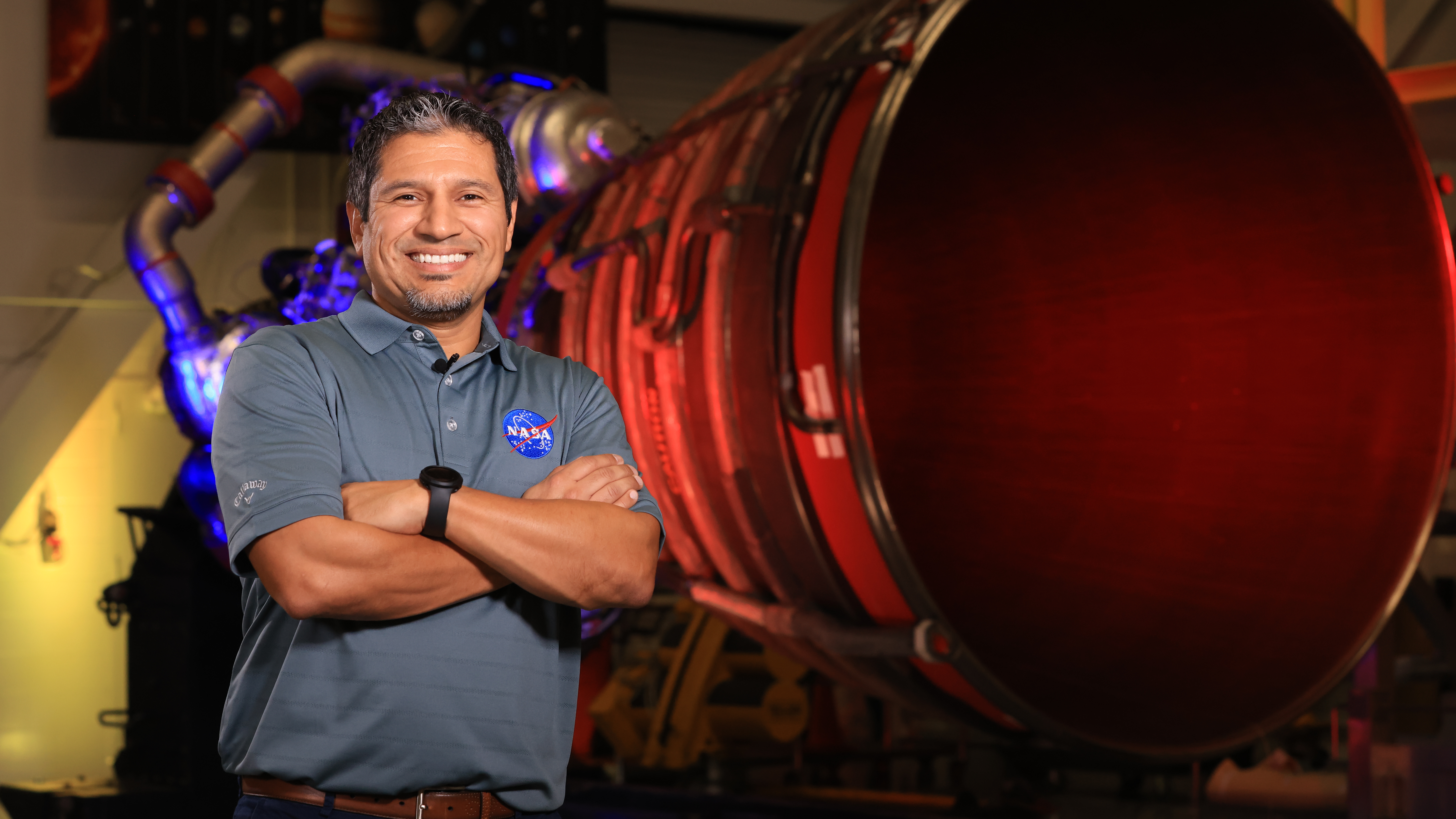
NASA’s Elkin Norena has helped the agency launch more than a dozen space shuttle missions – that’s more than a dozen crews to low Earth orbit and more than a dozen historic missions. They were missions that helped build the International Space Station, that provided a final servicing mission to the Hubble Space Telescope, and that performed critical science experiments that improved life right here on Earth.
Today, he continues that work as the manager of the Resident Management Office for SLS at NASA’s Kennedy Space Center in Florida, helping launch America’s rocket – the SLS (Space Launch System) – and the Orion spacecraft with its international quartet of astronauts on the Artemis II mission to fly by the Moon and return home.
Elkin Norena, who serves as an SLS resident management officer at NASA’s Kennedy Space Center in Florida, stands in front of an RS-25 engine.
NASA
As resident manager, Norena provides onsite SLS support for NASA’s Exploration Ground Systems team that is responsible for preparing, stacking, testing, and launching SLS and Orion. He is also the eyes and ears for the SLS Program, providing an avenue of communications back to the program, which is managed at NASA’s Marshall Space Flight Center in Huntsville, Alabama.
It is the continuation of a childhood dream to be part of space exploration.
“When I was a kid in New Jersey, I watched a space shuttle launch in class one day,” said Norena. “When I watched the power of launch and the brave astronauts going to explore, I knew I had to be a part of that one day. I wanted to become an astronaut.”
The dream to join the space program led the Colombia native to the University of Central Florida in Orlando, where he majored in computer engineering, just miles from the Space Coast and in view of space shuttle launches like the ones he once watched on TV.
When that clock ticks down to T-10 minutes, everybody’s just waiting. You wait for the automated system to kick in. You hold your breath and watch the clock go down to T-0. Then BOOM, launch happens, and you know it was all worth it.
Elkin Norena
Resident management officer, NASA Space Launch System Program
Following college, he joined NASA contractor United Space Alliance at NASA Kennedy, and in 2008 he joined the NASA Kennedy team as a civil servant, working on the same spacecraft that inspired him to pursue the space program as a child.
“I started off in the Space Shuttle Program as an electrical engineer. Then I moved into the firing room for 17 different shuttle missions as a flight termination engineer. It was exciting to be part of all those missions and build the International Space Station,” Norena said.
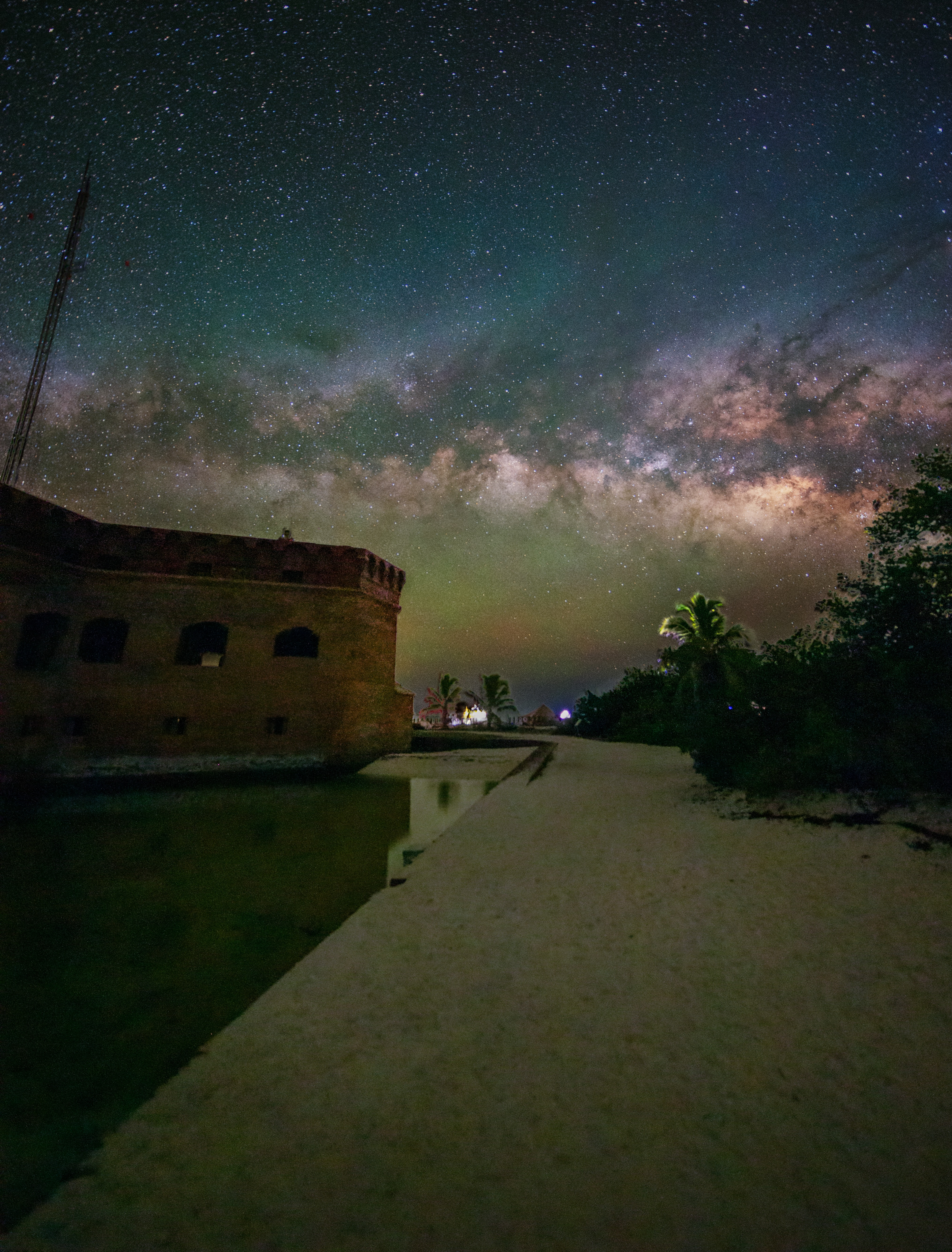
The Milky Way stretches above Dry Tortugas National Park in Florida.
Elkin Norena
Using those experiences, he became one of the original SLS team members. He was a part of the teams that successfully launched Artemis I and II and is now critical to the upcoming Artemis III mission.
Away from the launch pad, Norena’s hobbies orbit around his teenage daughters, participating in their activities. He also keeps a keen eye on space and is an avid astrophotographer.
“I love capturing the Milky Way! I’ve traveled to Utah, New Mexico, Arizona, and all across the western United States,” he said. “A great spot that’s closer for me is Dry Tortugas National Park beyond Key West.”
No matter how he explores space, Norena believes Artemis II is more than just a mission.
“This is historic. I grew up watching the shuttle missions, learning about Apollo, and wanting to be part of those Moon missions. We built the space station. The space shuttle explored space and technology on many levels,” he said. “Now, it’s our turn with Artemis to get back to the Moon, and this time to stay there. I’m excited to be part of the generation that does that.”
In Hayneville, Alabama, a stark environmental justice issue is unfolding along the historic route where civil rights marchers once walked toward Montgomery. This rural community, where some residents still cannot flush their toilets due to inadequate sewage infrastructure, now faces the prospect of a massive data center being built in their backyard.
The proposed facility represents a troubling pattern of environmental inequality, where communities already struggling with basic utilities become targets for industrial development that could strain their limited resources further. Data centers are notorious for their enormous energy consumption and water usage requirements for cooling systems, potentially exacerbating existing infrastructure challenges in areas that can least afford additional environmental burdens.
The juxtaposition is particularly striking along Highway 80, a road that symbolizes the fight for equal rights and justice. Today, residents of this same corridor face a different kind of struggle—one for environmental equity and access to basic services that many Americans take for granted. The situation highlights how communities with limited political and economic power often bear disproportionate environmental costs while receiving few benefits from industrial development.
This case exemplifies the growing tension between the digital economy’s infrastructure needs and environmental justice concerns, particularly in rural areas where oversight may be limited and community voices often go unheard in development decisions.

 Login