❌

Normal view

Astronomers Find Strongest Evidence Yet for Magnetic Fields on Alien Worlds

By: ESO
12 June 2026 at 20:32
Artist’s Impression of an Exoplanet With a Magnetic FieldAstronomers studying the atmospheres of several intensely heated exoplanets uncovered an unexpected pattern that may reveal a hidden property of these distant worlds. Astronomers have uncovered the clearest evidence so far that some planets beyond our Solar System possess magnetic fields. By measuring atmospheric winds on seven extremely hot gas giants, researchers found signs that [...]

Astronomers Unveil Record-Breaking Haul of 161 New Black Hole Collisions

12 June 2026 at 19:57
Gravitational Waves IllustrationA new gravitational-wave catalogue reports 161 additional black hole mergers, bringing the total to 390 detections. Scientists at the University of Glasgow’s Institute for Gravitational Research are celebrating the release of a major new collection of gravitational wave discoveries, a milestone that highlights the rapid growth of gravitational astronomy. The latest Gravitational Wave Transient Catalogue [...]

Ancient Meteorite Reveals a Forgotten Planet That Existed 4.5 Billion Years Ago

Comet on Fire Meteor EarthA rare meteorite recovered from the Sahara Desert has revealed compelling evidence for a long-lost world that existed during the solar system’s earliest days. About 4.5 billion years ago, a large planetary body, potentially as large as the Moon or even Mars, orbited the Sun before colliding with another object and breaking apart. Now, researchers [...]

A trillion dollars is a stupid amount of money

12 June 2026 at 17:26
Elon Musk in front of a background of falling money.

Elon Musk is now officially the world's first trillionaire. That is a colossal amount of wealth (and by proxy, power) for one individual to have. Its scale - a thousand times more than a billion - is difficult to fathom for those of us who aren't among the 3,363 billionaires that currently exist in our world. But let's try to comprehend it anyway.

The most frequently cited comparison is time. If you were to count out a million seconds, it would take you 11 and a half days. A billion seconds would take you 31.7 years. But a trillion seconds would take 31,700 years - to reach that point today, you would have needed to start counting in the Pa …

Read the full story at The Verge.

Elon Musk is the world’s first trillionaire

12 June 2026 at 17:24
Elon Musk with zeros and money falling from the sky.

Elon Musk's net worth has passed the trillion-dollar mark after SpaceX's IPO. His net worth, which was hovering around $800 billion before the IPO, includes the value of his 4.8 billion shares in SpaceX, along with his wealth from his other companies, like Tesla. Shares of SPCX opened at $150 and have remained well above the $138 benchmark that gives Musk a 13-figure net worth.

SpaceX combined Musk's rocket, AI, and social media platforms earlier this year, and said in its S-1 that its goal is to "build the systems and technologies necessary to make life multiplanetary, to understand the true nature of the universe, and to extend the light …

Read the full story at The Verge.

NASA to Cover 34th SpaceX Resupply Mission Space Station Departure

12 June 2026 at 16:32
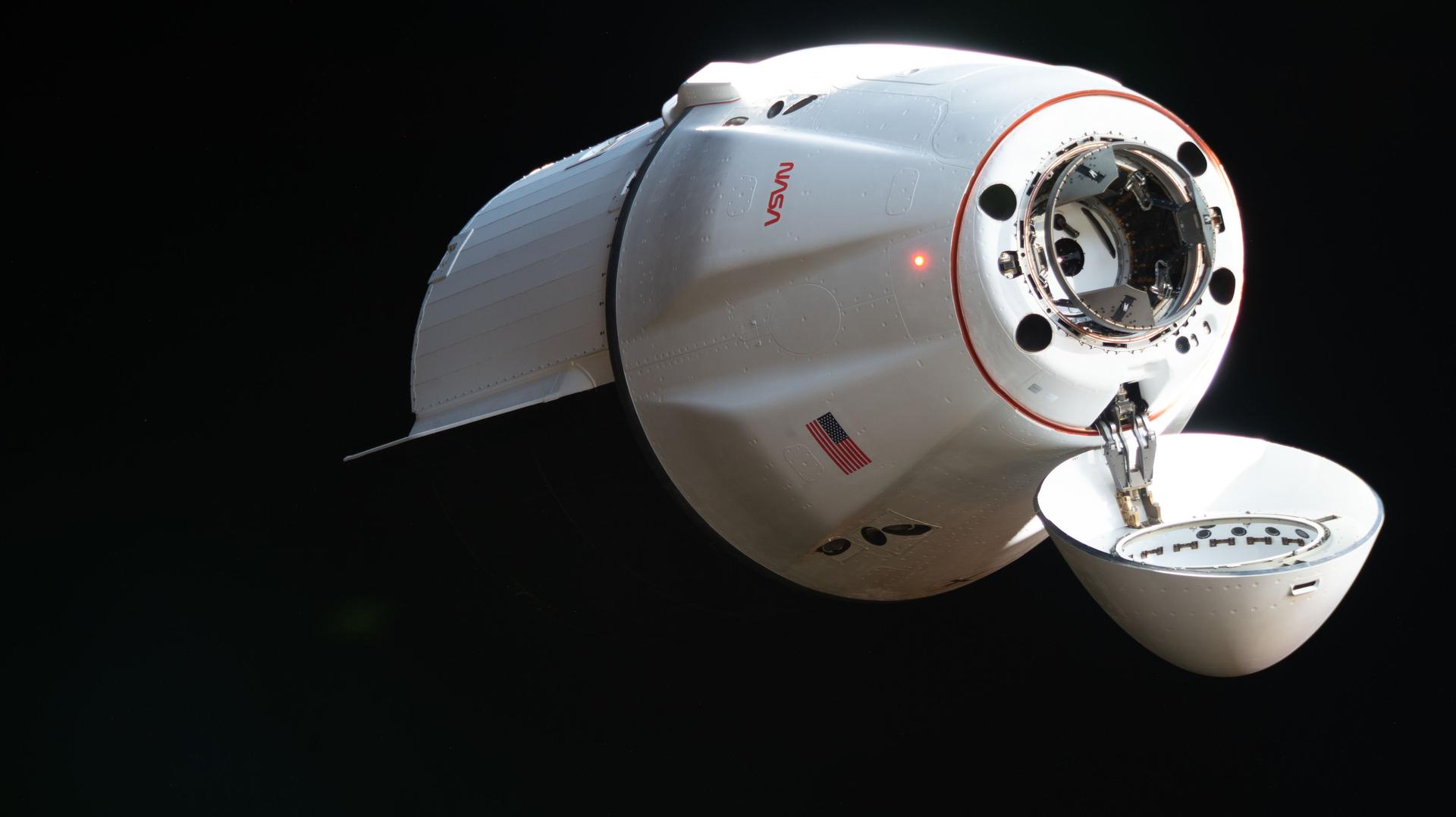
The SpaceX Dragon cargo spacecraft supporting the company’s 34th commercial resupply services mission for NASA approaches the International Space Station on May 17, 2026, carrying nearly 6,500 pounds of food, supplies, and equipment for the Expedition 74 crew.
Credit: NASA

NASA and its international partners are set to receive scientific research samples and hardware as a SpaceX Dragon spacecraft is scheduled to depart the International Space Station on Tuesday, June 16, for its return to Earth.

Watch NASA’s live undocking coverage beginning at 11:45 a.m. EDT on NASA+, Amazon Prime, and the agency’s YouTube channel. Learn how to watch NASA content through a variety of online platforms, including social media.

The Dragon spacecraft will undock from the forward port of the station’s Harmony module at about 12:05 p.m., after receiving a command from SpaceX ground controllers. The spacecraft then will fire its thrusters to move safely away from the orbiting complex.

Following a June 16 departure, the spacecraft will reenter Earth’s atmosphere on Wednesday, June 17, before splashing down off the coast of California at approximately 5:08 a.m. PDT. NASA will not stream the splashdown but will post updates on its space station blog.

Dragon will return to Earth with thousands of pounds of cargo, carrying samples that could shape future space exploration and life on Earth. Research returning includes bioprinted organ and cartilage tissue, data on improving cryogenic fuel storage for future space missions, and DNA‑inspired materials to develop new cancer treatments. The returning hardware includes an ocular imaging device used to monitor crew members’ eye health, an absorbent bed that filters trace contaminants from cabin air, and a separator pump from the waste and hygiene compartment.

Loaded with nearly 6,500 pounds of crew cargo and science experiments, Dragon arrived at the station on May 17 after launching two days earlier on a Falcon 9 rocket from Space Launch Complex 40 at Cape Canaveral Space Force Station in Florida.

For more than 25 years, people have lived and worked continuously aboard the International Space Station, advancing scientific knowledge and making research breakthroughs not possible on Earth. The space station helps NASA understand and overcome the challenges of human spaceflight, expand commercial opportunities in low Earth orbit, and build on the foundation for long-duration missions to the Moon, as part of the Artemis program, and to Mars.

Get breaking news, images, and features from the space station on Instagram, Facebook, and X.

Learn more about International Space Station research and operations at:

https://www.nasa.gov/international-space-station

-end-

Jimi Russell
Headquarters, Washington
202-358-1100
james.j.russell@nasa.gov

Leah Cheshier
Johnson Space Center, Houston
281-483-5111
leah.d.cheshier@nasa.gov

The post NASA to Cover 34th SpaceX Resupply Mission Space Station Departure appeared first on NASA Science.

NASA to Cover 34th SpaceX Resupply Mission Space Station Departure

12 June 2026 at 16:32
The SpaceX Dragon cargo spacecraft supporting the company’s 34th commercial resupply services mission for NASA approaches the International Space Station on May 17, 2026, carrying nearly 6,500 pounds of food, supplies, and equipment for the Expedition 74 crew.
Credit: NASA

NASA and its international partners are set to receive scientific research samples and hardware as a SpaceX Dragon spacecraft is scheduled to depart the International Space Station on Tuesday, June 16, for its return to Earth.

Watch NASA’s live undocking coverage beginning at 11:45 a.m. EDT on NASA+, Amazon Prime, and the agency’s YouTube channel. Learn how to watch NASA content through a variety of online platforms, including social media.

The Dragon spacecraft will undock from the forward port of the station’s Harmony module at about 12:05 p.m., after receiving a command from SpaceX ground controllers. The spacecraft then will fire its thrusters to move safely away from the orbiting complex.

Following a June 16 departure, the spacecraft will reenter Earth’s atmosphere on Wednesday, June 17, before splashing down off the coast of California at approximately 5:08 a.m. PDT. NASA will not stream the splashdown but will post updates on its space station blog.

Dragon will return to Earth with thousands of pounds of cargo, carrying samples that could shape future space exploration and life on Earth. Research returning includes bioprinted organ and cartilage tissue, data on improving cryogenic fuel storage for future space missions, and DNA‑inspired materials to develop new cancer treatments. The returning hardware includes an ocular imaging device used to monitor crew members’ eye health, an absorbent bed that filters trace contaminants from cabin air, and a separator pump from the waste and hygiene compartment.

Loaded with nearly 6,500 pounds of crew cargo and science experiments, Dragon arrived at the station on May 17 after launching two days earlier on a Falcon 9 rocket from Space Launch Complex 40 at Cape Canaveral Space Force Station in Florida.

For more than 25 years, people have lived and worked continuously aboard the International Space Station, advancing scientific knowledge and making research breakthroughs not possible on Earth. The space station helps NASA understand and overcome the challenges of human spaceflight, expand commercial opportunities in low Earth orbit, and build on the foundation for long-duration missions to the Moon, as part of the Artemis program, and to Mars.

Get breaking news, images, and features from the space station on Instagram, Facebook, and X.

Learn more about International Space Station research and operations at:

https://www.nasa.gov/international-space-station

-end-

Jimi Russell
Headquarters, Washington
202-358-1100
james.j.russell@nasa.gov

Leah Cheshier
Johnson Space Center, Houston
281-483-5111
leah.d.cheshier@nasa.gov

New SPHEREx Space Telescope Images Confirm a Major Problem That Many Astronomers Were Afraid Of

12 June 2026 at 15:52

Nearly three out of every four images obtained by NASA’s new SPHEREx space telescope revealed something many astronomers were afraid of: contamination by artificial objects humans are launching into space.

The findings were reported in a new preprint paper by researchers at NASA’s Ames Research Center, who say that 73.3% of all the images the telescope captured over four months last summer revealed evidence of at least one trail left by SpaceX satellites or other orbital spacecraft.

What may be worst of all is that astronomers aren’t surprised.

With its mission to map the night sky in near-infrared light, NSA’s Spectro-Photometer for the History of the Universe, Epoch of Reionization, and Ices Explorer (SPHEREx) relies on long-exposure imagery that enables it to map large regions of the sky with every viewing.

Unfortunately, long-exposure photography is also ideal for capturing the movement of satellites, an increasing number of which have been placed in orbit in recent years.

Equally troubling is the fact that SPHEREx, from its own position in Earth orbit, had been positioned at an altitude where it was hoped that the number of satellite streaks could be limited. Yet despite such efforts, the new paper featured at the arXiv preprint server reports that, on average, at least two satellite trails were detected in every exposure.

Satellites Mistaken for Cosmic Rays

Astronomers have been raising concerns about this problem already for some time, and presently, there doesn’t appear to be any near-term solution.

Even beyond image contamination, the preprint study also found that several satellites that enter SPHEREx’s field of view are bright enough that they are also triggering the space telescope’s automated system that protects its delicate components from stray cosmic rays.

Designed to shut down the telescope’s data collection when it detects what it suspects are cosmic rays, the new research reveals that some satellites reflect enough light to engage algorithms that control this defense system.

Even in instances where imagery is successfully obtained, albeit with contamination from satellites, the brightness of these orbital objects can effectively obscure objects behind the portions of the telescope’s images where the satellites appeared.

satellite trails
In the images above, several examples of satellite trails are shown in SPHEREx imagery collected during the summer months of 2025 Image Credit: NASA/Borlaff, et al/arXiv.org).

A Growing Concern

The new SphereX findings are only the latest indication that astronomers were right to be concerned about potential light pollution from satellites. In a past study by Sando Kruk and colleagues, Hubble Telescope images had shown an increase in the number of satellites crossing its field of view, rising from contamination shown in just 2.8% of its images, to 5.9% over a period of two decades.

Ideas about how to prevent the issue have focused on using anti-reflective coatings on satellites and other means of reducing their brightness once they reach orbit. However, many modern satellites are large enough that having darker exteriors doesn’t help to significantly mitigate the amount of light they can reflect.

Additionally, the study’s authors note that “Optical reflections are just a fraction of the problem, since satellites also emit and reflect [infrared],” meaning that optical darkening efforts “might even increase their temperature, making them brighter in the IR.”

Worse Before It Gets Better

According to the study’s authors, the problem is likely to worsen before astronomers see any improvements.

“Remarkably, some private operators have announced the intent of deploying 4000 purposely high reflective satellites,” the researchers write, which aim to provide “sunlight on demand.” Such artificial orbital systems, if successfully deployed, would reflect light as much as five times the brightness of the full Moon onto areas of the Earth roughly five kilometers in diameter.

This, the team argues, would potentially have “a catastrophic impact to the quality of the dark sky and the Earth’s inhabitants.”

Fundamentally, the authors hope that bringing additional attention to such issues with their recent study may help to mitigate future concerns about our ever-brightening night sky.

“The widespread contamination addressed in this paper affects multiple areas of astronomical research,” the team says, which they say includes “the study of transient phenomena, deep imaging surveys, spectroscopic studies, and the search for Near-Earth Objects (NEOs), thereby hindering our ability to understand the Universe and protect the Earth.”

The new paper by Alejandro S. Borlaff and colleagues, “SPHEREx confirms predictions for artificial satellite trail pollution in Low Earth Orbit,” appeared at the preprint arXiv server.

Micah Hanks is the Editor-in-Chief and Co-Founder of The Debrief. A longtime reporter on science, defense, and technology with a focus on space and astronomy, he can be reached at micah@thedebrief.org. Follow him on X @MicahHanks, and at micahhanks.com.

SpaceX’s massive IPO: all the latest news

12 June 2026 at 15:35

SpaceX is public: Everything you need to know post-IPO

16 June 2026 at 16:53
TechCrunch has followed SpaceX's start, struggles, and successes from the early days. And we're here for what happens next too. This package of SpaceX IPO coverage includes who stands to win (and maybe some who won't), pre-IPO deals, and what's tucked inside its S-1 registration document.

NASA and USAF-Backed Research Reveals the Breakthrough Propulsion Technology That Could Propell Future Satellite Swarms

12 June 2026 at 13:21


In a University of Kentucky laboratory, three small spacecraft stand-ins slid across low-friction air tracks, nudging and pulling one another without thrusters, propellant, or physical contact.

Instead, they used carefully timed magnetic fields, a technique that could one day help future satellite swarms hold precise formations in space without constantly burning fuel.

The NASA and Air Force-backed study, set to be published in the September 2026 edition of Aerospace Science and Technology,  marks a step toward what researchers call electromagnetic formation flying, a proposed method for controlling the relative positions of satellites using onboard coils rather than conventional propellant-based thrusters.

In the study, researchers demonstrated a decentralized, three-satellite control system that used alternating magnetic field forces to maintain formation with centimeter-level precision, offering a possible pathway for future space telescopes, interferometers, gravity-wave detectors, and other distributed spacecraft missions.

“Spacecraft formation flying can advance a variety of space technologies such as distributed-aperture telescopes, gravity-wave detectors, and interferometers,” researchers write. “One challenge for spacecraft formation flying is that traditional propellant thrusters eventually deplete, and they can contaminate sensitive spacecraft components.”

The study, authored by scientists from the University of Kentucky’s Department of Mechanical and Aerospace Engineering, focuses on a longstanding problem in spacecraft engineering.

Many future missions may not rely on a single large spacecraft, but instead on groups of smaller satellites flying in carefully arranged formations. If those satellites can maintain their spacing and orientation with extreme precision, they could function together like a much larger scientific instrument.

For example, a distributed-aperture telescope could use multiple spacecraft separated by carefully controlled distances to achieve observing capabilities that might be difficult or impossible with a single monolithic telescope.

Similar formation-flying concepts have been proposed for space-based interferometers and additional missions in which the relative positions of spacecraft are central to mission performance.

However, keeping multiple satellites in formation is not easy. Standard spacecraft rely on thrusters, which consume limited propellant. Over time, that fuel runs out, limiting mission duration and maneuverability. Thruster plumes can also contaminate sensitive instruments, a concern on spacecraft carrying delicate optical, scientific, or electromagnetic sensors.

However, electromagnetic formation flying, or EMFF, offers a different possibility. Each spacecraft carries electromagnetic coils. When electric current flows through those coils, they create magnetic fields. Those fields interact with magnetic fields created by nearby spacecraft, producing attractive or repulsive forces that can alter the satellites’ positions relative to one another.

Put simply, the satellites can push or pull on each other using magnetism.

The idea is not entirely new. Previous work has explored electromagnetic formation flying between two spacecraft, including experiments using direct-current-driven coils.

The problem becomes much harder when the formation includes three or more satellites. In that case, every satellite’s magnetic field can interact with the others, creating a web of coupled forces that becomes increasingly difficult to control as the formation grows.

The new study approaches that problem using alternating magnetic field forces, or AMFF. Rather than driving the coils with steady direct current, the researchers use sinusoidal currents at specific frequencies.

The key insight is that two satellites generate a nonzero time-averaged interaction force only when their magnetic moments alternate at the same frequency. If they do not share a frequency, the average force between them is negligible.

That frequency-matching approach effectively allows the system to pair satellites electromagnetically. One pair can interact at one frequency, while another pair interacts at a different frequency.

By adjusting the amplitude of each sinusoidal signal, the satellites can control the strength of the force between each pair without requiring a centralized controller to solve the entire formation’s motion at once.

“Only pairs with a common frequency can generate a nonzero time-averaged intersatellite force, and that force is determined solely by the amplitudes at the common frequency,” researchers write. “The method in this paper is decentralized, which means that each satellite has access to measurements of its position and velocity relative to only its local neighbor satellites.”

Centralized control can work in smaller systems, but it can turn computationally clumsy as satellite formations grow. A scalable system would need each spacecraft to make local decisions based on nearby neighbors, rather than requiring a single controller to calculate every force across the entire formation.

To test the idea, the researchers built a ground-based experimental platform using three custom electromagnetic actuation system units placed on linear air tracks.

The air tracks allowed the units to move with low friction, simulating one-dimensional relative motion between satellites. Each unit included an electromagnetic coil, batteries, power electronics, an Arduino Due microcontroller, wireless communication hardware, and laser range-finding sensors for measuring relative position.

In the three-satellite setup, the center unit was driven by a sum of two sinusoidal currents, while each outer unit was driven by one of those frequencies. This allowed the center unit to interact independently with each outer unit, demonstrating the central premise of frequency-multiplexed magnetic control.

In closed-loop experiments, the three-satellite system achieved formation in less than 30 seconds. The maximum steady-state formation error was less than plus or minus 0.01 meters, or about 0.4 inches. The mean steady-state formation error was less than plus or minus 0.001 meters, or about 0.04 inches.

Those numbers demonstrate that the method did more than produce a magnetic tug in a lab. It allowed multiple units to settle into a desired formation using local feedback and alternating magnetic fields, while avoiding the coupling problem that has limited electromagnetic control for larger formations.

The researchers also compared the experimental results with computer simulations. While the simulations generally matched the observed behavior, the team noted some differences caused by real-world hardware factors, including sensor interference, current saturation, possible misalignment, airflow disturbances along the air tracks, and unmodeled magnetic effects.

Those caveats are important. This was not a spaceflight demonstration, and the system was tested only in one dimension. Real spacecraft would operate in a far more complex environment, where microgravity, radiation, extreme temperature swings, atmospheric drag in low Earth orbit, gravitational forces, Earth’s magnetic field, and equipment restrictions would all matter.

Researchers also note that traditional thrusters may still be needed for orbit maintenance, orbit transfers, or controlling the overall center of mass of a satellite formation.

In essence, this is not a replacement for all spacecraft propulsion. It is better understood as a possible propellantless method for controlling the relative positions of satellites once they are already in orbit and operating as part of a formation.

Still, that limitation does not diminish the possible impact. If electromagnetic formation flying can be scaled and adapted for real spacecraft, it could reduce propellant demands for future distributed missions. That could extend mission lifetimes, reduce contamination hazards to sensitive instruments, and enable spacecraft formations more flexible than today’s architectures.

The research was supported in part by the National Aeronautics and Space Administration (NASA), the National Science Foundation, and the Air Force Office of Scientific Research.

The funding mix reflects the dual scientific and strategic interests in the work. NASA has clear reasons to explore precise formation flying for future space observatories and scientific missions. The Air Force, meanwhile, has an obvious interest in satellite coordination, maneuverability, and resilient distributed space systems.

The study’s most intriguing contribution may be its demonstration that magnetic-field-based satellite control can be both decentralized and scalable.

Rather than treating a multi-satellite formation in a single complicated system that must be controlled from the top down, AMFF allows each satellite to manage interactions with its neighbors using assigned frequencies. That could become increasingly valuable as space missions move toward constellations, swarms, and distributed architectures.

Researchers caution that additional work will be needed to move beyond one-dimensional air-track experiments and toward three-dimensional testing, more realistic sensing and control hardware, and, eventually, on-orbit validation.

Additional coils would be needed for three-dimensional position control, and relative attitude control could require additional actuation frequencies for each interacting satellite pair.

Nevertheless, the laboratory results show that the underlying concept works in a three-body system, which is exactly where the hard part begins.

Two satellites can pull or push on each other relatively easily. Three satellites introduce the coupling problem that makes electromagnetic formation flying difficult. By demonstrating three-satellite control with alternating magnetic fields, the study delivers experimental evidence that the frequency-based solution can work.

For forthcoming space missions, that could be a meaningful step. The next generation of telescopes and orbital instruments may not always be built as single enormous spacecraft. They may be assembled virtually, with multiple satellites flying together as one coordinated machine.

If so, keeping those satellites precisely arranged without wasting propellant could become one of the enabling technologies of future astronomy, Earth observation, and national security space systems.

“This article presented a 3-satellite experimental demonstration of decentralized EMFF using AMFF,” researchers conclude. “The settling time and steady-state formation error achieved in these experiments demonstrate that this approach is most likely capable of meeting requirements for satellite constellation reconfiguration and maintenance, thereby addressing the need for propellant-free formation flying.”

Tim McMillan is a retired law enforcement executive, investigative reporter and co-founder of The Debrief. His writing typically focuses on defense, national security, the Intelligence Community and topics related to psychology. You can follow Tim on Twitter: @LtTimMcMillan.  Tim can be reached by email: tim@thedebrief.org or through encrypted email: LtTimMcMillan@protonmail.com 

SpaceX is now public

12 June 2026 at 14:54
Elon Musk with big green arrow pointing up and money falling from the sky.

SpaceX is now a publicly traded company.

In one of the most highly anticipated and controversial public offerings of all time, the rocket venture helmed by Elon Musk started trading on Nasdaq on June 12th at the take-it-or-leave-it price of $135-per-share - though most retail investors will likely pay far more.

The IPO is historic for many reasons: SpaceX is hoping to raise $75 billion under the ticker symbol SPCX, which would make it the largest public offering in history. The company is controlled by Musk, who also runs Tesla, another trillion-dollar company. The IPO is expected to make Musk, who is set to control 85 percent of the voti …

Read the full story at The Verge.

❌