Eight endangered Asiatic lions recently died at a national park in India, with officials initially suspecting a tick-borne parasitic disease that had previously plagued the area. However, the Gujarat government later revealed the true culprit: extreme heat. This tragic incident highlights a growing crisis as rising temperatures threaten wildlife populations across the globe.
The lion deaths underscore the urgent need for better protection strategies as climate change intensifies heat stress on vulnerable species. Animals face numerous challenges during extreme heat events, from dehydration and heat stroke to habitat disruption and food scarcity. Endangered species are particularly at risk, as their already small populations cannot afford significant losses.
In response to this mounting threat, scientists have developed a new forecasting tool designed to predict heat-related risks to wildlife months in advance. The system aims to provide early warnings that could help conservation managers take preventive measures, such as providing additional water sources, creating shade structures, or temporarily relocating animals to cooler areas.
While this technological advancement represents a promising step forward in wildlife conservation, significant questions remain about its practical implementation and effectiveness. The challenge lies not just in predicting dangerous conditions, but in having the resources and infrastructure to act on these forecasts quickly enough to save lives at scale. As extreme heat events become more frequent and severe, protecting vulnerable wildlife populations will require both innovative tools and coordinated conservation efforts.
Across the stories today, a common thread emerges: the growing gap between urgent environmental realities and the systems—political, economic, and social—struggling to keep pace with change.
This tension plays out most starkly in the realm of climate health impacts. New research warns that heat-related hospitalizations could double by 2040, while a super El Niño threatens to deepen global economic inequality through cascading climate disruptions. Behind the numbers are real communities adapting in real time. In Pacoima, a working-class Los Angeles neighborhood sandwiched between highways and heavy industry, residents like Jose Luis Salas are mounting their own defense against air pollution, installing shoebox-sized monitoring devices that track what they breathe daily.
Yet the day’s coverage also points to growing momentum around practical solutions gaining real traction. Solar energy quietly surpassed coal in U.S. electricity generation for the first time this May—a milestone that arrived not through grand announcements but through the steady accumulation of rooftop panels and utility-scale installations. Britain cleared a major bottleneck by offering grid connections to over 700 clean energy projects, while new data reveals the country’s green economy now employs over one million workers across a £100 billion sector.
The stories reveal how environmental challenges are increasingly driving innovation at the community level. In Guatemala’s Western Highlands, approximately 60 communities are reviving ancient Maya agricultural wisdom, creating homemade biopesticides from aromatic plants to replace expensive chemical alternatives. Similarly, 120 women farmers in Malawi’s Chiradzulu district have transformed traditional maize cultivation by adding organic fruits and vegetables now in high demand from urban buyers—though their success is shadowed by a troubling reality: their bees, crucial pollinators for food security, are mysteriously disappearing.
It’s a reminder that progress and pressure often arrive together. Colombia enacted groundbreaking legislation requiring detailed cattle tracking to prevent deforestation-linked beef from reaching markets, while Indonesia’s magnificent hornbills face accelerating threats from both habitat loss and an illegal online pet trade. The contrast illustrates how conservation gains in one area can be undermined by emerging threats in another.
Perhaps most telling is how wealth continues to complicate climate action. New research from Greenpeace reveals that the ultra-rich drive a quarter of global emissions not through private jets—their visible symbols of excess—but through their investment portfolios and asset ownership. Meanwhile, chemical companies are quietly pushing “immunity laws” across 15 states to shield themselves from health-related lawsuits, even as communities bear the costs of environmental damage.
The space program offers its own metaphor for these broader tensions. NASA’s latest astronaut selections for Artemis missions reflect both ambition and limitation—crews training for missions that won’t reach the Moon, while hundreds of women gathered at the AeroWomen conference to prepare for space careers in an industry still taking shape.
As the week unfolds, all eyes will be on whether these parallel tracks—accelerating environmental pressures and emerging solutions—can converge into the systemic changes scientists say are necessary. Today’s stories suggest we’re living through a period when local innovation and global challenges are both intensifying, creating opportunities for breakthrough and breakdown in equal measure.
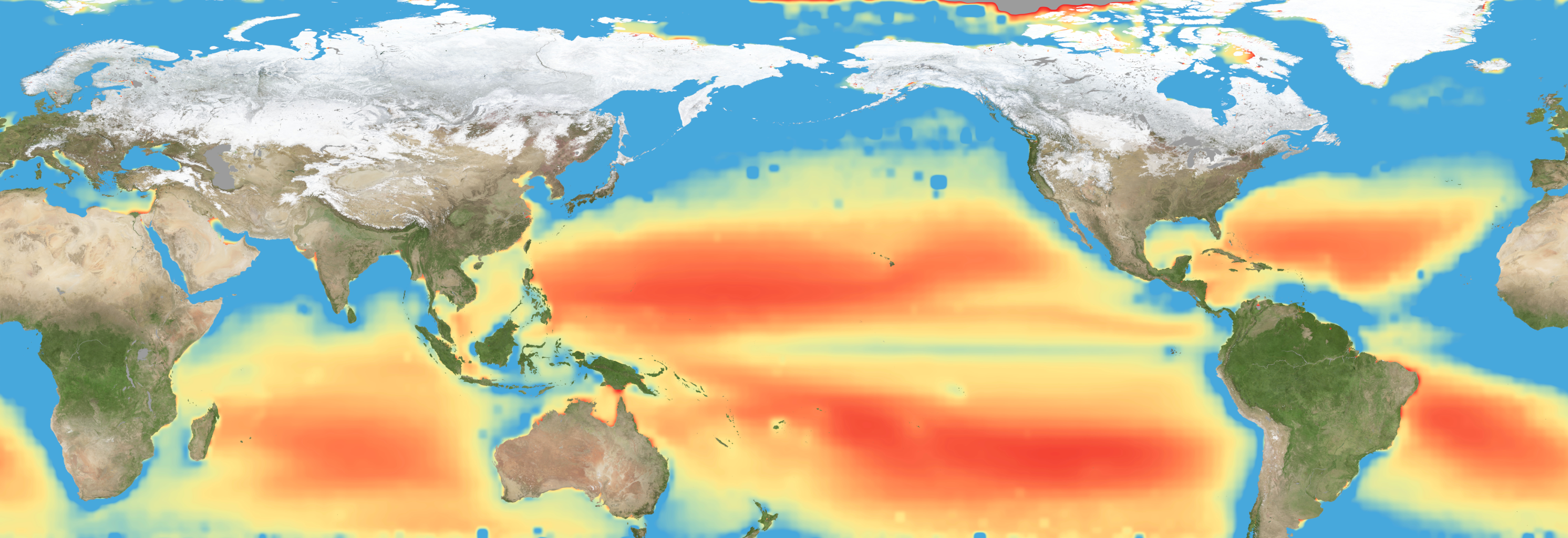
A powerful El Niño weather pattern is emerging as a formidable force that could significantly worsen existing economic disparities across the globe. This climate phenomenon, characterized by unusually warm ocean temperatures in the Pacific, has the potential to trigger a cascade of environmental and economic disruptions that will disproportionately affect the world’s most vulnerable populations.
The intensifying El Niño brings with it a familiar yet devastating playbook of climate impacts: prolonged droughts in some regions, catastrophic flooding in others, and widespread agricultural disruption that threatens food security worldwide. These weather extremes don’t affect all nations equally—developing countries with limited infrastructure and financial resources often bear the heaviest burden when crops fail, supply chains collapse, and communities are forced to rebuild from climate disasters.
Economic experts warn that this “super” El Niño could amplify existing inequalities between wealthy and developing nations. While affluent countries have greater capacity to adapt and recover from climate shocks through advanced technology, robust insurance systems, and emergency reserves, poorer nations often struggle to protect their populations and economies from the same environmental threats. The result is a widening gap where climate change becomes both a symptom and a driver of global economic inequality, creating a vicious cycle that leaves the most vulnerable populations increasingly exposed to future climate risks.
Americans are bracing for another summer of dangerous heat waves, and new research suggests the health crisis is only getting worse. A groundbreaking study projects that heat-related hospitalizations across the United States could double over the next 15 years, creating an unprecedented strain on the nation’s healthcare system.
The alarming findings predict annual heat-related emergency department visits and hospitalizations will surge from approximately 109,000 cases today to as many as 237,000 cases by 2040. This dramatic increase reflects the growing intensity and frequency of extreme heat events driven by climate change, which are pushing human bodies beyond their ability to cope safely.
The healthcare implications extend far beyond patient suffering. This spike in heat-related medical emergencies is expected to drive annual healthcare costs for heat-related conditions above $1 billion, placing enormous financial pressure on hospitals, insurance systems, and families already struggling with rising medical expenses.
The study’s authors describe the current state of preparedness as “woeful,” highlighting a critical gap between the escalating threat and existing public health infrastructure. Heat-related illnesses disproportionately affect vulnerable populations including elderly residents, outdoor workers, and communities with limited access to air conditioning or cooling centers. As extreme temperatures become the new normal rather than exceptional events, public health officials are calling for urgent investments in heat adaptation strategies, improved early warning systems, and expanded cooling resources to protect lives in the coming decades.
Celebrated Left-wing economist Thomas Piketty has unveiled a mad new plan to impose a global 90% income tax and 20% wealth tax to 'save the planet'. It proves global quasi-communism was always the real goal, says Ben Pile.
Across the stories today, a common thread emerges: the growing tension between our rapidly expanding digital world and the natural systems struggling to sustain it. From AI data centers planned for drought-stricken regions to coal plants getting emergency extensions, we’re witnessing the collision between technological acceleration and environmental limits.
The numbers tell a stark story. Two-thirds of new AI data centers are slated for areas already grappling with water scarcity, while these facilities demand massive amounts of both electricity and cooling water. Meanwhile, Florida’s coal plant—scheduled for retirement as part of a clean energy transition—gets an emergency lifeline to keep the lights on. It’s a reminder that progress and pressure often arrive together, forcing difficult choices between immediate needs and long-term sustainability.
The day’s coverage points to growing momentum around accountability, particularly in how we fund and regulate resource-intensive industries. Australian lawmakers are pushing for fair taxation of AI infrastructure, determined not to repeat what they see as mistakes with gas exports. North Carolina legislators face their own paradox, crafting bills that simultaneously curb data center expansion while boosting fossil fuel development. These policy tensions reflect a broader reckoning: how do we harness technological progress without overwhelming the ecosystems that support us?
Yet signs of genuine environmental recovery punctuate today’s more challenging headlines. Water voles have returned to an English nature reserve after four decades, while marine protected areas now cover 10% of the world’s oceans—a significant milestone toward the 30% goal by 2030. In Sumatra’s hills, coffee farmers like Sri Atmiatun are proving that conservation and community prosperity can grow together, restoring forests while securing livelihoods through innovative social forestry programs.
Behind the numbers are real communities adapting in real time. Alaska’s fishing industry faces uncertainty as critical ocean monitoring systems face budget cuts, while Arizona’s San Carlos Lake sits closed indefinitely after drought and dam releases killed all fish life. These aren’t abstract environmental statistics—they’re disruptions to ways of life, forcing entire communities to reimagine their relationships with changing landscapes.
The financial flows reveal where power and priorities truly lie. The world’s largest banks poured a record $906 billion into fossil fuels despite climate commitments, an 8% increase that environmental researchers call “unfathomable.” Meanwhile, China launched the world’s first wind-powered underwater data center, signaling that sustainable technology infrastructure is possible when political will aligns with innovation.
Perhaps most troubling is what we’re losing while focused on these larger battles. Wildfire smoke has erased four years of air quality progress across the United States, while sea levels are now rising at twice the rate recorded just a decade ago. Scientists are racing to record forest sounds before wild spaces fall silent—a poignant reminder that some losses can’t be reversed.
The day’s stories also illuminate the gap between good intentions and effective action. Louisiana legislators unanimously approved expanding their wood pellet industry despite the bill’s sponsor admitting he knows little about the sector. FIFA appears unprepared for wildfire smoke threats at upcoming World Cup venues. These moments reveal how quickly environmental challenges can outpace institutional readiness.
As the week unfolds, all eyes will be on whether emerging solutions—from underwater data centers to marine protection expansions—can scale fast enough to match the magnitude of the challenges. The central question remains: can we innovate our way toward sustainability, or will the pace of environmental change force more fundamental reckonings with how we live and build in a resource-constrained world?
As the United States grapples with record-breaking drought conditions across much of the country, the booming artificial intelligence industry appears to be on a collision course with water scarcity. New analysis reveals that approximately two-thirds of planned AI data centers are slated for construction in areas that have experienced some of the most severe drought conditions over the past year.
This concerning trend highlights a fundamental conflict between technological advancement and environmental sustainability. AI data centers are notorious for their enormous water consumption, requiring vast quantities of water for cooling systems to prevent the massive server farms from overheating. These facilities can consume millions of gallons of water daily, putting additional strain on already stressed water resources in drought-affected regions.
The timing couldn’t be worse for many communities already struggling with water shortages. The current drought has shattered previous records, leaving reservoirs at critically low levels and forcing water restrictions in numerous states. Yet the AI industry’s expansion continues largely unabated, with companies apparently prioritizing factors such as energy costs, tax incentives, and connectivity over water availability when selecting locations for new facilities.
This development raises serious questions about the sustainability of AI expansion and whether current planning approaches adequately consider long-term environmental impacts. As public concern grows over the water demands of AI infrastructure, communities and policymakers are increasingly calling for more responsible site selection and water-efficient technologies in data center development.
Massive curriculum changes are required for UK school Geography after the Met Office's climate projections were ruled "implausible" by the IPCC. But don't expect the revisions any time soon, says Chris Morrison.
PORT HUGHES, Australia — Situated midway along the Great Southern Reef that spans Australia’s southern coastline, the waters off Port Hughes typically teem with life. The coastal hamlet northwest of Adelaide plays host to a multitude of coral, bivalve and fish species. But in late March, the largest and longest harmful algal bloom (HAB) in Australian history arrived to Port Hughes, depleting its waters’ rich biodiversity. The bloom had first appeared elsewhere off the state of South Australia’s coast a year earlier, causing eye and skin irritation and respiratory symptoms among beachgoers. Then, along with waves of acrid-smelling sea foam, scores of dead marine animals began washing ashore. In Port Hughes, the HAB’s impacts were most visible below the surface. The town’s wooden jetty had previously been one of the most consistent locations in South Australia to observe temperate species, said Stefan Andrews, co-founder of the Great Southern Reef Foundation, a conservation advocacy group. But by mid-April, when Mongabay joined Andrews on a dive, the site was drab compared with vibrant photographs taken in February and March. Under the jetty, sponges and corals that had previously adorned its pylons in a brilliantly hued mosaic appeared colorless. Apart from a short-headed seahorse (Hippocampus breviceps) — a “sign of hope,” Andrews called it — little life was visible in the murky waters. The reef, he said, had become quieter, lacking the sounds of snapping shrimp and other creatures that once played in the underwater soundtrack. “There’s a sense of loss when you…This article was originally published on Mongabay
Across the stories today, a common thread emerges: the gap between environmental promises and practice is forcing communities to take matters into their own hands, even as powerful interests dig in their heels.
The day’s coverage points to growing momentum around local action filling spaces where larger systems have failed. In Iowa, farmer James Hepp is breaking ranks with agricultural tradition, calling for mandatory water quality standards after voluntary programs fell short on his 1,600 acres. Meanwhile, in Ghana, marine biologist Issah Seidu has convinced fishing communities to trade endangered guitarfish for giant snail farming—creating economic opportunity that doesn’t depend on depleting the ocean.
These grassroots shifts are happening against a backdrop of institutional retreat. The aviation industry quietly admitted its 2050 net-zero pledges will likely miss the mark, just five years after making them. Democratic politicians are avoiding climate messaging despite electoral benefits, a phenomenon researchers call “climate hushing.” And the Trump administration invoked wartime powers to pour $700 million into coal revival, framing fossil fuels as national security.
Yet nature itself is sending mixed signals that complicate neat narratives about environmental decline. UK waters are experiencing an unprecedented octopus population boom that’s reshaping marine ecosystems from England to Scotland. Tuna populations are showing remarkable recovery through strict international fishing regulations. But for every success story, there’s a reminder of fragility: critically endangered Chinese pangolins discovered thriving in Nepal’s community forests, or 119 sailors’ graves from 1801 now threatened by Norfolk’s rising seas.
It’s a reminder that progress and pressure often arrive together. The same regulatory changes that created UK electric vehicle loopholes will pump an extra 17 million tonnes of carbon into the atmosphere by 2030. North Carolina legislators are simultaneously curbing data centers’ massive electricity consumption while boosting fossil fuel incentives—an environmental paradox wrapped in a single bill.
Behind the numbers are real communities adapting in real time. Over 600 Thai residents just completed a 42-mile “peace walk” demanding government action on heavy metal river pollution. In the Dominican Republic, 65-year-old Leoncia Ramos wants to leave the home she’s known her entire life, fleeing gold mine pollution while Canada’s corporate watchdog office sits empty. Long Island residents in Brookhaven are discovering that decades of landfill contamination now threatens their groundwater.
These stories reveal something crucial about this environmental moment: when institutions fail or retreat, communities don’t wait. They organize marches, develop alternative livelihoods, break with traditional alliances, and demand accountability. Whether it’s Michigan’s farm training program addressing agricultural crisis through hands-on education, or Malawi’s Elephant Marsh feeding thousands while facing conservation pressures, local knowledge and local action are filling critical gaps.
The tension between extraction and protection remains fierce—Shell operated leaking Nigeria pipelines for years despite knowing the risks to mangrove forests, while Colorado opens 156,000 acres of critical wildlife habitat to oil drilling. But today’s coverage also suggests that the most durable environmental progress might be happening at smaller scales, in communities that can’t afford to wait for global agreements or corporate promises.
As the week unfolds, all eyes will be on whether these grassroots innovations can scale up fast enough to match the challenges revealed in today’s headlines.
Warming waters decrease upwelling and lead to stress on marine microorganisms due to limited availability of vital nutrients. Red indicates the regions of highest nutrient-related stress.
Kel Elkins/NASA’s Scientific Visualization Studio
Editor’s note: This article was updated on June 5.
A new study combining NASA satellite observations, ocean surveys, and genetic testing on marine microorganisms found evidence that warming ocean waters may be limiting nutrient availability across much of the global ocean. The researchers report that this nutrient stress affects microscopic marine organisms and could influence marine ecosystems over time.
The research, published June 5 in Science Advances, tracked the condition of phytoplankton, which form the base of ocean food webs. Rather than measuring nutrients like nitrogen, iron, and phosphorus directly, the researchers inferred stress by tracking subtle shifts in the ratio of carbon to chlorophyll in phytoplankton observed from space. When the amount of chlorophyll decreases relative to carbon as seen in satellite data, it’s an indication that the plankton are stressed.
“As our ocean continues to change, the ability to observe and track ocean conditions through sustained, high quality remote sensing observations has never been more important,” said Laura Lorenzoni, Program Scientist for NASA’s Ocean Biology and Biogeochemistry Program at NASA Headquarters in Washington. “This is fundamental, as plankton communities are the base of the marine food web on which important economic activities rely.”
The research team combined two decades of data from NASA’s Aqua satellite’s Moderate Resolution Imaging Spectroradiometer (MODIS) sensor with plankton samples collected on research cruises around the world. The approach linked large-scale satellite observations with genetic markers in Prochlorococcus, a tiny but abundant marine microbe that shows signs of nutrient stress in its DNA. The result is a global map revealing where phytoplankton are thriving and where they’re struggling.
Ocean chlorophyll, as observed with NASA’s Moderate Resolution Imaging Spectroradiometer (MODIS) instrument between January 2010 through May 2016.
Marit Jentoft-Nilsen/NASA’s Goddard Space Flight Center
The strongest indications of nutrient stress on plankton appeared in the subtropical gyres, which are vast, relatively calm regions of the Atlantic, Pacific, and Indian oceans. In these areas, a layer of warm surface water stifles the flow of colder water from deeper in the ocean.
“When the surface of the ocean warms, it generates this very stable situation where a layer of low-density water sits on top of higher-density cold water,” said study coauthor Adam Martiny, an oceanographer at the University of California, Irvine. “You’ve probably experienced that if you’ve ever been to a lake in the summertime—it’s super warm right on the surface, and very cold deeper down when you stick your legs in.”
This layering blocks the upward flow of nutrient-rich water, limiting the availability of ocean surface nutrients that are crucial for plankton. In the South Pacific, one of the most nutrient-poor regions, a layer of warm surface water contributed to nitrogen and iron shortages, producing the most severe nutrient-related stress that the team discovered.
But the researchers were surprised to find that parts of the North Atlantic experience less nutrient stress than expected. Although there was evidence of a lack of phosphorus, the impact on microorganisms was comparatively mild.
That difference may reflect the biology of the organisms themselves. Phytoplankton can partially compensate for phosphorus shortages by recycling phosphorus more efficiently or replacing phosphorus-rich molecules inside their cells. Nitrogen shortages are harder to overcome because nitrogen is crucial for the proteins and cellular machinery required for photosynthesis and nutrient uptake.
The study revealed that nutrient stress is strongly correlated with seasons and major weather cycles such as El Niño and the Pacific Decadal Oscillation, which lead to warming waters in the Pacific Ocean. During La Niña events, which cool water over a large part of the Pacific, stronger upwelling brought more nutrients to surface waters and reduced stress in some regions. Superimposed on those multi-year cycles, however, was a longer-term trend.
From 2002 through 2021, average sea-surface temperatures increased across nearly 90% of the ocean area examined in the study. Over the same period, nutrient stress generally intensified, consistent with previous hypothesis that warming oceans may become increasingly stratified and less able to replenish surface nutrients.
In many nutrient-poor regions of the Southern Hemisphere, however, the researchers found evidence that nutrient stress had not increased as much as expected despite significant warming. They suspect that microbes capable of capturing nitrogen from the air may partially offset the effects of reduced nutrient mixing.
That finding hints that marine ecosystems may possess more resilience to warming climates than some models predict. It also underscores the complexity of forecasting how ocean biology will respond to continued warming.
“We have two really powerful tools,” said study coauthor Michael Behrenfeld, a biochemist with Oregon State University in Corvallis, Oregon. The tools include satellite observations and cellular studies. “Both produce big data sets, but they are kind of opposites. We have very detailed data about microscopic phytoplankton … and then we have global coverage with satellites.”
By combining satellites that monitor the entire ocean with genetic clues carried inside microscopic plankton, the researchers say they are gaining a new way to track biological responses to changing environmental conditions near real time.
For generations, wild rice has been far more than just a food source for Native American communities in the Great Lakes region—it’s a cornerstone of cultural identity and spiritual practice. Bazile Minogiizhigaabo Panek of the Red Cliff Band of Lake Superior Chippewa recalls his first harvest at age seven, gliding through shallow northern Wisconsin waters in a traditional canoe while his family used poles and sticks to gather the precious grains that would rain into their boat and back into the water below.
Today, this culturally vital resource faces mounting pressures from climate change, pollution, and habitat loss. Rising temperatures alter water levels and growing seasons, while industrial runoff and invasive species threaten the delicate ecosystems where wild rice thrives. These challenges have prompted Indigenous communities and conservation groups to launch comprehensive protection efforts across traditional growing areas.
The response has been both scientific and deeply rooted in traditional knowledge. Teams are working systematically to map existing rice beds, collect seeds from healthy populations, and restore damaged habitats. Climate projections guide decisions about where to establish new growing areas that may prove more resilient as conditions continue to change. These efforts combine centuries-old harvesting wisdom with modern conservation techniques, creating a model for how traditional ecological knowledge can inform contemporary environmental protection.
The stakes extend far beyond preserving a single species. Wild rice ecosystems support diverse wildlife populations and serve as natural water filters. For Indigenous communities, protecting these waters means safeguarding cultural practices that have connected families and communities to the land for countless generations.
Across the stories today, a common thread emerges: the growing tension between ambitious climate goals and the messy realities of making change happen on the ground. From Colorado’s largest-ever oil lease sale to federal subsidies flowing toward aging coal plants, the gap between environmental necessity and economic momentum has rarely felt more stark.
The day’s coverage points to growing momentum around innovation, but also the persistent pull of established systems. While virtual power plants gain traction in Massachusetts and Minnesota as states seek clean energy solutions, the federal government simultaneously allocated $700 million to support the struggling coal industry through the Defense Production Act. It’s a reminder that progress and pressure often arrive together, creating policy landscapes that can feel contradictory but reflect the complex economics of energy transition.
Perhaps most telling are the stories of communities caught between these larger forces. In Colorado’s northwestern wilderness, the Bureau of Land Management is opening 156,000 acres of critical wildlife habitat — including migration corridors for the nation’s largest elk herd — to oil and gas drilling. Meanwhile, in the Dominican Republic, 450 families near the Pueblo Viejo gold mine are demanding relocation from what they describe as dangerous pollution, while Canada’s corporate watchdog office remains unstaffed and unable to respond.
These human-scale impacts reveal how environmental challenges increasingly operate across borders and timescales. The Middle East conflict now threatens global food security through fertilizer trade disruptions, while mangrove forests — nature’s carbon guardians for tens of millions of years — face existential pressure from rising seas happening faster than these resilient ecosystems can adapt.
Behind the numbers are real communities adapting in real time. In Nepal’s fertile southern plains, farmer Dhruba Prasai stands guard over his crops every night as wildlife emerges from nearby forests, highlighting the complex relationship between conservation success and agricultural livelihoods. In Norfolk, authorities must consider exhuming a 200-year-old mass grave of sailors as coastal erosion — accelerated by climate change — threatens this historic site.
Yet today’s stories also showcase remarkable resilience and ingenuity. A Kent village transformed itself into a living solar system model to inspire environmental awareness. The stunning turquoise dwarf gecko has rebounded from near-extinction thanks to trade bans and conservation efforts. Amazon communities are pioneering new models for sustainable resource management while protecting some of the world’s last intact forests.
The juxtaposition feels particularly acute in water policy, where federal officials prepare to impose Colorado River management plans if seven states can’t reach agreement, while a Labour politician calls for public ownership of Thames Water amid ongoing environmental concerns. These parallel struggles — one over scarcity, another over stewardship — underscore how water governance has become a defining issue for both climate adaptation and democratic accountability.
As the week unfolds, all eyes will be on whether the Biden administration’s mixed signals on energy policy — supporting both clean innovation and fossil fuel infrastructure — represent a pragmatic transition strategy or a failure to fully commit to climate goals. The stories emerging from frontline communities, from Nepal’s fields to Colorado’s wilderness, suggest that the window for managed, equitable change continues to narrow, making each policy choice increasingly consequential for both people and planet.
For tens of millions of years, mangrove forests have stood as nature’s ultimate survivors, thriving where land meets sea in some of Earth’s harshest conditions. These remarkable trees have mastered the art of living in saltwater, creating vast coastal ecosystems that serve as powerful weapons against climate change by storing enormous amounts of carbon in their roots, trunks, and surrounding soil.
Beyond their role as carbon storage champions, mangroves form living shields that protect millions of people from storm surges and coastal flooding. Their intricate root systems act as natural breakwaters, absorbing wave energy and preventing erosion that could devastate coastal communities. These forests also support incredible biodiversity, serving as nurseries for countless fish species and providing habitat for birds, reptiles, and marine life.
However, new research reveals a troubling paradox: while mangroves are among our most effective natural allies in fighting climate change, they may not be able to withstand the very problem they help solve. Rising sea levels driven by global warming threaten to push even these resilient ecosystems beyond their survival threshold. The modeling study suggests that the rate of sea level rise may soon outpace the mangroves’ ability to adapt, potentially triggering a devastating feedback loop where the loss of these forests releases stored carbon back into the atmosphere.
This threat represents more than just the loss of trees—it signals the potential collapse of a critical natural infrastructure that protects both climate stability and human communities worldwide.
Across the stories today, a common thread emerges around the growing tension between humanity’s expanding footprint and the natural world’s capacity to sustain it — and the innovative ways communities are responding to that pressure.
From Nepal’s sleepless farmers standing guard against crop-raiding elephants to New York’s groundbreaking moratorium on data centers, the day’s coverage points to growing momentum around a fundamental question: How do we balance human needs with environmental limits? In Nepal’s fertile plains, farmer Dhruba Prasai embodies this struggle in the most personal terms, spending nights protecting his livelihood from wildlife that has nowhere else to go as habitats shrink. His story reflects a global pattern where conservation success — healthy animal populations — creates new challenges for the communities living alongside recovering ecosystems.
Meanwhile, the United States is grappling with its own version of this tension through energy infrastructure. New York’s proposed data center freeze represents the first state-level recognition that the digital economy’s physical infrastructure carries real environmental costs. As artificial intelligence development accelerates — highlighted by upcoming presidential meetings with tech leaders — states are being forced to confront whether unlimited growth in energy-hungry facilities aligns with climate commitments.
The policy landscape reveals a surprising role reversal that challenges conventional wisdom about climate action. While traditionally blue states like California retreat from aggressive environmental policies, red states are surging ahead in renewable energy development. This shift suggests that economic opportunity, not political ideology, may increasingly drive clean energy adoption. Virtual power plants are gaining traction in states like Massachusetts and Minnesota, signaling that grid modernization is becoming a bipartisan priority as electricity demand soars.
But perhaps the most encouraging thread running through today’s stories is the remarkable capacity for recovery when protection efforts succeed. Tanzania’s turquoise dwarf gecko has rebounded from near-extinction after trade bans halted the illegal capture of 40,000 individuals. Mangrove forests worldwide are staging unexpected comebacks after decades of destruction. Even in crisis, there are signs of resilience: curlew chicks successfully hatched from eggs rescued during wildfires, and New Mexico’s “reforestation pipeline” is training climate-resilient seedlings to heal wildfire-devastated landscapes.
It’s a reminder that progress and pressure often arrive together. The same technological advances driving data center construction are also enabling virtual power plants to balance renewable energy. Conservation successes that allow wildlife populations to recover create new management challenges for rural communities.
Behind the numbers are real communities adapting in real time. From Nepalese farmers developing night watch systems to Native American tribes seeing their bison restoration efforts threatened by new federal grazing rules, the human dimension of environmental change continues to play out in deeply personal ways.
The contrast between immediate local impacts and longer-term recovery stories suggests we’re in a pivotal moment where short-term adaptation strategies must align with longer-term restoration goals. As the week unfolds, all eyes will be on how policymakers balance competing demands — from Alaska’s Arctic refuge lease sale to Albania’s luxury resort controversy — while communities continue innovating at the intersection of human needs and environmental health.
A proposed dismantling of America’s ocean observation network threatens to severely undermine weather prediction accuracy worldwide, leaving meteorologists and climate scientists operating with dangerous blind spots, according to leading researchers.
The ocean monitoring system plays a crucial role in tracking global climate patterns and marine ecosystems. Its potential elimination would dramatically reduce the precision of weather forecasts and El Niño predictions, creating significant economic ripple effects across multiple industries that depend on accurate atmospheric data. The system serves as a vital component of the international ocean observation network that helps scientists understand how our climate is changing.
Research published recently reveals that decommissioning this monitoring infrastructure would cause massive errors in annual ocean heating rate calculations – critical measurements for understanding global warming trends. Ocean temperatures drive much of Earth’s weather patterns, making continuous monitoring essential for everything from hurricane tracking to seasonal forecasting that farmers, shipping companies, and emergency management agencies rely on daily.
The loss of this data collection capability would force climate scientists to work with incomplete information at a time when precise environmental monitoring has never been more important. Weather-dependent industries, from agriculture to aviation, could face increased uncertainty and financial losses due to less reliable forecasting. The proposed cuts highlight the ongoing tension between government cost-cutting measures and the scientific infrastructure needed to understand and respond to climate change impacts.
The Arctic National Wildlife Refuge faces another potential threat to its pristine wilderness as federal officials prepare to hold an oil and gas lease sale on Friday. The sale represents the latest attempt to open Alaska’s most protected wilderness area to energy development, despite fierce opposition from environmental advocates.
A coalition of conservation organizations has launched a preemptive campaign, sending letters directly to major oil company executives urging them to avoid participating in the auction. The groups cite significant legal risks surrounding the leasing program, pointing to ongoing litigation that could invalidate any agreements reached. Their strategy appears to be working—previous lease sales have attracted minimal interest from major energy companies, suggesting industry wariness about the controversial project.
The debate highlights a fundamental clash over how America should balance energy production with wilderness preservation. Drilling supporters view the refuge’s coastal plain as a vast untapped resource that could significantly boost domestic oil production while generating substantial revenue for federal and state governments. They argue that modern extraction techniques could minimize environmental impact while providing energy security benefits.
However, opponents contend that any industrial development would irreversibly damage one of America’s last truly wild places, threatening caribou migration routes, polar bear habitat, and countless other species that depend on the refuge’s undisturbed ecosystem. The outcome of Friday’s lease sale will likely serve as a barometer for industry confidence in the program’s long-term viability amid continued legal challenges.
Warming waters decrease upwelling and lead to stress on marine microorganisms due to limited availability of vital nutrients. Red indicates the regions of highest nutrient-related stress.
Kel Elkins/NASA’s Scientific Visualization Studio
Editor’s note: This article was updated on June 5.
A new study combining NASA satellite observations, ocean surveys, and genetic testing on marine microorganisms found evidence that warming ocean waters may be limiting nutrient availability across much of the global ocean. The researchers report that this nutrient stress affects microscopic marine organisms and could influence marine ecosystems over time.
The research, published June 5 in Science Advances, tracked the condition of phytoplankton, which form the base of ocean food webs. Rather than measuring nutrients like nitrogen, iron, and phosphorus directly, the researchers inferred stress by tracking subtle shifts in the ratio of carbon to chlorophyll in phytoplankton observed from space. When the amount of chlorophyll decreases relative to carbon as seen in satellite data, it’s an indication that the plankton are stressed.
“As our ocean continues to change, the ability to observe and track ocean conditions through sustained, high quality remote sensing observations has never been more important,” said Laura Lorenzoni, Program Scientist for NASA’s Ocean Biology and Biogeochemistry Program at NASA Headquarters in Washington. “This is fundamental, as plankton communities are the base of the marine food web on which important economic activities rely.”
The research team combined two decades of data from NASA’s Aqua satellite’s Moderate Resolution Imaging Spectroradiometer (MODIS) sensor with plankton samples collected on research cruises around the world. The approach linked large-scale satellite observations with genetic markers in Prochlorococcus, a tiny but abundant marine microbe that shows signs of nutrient stress in its DNA. The result is a global map revealing where phytoplankton are thriving and where they’re struggling.
Ocean chlorophyll, as observed with NASA's Moderate Resolution Imaging Spectroradiometer (MODIS) instrument between January 2010 through May 2016.
Marit Jentoft-Nilsen/NASA's Goddard Space Flight Center
The strongest indications of nutrient stress on plankton appeared in the subtropical gyres, which are vast, relatively calm regions of the Atlantic, Pacific, and Indian oceans. In these areas, a layer of warm surface water stifles the flow of colder water from deeper in the ocean.
“When the surface of the ocean warms, it generates this very stable situation where a layer of low-density water sits on top of higher-density cold water,” said study coauthor Adam Martiny, an oceanographer at the University of California, Irvine. “You’ve probably experienced that if you’ve ever been to a lake in the summertime—it’s super warm right on the surface, and very cold deeper down when you stick your legs in.”
This layering blocks the upward flow of nutrient-rich water, limiting the availability of ocean surface nutrients that are crucial for plankton. In the South Pacific, one of the most nutrient-poor regions, a layer of warm surface water contributed to nitrogen and iron shortages, producing the most severe nutrient-related stress that the team discovered.
But the researchers were surprised to find that parts of the North Atlantic experience less nutrient stress than expected. Although there was evidence of a lack of phosphorus, the impact on microorganisms was comparatively mild.
That difference may reflect the biology of the organisms themselves. Phytoplankton can partially compensate for phosphorus shortages by recycling phosphorus more efficiently or replacing phosphorus-rich molecules inside their cells. Nitrogen shortages are harder to overcome because nitrogen is crucial for the proteins and cellular machinery required for photosynthesis and nutrient uptake.
The study revealed that nutrient stress is strongly correlated with seasons and major weather cycles such as El Niño and the Pacific Decadal Oscillation, which lead to warming waters in the Pacific Ocean. During La Niña events, which cool water over a large part of the Pacific, stronger upwelling brought more nutrients to surface waters and reduced stress in some regions. Superimposed on those multi-year cycles, however, was a longer-term trend.
From 2002 through 2021, average sea-surface temperatures increased across nearly 90% of the ocean area examined in the study. Over the same period, nutrient stress generally intensified, consistent with previous hypothesis that warming oceans may become increasingly stratified and less able to replenish surface nutrients.
In many nutrient-poor regions of the Southern Hemisphere, however, the researchers found evidence that nutrient stress had not increased as much as expected despite significant warming. They suspect that microbes capable of capturing nitrogen from the air may partially offset the effects of reduced nutrient mixing.
That finding hints that marine ecosystems may possess more resilience to warming climates than some models predict. It also underscores the complexity of forecasting how ocean biology will respond to continued warming.
“We have two really powerful tools,” said study coauthor Michael Behrenfeld, a biochemist with Oregon State University in Corvallis, Oregon. The tools include satellite observations and cellular studies. “Both produce big data sets, but they are kind of opposites. We have very detailed data about microscopic phytoplankton … and then we have global coverage with satellites.”
By combining satellites that monitor the entire ocean with genetic clues carried inside microscopic plankton, the researchers say they are gaining a new way to track biological responses to changing environmental conditions near real time.

 Login