10 June 2026 12:00pm – 1:00pm ET 9:00am – 10:00am PT
Community
Cosmic Origins
Type
Seminar
The ASTRA Initiative
Speaker
Jessica Gaskin
The ASTRA initiative will promote new strategic mission concepts for astrophysics, see here. We would like to encourage you to think about new strategic mission concepts for the coming decades of astrophysics.
As part of ASTRA, the Community Science (Ad ASTRA) Workshop will take place 1-3 September 2026 in Pasadena. New concept ideas will be discussed at this event.
To join the ASTRA initiative, mission concept template is now available, see here. There are also instructions for submission. Submitted concept ideas will be discussed at the September workshop.
12 June 2026 12:00pm-1:00pm ET / 9:00am-10:00am PT
Community
Cosmic Origins
TYpe
Seminar
Ground- and Space-Based Astronomy in the 2030s/2040s
Speaker
Rob Petre, NASA / GSFC
Abstract
The three Astrophysics Program Analysis Groups (PAGs) – the Cosmic Origins Program Analysis Group (COPAG), the Exoplanet Exploration Program Analysis Group (ExoPAG), and the Physics of the Cosmos Program Analysis Group (PhysPAG) – have been asked to jointly report up to six community prioritized mission concepts, in addition to the X-ray and Far-IR flagship mission concepts recommended by Astro2020, to the NASA Astrophysics Division Director, for consideration for entrance into the ASTRA Initiative. These concepts should be selected in the context of the current and planned international suite of ground- and space-based observatories. In this talk we present results adapted from one of the Habitable Worlds Observatory (HWO) Community Working Groups, in which we lay out the context of ground- and space-based observatories and missions expected to operate in the 2030s/40s. We summarize outputs from our community-driven mission database, which outlines the science goals and capabilities of observatories and missions expected to operate during that time period. This information enables identification of synergies between these planned facilities and potential new concepts, as well as capability gaps in the planned suite of observatories that could be filled by entrants to the ASTRA Initiative.
Pasadena Convention Center – Conference Center, 204
Summary
The opportunity to conduct focused science programs with small missions has increased as access to space becomes easier and more cost effective. This expansion opens the door to greater community participation in space missions, including by early-career scientists and those who may not have prior experience in building and designing such missions. This session seeks to bring together experts from the suborbital and low cost access to space community to hare their mission design process and experience launching missions for dedicated science.
As we approach the Astro2030 decadal survey it is timely to start discussions on innovative ways to perform science observations cheaper and faster by leveraging commercial capabilities for missions of all sizes.
Panel Moderator: Swara Ravindranath (NASA GSFC) Drew Miles (Caltech) Pablo Saz Parkinson (NASA HQ) Joseph Lazio (University of Michigan) Abe Falcone (Pennsylvania State University) David Ardila (JPL)
Cosmic Origins Science in the New Landscape of Space Astrophysics
Speaker
Swara Ravindranath, Deputy Chief Scientist of NASA’s Cosmic Origins Program (NASA GSFC)
Abstract
Cosmic Origins Science covers a broad range of topics that are fundamental to our understanding of the evolution of structure in the Universe and the physical processes that can explain the formation of galaxies, stars, and planets that we observe today. The various space telescopes that operate across the electromagnetic spectrum have been crucial to address some of the most fundamental questions related to our cosmic origins. The landscape of Space Astronomy is evolving fast with innovative technology, industry partnerships, and new commercial launch capabilities. In this talk, I will review the Cosmic Origins Program and discuss the new opportunities that offer strategic pathways for focused-science missions.
The Community Science (Ad ASTRA) Workshop is organized by the NASA Astrophysics Division to engage the community in defining future large, strategic astrophysics missions. Structured over three thematic days—Science, Capabilities, and Missions—the workshop provides a comprehensive framework to connect scientific priorities with technological readiness and mission implementation. Across all three days, plenaries, panels, breakout sessions, and poster contributions are designed to maximize community input. The outcomes of the workshop will help NASA prioritize mission concepts and shape a balanced, forward-looking astrophysics portfolio.
This workshop is organized by the NASA Astrophysics Program Offices in partnership with the Infrared Processing and Analysis Center (IPAC).
Important Dates:
Registration opens: March 31, 2026
Abstract deadline: June 24, 2026
Contributed talks/posters selection: July 1, 2026
Deadline for in-person registration: August 15, 2026
Deadline for virtual registration: August 31, 2026
Plan for the Workshop: Deliverables and Mandate (Day 2 focus)
EC PAG Chairs
9:10am
Innovation Workshop Summary
Innovation Workshop SOC speaker
9:50am
NASA Strategic Technology Gaps
Chief Technologist from PAGs
10:10am
Morning Break
10:40am
Emerging Technologies (session)
Presentations from community/industry members (TBA)
12:30pm
Lunch
Afternoon
2:00pm
Astrophysics Technology: Capabilities Needed
Parallel Breakout Sessions: What are the capabilities needed (software and hardware, platform, location) relevant to the ASTRA submitted mission concepts?
-Breakout categories TBD
Contributed presentations from community members (TBA after abstract selection)
4:00pm
Afternoon Break
4:45pm
Synthesis panel to summarize the breakout sessions on capabilities
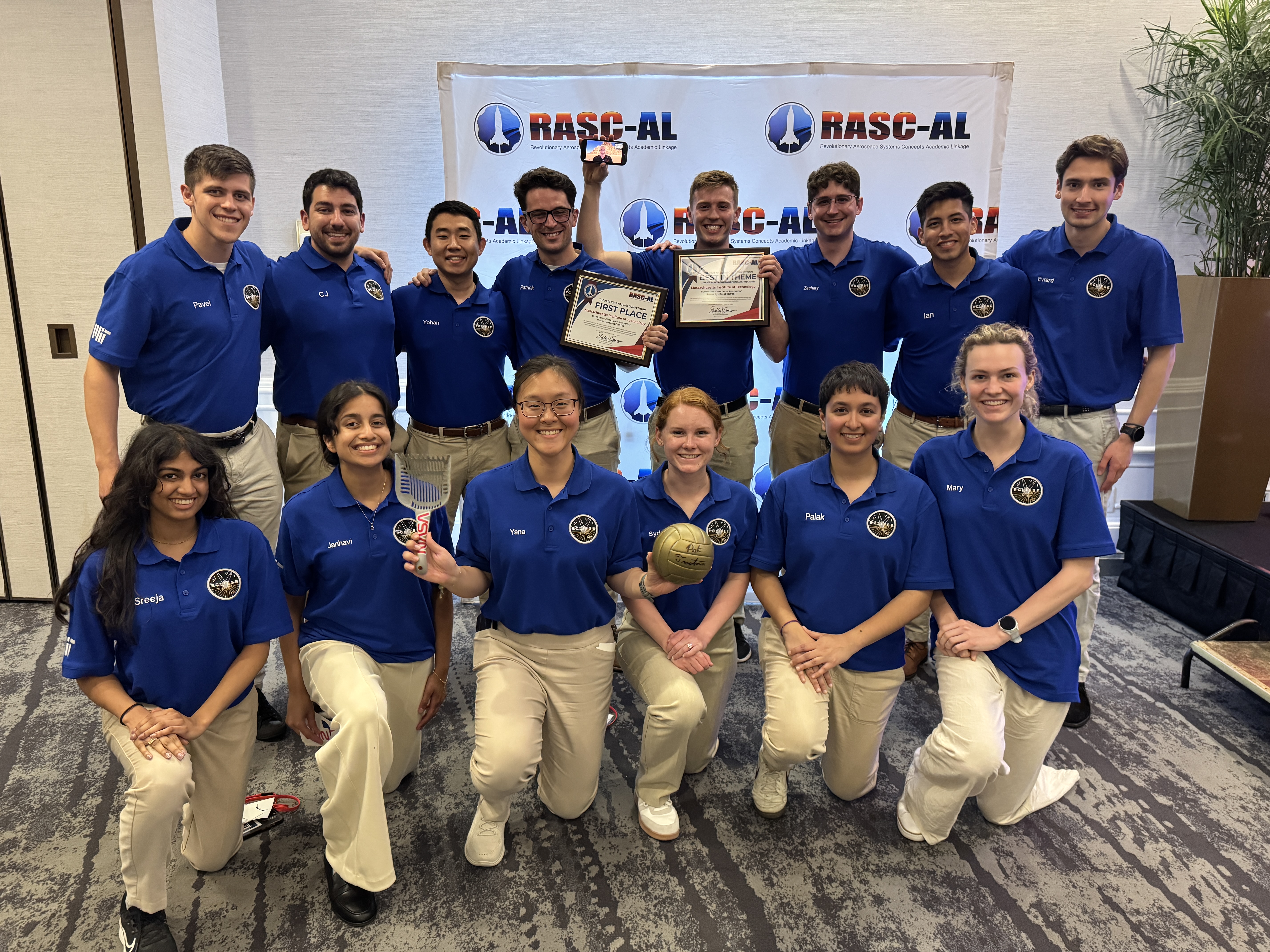
The Massachusetts Institute of Technology team that won the 2026 RASC-AL competition for their project, Exploration-Class Lunar Integrated Power SystEm.
Credit: National Institute of Aerospace
NASA announced the Massachusetts Institute of Technology project, Exploration-Class Lunar Integrated Power SystEm, as the first place winner for the 2026 Revolutionary Aerospace Systems Concepts – Academic Linkage (RASC-AL) competition, which challenges students to bridge gaps in aerospace technology by innovating new system concepts and prototypes.
Another team from the same university won second place overall for their project, Mars Exploration Layered Infrastructure for Operations, Research, and Advancement, while Virginia Polytechnic Institute and State University took third place with the Mars Pylon Network.
Empowering the next generation, the competition also supports the agency’s workforce development priorities by offering university teams hands-on experience in mission architecture development, systems engineering, and technical communication.
“The winning teams demonstrated how academic innovation can support Artemis mission goals,” said Daniel Mazanek, program sponsor for RASC-AL and senior space systems engineer, NASA’s Langley Research Center in Hampton, Virginia. “Their work highlights the important role student research plays in shaping future space exploration, and the results showcase how disciplined analysis can elevate innovative ideas into viable exploration concepts.”
Fourteen finalists attended the multi-day RASC-AL Forum in Cocoa Beach, Florida, and gave formal presentations outlining their mission architectures, technology solutions, and supporting analysis. These discussions provided students with real-time engineering feedback, exposing them to the rigor and scrutiny applied to human spaceflight concepts under development within the agency.
Awards were presented to teams demonstrating the highest levels of technical rigor, innovation, and mission alignment. In addition to the top prizes, other awards included:
Best in Communications, Position, Navigation, and Time Architectures for Mars Surface Operations Theme: Massachusetts Institute of Technology Mars Exploration Layered Infrastructure for Operations, Research, and Advancement MELIORA)
Best in Lunar Sample Return Concept Theme: South Dakota State University Sample Extraction of Lunar Elements for Network Entry (SELENE)
Best in Lunar Surface Power and Power Management and Distribution Architectures Theme: Massachusetts Institute of Technology Exploration-Class Lunar Integrated Power SystEm (ECLIPSE)
Best in Lunar Technology Demonstrations Leveraging Common Infrastructure Theme: Massachusetts Institute of Technology CLPS-enabled Highly-autonomous End-to-End isruSystem Evaluations to Build Understanding and Resilient Growth by Experimenting with Regolith (CHEESEBURGER)
Best Prototype:
Embry-Riddle Aeronautical University, Worldwide Campus Advanced Utilization of Resources for Energy & Viability Off-Earth (Project AUREVO) University of Illinois, Urbana-Champaign with Leonardo de Vinci Engineering School Mining and Advanced Transformation of Regolith for Infrastructure and eXpansion (MATRIX)
“The RASC-AL program allows students to demonstrate their ability to transform innovative concepts into technically sound studies, with emphasis on technical rigor, clear communication, and systems-level thinking,” said Christopher Jones, program sponsor for RASC-AL and chief technologist for the Systems Analysis and Concepts Directorate at NASA Langley. “These are the hallmarks of effective engineering that we’re looking for and reflect the standards required for real-world aerospace problem-solving,”
The NASA RASC-AL competition represents a cross-agency collaboration. The competition is administered by the National Institute of Aerospace and managed by the NASA Tournament Lab, part of the agency’s Prizes, Challenges, and Crowdsourcing Program.
NASA’s Artemis II Moon Mission Research Continues on Earth
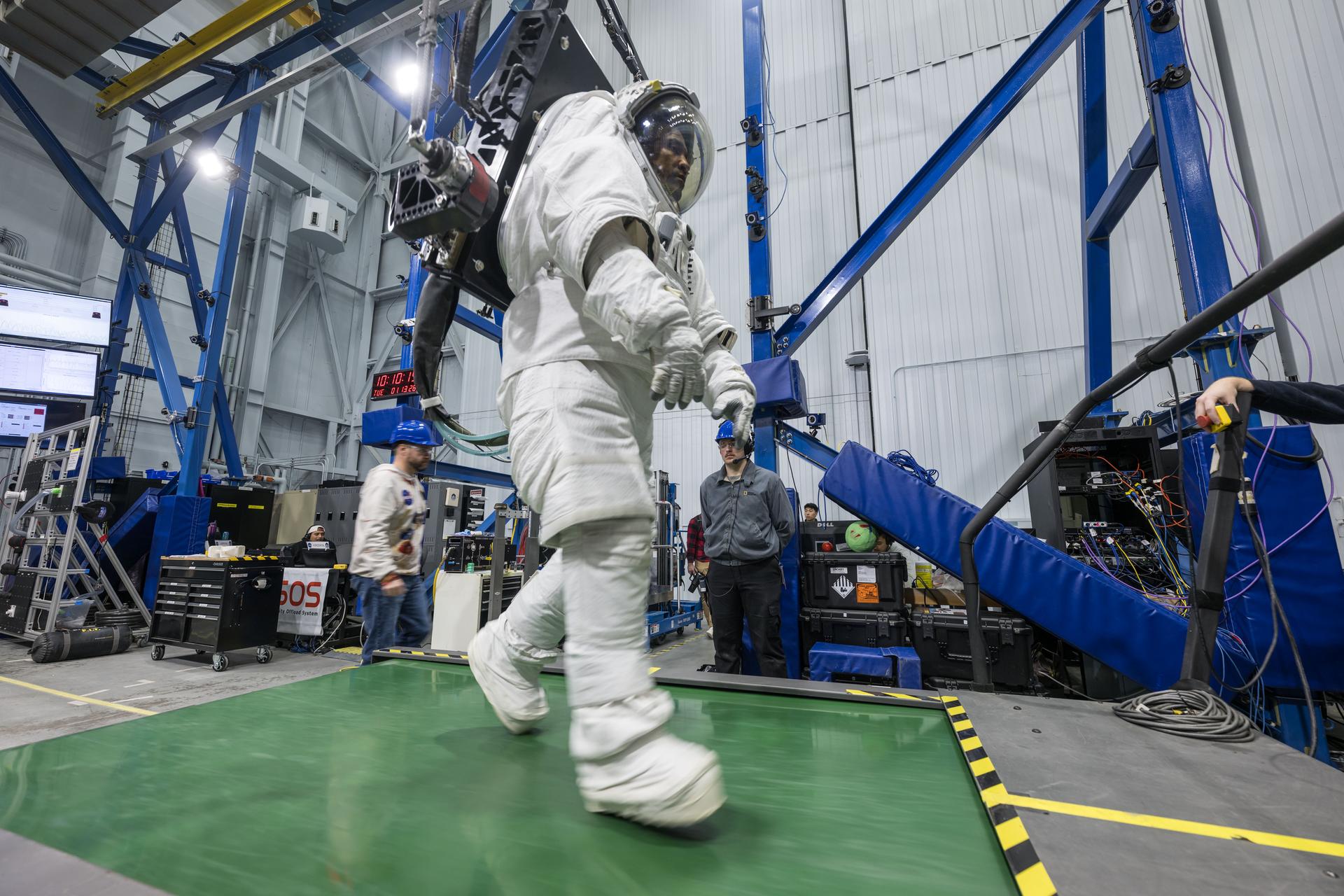
Artemis II astronaut Victor Glover walks on a treadmill while in a space suit harnessed to NASA’s Active Response Gravity Offload System at NASA’s Johnson Space Center. Glover is simulating a walk on a planetary surface while in a suit that has been offloaded to lunar gravity. Artemis II astronauts completed this and other suited tasks before their mission launched and within a few days of landing, giving researchers a chance to assess how quickly upon landing crews’ bodies adapt to a different gravity. Results will help scientists better understand how soon after landing crews can complete mission-critical tasks on the surface of the Moon or Mars.
NASA/Robert Markowitz
Since NASA’s Artemis II crew members safely splashed down in the Pacific Ocean on April 10 after their record-setting mission around the Moon, science teams have been busy collecting more data and combing through observations collected on the test flight. Results from these science investigations will help support safe human exploration of deep space and provide a blueprint for how future missions will conduct science on the lunar surface as NASA builds a Moon Base and develops an enduring human presence there.
Postflight crew health, performance data
In the hours, days, and weeks after landing, the Artemis II crew members, NASA astronauts Reid Wiseman, Victor Glover, Christina Koch, and CSA (Canadian Space Agency) astronaut Jeremy Hansen, contributed critical data to help the agency understand how the human body reacts to spaceflight. Collecting this data as soon as possible after landing was important to understand how the body adapts from microgravity to Earth’s gravity. The data will inform NASA’s understanding of how quickly crews can complete mission-critical tasks after landing on a planetary surface like the Moon or Mars, where there won’t be landing support personnel to assist.
Within a day of splashdown, researchers collected a suite of data for the Artemis II Spaceflight Standard Measures study, which is part of a larger effort across the astronaut corps to gather a baseline set of health measurements on blood pressure, heart rate, eye health, and motor control. Crew members also completed a mini obstacle course, which included lying down, standing up, unfurling a rope ladder, ladder climbing, and more, to assess how their bodies were adapting to Earth’s gravity.
Once the crew returned to NASA’s Johnson Space Center in Houston, researchers guided them through further medical check-ups and tests of motor control. Over the next several days, the crew completed obstacle courses wearing spacesuits offloaded to lunar gravity, which is roughly one-sixth the force of Earth’s gravity. Researchers are now analyzing this data to gain insight into how crews may perform as they adapt to the gravity of a planetary surface.
As part of the Immune Biomarkers study, researchers are comparing blood and saliva samples collected after the Artemis II splashdown with samples collected preflight and during the mission. Among other topics, the study investigates whether and how dormant viruses reawaken in astronauts’ bodies while in space.
Some crew members completed postflight cognition tests and a simulated manual spacecraft docking task to assess motor control for the ARCHeR (Artemis Research for Crew Health & Readiness) study. This, combined with data collected through a wrist-worn device while crew members were in space, is used to understand the effect of space hazards on well-being and performance.
Initial data collections for Artemis II health studies concluded 45 days after splashdown. However, medical teams will continually monitor astronaut health throughout the Artemis II crew members’ lifetimes.
Once this data is processed and anonymized, information will be available for scientists to study the effects of spaceflight via a request to NASA’s Life Sciences Data Archive. The results from this work could lead to new technologies and studies that help predict the adaptability of crews on future missions to the Moon and Mars.
Analyzing astronaut-derived organ chips flown around Moon
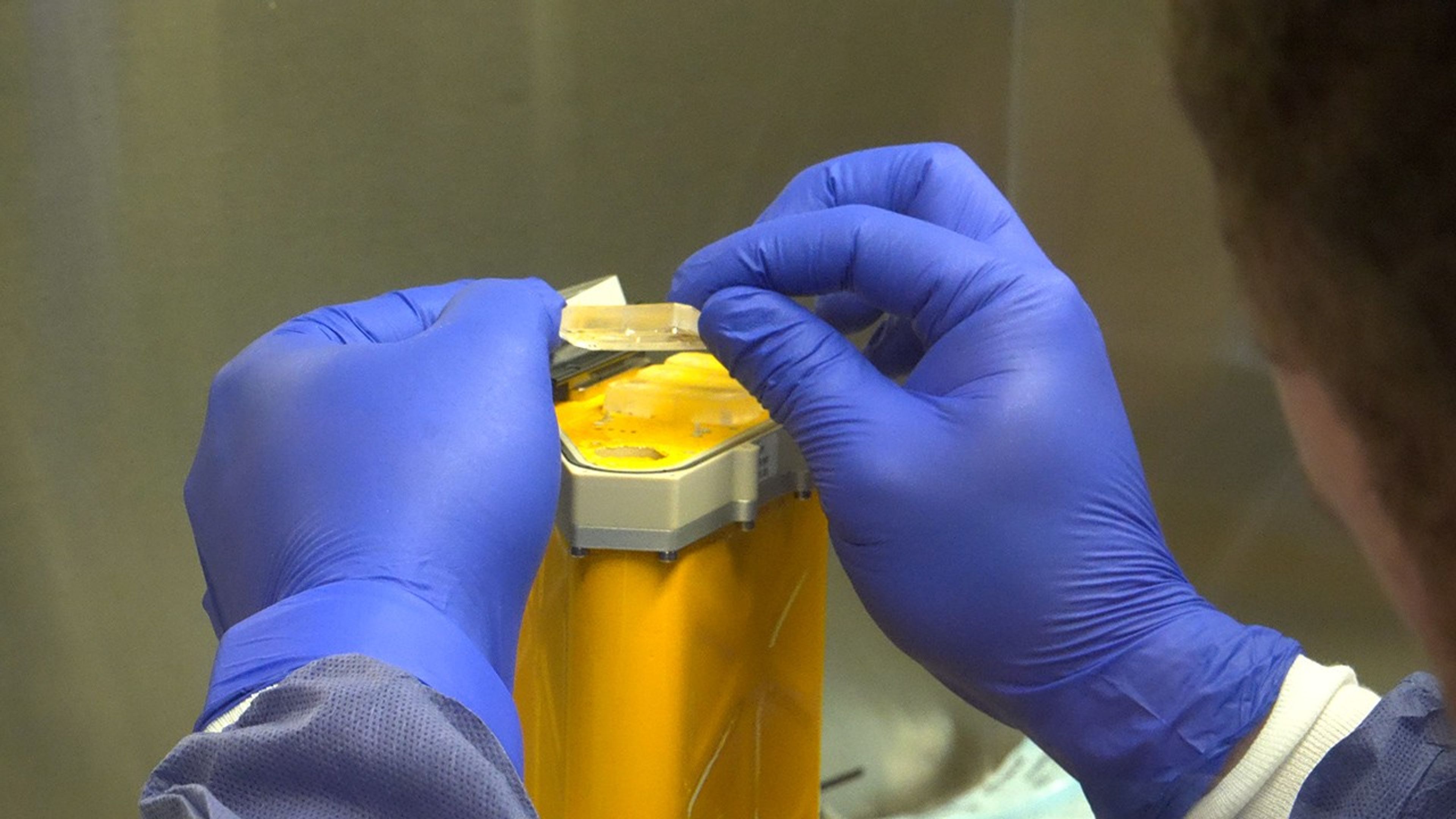
A scientist handles AVATAR organ chips following their journey around the Moon aboard Orion. The chips contain cells from each astronaut and are being prepared for detailed analysis.
NASA
Organ chips from NASA’s AVATAR (A Virtual Astronaut Tissue Analog Response) investigation are being analyzed at chip developer Emulate’s laboratory in Boston. The organ chips included bone marrow cells from each Artemis II astronaut. They flew around the Moon with the astronauts, and now researchers are studying these organ chips to determine how deep space radiation and microgravity affect human health at the molecular level.
Scientists are comparing the chips flown aboard the spacecraft to ground controls and crew blood samples using advanced techniques, including single-cell RNA sequencing. The analysis will characterize how organ chips model individual responses to spaceflight, which is data that could allow NASA to send future astronauts’ AVATAR chips ahead on missions to develop personalized medical kits. The researchers plan to share early findings at scientific conferences while full analysis continues.
Lunar imagery, audio for data release
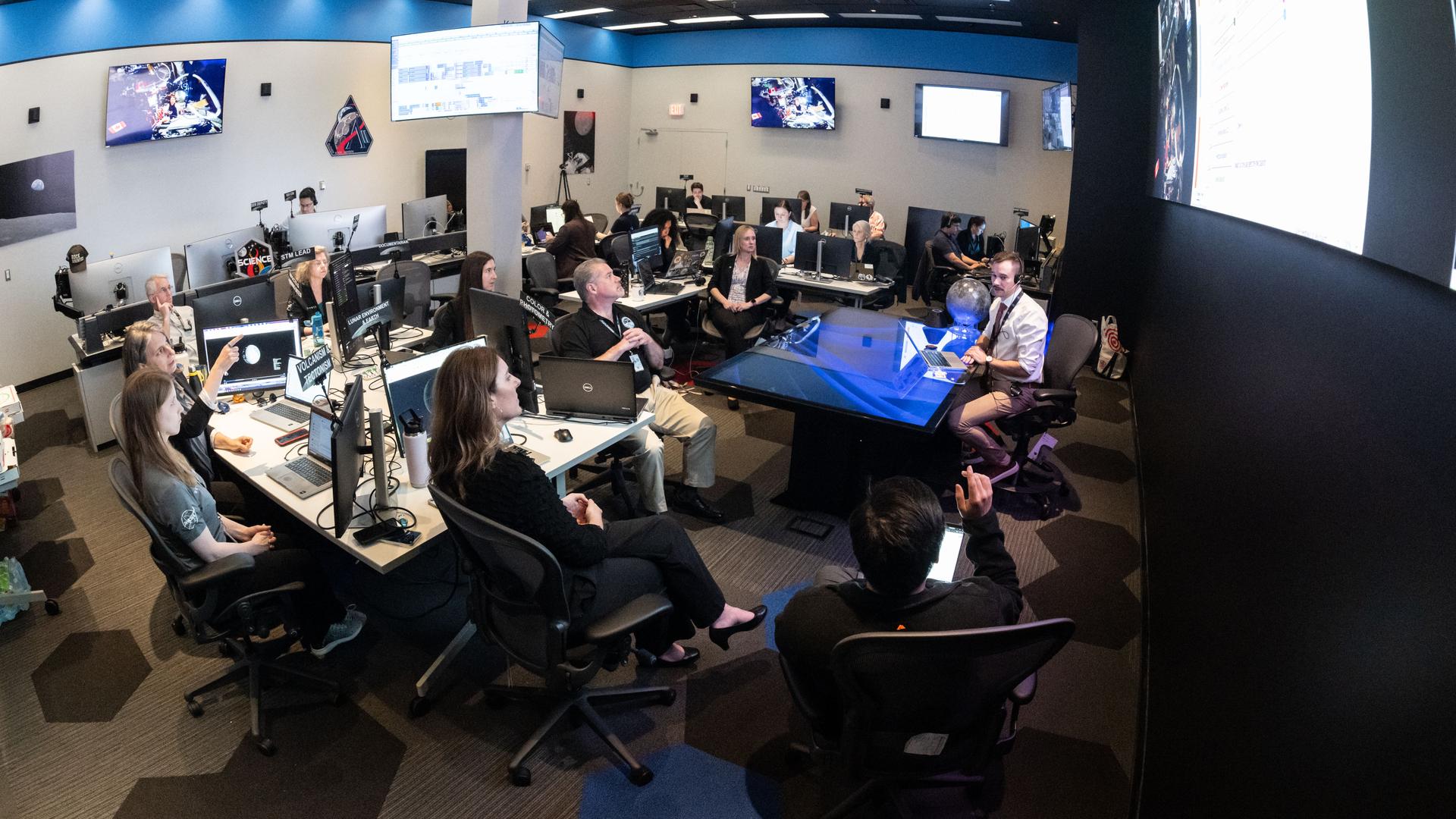
In this April 3, 2026, image, the Artemis II lunar science team is shown working in the Science Evaluation Room in the Mission Control Center at NASA’s Johnson Space Center in Houston. The team is putting together a plan of science observations for the Artemis II crew, which was headed toward the Moon aboard Orion. As they passed the Moon at closest approach on April 6, the crew applied the geology skills they learned in the classroom and in Moon-like environments on Earth as they photographed and described nuances of geologic features such as impact craters, ancient lava flows, and surface cracks and ridges. The crew noted differences in color, brightness, and texture — details that provide clues to surface composition and history.
NASA/Bill Stafford
On April 6, the Artemis II crew members studied features on and around the Moon for nearly seven hours during Orion’s closest approach to the lunar surface. Their work was guided by a minute-by-minute observation plan developed by the Artemis II lunar science team.
Scientists are reviewing the data collected from the mission, which includes images, video, and audio files, to release a report of their initial data interpretations later this year. The report will cover observations of impact flashes, variations in color on the lunar surface, and the shape and texture of faults and ridges. The team also will publish a report on how Artemis II lunar science observations were planned, organized, and executed for the benefit of future Artemis missions.
NASA will publish more than 100 science-related audio recordings with transcripts, as well as approximately 11,500 Earth and Moon image and video files from the mission science campaign, with accompanying data. While many of these images already are public, these records will be available through NASA’s Planetary Data System, a public archive of data from all of NASA’s planetary missions. To get the data ready, the team is converting files into standard formats that anyone can easily open and add information to make the data searchable in NASA’s archive for generations to come.
For more information on NASA’s Artemis II science efforts, visit:
Preparations for Next Moonwalk Simulations Underway (and Underwater)
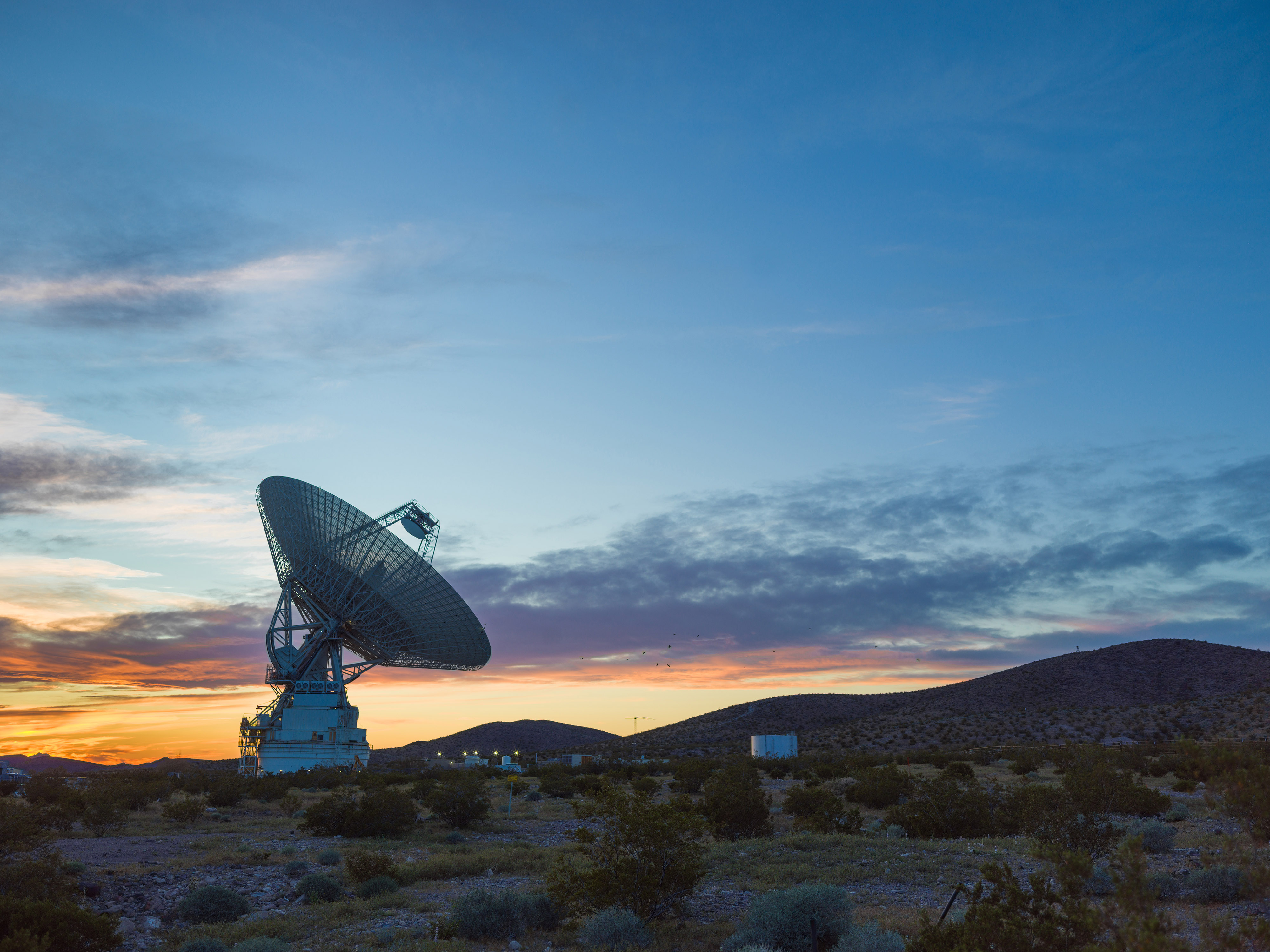
This sunset photo shows Deep Space Station 14, the 230-foot-wide (70-meter) antenna at the Goldstone Deep Space Communications Complex near Barstow, California, part of NASA’s Deep Space Network.
NASA/JPL
NASA has completed the investigation into the damage sustained last year at its 70-meter radio-frequency antenna, known as the Deep Space Station 14 (DSS-14), at the Goldstone Deep Space Communications Complex near Barstow, California. The agency has classified the event as a Type A mishap based on the total cost of damages. The antenna will remain offline to complete repairs and previously scheduled upgrades.
“NASA takes safety and any departure from established procedures seriously, and the investigation at Goldstone made clear that we must strengthen our processes. We are acting on the investigation’s findings,” said Joel Montalbano, acting associate administrator for NASA’s Space Operations Mission Directorate at the agency’s headquarters in Washington. “We will update and improve procedures, rebuild core in-house capabilities, and reinforce operational discipline across the Deep Space Network. NASA remains focused on learning from this and modernizing systems, so DSS-14 and the broader network are ready to support our ambitious future missions.”
On Sept. 16, 2025, the DSS‑14 antenna over‑rotated while actively tracking the Juno mission, placing excessive stress on cabling and associated structural supports. Water lines tied to the antenna’s fire‑suppression system also were damaged, causing significant flooding in the facility. There were no injuries.
NASA convened a Mishap Investigation Board, bringing together experts from across the agency to examine the technical, organizational, and cultural factors behind the incident. The board conducted on‑site inspections, interviews, and detailed reviews of technical documentation and operational logs from all three Deep Space Network sites. The board completed its final report in April and submitted it for agency concurrence.
The investigation issued findings and recommendations that emphasize training, technical rigor, operational procedures, system design, clear roles and responsibilities, and safety assurance. At the same time, teams already are applying lessons learned across all network sites to improve operational consistency. These steps will help bolster the network and reduce the risk of future mishaps.
In its final report, the board found the mishap primarily stemmed from software weaknesses, human error, and an undetected failure in the antenna’s hydraulic limit system. Investigators determined an electrical issue at the antenna the previous day caused the control system to misreport the antenna’s rotation state, an issue that went unnoticed and triggered multiple limit-stops during the Juno track on Sept. 16. While working to identify the limit-stop problem, operators performed several troubleshooting steps that inadvertently bypassed software and hardware safeguards, which ultimately led to the over-rotation incident. After flooding in the antenna base was observed, operators attempted to stow the antenna as a safety precaution, however, because the system had already passed the rotation limits, this action drove the antenna further into over‑rotation, causing additional damage.
Additionally, the investigation found the antenna’s hydraulic limit system, its final mechanical safeguard, was inoperable on Sept. 16 after being damaged in an undocumented prior incident. The system also had not been adequately tested for an undetermined period of time.
Investigators also concluded workplace culture pressured operators to work as expeditiously as possible, often stretching beyond their usual roles, expertise, and training, to keep the antenna operating. The board states the cultural conditions observed at Goldstone were not present at the network’s other sites, where roles and responsibilities are followed more consistently. Other contributing factors outlined in the report include inadequate procedures, reliance on undocumented practices and tacit knowledge, and gaps in the antenna’s control logic. NASA will accept this as the final report.
The agency estimates repairs will cost between $4.1 and $4.6 million, with a final figure to be determined after the antenna’s systems are fully assessed. The antenna will remain offline as it enters its previously scheduled extended maintenance and upgrade period, originally set to begin in August and expected to be completed by October 2028. These upgrades are part of broader network improvements essential to supporting future exploration and science missions, as well as enhancing the nation’s planetary defense capabilities.
“We are committed to learning everything we can from this incident, and we’ve already begun putting those lessons into practice,” said Kevin Coggins, deputy associate administrator for NASA’s SCaN (Space Communications and Navigation) Program at the agency’s headquarters. “Our teams are working to strengthen and standardize processes and training across all three network sites to ensure it remains resilient, consistent, and ready to support the next generation of missions. Every challenge is an opportunity to improve, and this is no exception.”
The Deep Space Network continues to provide full coverage for more than 40 missions despite the DSS‑14 incident. The network’s 13 other antennas, located at complexes in California, Australia, and Spain, are supporting all tracking needs without interruption. A dedicated scheduling team allocates antenna time across the network to meet each mission’s science and data‑return objectives. The team also maintains continuous coverage when an antenna goes offline for maintenance or an unexpected outage.
To view the report, which includes redactions to protect proprietary and privacy-sensitive material, visit:
O Facebook e o Messenger passam agora a contar com configurações semelhantes às do Instagram para as contas de adolescentes. Segundo a Meta, a funcionalidade de Conteúdo Limitado, para já exclusiva do Instagram, vai estar disponível nas duas plataformas ainda este ano.
Durante o último fim de semana, vários utilizadores partilharam no Reddit e na rede social X que as suas contas no Instagram tinham sido hackeadas. Andy Stone, porta-voz da plataforma, afirmou apenas que o problema foi corrigido e ainda não há certeza quanto ao número de contas afetadas.
Cape Canaveral Space Force Station (CCSFS) in Florida resumed operations Friday following the explosion of Blue Origin’s New Glenn rocket during a test Thursday night. Space Launch Delta 45 (SLD 45), which manages the U.S. Space Force’s Eastern Range and oversees all East Coast rocket and missile launches, said Friday that a SpaceX Falcon 9 rocket deployedContinue reading "New Glenn explosion: what it means for Blue Origin and SpaceX"
At least four Russian military satellites changed their orbits to match that of a Finnish-American radar surveillance satellite in the last week, raising questions about Russia's intentions amid an ever-expanding standoff high above Earth.
The maneuvers were identified through open source orbital tracking data. Greg Gillinger, a retired Air Force space intelligence officer, revealed the orbit changes Friday in a special edition of his Integrity Flash newsletter, published by Integrity ISR, a private business that provides "combat-proven operational support and elite training that enhances mission success across ISR (Intelligence, Surveillance, and Reconnaissance), cyber, space, and targeting domains."
The Russian satellites in question, designated Kosmos 2610 through 2613, launched together on April 16 on a Soyuz-2.1b rocket from Plesetsk Cosmodrome in northern Russia. Over the last week or so, the four satellites adjusted their inclinations—the angles of their orbits to the equator—by less than a degree.

 Login