Global oil giant Shell continued operating a compromised pipeline in Nigeria’s Niger Delta despite knowing it posed a pollution risk in the surrounding coastal wetland environment, newly disclosed internal company communications reveal. The emails and memos, reviewed by Mongabay, show senior leadership knew of the poor conditions of the 97-kilometer (60-mile) Nembe Creek Trunk Line as early as 2008. Despite concerns it was operating outside technical integrity standards and proposals to shut it down, a top executive decided to keep pumping oil through the line. Carrying 150,000 barrels of oil per day to the export terminal at Bonny Island Rivers state, the Nembe Creek Trunk Line is a critical oil artery in Nigeria. Throughout the years, theft from the pipeline using illegal connections caused spills into the vast mangrove ecosystem of true (Rhizophora sp.) and flowering black (Avicennia sp.) tree species. An internal 2013 Shell document coded such tampered lines as “red,” requiring either their immediate shutdown or immediate action to remove all illegal connections. Locals from the nearby riverine Bille community said the oil spills killed about 2,000 hectares (4,900 acres) of mangrove swamps around the village while impacting an area of 13,200 hectares (32,600 acres). The contaminated waterways and degraded ecosystem, they told Mongabay, killed fish and other aquatic life. Satellite imagery surrounding the village shows massive degradation of the mangroves. “The aquatic life is gone. Our people can no longer go to the river and catch reasonable fish — they can’t even find the fish in the…This article was originally published on Mongabay
Leoncia Ramos has lived her 65 years in the lush Dominican Republic town of La Piñita, but now says she is fearful for her health and wants to leave. She’s among 450 families asking the government and the company behind the Pueblo Viejo gold mine to be relocated because of concerns of pollution from the nearby mine. They allege the site, controlled by Canadian giant Barrick Mining Corp., is harming their health and the environment, and fear that if a tailings dam about a kilometer away were to collapse, it would be disastrous. Ramos’s community has spent 15 years fighting to have its concerns addressed and now says Canada, where Barrick Mining is headquartered, could play a role. In 2019, the Canadian government created an office of an ombudsperson to handle complaints from communities like Ramos’s. But the government has left the role vacant for the past year, and its work has seemingly come to a standstill. Canada is home to about half of the world’s publicly traded mining and mineral exploration companies, with operations both in Canada and overseas, including some of the world’s largest miners, like Barrick Mining. The government created the office of the Canadian Ombudsperson for Responsible Enterprise (CORE) in 2019 to address human rights complaints about Canadian companies’ operations overseas. But the office has now been without an ombudsperson since May 2025, and advocates say its work has stalled at a critical moment, as demand for transition minerals and a changing geopolitical climate are driving…This article was originally published on Mongabay
NASA’s Artemis II Moon Mission Research Continues on Earth
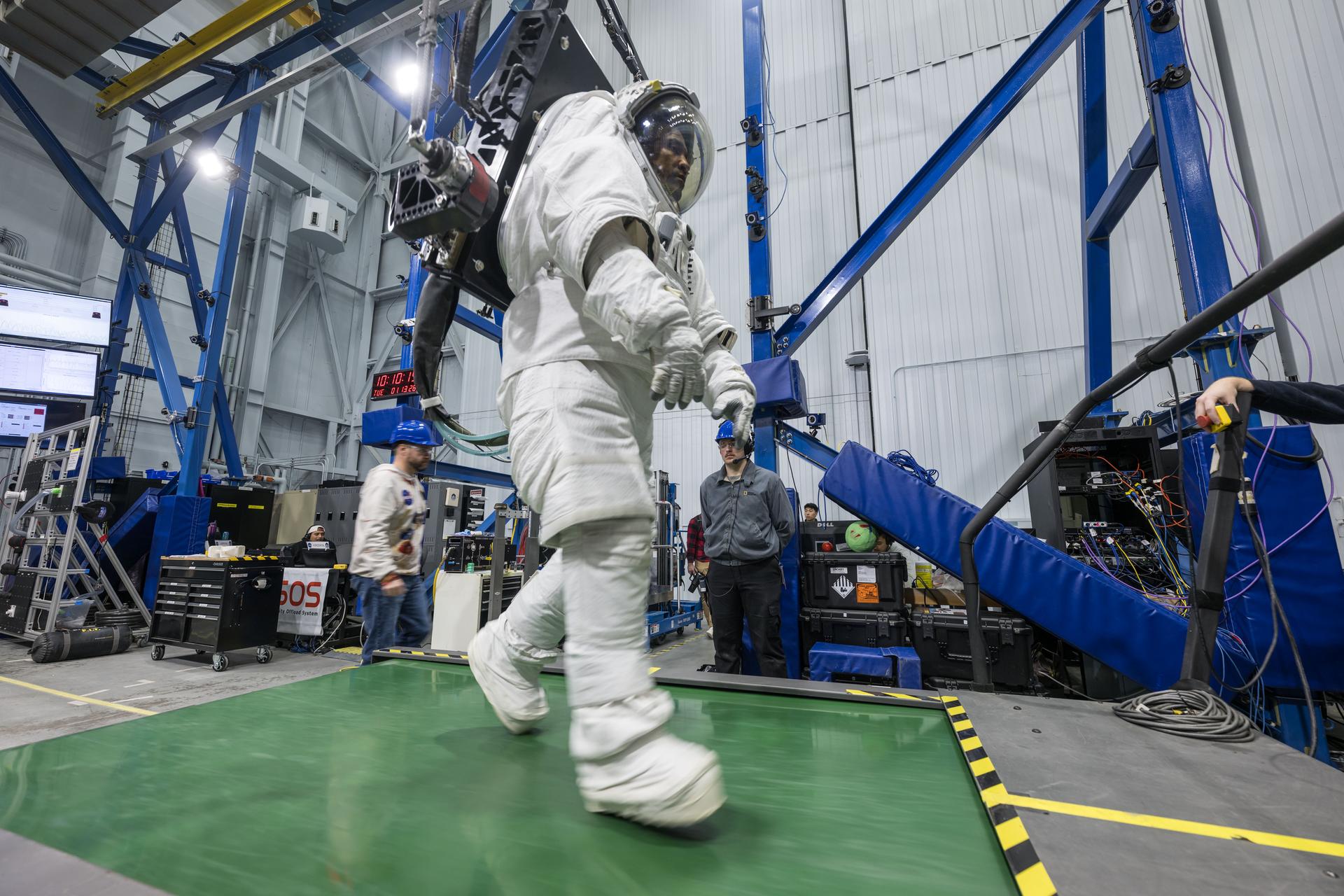
Artemis II astronaut Victor Glover walks on a treadmill while in a space suit harnessed to NASA’s Active Response Gravity Offload System at NASA’s Johnson Space Center. Glover is simulating a walk on a planetary surface while in a suit that has been offloaded to lunar gravity. Artemis II astronauts completed this and other suited tasks before their mission launched and within a few days of landing, giving researchers a chance to assess how quickly upon landing crews’ bodies adapt to a different gravity. Results will help scientists better understand how soon after landing crews can complete mission-critical tasks on the surface of the Moon or Mars.
NASA/Robert Markowitz
Since NASA’s Artemis II crew members safely splashed down in the Pacific Ocean on April 10 after their record-setting mission around the Moon, science teams have been busy collecting more data and combing through observations collected on the test flight. Results from these science investigations will help support safe human exploration of deep space and provide a blueprint for how future missions will conduct science on the lunar surface as NASA builds a Moon Base and develops an enduring human presence there.
Postflight crew health, performance data
In the hours, days, and weeks after landing, the Artemis II crew members, NASA astronauts Reid Wiseman, Victor Glover, Christina Koch, and CSA (Canadian Space Agency) astronaut Jeremy Hansen, contributed critical data to help the agency understand how the human body reacts to spaceflight. Collecting this data as soon as possible after landing was important to understand how the body adapts from microgravity to Earth’s gravity. The data will inform NASA’s understanding of how quickly crews can complete mission-critical tasks after landing on a planetary surface like the Moon or Mars, where there won’t be landing support personnel to assist.
Within a day of splashdown, researchers collected a suite of data for the Artemis II Spaceflight Standard Measures study, which is part of a larger effort across the astronaut corps to gather a baseline set of health measurements on blood pressure, heart rate, eye health, and motor control. Crew members also completed a mini obstacle course, which included lying down, standing up, unfurling a rope ladder, ladder climbing, and more, to assess how their bodies were adapting to Earth’s gravity.
Once the crew returned to NASA’s Johnson Space Center in Houston, researchers guided them through further medical check-ups and tests of motor control. Over the next several days, the crew completed obstacle courses wearing spacesuits offloaded to lunar gravity, which is roughly one-sixth the force of Earth’s gravity. Researchers are now analyzing this data to gain insight into how crews may perform as they adapt to the gravity of a planetary surface.
As part of the Immune Biomarkers study, researchers are comparing blood and saliva samples collected after the Artemis II splashdown with samples collected preflight and during the mission. Among other topics, the study investigates whether and how dormant viruses reawaken in astronauts’ bodies while in space.
Some crew members completed postflight cognition tests and a simulated manual spacecraft docking task to assess motor control for the ARCHeR (Artemis Research for Crew Health & Readiness) study. This, combined with data collected through a wrist-worn device while crew members were in space, is used to understand the effect of space hazards on well-being and performance.
Initial data collections for Artemis II health studies concluded 45 days after splashdown. However, medical teams will continually monitor astronaut health throughout the Artemis II crew members’ lifetimes.
Once this data is processed and anonymized, information will be available for scientists to study the effects of spaceflight via a request to NASA’s Life Sciences Data Archive. The results from this work could lead to new technologies and studies that help predict the adaptability of crews on future missions to the Moon and Mars.
Analyzing astronaut-derived organ chips flown around Moon
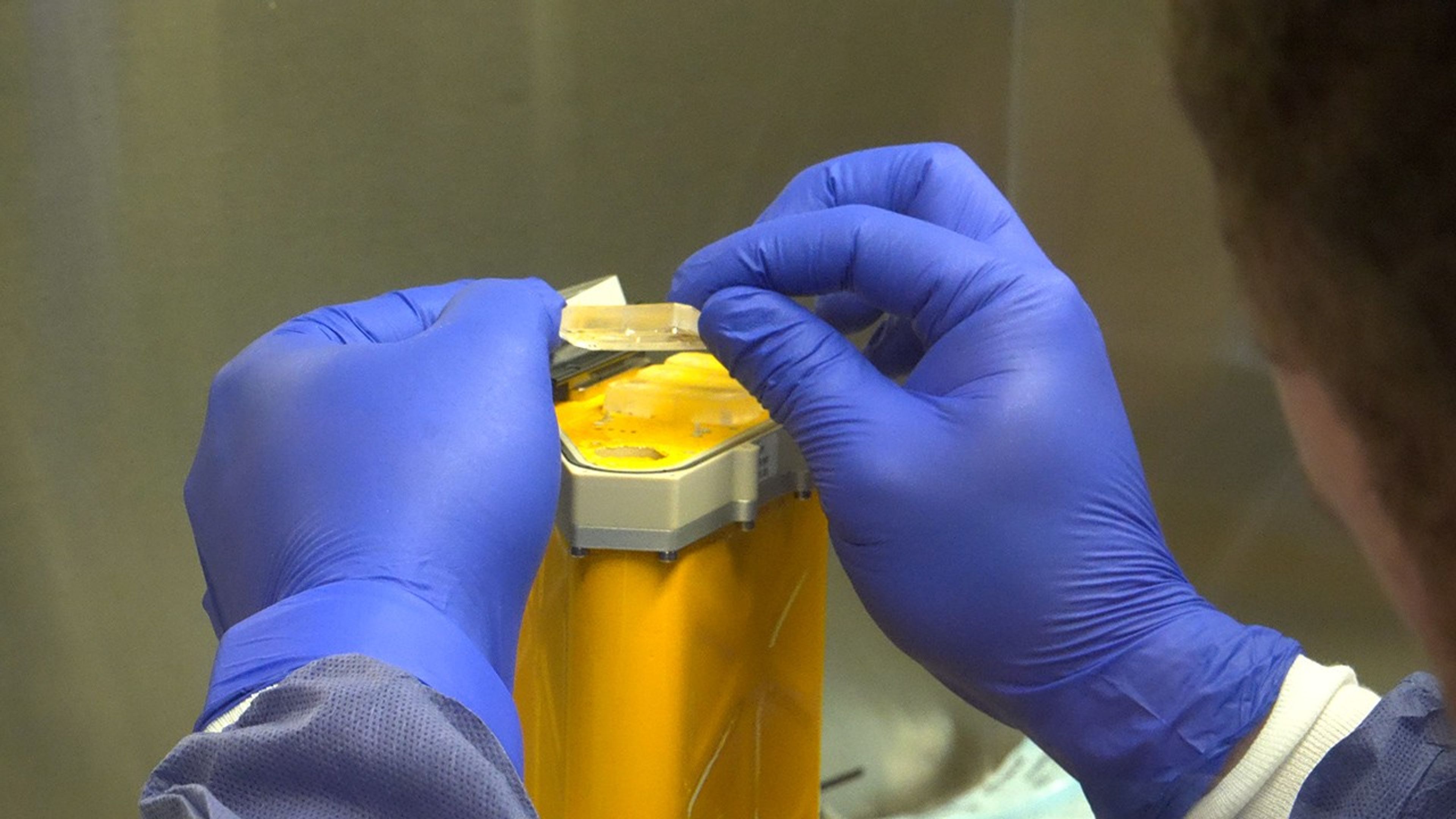
A scientist handles AVATAR organ chips following their journey around the Moon aboard Orion. The chips contain cells from each astronaut and are being prepared for detailed analysis.
NASA
Organ chips from NASA’s AVATAR (A Virtual Astronaut Tissue Analog Response) investigation are being analyzed at chip developer Emulate’s laboratory in Boston. The organ chips included bone marrow cells from each Artemis II astronaut. They flew around the Moon with the astronauts, and now researchers are studying these organ chips to determine how deep space radiation and microgravity affect human health at the molecular level.
Scientists are comparing the chips flown aboard the spacecraft to ground controls and crew blood samples using advanced techniques, including single-cell RNA sequencing. The analysis will characterize how organ chips model individual responses to spaceflight, which is data that could allow NASA to send future astronauts’ AVATAR chips ahead on missions to develop personalized medical kits. The researchers plan to share early findings at scientific conferences while full analysis continues.
Lunar imagery, audio for data release
In this April 3, 2026, image, the Artemis II lunar science team is shown working in the Science Evaluation Room in the Mission Control Center at NASA’s Johnson Space Center in Houston. The team is putting together a plan of science observations for the Artemis II crew, which was headed toward the Moon aboard Orion. As they passed the Moon at closest approach on April 6, the crew applied the geology skills they learned in the classroom and in Moon-like environments on Earth as they photographed and described nuances of geologic features such as impact craters, ancient lava flows, and surface cracks and ridges. The crew noted differences in color, brightness, and texture — details that provide clues to surface composition and history.
NASA/Bill Stafford
On April 6, the Artemis II crew members studied features on and around the Moon for nearly seven hours during Orion’s closest approach to the lunar surface. Their work was guided by a minute-by-minute observation plan developed by the Artemis II lunar science team.
Scientists are reviewing the data collected from the mission, which includes images, video, and audio files, to release a report of their initial data interpretations later this year. The report will cover observations of impact flashes, variations in color on the lunar surface, and the shape and texture of faults and ridges. The team also will publish a report on how Artemis II lunar science observations were planned, organized, and executed for the benefit of future Artemis missions.
NASA will publish more than 100 science-related audio recordings with transcripts, as well as approximately 11,500 Earth and Moon image and video files from the mission science campaign, with accompanying data. While many of these images already are public, these records will be available through NASA’s Planetary Data System, a public archive of data from all of NASA’s planetary missions. To get the data ready, the team is converting files into standard formats that anyone can easily open and add information to make the data searchable in NASA’s archive for generations to come.
For more information on NASA’s Artemis II science efforts, visit:
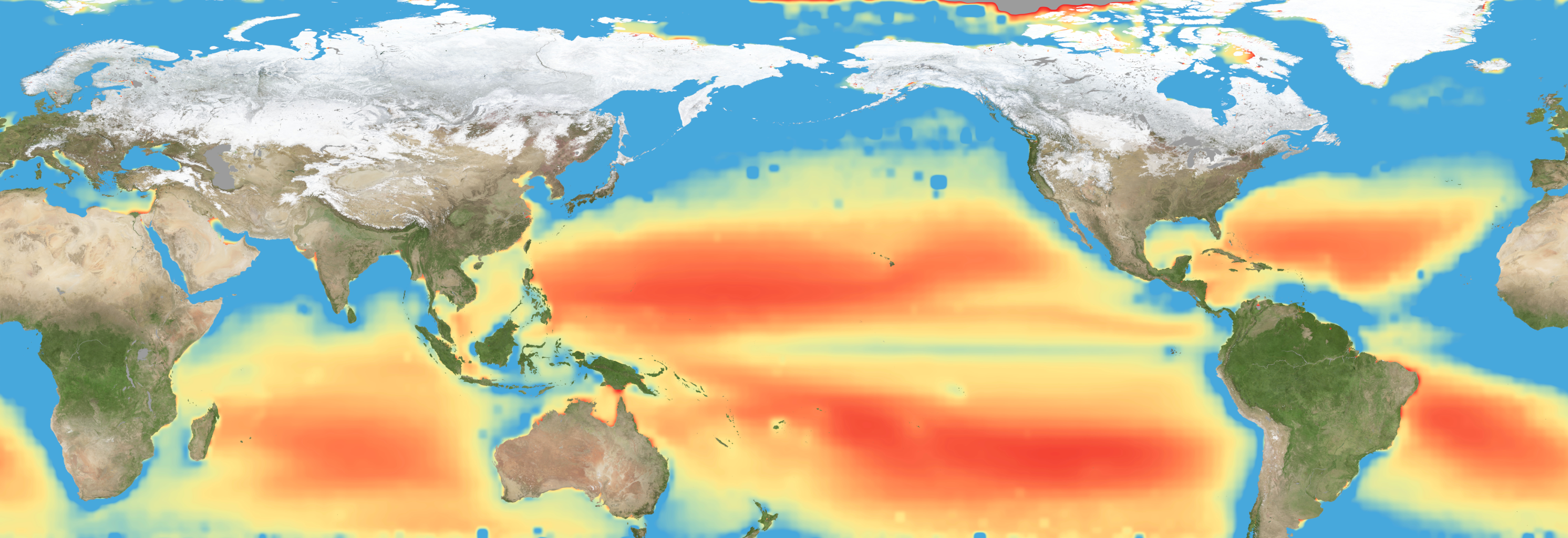
Warming waters decrease upwelling and lead to stress on marine microorganisms due to limited availability of vital nutrients. Red indicates the regions of highest nutrient-related stress.
Kel Elkins/NASA’s Scientific Visualization Studio
Editor’s note: This article was updated on June 5.
A new study combining NASA satellite observations, ocean surveys, and genetic testing on marine microorganisms found evidence that warming ocean waters may be limiting nutrient availability across much of the global ocean. The researchers report that this nutrient stress affects microscopic marine organisms and could influence marine ecosystems over time.
The research, published June 5 in Science Advances, tracked the condition of phytoplankton, which form the base of ocean food webs. Rather than measuring nutrients like nitrogen, iron, and phosphorus directly, the researchers inferred stress by tracking subtle shifts in the ratio of carbon to chlorophyll in phytoplankton observed from space. When the amount of chlorophyll decreases relative to carbon as seen in satellite data, it’s an indication that the plankton are stressed.
“As our ocean continues to change, the ability to observe and track ocean conditions through sustained, high quality remote sensing observations has never been more important,” said Laura Lorenzoni, Program Scientist for NASA’s Ocean Biology and Biogeochemistry Program at NASA Headquarters in Washington. “This is fundamental, as plankton communities are the base of the marine food web on which important economic activities rely.”
The research team combined two decades of data from NASA’s Aqua satellite’s Moderate Resolution Imaging Spectroradiometer (MODIS) sensor with plankton samples collected on research cruises around the world. The approach linked large-scale satellite observations with genetic markers in Prochlorococcus, a tiny but abundant marine microbe that shows signs of nutrient stress in its DNA. The result is a global map revealing where phytoplankton are thriving and where they’re struggling.
Ocean chlorophyll, as observed with NASA's Moderate Resolution Imaging Spectroradiometer (MODIS) instrument between January 2010 through May 2016.
Marit Jentoft-Nilsen/NASA's Goddard Space Flight Center
The strongest indications of nutrient stress on plankton appeared in the subtropical gyres, which are vast, relatively calm regions of the Atlantic, Pacific, and Indian oceans. In these areas, a layer of warm surface water stifles the flow of colder water from deeper in the ocean.
“When the surface of the ocean warms, it generates this very stable situation where a layer of low-density water sits on top of higher-density cold water,” said study coauthor Adam Martiny, an oceanographer at the University of California, Irvine. “You’ve probably experienced that if you’ve ever been to a lake in the summertime—it’s super warm right on the surface, and very cold deeper down when you stick your legs in.”
This layering blocks the upward flow of nutrient-rich water, limiting the availability of ocean surface nutrients that are crucial for plankton. In the South Pacific, one of the most nutrient-poor regions, a layer of warm surface water contributed to nitrogen and iron shortages, producing the most severe nutrient-related stress that the team discovered.
But the researchers were surprised to find that parts of the North Atlantic experience less nutrient stress than expected. Although there was evidence of a lack of phosphorus, the impact on microorganisms was comparatively mild.
That difference may reflect the biology of the organisms themselves. Phytoplankton can partially compensate for phosphorus shortages by recycling phosphorus more efficiently or replacing phosphorus-rich molecules inside their cells. Nitrogen shortages are harder to overcome because nitrogen is crucial for the proteins and cellular machinery required for photosynthesis and nutrient uptake.
The study revealed that nutrient stress is strongly correlated with seasons and major weather cycles such as El Niño and the Pacific Decadal Oscillation, which lead to warming waters in the Pacific Ocean. During La Niña events, which cool water over a large part of the Pacific, stronger upwelling brought more nutrients to surface waters and reduced stress in some regions. Superimposed on those multi-year cycles, however, was a longer-term trend.
From 2002 through 2021, average sea-surface temperatures increased across nearly 90% of the ocean area examined in the study. Over the same period, nutrient stress generally intensified, consistent with previous hypothesis that warming oceans may become increasingly stratified and less able to replenish surface nutrients.
In many nutrient-poor regions of the Southern Hemisphere, however, the researchers found evidence that nutrient stress had not increased as much as expected despite significant warming. They suspect that microbes capable of capturing nitrogen from the air may partially offset the effects of reduced nutrient mixing.
That finding hints that marine ecosystems may possess more resilience to warming climates than some models predict. It also underscores the complexity of forecasting how ocean biology will respond to continued warming.
“We have two really powerful tools,” said study coauthor Michael Behrenfeld, a biochemist with Oregon State University in Corvallis, Oregon. The tools include satellite observations and cellular studies. “Both produce big data sets, but they are kind of opposites. We have very detailed data about microscopic phytoplankton … and then we have global coverage with satellites.”
By combining satellites that monitor the entire ocean with genetic clues carried inside microscopic plankton, the researchers say they are gaining a new way to track biological responses to changing environmental conditions near real time.
More than a decade ago, conservationists began working to preserve a unique population of desert pampas cats that has adapted to the mangroves of Peru’s northern coast. This small, isolated population roams the San Pedro de Vice dry mangroves, a Ramsar Site and South America’s southernmost mangrove ecosystem. “This is a very unique population, because as far as we know, [it] is the only Pampas cat population that lives in a mangrove [habitat],” Alvaro Garcia, co-coordinator of the Pampas Cat Working Group and the Peruvian Desert Cat Project, told Mongabay in an email. The desert pampas cat (Leopardus garleppi), distinctive for its broad face, ranges along a relatively thin band snaking southward from Colombia through Peru and Bolivia, to northern Chile and Argentina. The species is acclimated to dry conditions, so inhabits deserts, grasslands and dry forests, and isn’t found living in mangroves anywhere else aside from this region of Peru. Dry mangrove forests, also called scrub or dwarf mangrove forests, grow in highly saline soils in upper intertidal zones, so lack regular daily flushing by ocean tides. At first, it was thought the dry mangrove-acclimated cats were faring well: “[I]n the mangrove [habitat], we put cameras out for a week, and we got tons of photos,” whereas in other parts of the felid’s range, conservationists barely capture one desert pampas cat image per month, said Cindy Hurtado, co-coordinator of the Pampas Cat Working Group and the Peruvian Desert Cat Project. Based on the photos, the research team assumed the…This article was originally published on Mongabay
SARLAHI, Nepal — Dhruba Prasai, a farmer from Sarlahi district in Nepal’s southern plains, says he’s exhausted from lack of sleep. Every year, nilgai antelopes, wild boars, deer and Asian elephants raid his fields, and if left unguarded at night, they not only feed on standing crops, but also stored harvest. “There is a forest to the west, and our fields are right next to it,” Prasai tells Mongabay. “The nilgai eat the maize, and the deer can’t even stand the sight of wheat and oat grass, they eat it all. If people stay up at night to guard the fields, they run away; otherwise, they come and destroy everything.” Farmers such as Prasai across Madhesh province, considered the country’s breadbasket because of its fertile land, are struggling with growing crop losses from wildlife, but complex procedures and policy gaps make access to relief, which is already limited, difficult. From mid-July 2024 to mid-July 2025, 14,821 cases of ‘human wildlife conflict’ were reported in Madhesh, according to government figures. A total of 134 people and 457 animals lost their lives. Last year, a wild boar ate three tand (storage racks) of maize stored in Prasai’s house. Although forest authorities told him to get a recommendation letter from the local municipal ward office to apply for relief, he didn’t do it. “I haven’t done it; we simply don’t have the time,” he says. Even those who did fill out the forms around the same time have yet to receive relief, he…This article was originally published on Mongabay
In April this year, two Bryde’s whales washed-up dead-on Dyer Island, a small nature reserve located a few kilometers off the coast of Gansbaai in South Africa’s Western Cape province. Both whales carried severe injuries; their vertebrae had been shattered. “It was very clear that it was [vessel] strikes, because both those whales were snapped in half, and you can also see the propeller marks,” Loraine Shuttleworth, head of research at the Dyer Island Conservation Trust, told Mongabay. Two whale strandings linked to ship strikes in one month alone is an unusually high number, Shuttleworth said. A new risk assessment has linked the increase in risk of ships striking whales to the rerouting of maritime traffic around South African coast. Due to the Houthi rebels attacks on ships traversing the Red Sea, which started in 2023, and the more recent fallout from the blockade of the Strait of Hormuz, many cargo companies have rerouted their vessels around the Cape of Good Hope. With greater shipping traffic comes a growing threat to marine species inhabiting the region: collisions with large, fast-moving vessels. Between December 2023 and December 2024, the number of large vessels traveling through South African waters at average speeds above 15 knots (28 kilometers per hour) has quadrupled, satellite data show. The scale of the increased maritime traffic struck scientist Els Vermeulen from the University of Pretoria’s Mammal Research Institute Whale Unit, on a flight into Cape Town in 2025. “It was a beautiful day, and there were just…This article was originally published on Mongabay
BANGKOK — Seven hundred days after activists from the environmental group Mother Nature Cambodia were imprisoned on charges widely regarded as retaliatory for their activism, 73 international and Cambodian civil society organizations have renewed calls for their unconditional release. After a trial lasting just over a month, 10 activists from Mother Nature Cambodia were sentenced on July 2, 2024, to between six and eight years in prison. Only five of the defendants attended the hearings, which saw Long Kuntha, 28, Ly Chandaravuth, 26, Phuon Keoraksmey, 25, and Thun Ratha, 34, each sentenced to six years behind bars for plotting against the government; fellow activist Yim Leanghy, 36, received an eight-year sentence for both plotting against the government and insulting the king. The five activists who did not attend the trial were sentenced in absentia. The appeals hearing for all 10 convicted activists was slated to take place on June 2, but has been postponed indefinitely by the Phnom Penh Court of Appeals. “The MNC5 are incarcerated in prisons in overcrowded and harsh living conditions, separated from each other and spread out all across Cambodia, hundreds of kilometers away from their families and legal counsel,” wrote the 73 NGOs in an open letter addressed to Prime Minister Hun Manet. “The … NGOs who have signed this letter sincerely request you take immediate action to ensure the unjust convictions of these five activists are reversed either prior to or at their upcoming appeals court hearing in Phnom Penh, and that their freedom…This article was originally published on Mongabay
As offshore wind farms expand rapidly in the global renewable energy transition, scientists are studying how these large marine infrastructure projects affect ecosystems beneath the waves. Research from Wageningen University & Research in the Netherlands suggests that offshore wind may bring both risks and benefits for sharks and rays, known collectively as Elasmobranchii, which are highly sensitive to electromagnetic fields (EMFs). A six-year project called “Elasmopower” examined how EMFs from subsea power cables in offshore wind farms affect bottom-dwelling sharks and rays. These species depend on natural electric and magnetic fields for key behaviors such as navigation, prey detection, habitat use and long-distance movement, particularly in low-visibility environments. The studies conducted as part of the Elasmopower project have been published in four papers, with three additional papers currently undergoing peer review. Sharks and rays have specialized electroreceptors called ampullae of Lorenzini. The jelly-filled sensory canals around the head and snout can detect even extremely weak EMFs from prey and predators, water movement, and the Earth’s geomagnetic field, Erwin Winter, a scientist at Wageningen, told Mongabay. This system is central to hunting and orientation, making Elasmobranchii especially relevant for studying EMF exposure from offshore energy infrastructure, Winter added. Erwin Winter, a researcher with the Elasmopower project, presented findings on offshore wind, electromagnetic fields and bottom-dwelling sharks and rays at the Sharks International 2026 conference in Colombo, Sri Lanka, in May. Image by Malaka Rodrigo for Mongabay. During a presentation on a summary of the Elasmopower research at the Sharks International 2026…This article was originally published on Mongabay
The existence of the “polluter pays” principle (PPP) in Bangladesh, at least on paper, dates back to 1992, ever since the country endorsed the Rio Declaration. However, Bangladesh has made little progress in implementing the principle so far. A statement by the incumbent minister for environment, forest and climate change, Abdul Awal Mintoo, saying that regulatory authorities recovered less than half of the total compensation imposed on polluters over the past 16 years, exposed the structural loopholes in environmental governance behind failures in implementing the principle. The minister pointed out that polluters can delay the compensation recovery by applying their right to appeal against the regulatory authorities’ orders. that Mongabay spoke to said that loopholes in the judicial system, weak evidence and economic analysis on pollution, and polluters’ influence must be addressed if the country really wants to implement the PPP. Environmentalist and Dhaka University’s zoology professor Mohammad Firoj Jaman told Mongabay, “Delays in implementation of laws against polluters aggravate environmental pollution, and the hope of reaping the benefits of environmental justice falls flat.” Shanties stand along the bank of Buriganga River in Hazaribagh, Dhaka district, Bangladesh. The area is known for tanneries, the waste from which fill the surrounding land and water. Image by Abir Abdullah/Asian Development Bank via Flickr (CC BY-NC-ND 2.0). Compensation recovery undermines the PPP The PPP binds polluters to bear the costs of managing and remedying the harm they have done to the environment. The concept of PPP was first mentioned in the recommendations of…This article was originally published on Mongabay
CHIRADZULU, Malawi — Diana Sitima’s farm on the outskirts of Malawi’s commercial capital, Blantyre, is both example and an exception. Where neighboring farmers have planted mostly maize for food and for sale in nearby markets, people drive out to buy sweet potato, pigeon peas and vegetables, bananas and avocado, and eggs produced on Sitima’s 3.5-hectare (8.6-acre) property. Sitima started farming in 1993. Unlike her neighbors, farming was a side hustle to begin with: she worked as an office assistant in Blantyre and her husband had a good job with a bank. Over the next seven years, she and her husband took out a series of micro-loans, renting small parcels of land and hiring people from the village to grow tomatoes for sale in the city. Sitima’s efforts went well, and because her family did not have to rely on their harvest for food or an income at that time, she was able to save the money she earned to take a next step. She quit her office job and acquired a farm of her own in Chiradzulu district, 15 kilometers (9 miles) east of the city. “That’s how I made money to be able to buy this land when it was put up for sale in 2006,” she says. While she was still a part-time farmer, Sitima attended several workshops, where she picked up ideas about agroecological farming — an approach combining crops, agroforestry, fish ponds, poultry and livestock, in a self-reinforcing system that protects soil health and reduces the…This article was originally published on Mongabay
Since May 23, more than 200 primates housed at the Lwiro Primates Rehabilitation Center (LPRC) in South Kivu province in the eastern Democratic Republic of Congo (DRC) have been placed under confinement due to the Ebola outbreak. This measure follows the death of a man who tested positive for the virus on May 21. This individual, a resident of Kahungu, located just 2 km (1.2 miles) from the town of Lwiro, where the center is situated, had traveled in early May to neighboring Ituri province. Ituri is the epicenter of the outbreak, which, as of May 27, is linked to more than 200 suspected deaths. A threat for humans and apes The LPRC houses at least 129 chimpanzees and 108 monkeys of various species, including olive baboons (Papio anubis), yellow baboons (Papio cynocephalus), L’Hoest’s monkeys (Cercopithecus l’hoesti), blue monkeys (Cercopithecus mitis), agile mangabeys (Cercocebus agilis) and others. Parrots, turtles and porcupines can also be found there. These primates, rescued from poaching and the illegal wildlife trade, are being kept in confinement even though “for the moment, no cases of Ebola virus transmission from a human to a great ape have been reported,” primatologist Liz Williamson explained in an email to Mongabay. According to the World Health Organization, the Ebola virus is transmitted to humans through close contact with the blood, secretions, organs or other bodily fluids of infected animals. A chimpanzee at the Lwiro Primates Rehabilitation Center, located in South Kivu province in the eastern Democratic Republic of Congo. Image…This article was originally published on Mongabay
Sat Born, 56, recalls freezing at the forest’s entrance when he first saw it. “Its head was this big,” he says, wide-eyed, spreading his hands to show the animal’s size. Recollecting that eventful morning in 2001, Born, who now farms bananas and durians, retraces his steps from his home in Trapeang Chheu Trav village in the rainforests of the Cardamom Mountains in southwestern Cambodia. As he walks up a hill rising above the forest canopy, he points to a spot on the road. “It’s over here. When I saw the tiger, it was 9 a.m.,” he says. “I was really shocked … I couldn’t tell if the tiger was coming towards me.” In 2007, just six years after this fleeting encounter, Cambodia’s last confirmed tiger sighting was logged by a camera trap. In the 1990s, the country was estimated to host hundreds of wild Indochinese tigers, but decades of poaching pressure took a heavy toll. In 2016, tigers (Panthera tigris) were formally declared extinct in Cambodia. That may be set to change with the imminent translocation of a small population of Bengal tigers from India. Although many reintroductions are success stories, this one raises some serious concerns. Why would Cambodia bring in a nonnative tiger? Have the people living in these areas been adequately consulted? Will these translocated tigers be able to adapt to this new habitat? Is there enough prey to sustain them, and if not, how will the government address predation when hungry cats feed on livestock? With…This article was originally published on Mongabay
Thomas Crowther begins his book with a snakebite that was not, in any conventional sense, dangerous. The danger came from interpretation. A misidentified species, a surge of fear, and a body that responded as if the threat were real: numbness spread, panic intensified, and the situation escalated until a second opinion dissolved it almost instantly. The episode is more than an anecdote. It sets the terms of Nature’s Echo, a book that treats cause and effect not as linear sequences so much as loops that can amplify themselves in either direction. Thomas Crowther That idea—feedback loops as the underlying architecture of the natural world—is the organizing principle of the book. Crowther traces it from cosmology to ecology to human psychology, moving across scales with considerable ambition. The early chapters move outward from the origin of matter, suggesting that the same reinforcing processes that allowed stars to form also underpin biological evolution and social behavior. It is an ambitious framing. At its best, it brings a sense of coherence to subjects that are often treated separately. At times, the scope of the framework requires readers to travel across very different domains and scales of thought. The structure reflects that expansiveness. The table of contents alone signals the range: from “Cause and Effect” and “Feedback Loops” through “Resilience and Tipping Points” and into “The Story We Tell Ourselves.” The progression is deliberate. Crowther starts with physical systems, moves into ecological stability, and then into the social and psychological domains where perception begins…This article was originally published on Mongabay
In the global debate over tropical deforestation, the usual cast of villains is well established: agribusiness, global supply chains, cattle ranchers, and governments granting land concessions for political support. One actor rarely appears in this narrative yet has played a consequential role in transforming the South American lowland frontier: The Mennonite agricultural colonist. For more than five decades, Mennonite communities have functioned as systematic agents of agricultural frontier expansion in the Gran Chaco and Andean Amazon, methodically clearing forests, draining wetlands, and catalyzing waves of deforestation that extend far beyond any individual colony. Mennonite communities operate within the law. They purchase land through formal channels, build permanent communities, and transfer agronomic knowledge to surrounding populations. Their values emphasize hard work, communal solidarity, and a theological relationship to land as stewardship. None of this changes the ecological outcome: Wherever a Mennonite colony is established, forests fall. Faith, mobility and colony formation Mennonites are an Anabaptist denomination rooted in the 16-century Reformation, distinguished by pacifism, communal life, and cultural separation from mainstream society. Conservative congregations — whose ancestors moved from Russia to Canada, then to Mexico, Belize and South America — are organized around a local congregation that functions simultaneously as a religious community, governance structure, credit cooperative and social welfare system. When a colony is established, it is an orderly community with collective decision-making, shared infrastructure, and a coherent plan for the future. Forest being cut, burned, and prepared by a Mennonite colony before planting crops. Image courtesy of Mario Silvero.…This article was originally published on Mongabay
The French government recently announced it has greenlit a plan to send its last captive cetaceans — two orcas and 12 dolphins — to zoos and entertainment parks in Spain. These cetaceans live in the Marineland Antibes park on the French Riviera, which closed in 2025. In 2021, France passed a law banning the breeding and keeping of cetaceans in captivity for entertainment shows, which will come into effect on Dec. 2, 2026. The orcas and dolphins at Marineland were the primary draw for visitors. The two orcas (Orcinus orca), Wikie, aged 25, and her son, Keijo, aged 12, were born at Marineland Antibes on the French Riviera and spent all their lives in concrete tanks and performing in display shows. They will now be moved to Loro Parque, a zoo and entertainment park in Tenerife on the Canary Islands. The dolphins will be split up between two parks in Valencia and Málaga on the Spanish mainland, with plans for some of them to return to France’s Beauval Zoo, when it’s ready to have them, according to reporting by Le Monde. A court-appointed expert team found in February 2026 that the concrete tanks in which the orcas lived at Marineland Antibes were in advanced structural decline, and if the mammals weren’t moved soon, they would have to be euthanized. “Faced with this emergency, we are acting to avert the worst,” Mathieu Lefèvre, France’s minister delegate for ecological transition, said in a statement, explaining the rationale for the decision. “Loro Parque…This article was originally published on Mongabay
Katelynn Delos Reyes thought she knew what to expect when Typhoon Sinlaku slammed into Saipan in April. As a lifelong resident of the island, Delos Reyes had survived frequent storms, including Super Typhoon Yutu, the second-strongest in U.S. history. Eight years ago, Yutu’s 274-kmph (about 170-mph) winds devastated her village in the southern end of Saipan. Just three years before that, she survived Typhoon Soudelor. But Sinlaku was different. “At the beginning, it was OK. But later on it wasn’t,” said Delos Reyes, who is Chamorro, Indigenous to the Mariana Islands. A few days before it hit the Commonwealth of the Northern Mariana Islands, or CNMI, on April 14, Sinlaku had tropical-storm winds. That made it what is known in the Marianas as a “banana typhoon” because such storms level banana trees but leave others standing. Then over the weekend, the typhoon rapidly intensified by 120 kmph (75 mph) in just 24 hours before becoming a 298-kmph (about 185-mph) monstrosity and the strongest storm on Earth so far this year. Delos Reyes and her family had done what they could to prepare. They boarded up the windows. They bought gallons of drinking water and filled plastic drums to use in the shower and toilet. Then the storm hit, and Delos Reyes grew scared. The winds, which had weakened to 240 kmph (about 150 mph), ripped the wood from a window. Rainwater gushed through the ceiling and soaked their belongings, including Delos Reyes’ mattress. She and her partner, her mother, her…This article was originally published on Mongabay
The year 2011 marked the first time a land-use restriction order was enforced for the Ituna/Itatá Indigenous Territory, a swath of Brazilian Amazon roughly twice the size of Singapore and home to people living in voluntary isolation. The order was meant to protect the latter by prohibiting unauthorized individuals from entering — but rates of forest loss and invasions grew. In 2019, Ituna/Itatá was one of the Indigenous territories with the highest forest loss, primarily due to illegal land grabbers. In Brazil, land-use restriction orders exist to protect isolated Indigenous peoples and are a temporary tool in cases where the demarcation process to formalize the protected status and boundaries of Indigenous territories are not yet complete. But as recent Mongabay reporting has shown, they’re often renewed many times over for years while the formal land titling stalls, and aren’t always effective at protecting isolated peoples’ lands from invaders. Following one of the latest land-use restriction orders in 2022 for the Ituna/Itatá territory, the area lost 2,211 hectares (5,464 acres) of tree cover, or about 1.5% of its total area, according to satellite analysis by Mongabay. The most recent renewal was in 2025. Brazilian federal public prosecutor Daniel Luís Dalberto, head of the office for recently contacted Indigenous peoples and those living in voluntary isolation, told Mongabay in a recent interview that while the legal measure is important, it should have “a short time frame, until the Indigenous territory is demarcated as quickly as possible,” and should be accompanied by other…This article was originally published on Mongabay
While searching for new Higgs bosons the CMS experiment at the Large Hadron Collider (LHC) may have just found a surprise. They have observed an excess of events that look to be a new particle, and are reporting high statistical evidence for their claim. The only question is what exactly is this new particle?
The search was initially designed to look for new, heavier, versions of the Higgs boson decaying to a top quark and an anti-top quark. Its well known that the Higgs boson of the Standard Model, discovered jointly by ATLAS and CMS in 2012, underlies the mechanism which gives all fundamental particles their masses. The Higgs boson itself interacts with particles in proportion to their mass, preferring heavier particles over lighter ones. It therefore interacts the most strongly with the heaviest known fundamental particle, the top quark, which has a mass of ~173 GeV. The Higgs boson itself only has a bass of 125 GeV, meaning conservation of energy dictates it can’t decay into a top quark-antiquark pair.
However many theories of physics beyond the the Standard Model predict additional Higgs bosons, heavier cousins of the current one. If these new heavy Higgs bosons had a mass larger than 350 GeV, they would likely decay to a top quark-antiquark pair quite often. CMS therefore was analyzed its data searching for this signature, hoping to find signs of a new Higgs boson. To do so, they had scrutinize very carefully the known production of top quark-antiquark pairs, which are produced copiously at the LHC from other processes. If a new particle was being produced and decaying to top quarks, the mass of the new particle would give the top quarks a characteristic energy. One key sign of a new particle would therefore be an excess of top quark-antiquark events at a particular energy, corresponding to the mass of the new particle.
When CMS scrutinized their data looking for such an excess they found one. But curiously right ~350 GeV, the minimum energy required to produce the top quark-antiquark pair. It would be quite the coincidence for a new particle to show up right at this minimum threshold, which made CMS consider alternative possibilities.
A comparison of the observed CMS data and their estimate of backgrounds as a function of the invariant mass of the top quark antiquark system. CMS observes an excess of events at ~350 GeV, which is well fit with a toponium model (red line).
One unorthodox explanation that seems to fit the bill is ‘toponium’, a short lived bound state of the top quark-antiquark pair is being formed. Toponium would be the heaviest version of ‘quarkonia’ we have seen, bound states of quark antiquark pairs that form bound states similar to atoms. We have observed and measured quarkonia states of the other quarks for decades, however it was long thought that the top quark, whose large mass causes it to decay in just 10^(-25) seconds, would decay too quickly to create observable bound state effects at a hadron collider. Toponium production would happen most often if the top quarks were produced just at the energy threshold, such that they don’t any extra energy. These low energy top quarks would spend more time close to each other than normal, rather than immediately flying away, so they could have time to briefly form a toponium state before decaying. However, once small hints of intriguing excesses started appearing in LHC analyses, updated calculations in the last few years suggested that perhaps such an effect could be observable.
These calculations are approximate, and more work is still being done to refine them. But the preliminary predictions they give for the properties of toponium seem to match well with what CMS is seeing, both in terms of the rate of toponium production and the quantum properties of the toponium state (spin and parity).
Still CMS is being cautious before claiming a discovery of toponium. They claim observation of an ‘excess at the top quark pair production threshold’ which is consistent with toponium. However given the limited present data and incomplete theoretical models of toponium, they cannot rule out that the excess they are seeing is coming from a new Higgs-like particle.
CMS measurement tries to disentangle the quantum properties of the observed excess. The x-axis shows the estimated rate of production a ‘pseudoscalar’ particle producing the excess. The y-axis shows a similar estimate for a ‘scalar’ particle. The allowed region for the scalar still includes zero, while the zero pseudoscalar hypothesis is clearly excluded at larger than 5 standard deviations.
Further work will be needed to develop improved theoretical models of toponium, and detailed studies from CMS assessing the properties of their observed excess. The excess will also need confirmation from CMS’s rival LHC experiment, ATLAS, to ensure it has not merely made a mistake in its analysis.
However, the smart money would say this very likely looks like toponium. Which, while not signaling the long sought overthrow of the standard model, would be an unexpected and cool surprise from the LHC. Understanding the properties of this previously-thought-impossible quasiparticle will spawn much fruitful research in the years to come. Physicists love a surprise!
Discloure: The author is a member of the CMS collaboration but did not directly work on this analysis
Erratum 4/15/2025 : The article was updated to clarify that in the theory literature prior to the LHC toponium was thought possible to form, just that it was thought to be too small an effect to be observable. The article previously incorrectly stated it had been previously thought impossible to form

 Login