❌

Normal view

Rare two-headed turtle hatchling discovered on Cape Cod

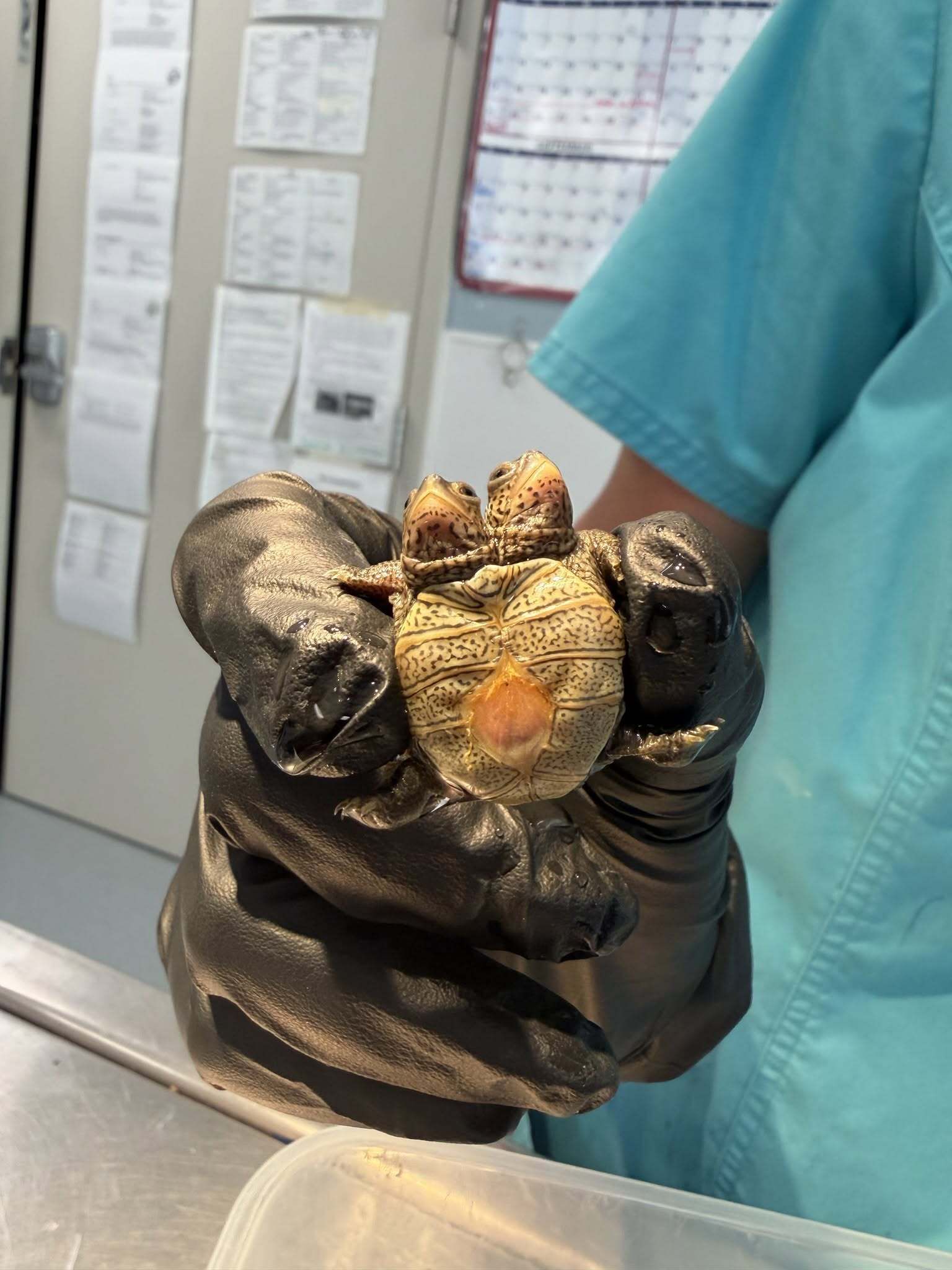
Cape Cod is known for its lobsters and its growing great white shark population, but now the holiday hotspot has another extraordinary animal to showcase: a rare two-headed diamondback terrapin that is surviving against the odds.

The baby turtle, which weighed just 0.18 ounces (5.2 grams), was brought to the Cape Wildlife Center in Barnstable, Massachusetts, on Sept. 17, according to a Facebook post from the wildlife center. It was originally found by representatives of the Mass Audubon Wellfleet Bay Wildlife Sanctuary at a protected nesting site in the town of Wellfleet.

The turtle's condition, known as bicephaly, is a rare developmental disorder that's typically caused by the incomplete splitting of a single embryo during the formation of identical twins. It results in conjoined twins that share one body but have two fully formed, independent heads.

A close up of a small two-headed turtle held in a black latex glove.

Two-headed turtles face survival challenges, as their abnormal anatomy can impair coordinated movement, feeding, and other functions essential for survival. (Image credit: New England Wildlife Centers Staff)

Zak Mertz, CEO of New England Wildlife Centers, which includes the Cape Wildlife Center, said the recently discovered diamondback terrapin (Malaclemys terrapin) is an uncommon example of bicephaly in turtles. Both genetics and epigenetics β€ͺ—‬ the study of how genes and environment can interact β€ͺ—‬ are thought to play a role in the condition's development.

"Our understanding based on the available research is that bicephaly is caused by both genetic and epigenetic factors," Mertz told Live Science in an email.

"It may have to do with the relatively long lifespan of the turtles, their preference for returning to the same nesting sites, and a limited gene pool due to their conservation status," he said."It may also be influenced by environmental factors, such as the temperature, humidity during incubation, physical characteristics of the nesting sites, or potentially even things the parents are exposed to in the environment."

Having two heads is rare but not unprecedented. According to the center, this is the third bicephalic terrapin found in the area in the past five years, providing another opportunity to learn more about the animals. Other wild animals with bicephaly have been found in recent years, including a two-headed porpoise found off the coast of the Netherlands and a two-headed dolphin that was found on a Turkish beach.

A 2021 study found that rare two-headed and partially duplicated sea turtle embryos and hatchlings showed significant craniofacial and spinal abnormalities and were generally smaller than typical hatchlings. The research found bicephalic turtles faced survival challenges because their abnormal anatomy could impair coordinated movement, feeding, and other functions essential for survival, highlighting the importance of monitoring such deformities as potential indicators of population and environmental health.

Diamondback terrapins are found in brackish marshlands along the Atlantic and Gulf coasts of the United States. Brackish waters have more salt than fresh water but less salt than seawater, and often occur where the freshwater of a lake or river meets the salty sea. These terrapins are classified as threatened by the Massachusetts Endangered Species Act, and their broader conservation status at the federal level is currently under review.

Veterinarians are monitoring the rare terrapin's health closely. "It is fascinating and an area that certainly merits more study," Mertz said. "We are excited to care for these two and learn as much as we can to inform future study in the process."

China reaches solar energy milestone β€” what does this mean for the world's largest greenhouse gas emitter?

China's solar power capacity has overtaken coal for the first time, marking a major milestone in the country's rapid expansion of renewable energy.

China had about 1,288 gigawatts (GW) of installed solar capacity at the end of July, compared with 1,285 GW of coal-fired capacity, according to figures from the country's energy administration reported by the South China Morning Post.

The milestone could have major implications for global efforts to tackle climate change: China is the world's largest annual greenhouse gas emitter, accounting for around 30% of global planet-warming emissions. If its rapid expansion of renewable energy begins to displace coal-fired power β€ͺ—‬ one of the country's primary sources of greenhouse gas emissions β€ͺ—‬ the impact could extend well beyond Chinese borders.

"China reaching around 1,288 GW of installed solar capacity, marginally overtaking coal, is a major milestone," Matthew Davies, UNESCO chair in sustainable energy technologies and a professor of chemical engineering at Swansea University in the U.K., told Live Science.

However, installed capacity doesn't necessarily equate to actual electricity generation. "Solar only generates when sunlight is available, whereas coal plants can run for much longer periods, so solar still supplies a much smaller share of China's electricity than coal," Davies said.

In other words, China has more solar capacity than coal capacity, but coal remains far more important when it comes to the amount of electricity actually delivered to the grid.

Between January and July this year, Chinese solar power output rose 15.5% compared to the same time period in 2025. Over those seven months, it reached 802.4 TWh, which is around 13% of the country's total electricity consumption.

"I would see this as a structural turning point, not the point at which solar has replaced coal," Davies said. "The key question is whether renewable generation can grow fast enough not only to meet rising electricity demand but to push coal generation down in absolute terms. Given the scale of China's power system, sustained reductions in coal use could have a major impact on global COβ‚‚ emissions."

To do that, China will need to do more than build solar farms. One of the biggest challenges will be integrating all of the new renewable power into the electricity system.

"Installing solar is only part of the transition; grids, transmission, storage and demand flexibility all need to keep pace so that renewable electricity can actually be used," Davies said.

This transition toward solar panels will also make renewable energy more accessible around the world, as China's enormous manufacturing capacity will help drive down the global cost of solar panels. However, Davies said the next phase of the transition is to ensure the whole solar production process is sustainable. "We need to think about where technologies are made, where materials come from, how long they last, and how they are reused or recycled," he said.

Solar panel manufacturing involves raw material extraction, processing, manufacture, transport and installation, so it has an initial carbon footprint. High energy requirement for polysilicon production is a considerable factor as it uses coal-fired power plants. But, this is offset by the electricity they generate.

There is also a case for expanding local and regional manufacturing, Davies noted. Doing so could strengthen supply chains, create local skills and economic value, and make the global energy transition more resilient and equitable. That could be particularly important for expanding access to electricity in parts of the world where reliable power remains limited.

"The global energy transition is not only about replacing fossil fuels in existing electricity systems; it is also about enabling people who still lack reliable electricity to gain access to clean, affordable power," Davies said. "Ultimately, success is not simply about installing more solar panels. It is about building a clean-energy system that is affordable, sustainable, resilient and accessible globally."

'It's incredibly rare to see a moment like this in the ocean': Camera drone captures moment humpback whale gives birth off Australian coast

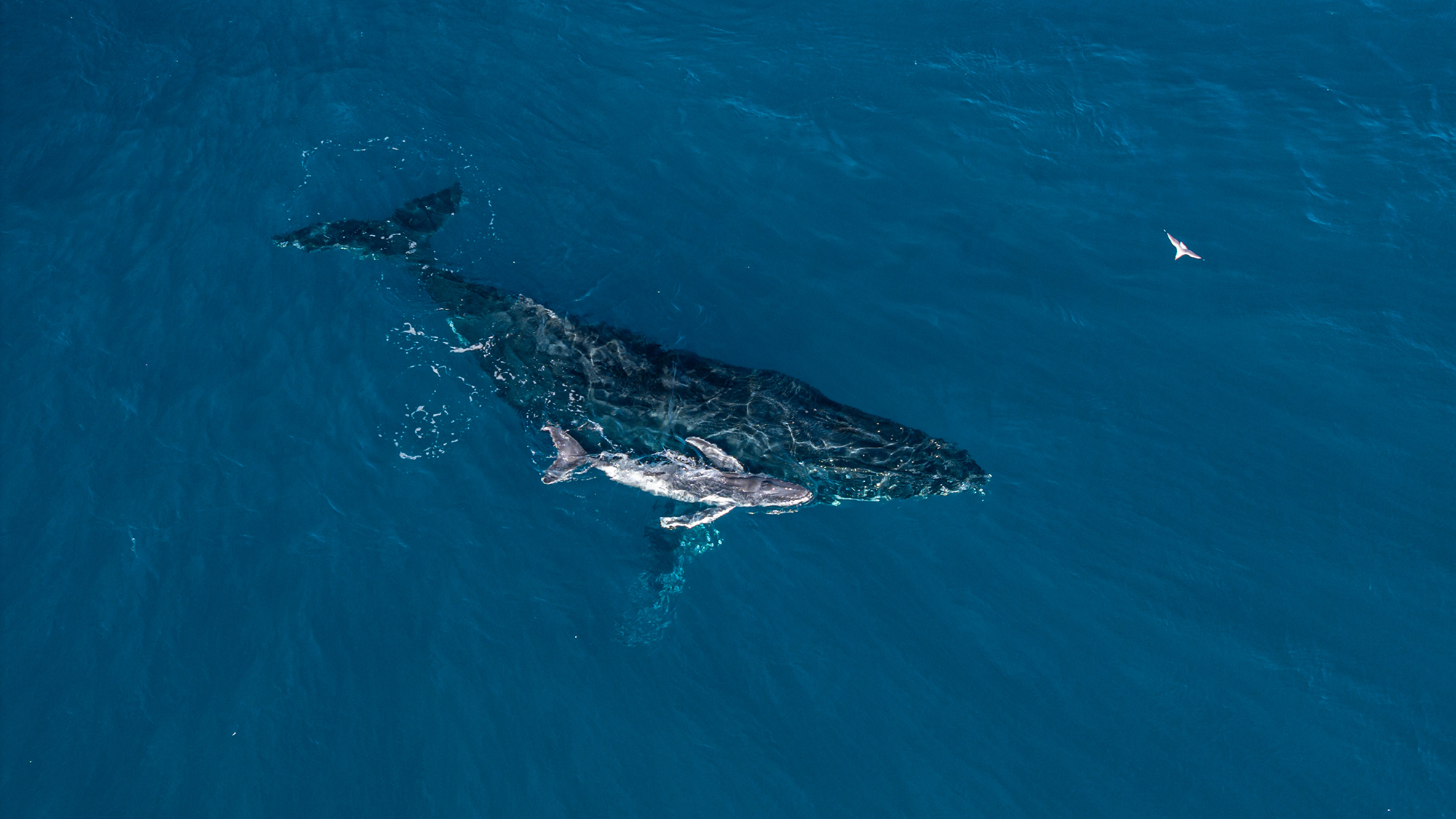
A camera drone operator captured footage of a humpback whale giving birth off the north coast of New South Wales in what is thought to be a world first.

Alexander Forrest, a commercial drone pilot for the Organisation for the Rescue and Research of Cetaceans in Australia (ORRCA), was conducting aerial observations of migrating humpback whales (Megaptera novaeangliae) on July 28. ORRCA is a nonprofit organization focused on the rescue, conservation and welfare of marine mammals.

During the survey, Forrest noticed a whale swimming slightly behind her pod and going unusually slowly. Then, he saw her give birth.

"It's incredibly rare to see a moment like this in the ocean. It's a very rarely documented encounter," Forrest told Live Science. "It's the first drone video as far as we know of a full humpback whale live birth. It gives critical inside moments in the first moments of a calf's life, and also discovers the behaviour of a new humpback whale mother and her freshly newborn calf."

An ORRCA spokesperson said that this is only the fourth time the phenomenon of a humpback whale giving birth had been filmed, in general. Scientists also have footage of other whale births, including a gray whale (Eschrichtius robustus) birth filmed off the coast of California and a sperm whale (Physeter macrocephalus) recorded giving birth in the Caribbean.

Large whales swim in the blue ocean

The expectant humpback whale mother swam behind her pod, eventually giving birth by herself. (Image credit: Alexander Forrest/ORRCA (@forrestfov))

The drone video shows the newborn whale surface from blood-reddened water for its first breath. The mother then turns back to reunite with it. The scene was filmed around 0.4 miles (700 meters) from the shore at Kingscliff in northeastern New South Wales.

The birth is "a symbol of one of the strongest conservation efforts in history, returning humpback whales from near extinction to nearly 50,000 on the New South Wales coast," Forrest said. Gathering data on this humpback whale population is critical to "discovering more about where they birth, what happens when they birth, and what those early moments look like."

Large whales swim in the blue ocean

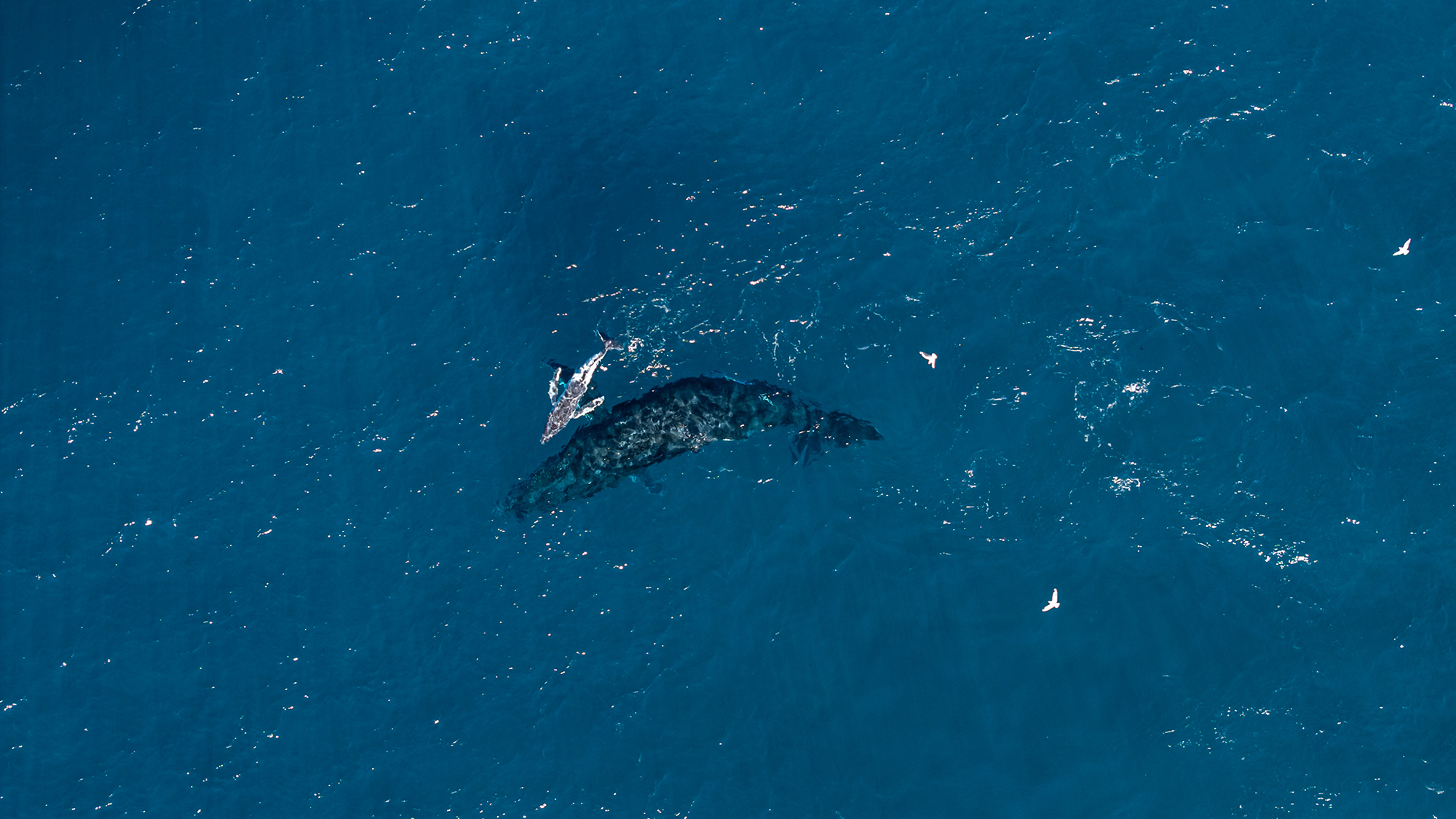
Humpback whale calves stay with their mothers for their first 11 months. (Image credit: Alexander Forrest/ORRCA (@forrestfov))

The footage will now be analyzed so that a report on the observation can be peer-reviewed and published in a scientific journal. Notably, the mother whale was trailing behind her pod when she gave birth, a detail biologists will compare with observations of other birthing whales that were accompanied by members of their pod. For instance, the 2023 drone footage of the sperm whale giving birth showed that she had 10 adult females near her that formed a protective circle and took turns lifting the calf up so it could breathe at the water's surface.

Throughout their first weeks, calves stay close to their mothers and learn critical behaviors, such as breathing at the surface.

"Humpback whales seem to have an incredible maternal bond with their offspring," Forrest said. "There is an 11-month period where this calf will be raised and feeding on very nutrient-rich milk until it is a yearling and can fend for itself."

A newborn humpback whale calf weighs 1 to 1.5 tons (900 to 1,360 kilograms) and measures roughly 10 to 16 feet (3 to 5 meters) in length. While feeding on its mother's milk, the calf will gain 100 pounds (45 kg) a day and develop the strength and food storage it needs for its first migration. Humpback whales undertake one of the longest migrations of any mammal, travelling up to 5,000 miles (8,000 kilometers) each way between the cold waters of the poles to warm tropical breeding grounds.

❌