❌

Normal view

US military practices orbital dogfighting in 1st-ever 'live fly' exercise in space

United States Space Command just held its first-ever "Apollo Maneuvers" exercise, which saw spacecraft maneuvering through simulated contested environments.

U.S. Space Command combines assets and personnel from each U.S. military branch (including the U.S. Space Force) to project American military power into and from orbit. It's unclear which or how many satellites or spacecraft took place in Space Command's recent Apollo Maneuvers 2026, but the exercise involved international partners, according to a command statement. What is known is that the exercise aimed to demonstrate "dynamic on-orbit operations, validate contested logistics and advance collective space maneuver doctrine."

To put it in plain English, this means that Space Command practiced maneuvering satellites and other spacecraft in proximity to one another in a simulated conflict environment, in order to continue refining the "orbital dogfighting" that the U.S. military has been hinting at for some years.

In military terms, dogfighting refers to the close aerial combat that fighter jets engage in, pitting two or more pilots against one another in contests of flying ability and firepower.

In terms of space, this involves "objects in space maneuvering in and out and around each other in synchronicity, and in control," according to Space Force's Vice Chief of Space Operations Gen. Michael A. Guetlein.

β€œThat's what we call dogfighting in space," Guetlein told attendees at a conference in 2025, according to Air & Space Forces, while speaking about Chinese satellite operations observed in 2024.

From statements that U.S. Space Command leadership gave about its recent exercise, it sounds like Apollo Maneuvers practiced just that, but in space.

"We will take some of our existing satellites and work with partners to demonstrate what are some of the requirements and capabilities to be able to maneuver for advantage, not just maneuver when you have to change your orbital position," Space Force Gen. Stephen N. Whiting, commander of U.S. Space Command, told reporters last month during a briefing at Redstone Arsenal in Alabama, according to Air & Space Forces.

"The side that can maneuver persistently and at scale will set the operational rhythm in orbit."

a man in a black military dress uniform speaks on a stage in front of an image of earth seen from space

Space Force Gen. Stephen N. Whiting, commander of U.S. Space Command, delivers a keynote address at the Space Foundation's 40th annual Space Symposium in Colorado Springs, Colorado on April 8, 2025. (Image credit: Space Foundation)

When it comes to space and what appears to be the inevitability of a conflict extending to Earth orbit, we're still not quite sure what that will look like. But several nations have been developing capabilities and concepts for maneuvering satellites in close proximity to other satellites with the intent to destroy or disable them, or to deny or degrade their communications or intelligence-gathering capabilities.

The U.S. Space Force, in particular, has been developing an operations framework for fighting a war in space and has held multiple training exercises aimed at practicing "orbital warfare."

But Space Force and U.S. Space Command still appear to lack many of the technologies they say they need to wage such warfare. Speaking at the Space Foundation's Space Symposium in 2025, Whiting stated that that the United States needs "orbital interceptors" to fight in space.

"And what do we call these?" Whiting rhetorically asked attendees. "We call these weapons, and we need them to deter a space conflict and to be successful if we end up in such a fight."

But U.S. Space Force has ordered and executed recent missions that have demonstrated capabilities and technologies along the lines of what Whiting described.

In June 2026, for example, a Rocket Lab Electron rocket sent one of the company's Puma satellites to orbit, where it rendezvoused with a True Anomaly Jackal spacecraft that launched a month earlier. Once both spacecraft were in orbit, they maneuvered close to one another to simulate "dynamic engagements."

The mission showed Space Force's "readiness to lean on our commercial partners to deny, disrupt and counter any adversarial advantage β€” no matter where they try to operate in space," according to a Space Force statement.

Mars rover watches Earth disappear behind Phobos | Space photo of the day for Aug. 6, 2025

a dot of light disappears behind a crescent of light on a grey background

A composite image captured by NASA's Perseverance rover on July 2, 2026 showing Earth (the bright dot) passing behind Mars' moon Phobos in the Red Planet sky. (Image credit: NASA/JPL-Caltech/ASU/MSSS/SSI)

NASA's Perseverance rover witnessed a rare event recently, when Earth briefly disappeared behind Mars' moon Phobos in the Red Planet sky.

What is it?

These new composite images were released by NASA's Jet Propulsion Laboratory (JPL) and taken on July 2, 2026, the 1,907th Martian day of Perseverance's mission. They consist of nine different images taken by the rover's Mastcam-Z instrument as it pointed up into the hazy Martian sky, watching our planet, seen here as a pale dot, cross behind the Mars moon Phobos.

This type of event is known as an occultation, from the Latin word occultare, meaning "to hide." On Earth, the most common type of occultation occurs when our moon passes in front of background stars or when planets pass behind the moon.

Mars has two moons, Phobos and Deimos. Phobos is the larger and innermost moon. Both are lumpy and irregularly shaped, and astronomers aren't sure whether they came from the asteroid belt or were formed from an ancient impact near or on the Red Planet.

a dot of light disappears behind a crescent of light on a grey background

A composite of nine different images captured by NASA's Perseverance rover on July 2, 2026 showing Earth (the bright dot) passing behind Mars' moon Phobos in the Martian sky. (Image credit: NASA/JPL-Caltech/ASU/MSSS/SSI)

Why is it incredible?

The image took careful preparation and required Perseverance to be in the right place at the right time.

"Phobos crosses the Martian sky three times a day, and Earth is visible for months at a stretch, but catching one directly behind the other takes planning and a little luck," said Mark Lemmon, a Mastcam-Z co-investigator at the Space Science Institute.

Aside from catching Earth passing behind Phobos, Perseverance has also witnessed Phobos passing in front of the sun, in what JPL calls a "Martian solar eclipse."

Curiosity rover spots mysterious honeycombs on Mars | Space photo of the day for Aug. 5, 2026

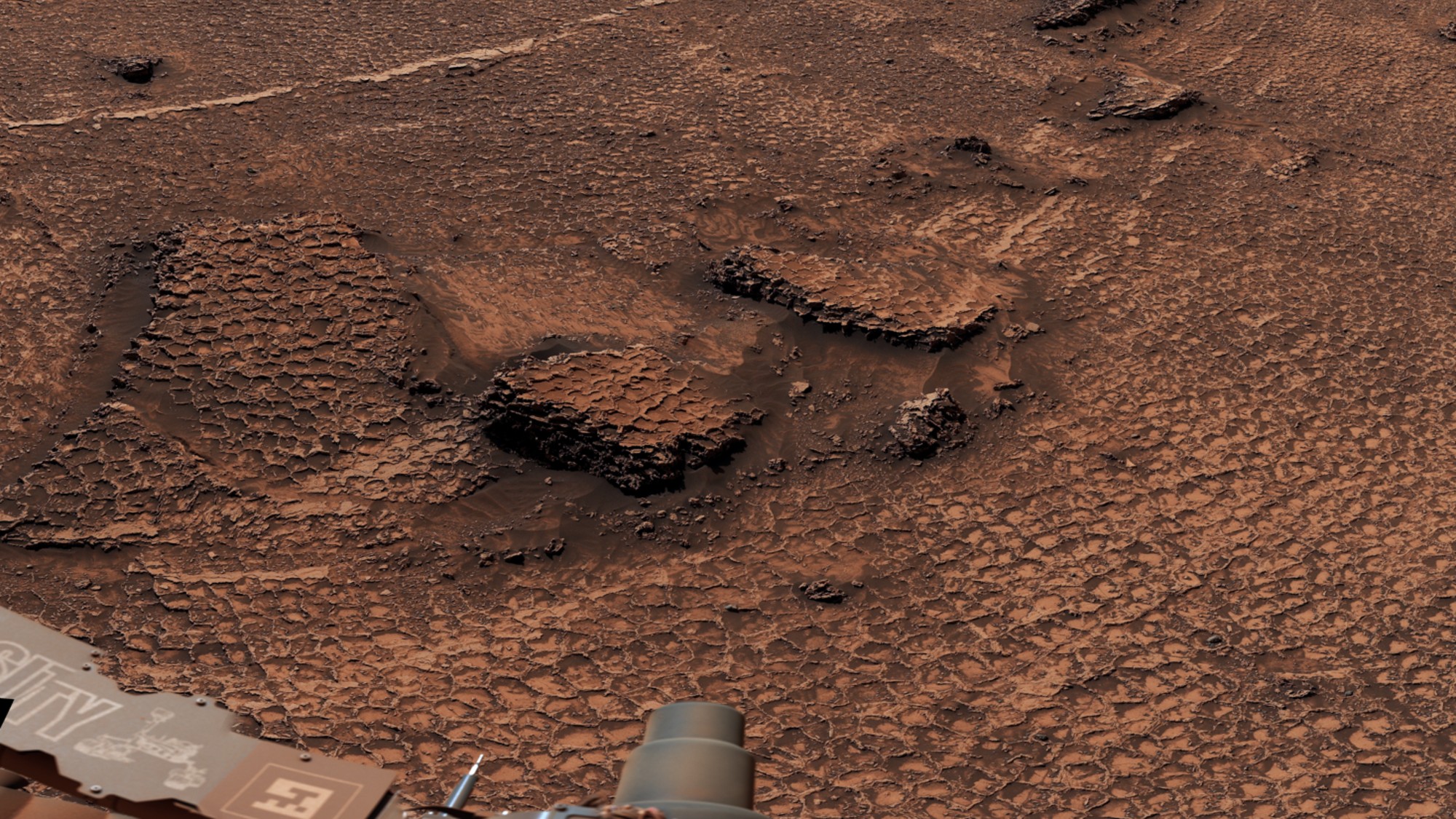
a reddish-brown landscape of soil and rocks covered in slightly raised hexagonal lines of nearly equal size

A close-up of the polygon fractures discovered by NASA's Curiosity Mars rover highlights their honeycomb-like textures. (Image credit: NASA/JPL-Caltech/MSSS)

NASA's Curiosity Mars rover spotted surprising shapes in the Red Planet soil while exploring a large valley.

What is it?

These images were captured on June 19 and 20, 2026, or the 4,930th and 4,931st Martian days of Curiosity's mission. They show honeycomb-like patterns referred to as "polygonal fractures" found in a valley on Mars known as Valle Grande. They measure about 1.5 to 3 inches (4 to 8 centimeters) across.

While Curiosity has seen other curious geometric patterns on Mars before, scientists were surprised by this most recent find.

"We've seen a lot of fascinating landscapes through Curiosity's eyes, but this sea of polygons took our breath away," project scientist Ashwin Vasavada of NASA's Jet Propulsion Laboratory said in a statement. "We measured their shapes and chemistry carefully and are hopeful there are clues in the data as to how these features formed."

a reddish-brown landscape of soil and rocks covered in slightly raised hexagonal lines of nearly equal size

A panorama taken by NASA's Curiosity Mars rover showing a large field of hexagonal shapes in the Martian soil. (Image credit: NASA/JPL-Caltech/MSSS)

Why is it incredible?

This field of polygons in Valle Grande extends as far as Curiosity's instruments could see, even around the base of a steep hill scientists named "Miraflores."

a reddish-brown landscape of soil and rocks covered in slightly raised hexagonal lines of nearly equal size

NASA's Curiosity Mars rover captured this sand-capped butte, nicknamed "Miraflores," estimated to be about 20 feet (6 meters) tall, on June 11, 2026. (Image credit: NASA/JPL-Caltech/MSSS)

While mission scientists have theories about how these structures form, it ultimately remains a mystery how they formed.

It's thought that changes in temperatures on Mars could have caused water to squeeze through sediment layers, but scientists will need to collect more data before they can reach a conclusive answer.

NASA is sending 2 probes to the moon to test complex 'three-body orbits'

NASA is planning to send two maneuverable probes to lunar orbit in order to learn how spacecraft are affected by the complex gravitational environment near the moon.

The mission, known as CAPSTONE 02, is currently aiming to launch in 2027. It will see the two probes maneuver in close proximity to one another and fly in "formation" so mission operators can better understand the gravitational effects spacecraft experience in cislunar space. This area of space is under the influence of both Earth's gravity and the moon's, meaning spacecraft operating there will have to navigate what are known as "three-body orbits."

While testing spacecraft maneuverability in these complex orbits, CAPSTONE 02 will also study communication and navigation systems that will be used in NASA's planned Artemis missions of lunar exploration and moon base construction. "This mission represents an important step in the maturation of cislunar capabilities," said NASA's Sean Fuller, Moon Base CAPSTONE manager, in an agency statement. "CAPSTONE 02 lays the foundation for lunar infrastructure and commercial services that support Artemis, Moon Base, and future missions to deep space."

The two CAPSTONE 02 probes are being built by Terran Orbital Systems, Inc. Once in space, they will alternate jobs while flying in formation, switching between what NASA calls "chaser" and "target" roles.

The spacecraft pair will use celestial navigation, optical sensors and data collected by telescopes on the ground during these maneuvers. This is similar to how NASA will use a variety of data to help its Orion spacecraft meet up with a lunar lander en route to the moon.

On the upcoming Artemis III mission, currently scheduled for 2027, NASA will test some of these techniques as Orion will rendezvous with both Blue Origin's Blue Moon lander and SpaceX's Starship, if all goes according to plan.

"Transporting crew to the lunar surface from cislunar orbit depends on knowing how well navigation systems will perform during these operations. Since these conditions can't be fully recreated on Earth, they must be tested in space," NASA wrote in its statement outlining the CAPSTONE 02 mission.

A giant chrome rocket and a small space capsule dock in low Earth orbit.

An artist's rendering of NASA's Orion spacecraft meeting up with SpaceX's Starship on the planned Artemis III mission. (Image credit: SpaceX)

As its name implies, this will be the second mission under NASA's CAPSTONE program, or Cislunar Autonomous Positioning System Technology Operations and Navigation Experiment. The first CAPSTONE probe launched in 2022 and operated for four years before NASA officially concluded its mission in June 2026.

That microwave-oven-sized CAPSTONE spacecraft tested communications tech and became the first spacecraft to test three-body orbits around the moon, according to a NASA statement.

CAPSTONE was tested in what is known as a near rectilinear halo orbit. This is a fairly gravitationally stable orbit, thanks to the nearly equal pulls of both Earth's gravity and the moon's.

Artemis moonsuits take a dive | Space photo of the day for July 31, 2026

a person in a bulky white spacesuit attached to an umbilical digs in sand with a shovel underwater

Exploration geologists and Artemis science officers Trevor Graff, left, and Angela Garcia carry out a lunar training development run at NASA's Neutral Buoyancy Laboratory (NBL) in Houston. (Image credit: NASA)

Sometimes to go to the moon, you first have to go underwater.

NASA is currently developing the training program for NASA's Artemis astronauts, some of whom could set foot on the moon during the agency's planned Artemis IV mission. As part of that development, two agency scientists recently donned Artemis moonsuits and took to NASA's underwater training facility.

What is it?

These photos show two NASA exploration geologists and Artemis science officers practicing using the same types of geology tools that astronauts might use when they explore the moon.

The scientists also "deployed a mock lunar payload under low-angle lighting conditions," according to a NASA statement accompanying the photo. NASA is currently aiming to place astronauts at the lunar south pole, where many areas remain in permanent shadow. As such, future lunar explorers may have to operate in near-total darkness and learn how to carry out their missions with very little light.

people in bulky spacesuits walk across a sandy surface underwater in a dark pool-like laboratory

Exploration geologists and Artemis science officers Trevor Graff, left, and Angela Garcia carry out a lunar training development run at NASA's Neutral Buoyancy Laboratory (NBL) in Houston. (Image credit: NASA)

Why is it incredible?

The fact that NASA is preparing to send humans back to the moon is incredible in itself. Humanity hasn't set foot on our natural satellite since 1972. While NASA still has many technical hurdles to cross when it comes to developing and selecting a moon lander, the agency is pushing ahead with developing the training it will use to prepare its astronauts to explore the lunar surface.

For this particular part of Artemis training development, NASA placed two scientists in its Neutral Buoyancy Laboratory (NBL), a 40-foot-deep (12-meter) pool at NASA's Johnson Space Center in Houston. The particular test in these photos was "the first time that two geologists were suited up simultaneously for lunar geology training in the NBL," according to NASA's statement.

For these tests, a portion of the underwater laboratory was outfitted with soil and rocks that simulate the surface of the moon. The buoyancy of the pool can be manipulated in order to simulate different levels of gravity, helping astronauts train for spacewalks or for exploring other worlds like the moon.

Satellites spy penguin poop on Danger Islands | Space photo of the day for July 30, 2026

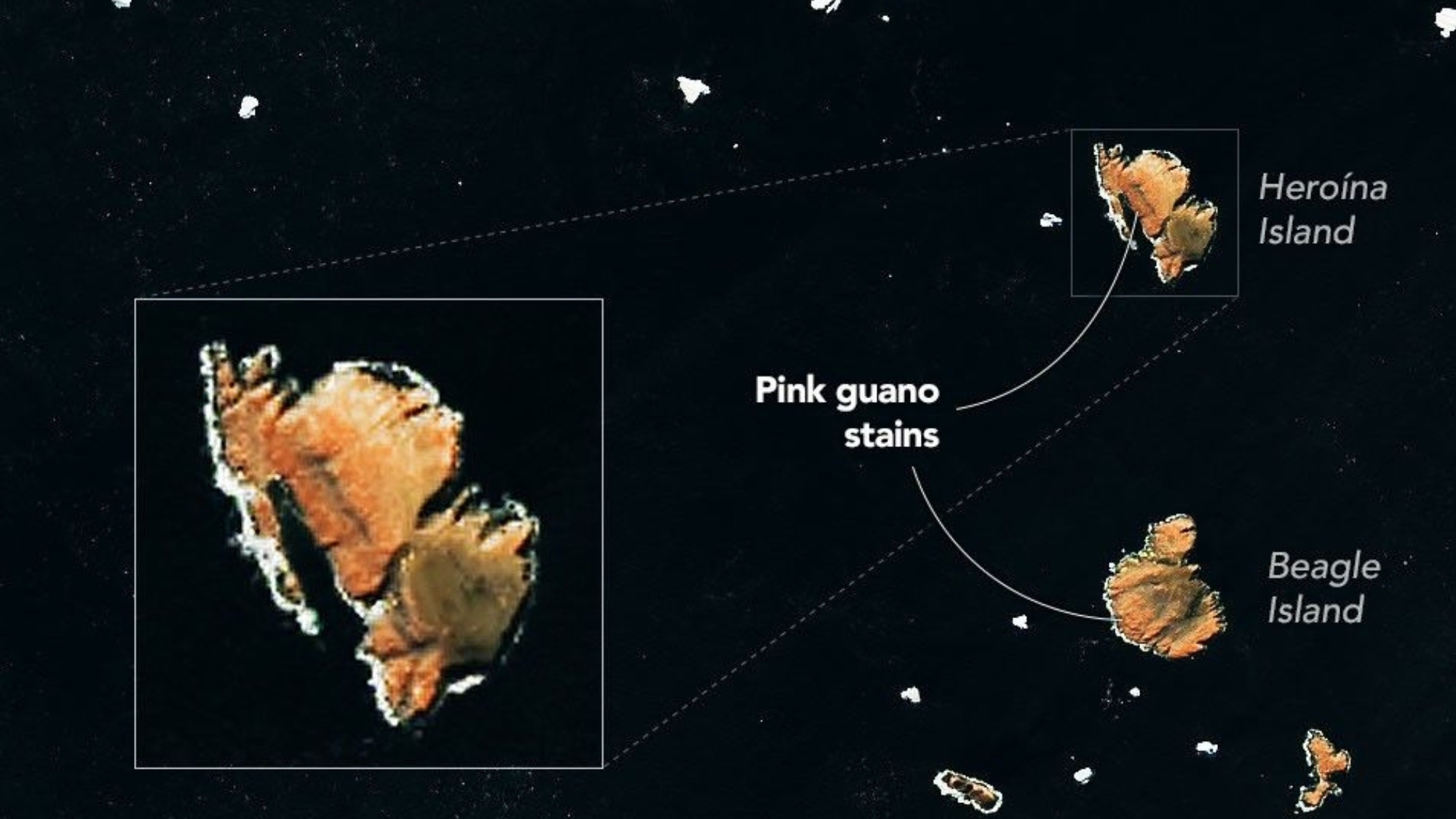
a satellite view of two long islands

Pieces of sea ice drift near Antarctica's Danger Islands in this image, acquired on Jan. 22, 2023, by theΒ Landsat 8 satellite. Several of the islands are stained pink by guano from AdΓ©lie penguins with a krill-rich diet. (Image credit: NASA Earth Observatory/Michala Garrison)

The diets of penguins on Antarctica's Danger Islands can be seen from space. At least indirectly.

Using satellite images captured by the Landsat 8 spacecraft operated by NASA and the United States Geological Survey, scientists can track changes in AdΓ©lie penguins' diets based on the color of their guano, or droppings.

What is it?

The image above shows pinkish-orange guano staining large sections of some of the Danger Islands, HeroΓ­na Island and Beagle Island. The penguins that live there eat a diet rich in krill, small marine crustaceans that are bright pink in color due to a specific type of algae upon which they feed.

a group of penguins jump from one ice floe to another in the sea

A group of Adelie penguins jumping from ice pebble to ice pebble on a beach of Paulet Island on the tip of the Antarctic Peninsula. (Image credit: Wolfgang Kaehler/LightRocket via Getty Images)

The bright pink color of the penguins' droppings stands out in satellite imagery, allowing researchers to monitor the birds' populations from space. But scientists wanted a closer look, and collected drone imagery as well, as seen in the image below.

two large clumps of dots can be seen on a grassy hill lined with snow and ice from an overhead perspective

A colony of AdΓ©lie penguins is visible in this image captured by a drone during a research expedition to the Danger Islands. (Image credit: Thomas Sayre-McCord/WHOI/MIT)

Why is it incredible?

It's pretty amazing that the diet of a specific population of birds can be monitored from 438 miles (705 kilometers) above Earth's surface. The imagery collected by Landsat-8 helped scientists locate where the penguin colonies might be, allowing them to find them in-person and collect guano samples. Those samples contained evidence of what the penguins were eating over time.

Researchers are using those satellite images and samples to track how the penguins' diet might be affected by changes in sea ice conditions, according to a NASA statement.

"Sea ice is such a hugely important factor in the Antarctic marine environment," said Clemson University biologist Casey Youngflesh who led a study comparing the penguins' diet and sea ice conditions. "The structure of the region's food web is changing in response."

NASA launched this spacecraft to save a space telescope. Now, it needs saving too

Things aren't going so well for NASA's latest satellite rescue mission.

NASA launched the Swift Boost mission on July 3, sending a specialized spacecraft to low Earth orbit on a Northrop Grumman air-launched Pegasus XL rocket. The spacecraft is called LINK and was built by Arizona-based Katalyst Space Technologies. LINK was sent to orbit to try and link up with NASA's Swift observatory, a highly successful scientific satellite designed to search for gamma-ray bursts, some of the most energetic events in the universe.

But it looks like just a few weeks after launch, LINK is experiencing some issues. "Katalyst's LINK servicing spacecraft experienced issues with attitude control, causing the spacecraft to spin and resulting in sporadic communications," NASA wrote in an update on Tuesday (July 28). Despite the malfunction, however, the space agency says the rest of the spacecraft is functioning normally and remains in otherwise good health.

According to preliminary analysis of the issue, two of the LINK spacecraft's three reaction wheels are not operating. In addition, there is "some loss of functionality" in LINK's cold gas thruster system.

The failure with the LINK spacecraft's reaction wheel is slightly ironic, given that the Swift observatory itself once had issues with its own reaction wheels. In 2022, NASA placed the observatory in safe mode when one of its reaction wheels caused minor issues with the spacecraft's movements.

a cylindrical spacecraft floats above earth

NASA's Neil Gehrels Swift Observatory, shown in this artist's concept, orbits Earth as it studies the ever-changing universe. (Image credit: NASA’s Goddard Space Flight Center Conceptual Image Lab)

Mission teams will now try to use the spacecraft's electric propulsion system to stop the spinning and regain control. If that can be done, NASA and Katalyst will then have to evaluate if the mission can proceed as planned.

Swift's orbit has been decaying for years, and the observatory is unable to boost its orbit on its own. Thus, LINK was designed to meet up with Swift in low Earth orbit and spend some time studying the observatory to determine how best to grab onto it with three robotic arms. Once it has linked up with Swift, LINK should be able to use its own thrusters to boost the observatory to a higher orbit and extend Swift's life.

a three-panel illustration showing two spacecraft meeting up above earth

Artist's illustration of Katalyst Space Technologies' Link servicing spacecraft approaching and capturing NASA's Swift space observatory on an orbit-boosting mission. (Image credit: Katalyst Space Technologies)

The Swift observatory, officially known as the Neil Gehrels Swift Observatory, was launched in 2004 at a cost of $250 million. The Swift Boost mission only cost NASA $30 million.

Over the last 22 years, Swift has been searching the sky for gamma-ray bursts and other high-energy astrophysics phenomena in the cosmos. In 2022, the observatory spotted a gamma-ray burst nicknamed the "BOAT," short for Brightest of All Time. At the time of discovery, it was the most powerful space explosion ever seen.

SpaceX Starship still floating 5 days after flight | Space photo of the day for July 29, 2026

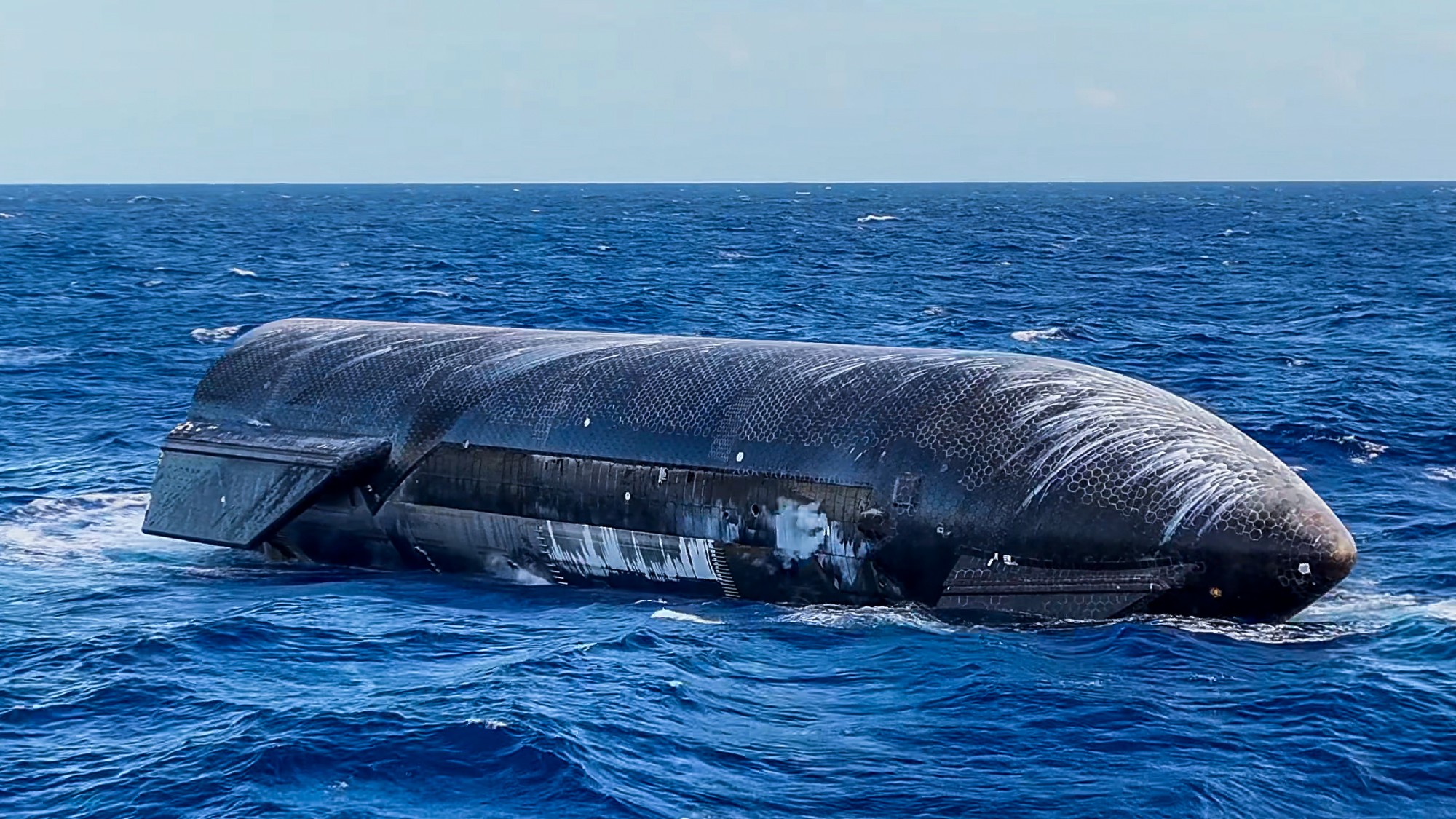
a large black cylinder with wing-like canards floats on top of a choppy blue sea

SpaceX's Starship Version 3 floats on the Indian Ocean on July 28, 2026, days after splashing down on the vehicle's Flight Test 13 on July 24. (Image credit: SpaceX via X)

SpaceX's Starship V3 looks absolutely seaworthy in this new photo taken days after its most recent flight test.

What is it?

SpaceX launched its Starship vehicle on July 24, sending the 408-foot-tall (124-meter) Starship Version 3 (V3) rocket on a suborbital trajectory that saw the rocket's upper stage make its softest splashdown yet.

In fact, the landing was so smooth that Starship is still floating off the coast of Western Australia. SpaceX shared the photo of Starship on Tuesday (July 28), posting on X that the vehicle is "still afloat in the Indian Ocean."

The scorch-streaked 171-foot (52-meter) Starship upper stage resembles an orca or a submarine in the photo, resting mostly out of the water.

Why is it incredible?

It wasn't just the splashdown that was so stunning. Video taken from aboard Starship and from the Starlink satellites that were deployed alongside the upper stage during Flight Test 13 truly looks like the stuff of sci-fi.

Starship, which consists of SpaceX's Super Heavy booster and the somewhat-confusingly-named upper stage known as Starship (or Ship), is designed to be rapidly reusable. That means, if all goes according to plan, SpaceX will eventually be able to land both stages and have them refueled, inspected and ready for flight again in a matter of days.

But there are still major hurdles to cross before that goal is ever reached. SpaceX will have to figure out how to make Starship's heatshield more durable and reusable, a feat some experts call a "dead-end for all missions that require full and rapid reusability," according to Ars Technica.

Nevertheless, having a fully intact second stage rocket floating on the ocean four days after a flight test is quite a feat.

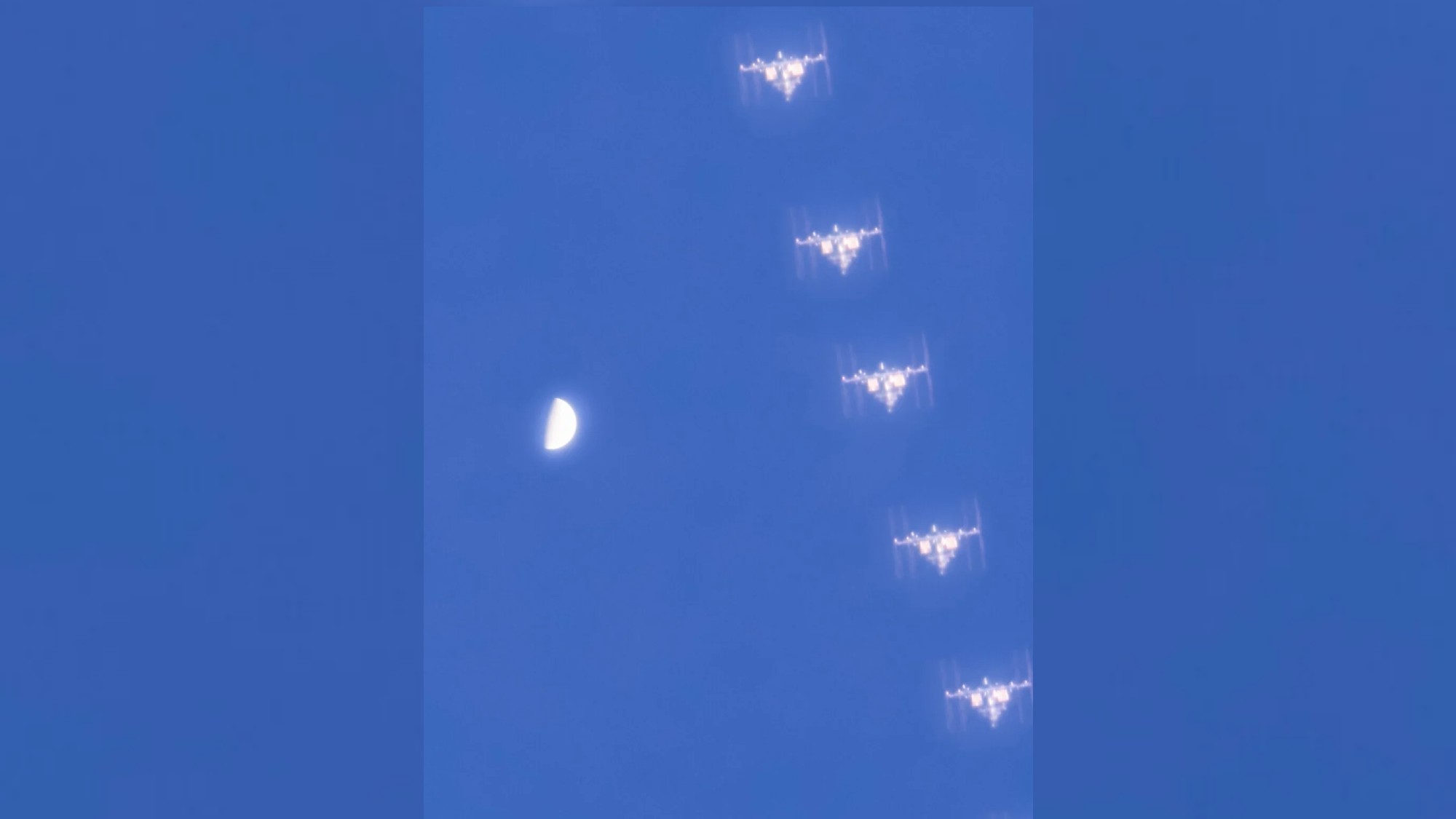
ISS meets Venus in incredible daylight photo | Space photo of the day for July 28, 2026

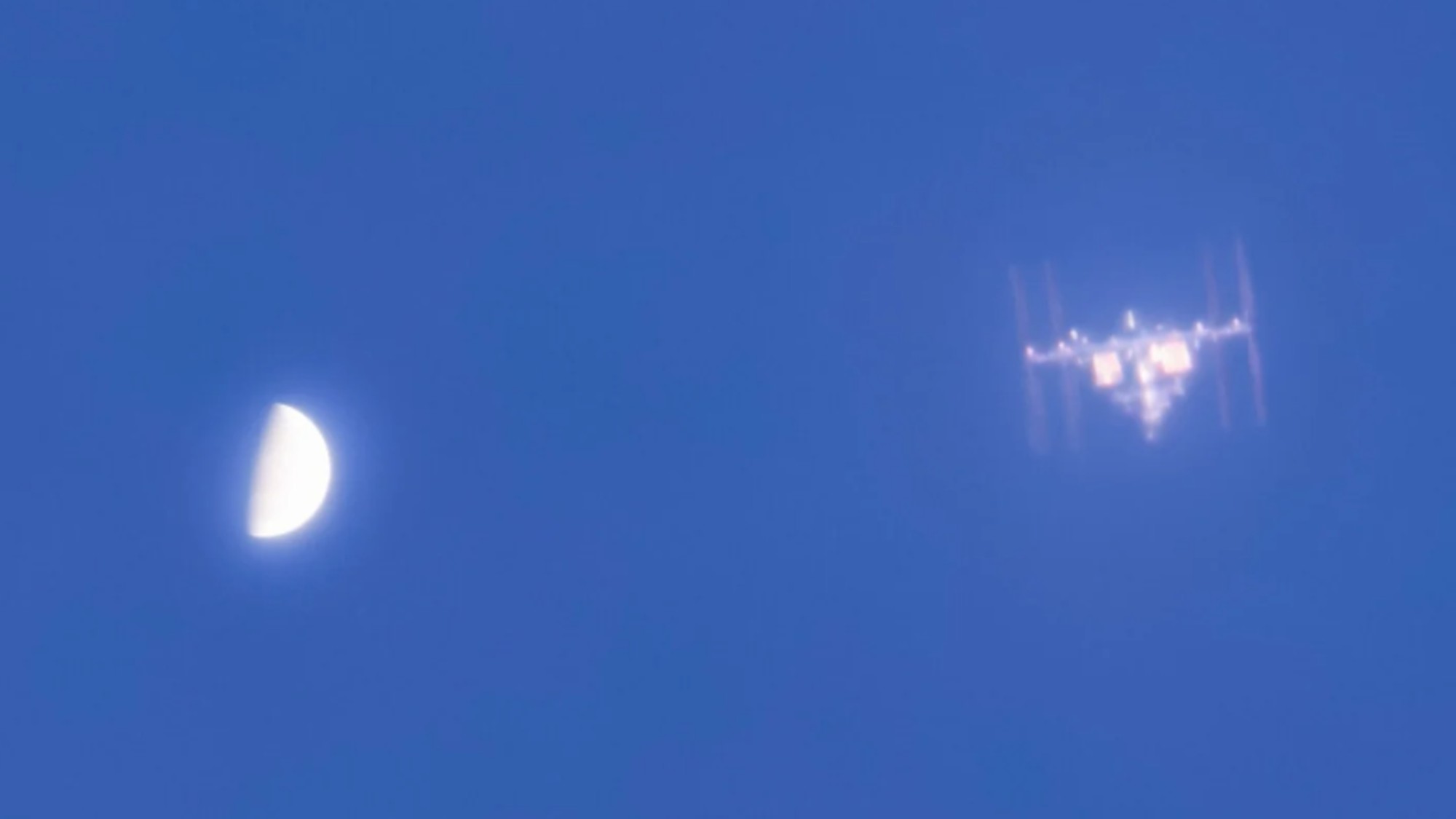
a T-shaped space station beside a half-orb on a blue sky

Venus beside the International Space Station as captured by photographer A.J. Smadi from Edmonds, Washington on July 18, 2026. (Image credit: AJ Smadi)

An astrophotographer captured a breathtaking scene as the International Space Station zoomed by Venus in the daytime sky.

What is it?

Photographer AJ Smadi set up the scene on July 18 in a park near Seattle, Washington. Smadi used a 9.25" (23.5 cm) Celestron Schmidt-Cassegrain Telescope and a ZWO ASI662MC camera equipped with an ultraviolet and infrared filter to capture the incredible image.

But this isn't the first time Smadi has pulled off such a feat. Just over a year ago, the photographer captured the ISS beside Venus in a photo that was selected by NASA as one of its Astronomy Photos of the Day.

"The thing that inspired me to capture Venus with the ISS is the fact that nobody has done it before," Smadi told Space.com by email. "After having realized this in April 2025 following my first time capturing the pair together, I was determined to best my own achievement," Smadi said.

Smadi regularly photographs the ISS but says the clarity differs greatly depending on the stability of the air and its distance.

a t-shaped space station next to a white half-orb in a blue sky

A timelapse photo of Venus passing beside the International Space Station as captured by photographer A.J. Smadi from Edmonds, Washington on July 25, 2026. (Image credit: AJ Smadi)

Why is it incredible?

Capturing Venus, the ISS, or any other object in space (other than the moon) during the daylight hours takes careful planning and a deep understanding of astrophotography techniques and filters.

The ISS travels at a mind-boggling 4.6 miles per second (7.5 km per second) and is 84 million miles (135 million kilometers) away from Venus, so lining up a photograph of the two seemingly side-by-side is no easy feat and takes painstaking planning.

For more of AJ Smadi's work, including photos of the ISS transiting the sun, the moon, and passing by Saturn, visit his Instagram.

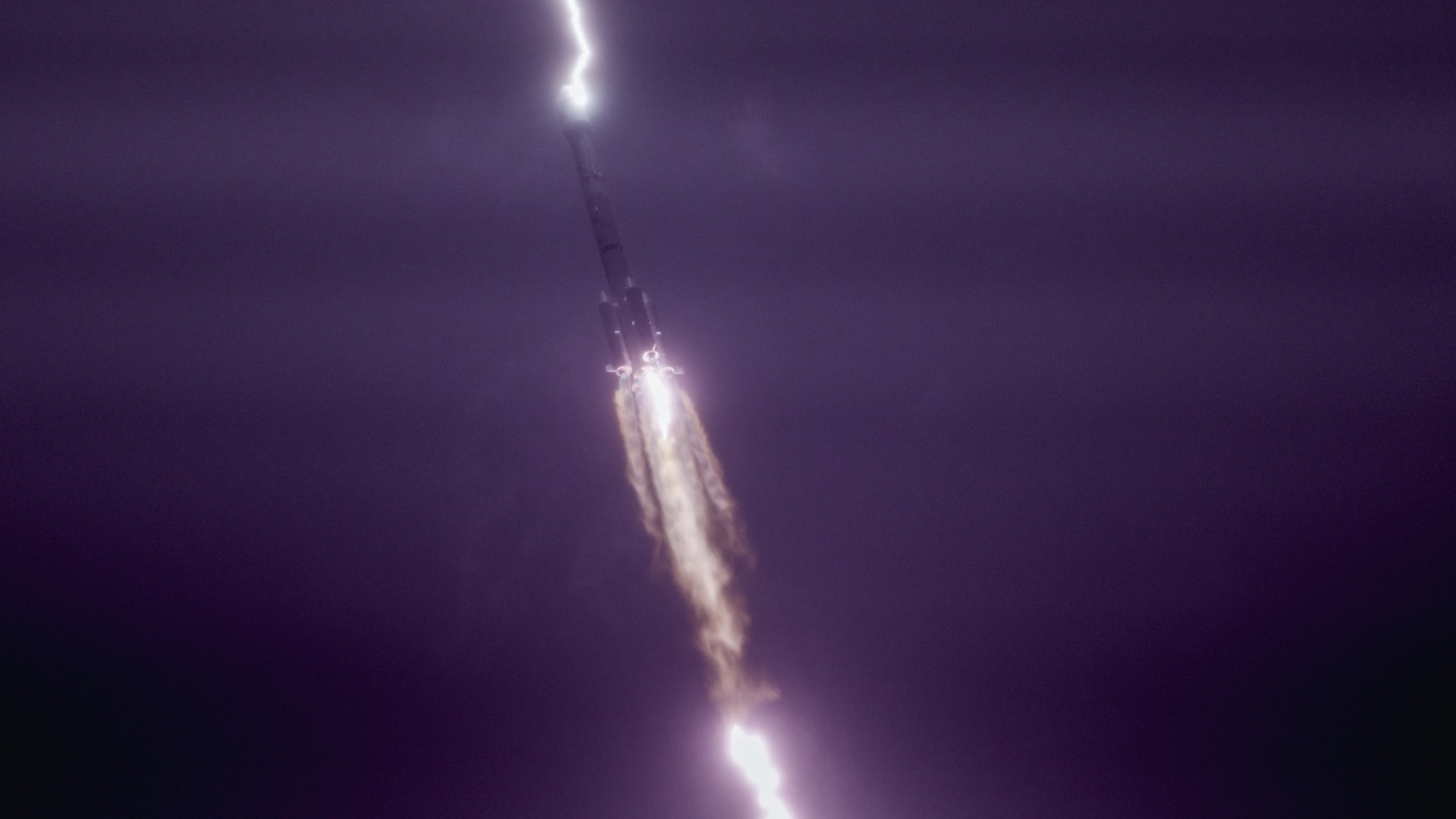
Lightning strike on Chinese rocket captured in epic launch photo

lightning strikes a rocket in the sky

A Long March-3B carrier rocket carrying the Tianlian II-06 satellite blasts off from the Xichang Satellite Launch Center on July 23, 2026 in Xichang, Sichuan Province of China. (Image credit: Zhou Quan/VCG via Getty Images)

Lightning struck a Chinese rocket shortly after liftoff this week, as seen in incredible video and photographs.

A Long March-3B rocket lifted off from China's Xichang Satellite Launch Center on Thursday (July 23) carrying a communications relay satellite destined for geostationary orbit. Some 30 seconds into flight, lightning struck the rocket, leading to awestruck cries from crowds gathered nearby to watch the launch.

Despite the strike, the rocket delivered the satellite to its intended orbit as planned, according to the China Aerospace Science and Technology Corporation (CASC). The satellite will help relay communications to the nation's Tiangong Space Station and other crewed missions.

This isn't the first time lightning has struck a rocket shortly after liftoff. A lightning bolt famously struck the Saturn V rocket carrying NASA's Apollo 12 mission, the second to ever land astronauts on the moon. In fact, the rocket was struck twice.

According to a report NASA issued after the mission, some non-essential instruments and sensors experienced "permanent effects" from the strikes. Nevertheless, the mission put astronauts Charles "Pete" Conrad, Alan Bean and Richard "Dick" Gordon on the moon as planned.

More recently, lightning struck a Russian Soyuz rocket in 2019 shortly after it launched. Like in this most recent example, the vehicle was able to place its Glasnost communications satellite in orbit despite the strike.

Une fusée Longue Marche 3B vient de se prendre la foudre peu après son décollage de Xichang.Ce n'est pas la première fusée à subir ça, la Saturn V et la Soyouz-2 ont été aussi foudroyées par exemple. Aucun échec n'est lié à la foudre... pour l'instant.pic.twitter.com/vrAqaGAnnCJuly 23, 2026

But not all rockets struck by lightning fare so well. In 1987, a bolt struck the United Launch Alliance Atlas/Centaur-67 rocket, leading to a malfunction in one of the computers that guided the vehicle and "ultimately causing the breakup of the vehicle," NASA wrote in a report of the incident.

The incident led to NASA developing strict Lightning Launch Commit Criteria (LLCC) to lower the risk of strikes by further defining weather conditions that would delay launches. "Since Atlas/Centaur-67 and the rigorous implementation of the LLCC, no other launch vehicles have intercepted or triggered lightning on launch in the United States," NASA wrote in a technical paper outlining the criteria.

If space war erupts, 'none of us will be able to avoid the war zone,' warns outgoing Space Force chief in final public speech

The outgoing head of the U.S. Space Force has some stark words for his international partners.

Speaking at the 2026 Global Air and Space Chiefs Conference on July 15, in what was his last public speech as Chief of Space Operations (CSO), Gen. Chance Saltzman told attendees that if an armed conflict ever reaches space, as military leaders have for years been predicting and planning for, no military or nation in the world will be spared.

"If a conflict extends into space, none of us will be able to avoid the war zone. Unlike a combat zone in the air, land or sea, we will not be able to steer clear," Saltzman said in his remarks at the conference, published by the Space Force. "Whether we want to be in the combat zone or not, orbital mechanics will put all of our space capabilities into the space war zone."

Saltzman's warning touches upon the fact that there isn't an unlimited amount of space in Earth orbit; in fact there are some crowded orbital inclinations that contain thousands of spacecraft. When a satellite or other spacecraft breaks up in one of these orbits, it can create hazards for many other spacecraft β€Šβ€” even crewed ones.

When Russia destroyed a satellite with a missile in a 2022 test, it left a dangerous debris field in orbit that persists today. The ISS has had to dodge it multiple times.

If a conflict broke out or extended to space, and that conflict involved the destruction of even just one satellite, it could potentially create a runaway effect that leaves parts of Earth's orbit unusable.

But despite the grave nature of his warning, Saltzman stressed that ultimately the shared nature of space means that all spacefaring nations should aim toward cooperation.

"We will share the consequences; therefore, we should share the responsibility for a safe, secure and stable space domain," Saltzman said, adding later in the speech that "these widespread consequences of conflict in space should make deterrence a goal for all of us."

Saltzman has stressed the need for international cooperation in prior speeches. The outgoing CSO called defending the peaceful use of space "the ultimate team sport" when introducing Space Force's International Partnership Strategy in 2025. "The domain is too big, too complex, too dynamic, for a single nation to secure alone," Saltzman said.

While head of the U.S. military's newest branch, Saltzman has seen the Space Force evolve into a fully "combat-credible" force, to use the outgoing CSO's own words.

Saltzman touted the Space Force's contributions to recent U.S. military operations earlier this year at the Space Foundation's 41st Space Symposium in Colorado Springs. "We aren't just talking about theories or plans anymore. We're talking about real operational combat, space effects and the Guardians who deliver them," Saltzman told attendees.

Saltzman is set to retire in August 2026 after serving as the Space Force's second Chief of Space Operations since 2022. President Donald Trump has nominated a replacement, Lt. Gen. Douglas A. Schiess, to serve as Saltzman's successor. Schiess has served as Deputy Chief of Space Operations for Operations since November 2025.

During a recent confirmation hearing, Schiess defended the Space Force's $71 billion budget request, stating the funds are needed to deter China's development of military space capabilities. "The 71.1 billion dollars that the president has asked for is exactly what we need," Schiess said, according to Space News.

China's space plane appears to have released a mystery object in orbit

China's Shenlong space plane appears to have released a mystery object while in orbit, according to a private space surveillance firm.

Shenlong launched on its fourth mission on Feb. 6, 2026 atop a Long March 2F rocket that lifted off from China's Jiuquan Satellite Launch Center in the Gobi Desert. As with previous flights, the objectives of this mission were not disclosed to the public. But according to recent observations by the commercial orbital intelligence company LeoLabs, one part of Shenlong's latest mission appears to involve releasing an unknown object.

"At 02:30 UTC on 22 June 2026, LeoLabs detected an unknown object in the vicinity of the Chinese Shenlong reusable space plane," LeoLabs posted to X. "This object did not correlate to any other object in our catalog. It was first observed by our Tracker radar in New Zealand."

"Following additional observations across our global network and analysis via LeoLabs Delta, we have independently cataloged this object and assessed with high confidence that it was released from the Chinese space plane," the company added in the post. "This activity is consistent with sub-satellite deployments conducted by the space plane in previous missions."

Space tracker Jonathan McDowell noted on X that the object has now been catalogued by the U.S. Space Force.

Shenlong, or "Divine Dragon," is a reusable space plane that launches atop a rocket but lands on a runway like an aircraft. Its overall design is believed to be similar to the United States Space Force's X-37B, or somewhat like NASA's storied space shuttle. Exact specifications are difficult to come by, given how secretive China's space program remains about Shenlong.

Very few images exist of Shenlong, and most of what we have seen of the space plane are telescopic images of the vehicle taken from ground-based telescopes.

black-and-white images of an aircraft-like object rotating in space

Imagery of China's Shenlong space plane caught on camera in 2024 by Felix SchΓΆfbΓ€nker in Upper Austria. (Image credit: Felix SchΓΆfbΓ€nker )

This isn't the first time that Shenlong has appeared to release objects while in orbit. In June 2024, observers noticed that the space plane may have released a subsatellite or ejected an unnecessary piece of hardware as it approached the end of its mission.

Six months earlier, observers believed the space plane had ejected six objects at once, but those were later determined to be debris left over from launch.

Observers on the ground have also noticed what appear to be solar arrays extending from Shenlong, based on analysis of telescope imagery.

On previous missions, Shenlong has appeared to conduct what are known as rendezvous and proximity operations (RPO), meaning it tested the capability to maneuver close to other objects in space, according to SpaceNews.

White these RPOs can be conducted for peaceful purposes such as repairing or refueling other spacecraft, it might also be the case that space superpowers such as China and Russia are developing these capabilities to potentially tamper with adversary satellites should warfare ever make it to space. In May, two Russian satellites came within 10 feet (3 meters) of one another in orbit, following a pattern of the country testing the capabilities of these so-called "inspector" spacecraft.

There's no reason to believe the United States isn't developing its own RPO capabilities for similar reasons, and the nation has released official artwork suggesting as much.

❌