❌

Normal view

How scientific publishers are fighting back against fraudulent papermills

22 September 2026 at 11:00
Hand typing on a laptop keyboard in low lighting
The dark side of science The demand on researchers to publish has increased the temptation for some scholars to cut corners and take risks to get published. (Courtesy: iStock/Martin Philip)

On 17 April 2016 Elisabeth Bik, a microbiologist at Stanford University, published a paper that shocked the world of medicine – and also shook the foundations of scientific publishing. Working with Ferric Fang from the University of Washington in Seattle and Arturo Casadevall from the Johns Hopkins School of Medicine in Baltimore, she conducted a huge study into image duplication and manipulation covering more than 20,000 published papers in 40 journals published between 1995 and 2014.

Together, the team documented 782 instances of image duplication – where the same photo, graph or data is reused improperly to represent different experiments – as well as 196 published papers that contained “duplicated figures with alteration”. Before the paper, Bik had anonymously been submitting reports on plagiarism and image duplication to journal editors, which she was motivated to do after discovering that someone had plagiarized her own work.

But following the paper’s publication, Bik became a scientific “sleuth-in-chief”, kickstarting a whole industry of so-called amateur scientific sleuths, to which she provided advice and mentorship. In 2024 she was awarded the Einstein Foundation Award for “identifying misconduct and potential fraud in scientific publications, highlighting science’s problems policing itself”. She donated the €150,000 prize money to the non-profit Center for Scientific Integrity to create a fund that supports fellow sleuths.

Bik’s work was a wake-up call not only for academics, but also for scientific publishers, journal boards and journal editors to focus on, and hopefully halt, scientific misconduct. IOP Publishing, for example, which publishes Physics World, employs a team of six research-integrity officers handling misconduct cases, which has become a far bigger problem than 10 or 20 years ago. Back then, examples of scientific misconduct, which mostly involved data fabrication, plagiarism or self-plagiarism, were notorious – certainly in physics – for their rarity.

One high-profile outlier involved the Bell Labs physicist Hendrik Schön, whose work promised to revolutionize the fields of organic electronics, superconductivity and nanotechnology. He published several high-profile papers in journals such as Nature and Science, but some scientists gradually began to notice that data in some of his figures appeared to have been duplicated. An independent committee was set up to investigate and in 2002 it found that Schön had fabricated data and falsified reports in 16 of 24 papers published between 1998 and 2001.

More recently, condensed-matter physics was hit by another high-profile case in which Ranga Dias claimed to have discovered superconductors that could operate at high pressures and ambient temperatures. A subsequent investigation by the University of Rochester in New York, where Dias was employed, concluded that he had committed misconduct, including data fabrication.

While misconduct generally used to be carried out by an individual looking for academic notoriety, it has now evolved into a co-ordinated and commercial activity that is tapping into science’s dependence on metrics when it comes to prestige and career progression. Referred to as “papermills”, these businesses sell authorships, citations, data and even produce full papers. Such papermills have evolved incredibly quickly to evade publisher checks and the peer-review process. Papermills also often market their services to students, promising guaranteed acceptance and citations.

Few people at the time of Bik’s discovery, however, could have foreseen the growth of artificial intelligence (AI) and machine learning (ML). These developments have given bad actors a powerful new tool – letting them rapidly increase their output and also target journals that lack the necessary checks needed to stop scientific misconduct at scale.

Scientific publishing terms at a glance

Open access Where research and academic work is free for everyone to read, share and use online.

Article processing charge A fee paid by an author or their funder to make a research paper open access.

Peer review An evaluation process where academic or scientific research is scrutinized by experts in the same field before it is published. Its main goal is to check the validity, accuracy and quality of a study to ensure only credible work enters the scientific record.

Impact factor A number that shows how often articles in an academic journal are cited in other research papers. It helps measure the relative importance or rank of a journal within its field, with a higher number meaning the work published in the journal is used more often by other scientists.

Papermill A shady, profit-driven business that creates fake or poor-quality scientific manuscripts and sells co-authorship on them to researchers.

Predatory journals Deceptive, profit-driven publications that claim to be legitimate scholarly journals but bypass proper peer review, editorial oversight and quality control. Their main goal is to trick researchers into paying an article processing charge without offering real academic services.

Artificial intelligence Intelligent behaviour exhibited by machines. But the definition of intelligence is controversial so a more general description of AI that would satisfy most is: the behaviour of a system that adapts its actions in response to its environment and prior experience.

Machine learning As a group of approaches to endow a machine with artificial intelligence, machine learning is itself a broad category. In essence, it is the process by which a system learns from a training set so that it can deliver autonomously an appropriate response to new data.

Large language model An artificial intelligence program trained on massive amounts of text to predict the next word in a sequence, allowing it to write text, translate languages, answer questions and power conversational chatbots.

Dark side of science

The term “publish or perish” is a well-worn phrase in academia. It originates because scientific success is often measured by the number of high-impact articles a researcher has co-authored. Publishing in high-impact-factor journals, and the citations that often generates, can affect an academic’s career and influence job or grant applications. Some institutions have been known to even award cash bonuses for publishing in such journals; with research contracts even not being renewed when a researcher can’t keep up with the publication rate required.

This pressure to publish is partly why publishers and journals have grown so much in recent years. That is especially so for open-access journals, which remove the requirement for traditional subscriptions. Articles are instead made immediately and freely available for anyone to read, with publication costs covered by authors who pay an article-processing charge, which can typically be around £2500 per article and rise to as much as £10,000.

That cost has made scientific publishers less reliant on journal subscription fees paid by libraries and more on income earned from individual scientists. According to an analysis carried out in 2023 by researchers in Canada and Germany, scientists globally paid more than $1bn in open-access fees between 2015 and 2018 to the big five academic publishers: Elsevier, Sage, Springer Nature, Taylor & Francis, and Wiley.

But as the popularity of open-access journals has risen, so too has the growth of “predatory” journals. They exploit the open-access model – and the need for scientists to boost their publication records – by taking publication fees but not carrying out a proper peer-review process, if at all.

A study in 2025 by researchers at Northwestern University found that the publication of fraudulent science, aided by papermills, is now at a point where it is outpacing the growth rate of legitimate scientific publications. According to the Retraction Watch Database, which is now part of the not-for-profit organization Crossref, some 13,000 papers globally were retracted in 2023, compared to roughly 6000 in 2022 and 5000 in 2021 (see figure 1). There are now more than 60,000 retractions in the Retraction Watch Database, with estimates of the number of papermill papers that did manage to make it into the scientific record at 10 times that number.

1 Fighting back
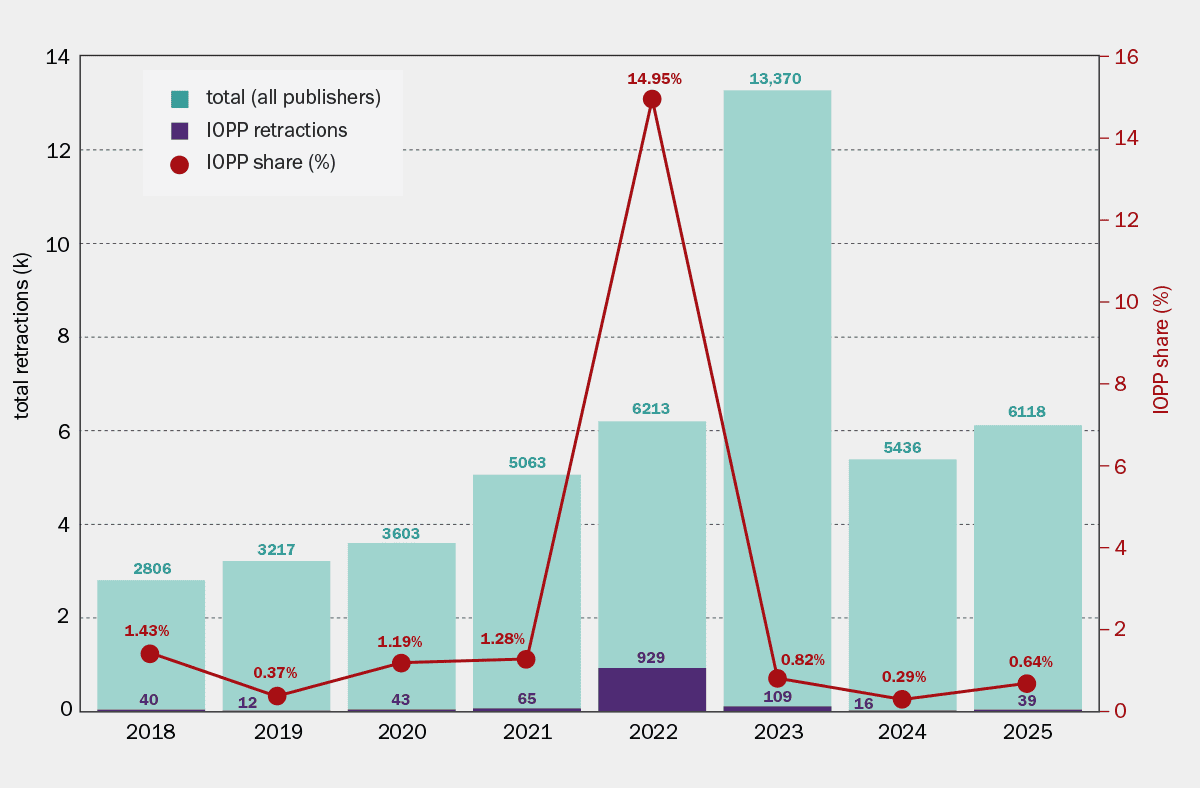
Chart of retractions per year 2020 to 2025
(Courtesy: IOP Publishing)

Papermill activity in the early 2020s led to a significant rise in the number of retracted articles, according to data from Retraction Watch. Publishers subsequently built up research integrity teams and developed new tools to tackle the issue, but it still remains a significant challenge within scholarly publishing.

Part of that increase has been the huge growth in the use of AI tools and techniques. AI is particularly potent in microscopy, where generative AI has made it simple to generate fake images of any microscopy technique within minutes that are indistinguishable from real pictures. Indeed, it is estimated that between 1999 and 2024, about 10% of papers published in cancer research were from papermills. An analysis carried out in 2023, meanwhile, found that about 400,000 papers across all disciplines – representing about 2% of all published papers – were from papermills.

In 2022 Anna Abalkina, a research-integrity sleuth and social scientist at the Free University of Berlin, spotted papers with author e-mail addresses that had domains that did not match where the academic institution was based. In a subsequent analysis the papermill – which was dubbed Tanu.pro and is one of the largest in Europe – was found to have produced 1517 papers between 2017 and 2025. It also listed more than 4500 researchers affiliated with around 460 universities across 46 countries. The majority of the authors were in Ukraine, Kazakhstan and Russia.

The trouble that scientific publishers have is that Al allows a paper to be produced at the click of a button, which comes with some unintended consequences. In 2021 computer scientist Guillaume Cabanac from the University of Toulouse and colleagues discovered the use of “tortured phrases” in thousands of research paper thanks to algorithms taking the names of scientific terms rather too literally. Examples include “Sun oriented force” for solar energy, “motor vitality” for kinetic energy or “counterfeit consciousness” for artificial intelligence.

Cabanac began his efforts charting scientific misconduct in 2020 by working with the computer scientist Cyril Labbe to spot gibberish in computer-science papers that were automatically generated using SCIgen, a piece of software that can produce a scientific paper with just a few prompts. “My research began to move towards the quantitative study of science and so we began to collaborate,” notes Cabanac. The pair’s work led to thousands of papers being retracted with Cabanac adding that the scale of use of these tortured phrases in the literature was “a surprise”.

Cabanac says that as AI tools have improved, there are fewer papers with such phrases being published, and spotting misconduct now involves different “smoking guns”. In 2023, for example, Cabanac was one of the first to identify the so-called “regenerate response” fingerprint in dozens of publications. This specific phrase is the label of a button on ChatGPT and while many publishers allow authors to use large language model (LLM) tools to help them produce manuscripts, they must declare it. The problem was that many authors did not make such a declaration, but left the fingerprints of LLM use in their manuscript.

Cabanac says that the latest misconduct smoking gun can be found in bibliographies and the growing use of hallucinated references – citations to other papers that have been simply made up by an LLM. Along with data falsification, other forms of scientific misconduct include citation manipulation, in which irrelevant or unnecessary references are added to boost the citation figures of a colleague or other author. This can also be reciprocal, in which groups of scholars cite each other’s work.

Some fields suffer more than others. In mathematics, for example, the number of research papers and general citations are quite low, which makes citation numbers more prone to manipulation. In 2023 data firm Clarivate announced it would exclude the entire field of mathematics from their influential list of “highly cited researchers” due to the issue of citation manipulation – a decision it reversed two years later.

Run of the papermill

The boom in AI techniques and papermills has been a real headache for publishers, with papermill “attacks” resulting in mass retractions in recent years. Such attacks involve co-ordinated, industrial-scale assaults on academic journals, flooding editorial offices with large batches of fake, plagiarized or completely fabricated research manuscripts. While some papermills function in the so-called “shadow market”, others are officially registered businesses, or mimic legitimate businesses with a website offering services.

Although papermills have targeted all types of journals including open access and subscription and any publisher regardless of size, they have mostly focused on conference proceedings and special issues. They make for easy targets thanks to their softer-touch peer review and use of “guest editors” who are responsible for overseeing the peer-review process for the issue.

Illustration of two people at desks piled high with paper
Industrial scale In recent years papermills have flooded journal publishers with papers either wholly or partly generated using AI. (Courtesy: iStock/siraanamwong)

In 2022, for example, IOP Publishing retracted nearly 500 articles in one go, of which the vast majority – 463 articles – came from the Journal of Physics: Conference Series. In 2024, meanwhile, the Swiss National Science Foundation stopped paying article-processing charges for articles published in special issues over quality concerns.

Yet the problem is not solely focused on conference proceedings and special issues. In 2023 the Public Library of Science (PLOS) retracted more than 100 papers from its flagship journal PLOS One over manipulated peer review. That same year, Hindawi and its parent company Wiley identified some 1200 articles that had compromised peer review and were retracted – a few months after Hindawi had announced that it would retract 511 articles across 16 journals for manipulated peer review.

Wiley then announced it would end the Hindawi brand name, costing the company up to $40m in lost revenue, and compelling it to integrate its 200 journals into Wiley’s 2000 journal portfolio. Yet the issues didn’t go away for Wiley, and in March 2025 the publisher retracted a further 250 papers.

Fighting AI with AI

Since the issue of papermills has come to a head in the last few years, publishers are fighting back (see box “How IOP Publishing is tackling the rise of papermills”) and the industry as a whole is taking action. The Committee on Publication Ethics (COPE) – a non-profit organization founded in 1997 that aims to define best practices and promote integrity in scholarly publishing – has issued new guidance on the use of AI in publishing.

Publishers are also pooling their resources into the STM Integrity Hub, which is run by the International Association of Scientific, Technical & Medical Publishers (STM). This cloud-based platform offers services that publishers can use to examine a variety of patterns that are indicative of papermills or other research integrity concerns, serving as an “early warning system” for integrity issues.
Futuristic-looking computer circuit with an attachment labelled "AI agent"
Spot the difference Generative AI has made it simple to generate fake images of any microscopy technique within minutes that are indistinguishable from real pictures, causing a headache for reviewers and publishers. (Courtesy: iStock/MF3d)

Antonia Seymour, chief executive of IOP Publishing, which is a member of STM, thinks that the rise in fraudulent papers is one of the most concerning issues for the whole scholarly ecosystem, with initiatives like the STM Integrity Hub being critical. “All publishers are being attacked by these bad actors trying to infiltrate the system with fraudulent papers,” she says. “The STM Integrity Hub is about combining signs of fraud not just from our corpus of content, but from other publishers as well.”

Other programmes supporting research integrity are Silverchair and Morressier, which check submission criteria such as missing author information (for example, e-mail address and institutional affiliation), missing ethics statements or missing keywords; and also confirms author identities using ORCiD. Somewhat ironically, they both use AI to beat AI by running the text through AI tools to check for tortured phrases, fraud and plagiarism as well as analysing citations.

Last year, the Science family of journals, run by the American Association for the Advancement of Science, adopted the use of Proofig, an AI-powered image-analysis tool, to screen for manipulation. ImageTwin is another programme that can detect image duplication and manipulation as well as spot AI-generated content.

Cabarnac, meanwhile, has worked with the French National Centre for Scientific Research (CNRS) to develop an online bibliography checker called bibCheck. “I’ve personally used bibCheck to flag hallucinated references in manuscripts I have reviewed,” says Cabarnac. “Finding these informed my decision to immediately reject.”

How IOP Publishing is tackling the rise of papermills

Many publishers have had to respond to the rise of papermills and fraudulent papers (see main text). That includes building up internal integrity teams and investing in new technology to manage the huge numbers of allegations and corrections.

“Retraction reporting is often reliant on self-declaration by publishers, therefore these figures are likely underestimating the scale of retractions out there,” says Kim Eggleton, research integrity manager at IOP Publishing, which publishes Physics World. “We’re of the opinion that retracted articles should be very clearly marked and we report all our retractions to Retraction Watch and PubPeer.”

Since 2023 IOP Publishing has also donated revenues from author-processing charges (APC) that it has earned from retracted works to charity, supporting Research4Life, which helps researchers in low- to middle-income countries to access published work.

Thanks to technological developments, and the work of some “scientific sleuths”, it is becoming easier to spot problematic papers. At the same time, that brings challenges to work through them all, contacting the authors and giving them a chance to explain.

At the start of 2021 IOP Publishing had one part-time position handling cases of misconduct; now it has one research integrity manager as well as six research integrity officers, all of whom are full time and fully trained to guidelines outlined by the Committee on Publication Ethics. The organization has also strengthened its screening process for conference organizers and invested in new technology.

IOP Publishing rejects about 55% of roughly 7000 submissions each month before they have even been sent for peer review. About 700 of those rejected papers are due to research integrity concerns. IOP Publishing’s research integrity team, which works on cases raised both before and after publication, typically has hundreds of papers under investigation at any one time.

But it is not only the papers themselves that can be fraudulent; there are even fraudulent peer-review reports. IOP Publishing has developed a machine-learning tool to detect duplicate peer-review reports – where the same reviewer report is sent for multiple submissions. The most egregious examples of this are “review mills”, organizations churning out fake reviews, often to inflate citations for a paying customer.

Until now, such patterns in reviewer reports had been difficult to identify, but the new tool automatically flags duplicate reviews to editorial teams. Indeed, since its pilot in 2024, the tool has processed around half a million reviewer reports dating back to 2020, identifying nearly 2500 cases where more than 60% of the content closely matched other reviews. These included instances in which reports were reused across multiple manuscripts or submitted under different reviewer names.

Any duplicate report submitted is flagged for investigation to IOP Publishing’s research integrity team. “This tool is a powerful addition to our efforts to defend high peer-review standards and weed out bad actors who try to manipulate the peer-review process,” says Eggleton. “It reflects our commitment to tackling unethical reviewing practices head-on and reinforces our role as a trusted, transparent and responsible publisher.”

Researchers are aware that the problem will not resolve itself and that publishers also cannot do all the fraud prevention alone. There are calls for researchers to undergo compulsory training in research ethics, and for journals to require raw instrument file datasets as a criterion for publication, as well as having dedicated conference sessions on combating AI risks. In 2025 Sense about Science and Taylor & Francis released a research integrity toolkit, created with and for early-career researchers, that answers common questions and provides practical advice.

Some have suggested that replication could and should be incentivized, perhaps by journals inviting a research group to replicate studies that are getting considerable attention in their journal (for example, studies with suspected AI-generated images), or inviting the replicating group to submit their replication for publication in the same journal. The replication study could then be linked to the original publication, and given an appropriate level of prominence.

But all these approaches take time and money. After several years of large numbers of retractions, in 2024 the number of retractions globally dropped back down to 5000 (see figure 1) – although many will still see that as being too much and others still estimate that figure to be much larger. The reality is that a lot of fraudulent material still exists in the scientific record, and may never come to light or be removed. Indeed, of the 782 papers that Bik found problematic in her analysis, only 177 have so far been retracted, with 42 having an expression of concern and 256 having been corrected. The remaining 307 remain in the scientific record untouched.

That is an issue that Seymour at IOP Publishing says must be resolved. While organizations like Clarivate are trying to clean up the scholarly record by potentially delisting a journal if it has found to be publishing too much fraudulent content, that can actually be a disincentive for publishers to go and find cases of fraudulent research in their journals. “Transparency and correcting the record is really important,” adds Seymour. “But at the moment, we’ve got quite a lot of sticks for publishers and perhaps not enough carrots.”

The post How scientific publishers are fighting back against fraudulent papermills appeared first on Physics World.

Welcome and Farewell to Our AAS Media Fellows

14 September 2026 at 17:00

logo of the American Astronomical Society

In 2017, we announced a new AAS-sponsored program for graduate students: the AAS Media Fellowship. This quarter-time opportunity is intended for current graduate students in the astronomical sciences who wish to cultivate their science-communication skills. This year, for the first time, we are welcoming two Media Fellows to the team.

We are pleased to announce that Lucas Brown and Alexia Kubas have been selected as our AAS Media Fellows for 2026–2027.

Alexia Kubas

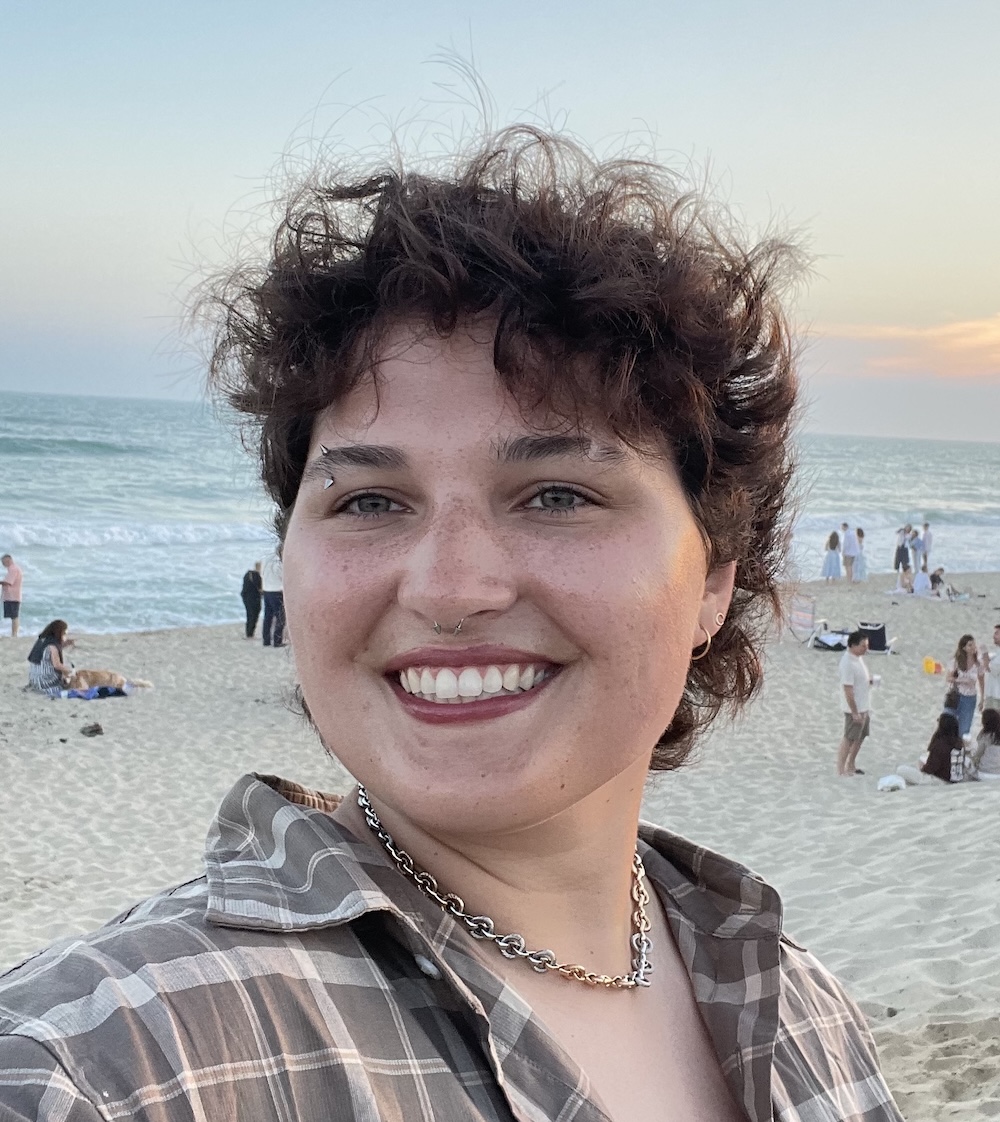
Alexia Kubas, a 2026–2027 AAS Media Fellow, is a graduate student at Cornell University.

Alexia majored in astronomy with minors in physics, math, and planetary sciences at the University of Arizona. They are now a fifth-year PhD candidate at Cornell University, researching periglacial processes on Earth and Ceres. Outside of research, Alexia founded and currently helps run an Ithaca, NY, chapter of Astronomy on Tap.

Lucas majored in physics with an astronomy concentration at the University of California, Davis, and he has a master’s degree in physics from Tufts University. He is now a physics PhD candidate at the University of California, Santa Cruz, where he works with Stefano Profumo on studying the phenomenology of primordial black holes. Outside of research, Lucas participates in outreach activities through organizations like the Santa Cruz Organization for Outreach in Physics and the Project for Inmate Education. He also serves as co-chair of the Astrobites collaboration.

Lucas Brown

2026–2027 AAS Media Fellow Lucas Brown is a graduate student at the University of California, Santa Cruz.

As AAS Media Fellows, Alexia and Lucas will regularly write and publish summaries of the latest astronomy research on AAS Nova, assist in managing the distribution of press releases as part of the AAS press office, and gain a broad understanding of the worlds of scientific publishing, communications, and policy. Alexia and Lucas will also be assisting with the press conferences at the upcoming AAS meetings, so please say hello if you spot them at future meetings!

As we welcome our new Fellows to the team, we’ll also soon bid farewell to Lexi Gault, our 2024–2026 AAS Media Fellow. Lexi will be continuing her PhD research at Indiana University, where she studies the interstellar medium conditions in nearby low-mass galaxies. After defending her PhD in Spring 2027, Lexi plans to pursue a postdoc in extragalactic astronomy or a full-time science writing position.

Please join us in welcoming Lucas and Alexia as our new Media Fellows and wishing Lexi the best in all her future endeavors!

The post Welcome and Farewell to Our AAS Media Fellows appeared first on AAS Nova.

When it comes to Beatles references, scientists can't let it be

9 September 2026 at 20:31

Scientists have an indisputable playful side, evidenced by frequent allusions to popular culture in their research publications. That includes popular song lyrics. And the most popular musical group, in terms of how frequently their songs and lyrics appear in the scientific literature, is The Beatles, according to a new paper published in the journal PLoS ONE.

“Some of these are genuinely brilliant," said co-author Gabriel Budel of Delft University of Technology in the Netherlands of the more than 3,000 references they found to The Beatles. "'The lung and winding road' is a paper on Long COVID that changes one vowel. 'Here comes the SU(N)' turns 'Here Comes the Sun' into a quantum computing paper about mathematical groups. Someone was having a very good day at their desk.”

Back in 2014, scientists at the Karolinska Institute in Sweden revealed that they had been deliberately inserting Bob Dylan lyrics into their papers as part of a long-running bet, starting with a 1997 Nature review entitled "Nitric Oxide and inflammation: The answer is blowing in the wind." That resulted in a 2015 study on whether Dylan lyrics appeared elsewhere in the biomedical literature; the most frequently referenced were "The Times They Are A'Changin'" and "Blowing in the Wind."

Read full article

Comments

© Ramon Dorenbos, CC-BY 4.0

When it comes to Beatles references, scientists can't let it be

9 September 2026 at 20:31

Scientists have an indisputable playful side, evidenced by frequent allusions to popular culture in their research publications. That includes popular song lyrics. And the most popular musical group, in terms of how frequently their songs and lyrics appear in the scientific literature, is The Beatles, according to a new paper published in the journal PLoS ONE.

“Some of these are genuinely brilliant," said co-author Gabriel Budel of Delft University of Technology in the Netherlands. "'The lung and winding road' is a paper on Long COVID that changes one vowel of the more than 3,000 references they found to The Beatles. 'Here comes the SU(N)' turns 'Here Comes the Sun' into a quantum computing paper about mathematical groups. Someone was having a very good day at their desk.”

Back in 2014, scientists at the Karolinska Institute in Sweden revealed that they had been deliberately inserting Bob Dylan lyrics into their papers as part of a long-running bet, starting with a 1997 Nature review entitled "Nitric Oxide and inflammation: The answer is blowing in the wind." That resulted in a 2015 study on whether Dylan lyrics appeared elsewhere in the biomedical literature; the most frequently referenced were "The Times They Are A'Changin'" and "Blowing in the Wind."

Read full article

Comments

© Ramon Dorenbos, CC-BY 4.0

MacVoices #26229: Macstock – Using Blockchain to Protect and Preserve Creator Content with Alessandra White

By: Chuck
10 August 2026 at 18:40
At Macstock, Alessandra White explains how blockchain can give creators greater control and permanence over their digital content. She discusses Hive, decentralized publishing, digital sovereignty, and ways creators can preserve posts and videos beyond centralized platforms. The conversation also examines blockchain’s permanence, including the trade-off that published material cannot simply be deleted…ever.  http://traffic.libsyn.com/maclevelten/MV26229.mp3 This MacVoices […]

💾

Why I Founded Free Speech Press

9 August 2026 at 13:13

Self-censorship is rising and traditional publishers steer clear of controversial topics. Mike Fairclough explains why he has launched a new publishing venture – and why it matters now.

The post Why I Founded Free Speech Press appeared first on The Daily Sceptic.

$2m crime novel deal collapses amid questions over AI use

31 July 2026 at 17:45

Agents withdraw Jerry Falade’s hotly anticipated debut after saying they can no longer authenticate ‘how the manuscript evolved’

A high-profile publishing deal for a debut crime novel has collapsed after doubts emerged over whether artificial intelligence played a role in writing it.

The hotly anticipated manuscript Call Me, I’ll Hide the Body, by Jerry Falade, was withdrawn from sale by its agent despite reportedly receiving an offer for more than $2m (£1.5m) from Minotaur, owned by Macmillan US, as part of a 14-way auction. The plan was to publish it in 2028.

Continue reading...

© Photograph: FreshSplash/Getty Images

© Photograph: FreshSplash/Getty Images

© Photograph: FreshSplash/Getty Images

How scholarly publishers are safeguarding trust in science

30 July 2026 at 15:02

This episode of the Physics World Weekly podcast features Antonia Seymour, who is chief executive of IOP Publishing.

Seymour has more than 30 years’ experience in a publishing industry that has evolved significantly from the days of paper journals to today’s sophisticated digital technologies.

In this interview we explore how scholarly publishers are responding to the rapid growth in research output, the rise of artificial intelligence and the increase in threats to research integrity.

A wholly owned subsidiary of the Institute of Physics, IOP Publishing produces more than 100 scholarly journals as well as Physics World.

The post How scholarly publishers are safeguarding trust in science appeared first on Physics World.

John Bell and the most obscure journal in physics

22 July 2026 at 11:00

As I was strolling through Belfast’s Titanic Quarter last summer, I discovered with delight a road called Bell’s Theorem Crescent. It’s named in honour of the Belfast-born physicist John Bell, best known for his eponymous theorem. Despite not being as embedded in popular culture as Schrödinger’s cat, his theorem will certainly ring a bell (forgive the pun) with most physicists.

The story goes back to 1935 when Albert Einstein, Boris Podolsky and Nathan Rosen (EPR) came up with their now-famous thought experiment, which was designed to show that quantum mechanics was, as a description of nature, incomplete. In the EPR scenario, non-local influences can affect the measurement outcomes performed on spatially separated particles.

Given how odd that seemed, some physicists invoked what are known as “hidden variables” to get rid of these non-local correlations and restore local realism. It was in 1964, while working at the CERN particle-physics lab, that Bell showed that no local hidden-variable theory can be compatible with the predictions of quantum mechanics.

This result – Bell’s theorem – is something I was familiar with but I had paid little attention to where it had originally appeared. As I discovered, it was published in a paper called “On the Einstein Podolsky Rosen paradox” in the journal Physics (3 195) in 1964. Also known as Physics Physique Физика, this little-known publication existed only from 1964 to 1968. In fact, Bell’s theorem is the most important result published in it.

The journal was set up by two physicists at Bell Laboratories in the US – Bernd Matthias and future Nobel laureate Philip Anderson. According to A Mind Over Matter – Andrew Zangwill’s 2021 biography of Anderson – they were not too happy with conventional physics journals. “The referees,” Anderson said, “often did a bad job, the editors took too long to make decisions, and too much wrong physics got published.”

Those are complaints you’ll still hear in coffee breaks at most physics conferences today, and they prompted Matthias to contact the media magnate Robert Maxwell, who’d founded Oxford-based publishing house Pergamon Press. Maxwell had figured out that scientific publishing could be a very lucrative business so he helped the two physicists to set up the journal.

A publishing experiment

In their first editorial, Anderson and Matthias called Physics an “experimental journal”, which they hoped would solve the problem of there being “far more good physics written than any physicist can read”. Their solution was to pick only those papers worth the attention of all physicists, which the editors did by reviewing – then accepting or rejecting – every submission themselves. They even paid authors 10 cents a word if their paper appeared in print.

Anderson and Matthias admitted that many physicists had already written to them, criticizing their proposed selection model. They’d been told that their “judgements will be fallible”, that they might be “overimpressed by showiness”, and that they’d end up rejecting excellent work. In response, the pair promised to try their best, accepting they would make mistakes and that their “criteria will be, not better, but different”.

The journal’s criteria clearly succeeded, in that Anderson and Matthias identified the merits of Bell’s paper, which was far from mainstream

These criteria clearly succeeded, in that they identified the merits of Bell’s paper, which was far from mainstream. Keen to find out more about the events surrounding its publication, I contacted Zangwill, who had interviewed Anderson several times for his book. Zangwill shared the following quote, published here for the first time.

“One day,” Anderson recalled, “a paper came in from a guy neither of us had heard of – John Bell. It was about hidden variables in quantum mechanics. Bernd had no clue, but I accepted it with the hope that its publication would spell the death of Bohmian trajectory quantum mechanics. It’s a very famous paper today.”

In 1967 the quantum physicist John Clauser found Bell’s paper after stumbling upon Physics Physique Физика, attracted by its unusual title. Clauser, who shared the 2022 Nobel Prize in Physics, carried out the first Bell test in 1972 with Stuart Friedmann. Their work triggered a long series of experiments that would deepen our understanding of quantum mechanics and catalyse the development of quantum technologies.

Over its short life, Physics did publish work from other notable physicists including Murray Gell-Mann, Leonard Susskind and Leo Kadanoff. In fact, the journal was ahead of its time, with the model of in-house editorial selection for broad interest returning in the 2000s with the Nature series of journals. The inclusive, multi-language title was also well ahead of its day.

Sadly, Physics Physique Физика was discontinued in 1968 after just three volumes

Sadly, Physics Physique Физика was discontinued in 1968 after just three volumes. According to what Anderson told Zangwill, it stopped “not because it lacked submissions, but because they had promised contributors rapid publication and Maxwell kept increasing the time between the appearances of successive issues”. Maxwell’s aggressive pursuit of profit might also have played a role.

The journal has since been archived by the American Physical Society and is freely accessible online. One can only wonder what might have happened if Anderson and Matthias had picked a different name for their journal.

The post John Bell and the most obscure journal in physics appeared first on Physics World.

In the age of AI, we must double down on the skills that make us experts

13 July 2026 at 11:00

In 2008 the US author Neal Stephenson published a speculative fiction novel called Anathem. Set on the fictional planet of Arbre, the story follows an order of monks, mostly isolated from the rest of the world, who every so often open up their doors to receive information on the state of the outside world.

In the book, Stephenson explores a Dark Age of the Internet, in which companies flood the network with plausible-sounding-but-false information in a ploy to force consumers to buy the firms’ own tools for distinguishing truth from falsehood.

Initially, this “crap”, as Stephenson calls it, had to be made by humans, but eventually the process is run by a so-called “Artificial Inanity”, which is able to create hundreds or thousands of bogus versions, or “bogons”, for every legitimate document.

Today, we face our own version of Stephenson’s Dark Age as our information landscape increasingly fills with AI slop, now going beyond AI-generated videos of uncanny kittens or images depicting politicians and celebrities in outlandish situations.

With the rise of chatbots powered by large language models (LLMs), our search results, social-media feeds and even scientific journals are getting polluted with data that, at first glance, appears relevant and plausible but contains no value beneath its gilded veneer.

As LLM-generated slop infects our previously trusted knowledge base, we face an information landscape that is quickly rotting beneath us.

As scientists, we must position our work in relation to other recent research. Yet that task gets harder when we have to sort out the real from the hallucinated. As LLM-generated slop infects our previously trusted knowledge base, we face an information landscape that is quickly rotting beneath us.

Where we could once track an idea to a paper with human authors (who bore consequences for acts of fraud), we face a future where we have to question whether an article’s authors, institutions or experiments ever existed, on top of evaluating its scientific merits.

This is not a hypothetical danger. In 2024 a team led by medical researcher Almira Osmanovic Thunström at the University of Gothenburg invented a fictitious medical condition called “bixonimania” and publicized it through posts on Medium and two pre-print papers.

Their goal was to test whether AI chatbots would pick up and propagate word of the fake disease, which they duly did. The researchers even tried to insert information that made the work obviously fake. This included acknowledging a colleague from Starfleet Academy, thanking the University of Fellowship of the Ring for funding, and even writing early on in the article that “this entire paper is made up”.

Trapped in a bog

As physicists, we are not immune to the dangers of information rot. A flood of LLM-generated articles prompted arXiv in May to announce consequences for authors whose submissions have “incontrovertible evidence that the authors did not check the results of LLM generation”, including having “hallucinated references”. Those consequences include a one-year ban from arXiv and the requirement, thereafter, that any submitted paper must already be accepted at a “reputable peer-reviewed venue”.

I initially welcomed the news. Harsh consequences are one way to discourage LLM usage, especially for sloppy shortcuts. But the more I reflect on it, the more I realize that arXiv’s consequences could eventually fall even on those who are not using LLMs to write their papers.

Relying on shortcuts is easy. Say you’re writing a literature review and paper A, which you’ve read and trust, has a fact you want to cite – but you notice that paper A cites paper B for this fact. It’s simple to scroll down to the reference section and copy paper B’s citation into your own citations (I would be lying if I said I’ve never done this myself).

But as the information landscape rots, this shortcut could run you afoul of policies like arXiv’s. What appears to be a valid citation – maybe even containing the names of authors you know personally – can be hallucinated.

We must double down on the skills that make us experts – our scientific judgement, information literacy, communication skills and careful scholarship.

Or it could be entirely fake, as a team of researchers who cited one of the “bixonimania” pre-prints in a peer-reviewed article discovered. Their paper was justifiably retracted by the journal editor, over their objections. By simply copying a reference without double-checking it, you can unintentionally join ranks alongside LLM users. Worse, you open yourself and all of your co-authors to being banned from arXiv.

I am not suggesting that arXiv’s policy is flawed. Rather, I argue that those who intend their writing to be AI-free must be vigilant. We must double down on the skills that make us experts – our scientific judgement, information literacy, communication skills and careful scholarship. We should lean into practising these skills – and teaching them – even though they are precisely the skills that AI companies claim LLMs can replace.

In Anathem, a character simply hand-waves away their Internet full of bogons, but we have no such solution. Instead, as our information landscape rots, we find ourselves trapped in a bog. To get out, we must plan each step carefully and take none for granted. What appears to be solid ground may well prove treacherous. Moving safely is a slow process, full of checking and double-checking as we painstakingly build out paths and tools we can trust.

Simply choosing not to use an LLM when writing is no longer enough. We have only our own scholarly skills to sort the bogons from the ground truth. We will all have to slow down if we want out of the bog.

The post In the age of AI, we must double down on the skills that make us experts appeared first on Physics World.

Physics World’s Margaret Harris honoured for ‘Feature of the Year’

25 June 2026 at 11:52

Congratulations to Margaret Harris for winning the “Feature of the Year – specialist audience” award from the Association of British Science Writers (ABSW). The Physics World online editor was cited for her article “The physics Nobel prizes you’ve never heard of”. The ABSW describes the article as: “A refreshing angle to Nobel prize reporting. It was an eye-opener, told a great story and gave some deep historical context to the murky world of who wins the Nobels and why.”

In the run-up to each year’s Nobel prize announcements, Physics World editors explore aspects of the award that have often been neglected. As well as her award-winning article from 2025, Harris has argued the case that Lise Meitner should have won a Nobel for her work on nuclear fission (“Overlooked for the Nobel: Lise Meitner”). On a lighter note, Harris has described an e-mail exchange with physics laureate Brian Josephson about his tongue-in-cheek “paper” on mattress rotation (“How to rotate your mattress like a physics Nobel prizewinner”).

The post <em>Physics World</em>’s Margaret Harris honoured for ‘Feature of the Year’ appeared first on Physics World.

An open access future is only possible by addressing its problems

22 June 2026 at 11:00

At the turn of the 21st century the open access (OA) movement proposed an inspiring idea: to make scientific knowledge freely available to everyone, everywhere. In what became known as the Budapest Open Access Initiative, the movement aimed to challenge scientific publishers who continued to raise subscription prices, sometimes without justification. This, OA proponents suggested, was increasingly undermining poorer countries and institutions, who often could not afford the subscriptions.

A quarter of a century on, numerous institutions – both national and international – have strongly promoted the transition from the subscription-based model to OA. But to what extent has this transition actually taken place?

In a recent post on his Journalology blog, publishing consultant James Butcher showed that while open-access publishing increased rapidly from 2000 to 2023, by 2024 it had stagnated if not reversed, with papers in subscription-based journals increasing. Gold OA – where an article processing charge (APC) is paid by the author to make the paper immediately freely available to read – showed a decline compared to hybrid OA, in which a traditional, subscription-based journal makes individual articles freely available to the public.

Butcher offers China as a possible explanation for the trend. The country now has the fastest-growing scientific output, accounting for roughly 25% of all research articles published annually – up from about 13% a decade ago. This rapid expansion of Chinese research activity is influencing the pace of the global OA transition. Data indicate that Chinese researchers rarely publish OA in hybrid journals, tending instead to publish either in fully OA journals or, more commonly, in subscription-based journals.

The data clearly show that the global transition to OA is only feasible once Chinese researchers significantly change their publishing practices. However, this shift entails a major financial challenge for China.

Historically, China has paid considerably less in institutional subscription fees than Europe, Japan or the US. As China’s research output continues to grow, publishing a greater share of papers as OA would impose increasingly high costs, making traditional subscription journals a financially attractive alternative for many researchers.

The reassessment of the open-access model is not limited to China. In 2018 cOAlition S – a consortium of national research agencies and funders from 12 European countries – launched Plan S, which proposes that publicly funded research is made immediately available in full OA without embargo. The consortium has now released a new strategy for 2026–2030 that adopts a more flexible approach, supporting alternatives to paywalled journals without explicitly aiming to replace them.

If these trends consolidate, the OA model may face additional, often overlooked obstacles: coexistence of different publication traditions and the unequal distribution of publication costs across countries and institutions. Both factors hinder progress toward a fully OA system.

Access all areas

OA is a noble concept but, unfortunately, what works in theory does not always withstand the complexity of the real world. APCs today can exceed $10,000 and are paid by the authors’ own research funds. It is worth emphasizing that a good journal has far more readers than authors, so distributing costs among readers is much more equitable than placing them on authors.

We are also in a paradoxical situation where publishers could be collecting both APC revenues and subscription fees. Many publishers are now signing Transformative Agreements with institutions, designed to eliminate this “double dipping” by bundling reading fees and open-access publishing costs into a single contract.

In practice, we have moved from a system of “free to publish, pay to read” to one of “free to read, pay to publish” where the burden of cost has shifted from institutions to individuals. This radical transformation has not eliminated inequality. On the contrary, it paradoxically risks deepening it, producing effects that run counter to the original goals of the OA movement.

OA has also inadvertently promoted the rise of predatory journals, which continue to prosper, while, in the meantime, an entirely different major challenge has emerged: artificial intelligence (AI). Generative AI systems are trained on massive volumes of text, including OA scientific articles. In other words, the scientific community is providing free data to large tech companies, which use them to develop proprietary models that generate large profits.

OA articles are often published under Creative Commons licenses that allow reuse, even for commercial purposes. Yet AI models often do not cite their sources or attribute authorship. Thus, publicly funded knowledge is exploited for private profit, but academic institutions, researchers and publishers often do not receive any recognition in return, not even symbolic.

If AI tools can be properly regulated, however, they can help accelerate scientific progress by using open, high-quality data. Still, the question of whether the benefits of OA outweigh the drawbacks remains largely unanswered.

Taking responsibility

OA has not been a total failure, but neither has it lived up to the high hopes it once inspired. With OA we have gained broader access, but at the cost of new imbalances. We have often sacrificed quality for quantity. And above all, we have largely forgotten that science is not just about sharing, but also about recognition, responsibility and fairness.

OA remains an idea with remarkable potential but only if we resist its most rigid and dogmatic interpretations, which consider it as an unquestionable good. Initially, only the advantages were acknowledged but now, after a quarter of a century, we are beginning to recognize its downsides.

Identifying problems is the only way to develop solutions: without a proper diagnosis, there is no effective cure. Resolving the persistent and emerging challenges of OA is now urgent, especially as the expanding role of Chinese research introduces new and unexpected dynamics into global publishing given their fondness for the subscription model.

There is no magic solution. Improving OA in scientific publishing requires shared responsibility across the research community. Researchers should engage responsibly in publishing and peer review, develop a better understanding of the complexity of the editorial process, and reject unethical practices.

Universities must reform evaluation systems by prioritizing research quality over publication volume, remove perverse financial incentives, and strengthen training in publishing ethics at the earliest stages of scientific careers.

Publishers should ensure fair and institutionally supported publication costs, enhance editorial and peer review standards, and actively counter predatory publishing.

At the policy level, funding agencies and governing bodies can foster greater accountability by supporting ethics training, and develop traceability and compensation mechanisms for AI use of OA content. Agencies could also invest in sustainable community-led models such as diamond OA platforms, in which research articles are published free to read and free to publish, with publishing costs subsidized by universities or government grants.

No-one wants to go back. But if we truly aspire to a science that is open, fair and sustainable, scientists must acknowledge the problem and take responsibility for addressing it.

The post An open access future is only possible by addressing its problems appeared first on Physics World.

Open data: the benefits and challenges of sharing a precious resource

28 May 2026 at 14:42

Data are at the core of science, but traditional journal articles normally deliver a distillation of the raw data gathered by the authors. While the movement towards open access to data is widely supported by researchers and funding agencies, a 2024 study by IOP Publishing revealed that many scientists still encounter a wide range of practical, ethical and technical barriers when it comes to sharing their data.

As a result, the publisher has launched a free online course that aims to give early-career researchers the practical skills and confidence they need to share and manage research data effectively.

To talk about the course and IOP Publishing’s open data policy I am joined by Laura Feetham-Walker, who is head of publishing strategy and performance at IOP Publishing.

IOP Publishing is a wholly owned subsidiary of the Institute of Physics and it publishes Physics World.

The post Open data: the benefits and challenges of sharing a precious resource appeared first on Physics World.

Harry Potter publisher to receive millions in Anthropic copyright settlement

Bloomsbury has 14,087 titles listed in agreement between AI startup and authors over use of their work

The publisher of Harry Potter has received a multimillion-pound payout as a beneficiary of a $1.5bn (£1.12bn) copyright settlement between the AI startup Anthropic and thousands of authors over the use of their protected work to power chatbots.

Bloomsbury, which is home to the bestselling novelists Sarah J Maas and Susanna Clarke as well as JK Rowling, said it had 14,087 titles listed within the settlement, with a proposed compensation of about $3,000 a title.

Continue reading...

© Photograph: Murdo Macleod/The Guardian

© Photograph: Murdo Macleod/The Guardian

© Photograph: Murdo Macleod/The Guardian

Troubling new details emerge on diabetes ouster controversy

17 July 2026 at 18:08

Last month, we reported on a troubling incident at the annual meeting of the American Diabetes Association (ADA) in New Orleans. On June 5, five leading scientists were ousted for handing out copies of an editorial, published in the journal Diabetes Care (an ADA journal) in April, sharply criticizing the Trump administration’s ongoing attacks on scientific research. There was a public outcry and (eventually) a personal apology from the ADA's CEO for the heavy-handed response, but it seems the organization has not yet learned its lesson.

The deputy editors of Diabetes Care have posted an editorial and seven accompanying opinion articles to a preprint server—handily contained in a single PDF file—that they say the ADA has refused to publish. Several troubling new details are included in the articles, including an accusation that ADA leadership knew in advance that members would be handing out copies of the editorial and deliberately set up an ambush by venue security and local police. That decision, in turn, might be due to simmering tensions connected to a session organized the year before.

ADA leadership was provided with the articles in advance of publication with an invitation to simultaneously publish their response.

Read full article

Comments

© Screenshot/MedPage Today

Book publishers sue Google for copyright infringement over Gemini AI training

14 July 2026 at 19:16

Group of major publishers accuses the tech giant of ‘one of the most prolific infringements of copyrighted materials in history’

A group of major publishers have filed a lawsuit against Google, accusing the company of illegally using millions of copyrighted books to help build its Gemini artificial intelligence models, in “one of the most prolific infringements of copyrighted materials in history”.

The case, filed in federal court in New York, has been brought by three publishers – Hachette Book Group, Cengage Learning, and Elsevier – and bestselling American author Scott Turow.

Continue reading...

© Photograph: Bloomberg/Getty Images

© Photograph: Bloomberg/Getty Images

© Photograph: Bloomberg/Getty Images

❌