❌

Normal view

Extragalactic Planetary Nebula with Massive Progenitor Sheds Light on Stellar Evolution

16 September 2026 at 17:00

planetary nebula NGC 2022

Editor’s Note: This article was co-written by Lucas Brown and Alexia Kubas, our 2026–2027 AAS Media Fellows. We’re excited to welcome Lucas and Alexia to the team and look forward to featuring their writing on AAS Nova regularly!

Planetary nebulae mark a key evolutionary phase for low- and intermediate-mass stars, but properties of the parent star are difficult to sleuth out. Researchers have discovered an extragalactic planetary nebula in the center of a star cluster, offering an unprecedented opportunity to trace planetary nebula properties to parent star stats.

The Puzzle of Planetary Nebula Progenitors

A planetary nebula, so named because the first ones discovered resemble the planet Uranus in a small telescope, forms when a Sun-like star runs out of fuel and sheds its outer layers, leaving a hot remnant core enveloped in a gaseous nebula. At higher masses, a different process kicks in: stellar cores can collapse to produce a chaotic burst of stellar material called a supernova. Where exactly the boundary should be placed between planetary nebula progenitors and supernova-forming stars remains an outstanding question in the field of stellar evolution.

Answering this question is challenging because once a planetary nebula becomes visible, the progenitor star’s transition into a hot, compact white dwarf is already underway, making it difficult to determine the star’s initial mass. For this task, researchers seek out planetary nebulae within open clusters — groups of stars that were born from the same molecular cloud and are roughly the same age — so that cluster characteristics can help piece together the progenitor puzzle. Since open clusters tend to be relatively young, they are also a great tool to probe planetary nebulae from more massive progenitors and explore the boundary between stars that produce planetary nebulae and those that go supernova.

Striking Gold
planetary nebula M279 in Andromeda

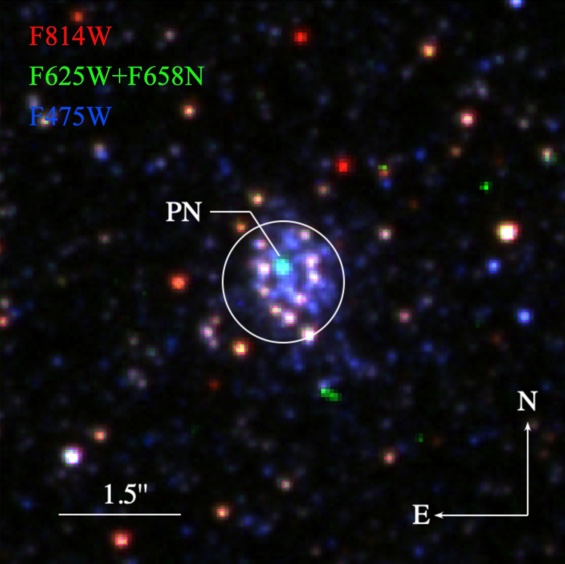
Open cluster AP 210 and planetary nebula M279 in the Andromeda Galaxy, as seen in archival Hubble observations. Click to enlarge. [Chen et al. 2026]

Numerous planetary nebula–open cluster pairs have been found in the Milky Way, but among those with well-constrained progenitor masses, very few push into the higher-mass regime where things get really interesting. Outside our home galaxy, the search has proven even more challenging due to data sparsity. Despite the odds, Pinjian Chen (Chinese Academy of Sciences) and collaborators have found a planetary nebula with one of the highest known progenitor masses in an open cluster in the Andromeda Galaxy.

To make this identification, Chen’s team used archival Hubble Space Telescope and MMT data to examine the location of the planetary nebula candidate M279 within the Andromeda Galaxy. The researchers’ critical observation was that the nebula not only overlaps with the position of an open star cluster called AP 210, but it also has an estimated velocity that matches the velocity of other stars in the cluster. These associations, when combined, provide strong evidence that M279 originated within the cluster.
color–magnitude diagram for open cluster AP 210

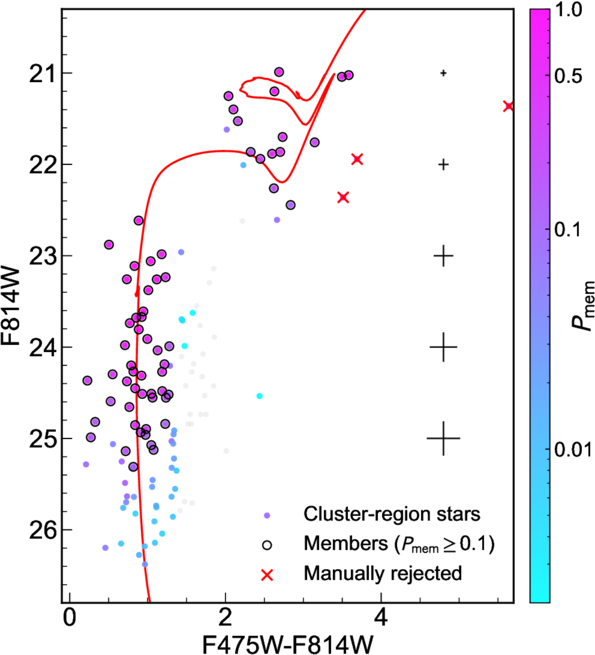
Color–magnitude diagram of stars in the open cluster AP 210. Colored dots represent stars, and the red line is the best-fitting isochrone, which was used to determine the cluster’s age. Click to enlarge. [Chen et al. 2026]

What’s My (Cluster) Age Again?

M279’s cluster origin has significant consequences for pinning down the properties of the progenitor star. First, stars in open clusters all form at roughly the same time — 90 million years ago in the case of AP 210 — allowing the authors to set a tight constraint on the progenitor’s age. Then, because the rate at which a star burns through its nuclear fuel and generates a planetary nebula is related to its initial mass, the researchers are able to connect this age to a specific progenitor mass of around 5.7 solar masses.

The team also subtracted the central star’s contribution from the observed spectrum to isolate the nebula’s composition, illuminating specific nuclear processes relevant to higher-mass stars. Planetary nebulae are cosmic cocktails whose chemical abundances trace the composition of the interstellar medium when the progenitor formed as well as elements formed via nucleosynthesis inside the star during its lifetime. Chen and collaborators found the nebula to be significantly nitrogen-enhanced, which is consistent with a massive asymptotic giant branch progenitor undergoing hot bottom burning that converts carbon to nitrogen. This newly minted metal would then be mixed back into the star’s outer layers, flooding the resultant nebula with its particular spectral signature.

While this work represents only a single observation of a high-progenitor-mass planetary nebula — and only the third compelling extragalactic planetary nebula–open cluster pair — it opens up the possibility that there may be many more waiting to be found, unlocking new insight into the lives of massive stars.

Citation

“A Planetary Nebula from a 5.7 M⊙ Progenitor in a 90 Myr M31 Star Cluster,” Pinjian Chen et al 2026 ApJL 1005 L2. doi:10.3847/2041-8213/ae77e4

The post Extragalactic Planetary Nebula with Massive Progenitor Sheds Light on Stellar Evolution appeared first on AAS Nova.
Disrupted Dwarf Galaxy: Investigating the History of the Small Magellanic Cloud

16 March 2026 at 16:00

Small Magellanic Cloud

Researchers show that the highly disrupted state of the Small Magellanic Cloud can be attributed to a long history of interactions with its neighbor, the Large Magellanic Cloud.

A Disrupted Dwarf Galaxy?

The Small Magellanic Cloud (SMC) is one of the largest and nearest satellites of the Milky Way. At a distance of just 200,000 light-years, the SMC has long been used as an accessible analog for low-metallicity star-forming galaxies in the early universe.

Small Magellanic Cloud photometric and HI kinematic centers

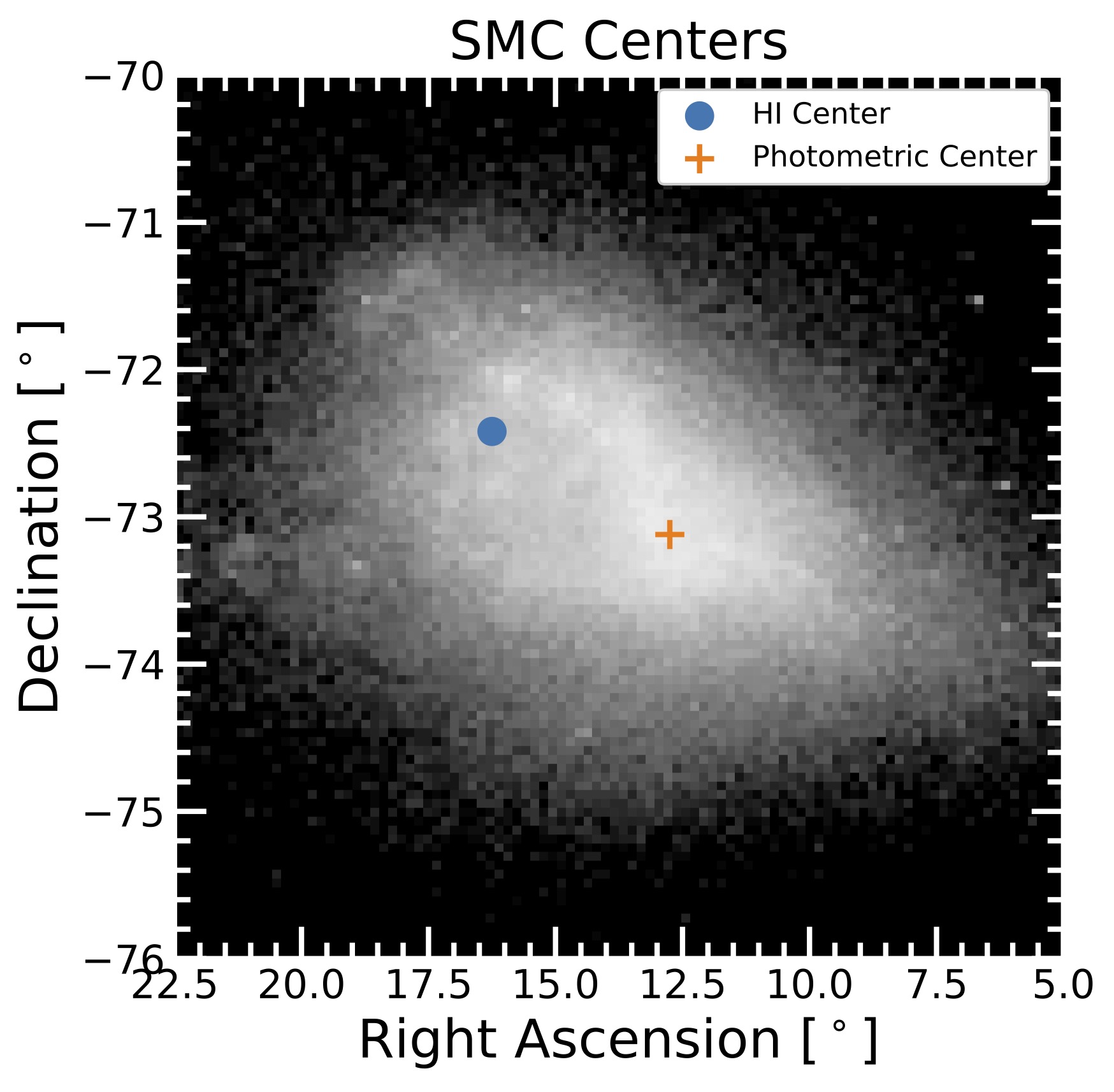
Locations of the SMC’s photometric center and hydrogen gas kinematic center. The two locations are separated by several thousand light-years. [Adapted from Rathore et al. 2026]

However, observations increasingly suggest that the SMC may not be an ideal analog for high-redshift galaxies. The SMC appears to have been disrupted: its gas seems to rotate while its stars do not, it has an unusually large line-of-sight depth compared to its extent on the sky, and its gas distribution has two peaks.

The source of this disequilibrium might be the Milky Way’s largest satellite, the Large Magellanic Cloud (LMC). As the SMC inches along its orbit around the Milky Way, it also engages in a gravitational dance with the LMC. These galaxies may be clumsy dance partners, with data suggesting a potential direct collision between the SMC and LMC within the past 200 million years.

Modeling the Magellanic Clouds

To understand how a potential collision between the Magellanic Clouds might have impacted the present-day properties of the SMC, Himansh Rathore (University of Arizona) and collaborators used hydrodynamical simulations to explore the interconnected histories of the SMC, the LMC, and the Milky Way.

SMC–LMC separation in the authors' models

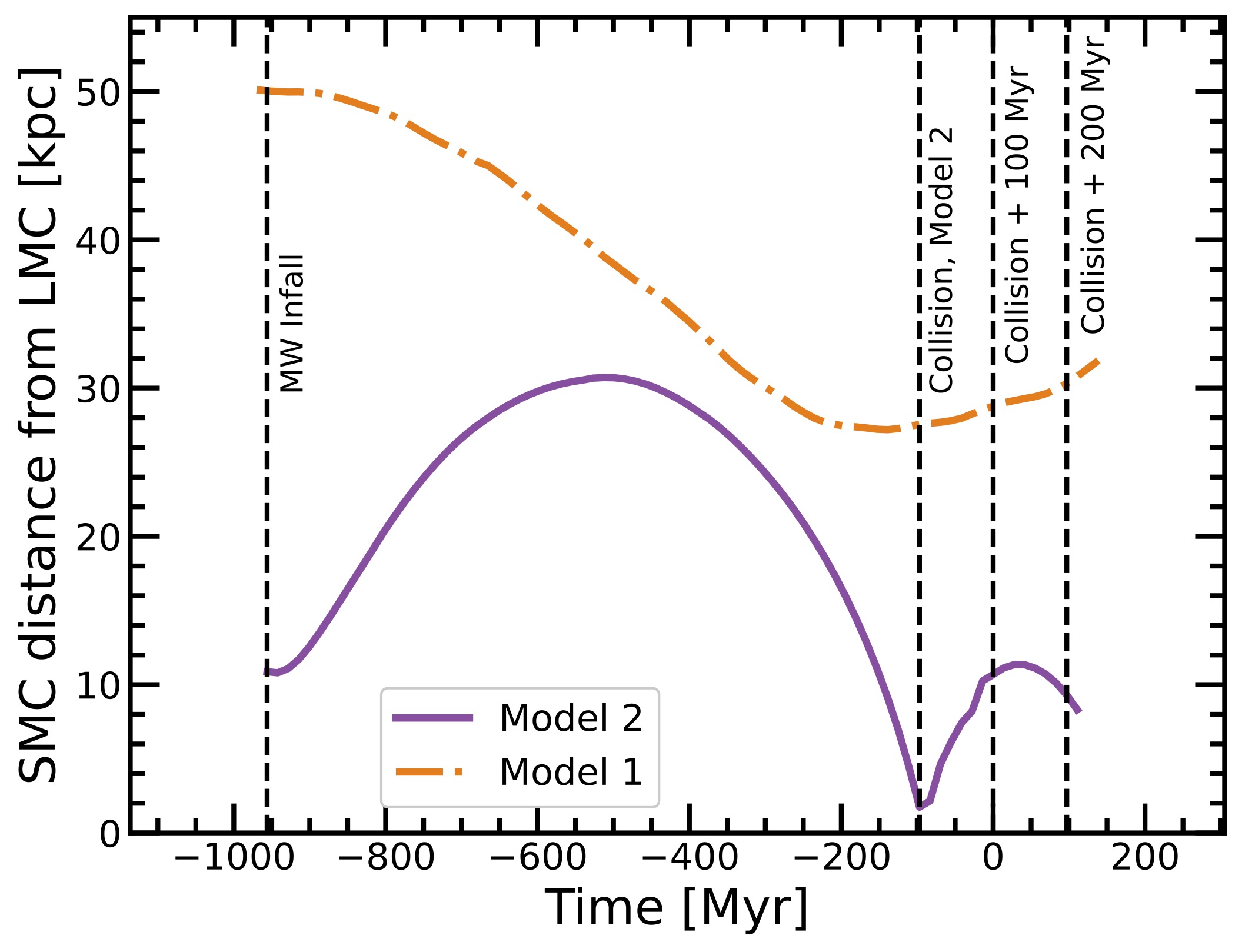
SMC–LMC separation over time in the control model (orange dot-dashed line) and the collision model (purple solid line). Click to enlarge. [Rathore et al. 2026]

At the beginning of the simulations, the SMC is in equilibrium, with its stellar and gaseous components neatly rotating in unison. From there, its fate diverged: in a control simulation, the SMC and LMC maintained a respectful distance, never getting less than about 100,000 light-years from one another. In the collision simulation, the galaxies collided 100 million years ago.

Both of these model scenarios reproduced certain features of the SMC–LMC system, such as the bridge of gas that spans the distance between them. Only the collision scenario, though, can explain the apparent discrepancy between the SMC’s stars and gas.

An Impactful Collision

SMC stellar density and viewing schematic

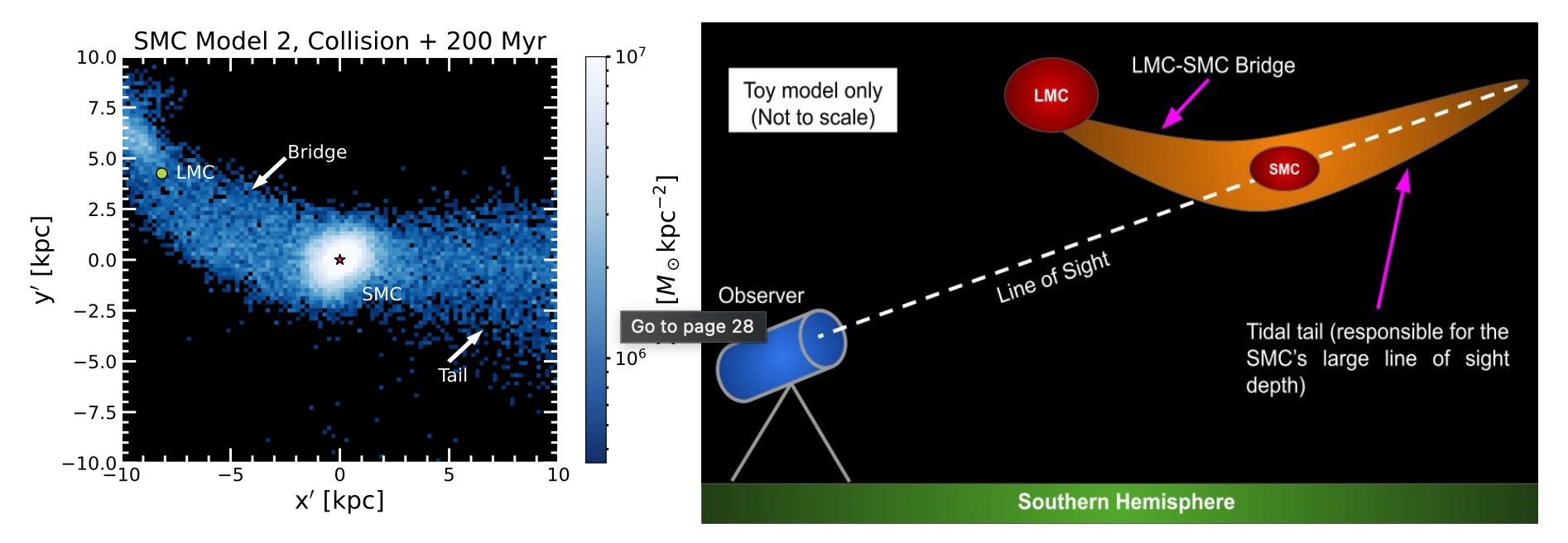
Left: Simulated stellar density 200 million years post-collision. Right: A schematic of our likely perspective on the post-collision SMC–LMC system. Click to enlarge. [Rathore et al. 2026]

Post-collision, the SMC’s stellar population is significantly elongated and features a tidal tail. If this tidal tail is oriented along our line of sight, it would explain why the galaxy’s depth in that direction is unexpectedly large. The presence of a gas tidal tail may also help to explain the two peaks in the galaxy’s gas density.

In terms of the galaxy’s rotation, only the stars nearest the SMC’s center rotate, while the rest move radially outward, swayed by the tidal pull of the LMC. This radial motion is also present in the galaxy’s gas. While previous work has interpreted the observed velocity dispersion of the SMC’s gas as a sign of rotation, Rathore’s team showed that radial expansion, viewed from an inclined angle, can mimic a rotational signature. 

The team also showed that the gas is far more disturbed than the stars, reflecting the pressure exerted by the LMC’s gas when the two galaxies collided. This type of interaction can transform an irregular dwarf galaxy into an ellipsoidal or spheroidal dwarf galaxy — a transition that Rathore’s team argues is underway for the SMC.

Ultimately, these simulations demonstrate that the SMC is a profoundly disrupted galaxy, likely still reeling from a recent collision with its larger neighbor. Viewing the SMC through this lens is critical to understanding its role as an analog to early universe galaxies.

Citation

“A Galactic Transformation — Understanding the SMC’s Structural and Kinematic Disequilibrium,” Himansh Rathore et al 2026 ApJ 1000 50. doi:10.3847/1538-4357/ae4507 

The post Disrupted Dwarf Galaxy: Investigating the History of the Small Magellanic Cloud appeared first on AAS Nova.

Ursa Major III/UNIONS 1: Dwarf Galaxy or Star Cluster?

2 March 2026 at 17:00

Ursa Major III/UNIONS 1

The smallest satellite of the Milky Way, Ursa Major III/UNIONS 1, has posed a mystery since its discovery. Is this smattering of stars a dwarf galaxy or a star cluster?

The Milky Way’s Mysterious Companion

In 2024, researchers discovered a small group of stars orbiting the Milky Way at a distance of about 33,000 light-years in data from the Ultraviolet Near Infrared Optical Northern Survey (UNIONS). This collection of stars amounts to just 16 solar masses and shines with only 11 times the Sun’s luminosity, making it 4–5 times less massive than the next faintest Milky Way satellite.

Considering its small stellar population and small size (its half-light radius is 10 light-years, which is typical for a globular cluster), this satellite appeared at first glance to be an ordinary star cluster. But early data also suggested that the stars had an unusually high velocity dispersion, which could mean that they are nestled within a dense and massive dark matter halo — making the satellite not a star cluster but a dwarf galaxy.

Reflecting this uncertainty, the satellite has two names: Ursa Major III (its dwarf galaxy designation) and UNIONS 1 (its star cluster classification). Can new data clear up the confusion?

New Dispersion Data

In a recent research article, William Cerny (Yale University) and collaborators described new observations of 16 stars in Ursa Major III/UNIONS 1 with the Keck II telescope.

plots of velocity dispersion

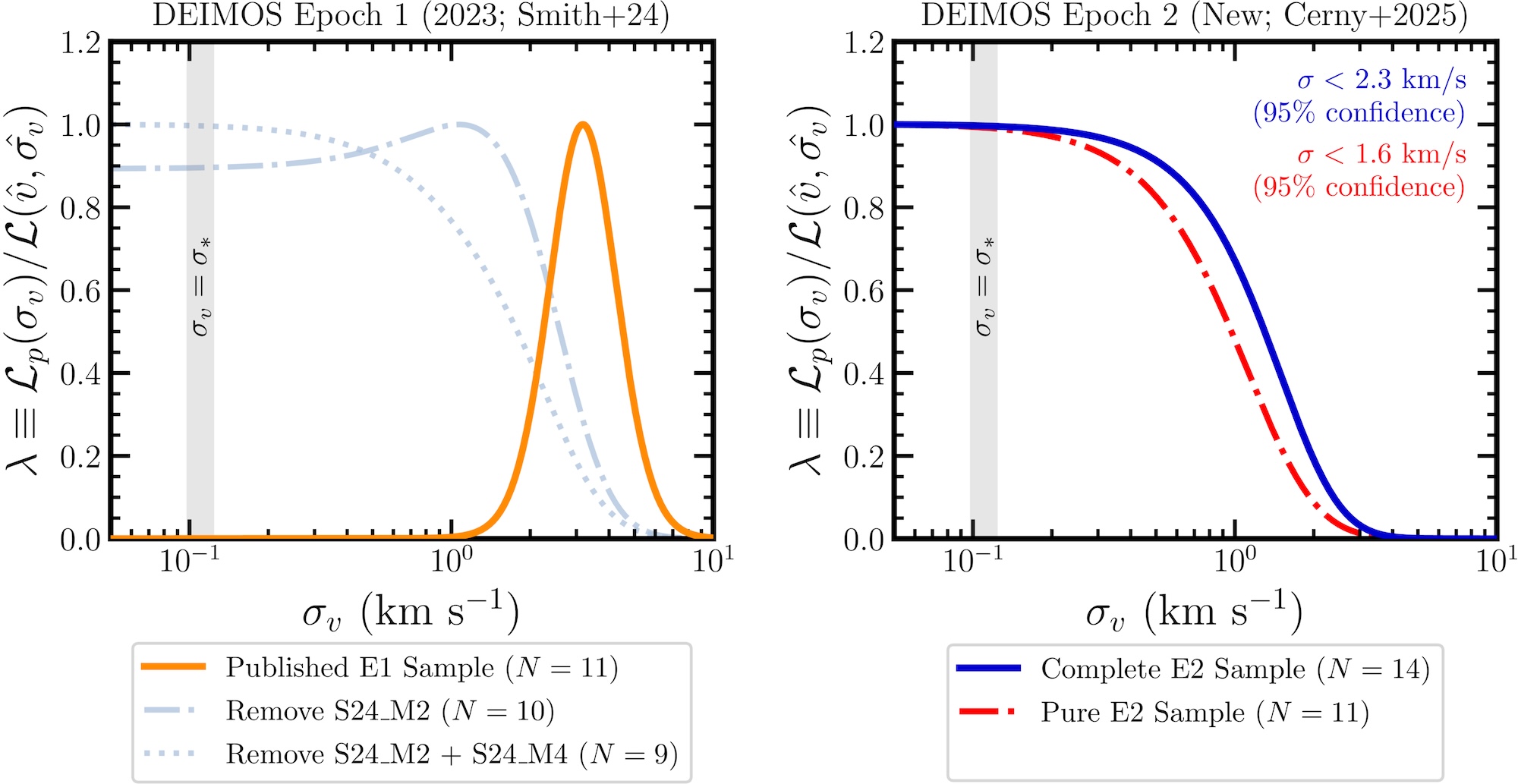
Normalized likelihoods for the velocity dispersion based on the initial data (left) and the new data (right). The initial velocity dispersion measurement of 3.7 km/s is ruled out by the new measurements. Click to enlarge. [Cerny et al. 2026]

Crucially, these measurements enabled a new estimation of the system’s velocity dispersion. In contrast to earlier work that found a high velocity dispersion of 3.7 km/s, the new data favor a value of just 0.1 km/s and rule out values above 2.3 km/s. While these results do not unequivocally preclude the possibility of dark matter, they strongly favor little to no dark matter. This goes against the initial evidence in favor of the dwarf galaxy hypothesis.

These observations also helped to confirm one candidate binary pair and identify three new binary candidates. (This large binary fraction, though interesting, isn’t diagnostic, as both star clusters and dwarf galaxies are known to host high proportions of binary stars.)

Further Evidence

Cerny’s team conducted a further test of the Ursa Major III/UNIONS 1’s identity by measuring the metallicities of its 12 brightest stars. They found that the stars are metal poor and have little metallicity dispersion. This finding again points to a star cluster, in which stars form in a single epoch, rather than a dwarf galaxy, which may feature multiple generations of stars with different degrees of chemical enrichment.

metallicity dispersion vs velocity dispersion for faint Milky Way satellites

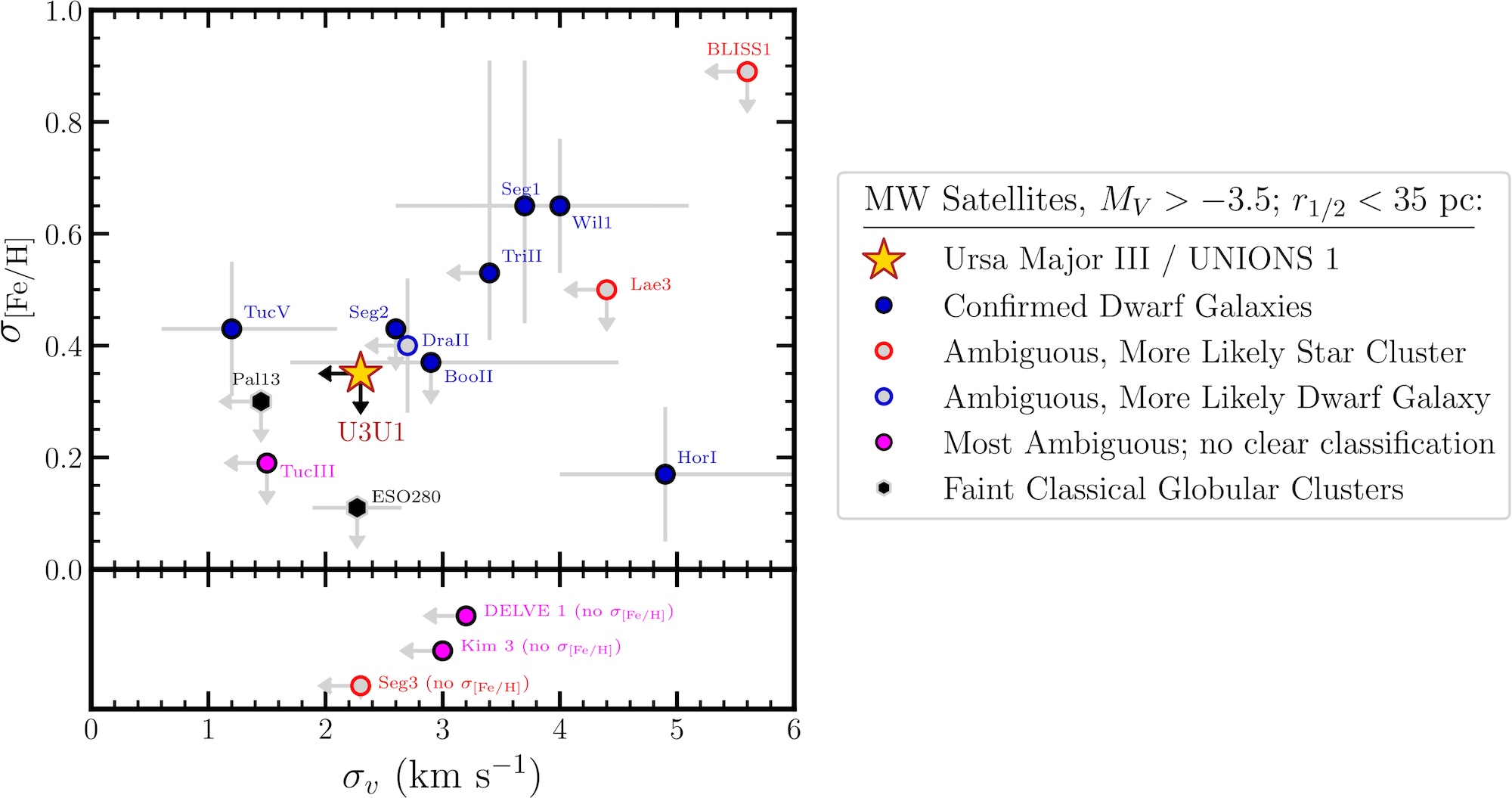
Upper limits on velocity dispersion and metallicity dispersion for Ursa Major III/UNIONS 1 compared to other faint Milky Way satellites. There are no confirmed dwarf galaxies for which the metallicity dispersion and velocity dispersion are both lower than for Ursa Major III/UNIONS 1. Click to enlarge. [Cerny et al. 2026]

Based on the newly collected evidence, Cerny and collaborators concluded that Ursa Major III/UNIONS 1 is likely a star cluster, though the possibility that it’s instead a dwarf galaxy could not be ruled out. If the star cluster classification holds, Ursa Major III/UNIONS 1 would be the least luminous metal-poor star cluster known. This classification may also imply the presence of a large number of compact objects — white dwarfs, neutron stars, or black holes — to keep the cluster intact, filling the role that dark matter would have played.

Going forward, further chemical abundance measurements of Ursa Major III/UNIONS 1 may still sway the argument one way or another. And as facilities like the Vera C. Rubin Observatory and the Euclid space telescope continue to collect data, other extreme Milky Way satellites may come to light.

Citation

“No Observational Evidence for Dark Matter Nor a Large Metallicity Spread in the Extreme Milky Way Satellite Ursa Major III/UNIONS 1,” William Cerny et al 2026 ApJL 999 L8. doi:10.3847/2041-8213/ae29b8

The post Ursa Major III/UNIONS 1: Dwarf Galaxy or Star Cluster? appeared first on AAS Nova.

Do You Have This Andromeda Galaxy in Extra-Extra-Extra Small?

12 November 2025 at 17:00

Andromeda Galaxy

Editor’s Note: Astrobites is a graduate-student-run organization that digests astrophysical literature for undergraduate students. As part of the partnership between the AAS and astrobites, we occasionally repost astrobites content here at AAS Nova. We hope you enjoy this post from astrobites; the original can be viewed at astrobites.org.

Title: Deep in the Fields of the Andromeda Halo: Discovery of the Pegasus VII Dwarf Galaxy in UNIONS
Authors: Simon E. T. Smith et al.
First Author’s Institution: University of Victoria
Status: Published in ApJ

Picture a galaxy. It’s big, right? Unfathomably big, huge even! But galaxies aren’t all extremely massive; they come in a variety of sizes and luminosities, and some galaxies are so small and so dim that astronomers may not even know they’re there, even when they’re basically in our backyard. The hunt for the smallest galaxies is an important one, as these systems give us extreme environments where we can test theories of dark matter and galaxy evolution. The authors of this article present a newly discovered ultra-faint dwarf galaxy dubbed Pegasus VII (Peg VII), found next to our nearest major galactic neighbour: Andromeda.

How Do You Find a Dwarf Galaxy?

Finding ultra-faint dwarf galaxies requires deep, long-exposure imaging across wide swaths of the night sky, something that is only possible through observational surveys. Some telescopes, like JWST, require astronomers to submit an application to point the telescope at a specific, known target and, if approved, will have some amount of “telescope time” to do their imaging. Others, like the Euclid space telescope, are part of large surveys in which an area of the sky is selected and systematically imaged over several years, regardless of if there are known objects there or not. Because of this, surveys are our best bet to discover faint systems like ultra-faint dwarf galaxies.

The survey these authors used is UNIONS (Ultraviolet Near Infrared Optical Northern Survey), which covers the same area of the sky as the Euclid space telescope but is done with three ground-based telescopes: the Canada-France-Hawaii Telescope, Pan-STARRS, and Subaru, all located on Maunakea in Hawaiʻi. The authors were originally focused on finding satellite galaxies in the outskirts of Andromeda’s gravitational influence and during their search were able to identify an overdensity of bright stars. They then applied for and were awarded telescope time with both the Canada-France-Hawaii Telescope and the Gemini Observatory to perform deeper follow-up imaging of the system to figure out what exactly it was.

Optical Illusion or Optical Observation?

With this deeper follow-up imaging they could confirm if these stars were really one coherent system or if they just appeared to be clumped together on the sky. When they plotted the stars on a colour–magnitude diagram (Figure 1) they were able to identify a main sequence, horizontal branch, and red giant branch, as would be expected if these stars all formed at roughly the same time and were allowed to evolve over billions of years. Congratulations, it’s a dwarf galaxy!

color–magnitude diagrams for stars identified as being within or outside of Peg VII

Figure 1: Left: The colour–magnitude diagram for all stars within 2 half-light radii of Peg VII. Those inside the orange dashed lines are identified members of Peg VII, and the red lines are the best-fit isochrones. The vertical red line is the main sequence, the curve at the top is the red giant branch, and the horizontal line is the horizontal branch. Below the black dashed lines are stars that are too dim to be reliably used in the analysis. Right: The colour–magnitude diagram for stars that appear to be around Peg VII that are not actually members. These stars don’t follow the main sequence at all. [Adapted from Smith et al. 2025]

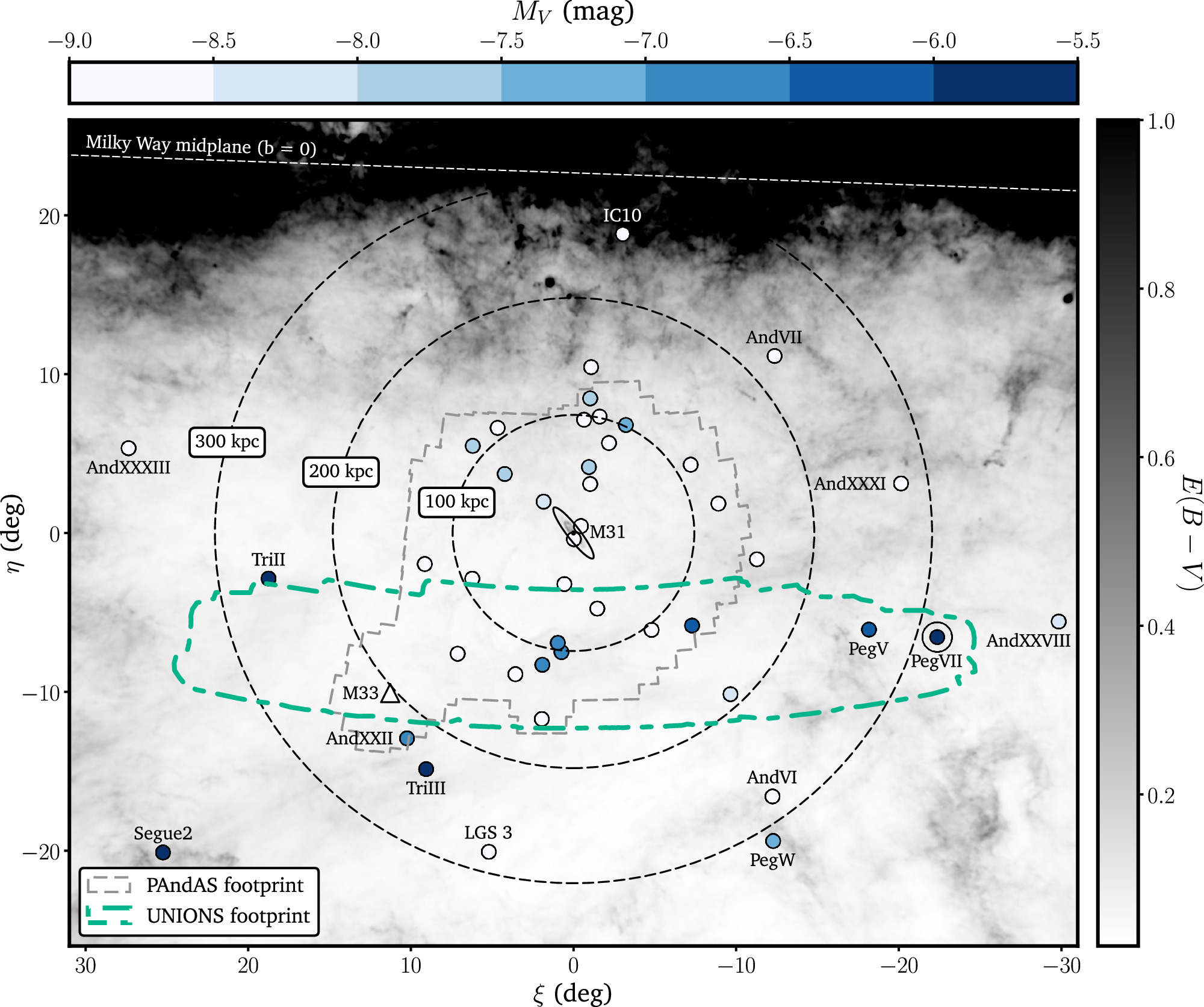
All together, Peg VII only hosts around 82 stars and is physically 129 times smaller than Andromeda. This results in an absolute magnitude of −5.7 (in astronomy, the more negative the absolute magnitude, the greater the object’s intrinsic brightness). For context, Andromeda hosts more than 1 trillion stars resulting in an absolute magnitude of −21.5, making Peg VII 2 million times dimmer than its massive neighbour. This definitively makes Peg VII the dimmest known Andromeda satellite galaxy. See Figure 2 for more about Andromeda’s satellites.
locations of Andromeda Galaxy satellites and survey footprints

Figure 2: The spatial distribution of the Andromeda (M31) satellite galaxy system. Galaxies are coloured based on how bright they are (darker means dimmer). The dashed grey line denotes the area covered by PAndAS, a survey focused on Andromeda satellites that are more centrally concentrated. The dashed green line denotes the area covered by the UNIONS survey, with Peg VII on the right-hand side, more than 978,000 light-years from Andromeda. [Smith et al. 2025]

With their colour–magnitude diagram, the authors could also fit isochrone models to estimate other properties of the system. Essentially, they performed simulations of systems with a variety of ages and metallicities and determined what the colour–magnitude diagrams of these system would look like and compared them to Peg VII’s. They estimate Peg VII to be around 10 billion years old and very metal-poor, which is expected for a small galaxy like this.

How Are Baby Dwarf Galaxies Made?

The big question surrounding Peg VII is how exactly it got like this. Did it originally form with so few stars, or was it originally bigger and has since had stars stripped away due to tidal forces exerted on it by Andromeda? It’s difficult to answer this right now because the imaging the authors obtained doesn’t allow them to determine Peg VII’s orbital path and speed around Andromeda. But, they can look for indicators of tidal disruption, like spatial elongation of the stars’ distribution, or how “stretched out” the galaxy is.

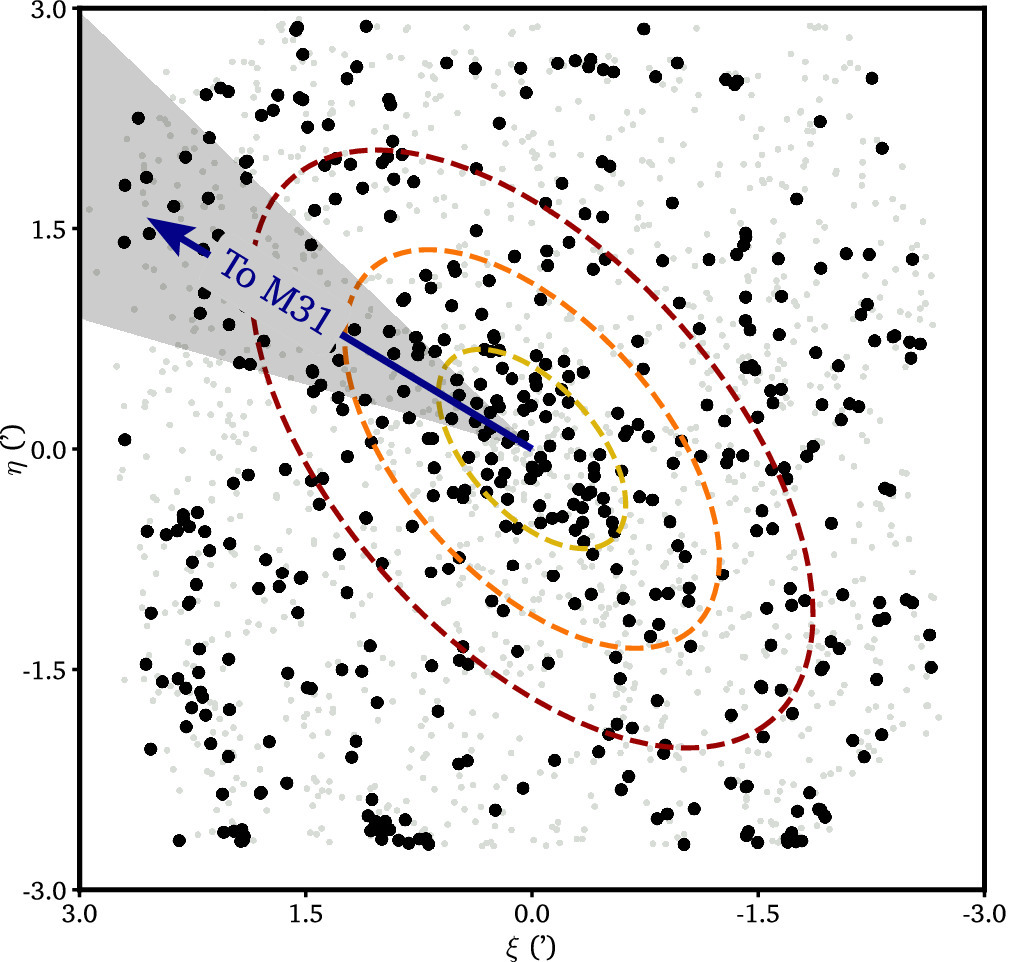
They found that Peg VII is quite elliptical (oval-like) and its major axis is roughly pointed at Andromeda (Figure 3). This could indicate that Peg VII has interacted with Andromeda in the past, and this could have affected its mass and size. However, there are lots of other possibilities for Peg VII’s shape that wouldn’t involve Andromeda at all. Peg VII could have naturally formed like this in isolation and has only just recently been brought into Andromeda’s orbit. It’s also possible Peg VII is the byproduct of a merger between two even smaller dwarf galaxies, which has been shown to result in elliptical distributions.

spatial distribution of Peg VII member stars

Figure 3: The spatial distribution of Peg VII member stars (dark black dots). The dashed lines show where 1, 2, and 3 half-light radii are, showing how elliptical Peg VII is. The blue arrow shows the direction Andromeda is in, which roughly lines up with Peg VII’s major axis. [Adapted from Smith et al. 2025]

To answer all of these questions, more follow-up observations are needed. By combining different wavelengths of light, it will be possible to determine Peg VII’s velocities, its star-formation history, and its hydrogen gas content and distribution. Even without an answer about Peg VII’s evolution, its discovery alone is noteworthy for the Andromeda system. Our theories of galaxy formation predict that Andromeda should have way more small satellite galaxies like Peg VII that we haven’t observed yet, as many as 60! This study of Peg VII highlights the need for large, deep surveys to extend this search for satellites to further distances from Andromeda and perhaps down to dimmer magnitudes.

In the meantime, keep your eye on the sky for more news about Peg VII and its other ultra-faint dwarf galaxy buddies. As big surveys designed for finding faint systems like these start to ramp up, like the Euclid space telescope and the Vera C. Rubin Observatory, we may be hearing more big things about these little galaxies.

Original astrobite edited by Caroline Von Raesfeld.

About the author, Veronika Dornan:

Veronika is a postdoctoral research associate at the University of Edinburgh. Her research is in observations of globular star clusters and how they can be used to study the evolution of their host galaxies.

The post Do You Have This Andromeda Galaxy in Extra-Extra-Extra Small? appeared first on AAS Nova.

Featured Image: JWST Expands the Search for Extragalactic Supernova Remnants

29 September 2025 at 17:00

Out to what distance can we resolve the structure of a supernova remnant in the infrared? Until recently, it was only possible to do so for remnants in the Milky Way and the Magellanic Clouds, but JWST has now extended that capability to other nearby galaxies. In a recent research article, Sumit Sarbadhicary (The Ohio State University) and collaborators used JWST to study supernova remnants in the Triangulum Galaxy (Messier 33), a small spiral galaxy that is 2.7 million light-years away. The study area contained 40 supernova remnants that were previously identified at other wavelengths. The image above shows a portion of the galaxy’s southern spiral arm, where each white circle indicates a known supernova remnant. Infrared observations of supernova remnants are critical for understanding the physics of the interstellar medium and the composition, formation, and destruction of dust. To learn more about how JWST has pushed the limits of our search for extragalactic supernova remnants, and for details on each of the remnants detected by JWST in the Triangulum Galaxy, be sure to check out the full research article linked below.

Citation

“A First Look at Spatially Resolved Infrared Supernova Remnants in M33 with JWST,” Sumit K. Sarbadhicary et al 2025 ApJ 989 138. doi:10.3847/1538-4357/adec7a

The post Featured Image: JWST Expands the Search for Extragalactic Supernova Remnants appeared first on AAS Nova.

❌