NASA astronaut Randy Bresnik (left) and ESA (European Space Agency) astronaut Luca Parmitano view progress on the solid rocket booster integration in High Bay 3 inside the Vehicle Assembly Building at NASA’s Kennedy Space Center in Florida on Wednesday, Sept. 2, 2026.
Bresnik, Parmitano, and NASA astronauts Andre Douglas, Frank Rubio, and Bob Hines made the first visit to Kennedy by the entire crew and backup crew members of the Artemis III mission. Artemis III will launch four crew members aboard the Orion spacecraft to carry out a series of objectives in low Earth orbit designed to demonstrate critical systems needed for future lunar landings, beginning with Artemis IV.
A NASA Launch Services (NLS) II contract has been awarded by the agency to Relativity Space Inc., and its Terran R launch service in accordance with the contract’s on-ramp provision. The Terran R launch service will be available to NASA’s launch services to use for future missions.
The NLS II contracts are multiple-award, indefinite-delivery/indefinite-quantity contracts with an ordering period through June 2030 and an overall period of performance through December 2032. The NLS II contracts include an on-ramp provision that provides an opportunity annually for new launch service providers to compete for future missions and allows existing contractors to introduce launch vehicles not currently on their NLS II contracts.
The NLS II contracts support the goals and objectives of the agency’s Human Spaceflight Mission Directorate, Science Mission Directorate, and the Research and Technology Mission Directorate. Under the contract, NASA also can provide launch services to other government agencies, such as the National Oceanic and Atmospheric Administration.
NASA’s Launch Services Program Office at the agency’s Kennedy Space Center in Florida manages the NLS II contracts. For more information about NASA, visit:
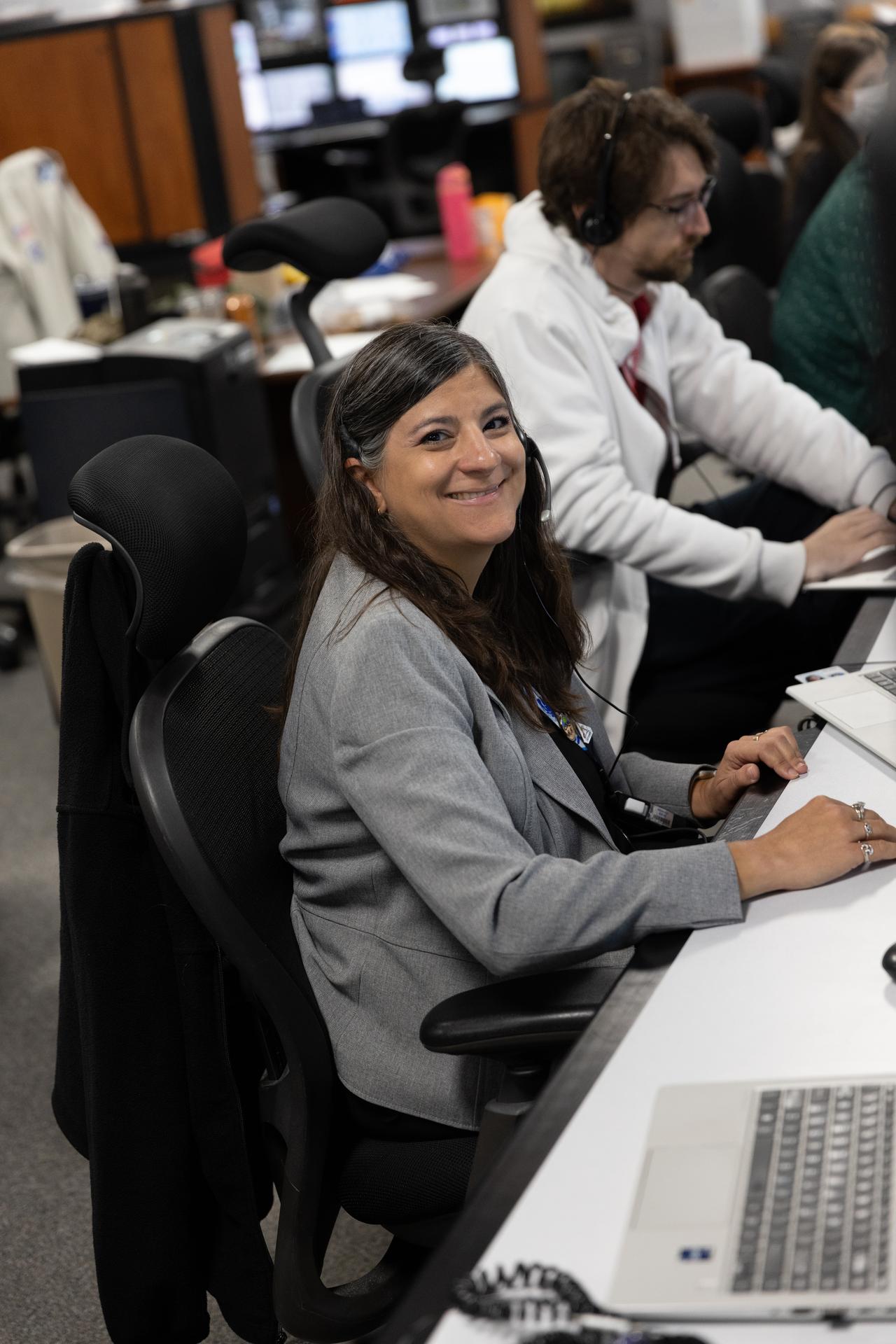
Lindsey Waitt, engineer with NASA’s Exploration Ground Systems Program, participates in a terminal countdown simulation for Artemis III on Thursday, Aug. 6, 2026, inside Firing Room 1 of the Rocco A. Petrone Launch Control Center at NASA’s Kennedy Space Center in Florida.
NASA/Clayton Rougelot
As a young girl raised in Worcester, Massachusetts, Lindsey Waitt dreamed of working for NASA. Her dream is now a reality as she embarks on her role as a NASA test project engineer with the Artemis launch team – an integral part of the agency’s missions that will enable humans to return to the surface of the Moon after launching from NASA’s Kennedy Space Center in Florida.
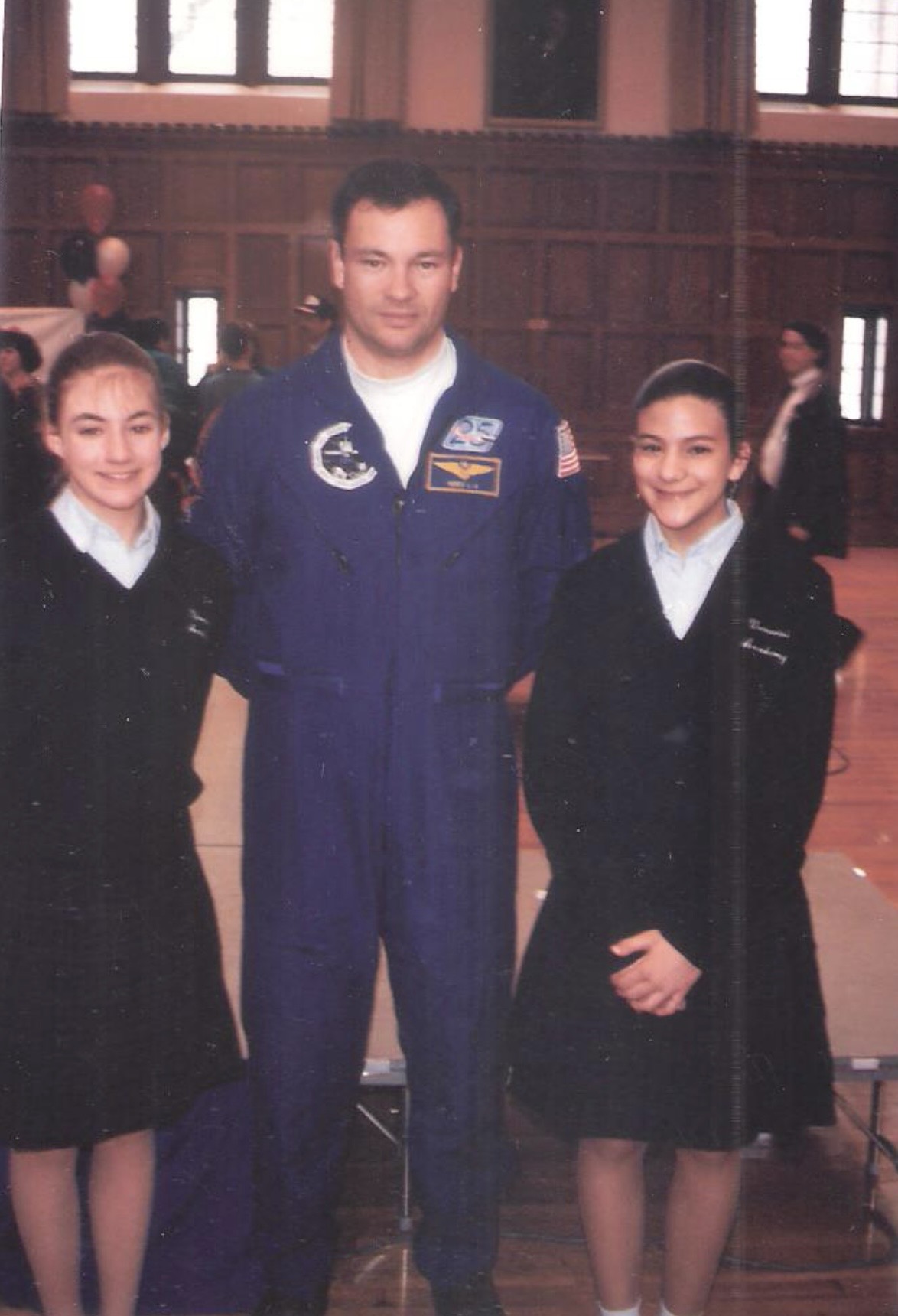
When she was in middle school in the late 1990’s, Waitt recalls meeting NASA Space Shuttle astronauts Michael Lopez-Alegria and Albert Sacco, Jr., a former professor at the college, during a visit to Worcester Polytechnic Institute (WPI) in Worcester, Massachusetts. She was inspired while listening to them recount their spaceflight experiences including an experiment on conducting research for growing cells on the Moon. She even posed for a picture and got their autographs. Little did young Waitt know, these would not be the only astronauts she would meet.
Lindsey Waitt (far right), poses for a photograph with NASA astronaut Michael Lopez-Alegria and her cousin at Worcester Polytechnic Institute in Massachusetts.
Photo credit: NASA/Lindsey Waitt
Her passion for learning about all things space and engineering led Waitt back to WPI where she studied engineering, absorbing different disciplines. She received her Bachelor of Science degree in Mechanical Engineering with a concentration in aerospace engineering and she left the school fueled by her passion to be a part of America’s space agency.
After graduation, she worked as a systems engineer on radar flight test missions for a defense contractor, and while excelling in her role, she realized it wasn’t the aerospace engineering field that she desired.
“It was an exciting program, and it was meaningful to be a part of a project focused on protecting the country from enemy attacks. But it wasn’t space,” Waitt said.
As the wife of a now retired sergeant first class officer in the United States Army, Waitt and her family traveled around the world during her husband’s enlistment, and she continued to follow NASA missions from around the globe. While Waitt was dedicated to raising her three young boys, she simultaneously pursued her master’s degree in Space Operations from the University of Colorado in Colorado Springs. Twelve years later, she made the courageous decision to fully return to her first career passion – working for NASA – despite nay-sayers suggesting too much time had passed for her to return to the industry.
The sky is not the limit, it's wide open now. The universe is the limit.
Lindsey waitt
Test project engineer
Waitt vividly remembers watching NASA astronauts Doug Hurley and Bob Behnken soar skyward during NASA’s first commercial crew mission to the International Space Station in 2020. Watching alongside her family, she even set up a rocket-shaped tent, and she and her children pretended to blast off from their yard as they cheered excitedly as the astronauts lifted off from what would be her future place of work.
After moving to Florida in 2022 to work at a small satellite company in Cape Canaveral, as a systems engineer and program manager, she continued to search for opportunities to work for the agency. Waitt vividly remembers watching Artemis I with her family. They had just moved to the Sunshine State, and she woke up in the early hours of the morning to watch the historic launch, having no idea she would be working on the next Artemis mission – the first time NASA sent humans around the Moon in over 50 years!
In 2024, Waitt began her career at Kennedy working for a contractor as a test project engineer during the Artemis II launch. As “problem-solvers,” test project engineers are the main hub of experts for technical tests and launch activities and they work to coordinate resolutions across the different subsystems that may arise during the dynamic operations associated with a rocket launch. Leading up to the Artemis II launch in April, Waitt quickly became certified to sit on the launch console during the dynamic pre and post-launch operations for the massive SLS (Space Launch System) rocket and Orion spacecraft and she eagerly watched from outside Kennedy’s Launch Control Center as the four crew members lifted off the launch pad towards the Moon.
When NASA announced its insourcing initiative earlier this year, Waitt seized the opportunity to fully realize her dream. She applied for a position and is now a NASA civil servant supporting the Artemis launch team as a test project engineer for NASA– a core position for the agency’s launch team. With Artemis III in front of her, Lindsey will see the buildup of launch operations from start to finish.
As the only female of the 14 test project engineers who work on the Artemis launch team, Waitt said she was fully embraced by the colleagues she stands beside.
“Everybody’s very open and welcoming,” Waitt said. “I’ve worked on teams before, but it’s never been like this. Everyone is so passionate about the mission, and everybody is working together to get things done quickly, but safely – that’s always first priority. We Are Going.”
This opportunity didn’t happen by chance. Waitt is embracing life’s journey and focused on making her dream come true, one launch at a time. “The sky is not the limit – it’s wide open now,” Waitt said. “The universe is the limit.”
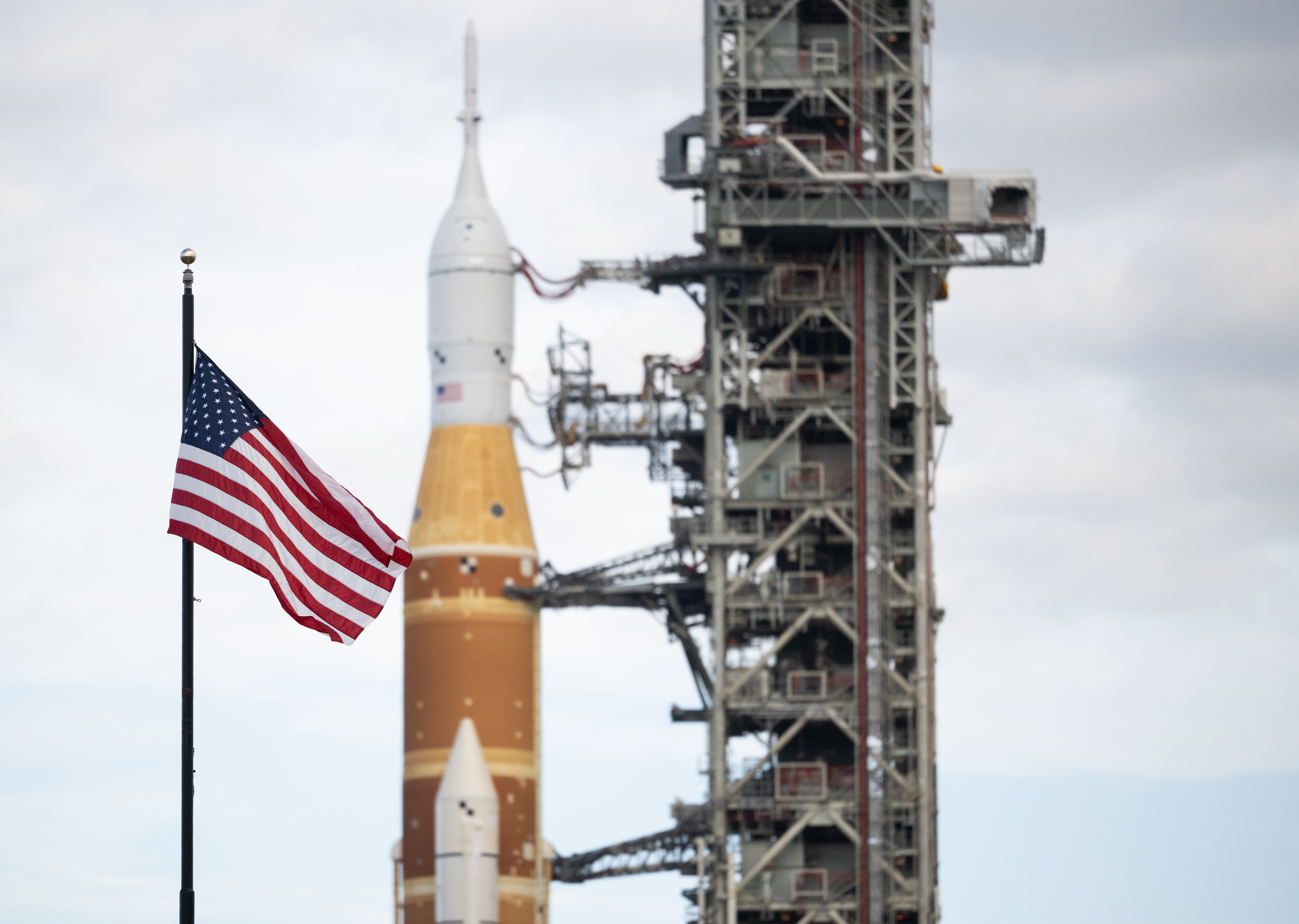
An American flag is seen in front of NASA’s SLS (Space Launch System) rocket and Orion spacecraft at NASA’s Kennedy Space Center in Florida on Jan. 17, 2026, ahead of the historic Artemis II test flight. NASA will host a news conference at NASA Kennedy on Friday, Aug. 14, to highlight American leadership in space and aviation.
Credit: NASA/Joel Kowsky
NASA will hold a news conference at 2:30 p.m. EDT, Friday, Aug. 14, live from the agency’s Kennedy Space Center in Florida, and media and digital creators are invited to attend in person.
The announcement, held in the XLV Hangar at the Shuttle Landing Facility, will preview a new event at NASA Kennedy later this year tied to America’s 250th anniversary, showcasing American leadership in aviation, space exploration, and emerging technologies while bringing together the public, industry leaders, innovators, and the next generation of explorers.
Participants include:
NASA Administrator Jared Isaacman
NASA leadership
Members of Congress
The agency will stream this news conference live through a variety of platforms:
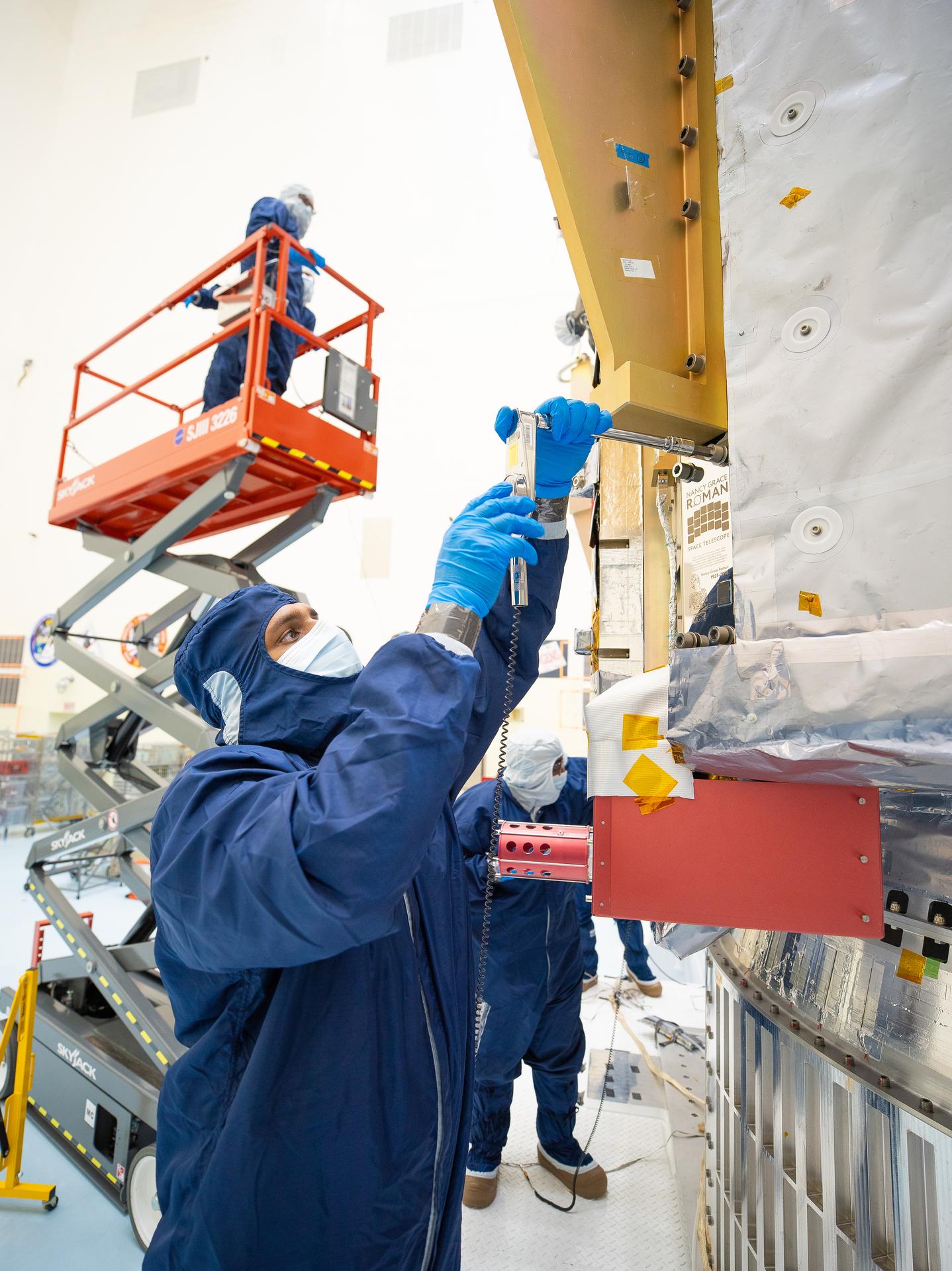
On July 27, technicians at NASA’s Kennedy Space Center in Florida installed a memory card containing 1,350,144 names as part of a commemorative plaque on the Nancy Grace Roman Space Telescope. The names were submitted by people globally, including astronauts from Artemis II and Artemis III. The memory card will travel with the Roman observatory to the Sun-Earth Lagrange point 2, or L2, about one million miles from Earth, where the Sun’s and Earth’s gravity balance out.
Roman is named after Dr. Nancy Grace Roman, NASA’s first chief astronomer and one of the architects of the agency’s modern science program. Roman championed space-based observatories that could study the universe from above Earth’s hazy atmosphere while making their data broadly available to the scientific community.
NASA and SpaceX are targeting launch for no earlier than 7:26 a.m. EDT Sunday, Aug. 30 aboard a SpaceX Falcon Heavy from Launch Complex 39A at Kennedy.
NASA's infrastructure at Kennedy Space Center, the crown jewel of US spaceports, is aging and approaching its limit due to increased demand from private companies, including SpaceX and Blue Origin, a new report finds.
"NASA’s launch infrastructure is vital to providing the agency, other government agencies, and commercial partners access to space for their most complex and expensive missions," states the report, published by the NASA Office of Inspector General. "Nevertheless, NASA’s launch infrastructure is dated and often does not provide the capacity to meet the growing demands of the agency and its partners."
The report covers NASA's launch facilities at the Kennedy Space Center in Florida and Wallops Flight Facility in Virginia. However, the most noteworthy information in the report concerns the Florida spaceport, where demand from SpaceX's Starship and Blue Origin's New Glenn launch vehicles is expected to stress NASA.
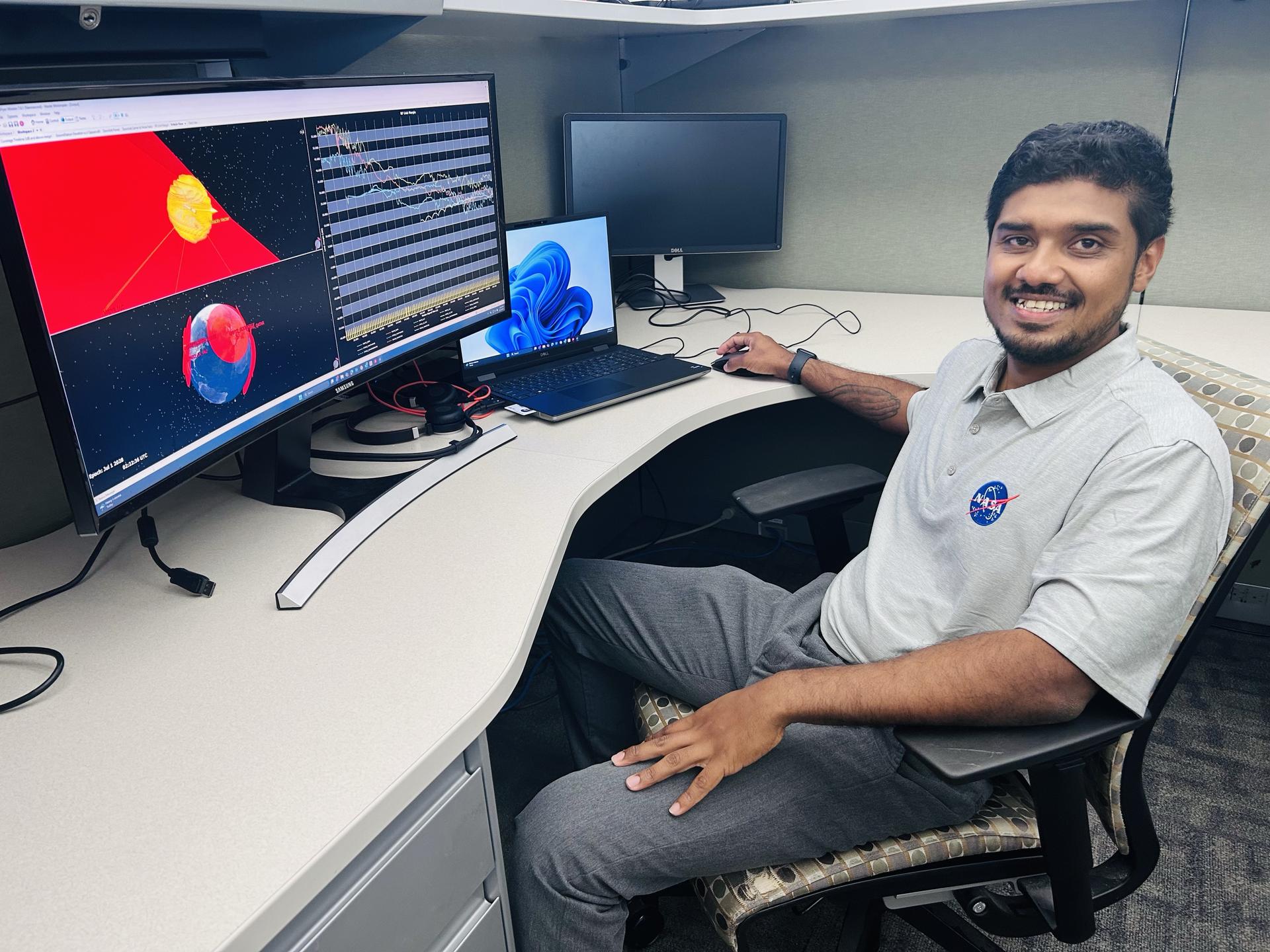
Rohit Goeptar, an electromagnetic/radio frequency analyst with NASA’s Launch Services Program at the agency’s Kennedy Space Center in Florida, reviews a radio frequency link budget analysis for NASA’s Nancy Grace Roman Space Telescope from his office. Goeptar is among the engineers and technicians sworn in as new NASA civil servants as part of NASA Administrator Jared Isaacman’s workforce directive to restore technical core competencies within the civil servants ranks.
NASA/Amanda Griffin
Rohit Goeptar was born into a poor family in Suriname, South America, the kind where both parents work three jobs and they still can only provide food and shelter for their family. At around age six, his family moved to California to start a new life. Only two years later, he moved back to South America with his father while his mother stayed in the United States and remarried. When he was 13, he became a U.S. citizen and he and his brothers returned to live with their mother in California.
At 19, Goeptar joined the U.S. Marine Corps where he spent six years as a technical operator. During one deployment to the Philippines, Goeptar helped set up communication systems for individuals who needed to contact their loved ones after a typhoon ripped through entire towns.
“I was lost, the Marine Corps gave me an opportunity,” Goeptar recalled.
While the Marines taught him useful skills, his life had not been the easiest. He lost not one, but two, fathers to suicide, and a short first marriage ended with him being unhoused on the streets of Kissimmee, Florida, for six months. But Goeptar eventually found his way.
As with most underdog stories, there was another person in the shadows behind his rise to success.
“Your brain works in mysterious ways,” his now wife told him a short while after they met. She then filled out college applications for him, and he eventually applied to NASA’s Kennedy Space Center in Florida.
While raising three kids, going to school full-time pursuing a computer engineering and electrical engineering degree simultaneously, Goeptar got the call that changed his life.
“In spring 2025, I was driving to pick my son up from school when a gentleman from Kennedy calls, telling me he’s seen my resume and do I have time for a quick interview,” Goeptar recounted.
He pulled on the side of the road and took part in an impromptu job interview.
Two weeks later, he had an in-person interview with others from Kennedy and two weeks after that, he had a contractor badge at America’s premier spaceport.
After starting as an intern under the Expendable Launch Vehicle Integrated Support, or ELVIS, contract, then moving to part-time until he graduated from the University of Central Florida (UCF) in Orlando, then full-time at the beginning of 2026, Goeptar was one of the ELVIS contractors who applied and were picked up to become civil servants recently.
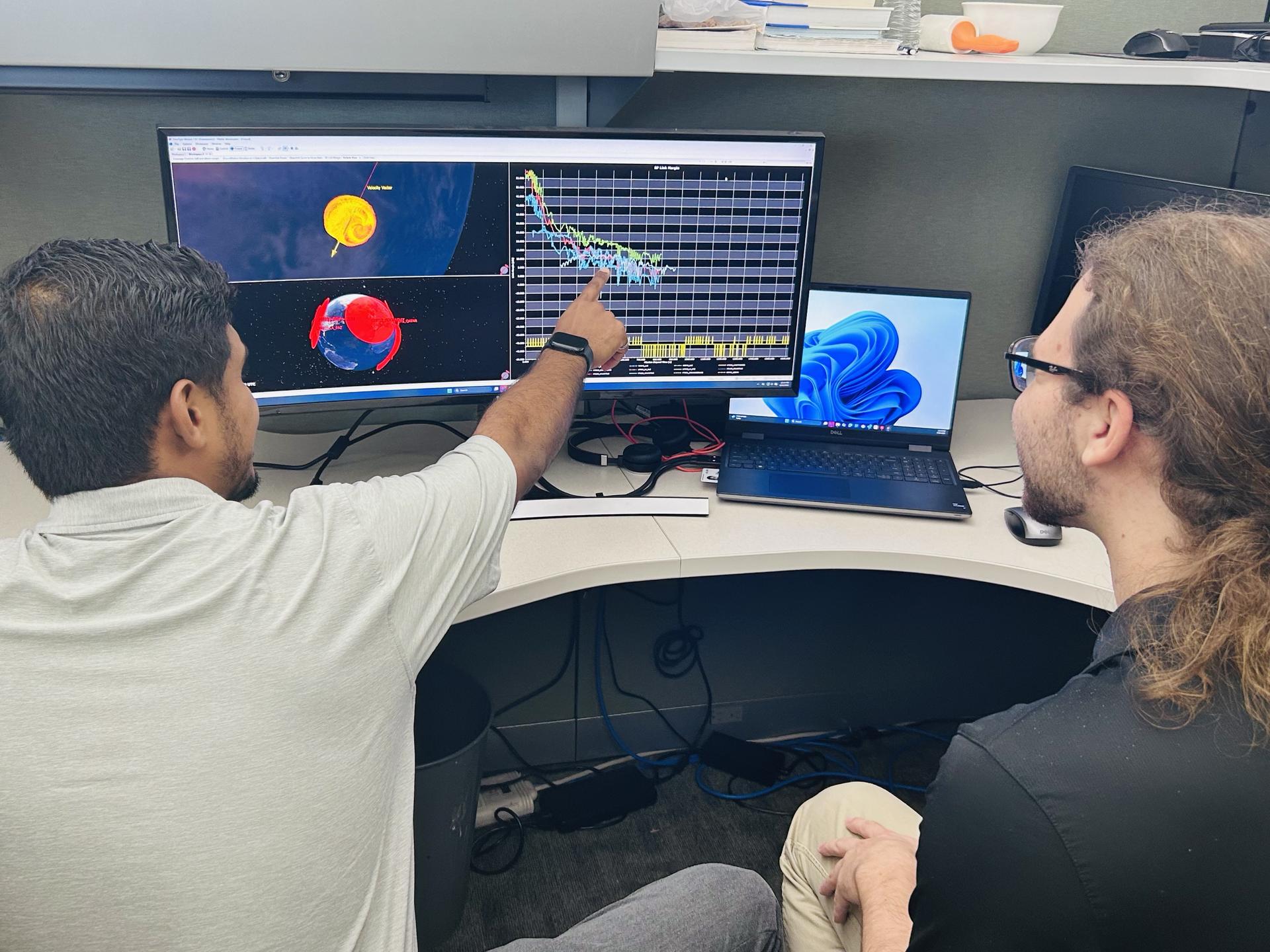
Rohit Goeptar, an electromagnetic/radio frequency analyst with NASA’s Launch Services Program at the agency’s Kennedy Space Center in Florida, reviews a radio frequency link budget analysis for NASA’s Nancy Grace Roman Space Telescope with a colleague.
NASA/Amanda Griffin
Now an employee of NASA’s Launch Services Program, Goeptar works with electromagnetic interference, electromagnetic compatibility, and radio frequency. It is his job throughout the entirety of the mission to analyze and ensure avionic boxes or anything electrically powered doesn’t interfere with any other systems. He also ensures independent systems are compatible when brought together. And finally, he conducts model radio frequency link analysis for different rockets and science demonstrations payloads. These may belong to NASA or commercial partners, and he is responsible for ensuring uninterrupted communication with the ground. In his short time at Kennedy, Goeptar has worked on Sentinel-6B, JPSS-4 (Joint Polar Satellite System), and IMAP (Interstellar Mapping and Acceleration Probe) missions.
And as far as his wife’s assessment that his brain works differently, he proved that within a year at Kennedy when he noticed an analytical issue his team wasn’t tracking. Once a rocket launches, it does a pitch, yaw, and roll. The analysis the team had been conducting didn’t account for this movement, which meant it wasn’t as accurate as it could be. He presented his solution to the team lead, and it now enables NASA data and partner data to be much more in sync.
“There is no greater feeling, being able to serve. It’s more than serving the public, it’s serving our country. It’s serving the future of our country,” Goeptar said with tears brimming in his eyes. “Being able to give back to that same government that gave me an opportunity to be where I’m at today. There’s no greater feeling than that.”
Meanwhile, Goeptar’s 11-year-old takes most of the credit for his landing at the space center, a NASA enthusiast, his son believes he spoke it into existence.
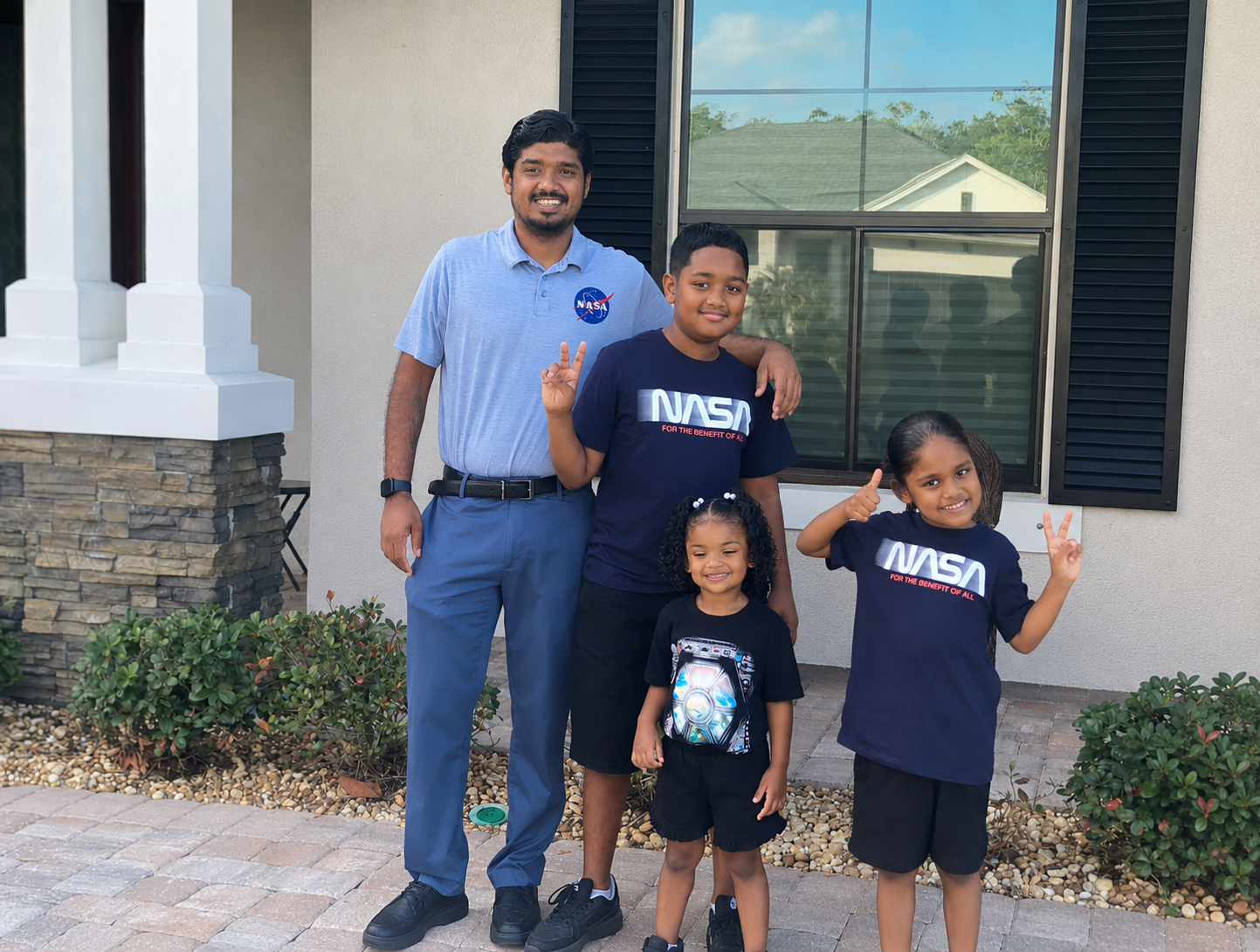
Rohit Goeptar, an electromagnetic/radio frequency analyst with NASA’s Launch Services Program at the agency’s Kennedy Space Center in Florida, poses for a photograph with his children.
NASA/Rohit Goeptar
“One day he wants to become an astronaut,” Goeptar said with joy on his face. “And I told him I will guide him until the day that I die. Maybe my last mission could be the one my son flies on. I’m not going to stop until that day happens.”
Rohit’s positive streak continues as he recently was accepted into electrical engineering master’s programs at both Johns Hopkins University, and UCF.
Listen to this audio excerpt from Elkin Norena, resident management officer, NASA’s Space Launch System Program:
0:00 / 0:00
NASA’s Elkin Norena has helped the agency launch more than a dozen space shuttle missions – that’s more than a dozen crews to low Earth orbit and more than a dozen historic missions. They were missions that helped build the International Space Station, that provided a final servicing mission to the Hubble Space Telescope, and that performed critical science experiments that improved life right here on Earth.
Today, he continues that work as the manager of the Resident Management Office for SLS at NASA’s Kennedy Space Center in Florida, helping launch America’s rocket – the SLS (Space Launch System) – and the Orion spacecraft with its international quartet of astronauts on the Artemis II mission to fly by the Moon and return home.
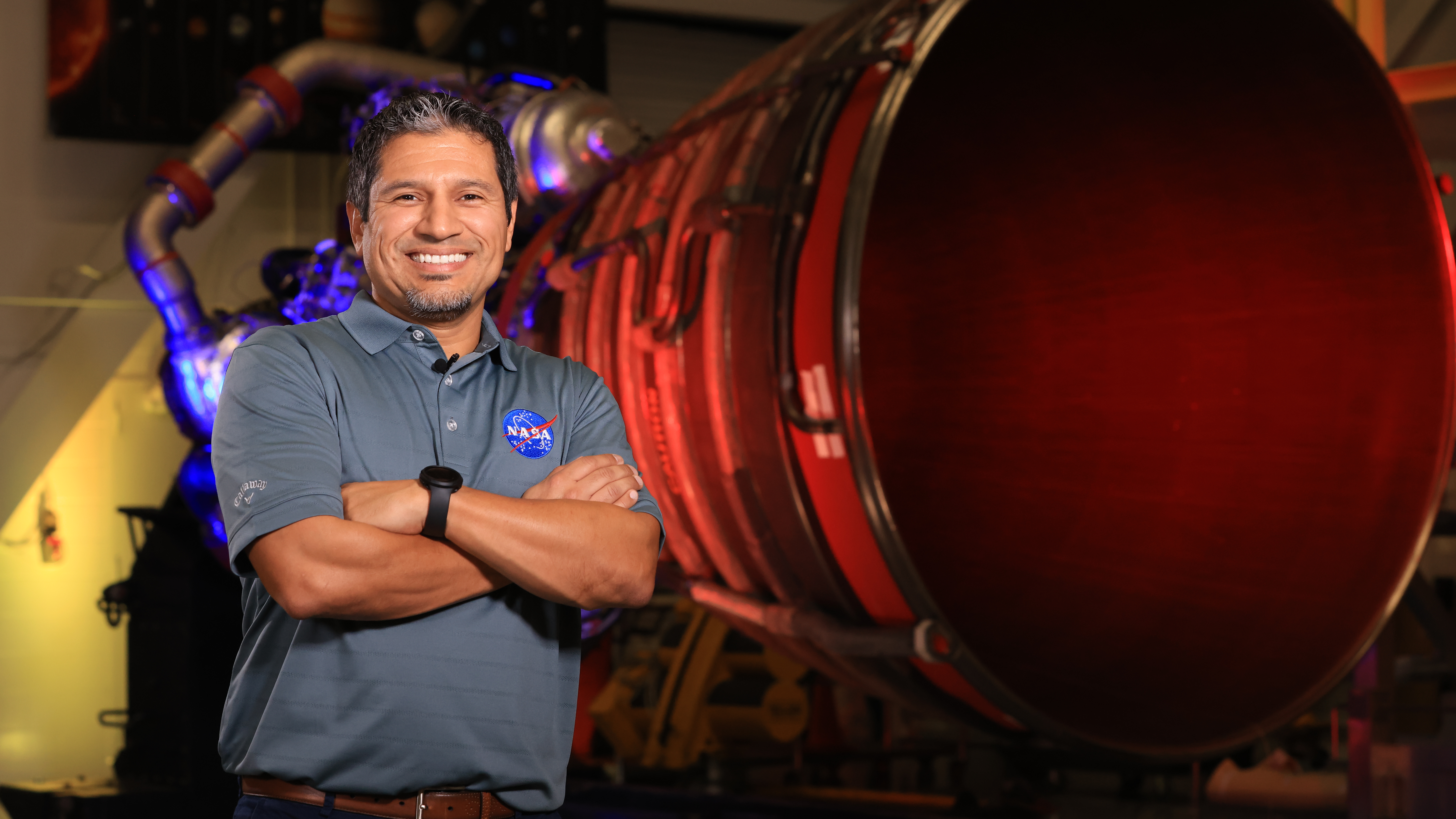
Elkin Norena, who serves as an SLS resident management officer at NASA’s Kennedy Space Center in Florida, stands in front of an RS-25 engine.
NASA
As resident manager, Norena provides onsite SLS support for NASA’s Exploration Ground Systems team that is responsible for preparing, stacking, testing, and launching SLS and Orion. He is also the eyes and ears for the SLS Program, providing an avenue of communications back to the program, which is managed at NASA’s Marshall Space Flight Center in Huntsville, Alabama.
It is the continuation of a childhood dream to be part of space exploration.
“When I was a kid in New Jersey, I watched a space shuttle launch in class one day,” said Norena. “When I watched the power of launch and the brave astronauts going to explore, I knew I had to be a part of that one day. I wanted to become an astronaut.”
The dream to join the space program led the Colombia native to the University of Central Florida in Orlando, where he majored in computer engineering, just miles from the Space Coast and in view of space shuttle launches like the ones he once watched on TV.
When that clock ticks down to T-10 minutes, everybody’s just waiting. You wait for the automated system to kick in. You hold your breath and watch the clock go down to T-0. Then BOOM, launch happens, and you know it was all worth it.
Elkin Norena
Resident management officer, NASA Space Launch System Program
Following college, he joined NASA contractor United Space Alliance at NASA Kennedy, and in 2008 he joined the NASA Kennedy team as a civil servant, working on the same spacecraft that inspired him to pursue the space program as a child.
“I started off in the Space Shuttle Program as an electrical engineer. Then I moved into the firing room for 17 different shuttle missions as a flight termination engineer. It was exciting to be part of all those missions and build the International Space Station,” Norena said.
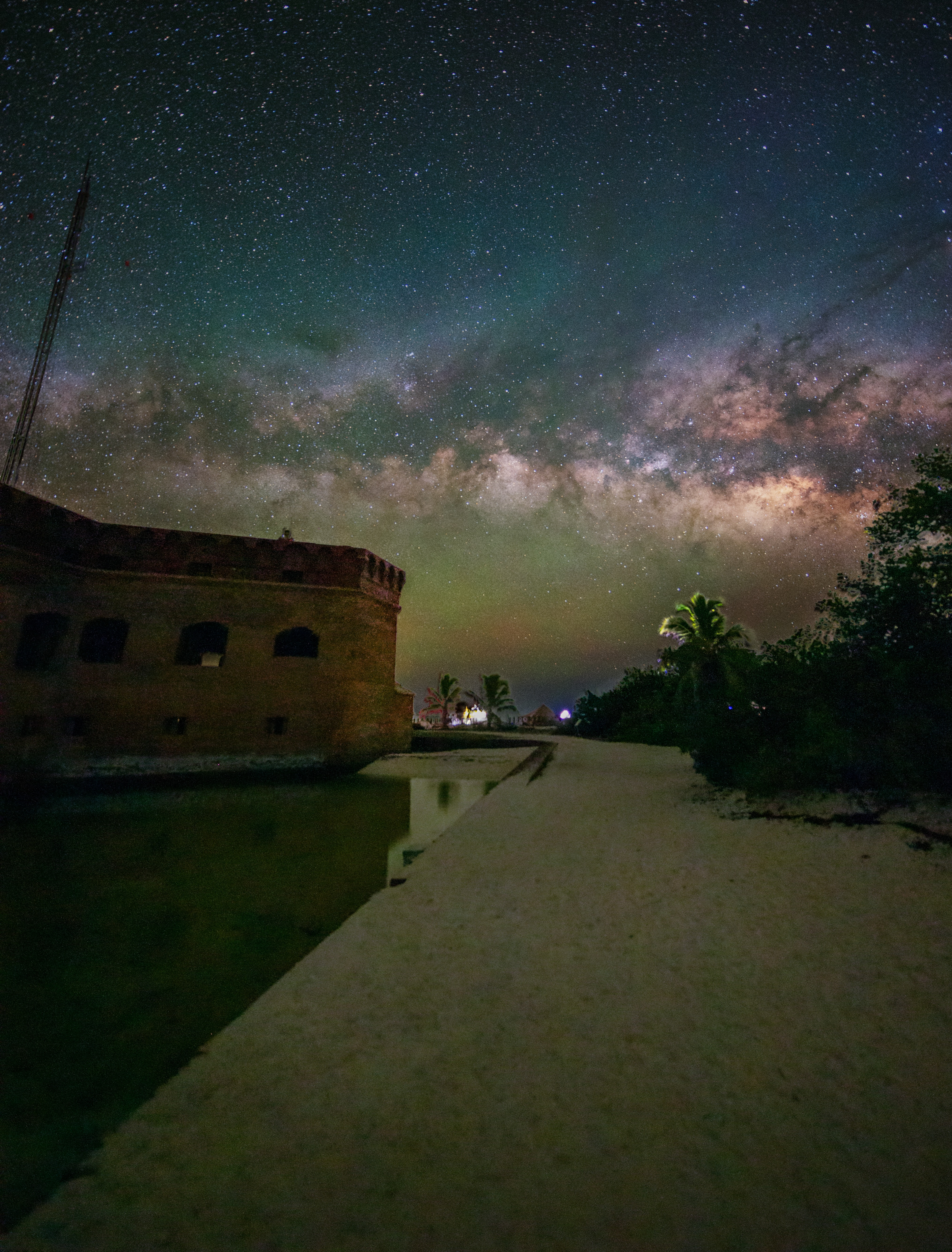
The Milky Way stretches above Dry Tortugas National Park in Florida.
Elkin Norena
Using those experiences, he became one of the original SLS team members. He was a part of the teams that successfully launched Artemis I and II and is now critical to the upcoming Artemis III mission.
Away from the launch pad, Norena’s hobbies orbit around his teenage daughters, participating in their activities. He also keeps a keen eye on space and is an avid astrophotographer.
“I love capturing the Milky Way! I’ve traveled to Utah, New Mexico, Arizona, and all across the western United States,” he said. “A great spot that’s closer for me is Dry Tortugas National Park beyond Key West.”
No matter how he explores space, Norena believes Artemis II is more than just a mission.
“This is historic. I grew up watching the shuttle missions, learning about Apollo, and wanting to be part of those Moon missions. We built the space station. The space shuttle explored space and technology on many levels,” he said. “Now, it’s our turn with Artemis to get back to the Moon, and this time to stay there. I’m excited to be part of the generation that does that.”

 Login