❌

Normal view

Vintage Computer Festival Mid-West 2026 – Part 1

17 September 2026 at 01:15

This was the absolute best weekend I’ve had in a really long time, and I can’t wait to have more of these adventures (I’m smiling on the inside)! VCF Midwest was an absolute blast (and even a bit overwhelming with how much there was!), met some acquaintances and familiar faces.     Also met up […]

The post Vintage Computer Festival Mid-West 2026 – Part 1 appeared first on Low End Mac.

How to use Journal’s writing prompts in iOS 27, or turn them off

16 September 2026 at 07:40

In iOS 27, the Journal app can suggest writing prompts “based on what you write and any photos or drawings you add to your entry,” and you can add up to three of them to a single entry. The prompts come from Apple Intelligence, and one switch hides them: Settings > Apps > Journal > […]

The post How to use Journal’s writing prompts in iOS 27, or turn them off appeared first on The Mac Observer.

‘I see no crease whatsoever’ – WSJ’s Joanna Stern hands-on with Apple’s iPhone Duo

10 September 2026 at 20:45
iPhone Duo features a 7.6-inch inner display that provides a large canvas for viewing content, gaming, and multitasking. Closed, it’s similar in size to a passport with a beautiful 5.4-inch outer display.

The Wall Street Journal‘s Joanna Stern got her hands on Apple’s long-rumored iPhone Duo foldable smartphone at Apple Park and walked away impressed and loaded with kitchen-scale comparisons.

The iPhone Duo, which ships in October starting at $1,999, is Apple’s biggest hardware change to the iPhone in years. Closed, Stern says it is a little smaller than a Pop-Tart, about the size of a passport or kitchen sponge, and similar in footprint to Samsung’s Galaxy Z Fold 8 — though she found the Apple device a bit beefier and sturdier. Unfolded, the inner display measures 7.6 inches, roughly an iPad mini that fits in a pocket. The cover screen is 5.4 inches.

Apple spent heavily on the inner screen. Stern reported no visible crease even when the device was bent or fully folded, unlike the obvious crease on the Z Fold 8. The inner display is matte rather than glossy, which she called her favorite feature. The hinge produces a satisfying click when closed. One-handed use in tablet mode is possible but awkward for those with smaller hands.

Hardware trade-offs are clear. There is no Face ID; the power button doubles as a fingerprint sensor. The rear cameras are limited to wide and ultrawide — no telephoto, which Stern called the biggest hardware disappointment. A camera hidden behind the inner display is designed for selfies and FaceTime.

Software is the main reason to buy one. Split-screen multitasking works like a simplified iPad: Safari and Messages can run side by side. Apple redesigned several first-party apps with two-pane layouts. The interface also changes with the fold angle, turning the device into a small laptop-style stand. Video watching benefits from the larger canvas.

Apple claims all-day battery life: up to 31 hours of video on the inner display and 44 hours on the outer. Naturally, Stern said real-world battery testing is still needed, but Apple’s battery claims are historically lower than actual use.

After years of skipping foldables and planning to buy the iPhone 18 Pro as usual, Stern said she is now considering the Duo.
‎
MacDailyNews Take: The initial hands-on reviews for iPhone Duo are uniformly strong to outright gushing!


‎
Please help support MacDailyNews — and enjoy subscriber-only articles, comments, chat, and more — by subscribing to our Substack: macdailynews.substack.com. Thank you!

Support MacDailyNews at no extra cost to you by using this link to shop at Amazon.

The post ‘I see no crease whatsoever’ – WSJ’s Joanna Stern hands-on with Apple’s iPhone Duo appeared first on MacDailyNews.

A20 Pro vs A19 Pro Benchmarks

10 September 2026 at 15:59

The average width of a human hair is around 50 to 120 micrometers (µm), or anywhere between three and five thousandths of an inch. Now let’s take five thousandths (0.005) of an inch and divide it by 63,500, which equals 2 nanometers – that is the transistor size inside the A20 Pro chip powering iPhone […]

The post A20 Pro vs A19 Pro Benchmarks appeared first on Low End Mac.

Getting a 4K60 display going on a Mac Pro 2,1

5 September 2026 at 12:25

On March 6th 2014, Apple released Mac OS X 10.9.3 Mavericks Beta, which included built-in support for several new display options at the time: 4K displays can now have a “retina” resolution, and now there’s an option to enable 60 Hz. Prior to this update, 4K support was spotty.   (Pictured: Mac Pro 2,1 using […]

The post Getting a 4K60 display going on a Mac Pro 2,1 appeared first on Low End Mac.

Adapting a cMP SAS/SATA drive bay wire harness for RAID cards

25 August 2026 at 15:43

So you have a spare set of Mac Pro parts laying around, or wanna trick-out a Mac Pro with some modifications? While in the process of building my own Mac Pro 1,1 -> 2,1 project working on getting a RocketRAID 2720SGL going in El Capitan, I realized I didn’t really have a spare SFF-8087 (36-pin […]

The post Adapting a cMP SAS/SATA drive bay wire harness for RAID cards appeared first on Low End Mac.

Site Update – Language support added

22 August 2026 at 09:00

In a continued effort of looking at all the different odds and ends of our website, one of the issues gnawing at me was how non-latin alphabet letters suddenly disappeared off of Low End Mac, instantly converting text from multiple languages into “????”. Today, Low End Mac restores/converted all posts dating back to 1997, over […]

The post Site Update – Language support added appeared first on Low End Mac.

Building a Vintage Quadra 605 for my Collection

20 August 2026 at 02:58

Crack! Dammit. Another piece of brittle ’90s Apple plastic bites the turns to dust. Last week, I finally assembled enough parts to build a working Quadra 605. I know, I know.. the 605 is one of Apple’s more boring machines, but there was a hole in my collection that needed filling. The little 605 fits perfectly […]

The post Building a Vintage Quadra 605 for my Collection appeared first on Low End Mac.

Fun with a Quadra 950 and a Whole Lot of RAM

10 August 2026 at 23:58

A Little History My first experience with a Quadra 950 was back when they were new. Mike Bean, then president of the Arizona Macintosh User’s Group, had one. It was big. It was loud. It was fast… and it was beige. I loved it! Mike also had a Workgroup Server 95, the Unix-based file-server version […]

The post Fun with a Quadra 950 and a Whole Lot of RAM appeared first on Low End Mac.

Repacking a 20-Inch 2006 iMac onto an open air case

9 August 2026 at 01:06

By this point this iMac had seen many iterations of items used as a computer case for one length of time or another: a wooden board, a shelf, and then a drawer from a tossed out table. Why not a proper open air style case?     There’s nothing particular which makes this case more […]

The post Repacking a 20-Inch 2006 iMac onto an open air case appeared first on Low End Mac.

The X, a Pro, and Air: 10 Years of iPhone design

8 August 2026 at 03:29

The iPhone X is a testament to device longevity, and durability. I gave mine to a family member when upgrading to an Xs Max in Late 2018, who held onto it all these years through a few different protective cases. Today I got it back where it’ll remain in my collection, after they upgraded to […]

The post The X, a Pro, and Air: 10 Years of iPhone design appeared first on Low End Mac.

Install 64 GB of RAM in your Mac Pro 1,1 or 2,1 – 2026 Edition

7 August 2026 at 01:18

Back in early 2018 I wrote one of my first articles as a writer for Low End Mac, covering how to get 64 GB of RAM working in your Mac Pro 1,1 (2006) or Mac Pro 2,1 (2007). At the time, the project felt like a massive risk considering the cost of the RAM, and […]

The post Install 64 GB of RAM in your Mac Pro 1,1 or 2,1 – 2026 Edition appeared first on Low End Mac.

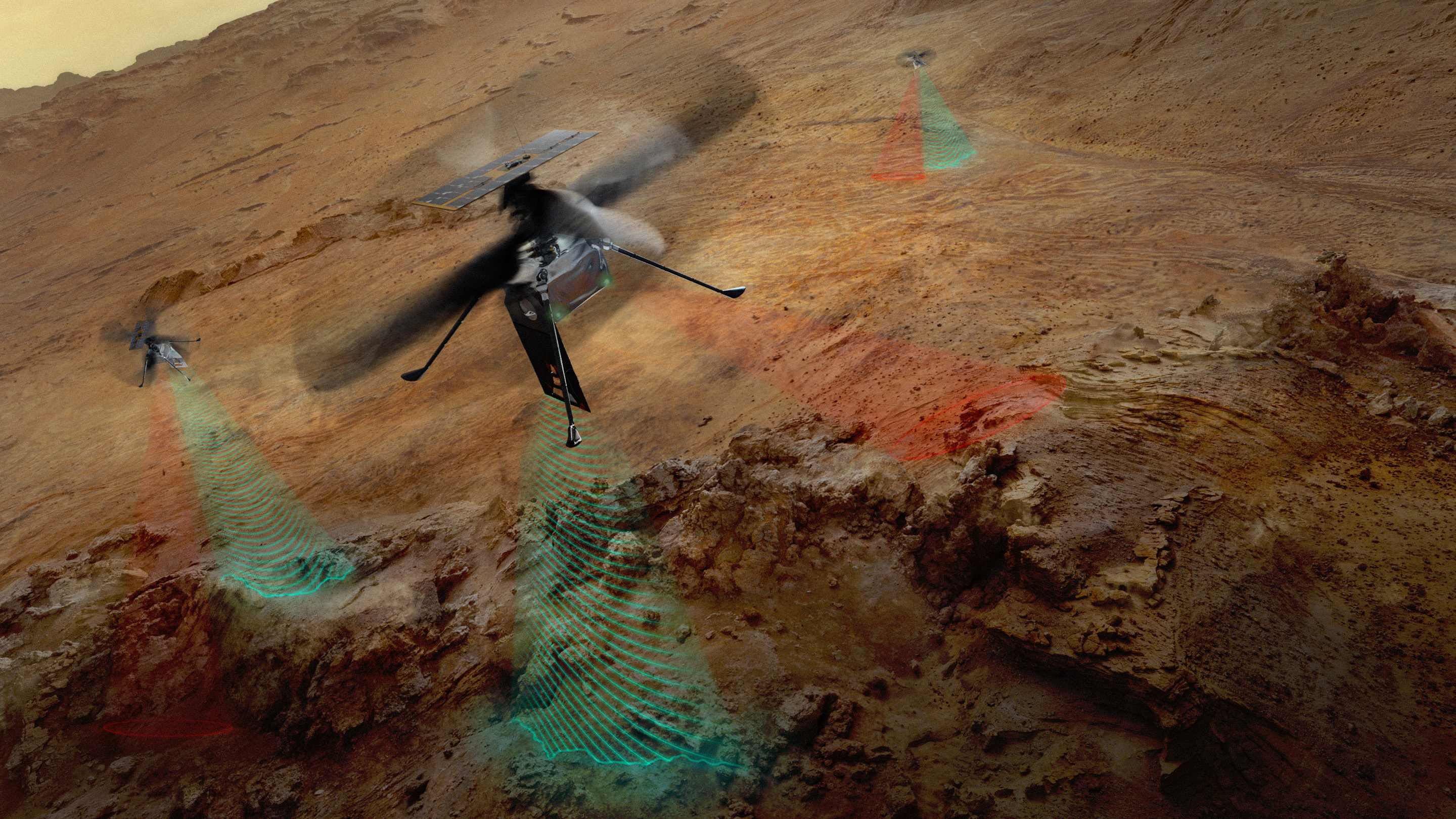
NASA’s SkyFall Helicopters at Work (Artist’s Concept)

6 August 2026 at 19:06
2 Min Read

NASA’s SkyFall Helicopters at Work (Artist’s Concept)

Three drone helicopters fly over a barren, reddish-brown rocky landscape. The foreground drone and two smaller drones in the background all project wavy, translucent red and green beams of light downward onto the rugged terrain below.
PIA26760
Credits:
NASA/JPL-Caltech

Downloads

NASA’s SkyFall Helicopters at Work (Artist’s Concept)

JPEG (3.25 MB)

Description

This artist’s concept depicts NASA’s three SkyFall Mars helicopters collecting data while flying over the surface of the Red Planet. 

The green frequency waves emanating from the helicopters’ large antennas depict collection of subsurface radar data. The red beams depict collect near-infrared imagery data from regolith (crushed rock and dust) and other surface features.

Equipped with four instruments each, the three helicopters will follow in the footsteps of the agency’s Ingenuity Mars Helicopter, a technology demonstrator that flew 72 times over nearly three years, proving that powered, controlled flight is possible in the rarefied Martian atmosphere. It also demonstrated how an aerial perspective can generate valuabledata by helping NASA’s Perseverance Mars rover team plan time-saving routes and choose locations for science-gathering. 

SkyFall is expected to launch aboard NASA’s Space Reactor-1 Freedom in late 2028. 

The SkyFall project, which will carry three Mars helicopters to the Red Planet in December 2028, is managed by NASA’s Jet Propulsion Laboratory. AeroVironment of Arlington, Virginia — which worked with JPL to design and build the history-making Ingenuity rotorcraft — will co-design and co-manufacture the SkyFall helicopters. Managed by Caltech for NASA, JPL manages the overall Mars Exploration Program on behalf of NASA’s Science Mission Directorate in Washington. 

For more information about NASA’s SkyFall:

https://science.nasa.gov/mission/skyfall/

Antenna Testing for NASA’s SkyFall Mission

6 August 2026 at 18:56
1 Min Read

Antenna Testing for NASA’s SkyFall Mission

A gloved person in striped shirt and glasses attaches a blue cable to a device with a metallic base and a translucent-appearing pane. The background is a chamber lined with grey and blue geometric foam acoustic panels.
PIA26759
Credits:
NASA/JPL-Caltech

Downloads

Antenna Testing for NASA’s SkyFall Mission

JPEG (30.46 MB)

Description

SkyFall ground-penetrating radar engineer Maya Román connects a coaxial cable to a test antenna in the Environmental Test Lab’s electromagnetic interference testing chamber at NASA’s Jet Propulsion Laboratory in Southern California. 

The antenna was pointed up during test to minimize reflections and interferences with the antenna pattern during the measurement.

Equipped with four instruments each, the three SkyFall aircraft will follow in the footsteps of the agency’s Ingenuity Mars Helicopter, which flew 72 times over nearly three years, proving that powered, controlled flight is possible in the rarefied Martian atmosphere. It also demonstrated how an aerial perspective can generate valuable data by helping NASA’s Perseverance Mars rover team plan time-saving routes and choose locations for science-gathering. 

SkyFall is expected to launch aboard NASA’s Space Reactor-1 Freedom in late 2028.

Village Tronic VTBook: a whole GPU on a PCMCIA card

5 August 2026 at 12:36

You heard that right, an entire GPU crammed into a compact PCMCIA card. What looks like an unassuming adapter for PowerBooks and PCs to hook up an external monitor, turns out to have an entire Trident Cyberblade XP2 chip crammed in there.     Featuring many supported resolutions including up to 2048 x 1280 @60Hz […]

The post Village Tronic VTBook: a whole GPU on a PCMCIA card appeared first on Low End Mac.

CHEST Critical Care Achieves First Ever Impact Factor

29 July 2026 at 13:52

Glenview, Illinois—CHEST, the American College of Chest Physicians’ flagship journal portfolio, has reported a major milestone for its open-access publication CHEST® Critical Care: the journal has earned its first Journal Impact Factor of 2.7. Released annually by Clarivate through the Journal Citation Reports, the metric reflects the average number of citations received by articles published in a journal, serving as a widely used proxy for scholarly influence.

In practical terms, an Impact Factor offers more than prestige. It functions as a signal to authors, clinicians, and research teams that the work circulating in a journal is being engaged by the wider scientific and medical community—particularly important in time-sensitive domains like intensive care medicine, where findings can influence protocols and bedside decision-making.

Hayley Gershengorn, MD, FCCP, Editor in Chief of CHEST Critical Care, emphasized that the achievement is rooted in the ecosystem around the journal. Authors contribute original and reproducible studies; reviewers help refine rigor and clarity; editorial leadership maintains standards; and readers ensure the research travels beyond publication.

The journal was designed to accelerate dissemination of high-quality critical care research while keeping access frictionless. Because CHEST Critical Care is fully open access, its content can be read by practitioners, investigators, and policymakers worldwide without subscription barriers—an element that can broaden citation pathways and facilitate adoption of evidence-based practices.

Beyond original studies, the journal publishes a range of formats, including reviews and case reports, as well as “How I Do It” clinical education articles. This blend supports both scientific discovery and translational learning, which can be critical for managing complex syndromes such as sepsis, respiratory failure, and septic shock.

For biomedical audiences, open-access visibility plus peer-reviewed credibility creates a compelling combination: findings are discoverable, accessible, and citable. That coupling helps explain why emerging journals can gain momentum quickly when their content resonates with urgent clinical needs.

To follow updates across the CHEST journal ecosystem, readers can visit the CHEST website and track news via the journal’s social channels. The organization frames the Impact Factor as a validation of community effort—and as motivation to keep publishing research that improves outcomes in critical care.

Subject of Research: Critical care medicine; scholarly publishing metrics
Article Title: CHEST Critical Care Achieves First Journal Impact Factor of 2.7
News Publication Date: Not provided
Web References: https://www.chestnet.org/guidelines-and-topic-collections/publications ; https://www.twitter.com/journal_chest
References: Clarivate Journal Citation Reports (Journal Impact Factor methodology)
Image Credits: Not provided
Keywords: CHEST Critical Care, Journal Impact Factor, Clarivate, open access publishing, critical care medicine, citations, peer review, intensive care research

❌