❌

Normal view

'You kill the bacteria and heal the wound at the same time': Emerging nanotech could be the future of wound healing

20 June 2026 at 19:00

For most people, a minor cut or scrape is no big deal β€” the body heals itself quickly, and antibiotics can deal with any infections. But some wounds, such as severe burns and diabetic ulcers, are prone to bacterial infections that can become resistant to antibiotics.

"Diabetic wounds are very difficult to heal and people live with these wounds for pretty much the rest of their life," says Vitaliy Khutoryanskiy, a materials scientist at the University of Reading in the United Kingdom.

To address this problem, scientists are developing new ways to treat infected wounds using specially designed nanomaterials that are activated with light and deliver precise antimicrobial action. The approach has shown promise in reducing infection and accelerating wound healing in experiments on mice and pigs but has not yet been tested in people.

Chronic, non-healing wounds offer ideal conditions for the formation of resilient biofilms, which delay healing and significantly raise the risk of amputation. The vast majority of such wounds β€” over 78 percent β€” have these stubborn layers of bacteria, which are often antibiotic-resistant.

The new light-activated nanomaterials offer a different way to eradicate bacterial infections, by converting light into localized heat, or by reacting with oxygen present in the tissues to produce toxic molecules that kill bacteria with minimal damage to the surrounding tissue.

Our skin can naturally absorb tiny amounts of radiation but with the help of specially designed nanomaterials, says Zhenpeng Qin, a materials scientist at the University of Texas at Dallas, "you can heat the tissue to a higher temperature." The heat weakens the bacteria and helps with tissue repair. Qin, who coauthored an exploration of the technique in the 2024 Annual Review of Biomedical Engineering, notes that similar, light-triggered therapies have been used to deliver toxins to target certain skin and esophageal cancers, but they have not been applied extensively to wound care.

In one promising study with wounds, Raffaele Mezzenga, a materials scientist from ETH Zurich, and his colleagues began with a naturally occurring antimicrobial protein called lysozyme, which was extracted from egg whites. They engineered the protein into a gel mixed with a light-absorbing dye. In the presence of near-infrared light, the dye heats up, melting the gel and releasing active lysozyme. When the light is turned off and the material cools, the lysozyme reverts to its inactive form.

When the team applied the gel to wounds in mice and pigs, they found it eradicated more than 95 percent of the bacteria present. The wounds also healed more quickly, because the lysozyme β€” which is toxic for healthy cells, too β€” was activated in the wound only when irradiated with light, saving the skin from overexposure. To boost healing still further, the team added magnesium ions to the gel, which prime immune cells called macrophages to shift from an inflammatory state to one that promotes healing. "The healing will be much faster because you kill the bacteria and heal the wound at the same time," says Mezzenga.

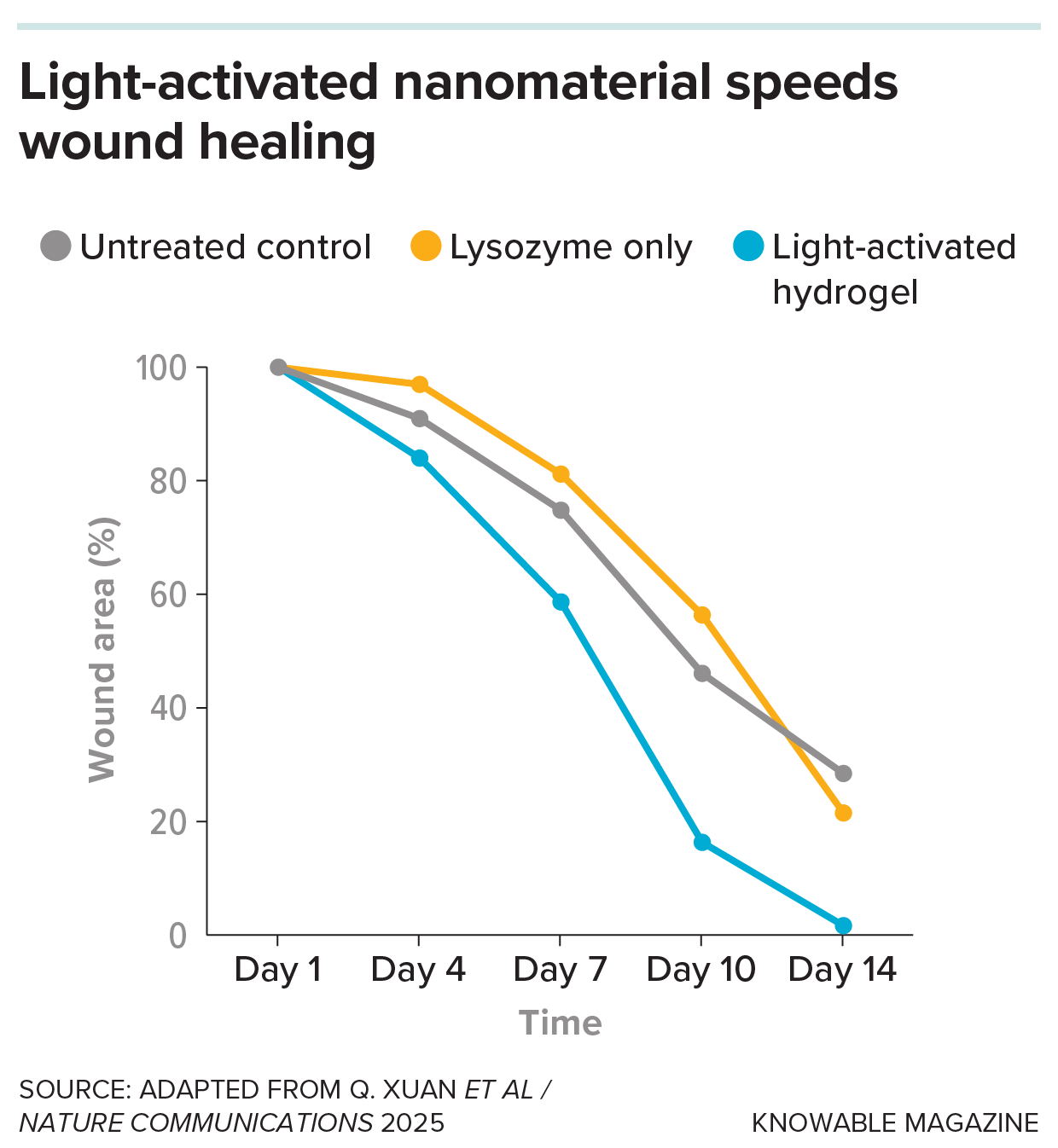
A chart showing percentage of wound healing over time

Light-activated nanomaterials that release noxious compounds only when and where they are needed can help eradicate wound infections while preventing damage to unaffected tissues. Here, mice with antibiotic-resistant wound infections were treated with a hydrogel that releases lysozyme, an antibacterial protein, only when activated by light. Their wounds healed more quickly than those of mice left untreated or treated with lysozyme alone. (Image credit: Adapted from Q. Xuan et al/Nature Communications and Knowable Magazine)

Since bacterial biofilms are especially persistent on the surfaces of medical implants β€” where they can cause recurring infections and sometimes require repeated surgeries or even amputations β€” the team also tested their gel on infected prosthetic joints in mice. They injected the gel around an infected implanted needle and shone near-infrared light through the skin. The treatment cleared biofilms and eradicated about 99 percent of bacteria around the implant, while preserving bone tissue.

In another recent study, scientists from Gannan Medical University and Shanghai University in China treated wounds using a nanomaterial made of gold nanoparticles and graphene-oxide "quantum dots," which are tiny, carbon-based semiconducting particles. When irradiated with blue light, the gold particles absorb the light energy and convert it into heat, while graphene oxide helps to transfer electrons across the material. This boosts reactions that produce toxic, unstable molecules called reactive oxygen species that react with structures on bacterial membranes and destroy them.

When the scientists added this material to a bacterial solution and shone blue light on it for 10 minutes, the mild heat and reactive oxygen species worked together to cause bacterial membranes to disintegrate. Using a stain that distinguished dead from living bacteria, the researchers confirmed that the treatment had killed 97 percent of the bacteria.

Testing the nanomaterial in mice revealed that after nine days, the wounds on treated mice showed 99 percent healing, while those of untreated mice showed only about 70 percent healing.

While these techniques have shown promise in the lab, further work will be needed before they can be applied to people. "There is still some way to go," says Lars Kaestner, a biologist at Saarland University in Germany. To be useful in a clinical setting, he notes, researchers would need to do extensive safety testing and lower the cost of the nanomaterials.

Nevertheless, the idea provides hope for patients with chronic wounds that fail to heal with conventional antibiotics, particularly as drug-resistant infections become more common in hospitals and diabetic care.

"It's a good concept," says Qin. "Wound healing and antibacterial resistance are very big challenges. And I think any advance that we can make in these areas would be welcome."

This article originally appeared in Knowable Magazine, a nonprofit publication dedicated to making scientific knowledge accessible to all. Sign up for Knowable Magazine's newsletter.

Outdoor cats can be exposed to dangerous germs β€” here's how to protect you and your pets, according to more than 400 studies

20 June 2026 at 15:00

Pets form an important part of many people's lives, providing meaningful companionship. However, our pets can sometimes also be a source of unwelcome pathogens and diseases, particularly if they frequently roam outdoors.

We are ecologists and a veterinarian who study wildlife health and the movement of pathogens among wildlife, domestic animals and people. If you let your cat outdoors, or if outdoor cats visit your yard, our recent findings may be relevant.

Zoonotic pathogens are organisms that can infect both animals and humans. From a pathogen's perspective, humans are just another animal host. Wildlife is often emphasized as a source of emerging disease for humans because there are vastly more wild animal species than domestic animal species.

However, even if a pathogen is capable of infecting people, it needs a way to reach us. Humans share more zoonotic pathogens with domestic animals than with wildlife, because domestic animals live close to us. Pathogens benefit even further if they can infect a companion animal.

In our newly published research, we compiled data from more than 400 studies to investigate how a cat's lifestyle, whether they're mostly indoors, outdoor-roaming or feral, affects that cat's likelihood of carrying pathogens that can infect people.

Across this compilation, there were nearly 100 pathogens detected in cats that are considered zoonotic and capable of infecting humans. Familiar examples are rabies, Toxoplasma gondii, roundworms and Salmonella.

Our research

We found that outdoor-roaming pet cats had three to five times the odds of carrying a zoonotic pathogen compared with indoor-only cats. More surprisingly, cats allowed to roam outdoors had similar odds of carrying at least one zoonotic pathogen as feral cats. Outdoor-owned cats carried fewer types of pathogens than feral cats, but the same pathogens that infect feral cats can also infect owned cats.

These risks become a large-scale problem because pet cats that roam freely interact closely with people, wildlife and other domestic animals. Across the studies we reviewed, about 60 per cent of owned cats had unsupervised outdoor access; in some regions, that rate exceeded 90 per cent.

Roaming cats hunt, interact with wildlife or other domestic animals, and move through environments contaminated with pathogens and toxins. Research suggests that cat owners may underestimate hunting by around 80 per cent, meaning that many prey captures and animal contacts go unnoticed.

These interactions are not uncommon and not limited to so-called pest species. Single-country estimates of wildlife killed by cats run into the billions, with more than 2,000 wildlife species documented as prey for domestic cats.

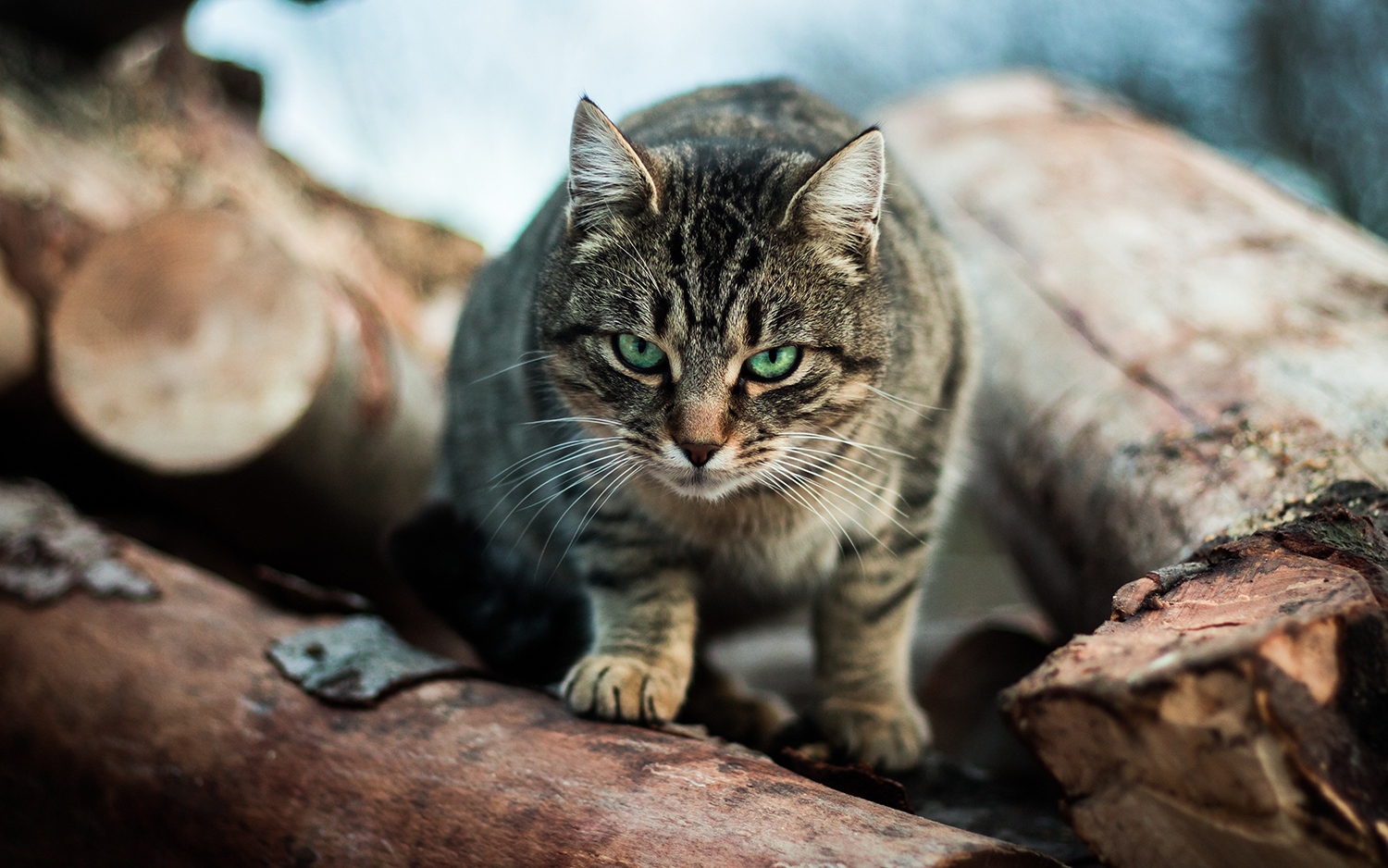
A gray and black striped cat sits on some broken tree trunks and looks at the camera.

Cats hunt animals that can carry zoonotic pathogens, including rodents, birds and bats, many of which would otherwise have little direct contact with people. (Image credit: Anton Darius)

Cats hunt animals that can carry zoonotic pathogens, including rodents, birds and bats, many of which would otherwise have little direct contact with people. Owned cats might bring home rodents carrying viruses, and there are documented cases of cats bringing rabies-positive bats into homes. A cat returning home with prey can therefore create a pathway by which pathogens circulating in wildlife populations reach people.

In addition, it is not only owners who are at risk. Outdoor cats defecate in gardens, parks, playgrounds and other shared spaces, potentially leading to high contamination rates. One study estimated that outdoor cats deposited more than 60 tonnes [60 tons] of feces per 10,000 households each year.

Depending on the parasite, feces can contain hundreds to hundreds of thousands of parasite eggs that can persist in soil or water for months to years, which can infect people or other animals that come in contact with those eggs.

What cat owners can do

The most straightforward intervention is also the most economical and humane: prevent unsupervised roaming. That does not mean denying cats access to the outdoors. It can mean building "catios" or enclosures, leash walks, supervised time outside or other forms of contained outdoor access.

House cats, as well as cheetahs, cougars and lynxes, can purr but can't roar, while other cats, such as lions, tigers and jaguars, can roar but can't purr.

Using systems like "catios" or leash walks can help minimize pathogens for cats. (Image credit: Carlos G. Lopez)

Veterinary care still matters. Treating existing parasitic infections and vaccinating against diseases like rabies are essential precautions, even for indoor cats. Since neither vaccines nor anti-parasitic treatment cover the full spectrum of wildlife-associated pathogens, managing exposure remains the more comprehensive protective approach.

The free-roaming debate is often framed as a false choice: either cats roam freely, or they are deprived of a natural life. That framing is misleading and inconsistent with how we manage other companion animals.

We do not assume dogs need unrestricted access to roads, neighbors' yards or to hunt wildlife to have good welfare. Indoor cats and cats with supervised outdoor access can live healthy, enriched and longer lives.

Policies and strategies that address how and where owned cats roam outdoors can help safeguard biodiversity, feline and wildlife welfare and public health. That is the central insight of One Health, that the same choices that protect ecosystems can also protect the animals and people who share them.

This article was co-authored by David Lapen, who works for and receives research funding from Agriculture and Agri-Food Canada.

This edited article is republished from The Conversation under a Creative Commons license. Read the original article.

How much of a cat fan are you? Find out by taking our cat quiz!

Science news this week: Goblin shark filmed for first time, California close to a major quake, physicists split photon, and inside China's plans to 'tame nature'

This week's science news was filled with things missing and found, with the revelation of the first-ever deep-sea footage of the elusive goblin shark making waves in the press.

Goblin sharks (Mitsukurina owstoni) are mysterious, deepwater creatures that have not changed much since they first appeared on Earth 125 million years ago β€” making them "living fossils." But capturing a recording of the sharks in their deep habitats is exceptionally difficult, and they have previously been seen alive only after being hooked to the surface on fishing lines. Scientists recently filmed not one, but two goblin sharks: The first near Jarvis Island in the South Central Pacific, and the second 6,550 feet (1,997 meters) deep in the Tonga Trench.

If you like your elusive animals on the wilier (and certainly much cuter) side, we also reported on the first ever photographs of the dwarf fox, a species that was believed to be extinct but has been found near a highway in Cozumel, Mexico.

Elsewhere, archaeologists found a second cannonball from the 1836 Battle of the Alamo, meaning they now have one from each side of the conflict. And separate teams of archaeologists discovered the remains of a prehistoric man in Germany who may have been a human sacrifice and signs of a "prototype" Stonehenge close near the famous Stone Age monument.

If you got this far wondering if the "missing" news items were, well, missing, we also covered how a "cold blob" of absent heat in the Atlantic Ocean is shifting Indian summer monsoons, threatening over one billion people; the Texas-size chunk of ice missing from Antarctica; how an ancient chunk of the moon found in Africa hints at a calamitous lunar collision; and a bizarre viral infection that left a woman unable to recognize her own father.

California is scarily close to a major quake

'The system is critically stressed': San Andreas and San Jacinto faults scarily close to major earthquake, study finds

Aerial view of the San Andreas fault and map showing tectonic stress at the San Andreas fault in 2025.

The San Jacinto and southern San Andreas faults have reached their highest levels of tectonic stress in 1,000 years. (Image credit: Left: Cavan Images / Peter Essick / Getty Images; Right: Burkhard et al., 2026 (CC BY 4.0))

The next major Californian earthquake could be closer than we thought, according to an alarming new study.

The research, based on historical modeling of earthquake activity, found that Southern California's San Andreas and San Jacinto fault systems are at their highest levels of tectonic stress in more than 1,000 years; while also being connected by a "gate" system that could make them rupture together.

The exact odds of each event happening and the timing of a possible future rupture are unknown. But the scientists stress that understanding how much strain is building up inside the system could help to prepare for whatever comes next.

Life's Little Mysteries

Why does it take our eyes so long to adjust to the dark?

A close up of a person's brown eye behind the lens of the glasses.

Why does it always take up to an hour for our eyes to adjust to our surroundings if we're out in nature on a dark night? (Image credit: Jackal Pan via Getty Images)

Our eyes are remarkably adaptable, switching from navigating under bright lights to the near pitch-black of a moonless night. But anyone who's stubbed a toe during this acclimation window β€” and that definitely includes me β€” may have once or twice asked themselves why it takes our eyes so long to adjust to the dark. Live Science shed a bit of light on the question.

β€”If you enjoyed this, sign up for our Life's Little Mysteries newsletter

Physicists split a photon

'A mixture from zero to infinity': Physicists split apart a photon β€” and ended up with an improbable swarm of particles

A lightbulb is shattered with various colors coming out of it against a black background

Physicists are studying what would happen if a single particle of light was sliced apart β€” unleashing a swarm of unpredictable outcomes. (Image credit: tiero via Getty Images)

What do you get if you split a photon? Anywhere from zero to an infinite number of more photons, physicists say.

That's the finding made by a new experiment that simulated a photon being sliced by a shutter under various circumstances, revealing the result was anywhere from zero to one to upwards of an infinite swarm of the tiny light particles. The probability of each of these states corresponded to how quickly the shutter cut the photon.

And the unexpected behavior has some truly profound implications for how we view fundamental particles.

Discover more physics news

β€”The world's first nuclear clock just ticked on β€” and it could help detect a fifth fundamental force of physics

β€”NASA's experimental X-59 jet breaks sound barrier twice, reaching Mach 1.4 in step toward 'quiet supersonic' technology

β€”Earth-based telescope shares image of Artemis II capsule near the moon β€” one of the farthest photos of humans ever taken

Also in science news this week

β€”'A completely different story': 300 million-year-old fossils reveal the first vertebrate land dwellers weren't what we thought, researchers claim

β€”Oldest known plague victims found in a 5,500-year-old burial ground in Siberia β€” and many of them were children

β€”Indonesia's near-identical, 'Twin Peaks' volcanoes form striking mirror image β€” Earth from space

β€”Lavish Roman villa discovered outside Rome's walls may have been frequented by Hadrian and Marcus Aurelius

β€”Neuroscientists are searching for the 'cellular substrate of loneliness'

Science Spotlight

'River in the Sky': China's doomed plan to create a 'cloud seeding corridor' tells us how far the country will go to solve its climate crisis

A rocket blasts off from a launch page next to a fence and forested hill.

A cloud-seeding rocket is launched into the sky in Hebei Province in an attempt to generate precipitation. (Image credit: VCG via Getty Images)

China's response to the climate crisis continues to astonish. Over the past two decades, the world's industrial powerhouse has presided over the largest and fastest clean energy buildout in modern history, while also working to bring its carbon emissions to a peak before 2030.

But an underdiscussed aspect of China's climate plans are its bold attempts to geoengineer the environment to be more resilient and better suit human needs. That's why, in his three-part "Taming Nature" series, Live Science's production editor James Price investigated the country's efforts to create a permanent atmospheric river and build the world's biggest dam in earthquake-prone Tibet.

Something for the weekend

If you're looking for things to keep you busy over the weekend, here are some of the best news analyses, crosswords, interviews, opinion pieces and quizzes published this week.

β€”A secretive Chinese probe has just arrived at one of Earth's 'quasi-moons' and will soon attempt a first-of-its-kind landing [News analysis]

β€”Dangerously hot and humid: Rising temperatures in the US make outdoor exercise hazardous [News analysis]

β€”'Is having two legs useful' in space?: Astronaut John McFall explains what life in orbit might be like for the first physically disabled person in space [Interview]

β€”'They reliably chose the statistically more favorable option': A crow researcher explains how these winged geniuses process numbers, and what it could reveal about human math smarts [Interview]

β€”Bow-Wow, Ding-Dong, Pooh-Pooh: Expert explains early theories of how human language evolved β€” and their silly names [Opinion]

β€”Rainforest quiz: Can you sort Earth's largest rainforests from biggest to smallest? [Quiz]

β€”Live Science crossword puzzle #48: Largest fish on Earth β€” 6 across [Crossword]

Science video of the week

Watch bison herd defend a newborn calf from wolf attack in a primeval Polish forest

Wolves attacking a herd of European bison in a forest. In the background we see the wolves biting a newborn bison calf.

Wolves are growing in number across Poland and Belarus, spelling trouble for the region's bison. (Image credit: Wijnands & Borowik, 2026. Ecology and Evolution (CC BY 4.0))

European bison (Bison bonasus) are typically considered to be a non-prey species β€” only being hunted by humans.

But rare and unexpected camera trap footage from Poland's Bialowieza Primeval Forest (the oldest and best-preserved temperate lowland forest in Europe) has called that into question.

In the video, a herd of bison is recorded rallying around a newborn calf to fend off an attack from five wolves (Canis lupus), successfully driving the predators away. It's a nerve wracking watch, and one that could become more common as wolf packs grow in size thanks to a late 1980s hunting ban across the region.

Follow Live Science on social media

Want more science news? Follow our Live Science WhatsApp Channel for the latest discoveries as they happen. It's the best way to get our expert reporting on the go, but if you don't use WhatsApp we're also on Facebook, X (formerly Twitter), Flipboard, Instagram, TikTok, Bluesky and LinkedIn.

Diagnostic dilemma: A fish stabs a man through the throat and the base of the skull

20 June 2026 at 11:00

The patient: A 31-year old man in Louisiana

The symptoms: When the patient reached the hospital, he was bleeding from the mouth and had severe neck pain and stiffness. Upon examining the man, his doctors noted a tear in the back of his throat on the right side.

What happened next: The man, a sports fisherman, had been brought to the hospital by boat and helicopter after an accident during an ocean fishing trip. He had caught a white marlin (Kajikia albida), a type of large fish with a long pointy "bill," weighing approximately 60 pounds (27 kilograms). This species can grow up to 180 pounds (82 kg).

As the man leaned over the side of the boat to release the hook from the fish, it jumped and struck him in the mouth with its bill, sending the man tumbling backward into the boat. He felt pain in his neck, which then radiated into his spine.

At the hospital, an X-ray of the man's upper spine did not reveal any abnormalities. However, his intensifying spinal pain and neck stiffness prompted one of the doctors to order a computed tomography (CT) scan of the same area. In the CT scan, physicians noted "a wedge-shaped, hyperdense object," they wrote in a report of the case. The object had penetrated the back of the man's throat and entered his spinal canal. It stuck there, piercing the foramen magnum β€” a large hole at the base of the skull that the spinal cord passes through.

The diagnosis: The doctors immediately performed surgery on the man to remove the penetrating object. They administered general anesthesia, and the surgeon used retractors β€” instruments that hold wounds open β€” to expose the object, which turned out to be the broken tip of a fish bill.

The treatment: The sharp bill fragment was so firmly wedged in the man's skull that the surgeon had to make an additional incision above the man's topmost vertebra in order to remove it, pulling it out along the path of entry. It measured about 1.4 inches (3.5 centimeters) long.

After the fragment was removed, the patient was given five different types of antibiotics both to prevent infection from microbes found in the throat and from bacteria that are unique to marine environments. He was discharged eight days later and continued to take multiple antibiotics for the next two weeks.

At his final follow-up visit, the man had fully recovered and showed no lingering neurological symptoms.

What makes the case unique: In 1848, doctors published the first medical case study of a skull injury from a foreign object: a gunpowder explosion had sent an iron bar through the skull of railroad worker Phineas Gage. Gage recovered, but he exhibited personality changes that doctors attributed to his significant brain injuries.

In another notable case, published in 1895, a man had tripped and fallen face-first onto an oilcan. The spout penetrated his cheek and became stuck at the base of his skull, causing temporary incontinence and permanent memory loss.

Since those 19th-century cases, physicians have reported instances of cranial trauma in different parts of the skull and from a variety of objects, including a crochet hook, a pitchfork, a bike key and a harpoon.

This man's case is the first reported instance of an injury to the foramen magnum, as well as the first injury caused by a fish bill, according to the report.

This article is for informational purposes only and is not meant to offer medical advice.

Why does it take our eyes so long to adjust to the dark?

20 June 2026 at 10:00

It's after dark, and the lights go out; a thunderstorm has knocked out your power. At first, it's pitch-black. But slowly, after a while, the light from the moon makes it possible to see your surroundings. The light didn't change; your eyes did.

But why does it take our eyes so long to fully adjust to the dark?

It has to do with the types of cells in the eye and how they evolved, experts told Live Science.

Sign up for our newsletter

Life's Little Mysteries logo with a question mark in a magnifying glass

(Image credit: Marilyn Perkins / Future)

Sign up for our weekly Life's Little Mysteries newsletter to get the latest mysteries before they appear online.

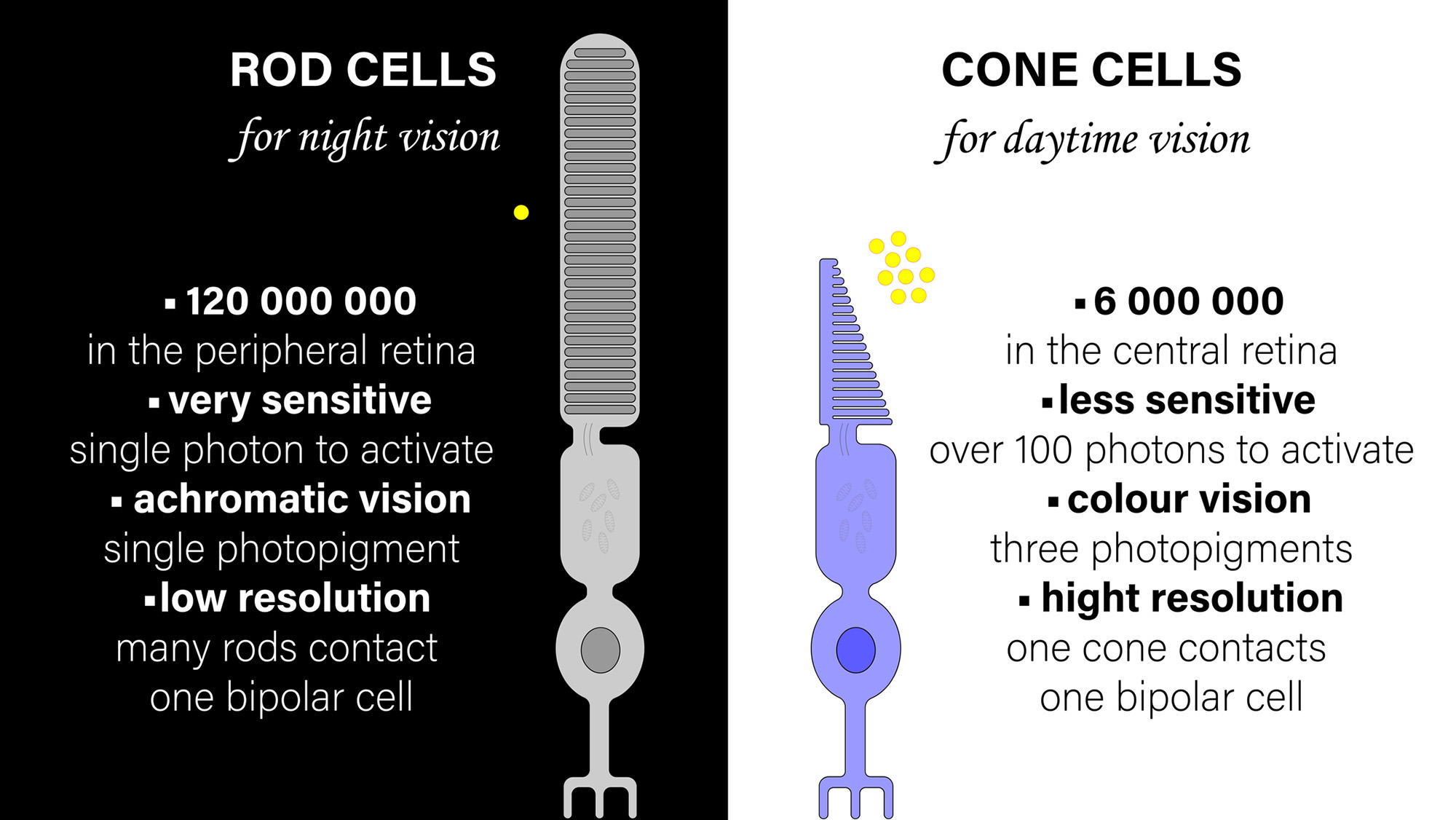
Our eyes use two kinds of cells to sense light. These cells, known as photoreceptors, are called rods and cones, based on their shapes, Alapakkam Sampath, a retinal neuroscientist at UCLA, told Live Science.

Cones are responsible for color vision. Humans possess three kinds of cone cells, which detect red, green or blue light. The colors people can see are a mix of red, green and blue, Anand Swaroop, chief of the Neurobiology Neurodegeneration & Repair Laboratory at the National Eye Institute, told Live Science.

Rods cannot discriminate colors, but they are far more sensitive to light. Each is capable of detecting a single photon, or particle of light. "Rods are what allow you to see in dim light," Swaroop said.

The extraordinary sensitivity of rods has a price, though: Once each rod detects a photon, it can take up to an hour for it to regenerate its ability to see light, Johan Pahlberg, chief of the photoreceptor physiology group at the National Eye Institute, told Live Science.

A comparison chart between rods and cones in the eyes

Rods and cones are photoreceptors, or light-detecting cells, in the retina. (Image credit: Anatoliy Stepura via Getty Images)

The compound that helps rods sense light is called rhodopsin, which is derived from vitamin A, Sampath said. Once each rhodopsin molecule absorbs light, it gets "bleached," meaning it can no longer detect light.

Specifically, rhodopsin is made of two compounds: opsin and retinal, Pahlberg said. When rhodopsin absorbs light, the retinal changes from bent to straight and detaches from the opsin. This retinal eventually makes its way into a part of the eye known as the retinal pigment epithelium, where it can get repaired and resume a bent shape. This retinal can then make its way back to an opsin and reattach to create a functional rhodopsin.

If all of the rods in a human eye are bleached, it may take 45 minutes to an hour for all of them to regenerate, Pahlberg said. However, some rods may regenerate within 10 to 15 minutes to grant some level of vision in dim light, he added.

Rods and cones line the retina, the back part of the eyeball. Rods outnumber cones in most mammal retinas. "In each human eye, there are roughly 6 million cones and 100 million rods," Swaroop said. Sampath noted that "since it takes a lot of time for rods to regenerate, your eyes have a huge number of them to compensate."

Cones are found mostly in the center of the retina, where the eye's lens focuses most of the light it receives, while rods dominate the rest of the retina, Sampath explained. This reflects how during the day, we rely mostly on cone cells for our vision. "Rods are mostly not functional at all during that time," he said.

The human eye does have a quicker way to adjust somewhat to the dark. It can enlarge the pupil, the dark hole at the front of the eye, to let in more light, explained Mark Fairchild, professor of color science at the Rochester Institute of Technology in New York, in an article in The Conversation. However, the vast majority of the eye's adaptation to darkness is due to its rods, and the long amount of time it takes for rods to regenerate explains why it takes so long for eyes to fully adapt to the dark.

Before artificial lighting, humans would typically not experience quick shifts from light to dark. Instead, the ability for human eyes to adapt to the dark would have relied on the setting of the sun, which might take about the same time as rod cells take to regenerate. "There was no evolutionary pressure for it to be faster," Sampath said.

Rods are the most vulnerable cells in the retina to disease and dysfunction, Pahlberg said. This is why older adults often have trouble driving at night. "My colleagues are developing a diagnostic test as a normal part of an eye exam to measure the human adaptation to the dark to see how it changes with age," Sampath noted.

❌