A camera trap in an ancient Polish forest has captured extremely rare and unexpected footage of wolves attacking a bison herd made up of adults, youngsters and a newborn calf, a new study shows.
The event took place on Sept. 15, 2025. Five wolves (Canis lupus) enter the camera frame, closely followed by three bison cows and the newborn calf. In the footage, the cows chase after the wolves, leaving the calf alone and exposed. The wolves then surround the calf, bite its neck and try to drag it away, but two cows come to its rescue. The wolves return and seize the calf a second time in the background of the video — however, this time the entire bison herd comes to its defense to end the attack.
The clip is from the Bialowieza Primeval Forest, the oldest and best-preserved temperate lowland forest in Europe, which hosts the world's biggest population of European bison (Bison bonasus). The forest covers 350,600 acres (141,900 hectares) on the border between Poland and Belarus. There are more than 870 bison on the Polish side, according to the new study, while the Belarussian side has roughly 730 bison.
Also known as "the king of the forest," the European bison is typically considered a non-prey species, meaning it has no predators except humans. But the footage calls this into question.
These still images from the video show (a) the wolves grabbing the newborn calf for the first time; (b) the wolves seizing the newborn calf for the second time; and (c) the bison herd forming a protective circle around the newborn calf after both attacks. (Image credit: Wijnands & Borowik, 2026. (CC BY 4.0). Mammal Research Institute, Polish Academy of Sciences.)
"To our knowledge, we present the first video-recorded evidence of wolves attacking a European bison herd in the Białowieża Primaeval Forest," researchers wrote in the study, published May 29 in the journal Ecology and Evolution. "Although the video did not capture a direct kill, it suggests that other attacks on European bison could potentially be successful."
Historical documents show that wolf attacks on European bison used to be more common, with about 8 kills recorded annually in the Bialowieza Primeval Forest between 1840 and 1849. The forest was a popular hunting ground for monarchs from the 14th century onward, explaining why such detailed records exist.
European bison went extinct in the wild in 1919, but they were reintroduced in the Bialowieza Primeval Forest in 1952. The first confirmed bison kill since then dates to the mid 1990s, and after that, it seems as though wolves stuck to a diet of roe deer (Capreolus capreolus), red deer (Cervus elaphus) and wild boar (Sus scrofa), likely because these are much easier prey than bison, the researchers wrote in the study.
But now, "our observation demonstrated that the European bison is in fact a potential prey for wolves," they wrote. "This raises questions about why predation attempts are so rare, whether the bison can still be described as a non-prey species, and what this could mean for conservation and management of the species."
An intriguing trend in the Bialowieza Primeval Forest is that wolf packs are growing in size, possibly thanks to a late 1980s hunting ban. This shift could increase wolf predation on bison in the future, because bigger packs can handle bigger prey.
"If predation on European bison, specifically young animals, occurs more frequently than previously assumed, wolves could play a small but potentially important role in the natural regulation of bison numbers," the researchers wrote in the study. "In turn, such regulation could possibly lead to mitigation of human-bison conflicts."
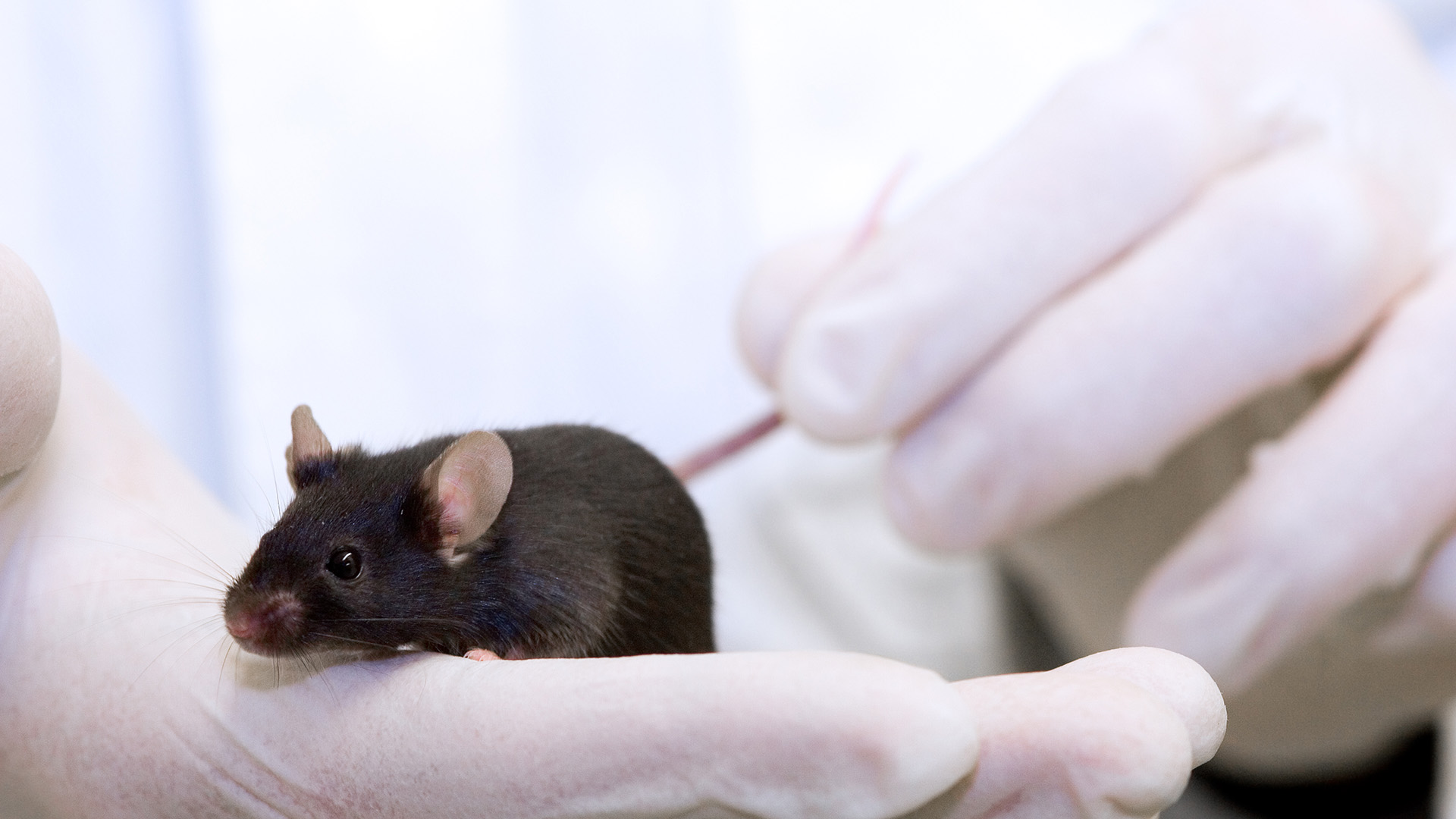
High estrogen in the brain's memory center may worsen one's resilience against traumatic events, swaying the tendency to develop memory problems or post-traumatic stress in the aftermath, a recent study in mice suggests.
The research, published in April in the journal Neuron, explored the effects of estrogen in the mouse brain. It zoomed in on the hippocampus, a key part of the brain involved in learning and memory. Both male and female mammals produce significant amounts of estrogen in the hippocampus, despite it often being framed as a "female" hormone.
"We're so biased to think of female high estrogen, male low estrogen," said study co-author Elizabeth Heller, an associate professor of pharmacology at the University of Pennsylvania Perelman School of Medicine. But "in this local brain region, where you have local production of estrogen, actually sometimes the males are higher than the females depending on the female's cycling," Heller told Live Science. Estrogen levels in the female hippocampus rise and fall in line with the body-wide hormone cycle, while its levels in the male hippocampus remain fairly steady.
The study suggests that these local estrogen concentrations may influence one's vulnerability to memory problems following major acute stress. Although the research was conducted in mice, the authors think it likely has relevance to humans.
"I think this is highly translatable," study senior author Dr. Tallie Z. Baram, a professor, developmental neuroscientist and child neurologist at the University of California, Irvine, told Live Science.
About 10% to 12% of women experience PTSD in their lifetime, compared with 5% to 6% of men. Some of that difference may stem from variance in men's and women's lived experiences; for instance, women have higher rates of sexual assault at young ages than men do. Biological differences between women and men are another potential factor, but their contribution to the phenomenon is poorly understood.
The new study highlights hippocampal estrogen as one difference that might matter. "The research has uncovered important new avenues for research on PTSD," Victoria Luine, a professor emerita of psychology at Hunter College in New York City who wasn't involved in the work, told Live Science in an email.
In the study, researchers simulated acute traumatic events by exposing lab mice to multiple stressors at the same time, including bright lights, loud music and the odors of other stressed-out mice. They ran the mice through various memory tests before and after the stressful experience and compared these rodents with a group that did not experience such stressors.
Compared with unstressed mice, the stressed-out male mice performed worse on the various memory tests, and those deficits persisted for weeks. "Even a month later, they had a memory deficit — so it's a really perseverative effect," Heller said.
The hormone cycles of female mice and humans are similar, but they occur on very different timescales, with the mouse cycle being about one-seventh the length of the human cycle. (Image credit: dra_schwartz via Getty Images)
A similar pattern was seen in female mice that were stressed out during proestrus, the phase of their hormone cycle when estrogen peaks and the body prepares for ovulation. Both sets of mice learned to associate certain cues with the stressful experience and avoid them, with females being more sensitive to those cues than males were.
But interestingly, female mice that were stressed during estrus, when estrogen plummets and ovulation occurs, showed resilience. Their behavior and memory remained comparable to those of unstressed mice. "The female mice that had low levels of estrogen laughed it off — they were completely protected," Baram said.
Studies suggest hippocampal estrogen levels are similar in male and proestrus female mice, while estrus females have lower levels. The researchers confirmed this using a technique called mass spectrometry, finding that estrus mice had half the amount of hippocampal estrogen that the males and proestrus females did.
In this context, that lack of estrogen in the hippocampus appeared to guard against the negative effects of stress. This finding was surprising, Baram noted, because estrogen is generally thought to promote memory function in both sexes and declines in estrogen, as seen during menopause, are tied to memory problems. That said, menopause takes place over a much longer timeline than the female mouse hormone cycle, which takes only four or five days.
A connection to DNA
Why do estrogen levels matter for memory? "Estrogen receptors directly control gene expression," Heller said. By binding to its receptors, estrogen turns the activity of certain genes up or down.
Heller's lab studies mechanisms that control gene activity in the context of psychiatric disorders. One of those mechanisms is chromatin remodeling, meaning changes in how DNA is packaged in a cell that can shift which genes can be activated at a given time. A portion of the chromatin can be "open," exposing genes to machinery that turns them on, or "closed," which typically shuts genes down.
It turns out that the high hippocampal estrogen in male mice and proestrus female mice opens up their chromatin in a way that might leave them vulnerable to memory issues ushered by severe stress. Female mice in estrus, by contrast, have a totally distinct chromatin profile that appears to be protective.
What is it about women at that stage in life that makes them more vulnerable to memory loss with aging?
Tallie Z. Baram, professor, developmental neuroscientist and child neurologist at the University of California, Irvine
"We can see that the function of many of those [open] genes relates to synapse biology," Heller said. Synapses are the points at which different neurons meet and exchange electrical signals, and they're central to the physical structure of memories in the brain.
It may be that, in most circumstances, it's useful to have high levels of hippocampal estrogen because they "open" the chromatin, enabling the hippocampus to forge new memories quickly in response to new experiences, Baram noted. But when these experiences consist of severe acute stress, "that same plasticity, that same ability of the brain to learn, turns problematic," she said. If the results carry over to humans, women may be particularly vulnerable to these memory impacts in certain phases of their menstrual cycles or points in their lifespans when estrogen is high.
In males and females, different flavors of estrogen receptor were responsible for the stress-induced memory issues. The reasons for this difference will be a matter of future study, Baram said. Additionally, future research could attempt to pinpoint exactly where the different estrogen receptors are located throughout the hippocampus, Heller said.
The study provides a "strong demonstration that estrogens drive sex-dependent, stress-induced changes in chromatin networks which can dramatically alter neural functions like memory," Luine said. What's more, "these results present cogent evidence that sex is a powerful biological variable."
It's important to include both sexes in research to truly understand how the brain functions and responds to external factors, like stress, Luine said. "An important aim of this and other studies is to protect humans against PTSD," she added, and this study strongly suggests preventive treatments for PTSD might need to be tailored by sex.
Beyond PTSD, Baram thinks the research could have implications for women's risk of aging-related memory problems and dementia.
The decline of estrogen in menopause is thought to raise this risk, but prior to menopause comes perimenopause — a period with massive spikes in estrogen. The study's findings hint that if stress shows up during perimenopause, the combination of stress and high estrogen levels may contribute to memory problems. Thus, perimenopause may represent another time when women are particularly vulnerable to memory disturbances, Baram suggested.
"We need to start thinking a little bit differently," she said. "What is it about women at that stage in life that makes them more vulnerable to memory loss with aging?"
This article is for informational purposes only and is not meant to offer medical advice.
This article was first published May 4, 2026.
See how much you know about the most complex organ in the human body with our brain quiz!
Never-before-seen fossils of newly hatched crocodile-like creatures are shining new light on how our aquatic ancestors conquered land.
Early four-limbed vertebrates (tetrapods), which would eventually give rise to humans, took their first steps on land in the Devonian period, some 419 million to 359 million years ago, marking one of the most important periods in the evolutionary history of animals.
Now, a new study published Thursday (June 18) in the journal Science has revealed that these early tetrapods were less like amphibians and more like us. Rather than having a tadpole phase in their development, as many amphibians do today, new evidence suggests that they were direct developers — growing from smaller to bigger versions of themselves, like their ancestors, humans and many other animals.
The study is an important contribution to our understanding of early tetrapods' reproductive developmental biology, said Tim Smithson, a visiting academic at the University of Cambridge who specializes in early tetrapods but was not involved in the study.
It suggests that the "earliest tetrapods that took those first steps on to land were able to rely on the successful reproductive and developmental strategies of their forebears," Smithson told Live Science in an email. "Direct development made life easier — one less thing to worry about!"
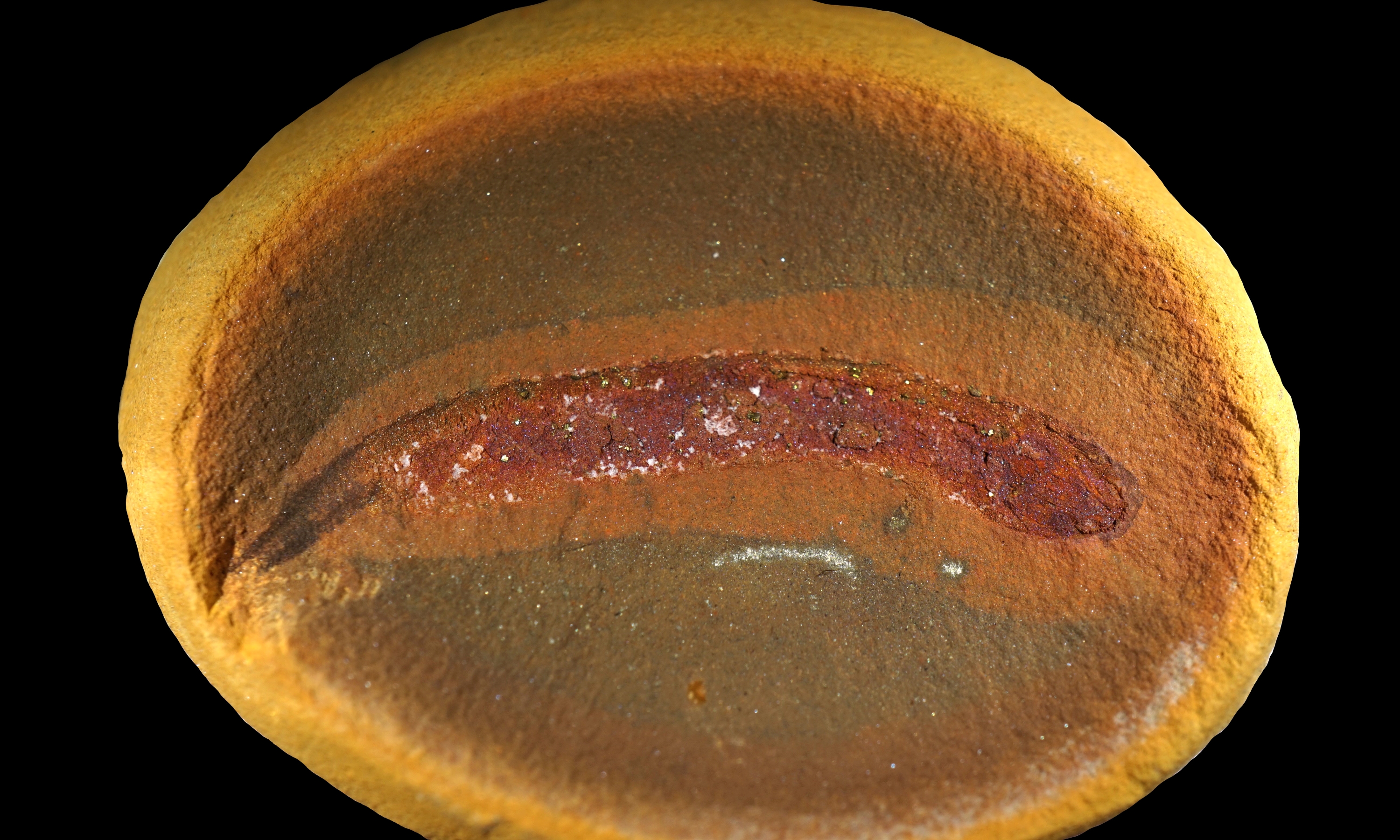
The new research was based partly on fossils from early land-dwelling predators called embolomeres. These animals looked like a cross between a crocodile and an eel and ruled river, lake and swamp habitats 350 million to 280 million years ago, during the Carboniferous and Permian periods. While these creatures could grow to more than 10 feet (3 meters) long as adults, the study unveils rare fossils from Mazon Creek, near Chicago, that preserved embolomeres as hatchlings that were days to a couple of weeks old.
"These are intimate details of the first moments of these animals' lives, and we've never seen that before for this entire part of the evolutionary tree," study co-author Jason Pardo, a postdoctoral fellow of evolutionary biology at Vilnius University in Lithuania and a research associate at the Field Museum in Chicago, told Live Science.
Researchers studied exceptionally well-preserved fossils from Mazon Creek, Illinois. (Image credit: Arjan Mann)
These fossils didn't show evidence of external gills and other tadpole-like features that the researchers would have expected from an early land dweller. The researchers then checked other fossils from before and during the "fin-to-limb transition" but found no evidence of an amphibian-like life cycle in those, either.
"For as long as we've understood evolution, we've assumed this story of how we made that transition from water to land," Pardo said. "We in fact have a completely different story."
Science upended?
A statement released by the Field Museum claimed that the study upends scientists' understanding of how animals conquered the land. However, the experts Live Science spoke to disagreed with this assertion.
"The Mazon Creek material is wonderful, the study is interesting and the interpretation of the fossils is sound, but I don't think the results are terribly surprising," Per Ahlberg, a professor of evolutionary organismal biology at Uppsala University in Sweden, told Live Science in an email.
Ahlberg, who was not involved in the new study, specializes in the early evolution of tetrapods. He noted that scientists knew some early tetrapods had a larval stage similar to that of modern salamanders — namely, those belonging to the group Temnospondyli, which he described as the ancestral stock of modern amphibians. However, he contends that this didn't mean scientists assumed every early tetrapod was the same.
"Nobody has been arguing in recent years that ALL early tetrapods had such a larval stage or that this was essential for enabling the transition to land," Ahlberg said. "I mean, I have been working right at the core of this research field for 40 years and I have never given it any thought."
In response, Pardo agreed that specialists in the field recognized that the data didn't support that early tetrapods had an amphibian-like development. However, he argued that even among specialists, assumptions were still made about metamorphosis — a major developmental transition, like a tadpole transforming into a frog — and amphibian-like bodies.
Young embolomeres, illustrated here, suggest that early tetrapods didn't undergo an amphibian-like metamorphosis. (Image credit: Berit Godring)
"Onto something big"
Study co-author Arjan Mann, an assistant curator of early tetrapods at the Field Museum, first saw the study's first baby embolomere fossil during a 2016 trip to the Field Museum while working on his doctorate. At the time, the fossil was a mystery.
Mann and Pardo mused over the fossil's identity for years before high-resolution scans with scanning electron microscopy at the Canadian Museum of Nature confirmed that the ancient creature was an embolomere, according to the museum's statement.
"I think Jason and I both knew we were onto something big, since fossils of this kind of animal and from this phase, and developmental state in early tetrapod evolution have never been found or studied before," Mann told Live Science in an email.
Along with the embolomeres, the researchers looked at megalichthyid fish from before the land transition and limbless, snake-like creatures known as aistopods from during the land transition. All showed signs of direct development, they said.
"I think the take home message of this study is that we should always challenge conventional wisdom in science, especially when these older ideas do not have substantial backing," Mann said.

 Login