❌

Normal view

Finland's largest Viking Age silver hoard discovered by metal detectorist — and it has thousands of coins and pieces of jewelry

11 September 2026 at 11:00

The largest hoard of Viking Age silver ever found in Finland — which contains almost 10 pounds (4.5 kilograms) of coins and jewelry — has been unearthed by a metal detectorist about 95 miles (150 kilometers) north of Helsinki.

The hoard had been divided into two deposits and buried in birch-bark containers. Although the coins and jewelry likely date to between A.D. 1000 and 1050, it's unknown exactly when they were buried, Esko Tikkala, an archaeologist at the Lahti Historical Museum who excavated the hoard, told Live Science in an email.

The hoard has not yet been fully cleaned, separated and counted yet, but there are thousands of pieces, Tikkala said. "There are quite a lot of coins in this hoard," he said. "I have not had time to go through them."

Metal detectorist Kalle Lappinen found the two deposits Sept. 3 and immediately contacted the museum. Archaeologists inspected and properly excavated the finds the next day, according to a translated statement.

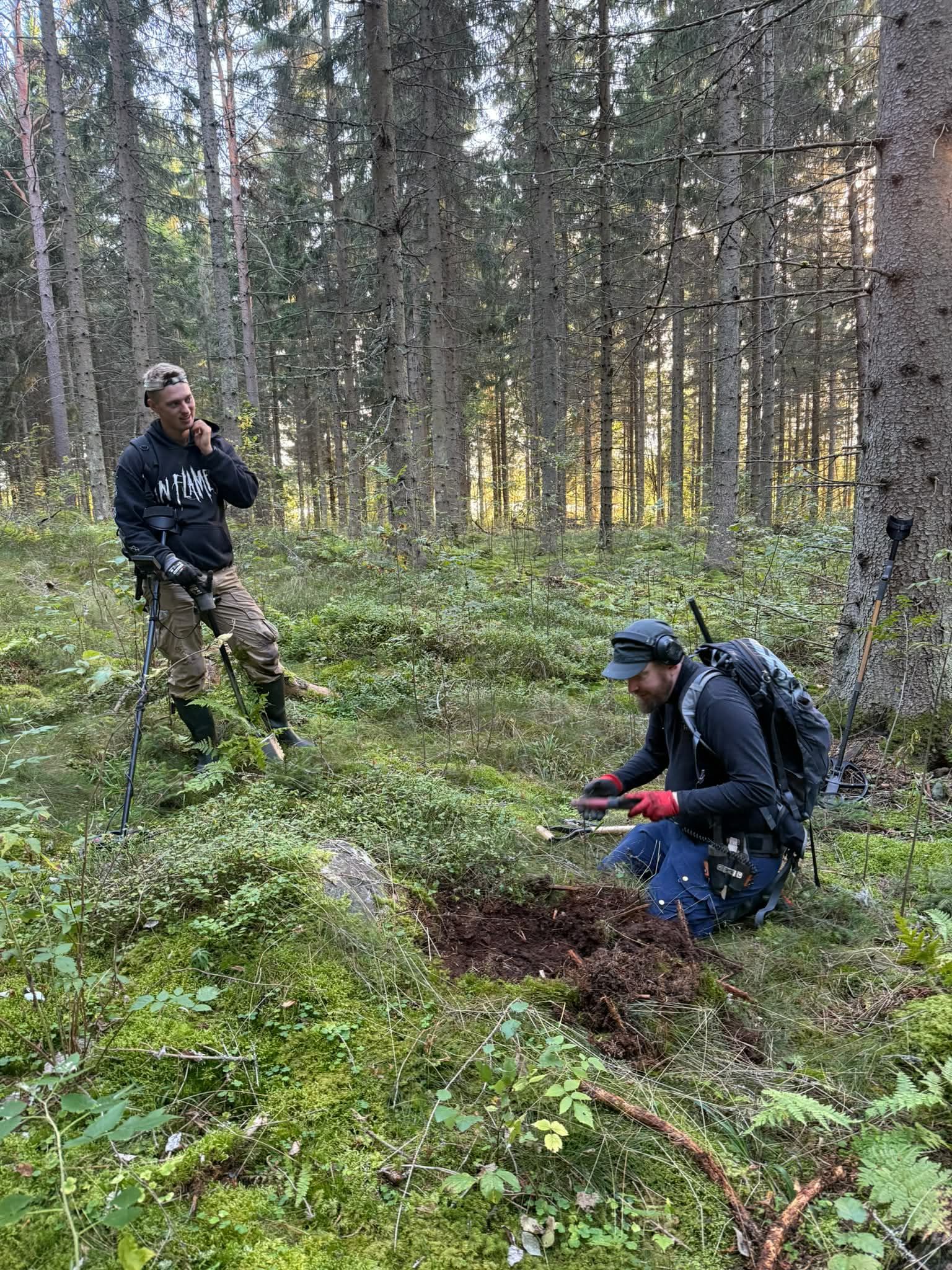
A person stands in the middle of a mossy forest, another kneels on the ground

The coins were discovered in early September by metal detectorist Kalle Lappinen (right). (Image credit: Kalle Lappinen)

Tikkala described the hoard site as beside a rock outcrop in a forest near the town of Sysmä. Several other buried hoards had been found in the same region of Finland over the past 10 years, Tikkala said.

Although it's challenging to determine why specific hoards were buried, a recent study of more than 15,000 Roman-era (the eighth century B.C. to the fifth century A.D.) hoards found that they were hidden for multiple reasons, including for tax evasion, votive offerings, and safe storage in times of uncertainty.

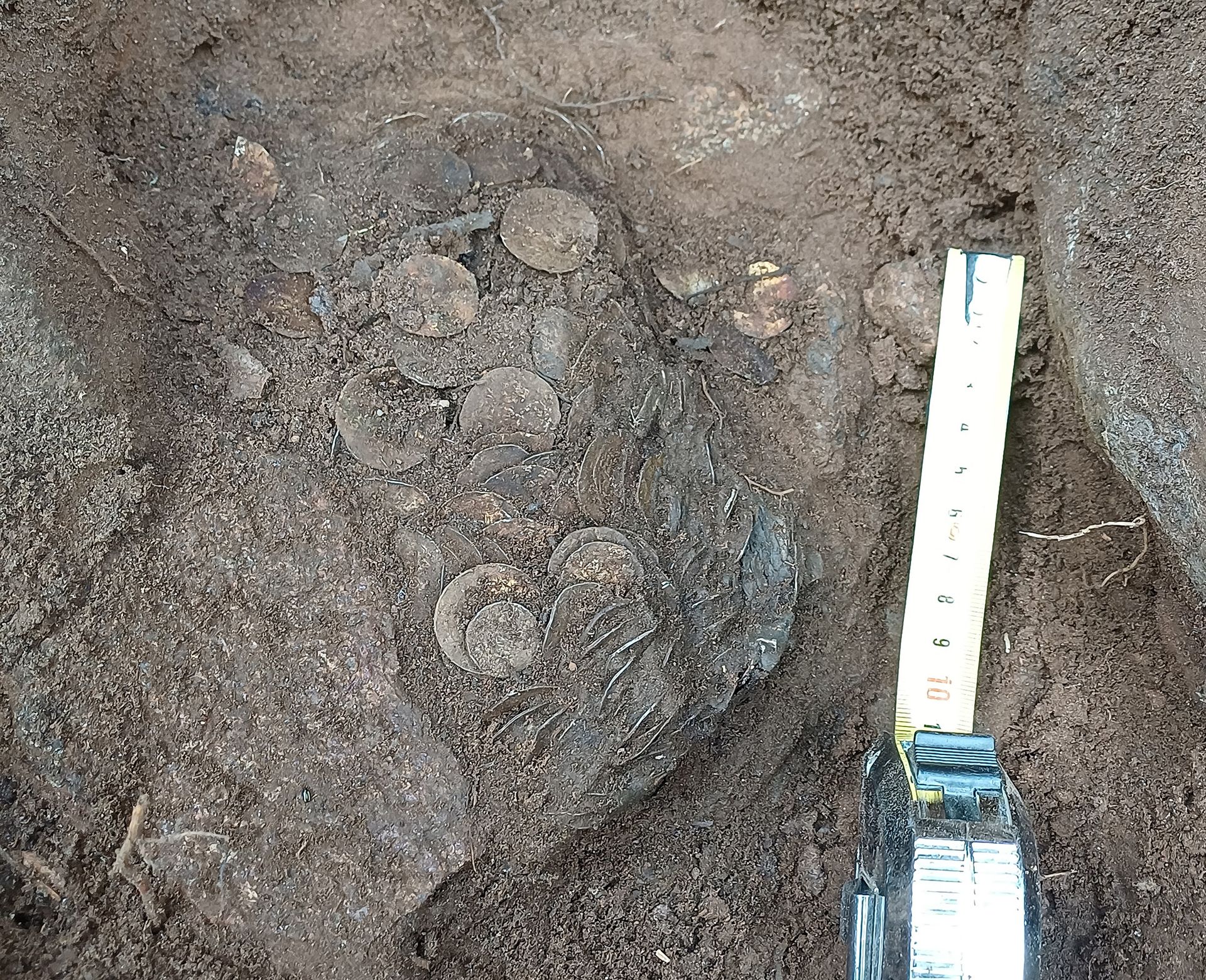
Tikkala said the two deposits of the silver hoard were buried between two stones about 18 inches (45 centimeters) below ground and about 39 feet (12 meters) apart. There were no signs of any burials nearby, but the surrounding area had not been properly studied, he said.

Tikkala added that the coins came from areas that corresponded to present-day Germany, Sweden and Great Britain. There were also some dirhams —‬ silver coins made in the Islamic world. Dirhams previously found in Finland generally date to between about 800 and 1050, he said.

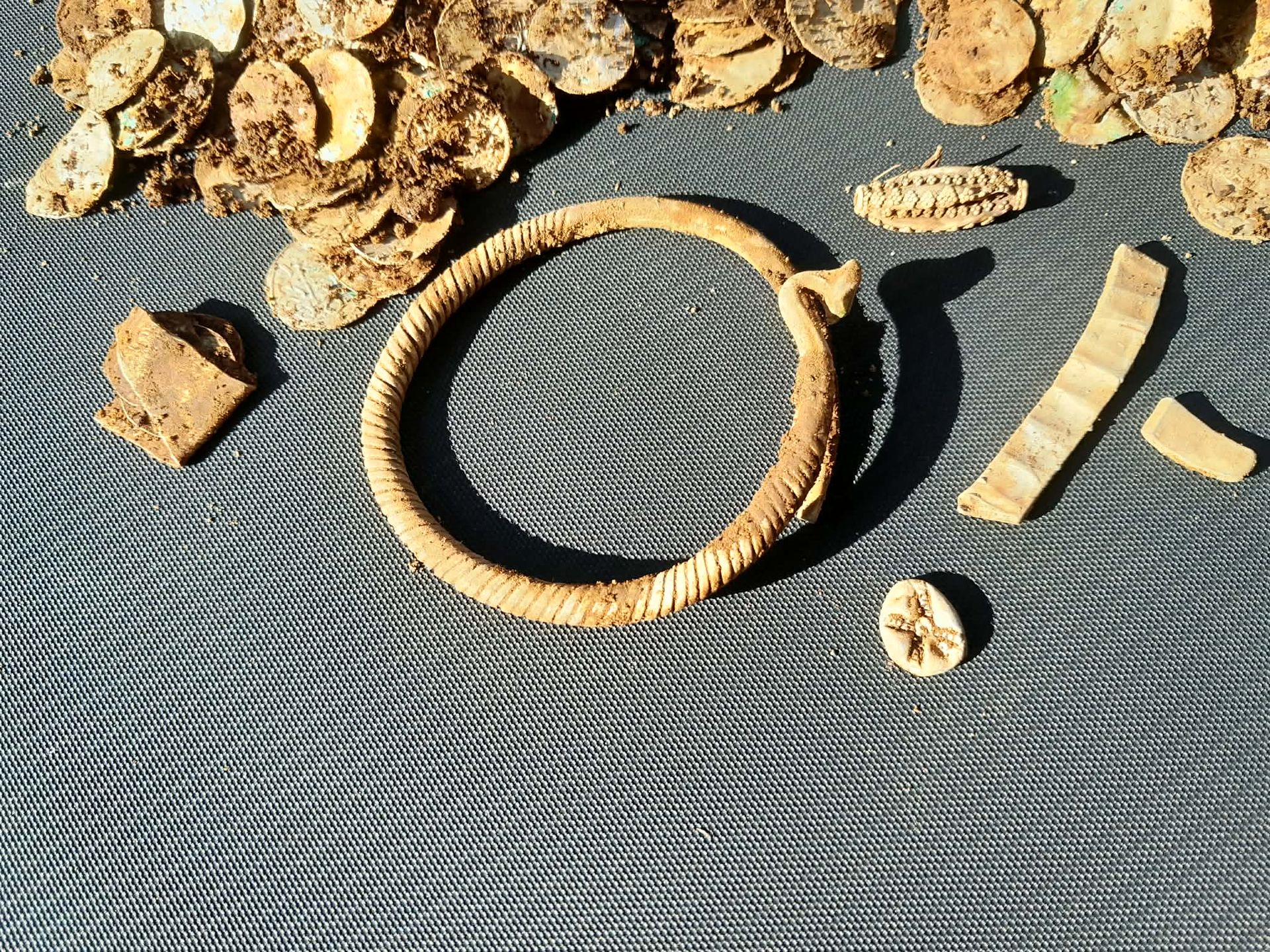
A close up of coins and a bracelet against a gray surface

In addition to the silver coins from many places, the hoard contains items of silver jewelry and "hack silver" used for payments. (Image credit: Lahti Museum)

The hoard also contains several pieces of jewelry, including a silver bracelet, and "payment silver" in the form of hack silver (also called hacksilber) — pieces of silver that could be cut into smaller pieces for payments according to their weight.

The weight of the precious metal alone would make the hoard worth almost $10,000 today.

From the Viking Age, but not from Vikings

Although the hoard is from the Viking Age (traditionally, from the 793 attack on Lindisfarne until the 1066 defeat of a Viking army at Stamford Bridge in England), that doesn't mean it was buried by Vikings, Tikkala said.

"The term Viking Age does not imply that there were Vikings in Finland," he said. "We have no sources suggesting that Finland was 'Viking' in the same sense as regions of present-day Sweden, Norway, and Denmark."

Instead, Finnish historians and archaeologists had adopted the term to designate the period, he said. But the area now known as Finland was not culturally or politically part of Viking Scandinavia.

A close up of half unearthed coins in a gray rock.

The hoard had been placed in two bark containers that were then buried several feet apart. (Image credit: Lahti Museum)

The next stage of the archaeological investigation will be to properly study the site where the two deposits were found, as well as their surroundings, Tikkala said; after that, specialists in Viking Age coins will try to identify the coins and prepare a detailed report.

"There will definitely be scientific articles published on the hoard as a whole, as well as more detailed studies of the coins themselves," he said.

Until now, Finland's largest Viking Age hoard was found in 1895. Buried at Nousiainen, about 130 miles (210 km) southwest of Sysmä, it contained more than 1,700 silver coins but weighed only about half as much as the newfound hoard.

Other Nordic countries have also recently reported their largest Viking Age hoards. A cache of more than 4,700 coins was found in Norway this past spring, and a homeowner in Denmark unexpectedly discovered a hoard of more than 700 silver objects weighing more than 40 pounds (18.5 kg) in their backyard, also in the spring.

See how much you know about ancient norsemen with our Viking quiz!

World's oldest evidence of habitual drug use traced back 25,000 years to Indonesia

9 September 2026 at 19:00

The world's oldest known habitual drug use can be traced to an island in Indonesia, where ice age hunter-gatherers sucked on betel nuts — palm seeds that contain a neuroactive substance, a new study finds.

Scientists made the discovery after studying strange grooves in the teeth of two prehistoric hunter-gatherers. The deep grooves were caused by regularly sucking on betel nuts (Areca catechu), likely for relief from the pain of toothache, according to the study, which was published Wednesday (Sept. 9) in the journal Science Advances.

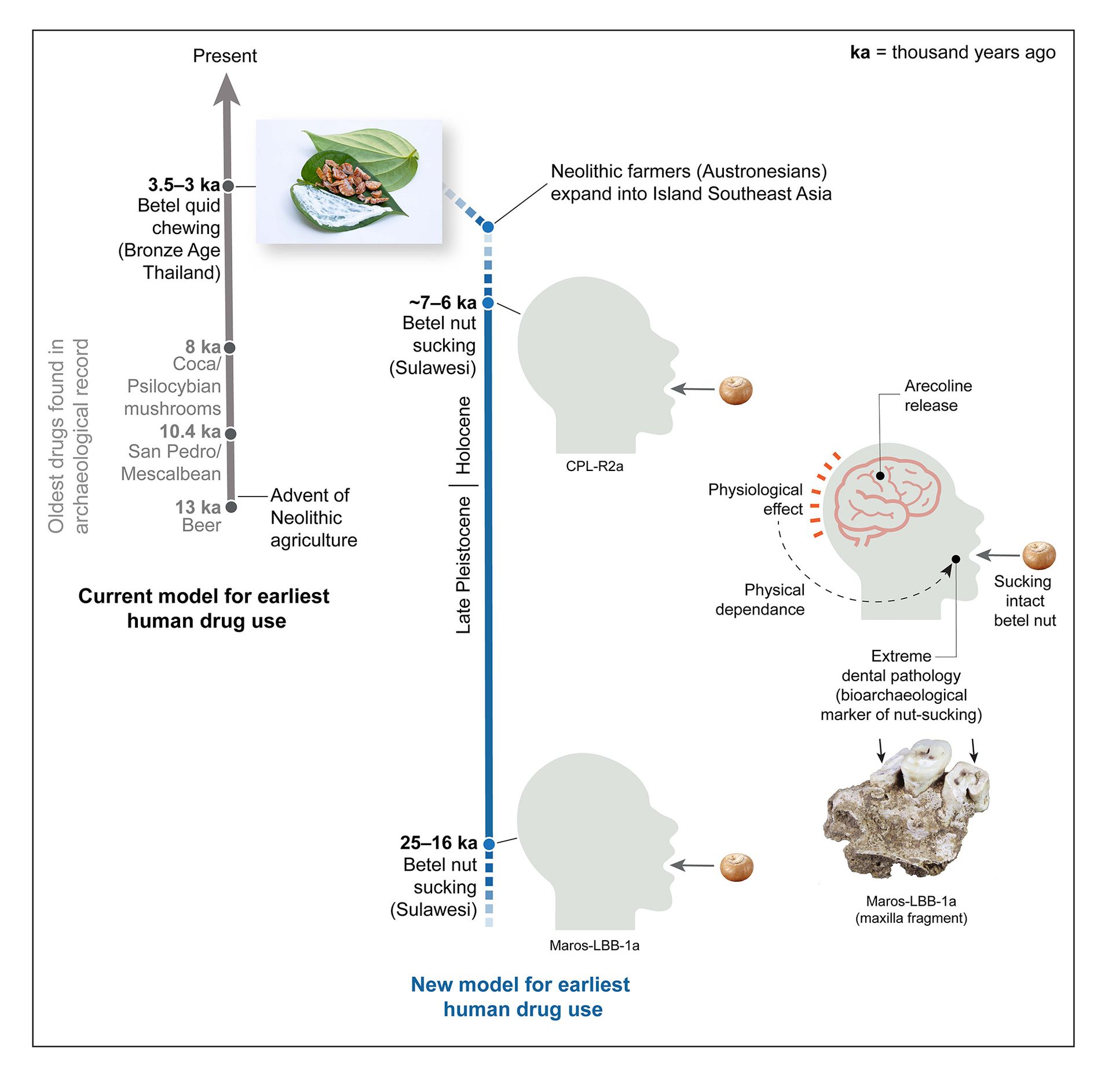
The partial skeletons of the two people were found on the island of Sulawesi, but their lives were separated in time by thousands of years. One of them, a man who died between about the ages of 40 and 50, lived between 25,000 and 16,000 years ago. This period roughly corresponds to the Last Glacial Maximum, the coldest part of the last ice age — although Sulawesi was not covered with ice at that time. The second person, who was around the same age when they died, lived on Sulawesi between 7,600 and 6,300 years ago, according to the study. The sex of this individual could not be determined.

Betel nuts contain a neuroactive compound called arecoline, which has a powerful stimulant effect when chewed with slaked lime, or calcium hydroxide. This early method of directly sucking betel nuts, however, would have only made the mouth numb.

These hunter-gatherers had so much dental damage, the new analysis found that they must have sucked on betel nuts almost continuously throughout their lives. But it seems these numbing nuts didn't have the desired effect in the long run. Instead, it may have made their dental conditions worse by eventually exacerbating any painful holes in their teeth.

"The more they sucked on the nut to relieve toothache, the worse that the damage to their teeth became," study first author Adam Brumm, an archaeologist at Griffith University in Australia, told Live Science. The grooves progressively became deeper, and in one individual they exposed the tooth's inner pulp cavity. "It would have been excruciatingly painful," Brumm said.

Although a 2017 study showed that Neanderthals used the bark of plants like poplar (genus Populus) for its pain-killing properties (poplars contain salicylic acid, a form of the active ingredient in aspirin), this is the earliest evidence of a drug from plants being used habitually, Brumm said.

Plant-based drugs have been used in many other prehistoric societies: 10,000-year-old traces of the pollen of a psychedelic cactus have been found in Peru, and 13,000-year-old residues of alcoholic beer have been found in Israel.

A diagram showing drug in people.

Sucking betel nuts is the earliest-known addictive behavior. Modern betel nut users make them into a chewable wad with slaked lime. (Image credit: A. Brumm)

Addictive nut

After determining the likely cause of the grooves, the researchers tested whether sucking on betel nuts — a behavior not seen before — resulted in a neuroactive effect. Their test subjects, genetically-engineered frog eggs with human neuroreceptors, revealed there was a neuroactive effect. Then, they examined samples from the teeth, which revealed traces of betel nut use.

Betel nut, also known as areca nut, is still widely used today in parts of South Asia and Oceania. Today, however, betel nut users mix it with slaked lime to make a chewable wad that has a stimulant effect. This chewable wad, also called a quid, is strongly addictive, and is used by an estimated 600 million people worldwide. But arecoline is also carcinogenic, and betel nut quids are often mixed with tobacco, so users are often diagnosed with mouth cancer.

The researchers speculate that the use of slaked lime with betel nuts originated much later, during the Neolithic, or "New Stone" Age, about 4,000 years ago on Sulawesi, when slaked lime was added to pottery to prevent it from shrinking and cracking during firing.

"It now seems probable that betel chewing as we know it evolved from a much simpler, older practice of just sucking on the intact nut," the researchers wrote in the new study.

It's likely that people of all ages used this remedy for toothache in prehistoric times, but the grooves only became apparent in mature people who had become addicted to the practice, Brumm said.

Drug use started before farming

The earlier betel-sucking man predated the Neolithic period not only in Sulawesi but also in the Fertile Crescent, where people began practicing agriculture around 12,500 years ago, Brumm said. Archaeologists have long debated whether people began using neuroactive plants as drugs before or after the introduction of farming, but the new finding shows that psychoactive drug use happened thousands of years earlier, Brumm said.

The new study is a "fantastic piece of research," Elisa Guerra Doce, a prehistoric archaeologist at the University of Valladolid in Spain who was not involved, told Live Science in an email.

The new study gives "particularly compelling and direct evidence for the antiquity of drug use," she said.

Guerra Doce is an expert on the prehistoric use of plants as neuroactive drugs. "In the specific case of betel nuts, the findings are especially significant because they also reveal the prehistoric roots of a deeply established cultural practice in Southeast Asia and the Pacific," she said.

The study also highlights how the prehistoric people of Sulawesi explored their natural world and figured out that it not only provided subsistence and medicinal resources but also had "substances that became integrated into social and cultural traditions over thousands of years," Guerra Doce said.

Man rummaging in a Polish junkyard finds a 1,800-year-old shield holding the cremated remains of a Vandal warrior

1 September 2026 at 15:37

A cone shaped container is open next to a pile of ashes on a white surface

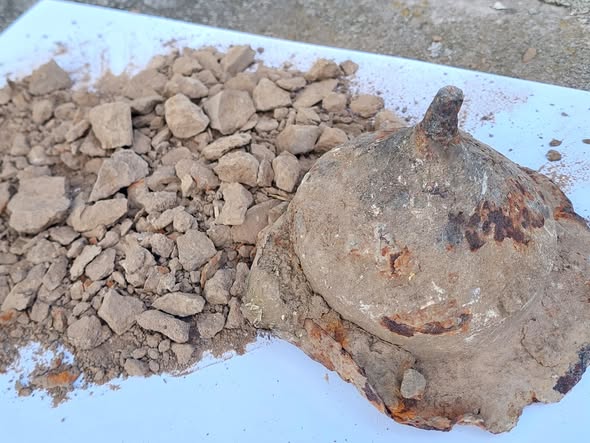
The iron shield boss was covered with caked earth when it was found. (Image credit: Bartłomiej Bartecki, Hrubieszów Museum)

A man searching for spare auto parts at a junkyard in Poland discovered an entirely different kind of treasure: part of a 1,800-year-old shield that was filled with bones.

The shield's age and location suggest that it belonged to a Vandal warrior, according to the archaeologists who excavated the find. The Vandals were Germanic people who lived in Poland at that time. After the Germanic invasions of the Roman Empire, the Vandals, whose name became synonymous with destruction, moved south and eventually settled in North Africa in A.D. 429, long after this shield was buried.

The bones seem to have been part of a cremation, which was also a Vandal tradition. However, the archaeologists lamented in an Aug. 20 Facebook post that the original grave has been lost to time.

A cone-shaped stone container is against a stone surface.

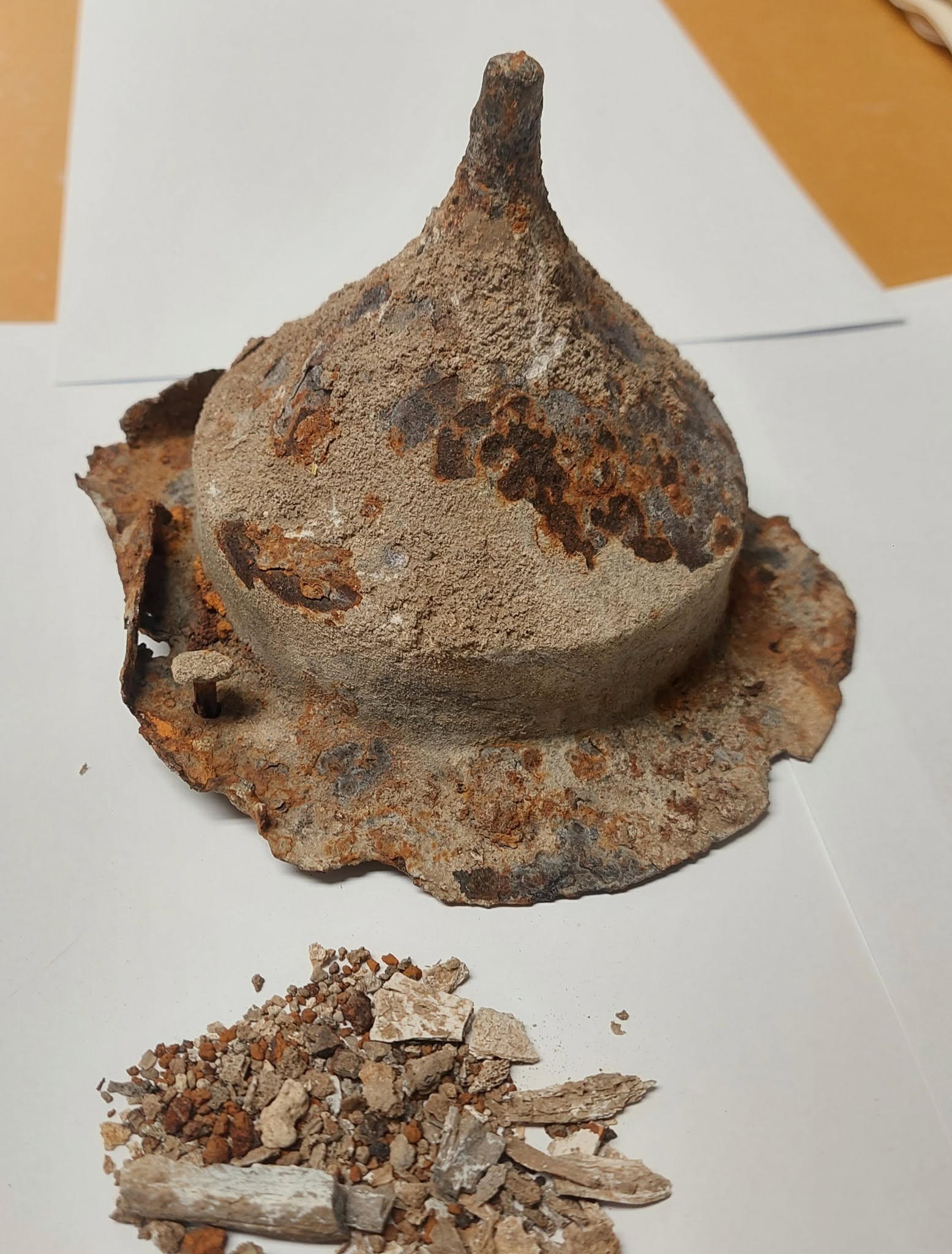
The ancient shield boss — the central iron hub of the full shield — was found in a junkyard in southeastern Poland. (Image credit: Bartłomiej Bartecki, Hrubieszów Museum )

The newfound artifact consists of the shield's central iron "boss," or "umbo," which protected the hand while supporting the wood and leather of the full shield built around it. The wood and leather have now rotted away.

The shields of Roman legionaries also had a central boss. But the Romans never got that far north, and the pointed style of the boss indicates it is of second-century Vandal origin.

A pile of ashes and small stones against a white background.

Archaeologists think the bones are from the cremation of a Vandal warrior.  (Image credit: Bartłomiej Bartecki, Hrubieszów Museum )

Junkyard find

A cone-shaped stone container is full of gray ashes, sitting on a white surface.

Examinations showed the plug of dried earth inside the shield boss contained cremated bones. (Image credit: Bartłomiej Bartecki, Hrubieszów Museum )

According to the Facebook post, the shield boss was discovered earlier this month at a junkyard in the town of Hrubieszów, near Poland's southeastern border with Ukraine.

The man who found it immediately knew the artifact was very old, and he sent a photograph of it to the Father Stanisław Staszic Museum at Hrubieszów. Archaeologists there verified its likely origin, and the cremated bones were found during later examinations of a plug of dried earth inside the boss.

"The state of preservation of the umbo, especially its characteristic surface, indicates that it was exposed to high temperatures," museum representatives stated in the post. "This fact, combined with the burnt bones inside, clearly indicates the cremation burial of a warrior from the Vandal community." The Vandals are associated with the Przeworsk culture in Poland, after the town where evidence of them was first found.

"Unfortunately, we will probably never know what else was found in this destroyed burial ‪—‬ perhaps a sword, spearheads, javelins, a belt buckle, or a cloak clasp," the museum team noted.

See if you know what these mysterious artifacts are with our archaeological fragments quiz!

❌