Microsoft's long-rumored disc-to-digital program for Xbox went live in testing last week, and it has grown to supporting hundreds upon hundreds of games since.
The disc doesn't become inert after licensing the digital version either. If you sell the disc or give it away, the next user can grab the digital license from your account. You won't lose your cloud save either, so if you re-acquire the disc or buy it outright digitally later on, you'll be able to continue on as normal.
Some users have been disappointed with the initial roll out, however, as some major publishers have so far not opted in.
Some outlets went with headlines today decrying Ubisoft and others for their apparent decision to boycott the system. Ubisoft has long been the target of game preservationists, given that Ubisoft's shuttering of The Crew and other games led to stronger calls for digital rights. Ubisoft denying access to digital versions from disc-based games already sold would seem a bit like their M.O. in that universe. It seems the anger was premature, though.
Microsoft has always stated that this initial testing phase doesn't represent the full scope of content coming to the disc-to-digital program. Indeed, many publishers are still likely going over the contracts and ensuring that the legalese all matches up before going ahead with it. SEGA, Square Enix, Bandai Namco, and Ubisoft were among those apparently not honoring the program.
Today, it seemed that Ubisoft games have now gone live in the system for Xbox Insider testers in the Alpha and Alpha Skip-Ahead, however.
Yeah, I just converted my Ubisoft games. Trials Fusion with the season pass, AC Ezio Collection, AC Syndicate and Far Cry Primal.September 8, 2026
As you can see in the X (Twitter) thread above, Ubisoft games are now fully available on the disc-to-digital program, with titles like Far Cry Primal, Far Cry 4, Trials Fusion, Assassin's Creed titles, and many more going live.
I received a DM about an hour ago informing me of the change, and it seems other titles are now following suit.
It remains to be seen when (or if) other publishers come on board. Given how aggressively Square Enix has supported forward-facing Xbox initiatives like Xbox Play Anywhere and Xbox Cloud Gaming, it's fairly obvious to me that Square Enix will jump on board pretty soon. I'm told other publishers are just going over the detailing before committing, which is standard practice for any big corporation.
Xbox's disc-to-digital program is one of the most impressive innovations we've seen from Microsoft's gaming efforts in recent years, although it was originally pitched in 2013 as part of the Xbox One. It was pretty poorly presented back then, though, and users in 2026 are far more knowledgeable about the potential benefits of digital gaming. Still, there's more Xbox could potentially do here to sweeten the deal. With PlayStation committing to the phase out of discs entirely by 2028, many are wondering (and hoping) on whether Xbox will continue the disc-based torch with the next-gen Xbox Helix.
What publishers are you hoping to see jump on board? Hit the comments, let us know.
Join us on Reddit at r/WindowsCentral to share your insights and discuss our latest news, reviews, and more.
There still exists enormous untapped potential within Blizzard franchises, in my view. World of Warcraft has yet to reclaim the heights of the Wrath of the Lich King days, although I would argue the potential still exists therein. Dormant franchises like StarCraft are waiting in the wings for a big-budget revival, and even classic games like Heroes of the Storm would likely have a new audience with the right business model and investment.
We haven't seen BlizzCon since 2023, as the firm now typically waits for a wider variety of announcements to coalesce before spinning up the event. As such, I'm expecting this year's BlizzCon to be perhaps its biggest and most important yet — in an age where competition for Blizzard's staples is also more aggressive than ever.
Here are some spoiler-free hopes, dreams, speculations, and information about what to expect from Blizzard Entertainment's big show.
The big one: StarCraft at Blizzcon 2026
Long dormant, StarCraft remains one of Blizzard's most beloved and nostalgic franchises. (Image credit: Blizzard Entertainment)
StarCraft is coming back this year, after a long period in cryostasis.
StarCraft is Blizzard's flagship sci-fi franchise, although it has been dormant since the conclusion of StarCraft II: Legacy of the Void back in 2015. If we're talking about major tentpole releases, the wait has been even longer.
StarCraft is set in a bleak future where humanity is besieged by futuristic Protoss and Alien-like infesting Zerg. StarCraft and Battle.net were both instrumental in legitimizing esports in general, particularly in Korea, where the game's demanding real-time strategic gameplay won over millions.
In the Activision era, former CEO Bobby Kotick preferred franchises that could reach mass mainstream audiences, and eschewed "niche" genres even if their fans were incredibly engaged. Now under Xbox, which arguably specializes in "niche," there's every chance we could see StarCraft see a bombastic revival.
Even in 2026, the classic StarCraft games more than hold up. We all know about the long-rumored StarCraft shooter, but what about a revival for the RTS games too? (Image credit: Blizzard Entertainment Inc.)
Blizzard has been hiring for an "open world shooter" for many years, seeking disciplinary expertise for vehicular gameplay and first- and third-person combat. I've personally seen some early test footage of the project Schreier first reported on, featuring playable Terran marines battling Zerg threats in what appears to be an open-world setting, complete with high-end visuals and cinematic campaign treatment.
It's unclear exactly what the finished product will be like, but I'm expecting and hoping for a full-blown co-op campaign with multiplayer PvE content, akin to Gears of War's new Siege mode, for example, or perhaps something broader like Helldivers 2. Schreier recently said on his podcast not to expect it to be an MMO-lite akin to Destiny, but StarCraft would surely be a ripe option for multiplayer PvE content on the side, or maybe even PvP content, pitting Protoss, human, and Zerg players against each other somehow.
I'm also curious if Blizzard plans to revive some of the StarCraft RTS games as well. Nexon has reportedly pitched to Blizzard to build a game within the StarCraft IP. I've heard rumors that Blackbird Interactive, which was a co-dev on Warcraft Remastered, might also be once again involved in Blizzard's classic RTS efforts — although perhaps that is for Warcraft itself again. Speaking of ...
Warcraft at BlizzCon 2026
The conclusion of Xal'atath's story arc should be revealed at BlizzCon 2026. (Image credit: Blizzard)
Warcraft remains Blizzard's most visible franchise, more than likely, as the industry-leading subscription-based MMORPG enters its third decade.
I'm fully expecting that Blizzard will reveal not only the next major content patch for the current expansion, Midnight, but also give us the full rundown of The Last Titan.
World of Warcraft is in a bit of an odd place in my view, with something of an identity crisis. Warcraft's writing team seems intent on making it more "cozy" and appealing to broader audiences, at the cost of the franchise's historical bite and edge. Horde and Alliance faction war has been edited out of the story, and the game's writing in general has been a lot more "gentle" in recent times.
I've long thought World of Warcraft still has a ton of untapped potential to reach its old-school audience; whether that comes in the form of gameplay or story direction (or a combination of both) remains to be seen, but I'm expecting Blizzard to over-deliver for World of Warcraft in the near future. Why? Blizzard potentially has some serious competition looming on the horizon in the form of the League of Legends MMO, long in development at Riot Games. Final Fantasy 14 has also proven itself to be a viable alternative. Blizzard tends to do best when it has competitors biting at its heels.
With RTS games like Age of Empires and WH40K: Dawn of War getting a lot of love this year, could Blizzard circle back on classic Warcraft RTS games too? (Image credit: Blizzard)
Beyond World of Warcraft retail, there are strong rumors of a so-called "Classic+" reveal on the horizon.
Blizzard has been trying to deliver two separate experiences of WoW for some time, with the more RPG-leaning classic rendition of the game re-emerging as a separate experience. Fans of that gameplay style want something more, leading many to think that codename "Camelot" might represent a World of Warcraft Classic "prequel" of sorts, taking place in Azeroth's ancient history.
On top of that, there are also rumors that Blizzard might be exploring Warcraft's RTS roots again. A title, "Warcraft Chronicles," emerged alongside the Camelot codename, and given rumors I've heard about RTS aficionados Blackbird Interactive being on board with Blizzard again, perhaps we could see new expansions for Warcraft 3, or remakes of Warcraft 1 or 2 even.
It does seem like a general industry trend right now to bring new content to older games. Witcher 3 is getting a new expansion, for example, and Microsoft un-canceled expansions for Age of Empires II and III both, as the franchise finds a small but very passionate audience. I think new content for Blizzard's classic RTS games is something I personally highly expect, given what we've heard.
Overwatch, Diablo, and ... Heroes of the Storm?!
Could we see an Age of Empires-style Heroes of the Storm revival? (Image credit: Windows Central)
Finally, we have Overwatch and Diablo. Overwatch is arguably Blizzard's biggest franchise now, enjoyed by millions across the world. Blizzard's strategy of over-delivering a huge tranche of heroes all at once really helped Overwatch regain popularity, and remains one of the few big service games capable of tapping both Gen-Z and Millennial audiences in equal measure.
I'm expecting Overwatch to continue its upward trajectory with new hero announcements, and perhaps, finally, we'll see some form of transmedia announcement for the franchise. Overwatch's lore and characterization have received a ton of investment in recent months. What better way to top that off than a big-budget Netflix Anime or perhaps even an animated movie?
Speaking of, I'm also expecting Diablo to get the same transmedia treatment. I've been hearing for months that Diablo has a TV show in development. It's unclear whether it's at Netflix or Amazon or whoever else. Perhaps we'll see that revealed in full here at BlizzCon 2026, if it's indeed true.
Lillith's story arc might be over, but Diablol (Image credit: Blizzard)
I expect we'll also hear what's next for Diablo. One thing I've heard is that Blizzard wants the waiting time between tentpole Diablo launches to be shorter, although it's probably still too early for a reveal of Diablo 5 if I had to guess. It's more likely we'll see a big season reveal for Diablo 4, and if we're lucky, maybe more classic content for Diablo 2 like the recent Warlock DLC. This is one area where Blizzard could surprise me, though.
I'm not expecting a new Diablo 4 expansion right now, instead with resources flowing towards Diablo 5. But I could be wrong; I'm excited to find out what they're cooking here.
Beyond that, we'll likely get new content for Hearthstone (perhaps the long-awaited Monk class inclusion?), and I wouldn't be surprised if Blizzard also announces other new mobile game spin-offs from third parties, such as Overwatch Rush.
But what about ... Heroes of the Storm? Blizzard's long-dormant MOBA has been getting an uptick in love recently, with updates filtering through, and it even has some esports tournaments at BlizzCon this year as well. A little birdie has been teasing me that this upcoming weekend could be exciting for Heroes of the Storm fans ... what would it look like if Heroes of the Storm got a similar Overwatch-style multi-hero announcement?! Let me have my hopium ...
What do YOU want to see from BlizzCon 2026?
Heroes of the Storm is ready for a revival in my view. Bring on the classics! (Image credit: Blizzard)
Blizzard is one of the game industry's most legendary outlets, on par with the likes of Nintendo. Few studios have managed to deliver so consistently for so long, creating so many millions of fans across such a wide variety of genres.
I have my issues with Blizzard's direction at times, particularly with World of Warcraft's writing, and the lack of love for games like StarCraft and Heroes of the Storm. BlizzCon is always an opportunity to see Blizzard addressing feedback, however. And we know that they can do it: Overwatch is proof that awesome games can be revived with the right amount of love and investment. Diablo 4 is proof that Blizzard can still deliver top-shelf story writing, too.
BlizzCon 2026 feels like the first time in years every major Blizzard franchise has real momentum again.
I'd love to see Heroes of the Storm get a console port to Xbox, PlayStation, and even Nintendo Switch. MOBAs absolutely can work on console, and with an eclectic cast of known characters, I think Heroes of the Storm could find a huge new audience, especially if they opened it up to third-party characters. Microsoft-owned characters like The Doom Slayer, Master Chief, and even weirder stuff like Banjo would be a perfect fit for the game in my view, even if some Heroes fans might consider it sacrilegious ... it hardly makes a ton of sense for Tracer to be fighting Deathwing in the first place, no?
Adding new content to Warcraft 3 or remaking classic RTS titles like StarCraft 1 or Warcraft 1 and 2 would also help the genre's resurgence. I'd love to see something surprising and new for Overwatch too, beyond new heroes, and I'm intrigued to see where Blizzard takes Diablo from here.
Writing a spoiler-free BlizzCon predictions/preview/hopes and dreams article today. What do YOU want to see?September 8, 2026
Either way, there's still so so much potential within Blizzard in my view, despite how big it already is. BlizzCon is becoming an industry event in its own right, now featuring content from third parties like CD Projekt RED for the first time. Could we eventually see it evolve to include even more games and franchises? It's exciting to think about.
Let me know what you want to see from BlizzCon 2026 in the comments. I'll be out there, so say hi if you see me!
Join us on Reddit at r/WindowsCentral to share your insights and discuss our latest news, reviews, and more.
Microsoft says that the changes will impact "4%" of Xbox Game Pass subscribers, which in essence still amounts to well over a million players. Microsoft has rolled out Xbox Cloud Gaming to LG, Samsung, and now TCL TVs as of today, which makes for some awkward timing.
The limits have been met with derision both within and without the Xbox fanbase, and have shone a spotlight on where Xbox is falling short here.
NVIDIA GeForce Now will extend its value over Xbox Cloud Gaming
GeForce Now is pretty inarguably better value. (Image credit: NVIDIA)
Already the market leader, NVIDIA GeForce Now introduced hourly limits a few months ago in response to some criticism, although the limits GFN offers are far more generous than what Microsoft has proposed here. On GFN's highest tiers, you get 100 hours, with some hours rolling over to the next month too.
Not only that, but NVIDIA GeForce Now also just offers a generally higher-quality experience, with better bitrates, latency, and stability. Xbox Game Pass had it beat before on usability, though, with a more console-like interface and more TV-friendly apps. Game Pass also comes with a larger upfront library of games, whereas NVIDIA GeForce Now, for the most part, is made up of games you've already purchased from Steam.
The issue for me is ... 15 hours just isn't enough to complete the vast majority of decent games these days. Fable is supposedly around 30 hours long for a completionist playthrough. Will Xbox Cloud Gaming users be expected to spread their session across two months to finish the game?
Microsoft is going to offer per-hour passes to boost how much access you have, but we've not really seen the pricing yet. I have a feeling they won't be cheap.
Xbox Remote Play could be a solution ... but it seems to be abandoned
The Xbox Ally (White) model isn't particularly great for high-end native playback, but it is a great conduit for Xbox Remote Play and cloud. (Image credit: Windows Central | Jez Corden)
We live in a weird dichotomy right now, driven by the AI component crisis. Microsoft is buying up all the memory for its AI push and leaving Xbox with scraps on the side. That extends to Xbox Cloud Gaming servers too, and while they can be used for AI workloads off-peak, I'm told, they're obviously not specialized for that type of work.
Either way, servers break down and wear out; they need to be replaced regularly. Running servers 24/7 is an expensive business on the component side, even before you start thinking about electricity and water for cooling.
You can effectively turn a home Xbox Series X|S console into a "personal cloud server" and have it stream your games over a viable Wi-Fi network. The problem is, despite being similar hardware, Xbox Remote Play is inexplicably locked to 1080p. Xbox Cloud Gaming on Xbox Game Pass Ultimate offers 1440p with higher bitrates, too.
There's no real reason why, at least in the case of the Xbox Series X, we shouldn't be able to get a better Xbox Remote Play experience. But that doesn't exactly solve things for users who rely entirely on Xbox Cloud Gaming ...
Cloud-first gamers who bought an Xbox Ally base model or other cloud-first devices like the Logitech G Cloud are pretty much screwed by this change — unless Microsoft does something to improve Xbox Remote Play. That is, of course, presuming they even own an Xbox Series X|S, both of which are now insanely expensive. None of this really makes a lot of sense, does it?
Update: Since writing this piece, it seems Microsoft began testing 1440p on Xbox Remote Play too on the Xbox Insider program's Alpha Ring, which is a huge win. But there's still not a lot of information about whether they're going to respond to the backlash about cloud usage limits. I'll try and get more info later about exactly what we can expect from Xbox Remote Play.
Xbox Cloud Gaming is another victim of the RAMpocalypse
All your RAM are belong to us. (Image credit: Microsoft)
I was recently told by Microsoft figures that, given compute demands for AI, Xbox Cloud Gaming is effectively losing money when used beyond 15 hours per month. When you have Azure server rack space being used for anything other than AI, it seems Microsoft isn't particularly sentimental towards the idea anymore.
Microsoft has been on an economic grind for Xbox over the past few months, "restructuring" the org to ensure that it sends a bigger accountability margin back to the mothership. That's meant mass Xbox layoffs and cancellations of projects, and a more aggressive posture towards easy wins.
Xbox Cloud Gaming clearly isn't an easy win in this new reality. If 15 hours is the cap that prevents the service from being unprofitable ... perhaps the business model was never really viable in the first place.
Xbox Cloud Gaming isn't exactly struggling in a vacuum, though. Other companies that rely entirely on cloud inference seem to be struggling. Whether it's Roblox or Twitch, the era of "cheap cloud" seems to be over — alongside video game consoles themselves, and consumer hardware in general, seemingly.
Either way, I don't see how you can plausibly expect people to use cloud gaming as a primary vehicle with such a strict limit. Microsoft isn't able to get Xbox hardware stock to most of the world either.
Then ... you start wondering why Microsoft is so eager to let a literal billion Windows 11 users burn cash on a pyre for free access to Microsoft Copilot ... but wants to charge out the nose for Xbox Cloud Gaming? It's a pretty clear admission that they don't see much of a future for cloud gaming in general. Or perhaps it's just more AI psychosis.
Join us on Reddit at r/WindowsCentral to share your insights and discuss our latest news, reviews, and more.
I've been following this story for a while, but it seems like Call of Duty fans of at least one of their PC versions have cause to celebrate this week.
Microsoft has been hard at work leveraging its Call of Duty acquisition to boost Xbox's fortunes in recent years, shipping Black Ops 1 and 2 "classic" versions exclusively onto PlayStation to huge fanfare.
Indeed, the "classic" Call of Duty versions have been in the spotlight somewhat lately, as fans clamor for an era of a more grounded, less microtransaction-laden Call of Duty. Modern versions are replete with pop culture bloat and mountains of "features" nobody really asked for, leaving nostalgic millennials and older gen-z players yearning for simpler times.
Remote Code Execution (RCE) exploits allow players in multiplayer titles to literally upload malware to your computer. The way some older games work with regard to peer-to-peer networking, if left unpatched, facilitate this malignant type of attack. Modern Warfare 2 on PC has been notorious for these types of vulnerabilities unfortunately, but there may be light at the end of the tunnel.
In a statement to Windows Central, Activision claimed the following: "An update released this week addressed all known vulnerabilities in Modern Warfare 2. The team continues to support our legacy titles, with additional updates coming soon. We encourage anyone aware of additional issues to report them through Activision's Bug Bounty Portal."
There are other reports of aimbots, wall hacks, and even RCE exploits in other classic Call of Duty PC games, but it sounds as though Activision is now actively working through these after realizing the potential goldmine it's sitting on. Indeed, Call of Duty: Black Ops 1 and 2 dominated the PlayStation store over the summer, potentially opening up new revenue streams for the legendary franchise.
What about Call of Duty on Xbox backwards compatibility?
Classic Call of Duty games are available on Xbox backwards compatibility ... but it's a double edged sword somewhat. (Image credit: Activision)
I've also requested for Activision to comment on the Xbox backwards compatible versions of Call of Duty, which are similarly replete with hackers and aimbots and the like.
Xbox backwards compatibility is one of the best features Xbox Series X|S and Xbox One have in my view. It allows hundreds of classic Xbox and Xbox 360 games to carry forward, ensuring that your purchases travel with you.
In the early days, having all of the classic Call of Duty titles in one place is arguably a huge selling point for Xbox as a console ecosystem. However, Microsoft itself offered a huge flaw in the system this summer, when it ported the classic Black Ops 1 and 2 exclusively to PlayStation, complete with modernized security updates and server infrastructure.
It's a sad state of affairs for Xbox fans of classic Call of Duty games potentially. Despite Xbox literally owning Call of Duty, Xbox fans are left with the worst experience thanks to the unpatched security vulnerabilities.
Since the classic Call of Duty titles available on Xbox Series X|S today are effectively Xbox 360 versions, the source code of which is likely archived, it seems incredibly unlikely Microsoft and Activision will be willing to patch some of these. The Xbox 360 security layers are easily bypassed these days, with modded consoles opening up old school backwards compatible multiplayer titles to a variety of vulnerabilities.
It's a sad state of affairs for Xbox fans of classic Call of Duty games potentially. Despite Xbox literally owning Call of Duty, Xbox fans are left with the worst experience thanks to the unpatched security vulnerabilities.
I'll update this article if Activision responds to my queries on the topic, but at least for now, PC players of Call of Duty: Modern Warfare 2 should feel a bit safer for the time being. I'll monitor the situation and let you know of any updates as soon as I'm able.
Join us on Reddit at r/WindowsCentral to share your insights and discuss our latest news, reviews, and more.
It was probably inevitable eventually, but Xbox Cloud Gaming is joining NVIDIA and other platforms in putting hourly limits on its streaming service.
Xbox Cloud Gaming is a platform tied to Xbox Game Pass right now, giving you unlimited access to stream games from Game Pass as well as hundreds upon hundreds of digital games you own. In fact, thanks to Xbox's disc-to-digital program, you can now even play disc-based Xbox games you own if they're included in Xbox Cloud Gaming.
Many users use Xbox Cloud Gaming on Xbox One to play current-gen Xbox Series X|S games that aren't available natively on older systems. It's also great for running games on laptops, tablets, and other devices that aren't powerful enough to run said titles natively.
Up until now, Xbox Cloud Gaming was unlimited, but Microsoft just announced that it will begin introducing limits.
The new hourly cloud gaming limits via Xbox Game Pass
Xbox Game Pass Tier
Features
Resolution
Price (US)
Essential
5 hours per month, with 50+ games
Up to ~1080p
$9.99/mo
Premium
10 hours per month, with 200+ games
Up to ~1080p
$14.99/mo
Ultimate
15 hours per month, with 400+ games, and day-one Xbox titles
Up to 1440p
$22.99/mo
"We recognize that introducing limits is a meaningful change, particularly for players who regularly spend more time gaming through the cloud," Microsoft said on Xbox Wire. "We expect this upcoming change to impact 4% of Game Pass subscribers. Once subscribers use their included hours, they will be able to purchase additional cloud playtime through the XBOX Store."
I'm told that the "additional cloud playtime" bundles will not have a "use by" expiry window once purchased, although Microsoft hasn't listed exactly how much these passes will cost as of yet.
Indeed, you will not need an Xbox Game Pass subscription to use these cloud playtime hours, which will grant you access to your own library of compatible Xbox Play Anywhere cloud games even if you don't fancy owning the Game Pass subscription.
"We’re introducing this model because the cost of providing cloud gaming grows as more people use it and play for longer," Microsoft explained. "Moving to monthly limits allows us to keep offering the service while continuing to invest in its reliability and performance."
"We understand that for some players the practical result is a higher cost. In November, we’ll provide more information about pricing, purchasing additional hours, eligible games, market availability, and how players can check their remaining time. We’ll listen closely to player feedback before and after the change takes effect and share any adjustments we make."
The RAMpocalypse is coming for cloud gaming, too
Xbox Cloud Gaming has improved immeasurably in recent years. (Image credit: Microsoft)
Microsoft has been long-rumored to be exploring an ad-based tier for Xbox Cloud Gaming and Xbox Game Pass in general. It's also true that the video ads business is incredibly tough, making me wonder if Microsoft decided to opt for this approach instead of trying to compete with Google / YouTube for video ad slots.
Indeed, many recent reports suggest that Twitch, despite being absolutely rammed with ads, is nowhere near profitable. What prayer would an ad-based Xbox Cloud Gaming tier have, given the monstrous amount of bandwidth required for Xbox Cloud Gaming video encoding?
The RAMpocalypse is impacting consumer electronics prices, but also cloud server prices too. Microsoft has reportedly joined NVIDIA and Google in earmarking 70% of Samsung's total DRAM output through to 2031. Unfortunately, I don't think a significant chunk of that memory is going towards gaming.
One advantage Xbox Cloud Gaming probably does have (at least in terms of Microsoft corporate politics) is that it does help keep cloud inference up — which in turn helps Microsoft justify infrastructure capital expenditure to shareholders. Xbox Cloud Gaming servers, while idle (at night, for example), can be used for training AI models potentially, which helps anchor Xbox's future in a corporation dominated by AI hype.
I suspect that introducing these limits now revolves around a plan to begin marketing Xbox Cloud Gaming more aggressively. If Microsoft ever did manage to find some form of mainstream breakthrough with Xbox Cloud Gaming, creating huge server queues (which we've seen in the past) wouldn't exactly represent a positive first-time experience for new players.
If Microsoft's goal is to form habits around Xbox Cloud Gaming in regions where console availability and affordability are low, ensuring a stable experience is obviously within their interests.
It remains to be seen if Xbox Cloud Gaming will ever be anything more than a niche kind of thing. It's useful for testing out games without installing them, but in most scenarios where you might want to use it, i.e., on a plane, on hotel Wi-Fi, or on a long-distance commute ... you're probably not going to have good enough internet speeds.
The laws of physics and the speed of light preclude Xbox Cloud Gaming from seeing any significant improvements from here, probably, but the upcoming direct-to-Wi-Fi Xbox controllers should offer a meaningful latency boost — if they ever actually come out.
It's a hot topic right now. With Xbox Helix and the PS6 threatening to be the most expensive consoles ever, perhaps even cloud gaming will end up too expensive to be worth it.
I'm tired of this AI stuff, mannnnnnnn.
Join us on Reddit at r/WindowsCentral to share your insights and discuss our latest news, reviews, and more.
I've been using Razer mice for decades, and have tested dozens upon dozens of iterations of the firm's products. I'm also a dedicated MMORPG and MOBA player on PC, flipping between games like World of Warcraft and Heroes of the Storm as seasons wax and wane.
For the Warcraft-faithful, I play a Demonology Warlock, which has been simplified over the years, but in previous expansions I had anywhere up to 30+ keybinds for playing the class effectively in PvE and PvP. It was a bit like learning a musical instrument back in the day, particularly when you throw in battle potions, trinkets and other additional buttons.
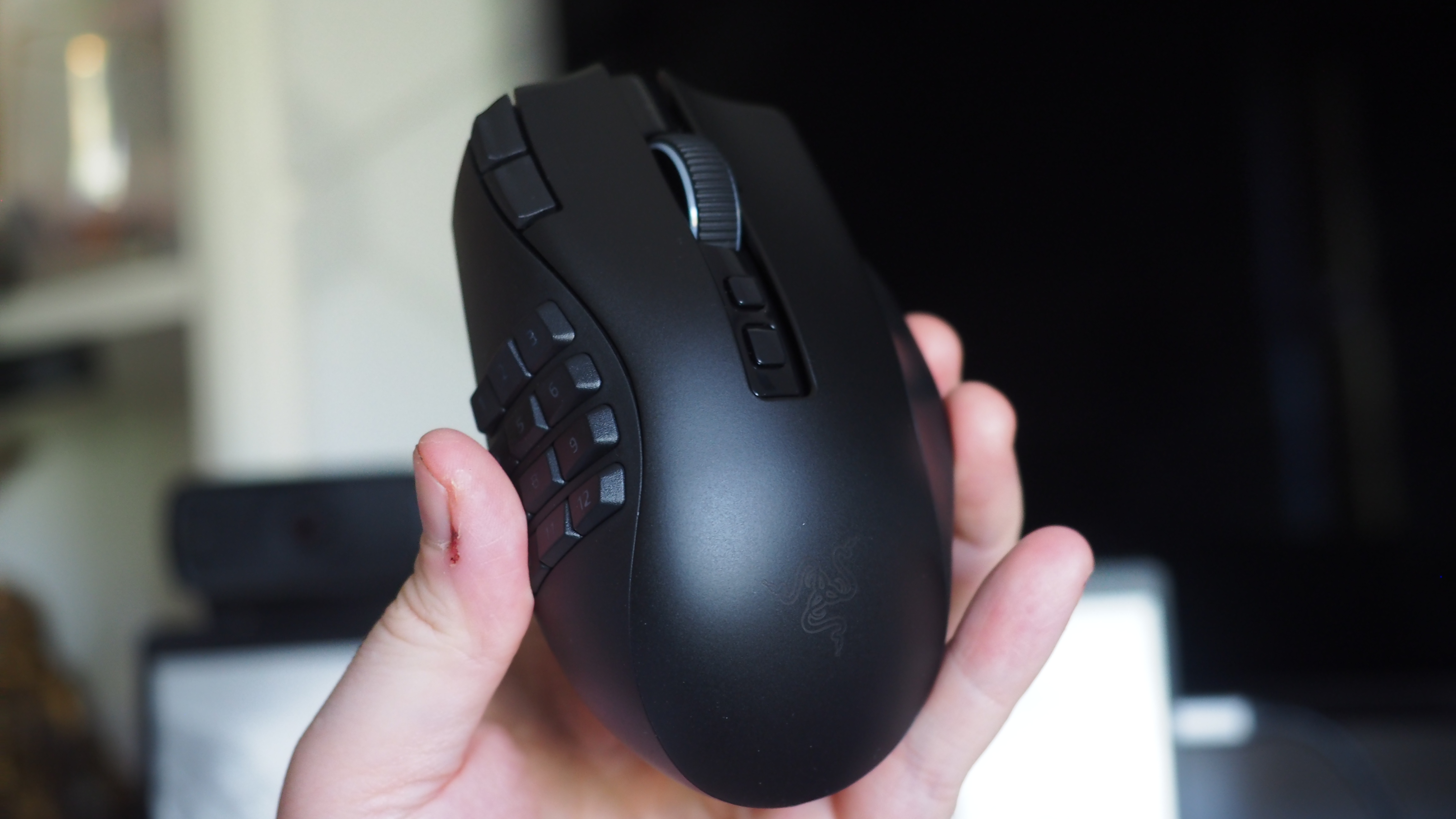
As such, I've tended towards Razer mice with extra inputs to make my gaming life easier. I had no idea how much easier it was going to get until I went palm-on with the new Razer Naga V3 Pro — which is quite easily one of the best mice of 2026.
Razer Naga V3 Pro: Specs and price
MMO player's best friend. (Image credit: Windows Central | Jez Corden)
The Razer Naga V3 Pro builds on its predecessor in a variety of ways, but chief among those is the inclusion of a further three configurable inputs, bringing the maximum total to 23 (and many, many more if you use HyperShift and other modifier keys).
1000 Hz native; upgradeable to true 8000 Hz (Mouse Dock Pro / HyperPolling Dongle); HyperSpeed Wireless (2.4 GHz), Bluetooth LE, USB-C wired
Battery & Lighting
Up to 155 hours (HyperSpeed); 3-zone RGB (logo, wheel, 12-button plate); 5 onboard profiles
Materials & Accessories
100% PTFE feet; USB-A to USB-C cable; HyperSpeed dongle; compatible with Mouse Dock Pro & HyperFlux V2
Dimensions & Weight
119.5 × 75.5 × 43.5 mm; 117 g base weight; Side plates: 12-button (20 g), 6-button (17 g), 2-button (15 g)
Price & Availability
$179.99 USD / £179.99 GBP / €199.99 EUR — Available worldwide Aug 11, 2026
Razer also doubled down on durability with reinforced molding processes for the switches, which the firm says will now last up to and potentially beyond 100 million actuations.
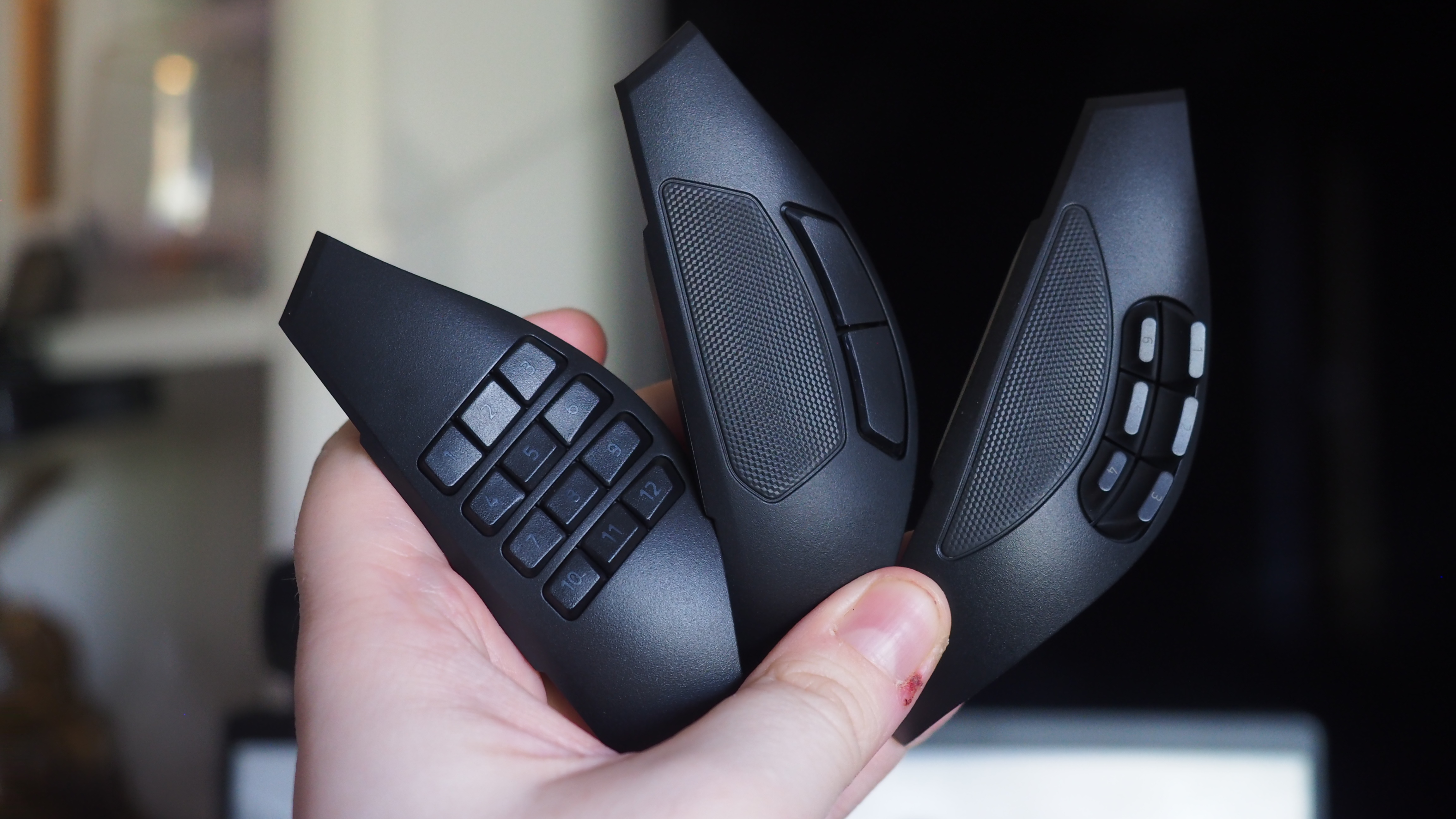
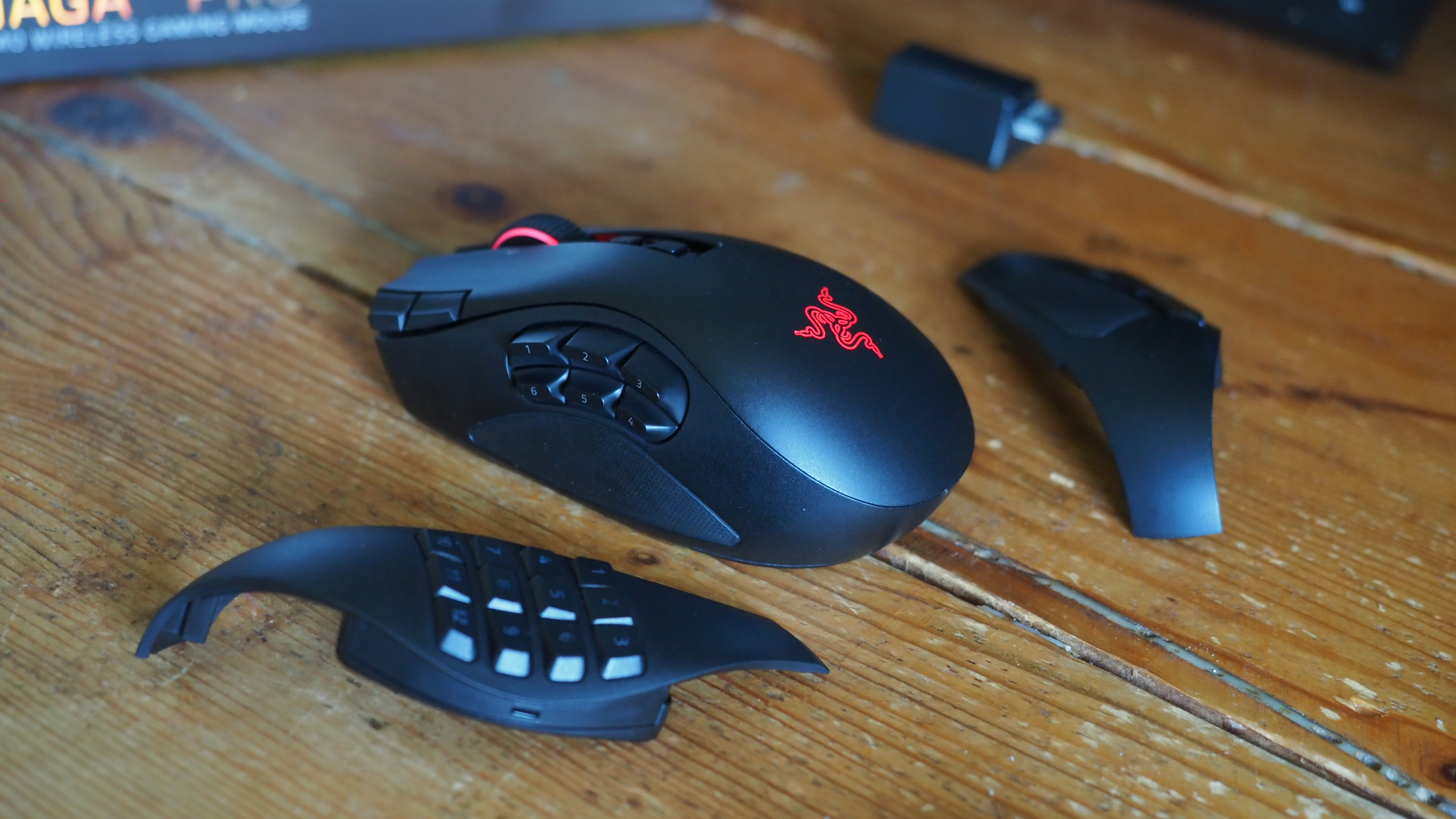
The obvious headline feature is the magnetic button plates that can be customized at will, adding between two, six, and twelve additional buttons. Razer has also included a uniquely configurable scroll wheel that comes with haptic feedback capabilities.
The mouse goes into general availability on August 11, 2026, and will set you back $179.99 from Best Buy in the United States.
Razer Naga V3 Pro: Features
Three's a crowd they say. Not here. (Image credit: Windows Central | Jez Corden)
The Razer Naga range has long been designed with MMO and MOBA gameplay in mind, adding a huge amount of additional inputs via a unique magnetic side plate feature.
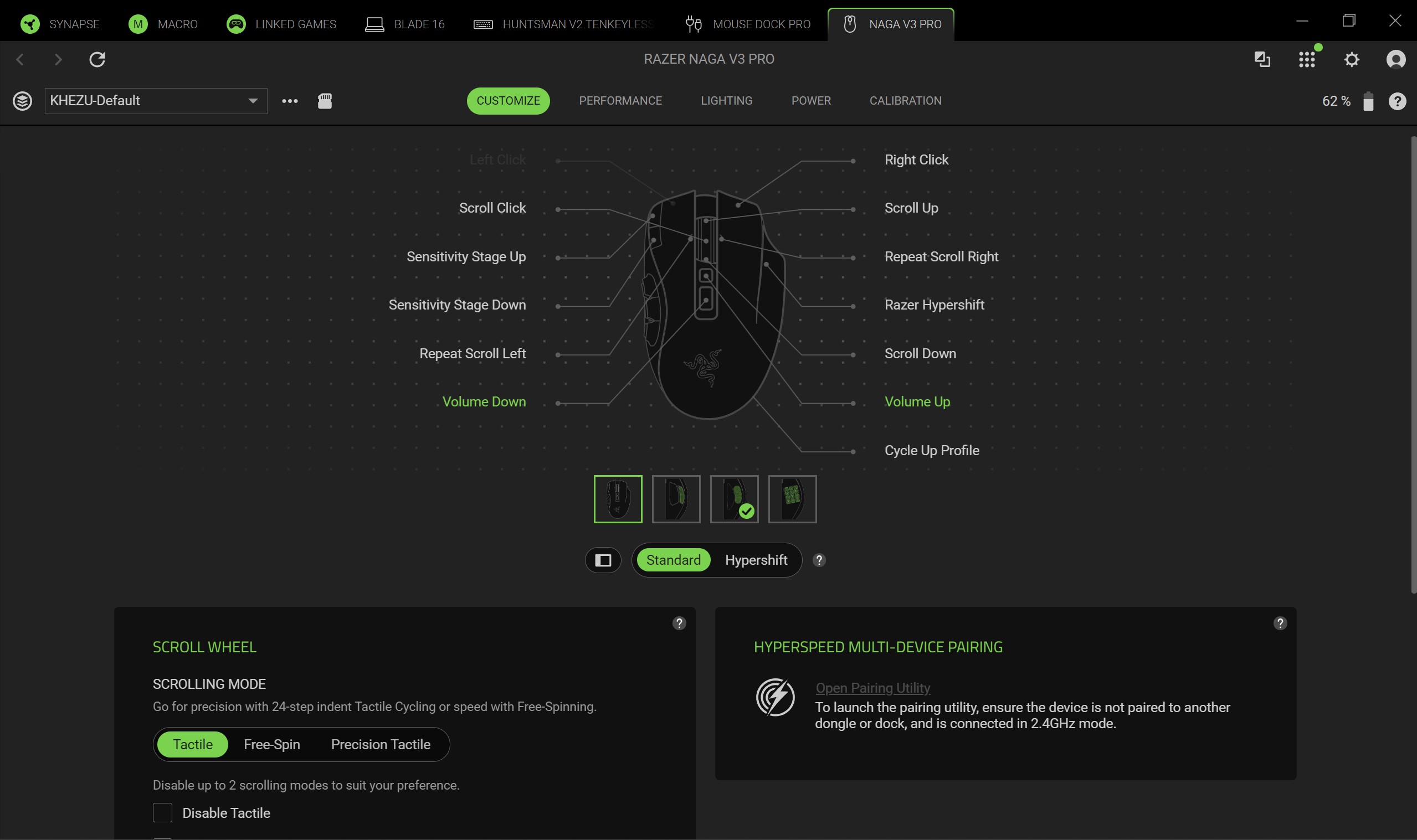
Razer has enhanced the force of the magnets to ensure it feels well and truly part of the mouse when connected, and I can say without doubt that it well and truly does. The buttons can be programmed at will using Synapse, and modified further with a ring-finger button that defaults to Razer's dedicated "Hyper Shift" modifier key. Of course, all of these can be reconfigured too.
What struck me immediately when going palm-on was the new scroll wheel. Razer has included some unique functionality here that I've not experienced previously in other mice. You can set it to free-wheeling mode, which allows it to quite literally spin indefinitely under its own weight. There's also a standard step-stop function that most users will be familiar with, but also a precision-stop feature that adds some haptic feedback and shortens the actuation for rapid hot bar or weapon switching with more forceful control.
There is a parade of other buttons and functions too. The DPI rates have been placed in the top right corner of the mouse out of the way, requiring a little more intent to reach to prevent accidents, I suppose. There are two buttons below the scroll wheel, and the scroll wheel itself can be tilted and clicked for additional inputs too.
It sports 155 hours of battery life out of the box, and supports Razer's new Mouse Dock as well as its wireless Hyper Flux charging mouse mat. Either plugged in or connected to a compatible Hyper Speed dongle, this bad boy can go all the way up to 8,000 Hz. You will not be left wanting for speed.
Razer Naga V3 Pro: Comfort and usage
All the buttons. Windows Central | Jez CordenLight weight, maximum function. Windows Central | Jez CordenIt feels good in the hand, although some users may find it a little too high. Windows Central | Jez CordenRazer magnetic charge dock capable, but not included. Windows Central | Jez Corden
How does it feel to actually use, though? I dropped into a couple of World of Warcraft raids and played a few games of Heroes of the Storm to get a feel for it, but it was in games like Age of Empires where it truly felt transformative.
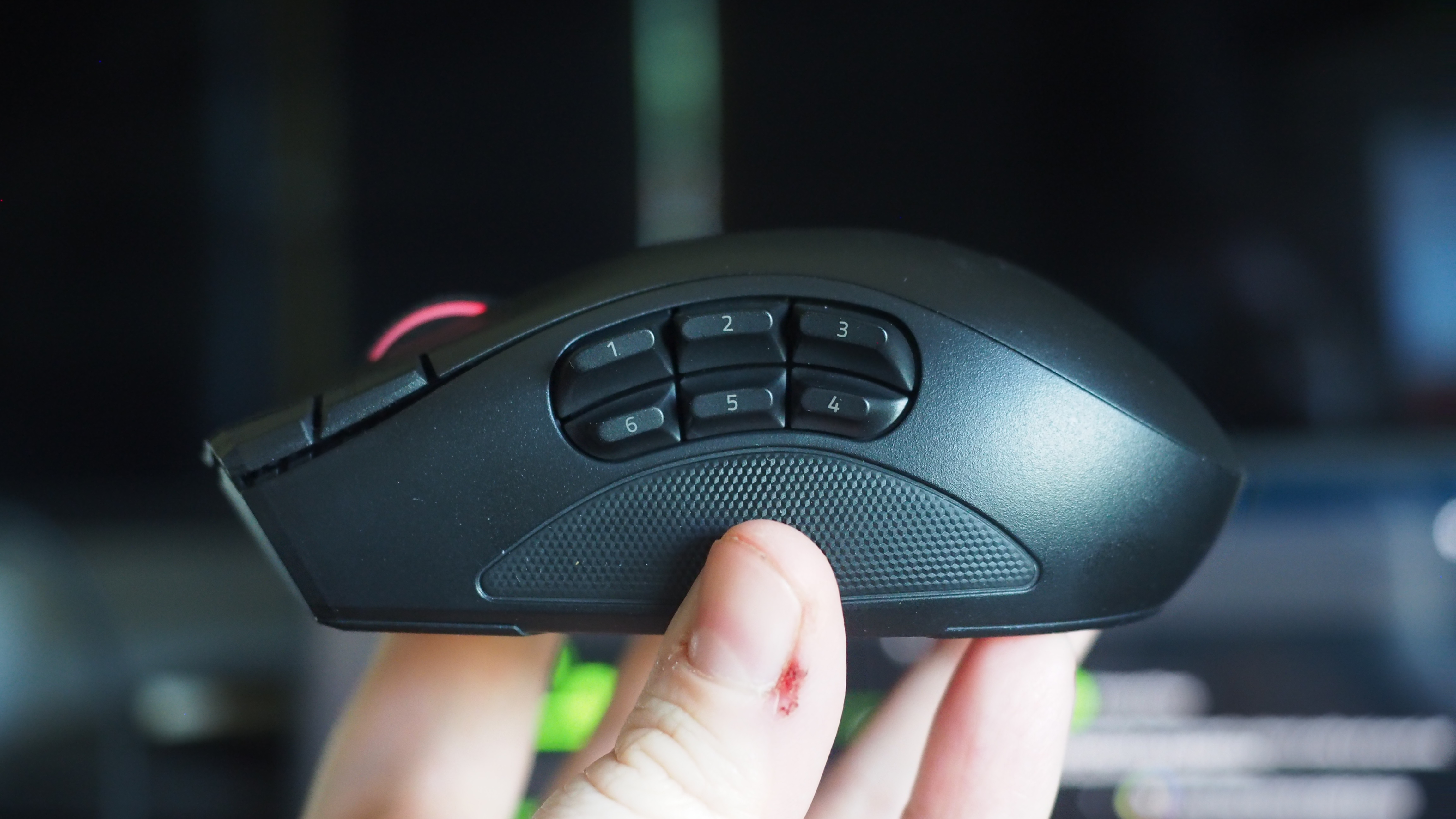
As noted, you can add up to 12 extra buttons with the side plate feature. It does take some getting used to, and I think Razer could've perhaps done a bit more to help differentiate the keys, particularly on the 12-button plate. The six button plate felt like the sweet spot for me, given that the profile of the buttons made them easier to memorize, but also I didn't find it as hard to squeeze my thumb backwards to hit the keys closest to my palm.
Indeed, you might struggle with this mouse if you don't have the most flexible hands. I found its palm hump to be a bit tall for my tastes (small ass hands maybe, or perhaps poor desk ergonomics on my end), but overall it was incredibly comfortable. I suspect most people won't have any issues with it. I also suspect that it was designed quite intentionally to be "palm grippy" to facilitate the fact users will be reaching for buttons on the side more often than on other mice.
Six buttons felt like the sweet spot for me. (Image credit: Windows Central | Jez Corden)
There are probably neuroscientific reasons for this, but it does feel genuinely more intuitive to actuate inputs on the same hand as your movement intentions. Perhaps it stems from my console-oriented history in some ways, but I found it a lot easier to drop Guldan's ult with a mouse swipe and mouse click, as opposed to lining up my mouse with a keyboard press.
For Age of Empires, it was particularly fun binding various quick keys directly to the mouse. Assigning regiments, bypassing certain menus, and being able to select specific units instantly from anywhere won't make up for my lack of skill with RTS, but it did boost the fun factor.
Razer Synapse is a fantastic piece of software that ties everything together. It's still better than solutions from other companies by a country mile. Configure RGB lighting, set up profiles for specific games, configure literally all the things — quick and easy.
Sync all the Razer things. (Image credit: Windows Central)
Some of the less useful features include Razer's macro functionality, which will sadly get you banned in a lot of online games for "automation."
The Naga V3 Pro also comes with an AI assistant key by default, which lets you bind certain Copilot prompts to mouse inputs for some reason. You can turn it off, but it's 2026 so everything has to have some kind of "AI" feature in it apparently, even if it's effectively useless. Perhaps this might become more useful if Microsoft ever ships agents to consumers, but as for right now it feels like boardroom fluff. Thankfully, that's the only "feature" here I could describe as such. Practically everything else is genuinely useful and represents a demonstrable upgrade.
There is a lot of functionality in the Razer Naga V3 Pro, and you won't need all of it all of the time. It is designed primarily for people who want maximum control over their games, and indeed, it is priced as such.
Razer Naga V3 Pro: Conclusion
It ain't cheap! (Image credit: Windows Central | Jez Corden)
The Razer Naga V3 Pro is a tour de force of functionality, with unmatched versatility for practically every genre of game you can throw at it. FPS, RTS, MOBA, MMORPG, and beyond — even the most control-complex games fall before the Naga and its capacity to inject intuitiveness into the least intuitive games and control schemes possible.
But yes, it will require configuring to get there. That's ultimately who it's designed for, though; people who play more complex games to a hardcore level, and want their peripherals to reflect their desire to configure and control their experience.
You should buy this if ...
✅ You play complex input-heavy games like MMORPGs and RTS.
✅ You like to configure your controls to the nth degree.
✅ You prefer your inputs on your mouse, rather than your keyboard.
You should not buy this if ...
❌ You find configuring keybinds exhaustive and annoying.
❌ You have particularly small hands (you might find its height uncomfy).
❌ Price might be a concern.
This will become my default mouse moving forward. Being able to effectively keybind number keys 5, 6, 7, 8, 9, 0, etc. without needing to physically reach away from WASD is a big boost in some games I play.
However, I am cognizant of the fact that I got the review unit here. Almost $200 for a mouse is tough to justify unless you're particularly passionate about the functionality the Razer Naga V3 Pro is going to provide for you. For configuration enthusiasts, there's well and truly nothing better than the Razer Naga V3 Pro right now.
Razer
Naga V3 Pro
"Stay one step ahead—no matter how the game changes."
Join us on Reddit at r/WindowsCentral to share your insights and discuss our latest news, reviews, and more.
I've long been a fan of XCOM, which is why when I heard two of my favorite franchises were about to collide on Xbox and PC, my interest was immediately piqued.
This is Star Wars: Zero Company, an upcoming turn-based tactics game set in the legendary sci-fi universe that needs little introduction.
Developed by Bit Reactor, who themselves are comprised heavily of XCOM and Firaxis vets, I recently was lucky enough to talk to the team behind the game, as well as go hands-on for the first time.
Bit Reactor's Greg Foertsch, art director of XCOM fame, was candid on the game's origin story. It was actually the late great Vince Zampella of Titanfall and Call of Duty fame who offered it up first, and the rest is history: "Star Wars was not on my bingo card, to be quite honest, till Vince brought it up, and frankly, I was a little terrified at first, but I had to say yes."
Terrified they might've been. But from what I've seen, I think they've absolutely nailed it and have nothing to fear whatsoever. Star Wars Zero Company is now a personal game-of-the-year contender, if indeed the full game continues to be as infectious and intriguing as the demo slice I played.
Bit Reactor noted that they felt the turn-based tactics genre still had a big story to tell, even as Take Two essentially wound down the XCOM franchise in favor of focusing on Civilization. What better way to introduce the genre to a new audience than via one of the biggest franchises in the world?
But Bit Reactor has also been keen to modernize every aspect of it for modern sensibilities: photorealistic art, a third-person camera, high-quality story writing and cinematic treatment, and a Mass Effect-like character bonding system that has enormous potential.
Star Wars: Zero Company launches on Xbox and PC on August 27, 2026.
A heaping of XCOM, a dash of Mass Effect?
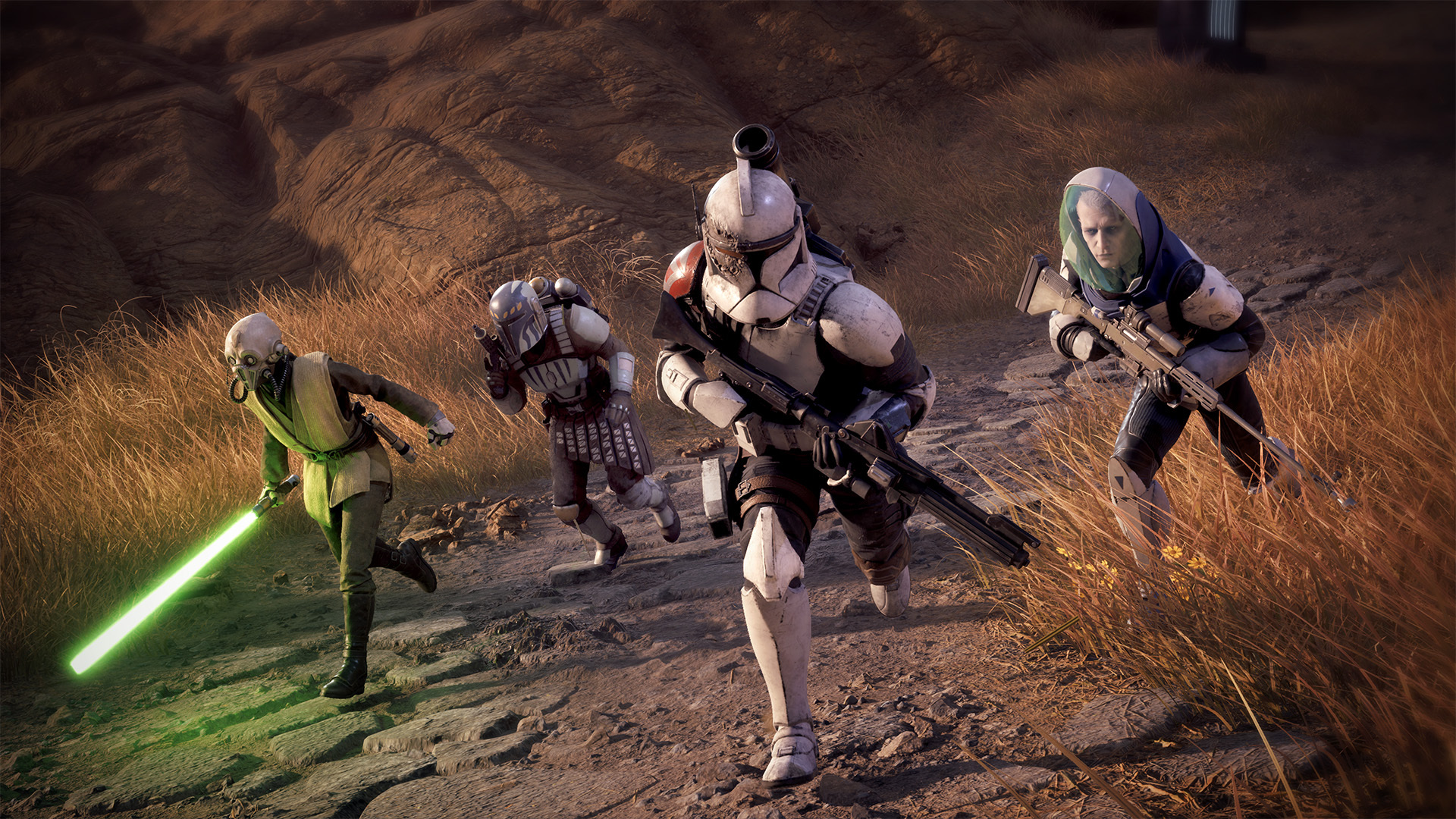
Lead a rag tag group of survivors on a quest for fame and fortune, and unravel a potentially darker plot along the way. (Image credit: EA | Bit Reactor)
In Star Wars Zero Company, you take command of a "dirty dozen" style mercenary outfit, which immediately gave me Mass Effect 2 vibes.
This ragtag group of rejects, bounty hunters, and warriors of fortune come together under a variety of difficult circumstances. The Clone Wars are in full swing, and the Republic needs mercs willing to undertake missions that are perhaps beyond their remit (and missions that skirt the law ... and perhaps even basic morality.)
As such, you play as Captain Hawks, a fully customizable humanoid and former Republic officer who has gone into business for himself. You can fully tailor Hawks' identity and pick from a variety of iconic Star Wars species to lead your crew.
As you get further in, you'll meet other heroes who join your squad for a variety of their own reasons. There's Tel-Rea, who is a former Jedi Padawan, Trick, a "forcibly retired" clone trooper, and Cly, a Mandalorian driven by vengeance.
The eclectic cast led Bit Reactor to create its "Bond system," which gave me a ton of Mass Effect 2 vibes. As your crew collaborates both in missions and during trips to The Den (your base of operations), they build relationships and synergies that benefit your tactical options and also develop their characters.
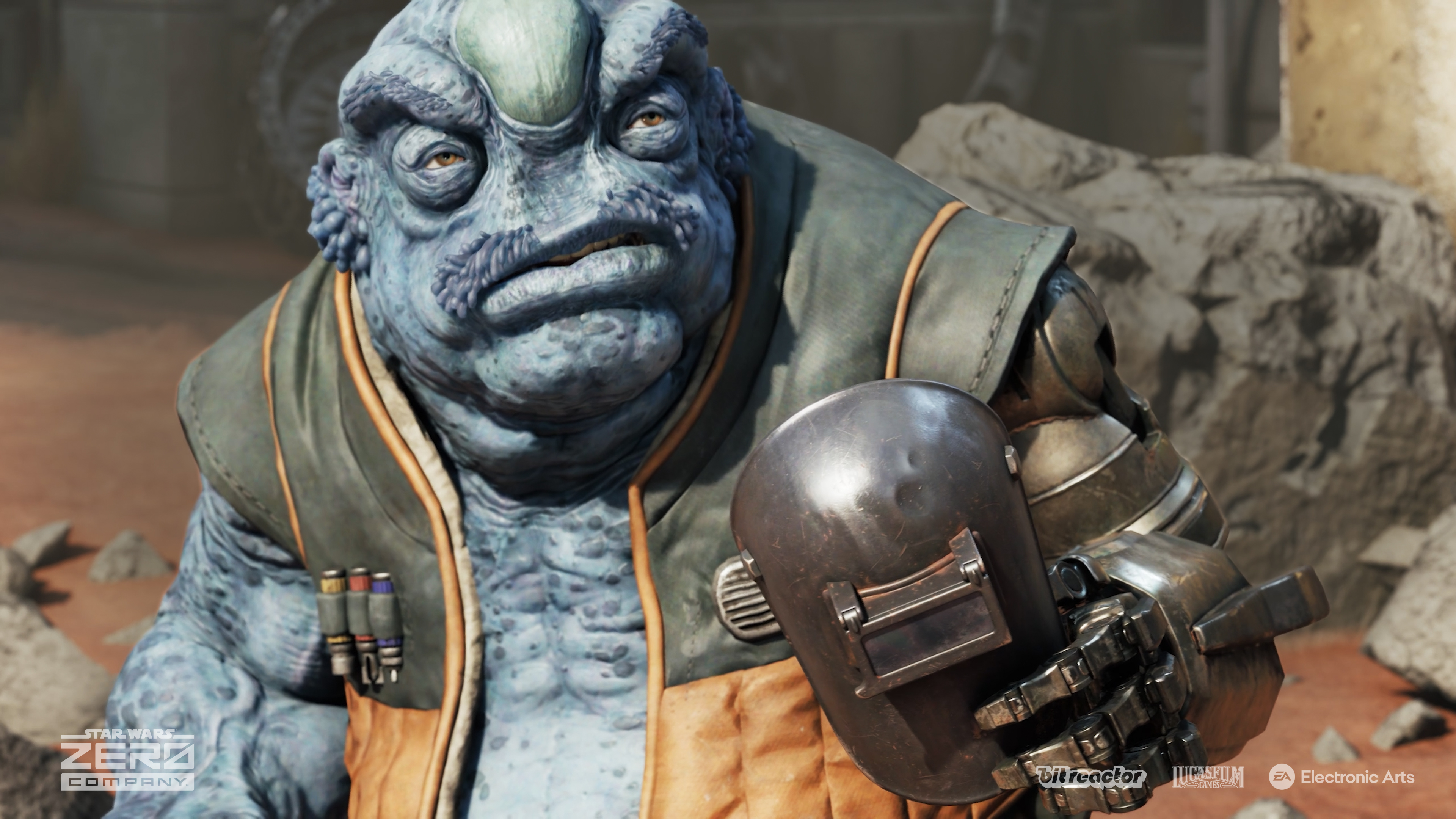
Kabbney "Kabb" Uppercut is a Felshi, a completely new species created for Zero Company. (Image credit: EA | Bit Reactor)
"I wanted that to have a long arc of play over the course of the whole campaign… you’re not just learning to power your characters up, but you’re also having them develop relationships that’s evolving in your head," game directorJames Brawley explained to us. "Characters grow stronger as a result… that’s why they’re able to beat these overwhelming threats, because they know how to work together."
"This is your Star Wars game… how you get there, what you experience, the characters you build, the relationships and bonds you make — they’re all unique to your playthrough."
The team explained that the events of Zero Company take place adjacent to The Clone Wars, in the shadows, using an entire cast of new characters. And indeed, like any good XCOM-like, permadeath is a feature here. If you have two characters that synergize well and unlock powerful abilities as a result, having one of them die not only severs that bond but also deprives you of access to those powerful abilities. The stakes remain incredibly high as a result, in true XCOM-fashion. You'll also lose the resolution of their stories and experiences too, making every playthrough potentially unique (unless you save scum, that is ... but there are auto-saves-only Ironman modes for those who don't want to be enticed into such heretical gameplay styles.)
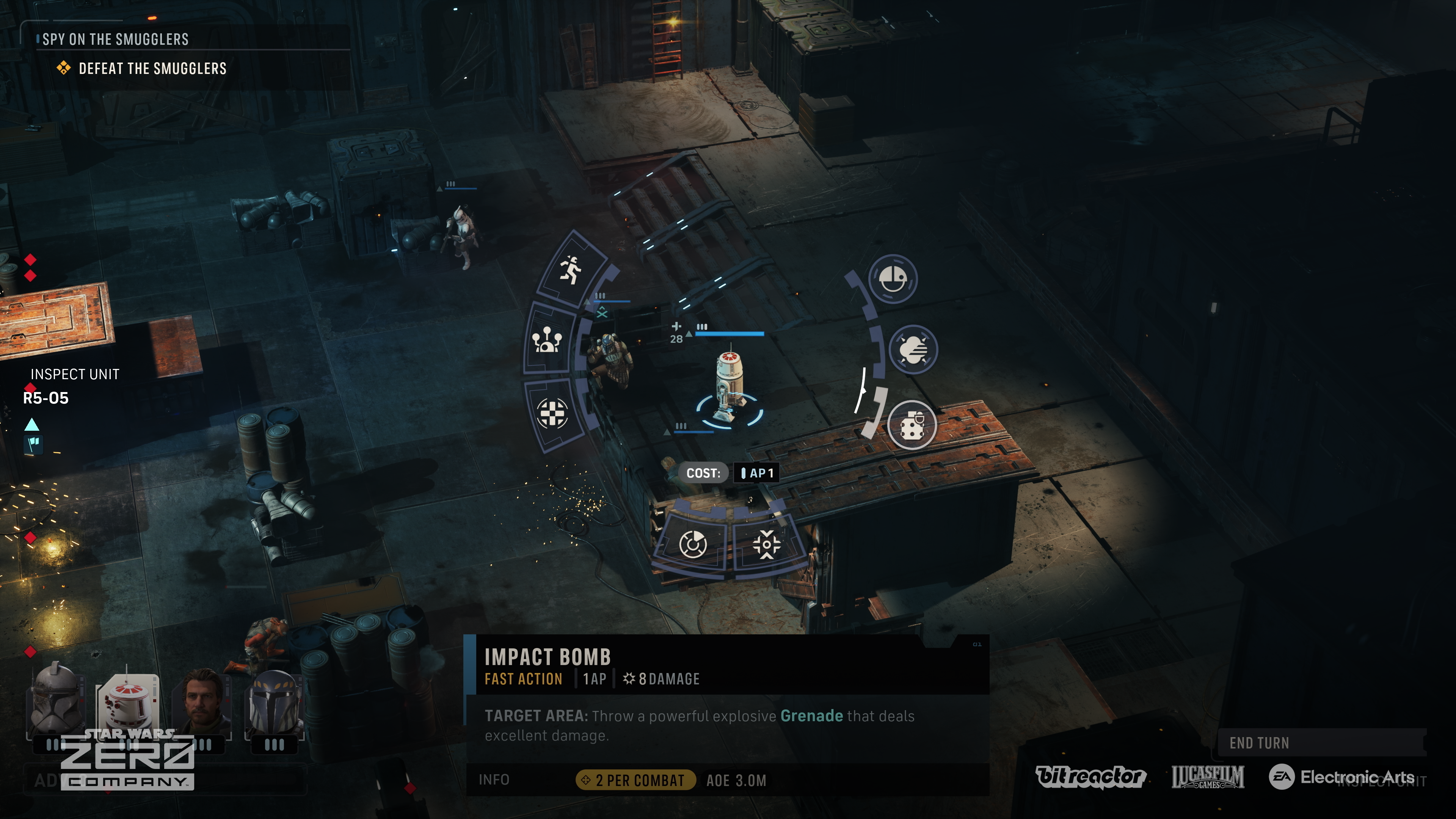
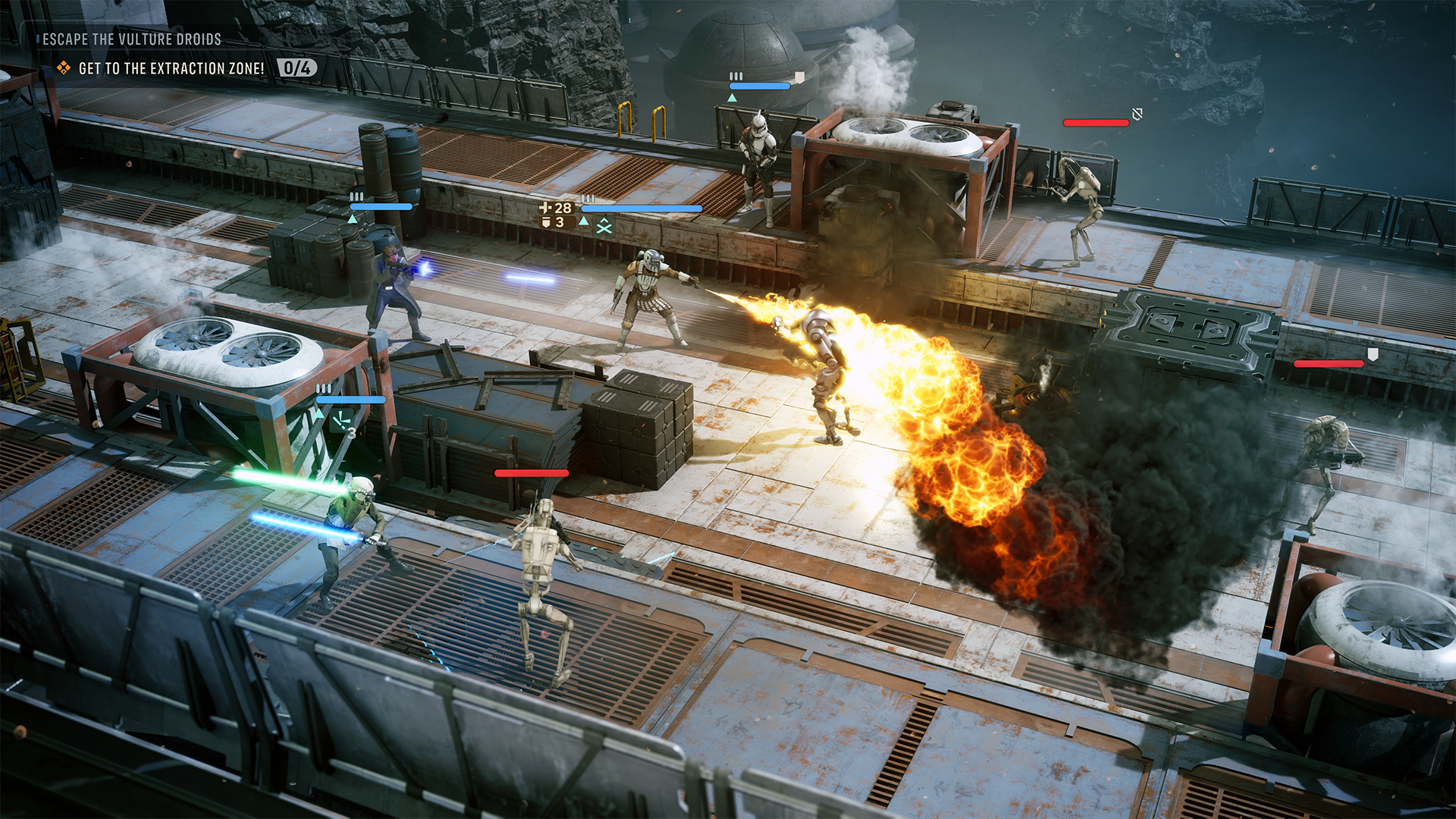
Set up powerful killzones with overwatch commands, and leverage unique Star Wars-inspired abilities to decimate your enemies. (Image credit: EA | Bit Reactor)
I didn't get to experience too much of the combat gameplay, but from what I played, it felt every bit as satisfying and fun as previous official XCOM-style games I've played from the team here. Bit Reactor is comprised of XCOM and Firaxis vets, as noted, and you can feel that pedigree in every aspect of play. The team said Disney was on hand too to verify the Star Wars authenticity but was also incredibly open to Bit Reactor's own agency therein. The team said they "couldn't praise Disney enough," in what sounds like a very productive working relationship.
Disney hasn't always handled the Star Wars IP as well as I would've liked ... but it's hard to deny that they've had some absolute bangers on their hands. Rogue One has been a particular highlight for me, but also the games. Cinematic delivery I'd argue is more important in a Star Wars-adjacent title, which obviously comes with certain expectations. You can expect great characters, a grand adventure across the galaxy, and big cinematic moments sprinkled throughout Zero Company, the developers tell me. But crucially, also dark villains.
The Clone Wars are in full swing in corners of the galaxy, but while bounty hunting, Hawks and his crew get caught up in a uniquely dangerous situation. The separatist-aligned cult known as the Infinite Coil rears its head early on. Its members seem infected with a mysterious space plague that, if I were a betting man, potentially has dark side origins.
"The Clone Wars offered us a place to tell a Star Wars story that touched on canon, but didn’t interfere… it allows people to attach to new characters in a way that hasn’t been done before."
The Jedi Fallen Order franchise has been well-received, and before Vince Zampella's passing, it seemed like EA was on an upward swing with its Star Wars license stewardship. Zero Company looks set to continue that legacy and also maintain the quality bar Jedi Fallen Order established.
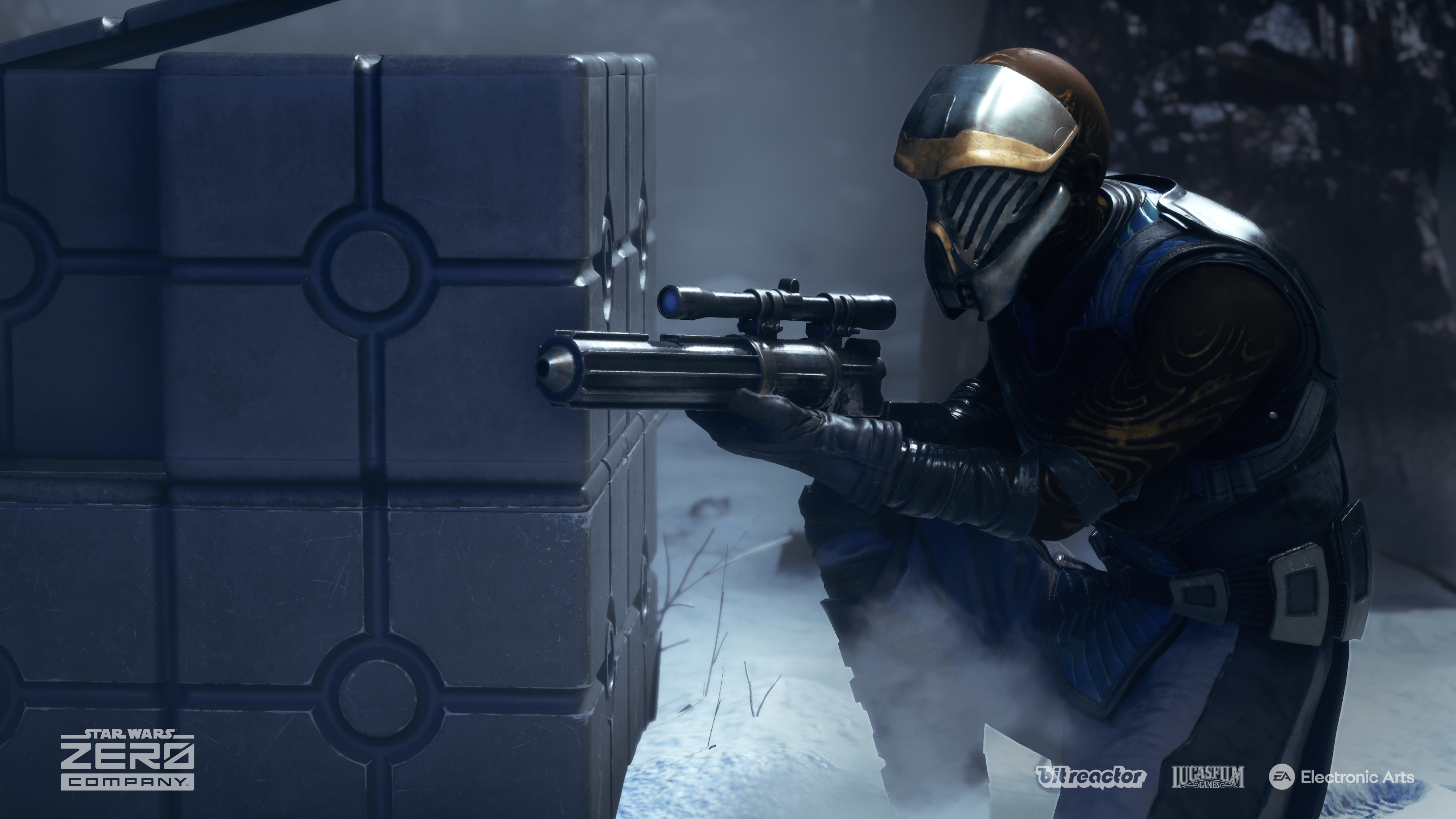
In Zero Company, you'll fight separatist forces of all stripes, but the central antagonistic force is a shadowy cult known as the Infinite Coil. (Image credit: EA | Bit Reactor)
Indeed, I was surprised to discover how far Zero Company diverges from the typical XCOM formula from a story perspective, where most of the characters are throwaway soldiers designed to ultimately be expendable. The detailed characterization of the heroes in Zero Company are every bit as cinematic and interesting as any story-heavy action game or big-screen Star Wars experience you might expect.
Zero Company makes heavy use of a traditional third-person over-the-shoulder camera for some of these sequences too, making the game feel almost more like a CRPG in the vein of Baldur's Gate 3 or Wasteland 3, as opposed to a pure tactics game. Tactics games with fixed isometric cameras often come with stylized art given that the camera is zoomed out a lot of the time. Zero Company went deeper on visuals to accommodate its more cinematic delivery, and the results speak for themselves. Zero Company feels painstakingly authentic.
"We should be better looking, not worse. We should be better frame rates, not worse. We should have more stories, more immersion," Bit Reactor explained. "We’re just making a great game — it just happens to be turn‑based.”
If you've never played an XCOM-like before, its RPG systems might be what entices you most
More XCOM-style games please. (Image credit: EA | Bit Reactor)
I was incredibly encouraged by Star Wars: Zero Company's preview cycle. I was immediately drawn to the characters and intrigued by the potential of the game's Bond system. What events and storytelling opportunities would I be able to unlock? What consequences would befall me for mismanaging those bonds and potentially getting some of my heroes killed? What exactly is the Infinite Coil, and what do they want?
Star Wars: Zero Company is a bit of a rarity in 2026, as big publishers chase service games, infinite experience, and microtransaction hellscapes. Take Two itself no longer seems to want to service the XCOM franchise sadly, and other companies that have attempted it have often struggled to broaden their appeal. Truly "AAA"-grade tactics games have become vanishingly rare.
Star Wars is the perfect universe to offer a take on this genre in my view, particularly in the Clone Wars era. But Bit Reactor's clear efforts on the cinematic and story-delivery side give Zero Company broad potential that similar attempts at the turn-based tactics genre have missed in recent years. Baldur's Gate 3-style cinematics and character delivery, atop modern high-quality visuals and focused XCOM-style tactical play? Zero Company has everything I didn't know I needed from this quarter's very busy slate of games.
Star Wars: Zero Company is something every Star Wars and turn-based afficionado should put on their wishlist.
If you have any questions about the game, drop them in the comments and I'll get them answered!
Star Wars Zero Company is a turn-based tactics experience with heavy cinematic leanings. Set in the Clone Wars Star Wars era, lead a merc group across the galaxy seeking fame and fortune, but perhaps finding something darker along the way.
Microsoft purchased Blizzard as part of its big Activision acquisition a few years ago. The Warcraft maker has had a roller coaster decade in a variety of ways, with downturns in hit franchises like Warcraft and Overwatch prevented the legendary studio from finding its mojo.
Free from the reins of Activision, Blizzard now operates as a limited-integration entity within Microsoft's Xbox division, and the results well and truly speak for themselves. Overwatch is arguably better than ever, with a razor-sharp focus on fan feedback and new content. World of Warcraft still has issues with its writing and polish, but the content cadence has never been so consistent. Genre-defining franchise Diablo has also seen a stunning return to form, with an overhaul of the endgame loop atop a truly spectacular expansion in the form of Lord of Hatred.
All of that painstakingly hard work has seemingly paid off. A new email sent by Blizzard President Johanna Faries to staff this past week celebrated the division's roaring return to growth.
Blizzard President Johanna Faries opened the email rallying the team ahead of BlizzCon 2026, set to go live in Anaheim on September 12, "the weekend will reflect the bold and collaborative work of everyone reading this," she said. "It's my hope that the event can shine a light on the work underway at Blizzard, and that it can serve as a powerful springboard into a new era of momentum and excitement behind our mission to bring joy and belonging for communities worldwide."
Faries also laid out Blizzard's performance through FY26, which just ended for Microsoft with Xbox 11% down overall (owing to some big franchises like Call of Duty and Candy Crush having a difficult year). While Xbox overall has struggled, Blizzard is one area that continues to thrive and grow.
"In FY26 Blizzard ended the year as the top-performing studio in Xbox's studios division, and this past year has marked our third highest fiscal for top line revenue in Blizzard's history."
Faries went on to explain that Blizzard has begun seeing consecutive years of growth again for the first time since Overwatch launched back in 2016. It's a huge feat considering intense competition from the likes of Roblox, Fortnite, and other service-type entities eating up a lot of the attention.
"FY25 and FY26 were our first back-to-back years of growth since FY17," Faries explained. "Diablo 4: Lord of Hatred and Overwatch drove exceptional performance in particular, with Overwatch delivering its strongest quarter since 2022." Faries emphasized that the success will help them invest even more in Blizzard games, staff, and other initiatives that will "shape Blizzard's future."
BlizzCon could be a really huge moment
Blizzard stewards some of the most popular franchises in gaming history. (Image credit: Jennifer Young)
More StarCraft could be on the horizon. (Image credit: Blizzard)
In September, BlizzCon will offer a glimpse at the near and long-term future of Blizzard's universes. We should see the next Warcraft expansion, dubbed The Last Titan, revealed in full. I've heard Blizzard is working on a variety of mobile game spin offs with partners too, as well as potential trans-media projects similar to Cyberpunk Edgerunners or the Fallout TV show for its own franchises. Blizzard is also known to be working on a StarCraft third-person shooter led by Far Cry director Dan Hay, and the next core Diablo project is also moving ahead.
Who knows what other surprises could be awaiting us? A Heroes of the Storm revival maybe?! Higher-quality remakes of Blizzard classics? Something completely new?! It's exciting to think about as a long-time Blizzard fan, but more importantly, it's encouraging to see Blizzard's industry-leading devs have a spot in the sun after many years of turbulence. Faries and the team at Blizzard should serve as an example for Xbox CCO Matt Booty to follow. Let's hope (and pray) Microsoft continues to let them cook.
What Blizzard franchise do you want to hear most about at BlizzCon? Vote in our poll!
Join us on Reddit at r/WindowsCentral to share your insights and discuss our latest news, reviews, and more.
Everyone knows Xbox isn't doing so hot these days, but new research from Statista Consumer Insights has put that common belief to the test.
Xbox is "unhealthy" according to new CEO Asha Sharma, which has led to thousands of layoffs this summer and many more throughout the next fiscal year. Gaming as a whole is struggling from a variety of headwinds, including the memory crisis, dilution of attention, competition from non-gaming hobbies, and potentially an unhealthy dependence on free-to-play forever games like Fortnite.
Indeed, Microsoft's gaming division saw a decline to the tune of 11% last fiscal year, which sources tell me almost entirely revolves around Call of Duty having an off year. I suspect diversifying the Xbox business would probably be a good idea to reduce dependence on the firm's handful of mega-games, but that's a discussion for another time.
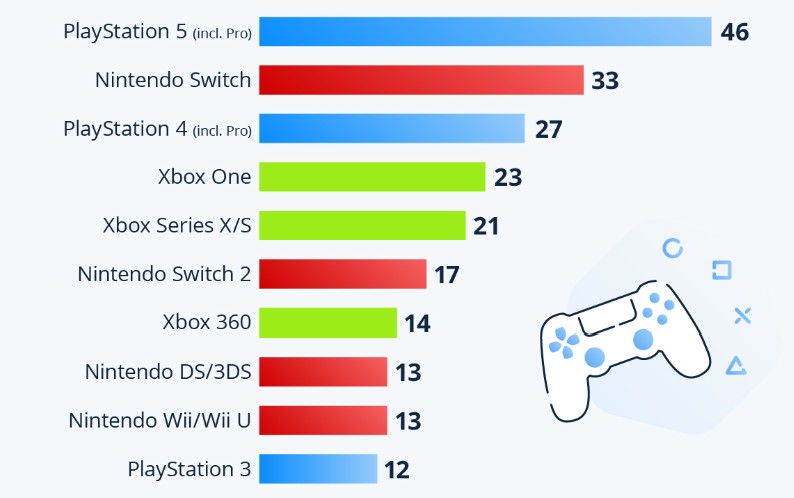
It's no secret that Xbox One was ill-received by the core gaming community, and Microsoft is still paying for those mistakes over a decade later. New data from Statista Consumer Insights put common beliefs about Xbox's performance to the test, surveying over 3,200 gamers in the United States.
The data from Statista shows PlayStation beating Nintendo and Xbox by a healthy margin, with Xbox combined platforms languishing in last place. (Image credit: Statista Consumer Insights)
Users were asked which console platforms they frequently play on specifically, with PC and mobile excluded from the picture. Of console players in the United States, some 85% frequently play on PlayStation platforms, 76% play on Nintendo platforms, with Xbox coming in last at 58%. The figures suggest that most people own multiple consoles and frequently play across different platforms. What is perhaps most striking is how popular the Xbox 360 still is, which is even giving the Nintendo Switch 2 a run for its money. It aligns with what I've previously heard about Xbox 360 engagement, which is uniquely sticky for Microsoft.
In a universe where some service games last "forever," there are arguably few reasons to upgrade from a PS4 or an Xbox One if all you enjoy playing is Fortnite or Minecraft and the like, which are still updated and fully functional on older platforms. At least it shows that users remain engaged, even if they are playing on older platforms. The challenge is figuring out how to convince them the upgrade is worth it.
Grand Theft Auto 6 is exclusive to Xbox Series X|S and PlayStation 5, which in a usual console cycle would likely have a dramatic upward impact on the current-gen systems. That uptake is likely going to be a tad muted for Xbox, which is struggling to source memory at reasonable prices for its Xbox Series X|S range. The box is already more expensive than ever, and has firmly slipped beyond your average luxury purchase.
Can devices like the Xbox Ally and the next-gen Xbox Helix help Microsoft's struggling gaming division find its footing? (Image credit: Windows Central)
It'll be interesting to see how Xbox CEO Asha Sharma addresses the delta here. Xbox PC and Xbox Cloud Gaming are obviously excluded from the results here, and both of these platforms represent a huge growth area for Microsoft. Microsoft has barely marketed Xbox Cloud Gaming arguably, and Xbox Game Pass on PC remains a fantastic deal too. Putting more investment into these products (and maybe I dunno, marketing them?) could make for an easy win.
Sharma said that there are "200 million" Xbox players last month, but it's unclear exactly how Microsoft arrives at this figure. Does that include Minecraft players on PS5 or Nintendo Switch for example? It's hard to parse. What isn't hard to parse is the scale of the challenge facing Xbox, whose identity has been rocked by a variety of experiments that landed with mixed results.
Xbox has a new console on the horizon, in the form of Project Helix, but so too will PlayStation. The competition for the future will remain fierce, but it's unclear if Microsoft still has the stamina to keep investing in gaming as shareholders heap demands for more AI.
It'll be interesting to see how Xbox weathers the next few years, with no end in sight for memory shortages, demographic shifts to PC, and the rise of free-to-play perpetuating something of a race to the bottom.
We've seen where the United States prefers to play, but where do YOU prefer to play, Windows Central reader? Vote in our poll below!
Join us on Reddit at r/WindowsCentral to share your insights and discuss our latest news, reviews, and more.
Xbox has been on a bit of a tear when it comes to new platform features lately.
Yesterday, Microsoft announced the latest build for the Xbox Insider Program, with a variety of new features big and small. The features included better management for Xbox cloud saves, better sorting of your games library, and other bits and pieces. The headline act, however, is voice clip recording on the Xbox Game DVR. This is a feature people have been asking Microsoft to add for over a decade, all the way back to the Xbox One era.
When you have an epic gameplay moment with friends, it would be awesome if you could also capture their reactions without having to use a complex capture rig. You'd need to use a streaming PC with StreamLabs OBS or a capture card like the Elgato 4K S to extract the audio alongside your Xbox gameplay.But yesterday's update has made it a million times easier.
Here's a clip from a quick gameplay session on Warhammer 40K: Space Marine 2 I had this morning, showing how the first iteration works.
Here's an example of Xbox's new voice capture in the Game DVR. It's early days yet (available on the Insider ring). It seems to freeze the game for a split second when you hit capture. Also as far as I can tell, there's no way to adjust audio levels. You can barely hear me in… pic.twitter.com/0wmR5id4KVAugust 6, 2026
As you can see (or ... well, hear) the audio levels aren't ideal out of the box. You can barely hear me in this capture over the audio of the game. You would have to lower the gameplay sound a fair bit in order to be able to hear me, but it would be ideal if Microsoft would add settings for this.
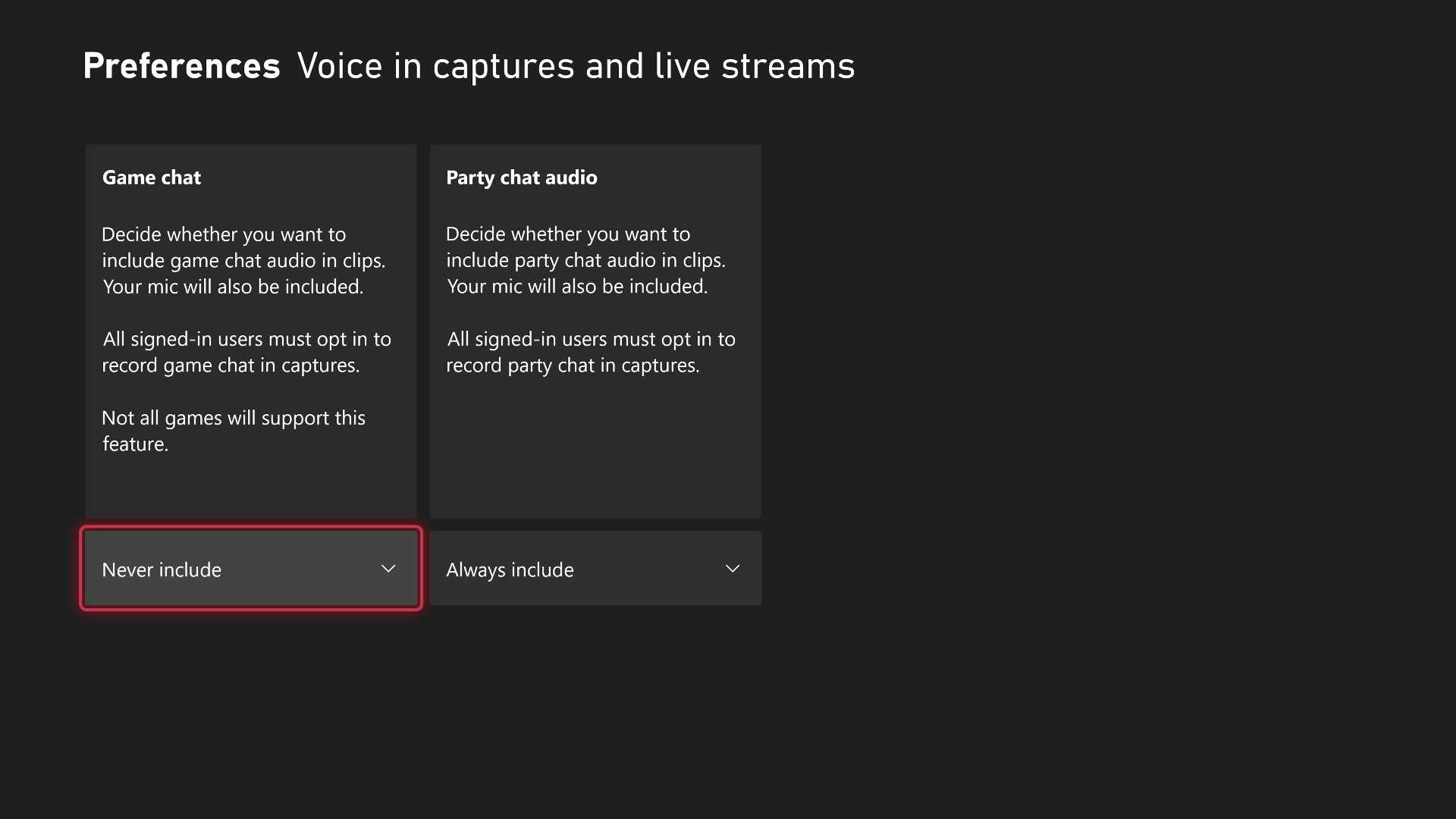
In order for this feature to work, users have to enable it in the settings. Only users who have enabled game or party chat audio capture will appear in the sound mix, giving you total control over whether or not your reactions are captured (potentially saving your more embarrassing gameplay moments from going viral.)
You can also set whether your voice is clippable in public audio settings too, such as lobby chat on Call of Duty (oh boy) or in proximity chat games like Arc Raiders and the like.
Head into preferences, then clip settings, and then voice in captures and live streams to access the above settings. As of writing, they're available to Xbox Insider Program users in the Alpha ring. (Image credit: Windows Central | Jez Corden)
Hopefully, Microsoft will add audio mix granularity sliders in the future, as it's far too quiet in my opinion as of writing. Additionally, capturing a clip seems to temporarily freeze a game for 0.2 seconds when you have voice capture turned on. I'm not sure if that's a consequence of the feature or an instability in the latest Alpha build, but I'm sure the experience will be improved before hitting general availability.
It's potentially exciting how this feature could evolve in the future. Xbox CEO Asha Sharma is a former Meta executive, and likely has thoughts on how to leverage social media virality as a vector for growing Xbox's footprint. Perhaps there's a future where Xbox supports webcam picture-in-picture clipping too, and maybe we'll even get direct sharing to social networks back again some day on top. Perhaps even native Xbox Series X|S video editing tools will return as well, who knows?!
Microsoft's stocks rallied this past week on accelerating AI growth, but the devil is always in the details.
Over the past month, Microsoft's shares have surged almost 30% following its quarterly filings, which beat Wall Street estimates by a significant margin. Microsoft proved that its AI business is accelerating in growth, and that cash flows remain healthy despite the firm's extensive capital expenditure on new data centers. However, new information suggests that there's still an enormous caveat to this news.
Analysis from Bloomberg has poured cold water over Microsoft's AI earnings potential. Disclosures from Microsoft suggest that OpenAI accounts for around 70% of Microsoft's total AI-related income, based on projected growth and previous disclosures that relate to revenue derived from OpenAI.
Microsoft reported that Copilot has millions of paid seats in Microsoft 365, and is being gradually adopted by a wide variety of governmental, public, and private sector businesses. But when you tally it against previous disclosures, it shows that GPU and infrastructure consumption specifically from OpenAI still drives between 65 to 70% of Microsoft's total AI business. Training platforms like ChatGPT and simply serving it to customers remains the cornerstone of Microsoft's AI business. That's potentially problematic and comes with a huge amount of risk.
Azure has turned Microsoft into an absolute powerhouse, but I would argue its AI bets still threaten that. (Image credit: Getty Images | NurPhoto)
On the gaming side, Call of Duty having an off year was enough to drive Xbox's total revenue down by 11%, leading to masses of layoffs. OpenAI, by comparison, is estimated to be losing anywhere between 10 and 20 billion dollars per year, on a comparatively modest $2-5 billion in revenue. OpenAI has a mountain of investors keeping it afloat right now, and Microsoft itself remains one of OpenAI's biggest backers, investing to the tune of billions in cash, infra, compute credits, and other instruments. On the face of it, Microsoft's AI bookings simply represent OpenAI's compute bill packaged as revenue.
It's not unheard of in business. Spotify ran losses for years until eventually becoming profitable (to the tune of billions, I might add). The idea is that you burn through debt, scale rapidly, change user behavior, and create new markets. Then, you lock people in and make them dependent, and start monetizing. Microsoft and OpenAI's other creditors are betting that one day, ChatGPT will become the default — an inescapable cornerstone of computing for billions of people.
But what if that doesn't happen?
What if people end up choosing Claude or Gemini over ChatGPT? What if regulatory scrutiny or public opinion sours ever further? What if elections are won on the promise of blocking new data centers, rather than enabling them?
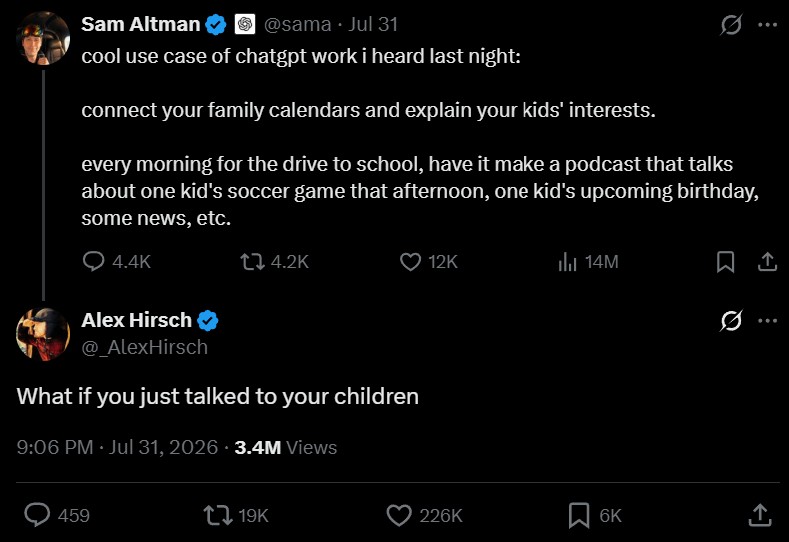
Public perception of AI remains incredibly negative, owing to the damage data centers cause in communities, and the theft and destruction of art and human-created content. (Image credit: Alex Hirsch on X (Twitter))
The disclosures suggest that Microsoft's AI growth is inorganic and revolves almost entirely around training ChatGPT's models. If OpenAI imploded or decelerated, Microsoft would be on the hook for billions in sunk cost and enormous amounts of excess data center capacity.
There's no suggestion of a deceleration, quite the opposite — which is why the stock price has surged. But there's also little reason to believe that this entire segment is even vaguely organic.
Microsoft is already trying to diversify by training its own "more efficient" MAI models for consumer applications while boosting external enterprise adoption. It's started to devote more attention to its legacy consumer businesses too, namely Xbox and Windows, as neglect therein becomes untenable. But none of this will save Microsoft or its shareholders if the so-called "AI bubble" well and truly does pop.
It'll be interesting to watch how CEO Satya Nadella navigates Microsoft through this somewhat unprecedented era.
Join us on Reddit at r/WindowsCentral to share your insights and discuss our latest news, reviews, and more.
Xbox is back with a flurry of updates for the Xbox Series X|S, including one headline act that I think will make many people very happy.
Today, Xbox revealed that it has acted on some of the top feedback requests from the Xbox Feedback site, including voice clip and party chat recording inside the Xbox game DVR. Recordings will now also capture your team mates' cries of valor or wails of defeat (if you enable it, that is), alongside other various Xbox system improvements.
Team is working on something for later this year!August 5, 2026
Speaking on X (Twitter), Xbox CEO Asha Sharma replied to a fan "team is working on something for later this year," when asked if Microsoft would implement "Platinum"-styled completion achievements.
Players have been pining for an answer to PlayStation's platinum trophy system, which rewards players with a trophy for achieving 100% completion rates in games. Xbox games typically come with 1000 gamer score to earn per title, but there's no reward for acquiring all of the achievements.
I suspect Xbox was probably working out some of the finer details about how it would work in continuity with gamer score. Many games receive extra achievements post-launch, which would obviously remove your "100%" completion status. Perhaps you get the platinum achievement simply for hitting the base 1000 gamer score in the title? Who knows. Either way, it seems that Xbox will have an answer for it later this year!
Join us on Reddit at r/WindowsCentral to share your insights and discuss our latest news, reviews, and more.
My favorite Xbox feature is having a bit of a moment in the sun.
The Xbox ecosystem is a lot better than people give it credit for in my view. Xbox Game Pass is still a fantastic deal for those who want to graze a large library of content. Xbox Cloud Gaming is more viable than ever for single-player games, and things like cloud saves remain free, while paid on other platforms.
My favorite feature however is Xbox Play Anywhere. The ability to buy once, and take my games across Windows PCs, cloud, my laptop, Xbox Series X|S and Xbox Ally X handheld is a cornerstone of how I want to access games now. It's a vastly underrated feature, and something I think Microsoft could do a lot more to promote.
Baldur's Gate 3 is one of the best RPGs of modern times. (Image credit: Larian Studios)
I sent Larian publishing lead Michael Douse a message and asked for comment on why Baldur's Gate 3 ended up hitting Xbox Play Anywhere, almost three years after its initial launch.
"We just did it because it's a pretty cool part of the Xbox ecosystem and it would mean a lot to the players who enjoy that ecosystem," Douse explained. "We had the resources & time and figured it would make a few folks happy."
Indeed, there's been a huge sprint of fantastic AAA games hitting Xbox Play Anywhere recently, including 007: First Light, Beast of Reincarnation, Hell is Us, Palworld 1.0, Dispatch, Subnautica 2, and many more. Upcoming we also have things like Blood of the Dawnwalker and Onimusha: Way of the Sword. Historically, games only hit Xbox Play Anywhere via Xbox Game Pass, but increasingly, developers are dropping Xbox Play Anywhere on a discretionary basis.
I also asked Sascha Reuter from Fullset about Project Neon, a classic SHMUP that originally launched on the Neo Geo. Project Neon has now been ported to Xbox Series X|S and other platforms, and is launching straight into Xbox Play Anywhere.
"We always love to give players as much bang for for their buck as we can," Reuter explained. "So adding all the versions was pretty much a no-brainer, so was to allow players to switch between their systems however they like."
Reuter told me that developing for Xbox Play Anywhere is as simple as "using a Dropbox folder," as developers can deliver app packages that target multiple platforms via Microsoft's developer back end. Reuter said that Xbox's API for designating a save folder is simple to set up for cross-platform saves, and prevents overwriting and handles syncing via Azure.
Increasingly, it feels like developers are actively opting into Xbox Play Anywhere by default, but challenges remain.
The future of Xbox is PC
Xbox Helix is set to bridge the gap between Xbox and Windows. (Image credit: Windows Central)
Microsoft is doing a lot of work to bridge the gap between its Xbox and Windows ecosystems. Xbox Play Anywhere helps developers target Xbox customers regardless of platform, and Microsoft has long suggested games with Xbox Play Anywhere see higher sales and boosted retention.
Still, it's difficult to retroactively set up Xbox Play Anywhere. If codebases diverge too much across separate versions, applying Xbox Play Anywhere can create errors when synchronizing progress. Games like Fallout 76 have never received Xbox Play Anywhere support for that reason — although it's not unheard of. Resident Evil 8 gained Xbox Play Anywhere support several years after launch too, just like Baldur's Gate 3.
Some publishers perhaps simply don't seem to see the value in it. Ubisoft has begun offering free versions of some of its PC games to owners who already own the Xbox version, but Xbox achievements aren't supported on PC. EA doesn't offer any form of synchronicity at all between its Xbox and PC versions either.

 Login