❌

Normal view

Cool chemistry trick allows new tattoos to 'turn on and off'

9 October 2026 at 16:00

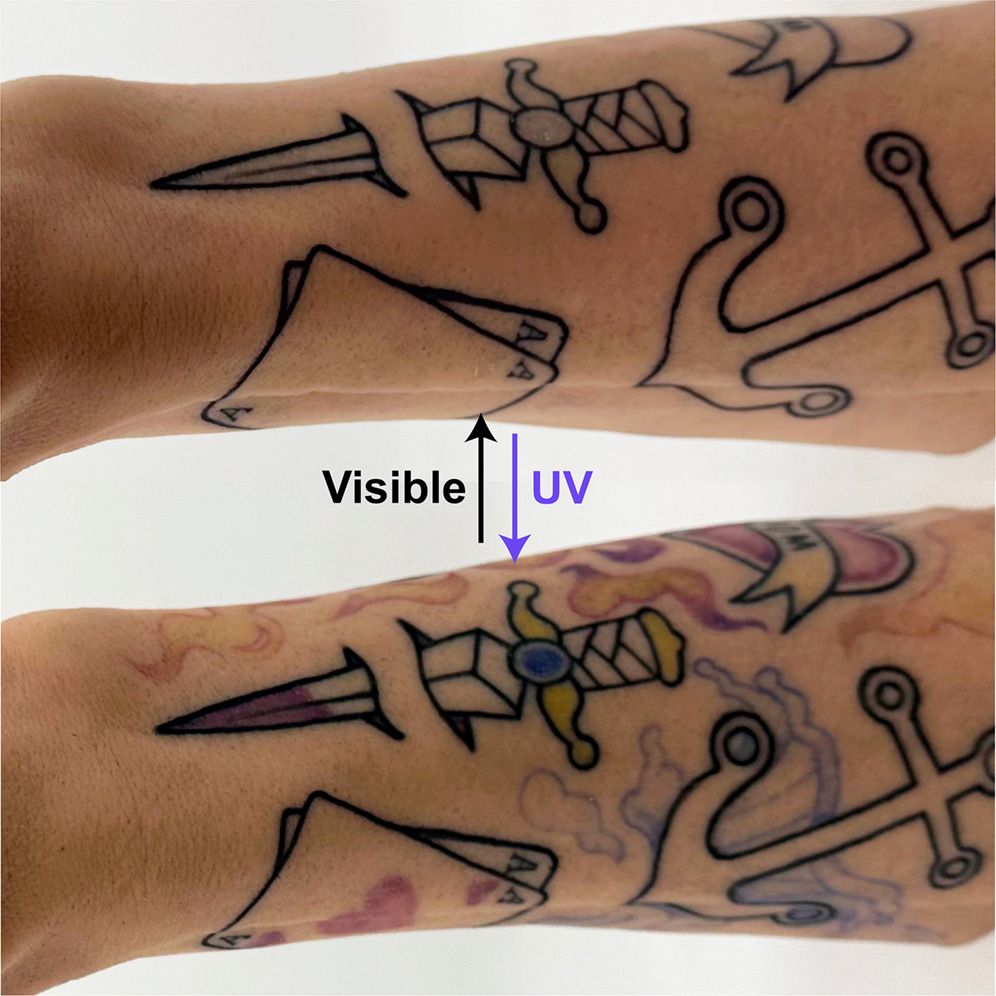
Two arms with one showing tattoos and the other showing colors amidst the tattoos

The new tattoo ink is activated under UV light. (Image credit: Matter & Light, Bruns et al.)

Researchers have developed a new type of tattoo ink that can be switched on and off with light, allowing colors and images embedded in the skin to be changed and even "erased" without having to go through the painful tattoo-removal process.

The system, which is being commercialized under the name PhotoTat, could eventually give people a way to conceal or change permanent body art. It could also have more practical applications, including medical tattoos that are visible only when a doctor needs to see them, researchers reported in a study published Friday (Oct. 9) in the journal Matter & Light.

"This is a tattoo that you can have, and whenever you decide you don't want it to be showing anymore, or you just don't want it there, you just turn it off," said study co-author Carson Bruns, an associate professor of biomedical engineering at the University of Colorado at Boulder. "And that's it. You don't have to turn it on again."

Working like a light switch

PhotoTat contains three primary color inks β€” blue, magenta and yellow β€” made with photochromic dyes, which are light-sensitive compounds that can change color with different wavelengths of light. These dyes are encapsulated in nanoparticles of polymethyl methacrylate (PMMA) β€” a medical-grade, glass-like plastic that is already used in medical implants and dermal fillers.

The dyes change their molecular structure when exposed to specific wavelengths of light. A 365-nanometer ultraviolet (UV) LED can activate pigments in around two to three seconds, Bruns said. Once activated, the colors can persist for hours to days under typical indoor lighting. But once the wearer exposes their skin to the bright outdoor sun, the colors disappear in seconds, erased by the intense light.

That makes the tattoo unique, as the pigment itself remains in the skin but the tattoo's appearance changes. Bruns and his team found that all three PhotoTat channels remained switchable in the skin for between 1.4 and 2.2 years.

Tattooing yourself for science

The three colors enable someone to activate different portions of a tattoo using different wavelengths of light. That means the magenta part of the tattoo might be turned on with green light, while the yellow pigment would be activated by blue light. This allows the wearer to customize their design and coloration to whatever they want at the moment β€” from a purple cherry to a yellow group of hearts.

That feature makes PhotoTat appealing for "people who love tattoos and have lots of tattoos, but just want something kind of fun and playful to add," Bruns told Live Science.

Bruns has tested each iteration of PhotoTat's inks on his own skin. His art is arranged in a series of tattooed scales, with different ink formations in individual scales.

"I gave myself these scales on purpose because they're each sort of a container for an experiment," Bruns said. The result, he joked, resembles a "magical mermaid trick," with some scales appearing out of nowhere and others changing color when activated.

The technology can also be combined with conventional tattoo ink. A permanent black ink design, for example, could contain hidden PhotoTat elements that appear only when activated.

The new tattoos could be appealing to people who want tattoos but are hesitant about their permanence, as well as to people who love their tattoos but occasionally need to conceal them because of work, social expectations or family, Bruns said.

"It's going to be on for most of the time, but just for this one moment, I'm going to turn it off for you grandma, for example," Bruns said.

Medical tattoos

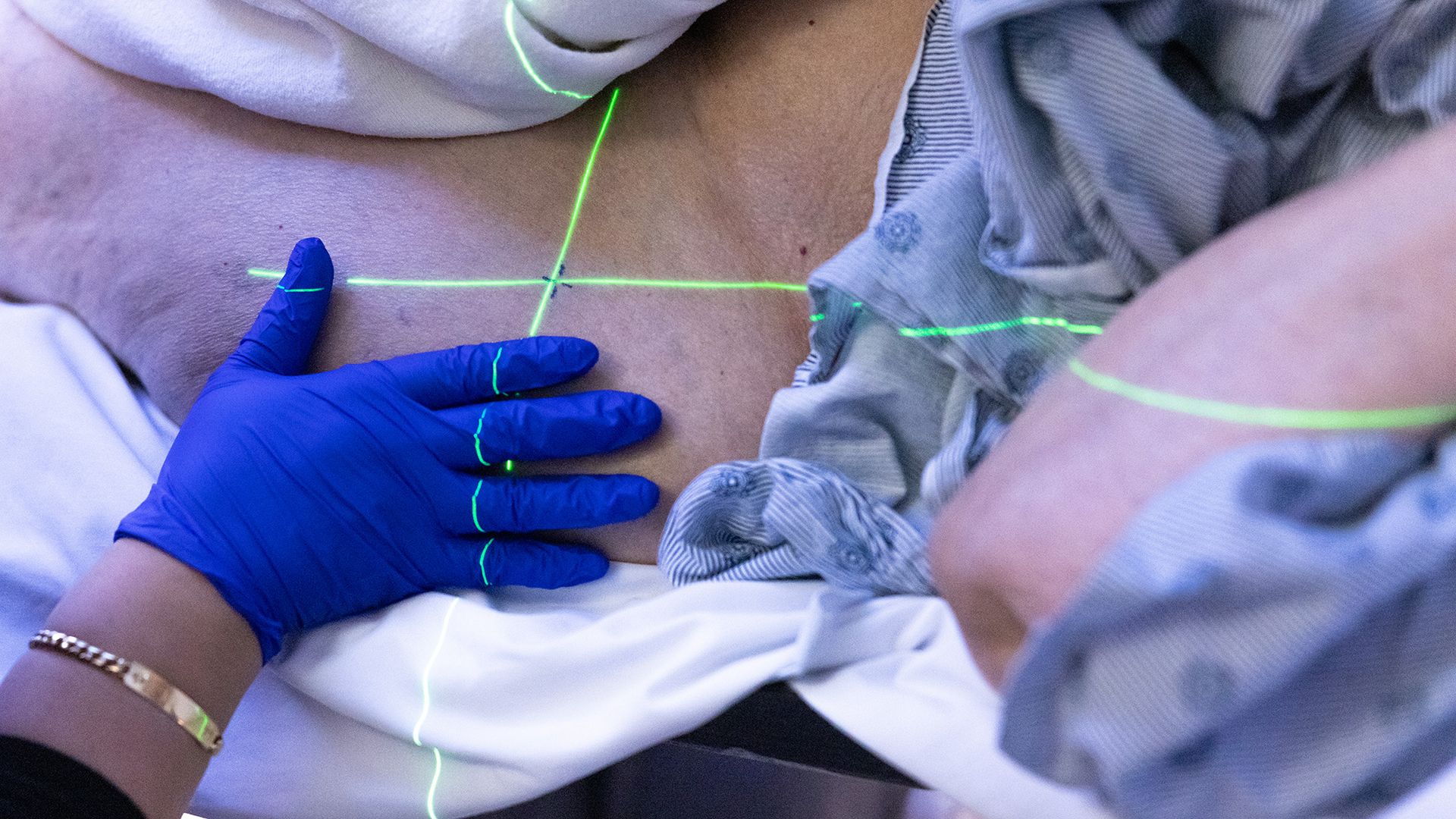
Bruns thinks the tattoos could be helpful in a medical setting, too. Patients undergoing radiation therapy, for example, sometimes receive permanent tattoos that help doctors precisely align radiation beams. While useful, those marks remain after the treatment, reminding the patient of their experience. These would make such markings invisible if a patient wants them to be.

PhotoTat could potentially allow similar markings to be switched on during surgery and hidden afterward.

Bruns has spent several years developing other smart tattoos for medical applications, including a dosimeter-type tattoo that measures the amount of UV radiation a wearer experiences, along with a tattoo that changes color when the wearer is exposed to dangerous gamma radiation.

A crossbeam of green laser light is on someone's back.

A cancer patient receives radiation treatment, guided by laser lines and a tattoo on their skin. (Image credit: The Washington Post via Getty Images)

"It's not for you and me, but if you're like an astronaut or a nuclear engineer, they have to wear these dosimeters," Bruns said. "So, we have like a dosimeter tattoo that sort of puts that in your skin."

So far, Bruns and a fellow tattoo artist, have only commercialized the purple PhotoTat ink, after running the ink through a series of third-party medical tests.

The tests showed the purple is safe for use, and available to order, but it isn't cheap at $100 for a small bottle. Bruns hopes as more research is done, he can bring the other colors to market and lower the production cost, so the technology is more accessible.

'We stocked an RV as an emergency bugout vehicle': Readers share how prepared they are for a disaster

7 October 2026 at 17:23

As the "super" El NiΓ±o is predicted to bring heavier storms and flooding to the U.S., experts recommend stocking up on food and other supplies. Floods and other disasters, like wildfires, are on the rise due to climate change, making disaster preparedness essential.

But how prepared are people for a disaster?

Preparedness levels vary; some people keep an emergency kit full of food and first-aid supplies, while others have a planned meeting place designated as a safe space. Having a plan can help people feel better about unpredictable events. But not everyone has thought this far ahead.

Live Science recently asked readers how prepared they are for a natural disaster and what sort of plans or supplies they have on hand. Over 130 people responded to the poll, with 51% of readers choosing "I've got an emergency kit ready for when the unexpected happens."

The comments reflected this majority, as one reader wrote, "We're on the edge of an area at risk for grass fires, so we bought/stocked an RV as an emergency bugout vehicle. Felt extreme initially, less so as time goes by. Gives us 3-5 days of margin before we need to resupply, with food, water and first aid for people and dogs."

Another commenter responded to the rest of the comments, writing, "This is just the begining [sic]. Get a greenhouse, plant food, learn to harvest water, build an outside toilet (for later), learn to be self sufficient. trade with your neighbors. Plant fruit trees, get solar panels and an electric transporation (bike, car whatever). Keep a de humidifier in your home. it's back to the 1930ie[s]."

Do you agree with these readers? Let us know in the comments section.

Colorful wildflowers bloom across Chile's Atacama Desert in wake of 'super' El NiΓ±o

2 October 2026 at 21:34

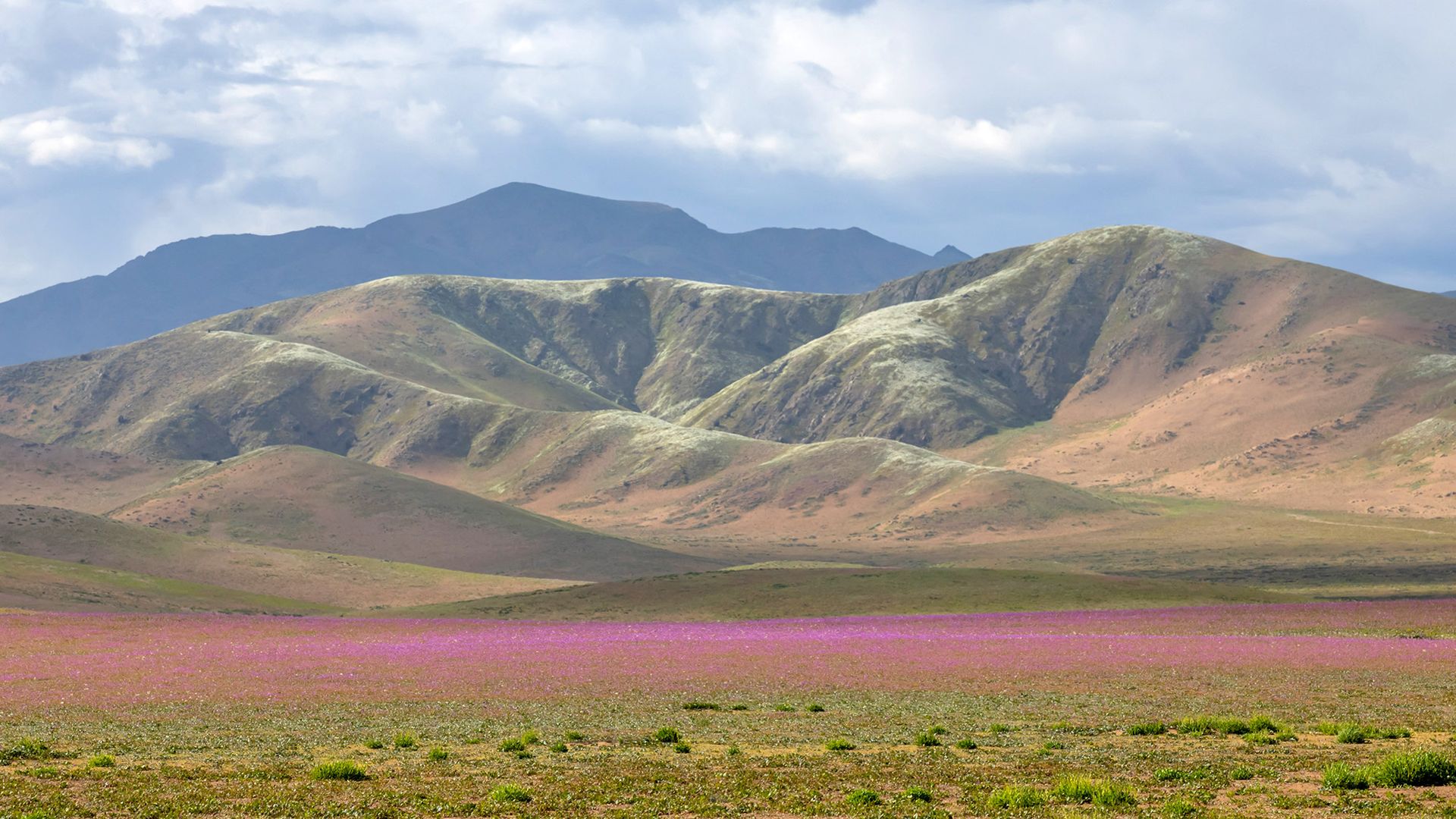
This year's exceptionally strong El NiΓ±o has brought a rare gift to Chile's Atacama Desert: rain. In one of the driest places on Earth, that rare moisture has awakened millions of seeds and bulbs that can remain dormant underground for years, transforming the landscape into a spectacular carpet of color.

Known locally as "desierto florido," or "flowering desert," the phenomenon is one of nature's most remarkable transformations. Patches of purple, pink, white, red and yellow now spread across hillsides and plains that for much of the year appear almost completely lifeless.

"It is a unique phenomenon; there are more than 200 plant species," Jorge Carabantes, head of the Protected Areas Department at the National Forest Corp. (CONAF) in Chile, told The Associated Press. "This is a flowering event that is obviously extraordinary and unusual, very different from other blooms that occur elsewhere on the globe."

Typically, the Atacama gets just 0.6 inches (15 mm) of rain a year. But thanks to the super El NiΓ±o, record levels of rain fell between July and August in several Chilean regions, including levels not seen since the 1950s, with some areas receiving more than 7 inches (190 millimeters), Carabantes told the AP.

While this unprecedented precipitation has caused flooding in some areas of Chile, it's created a 6,560-square-mile (17,000 square kilometers) swath of flowering blooms across the Atacama Desert. This is the most extensive desert bloom since 1997, CONAF representatives told the AP.

For photographers and tourists, the landscape is breathtaking, with bright colors contrasted against the dark Atacama mountains and Chile's cloudless skies. But the bloom is fleeting; by the end of the Southern Hemisphere's spring, many of the flowers will disappear, leaving behind seeds and bulbs waiting for the next extraordinary rains.

Here are five photos from Getty Images photographer Javier Torres that showcase the beauty of this rare event.

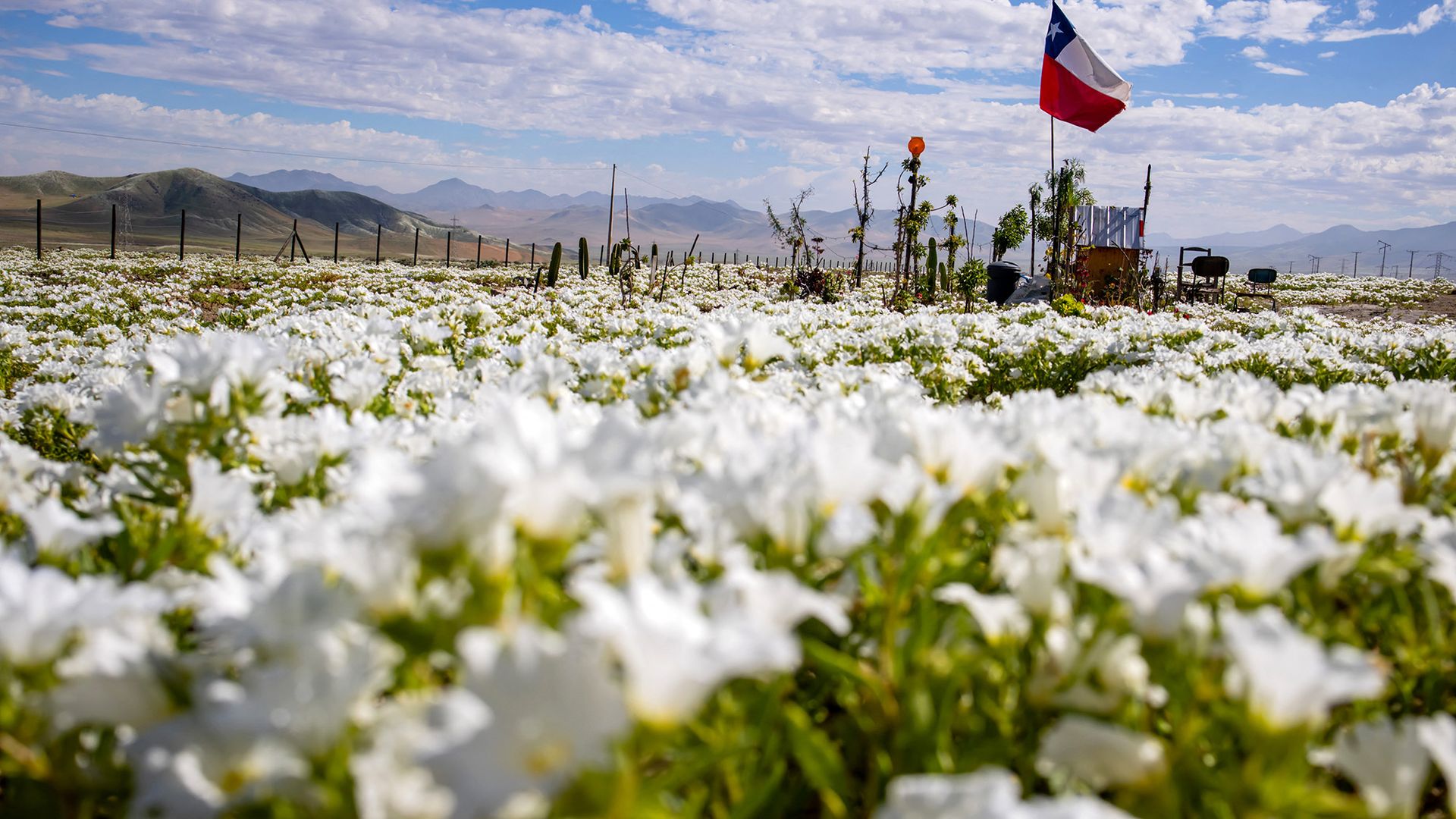
A patch of white blooms is seen with a red, white and blue flag in the background.

Flowers bloom on the plains near the Atacama Desert near CopiapΓ³, Chile, with the Chilean flag in the background. (Image credit: JAVIER TORRES via Getty Images )

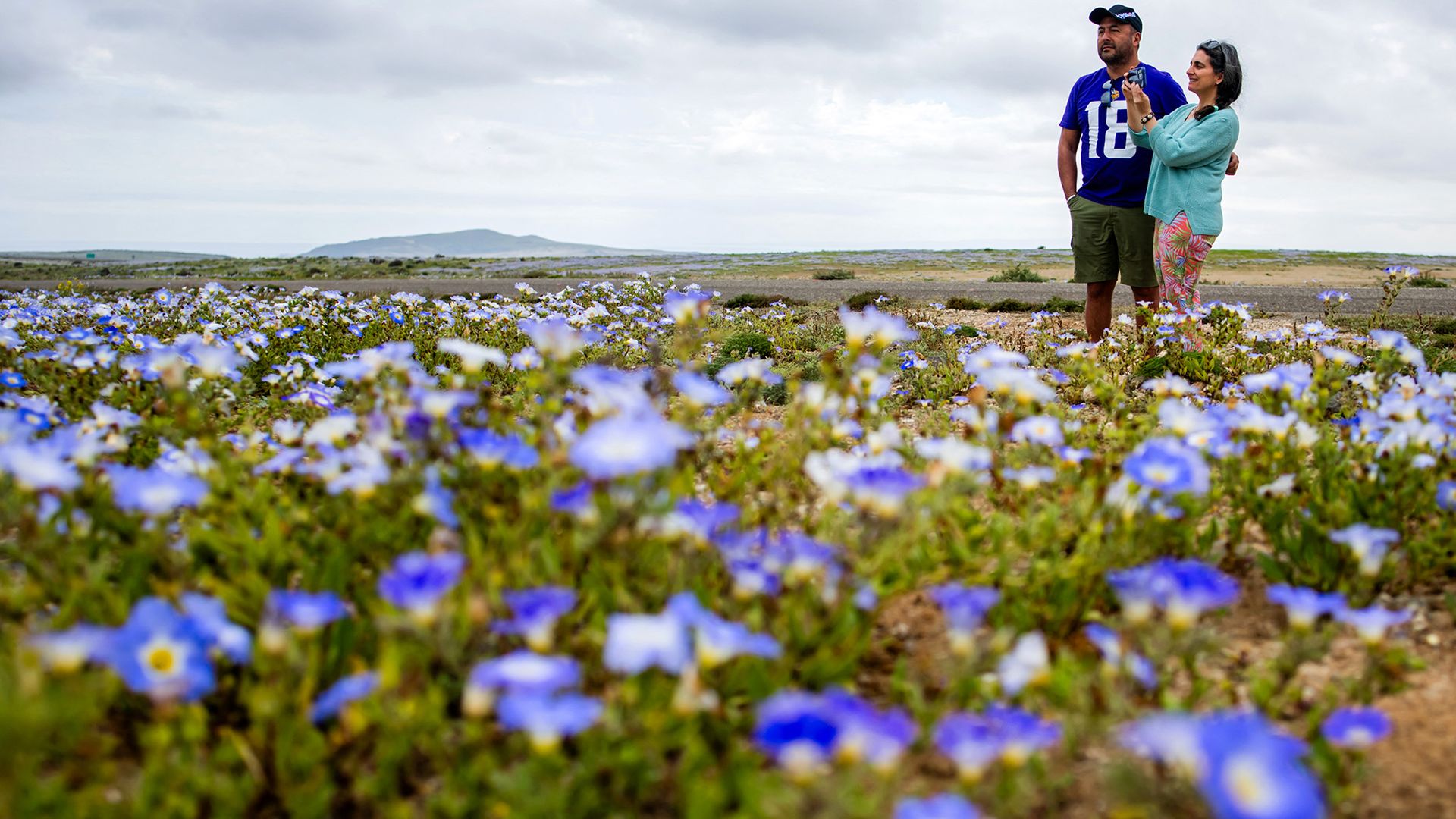
Two people stand in a patch of purple flowers.

Tourists admire the purple blossoms of the desert flowers. (Image credit: JAVIER TORRES via Getty Images)

A patch of pink flowers is seen in front of a mountain range.

The plains of the Atacama Desert are carpeted by brilliant blooms, with the mountains in the distance. (Image credit: JAVIER TORRES via Getty Images)

A series of purple flowers are seen under a red sky.

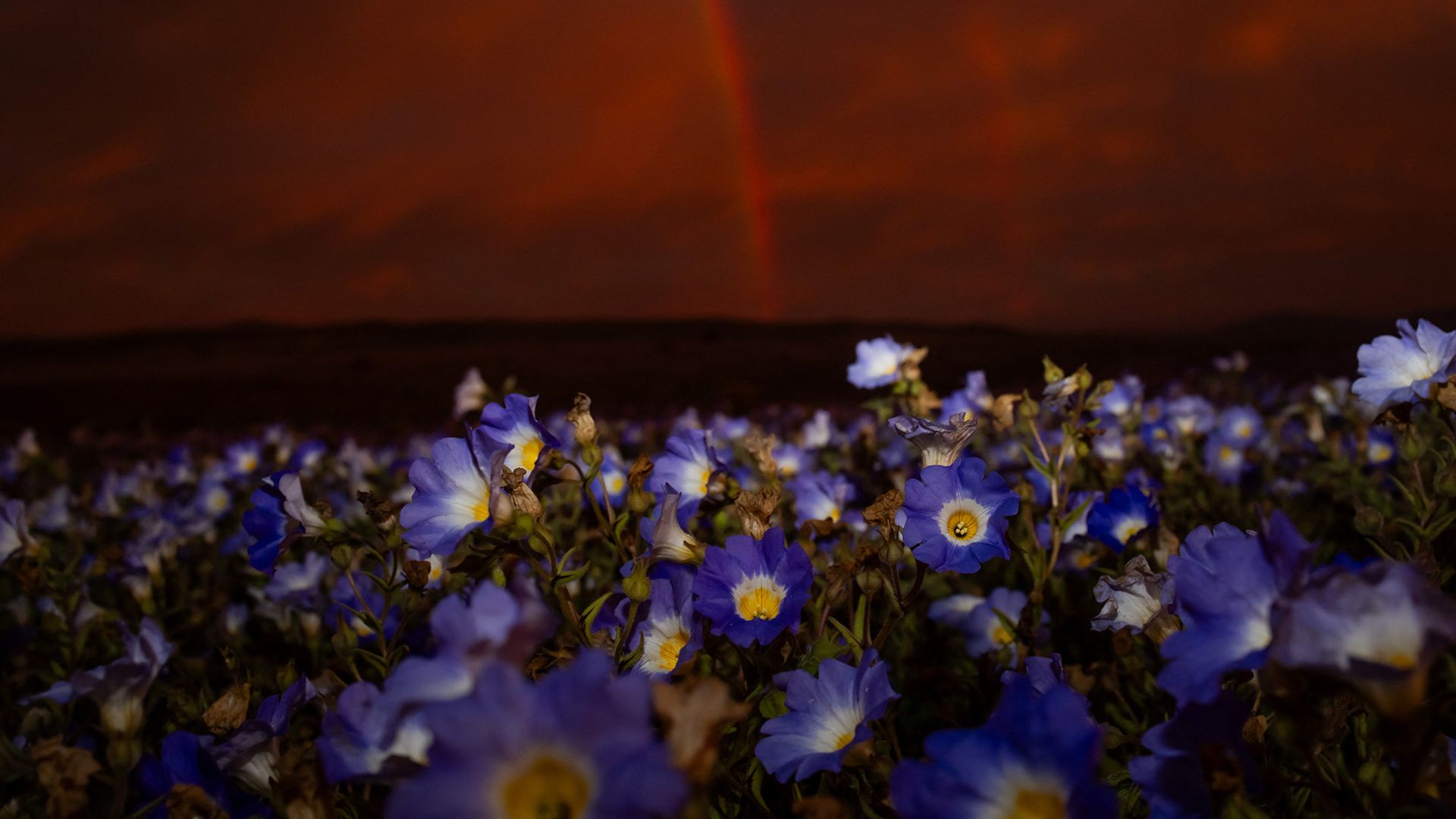
A rainbow glows over purple flowers in Chile's Atacama Desert. (Image credit: JAVIER TORRES via Getty Images)

A patch of purple flowers is seen with long cacti in the background.

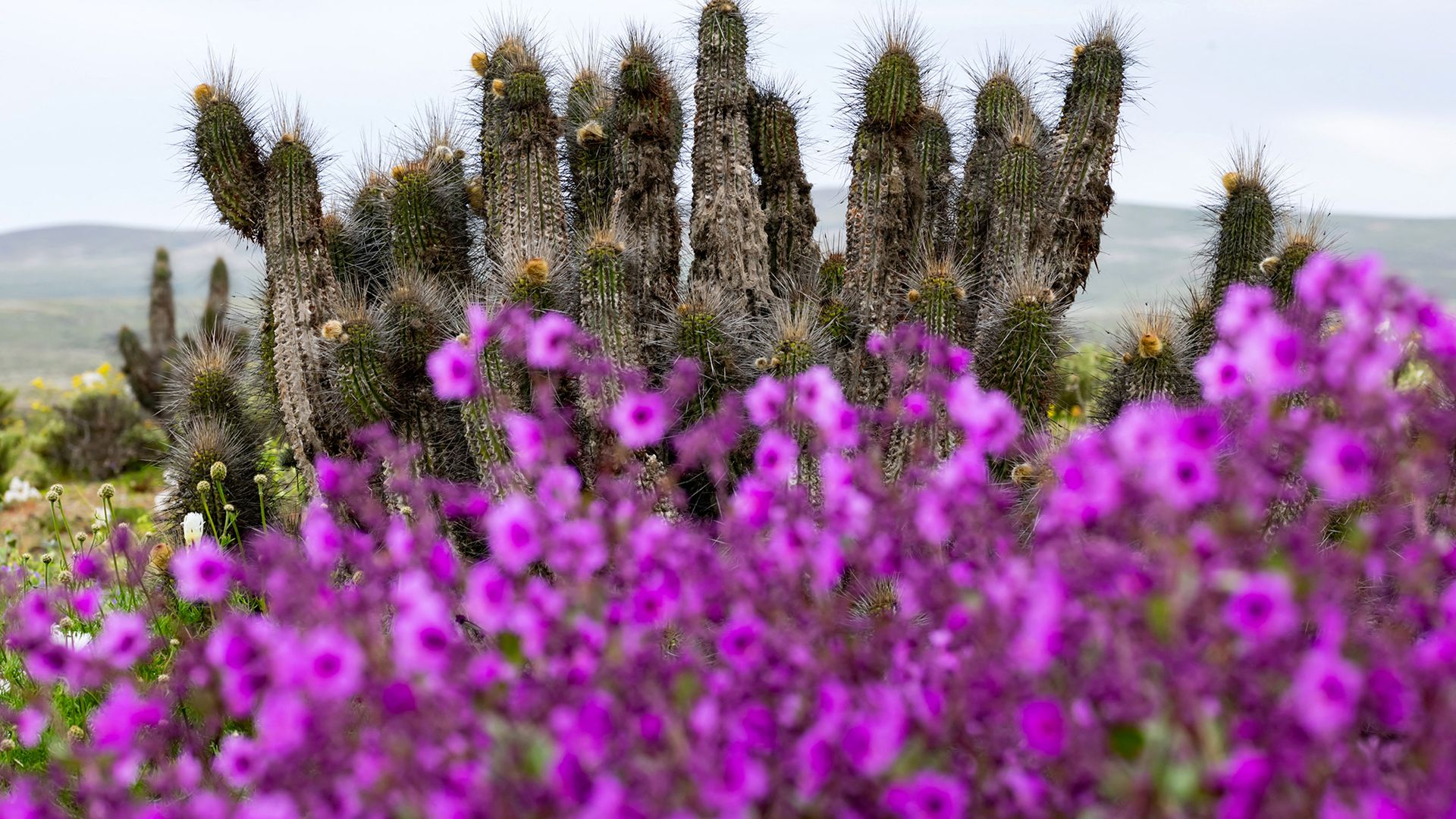
Cacti mix with blooming wildflowers in the Atacama Desert. (Image credit: JAVIER TORRES via Getty Images)

RELATED STORIES

β€”Bloom entombed in amber is the largest fossilized flower ever found

β€”Atacama Desert's center dried out 20 million years earlier than previously thought β€” before the Andes formed

β€”Hidden 'biosphere' of extreme microbes discovered 13 feet below Atacama Desert is deepest found there to date

Animals may have evolved 200 million years earlier than previously thought, new study suggests

2 October 2026 at 19:00

The first animals may have appeared on Earth hundreds of millions years earlier than their fossils suggest, a new modeling study suggests.

Previously, the earliest fossil evidence of animals dated to around 574 million years ago, during the Ediacaran period (635 million to 538 million years ago). In the new paper, a research team argues that we can't just rely on the spotty fossil record, and suggests that animals first appeared up to 200 million years earlier than the oldest known animal fossils.

In the study, published Friday (Oct. 2) in the journal Science Advances, the researchers argue that the absence of animal fossils in some exceptionally well-preserved ancient rocks doesn't mean the animals were absent from history. Instead, they suggest that the fossil record may be missing a key chapter of animal evolution, potentially pushing the origins of animals back to between 800 million and 700 million years ago.

This would place the emergence of animals deep within the Neoproterozoic era (1 billion to 539 million years ago), possibly before or during some of Earth's most extreme ice ages.

Even though scientists haven't found undisputed animal fossils from the Neoproterozoic, that doesn't mean animals didn't live at that time. Fossils can be absent from rocks for several reasons, including because scientists are looking in the wrong places or the conditions were unsuitable for creating fossils, making it difficult to determine the earliest evolved animals.

"Until that evidence becomes available, the precise birth date of the animal kingdom remains uncertain," study co-author Ross Anderson, an associate professor of natural history at the University of Oxford, said in a statement.

Where are the animals?

Until now, most researchers relied on the well-preserved rocks from the Ediacaran period, including the roughly 590 million-year-old Weng'an Biota in China, to investigate the timing of animal evolution. Because rock deposits there contain uniquely preserved microscopic organisms but no definitive animal fossils, experts have sometimes treated them as a kind of upper limit for when animals could have evolved.

"So the game is basically how much does it predate our first fossil discovery by and what happened in that evolutionary black box between when they actually originated versus when we get our first fossil window," Karma Nanglu, an assistant professor of evolutionary paleobiology at the University of California, Riverside who wasn't involved with the study, told Live Science.

But the researchers wondered whether other fossil sites from known animal periods actually had evidence of animal fossils.

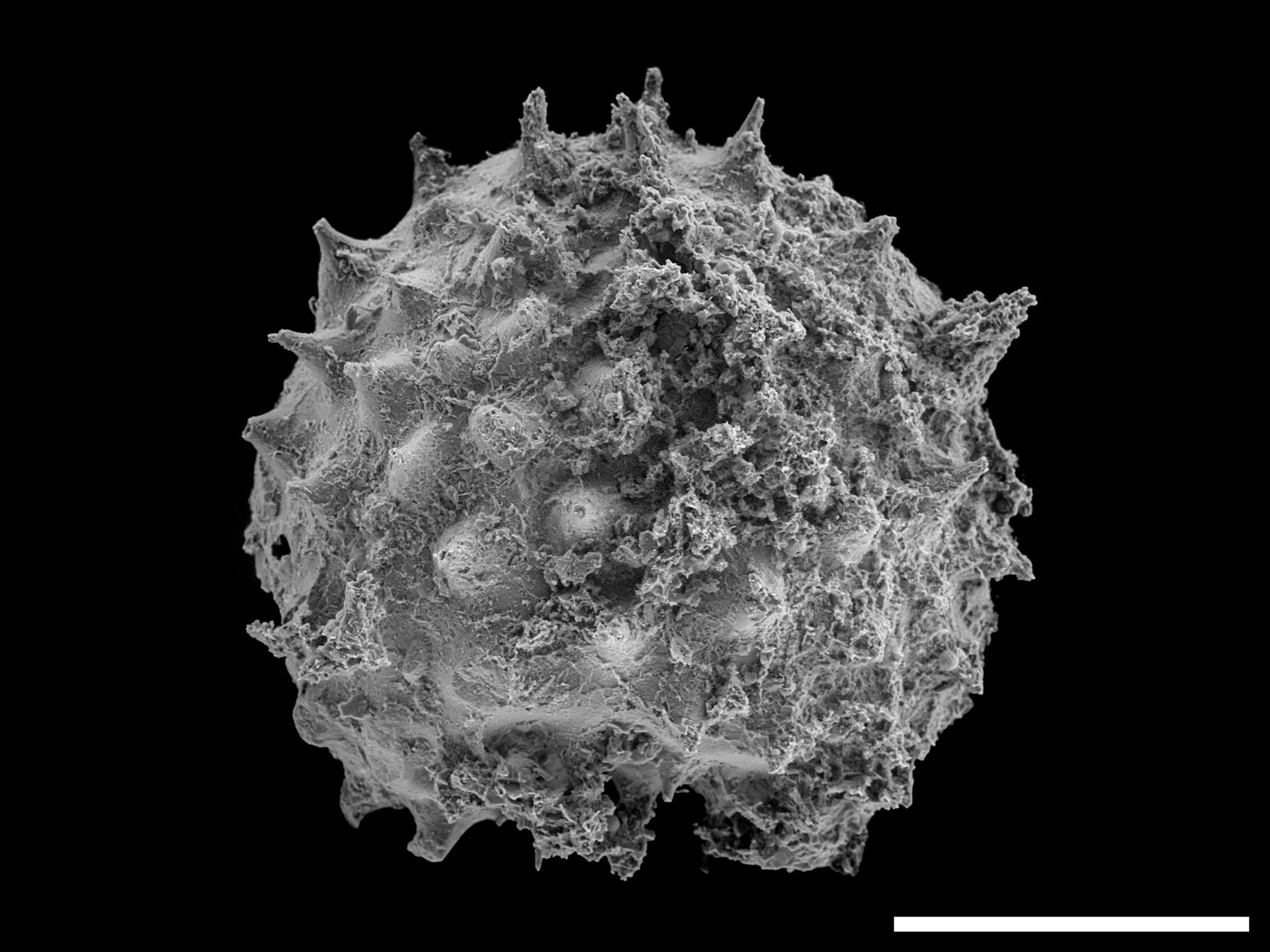
To find out, Anderson and his colleagues studied more than 140 samples from the Kheseen Biota in Mongolia, which is more than 40 million years younger than the 590 million-year-old Weng'an Biota deposit. Given that it's a younger deposit, the researchers hypothesized that there should be evidence of animal life left in the rock. Using electron scanning microscopy, the researchers saw microscopic fossils preserved in extraordinary detail, including tiny, spherical organisms and embryo-like structures containing internal cells.

A microscope image showing a gray sphere with jagged edges.

An electron microscope image of Asterocapsoides wenganensis, a microscopic fossil from the Kheseen Biota in Mongolia. (Image credit: Derek Briggs.)

Yet, despite the quality of preservation, the researchers couldn't identify any of the microfossils as animals. That's important, because by the time the Kheseen Biota was deposited, animals were present elsewhere on Earth.

"The Kheseen Biota breaks the argument that the exceptional microfossils of Weng'an mean we would have seen animal fossils in the assemblage had they existed at the time," Anderson said. "The Kheseen microfossils are just as well-preserved, yet animals continue to be absent β€” despite the fact we know at that point they existed."

Using molecular clocks

Given the absence of fossil evidence, Anderson and his collaborators turned to another common method used to date ancient life: molecular clocks. Molecular clocks estimate when evolutionary lineages diverged by comparing genetic differences among living organisms and combining those differences with rates of genetic change. For example, if two bird species have five DNA changes and one DNA change takes about 1 million years to accumulate, scientists could estimate that the two species diverged around 5 million years ago.

"Molecular clocks are useful when we don't have a particularly good fossil record for a group of interest or a time period of interest," Nanglu said.

When the analysis was constrained by the younger Weng'an deposit, the estimated origin of animals was comparatively recent. When they used older geological constraints β€” specifically rock formations in Norway, Australia and Arizona deposited between around 850 million and 730 million years ago that have been used in the past for trying to find animals' early ancestors, the timeline changed. By comparing modern animal DNA to reference dates from the fossil record along with evolutionary rates of change β€” their estimate shifted back by roughly 200 million years, to between about 800 million and 700 million years ago.

"Pre-Ediacaran animal body fossils still elude us, and this analysis does not prove that animals existed 800 million years ago," study first author Orin Lole Durbin, a doctoral student of paleobiology at Virginia Tech who was a University of Oxford undergraduate at the time of the study, said in the statement. "Meanwhile, our molecular-clock analyses show how much further back their evolutionary history could extend."

Could animals have lived before "Snowball Earth"?

There are other clues that animals may have a longer history.

Chemical fossils, or biomarkers, have been interpreted as evidence consistent with sponges living at least 650 million years ago, tens of millions of years prior to the oldest known animal fossils.

If animals did originate 800 million years ago, their emergence would also intersect with the Cryogenian period, which began around 720 million years ago as part of the Neoproterozoic era. During this interval, Earth experienced enormous glaciations often referred to as "Snowball Earth."

Although there is no definitive answer to whether animals survived this uncertain time, the researchers plan to search additional Neoproterozoic rocks with different environments and preservation conditions to find more evidence for their analysis.

"Fossils themselves are by definition kind of hidden from general sight," Nanglu said."Beyond that there's an even more hidden world, and that has a lot of potential to tell us about animal origins."

Think you know about natural selection? Try your hand at our evolution quiz!

How prepared are you for a disaster?

2 October 2026 at 16:01

This year's "super" El Nino means the U.S. will likely face a higher risk of stormy weather and flooding, so experts are recommending Americans stock up on food.

And flooding is just one of the natural disasters people will face β€” many people are at risk of wildfires, power outages or earthquakes. While some disasters are unexpected, preparation can make a significant difference in how much they impact peoples' daily lives.

But is anyone actually prepared for the worst?

Levels of preparedness vary widely. Some may keep an emergency kit stocked with food, water and first-aid supplies, while others may have an evacuation plan, emergency contacts or designated meeting place for their household. And others do nothing at all. Although a recent study revealed there's no single place on Earth that's best prepared for global disaster, there are steps people can take to feel well equipped.

Experts recommend stocking up on food supplies and other essentials, especially in areas that might be more disaster prone. But how prepared are you? Answer our poll below, and share how you've prepared for emergencies or what you have in your disaster kit in the comments.

❌