Reading view

My year with the robots: how Joanna Stern let AI into her home, work – and heart

In 2025, the tech journalist invited artificial intelligence to do nearly everything for her, including editing the book she was writing about the experiment. Some of it was useful, some not – but it was her time with a chatbot companion that really shook her

For a year, Joanna Stern decided to turn herself into a “lab rat” – the object of her own experiment. Throughout 2025, she invited artificial intelligence into “every corner” of her life. She let AI answer her texts, decide what she ate and cooked, mow her lawn, fold her washing, drive her places, parse her mammograms and even, in the darkness of a burner phone, be her lover. The resulting book, I Am Not a Robot: My Year Using AI to Do (Almost) Everything, asks all the big questions, including: what happens when AI can do everything humans can do? And what comes after that?

If anyone can produce answers, surely it’s Stern. Last February, she ended a 12-year stint as a personal technology columnist at the Wall Street Journal. During her tenure, she won an Emmy for her short documentary E-Ternal: A Tech Quest to “Live” Forever, which explored digital legacies, and built a reputation for product reviews that were outlandishly creative and fiendishly stringent. She once took an Apple watch jetskiing on the Hudson river to evaluate its connectivity.

Continue reading...

© Photograph: Sydney Krantz/The Guardian

© Photograph: Sydney Krantz/The Guardian

© Photograph: Sydney Krantz/The Guardian

  •  

High-Energy Pulsed Laser via Mamyshev Oscillator

In a groundbreaking advancement poised to redefine the landscape of ultrafast photonics, researchers have unveiled an integrated mode-locked laser that delivers unprecedented pulse energies previously unattainable on photonic integrated circuits (PICs). This seminal work, introduced by Qiu and colleagues and published in Nature, presents a novel laser architecture harnessing the Mamyshev oscillator concept combined with erbium-ion-implanted silicon nitride waveguides. The result is a compact, chip-scale laser source capable of delivering nanojoule-level pulses at a 176 MHz repetition rate, setting a new milestone in integrated ultrafast laser technology.

Ultrafast lasers represent a linchpin technology in modern science and industry, enabling landmark innovations ranging from precision eye surgery to real-time observation of chemical reactions and the realization of high-precision optical atomic clocks. Yet, despite aggressive research and development over recent decades, the challenge has remained to translate the high performance of conventional fiber-based ultrafast lasers onto photonic chips without sacrificing pulse energy. Typical integrated systems have been hampered by low output pulse energies, limiting their applications particularly in driving nonlinear optical processes, such as supercontinuum generation.

The research team surmounted this formidable challenge by integrating erbium ions into silicon nitride photonic platforms, exploiting the advantageous gain properties of erbium while leveraging the low propagation loss and broad transparency window of silicon nitride. This innovative hybrid integration forms the active medium of the laser, facilitating efficient gain within a highly compact and scalable photonic chip environment. Silicon nitride’s compatibility with CMOS fabrication techniques further paves the way for wafer-scale manufacturing and on-chip integration with other optical components.

Crucially, the laser is constructed around a Mamyshev oscillator configuration, a paradigm that departs from traditional mode-locking schemes. The Mamyshev oscillator utilizes a combination of alternating spectral filtering and nonlinear self-phase modulation to achieve stable mode-locking operation. This architecture excels in enabling large nonlinear phase shifts, which are essential in maintaining pulse integrity and achieving high pulse energies, particularly on integrated platforms. By alternating spectral filtering within the cavity, the system effectively self-regulates, maintaining a consistent output without the need for external seed sources or complex stabilization mechanisms.

Operating at a repetition rate of 176 MHz, the laser generates pulses with nanojoule-scale energy, bringing integrated sources in line with fiber laser systems while outstripping previous chip-scale implementations by approximately two orders of magnitude. The output pulses exhibit exceptional coherence and can be compressed to durations as short as 147 femtoseconds via linear compression techniques, achieving temporal brevity highly sought after in ultrafast science. This represents a major breakthrough, as prior integrated mode-locked lasers have generally struggled to produce both short pulses and sufficient energy simultaneously.

Beyond pulse characterization, the utility of this laser is strikingly demonstrated by its ability to drive a supercontinuum generated directly within silicon nitride waveguides spanning an impressive 1.5 octaves in optical bandwidth. This is particularly significant because supercontinuum generation typically demands high peak powers or additional amplification stages. Here, the compact on-chip laser source alone suffices, eliminating the need for bulky external components and enhancing integration potential for portable spectroscopy and metrology applications.

The tangible impact of this ultrafast source is exemplified in the authors’ demonstration of a miniaturized terahertz time-domain spectrometer, an instrument paramount for broadband electromagnetic wave measurement and chemical sensing. Utilizing the integrated mode-locked laser, the spectrometer achieved a bandwidth of 5 terahertz with an outstanding dynamic range of 90 dB, enabling highly sensitive, non-contact chemical analysis. This application underscores the laser’s promise not just in laboratory settings, but in diverse fields requiring compact and precise spectroscopic tools such as environmental monitoring, security, and medical diagnostics.

Importantly, this work addresses critical limitations in scalability and manufacturability that have hindered the translation of ultrafast laser technology to integrated photonics. The erbium implantation process adopted is compatible with established silicon nitride fabrication workflows, signaling that this breakthrough is not merely a proof of concept but a viable pathway to mass production. The prospects for chip-scale frequency metrology, portable ultrafast spectroscopy, and even integration into complex photonic circuits for advanced information processing are now markedly brighter.

This pioneering laser architecture also invites renewed exploration into nonlinear optical dynamics on chip-scale platforms. The synergy between large nonlinear phase shifts enabled by the Mamyshev mechanism and the enhanced gain provided by erbium ions opens vistas for new integrated nonlinear devices and frequency comb generators with unprecedented performance metrics. The ability to engineer pulse shape, energy, and timing directly on chip will no doubt inspire fresh theoretical and experimental research directions.

From a technological standpoint, the achievement seamlessly aligns with global trends toward miniaturization, energy efficiency, and system integration in photonics. By accomplishing state-of-the-art ultrafast pulse generation within a compact footprint, this research brings us closer to ubiquitous ultrafast laser sources embedded in a wide range of devices. This paradigm shift promises to catalyze innovations across numerous disciplines reliant on light-matter interaction at ultrafast timescales.

As the community digests these findings, future work will likely explore the tailoring of erbium ion distributions, dispersion engineering of silicon nitride waveguides, and enhanced filter designs to push pulse energies and durations even further. Moreover, integrating active phase stabilization and feedback control mechanisms could further improve laser stability and coherence, fully exploiting the Mamyshev oscillator’s potential in practical systems.

This seminal study by Qiu et al. redefines what is achievable in integrated ultrafast photonics, demonstrating that chip-scale mode-locked lasers can now compete with—and even surpass—traditional fiber-based counterparts in pulse energy output and functional versatility. This is a critical step toward fully integrated photonic systems where ultrafast light generation, manipulation, and detection coexist on a single chip, heralding a new era in optical science and technology.

Subject of Research:
Integrated ultrafast mode-locked laser technology based on Mamyshev oscillator architecture incorporating erbium-ion-implanted silicon nitride waveguides.

Article Title:
High-pulse-energy integrated mode-locked laser using a Mamyshev oscillator.

Article References:
Qiu, Z., Yang, X., Li, X. et al. High-pulse-energy integrated mode-locked laser using a Mamyshev oscillator. Nature 654, 57–63 (2026). https://doi.org/10.1038/s41586-026-10517-4

Image Credits:
AI Generated

DOI:
https://doi.org/10.1038/s41586-026-10517-4

Keywords:
Ultrafast lasers, photonic integrated circuits, mode-locking, Mamyshev oscillator, erbium-ion implantation, silicon nitride waveguides, supercontinuum generation, terahertz spectroscopy, integrated photonics, nonlinear optics.

  •  

Demand Is Booming For New No Tech, Repairable Tractor

An anonymous reader quotes a report from 404 Media: The secondary market for decades old, low-tech John Deere tractors has been booming for years as farmers have sought reliable tractors that they can actually fix without having to deal with John Deere's repair monopoly. A Canadian company has seen that demand and came up with a radical thought: What if they made a new, repairable, "no-tech" tractor to solve what has become a gigantic pain point for farmers? Alberta's Ursa Ag says that it has been inundated with demand after announcing its tractor, which costs roughly half as much as a Deere and has the benefit of not being a repair nightmare. [...] Ursa Ag markets its tractors as "no frills" and "built to last." Ursa Ag's Doug Wilson told me that the company designed the tractor because of a need in the marketplace for a new machine that isn't loaded with tech and is easy to maintain. The company follows in the footsteps of consumer electronics companies like Fairphone, which makes a repairable smartphone and Framework, which makes modular, repairable laptops. The demand Ursa Ag has seen is part of the backlash to manufacturer repair monopolies and the injection of technology and internet-connected sensors and terms of use into even the most basic of gadgets. "I talk to farmers every day and I hear from farmers every day about how they went out and bought machinery from 1987 so that it wouldn't have a computer on it," Wilson said. "All of this came from a simple discussion with a customer who wanted to be able to turn [the tractor] on at the start of the day, to use it, and shut it off at the end of the day. It needed to work, so that's what we built." Ursa Ag's tractor has been hyped in agriculture circles after Wilson showed the tractor off at a Canadian farm show and it was featured by Farms.com. Wilson said more than a thousand farmers have contacted him after that show, from roughly 30 countries. "I got a handwritten letter from a farmer in France who doesn't own a computer and wanted us to mail him information about the tractors," he said. He said the company has thus far made a couple fewer than 100 tractors but is working on tripling its production capacity and has seen a lot of demand over the last few months. "Given the number of my customers that carry flip phones, I would say there is consumer pressure to back away from some of the technology that is unnecessary to perform everyday tasks," Wilson said. "So that is definitely transferable to dishwashers and washing machines, refrigerators. Refrigerators that have screens on them that'll tell you what's inside. It's a little crazy." "That high-tech stuff, the million-dollar John Deere tractor has a place. It has technology that is well worth the money," Wilson said. "But that technology is needed for 5 percent of what a farm does. There are so many applications for tractors on farms that don't require technology. The technology that goes into even a calculator is not required for most farming applications."

Read more of this story at Slashdot.

  •  

Optimizing Carbon Ratios in Concrete Enhances Carbon Accounting Accuracy

For the first time, scientists from the University of Tokyo have unveiled a groundbreaking technique to precisely quantify the amount of carbon dioxide (CO2) absorbed by concrete through various sources, including both natural atmospheric CO2 and industrial emissions. This advance is poised to revolutionize carbon accounting and trading mechanisms by providing an unprecedented level of accuracy in tracing the origins of sequestered carbon in cementitious materials. The innovation stems from harnessing the subtle distinctions within carbon isotopes, which act as molecular fingerprints, and has the potential to be adapted for monitoring other greenhouse gases as well, marking an important milestone in climate change mitigation research.

Concrete production has long been recognized as one of the largest contributors to global CO2 emissions, responsible for approximately 8% of anthropogenic emissions worldwide. Traditionally viewed as a linear carbon emitter, the industry has recently witnessed promising developments where concrete can be engineered to actively capture and store CO2 during certain phases of its lifecycle. However, a fundamental challenge has been the inability to distinguish the origin of CO2 absorbed by concrete—whether it stems from combusted fossil fuels or from naturally occurring atmospheric sources. Professor Ippei Maruyama and his team at the Building Material Engineering Laboratory set out to solve this puzzle, aiming to enhance the transparency and credibility of carbon reduction claims linked to concrete technologies.

Central to their approach is the use of isotopic ratio analysis, which exploits the unique signatures of carbon atoms differing in neutron number. Carbon predominantly exists as the isotope carbon-12 (^12C), but a minority exists as carbon-13 (^13C) and carbon-14 (^14C). While ^14C decays over thousands of years and is virtually absent in fossil-derived CO2, atmospheric CO2 contains a measurable level of this isotope. Conventionally, radiocarbon dating focuses on ^14C abundance to estimate the age of materials. However, environmental mixing of gases during the CO2 fixation process in concrete complicates simple isotope interpretation, requiring more nuanced analytical frameworks that the research team has now developed.

The innovation in this study revolves around a novel correction model designed to accurately account for isotope fractionation effects, which occur when different isotopes separate or concentrate unevenly during physical or chemical processes. Traditional correction methods, inherited from radiocarbon dating protocols, fall short when applied to environments where atmospheric air mixes with industrial exhaust gases during concrete carbonation. Such mixing skews the isotope ratios, introducing significant errors into source attribution calculations. Recognizing this gap, Maruyama’s group devised a mathematical framework that rigorously adjusts isotope ratio readings, thereby dramatically enhancing the precision of distinguishing between fossil-derived and atmospheric CO2 embedded in concrete.

To empirically validate their methodology, the team subjected concrete samples to controlled laboratory environments containing varying proportions of industrial exhaust gases and atmospheric CO2. By pulverizing the cementitious materials and analyzing the embedded carbon isotopes with mass spectrometry techniques, they demonstrated that under ideal laboratory conditions, the integration of fossil-derived CO2 into concrete can be extremely efficient, often exceeding expectations. Yet, the real-world application remains complex due to environmental variability—such as fluctuations in humidity, temperature, and ambient CO2 concentration—which influence the carbonation dynamics and associated isotope ratios. Their analytical model is designed to be robust enough to accommodate these variables as the research progresses.

The implications of this work extend beyond academic interest: industries adopting carbon capture in concrete manufacturing now have a scientifically validated means to quantify the true source of sequestered CO2. This differentiation is crucial from a regulatory and economic standpoint because atmospheric CO2 absorption does not equate to a net reduction in emissions, while capturing fossil-derived CO2 from industrial exhaust represents a true mitigation benefit. Accurate carbon accounting informed by isotope analysis could thus reshape emission inventories, inform policy development, enhance carbon credit systems, and incentivize technologies that genuinely reduce carbon footprints.

Further exploration of this isotope-based approach could also spur innovations in monitoring other industrial gases with complex origins, such as methane or nitrogen oxides, where source attribution remains a challenge. The methodology highlights the power of stable and radioactive isotope tracing as a versatile investigative tool in environmental science and industrial process evaluation. By extending the scope beyond carbon in concrete, similar isotope fingerprinting techniques might be customized to achieve high-resolution tracking of various atmospheric pollutants and greenhouse gases, supporting broader climate action efforts.

Concrete’s ability to sequester CO2 stems from its chemistry. The mineralization of CO2 during hydration reactions leads to the formation of carbonate compounds within the cement matrix, effectively locking carbon in a stable solid phase for extended periods. Understanding the subtle differences in isotope composition within these carbonate minerals offers a direct window into the carbon source history—whether it was atmospheric, recently emitted fossil fuel carbon, or even recycled industrial CO2. This level of insight was previously unattainable but is now accessible thanks to the analytical advancements demonstrated by the University of Tokyo team.

Moreover, one of the challenges addressed by this research is the “contamination” of fossil CO2 measurements by the presence of atmospheric CO2, which naturally infiltrates exhaust streams and ambient air in practical scenarios. Without precise separation of these sources, carbon quantification efforts could overestimate or underestimate true emissions reductions. The researchers’ success in developing a correction model for isotope fractionation enables confident distinction of mixed sources—a vital step for validating carbon capture technologies in the infrastructure sector.

Going forward, the team intends to expand the scope of their investigations by applying their methodology in industrial-scale settings, where conditions differ markedly from controlled laboratories. Such field validation is essential to confirm robustness and reliability before commercialization and regulatory acceptance. They also plan to refine their isotope measurement protocols and modeling algorithms to increase sensitivity and reduce uncertainties. This will facilitate seamless integration into carbon trading frameworks and environmental reporting systems, ultimately empowering stakeholders to make informed, scientifically-backed decisions.

This pioneering work is funded by Japan’s New Energy and Industrial Technology Development Organization (NEDO) under project JPNP21023, underscoring the strategic national priority placed on sustainable materials science and decarbonization technologies. It was published in the June 2026 issue of Cement and Concrete Research, highlighting the intersection of chemistry, materials engineering, and climate science in tackling one of the most pressing global challenges. Professor Maruyama and his colleagues demonstrate how fundamental isotopic science can be harnessed to deliver practical solutions with significant environmental and economic impacts.

The discovery not only advances our understanding of carbon cycling within industrial materials but also contributes to the larger dialogue on how technological innovation can facilitate the transition to a carbon-neutral future. By precisely tracing how and where CO2 is captured, accounted for, and stored within concrete structures, researchers are laying the scientific foundation for more effective climate policies, responsible corporate action, and sustainable infrastructure development. This innovation in isotope analysis represents an important step forward in harnessing advanced analytical techniques for environmental stewardship.

In summary, the University of Tokyo’s research stands as a landmark achievement in the quantification and verification of CO2 sequestration within concrete. Through meticulous isotope measurements and the creation of new correction paradigms, the researchers successfully discern fossil-fuel derived carbon from atmospheric sources embedded in cementitious materials. The potential applications, ranging from improving carbon accounting standards to supporting carbon markets, mark this work as both timely and transformational in the ongoing battle against climate change.


Subject of Research: Not applicable

Article Title: Quantification of sequestered fossil-derived CO₂ in cementitious materials and its atmospheric contamination using carbon isotope measurements

News Publication Date: 2-Jun-2026

Web References:

References:
Ippei Maruyama, Ryusei Igami, Ryo Kurihara, Masayo Minami, Hiroshi A. Takahashi, Abudushalamu Aili. “Quantification of sequestered fossil-derived CO₂ in cementitious materials and its atmospheric contamination using carbon isotope measurements,” Cement and Concrete Research, 2026. DOI: 10.1016/j.cemconres.2026.108290

Image Credits:
©2026 Maruyama et al. CC-BY-ND

Keywords

Carbon dioxide sequestration, concrete carbonation, isotope ratio analysis, carbon-13, carbon-14, fossil carbon detection, carbon accounting, climate change mitigation, isotope fractionation correction, cement chemistry, industrial CO2 capture, carbon trading

  •  

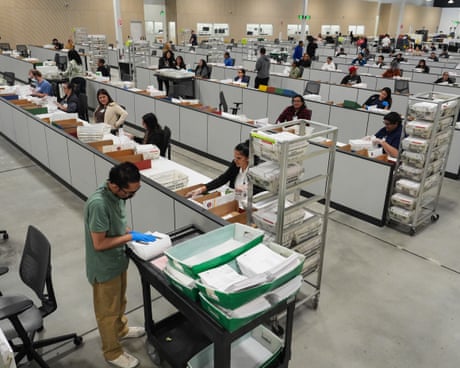
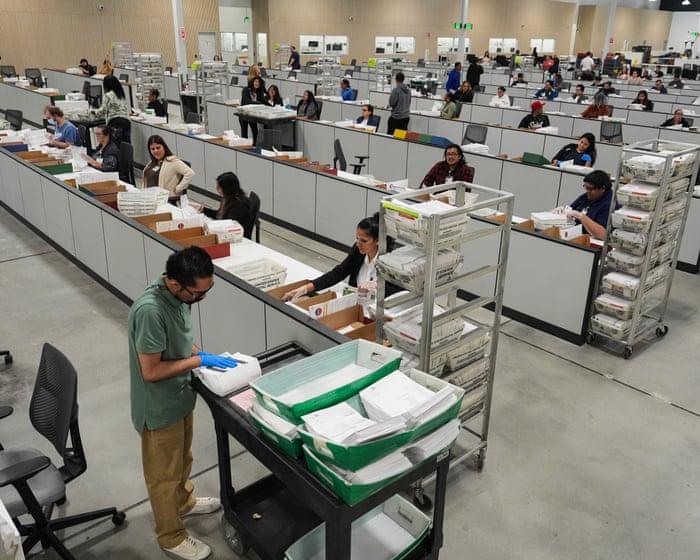
Tech industry wins big in California primary election with millions spent paying off

Silicon Valley is fighting against regulation, taxes and growth of AI and will benefit from having political leverage

Silicon Valley had a big night in California’s primary election, proving that the tens of millions of dollars funding candidates across the state was money well spent. While the tech industry’s preferred candidate for governor came in a scant sixth place, donations to smaller elections proved to be a successful strategy.

Tech billionaires have in past months thrown their full weight into politics as the industry fights regulations, taxation and promotes the unfettered growth of artificial intelligence. Getting the right candidates in office, especially in its home turf of California, is existential. With favorable candidates, tech companies can gain both political and regulatory leverage to maintain their dominance in business.

Continue reading...

© Photograph: Jae C Hong/AP

© Photograph: Jae C Hong/AP

© Photograph: Jae C Hong/AP

  •  

Seattle, home to Amazon and Microsoft, poised to pass moratorium on new datacenters

Measure expected to succeed next week represents major rebuke to big tech as local disquiet over AI boom grows

Seattle’s city government is on the verge of passing a year-long ban on the construction of new datacenters, the largest city yet in the US to consider such a moratorium as nationwide backlash grows.

Four companies sought to build five large datacenters in areas serviced by Seattle’s public utility; if approved, they would have consumed approximately a third of the city’s current daily demand for electricity.

Continue reading...

© Photograph: Bloomberg/Getty Images

© Photograph: Bloomberg/Getty Images

© Photograph: Bloomberg/Getty Images

  •  
❌