 Login
Login An expert explains.


Nature, Published online: 03 June 2026; doi:10.1038/s41586-026-10589-2
Improved fractionation strategies can identify antibiotics with previously unseen scaffolds and mechanisms, exemplified by manikomycin from Streptomyces rimosus, which acts by targeting the E-site of the bacterial large ribosomal subunit.
Nature, Published online: 03 June 2026; doi:10.1038/s41586-026-10598-1
Centromeric DNA repeat insertions and CENP-A chromatin assembly are identified as genomic signatures that preserve telomere integrity in ALT cancer cells.
Nature, Published online: 03 June 2026; doi:10.1038/d41586-026-01580-y
When considering what shapes animal development, factors such as genetics come to mind. For a queen bee, however, her special wax home also has a role.


One way archaeologists learn how ancient people, including Neanderthals, did things is to attempt to do those things themselves, a process called experimental archaeology. Normally, that involves making stone tools, butchering deer, or distilling birch tar. But in a new study, it meant doing very destructive things to teeth from one of the world’s most carefully protected animals.
That's because the archeologists suspected that Neanderthals once used rhino teeth as tools. By using the teeth to make stone tools, the researchers demonstrated that Neanderthals probably did the same thing, adding to what we know about the wide range of items in their toolkits.
Some Neanderthal archaeological sites in Europe and Asia seem to have many more rhinoceros teeth lying around than you’d expect. We know Neanderthals hunted a now-extinct species of rhinoceros in Europe and eastern Asia, but the people who had inhabited these sites looked like they had been collecting rhino teeth for some reason.
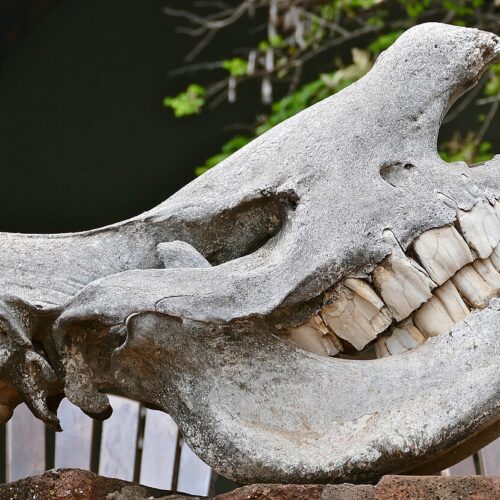
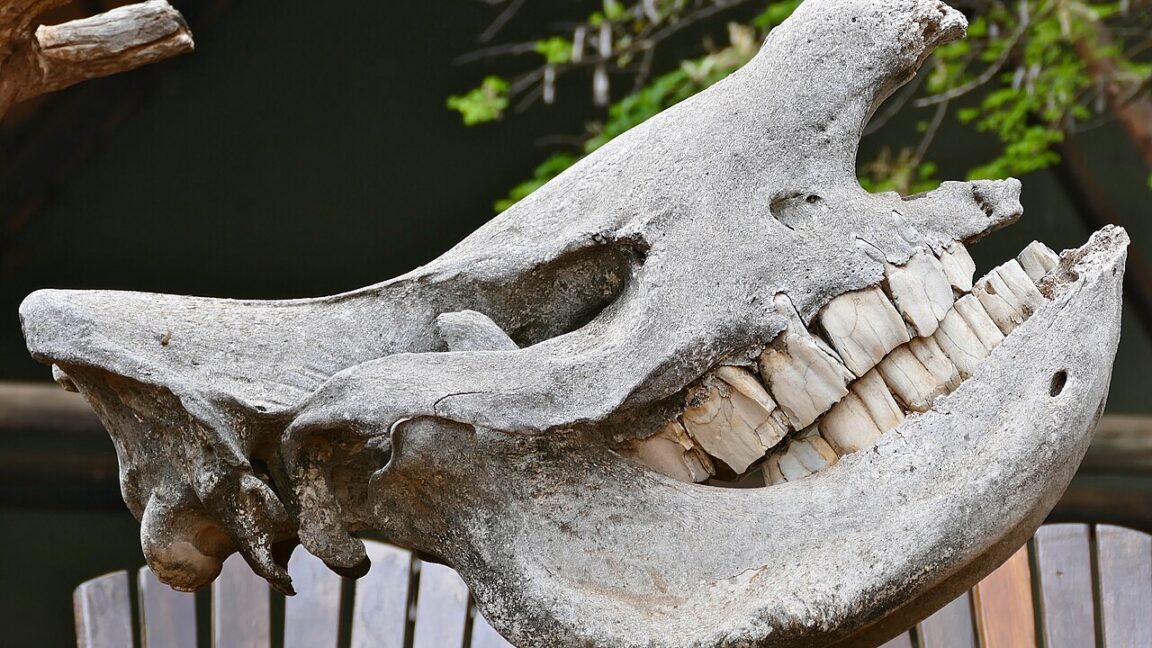
© By Bernard DUPONT from FRANCE - White Rhino Skull, CC BY-SA 2.0, https://commons.wikimedia.org/w/index.php?curid=55453022
One way archaeologists learn how ancient people, including Neanderthals, did things is to attempt to do those things themselves, a process called experimental archaeology. Normally, that involves making stone tools, butchering deer, or distilling birch tar. But in a new study, it meant doing very destructive things to teeth from one of the world’s most carefully protected animals.
That's because the archeologists suspected that Neanderthals once used rhino teeth as tools. By using the teeth to make stone tools, the researchers demonstrated that Neanderthals probably did the same thing, adding to what we know about the wide range of items in their toolkits.
Some Neanderthal archaeological sites in Europe and Asia seem to have many more rhinoceros teeth lying around than you’d expect. We know Neanderthals hunted a now-extinct species of rhinoceros in Europe and eastern Asia, but the people who had inhabited these sites looked like they had been collecting rhino teeth for some reason.
© By Bernard DUPONT from FRANCE - White Rhino Skull, CC BY-SA 2.0, https://commons.wikimedia.org/w/index.php?curid=55453022
