
Reading view

Anthropic and DeepMind Now Actively Investigating AI Consciousness

Are AI models conscious, and if not, could they be in the near future? The possibility is far-fetched, but AI companies seem to feel it’s in their best interests to keep the question as open-ended as possible.

Now, the Financial Times reports that three of the industry’s top dogs — Anthropic, Google’s AI lab DeepMind, and Meta — have all hired experts in fields like psychology, philosophy, and ethics to pursue research into machine consciousness and AI welfare. 

Anthropic, which has arguably done the most out of the bunch to anthropomorphize its models and play up the AI consciousness angle — its chatbot has the human name of “Claude,” after all — has been testing its models for behaviors that resemble “panic” and “anxiety,” per the reporting, and is pursuing “model welfare research” to explore whether AI models might have experiences that matter morally.

“We remain deeply uncertain about this, but we think the question is serious enough to study carefully as AI systems get more capable,” the company said in a statement.

DeepMind, meanwhile, has hired University of Cambridge researcher Henry Shevlin as a philosopher working on machine consciousness, human-AI relationships, and AGI readiness, per the reporting. (Earlier this year, Shevlin sparked a wave of discourse in online AI circles after sharing his stunned reaction to an email he received from an AI agent.)

DeepMind ethicist Iason Gabriel, who leads the lab’s AGI and society team, called the question of AI consciousness “very complicated,” and described AI as “highly capable cognitive agents that are also just very deeply different from human beings and even from animal consciousness.”

These weighty claims are disputed by many scientists and AI researchers. But the FT, in seeking a counterargument to round out its reporting, quotes an expert who makes claims that ascribe a questionable degree of humanlike agency to chatbots. “[AI models] have goals, they can deceive, they can hide what their true interests are,” Susan Schneider, director of the Center for the Future of AI, Mind and Society, told the newspaper. But she added it’s “entirely scientifically possible that they’re doing this without having the felt quality of experience, which is what consciousness is.”

Certainly, the possibility of AI consciousness shouldn’t be completely dismissed out of hand. But neither should alien civilizations, which are generally treated more as a sci-fi musing than an urgent existential issue. 

Moreover, we should be skeptical when most of the noise on this topic is coming from the industry itself. Anthropic CEO Dario Amodei has repeatedly dangled the possibility of AI consciousness in interviews. And his company’s research frequently makes bold claims about their models showing humanlike behavior, such as supposedly harboring “emotions.” Just remember that it’s easier for AI companies to string us along with wild Skynet doomsday scenarios instead of confronting the tech’s far mundane consequences currently playing out before our eyes.

More on AI: Was This the Moment That AI Psychosis Began?

The post Anthropic and DeepMind Now Actively Investigating AI Consciousness appeared first on Futurism.
  •  

Film Community Aghast as Martin Scorsese Extolls AI Startup, Says He Now Uses AI for Storyboards

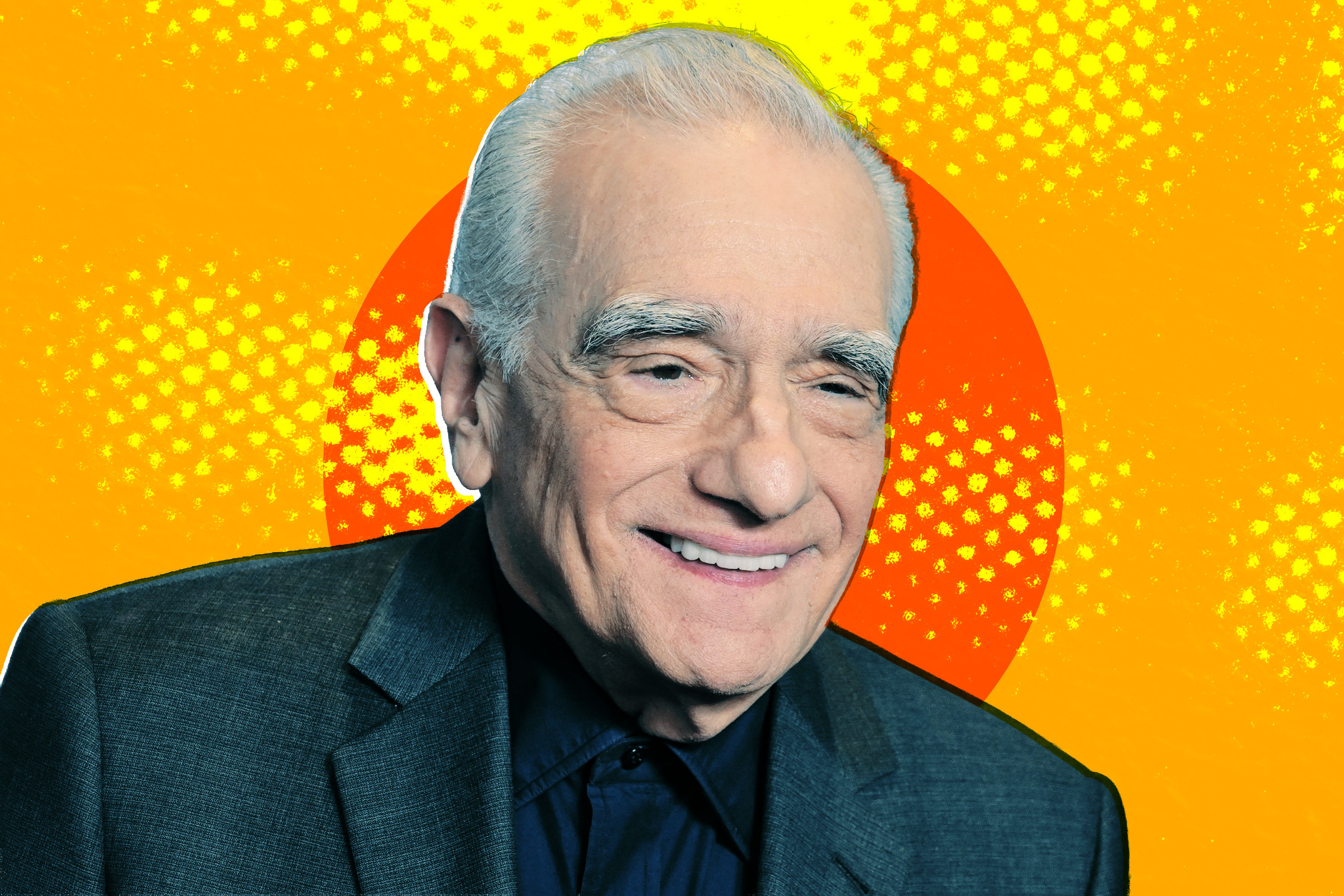
The film community is in meltdown after acclaimed director Martin Scorsese promoted a new AI startup called Black Forest Labs, saying that he’s already using its tech to help plan his movies.

Scorsese revealed this collaboration in a statement to The New York Times on Tuesday, which was accompanied by the release of a new promotional video from Black Forest Labs depicting the 83-year-old film legend using its AI image generation tool for storyboarding, the process of visualizing scenes using illustrations in preparation for filming. According to the reporting, Scorsese signed on as a partner and an adviser to the venture last year.

Such shilling by a venerated artist for AI was, in the eyes of many filmgoers, the opposite of “Absolute Cinema.”

“Cannot stress enough how disappointing it is that Martin Scorsese is collaborating with an AI company and putting a stain on his name so late in his life and career,” wrote one cineaste.

“Putting storyboard artists out of work is bad and that should not be a controversial opinion,” another fumed.

For film journalist Richard Newby, the reaction was visceral. “I feel like I’m going to throw up,” he tweeted.

It’s easy to understand where they’re coming from, since Scorsese is one of the most revered filmmakers alive. The “GoodFellas” and “Mean Streets” director spearheaded a movement that cast off the shackles of the stodgy old studio system and ushered in a Renaissance of Hollywood filmmaking that embraced authorial intent, drawing on a deep reverence for foreign filmmakers — from Akira Kurosawa to the duo of Michael Powell and Emeric Pressburger — to create something more stylistic and transgressive, while taking a unflinching eye to social issues of the day. 

Beyond his role behind the camera, Scorsese has also been an important champion of overlooked international films, and has helped preserve cinema history through his Film Foundation. For him to throw his weight behind AI is a big victory for the industry — and a gut punch to artists who view the tech as not only a threat to their livelihoods, but to creativity itself.

That said, Scorsese is being conspicuously limited in how he praises AI, though this is likely to be little consolation to the anti-AI crowd. In the promotional video and in his remarks to the NYT, he was careful to stress that he only uses AI for storyboarding, claiming that it’s allowed his team “to move faster without sacrificing quality or craft” during preproduction.

“For 70 years, I’ve been creating my own storyboards,” Scorsese told the NYT in a statement (which is notable, since it definitely reads more like a company-approved release than something he’s said in one of his many insightful interviews.) “There’s always been this problem of how do you communicate what you see in your head to your cast and crew. There are some things you have to see and feel.”

“Now with this tool,” he added, “I can share what I’m visualizing more clearly and efficiently to my creative team — the production designer, art designer and cinematographer.”

The sense of betrayal hit one Scorsese fan especially close to home.

“Scorsese’s storyboards for Taxi Driver were a big inspiration for me, a poor artist, to feel confident drawing ideas to share with our illustrators,” the indie game developer lamented. “I can’t understand why so much of the older generation of artists are swayed by this crap when they already had it all figured out.”

More on AI: OpenAI’s Attempt at an AI-Generated Pixar-Style Movie Is in Shambles

The post Film Community Aghast as Martin Scorsese Extolls AI Startup, Says He Now Uses AI for Storyboards appeared first on Futurism.

  •  
❌