Reading view

A ‘mystery beetle’ is devouring North Carolina’s precious blueberries

North Carolina’s blueberries may have a beetle problem. For the first time, scientists in the Tarheel State have documented the presence of Prionus imbricornus eating blueberry bushes. This longhorn beetle and its larvae can chomp their way through the state’s valuable blueberry fields. The findings are described in a study published this week in the Journal of Integrated Pest Management

Blueberries are native to North Carolina, but were not cultivated until 1935. The state is the sixth largest blueberry producer in the United States, and the blueberry industry is valued at roughly $70 million. Protecting the plants from pests is crucial, as blueberries are considered one of North Carolina’s most valuable and desirable crops. 

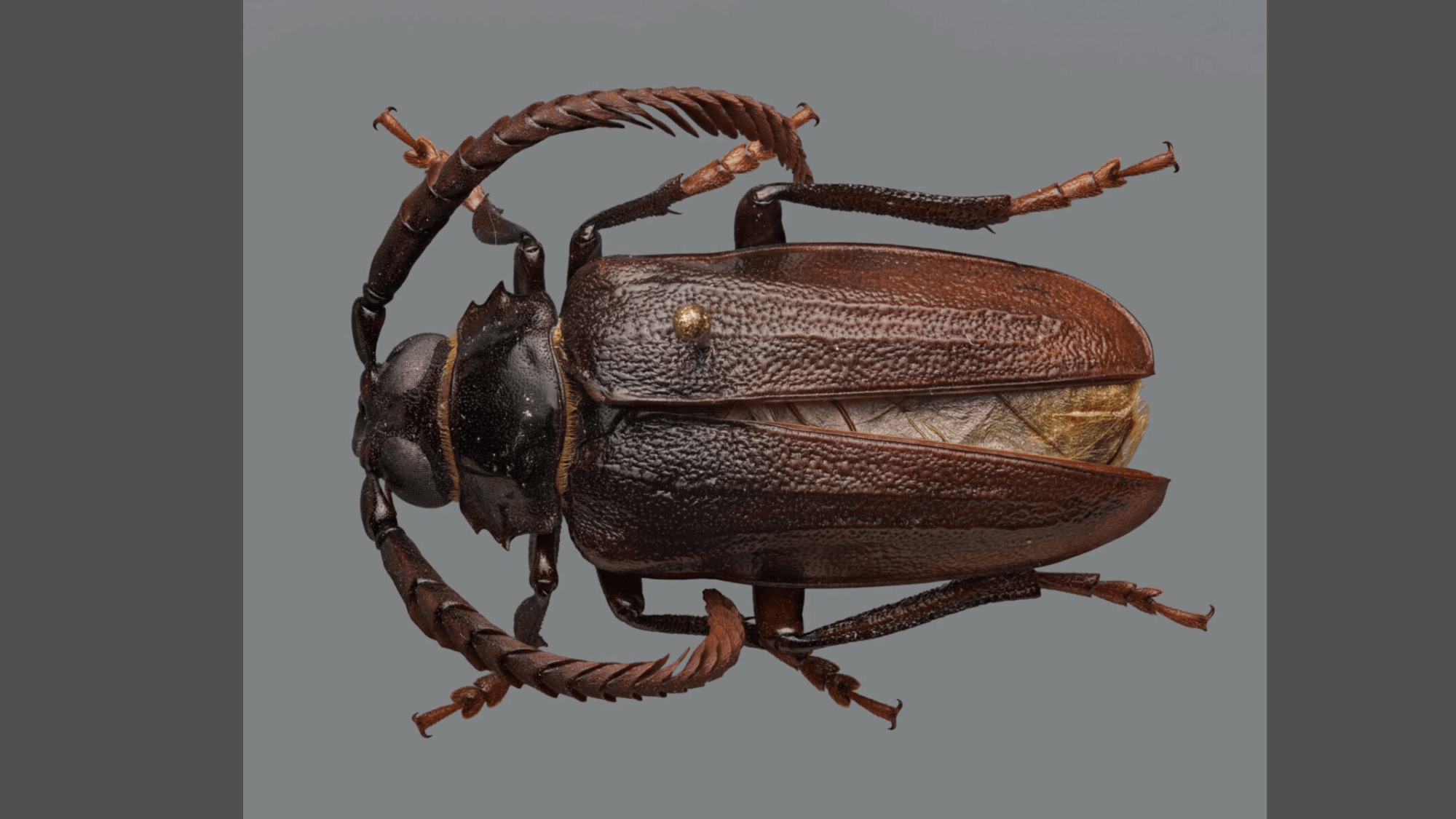
Several species including the blueberry maggot (Rhagoletis mendax), plum curculio (Conotrachelus nenuphar), and cranberry fruitworm (Acrobasis vaccinii Riley) can threaten blueberry crops. The long-horned beetle P. imbricornus may now join their ranks. P. imbricornus is known for their long antennae and are considered wood-boring beetles. The adult females typically lay their eggs in the soil near the roots of hardwood trees. The larvae then eat and destroy the roots. These larvae can grow up to five inches long and potentially kill trees, since the adults don’t feed. 
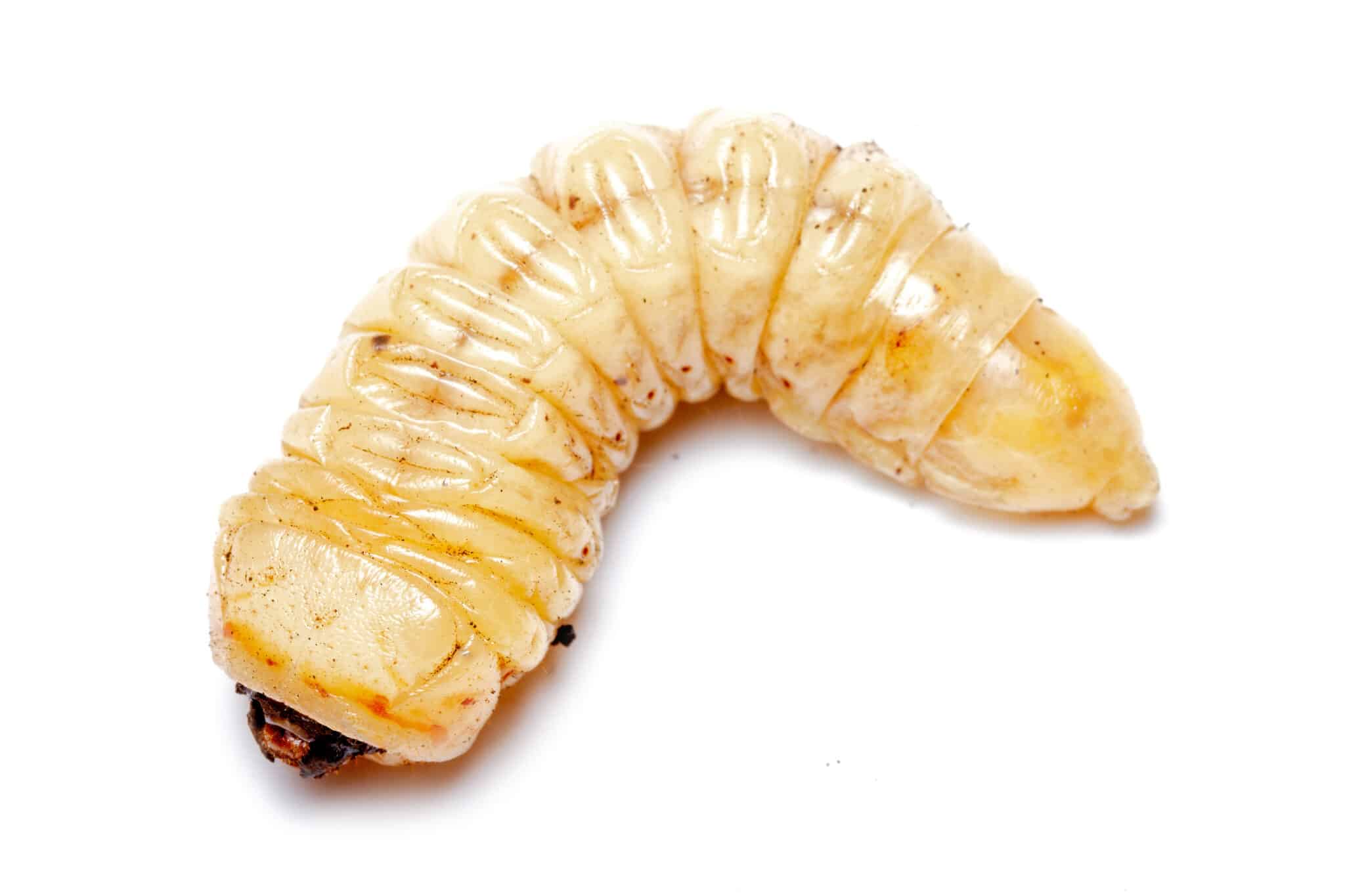
a long yellow beetle larvae
P. Imbricornis larva. The larva, which can grow up to five inches long, feed on the roots of blueberry bushes. Image: Matt Bertone/NC State.

North Carolina is the first state to report that P. imbricornus is actively feeding on blueberry bushes. However, reports of unidentified larvae from the Prionus beetle genus feeding on and damaging blueberry bush roots go back to 2010. In the 16 years since, identifying the specific species responsible has been difficult since the larvae live near the roots of the plants. Different types of longhorn beetle larvae also look very similar, and not identifying a species can harm efforts to combat harmful bugs. 

“Before now, researchers often just assumed the species of Prionus on their commodities based on adult identification,” Kenneth Geisert, a study co-author and NC State graduate student, said in a statement. “If that guess was incorrect, it could mean using a treatment strategy that did not line up with the problem and incorrectly associating species and their hosts.”

For example, P. imbricornus attacks roots, but another longhorn beetle species may go after a tree’s dead branches or trunk. 

“Without knowing which species of beetle you’re dealing with and their ecology, incorrect management can cause adverse effects on non-target insects,” Geisert added.

For this study, the team used a series of black panel traps scented with sex pheromones to attract and gather adult beetles. The traps were placed at six farms across Pender, Sampson, Bladen, and New Hanover counties. The team then used a technique called genetic barcoding on the larvae to analyze small, standardized segments of their DNA to identify the species. They then compared the unknown larval sequences with the same genetic segments from known Prionus adults.

They matched the P. imbricornus with 98 to 99 percent accuracy. According to the team, this result is both good and bad news for farmers.

“On one hand, it’s very important that we know which species we’re dealing with,” said Lorena Lopez, a study co-author and entomologist at NC State. “On the other, North Carolina was the first state to ever report Prionus infestation in blueberries, and there are no insecticides currently labeled against this pest in blueberries.”

To address this shortfall, Lopez has begun insecticide trials. Pinpointing effective insecticides and timing during P. imbricornis reproductive cycles can potentially limit larval development. Fewer larvae could help prevent major root damage and provide blueberry farmers with an effective management tool to protect their crops. 

The post A ‘mystery beetle’ is devouring North Carolina’s precious blueberries appeared first on Popular Science.
  •  

Big wings and sweet songs: The mating lives of Panama’s katydids

When it comes to reproduction, animals will pull out all the stops to attract a mate. Sending out noisy mating calls, showing off colorful wings, inflating a throat pouch, and shaking a literal tailfeather all ensure that the next generation of a species happens. Some insects will go as far as making themselves look like an entirely different living thing—leaves. 

Usually used as a means of camouflage, male katydids appear to use their leafy disguise to amplify mating calls and make themselves more attractive to the opposite sex. The findings are detailed in a study published today in the journal Proceedings of the Royal Society B, and offer one of the first demonstrations of how leaf mimicry enhances a male katydids’ sexual signals. 

To shield themselves from predators, various species of katydids have evolved wings with structures that look like leaves. Panama’s leaf-masquerading katydids (Arota festae) will even change from green to hot pink in order to better mimic leaves. What’s been less clear to entomologists is whether or not these leaf-mimicking structures play a role in katydid mating. 

This new study looked at a species called Viadana brunneri from Barro Colorado Island, Panama. To attract mates, katydids create songs by rubbing together specialized structures on their wings. In many tropical species like V. brunneri, the portion that mimics leaves makes up the majority of their wing’s surface area.  

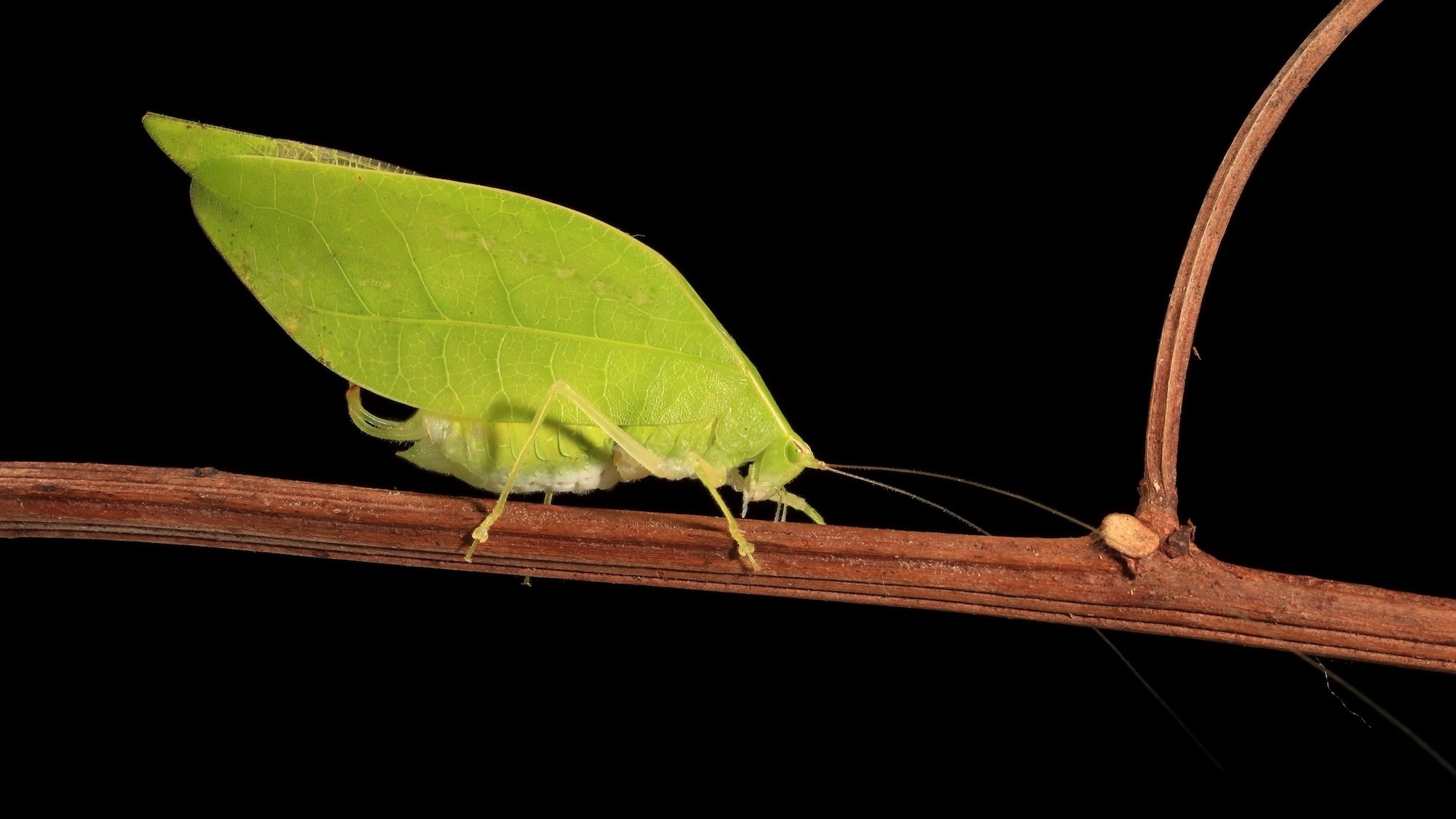
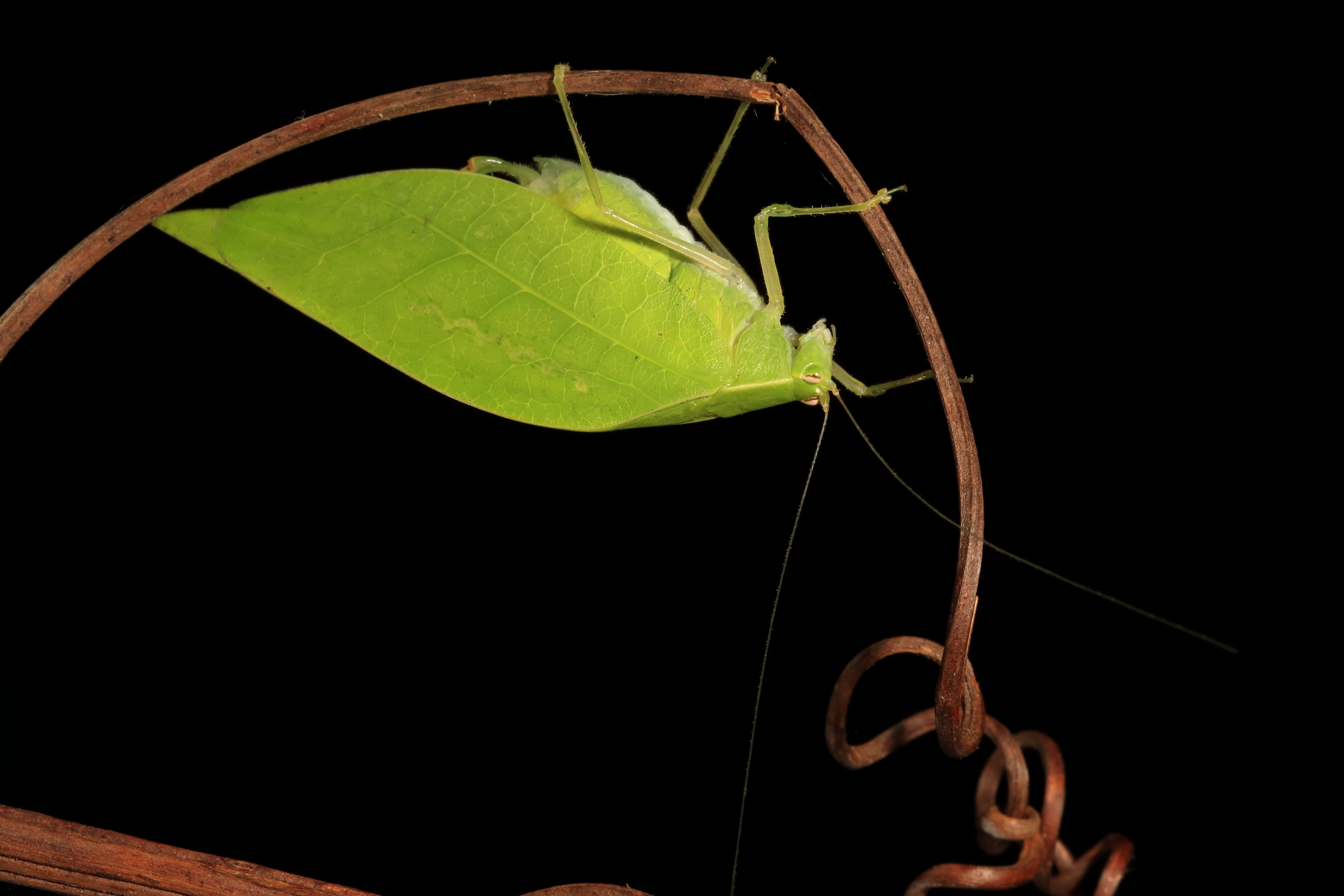
a green insect with a large, green wing that looks like a leaf hands upside down on a stick
Most of the wing structure is devoted to helping male katydids look more like a leaf. Image: Christian Ziegler.

Previously, scientists believed physical adaptations for survival and for attracting mates can function in conflict with one another, particularly if they are physically connected. A male peacock’s flashy tail feathers may help it attract a female, but it also makes it easier for predators to find them. Male katydids, on the other hand, are able to use the acoustic properties of the structures that they use for defense to their reproductive advantage. They are a rare example of how an adaptation for self-defence and reproduction can work together without necessarily putting the animal in jeopardy. 

The team performed a series of bioacoustic, behavioral, and biophysical experiments, showing that these leafy structures on their wings make them more attractive to females, while also helping conceal them. After removing the leafy portions of a male V. brunneri’s wings, the pitch became higher and the volume of their songs also changed. The team then played these calls for females who preferred the lower pitch calls from males with their leafy wing sections still intact. 

While male katydids do all the singing, females indicate their interest by replying to the song with clicks. The insects produce short, sporadic and infrequent calls, possibly for only two seconds in a single night. They perform these calls in ultrasounds, which our ears can’t pick up. They also found that the leafy portions of the male katydid wing will vibrate to amplify their songs, making them more detectable to females. 

“Our study provides a rare example of natural and sexual selection acting in harmony, producing traits that simultaneously improve survival and mating success,” Dr. Benito Wainwright, a study co-author and evolutionary biologist at the University of St Andrews, said in a statement. “We are now extremely excited to start exploring how such an interesting interaction evolved in katydids.” 

The post Big wings and sweet songs: The mating lives of Panama’s katydids appeared first on Popular Science.

  •  

Camouflage and Charm: How Male Katydids Use Leaflike Patterns to Boost Attraction

In a groundbreaking study published in the prestigious journal Proceedings of the Royal Society B, researchers from the University of St Andrews have unveiled a remarkable dual function of leaf mimicry in tropical katydids, specifically in the species Viadana brunneri. This study challenges the long-held assumption that survival adaptations and sexually selected traits inherently conflict with one another, demonstrating instead a rare synergy where a single morphological trait simultaneously enhances camouflage and acoustic signaling, thereby benefiting both survival and reproductive success.

Leaf mimicry is a fascinating example of evolutionary adaptation, primarily understood as a survival strategy where insects disguise themselves as leaves to evade predation. The katydids studied possess wings where the majority of the surface area consists of intricate “leafy” structures that visually blend into their rainforest habitat. Yet, until now, the significance of these leaf-like structures in mating communication remained largely unexplored. The latest research reveals that these same leafy extensions on the male katydid wings play a critical role in modulating and amplifying their acoustic mating calls, making these males more attractive to females.

Katydids produce their songs through a process known as stridulation, which involves rubbing specialized ridges on their forewings together. In many tropical species, the wings’ broad surfaces include leaf-like patterns that contribute aesthetically to camouflage but are also acoustically active. By conducting precise bioacoustic and biophysical experiments, the researchers demonstrated that these leafy wing portions act as natural amplifiers, vibrating sympathetically with the sounds generated by the stridulatory organs. This phenomenon enhances the sound’s resonance and modifies the pitch, effectively improving the male’s ability to broadcast their calls over the ambient noise of the rainforest.

The interplay of natural and sexual selection outlined in this research is particularly striking because it defies the classical perspective that traits favored by one form of selection often incur costs under the other. For instance, while peacock tails increase mating success due to their showy displays, they also raise predation risk due to conspicuousness. The katydid wings’ leaf mimicry, however, serves the dual purpose of enhancing concealment while boosting mating call attractiveness, merging the evolutionary interests of survival and reproduction into a unified trait.

Behavioral assays further illuminated these findings by examining female responses to male calls with and without their leafy wing structures. When males had the leafy portions of their wings experimentally removed, the characteristics of their calls altered significantly—the pitch increased and loudness diminished. Females showed a clear preference for the calls emanating from males with intact leafy wings, favoring the lower pitch and stronger amplitude. This preference implies the leaf-like structures not only camouflage but provide an acoustic advantage that improves reproductive success.

Another confounding aspect of katydid communication is the remarkably fleeting nature of female calls. In an environment saturated with competing sounds, female Viadana brunneri produce only sporadic and ultra-short signals in the ultrasonic range, spanning a mere two seconds in total across entire nights. These infrequent and high-frequency responses pose a unique challenge for males, emphasizing the evolutionary pressure on males to optimize their sound production for maximum detectability and attractiveness.

The study bridges a gap in evolutionary biology by highlighting a novel multifunctional adaptation. It underscores that complex traits can evolve through intertwined natural and sexual selection pressures to optimize multiple fitness outcomes. This discovery opens new avenues for exploring how communication signals evolve when subjected to the competing demands of predator avoidance and mate attraction. It also raises fascinating questions about the biomechanical design of insect wings and their integration into both survival and reproductive strategies.

Dr. Benito Wainwright, the lead researcher, expressed excitement over these findings, emphasizing the rarity of natural and sexual selection converging to favor the same morphological trait. His team is poised to further investigate the evolutionary history and genetic underpinnings that led to the emergence of these acoustically active leafy wings in katydids. Such studies promise to enrich our understanding of how multifunctional traits evolve and are maintained in complex ecological contexts.

The implications of this research extend beyond katydids, suggesting that multifunctionality in morphological and behavioral traits may be a more common evolutionary solution than previously appreciated. By integrating camouflage and acoustic enhancement within the same structure, these insects exemplify evolutionary ingenuity, with potential parallels in other taxa where natural and sexual selection pressures coincide.

This research also underscores the importance of interdisciplinary approaches, combining bioacoustics, behavioral experiments, and biophysical analyses to unveil the multifaceted roles of morphological traits. The detailed scrutiny of how leaf-like wing structures modulate sound waves offers novel insights into insect communication mechanics and may even inspire biomimetic applications in acoustic technology or material science.

Ultimately, this study reshapes textbook understandings of sexual and natural selection dynamics. It exemplifies the subtle complexities of evolutionary adaptations where the boundaries between survival and reproduction blur, allowing organisms like Viadana brunneri to thrive amidst the challenges of predation, environmental noise, and mate competition within the biodiverse tropical rainforests.


Subject of Research: Animals
Article Title: Naturally-selected and sexually-selected wing structures synergistically enhance attractiveness of katydid acoustic signals
News Publication Date: 3 June 2026
Web References: http://dx.doi.org/10.1098/rspb.2026.0952
Image Credits: Christian Ziegler
Keywords: Evolutionary biology, bioacoustics, sexual selection, natural selection, katydid, leaf mimicry, acoustic signaling, tropical rainforest, insect communication

  •  
❌