Reading view

A study of adults aged 62 to 92 found that basic motor control — drawing lines, placing dots — remains almost identical between people with and without cognitive impairment, meaning the hands stay capable long after the processes that organise thought have started to change
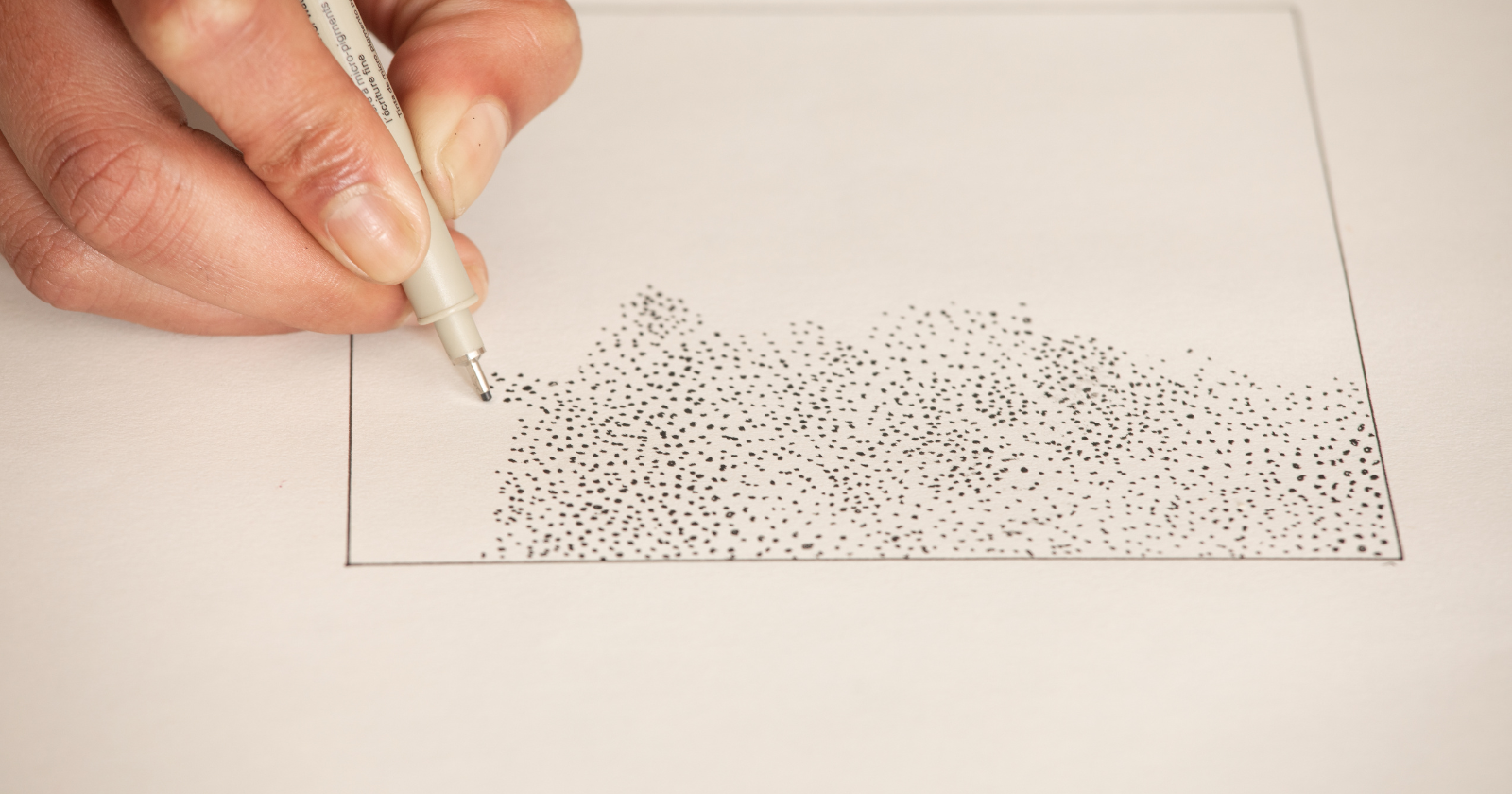
There is something quietly striking in the image. An older adult — perhaps 86, perhaps older — sits before a digitizing tablet and draws horizontal lines. The pen moves steadily across the surface. The lines come out clean and even. The hand does not falter. The hand, it turns out, does not know.

A new study published in Frontiers in Human Neuroscience has examined what happens to handwriting and motor control in older adults with and without cognitive impairment, and one of its most arresting findings is precisely this: when it comes to basic pen-motor tasks — placing dots on a surface, drawing horizontal lines — the two groups are effectively indistinguishable. The degradation of cognitive function that researchers can detect through standardized assessments leaves no measurable trace in the elementary mechanics of holding and moving a pen.

The basic motor infrastructure holds. What begins to separate the groups is something more demanding: the cognitive work that handwriting also requires.

What the study measured, and how

The research, led by Ana Rita Matias and colleagues at the Universidade de Évora and collaborating Portuguese institutions and published in May 2026, recruited 58 institutionalised older adults ranging in age from 62 to 99. Thirty-eight participants had been classified as cognitively impaired, with a mean age of 86.05 years. Twenty were cognitively healthy, with a mean age of 84.35 years. Cognitive status was established using two standard clinical instruments: the Mini-Mental State Examination and the Clock Drawing Test.

Each participant completed a series of tasks on a Wacom digitizing tablet fitted with an inking pen — a device that captures not just what is written but the kinematics of how it is written: pen velocity, pressure, the duration of strokes, the number of discrete movements, the pauses between them. This is the critical advantage of digital capture over conventional paper-based assessment. What the eye cannot see, the tablet records.

The tasks fell into two categories. The first were simple motor tasks: a dots task, in which participants were asked to place at least ten dots on the tablet surface within twenty seconds, and a lines task, in which they were asked to draw at least ten horizontal lines in the same time. These tasks required control of the pen but little else. No language processing. No memory retrieval. No composing of meaning.

The second category was more demanding: four handwriting-speed tasks involving the copying and dictation of sentences. Copying a sentence allows the writer to keep the source text in view. Dictation does not. The words arrive as sound, must be held in working memory, parsed for meaning, translated into motor sequences, and then committed to the page — all while the auditory trace is already fading.

Where the difference appears — and where it does not

The dots and lines tasks did not significantly discriminate between the two groups. This is the finding worth pausing on. Cognitive impairment, at the level where it is detectable by standard clinical tools, has not yet disrupted the peripheral motor system. The hand moves. The pen responds. The basic loop between intention and execution remains functionally intact.

The dictation tasks told a different story. Here the researchers found statistically significant differences between the cognitively impaired and cognitively healthy groups. One task in particular — referred to in the paper as WS3, a dictated sentence — produced the strongest discriminatory signal. Two features of the kinematic data were especially predictive: Duration, the total time taken to complete the task, and Number of Strokes, the count of discrete pen movements. Both variables significantly predicted cognitive group membership.

Participants with cognitive impairment took longer and produced more fragmented output — more individual pen movements to accomplish the same written result. The hand was still moving. But the coordination between the cognitive processes that organise language and the motor processes that execute it had become less fluent, more effortful, more interrupted.

As the authors write in their conclusion: “Handwriting kinematics, especially temporal and stroke-related features, are sensitive indicators of cognitive impairment when assessed under high cognitive–motor load.”

Why handwriting carries cognitive signal

Handwriting has attracted sustained interest from researchers studying cognitive decline precisely because it occupies a peculiar position: it is both a motor act and a cognitive one, and the two are difficult to disentangle by observation alone. The digitizing tablet changes that. By capturing kinematics in real time, it makes visible the hesitations, the micro-pauses, the multiplying strokes that a simple reading of the finished text would never reveal.

What the tablet captures, in effect, is cognitive load expressed through movement. When a task places high demands on working memory — as dictation does — the motor system has fewer resources available to it. The result is not necessarily illegible handwriting. The result is handwriting that takes longer, that requires more individual pen lifts, that shows the seams of the effort it took to produce.

The distinction between copying and dictation is not incidental to this research — it is the mechanism. Copying a sentence is primarily a perceptual-motor task. The writer looks at words and reproduces them. Dictation requires the writer to be, briefly, a language processor: receiving, holding, decoding, and transcribing without the safety net of visible text. That additional cognitive burden is where the between-group difference becomes measurable.

Earlier research in this area has identified kinematic features — pen velocity, in-air time, the ratio of time spent writing to time spent pausing — as markers that correlate with cognitive status in conditions including mild cognitive impairment and Alzheimer’s disease. What the Matias study adds is a careful separation between tasks that load the motor system alone and tasks that load the cognitive-motor system together. The separation clarifies which element of handwriting carries the diagnostic signal.

The case for handwriting-based screening

The researchers position their findings as support for digitally mediated handwriting tasks as screening tools for cognitive decline. The argument has practical force. A digitizing tablet is low-cost relative to neuroimaging and requires no specialist clinical infrastructure. Handwriting is, for most older adults, a deeply familiar act — ecologically valid in the language of assessment research, meaning it does not require participants to learn a new task or adapt to an unfamiliar paradigm. It is something people have done for decades, and the act of doing it again in a clinical or care context carries little of the anxiety or performance pressure that some formal cognitive assessments introduce.

For populations in institutional care — the population this study recruited — such considerations are not trivial. Fatigue, unfamiliarity, and distress can all contaminate cognitive assessment data. A brief handwriting task, completed at a table with a pen in hand, is a different kind of ask than a sustained battery of memory and attention tests.

The study also raises the possibility of longitudinal monitoring: repeated handwriting assessments over time could track subtle kinematic changes before they manifest as detectable impairment on conventional screening tools. The tablet captures what the eye misses. Over months or years, the data might record the earliest drift in the coordination between thought and hand.

What the hand does not know

The human detail at the centre of this research is the one that stays. An older adult draws horizontal lines on a tablet. The hand moves cleanly. The pen does not hesitate. By the measure of the task — ten lines in twenty seconds — the performance is equivalent to that of someone whose cognition, by clinical assessment, remains fully intact.

The hand, performing that task, is not reporting on what is happening elsewhere. The motor infrastructure is preserved. The elementary act of guiding a pen across a surface — the muscle coordination, the proprioceptive feedback, the fine motor loop that learned to hold a pen in childhood and has held one ever since — continues to operate as it has always operated.

What changes, and what the digitizing tablet can detect, is the integration. The moment handwriting becomes more than a motor act — the moment it requires the writer to hold language in mind, to compose and convert and commit — the kinematic signature of cognitive change begins to appear in the data. Not as tremor. Not as a loss of motor control. As duration. As the number of strokes it takes to get the words down.

The hands stay capable. The research is careful to say so. What shifts is the coordination between capability and the cognitive processes that direct it. That coordination, it turns out, is where cognitive impairment first makes itself legible to a machine that is paying close enough attention.

Produced with AI assistance. Reviewed by the Space Daily editorial team before publication.


The post A study of adults aged 62 to 92 found that basic motor control — drawing lines, placing dots — remains almost identical between people with and without cognitive impairment, meaning the hands stay capable long after the processes that organise thought have started to change appeared first on Space Daily.


  •  

Disgust Linked to Improper Waste Disposal, Study Finds

A groundbreaking study emerging from the University of Gothenburg has shed new light on the persistent problem of improper waste disposal, revealing that the emotional response of disgust plays a critical role in shaping public behavior in shared environments. Traditionally, waste management failures have been attributed largely to social norms and carelessness. However, this new research emphasizes the powerful influence of sensory and emotional perceptions, particularly disgust sensitivity, on how individuals interact with waste disposal spaces.

The conventional wisdom posits that people’s waste disposal habits are mainly influenced by the behaviors of those around them—if littering is common, individuals are more likely to follow suit. While this social contagion effect is well-documented, it overlooks a vital psychological component: the visceral reaction humans have to unclean environments. When people perceive a space, such as a waste disposal room, as dirty or revolting, their discomfort and aversion can drive them to avoid engaging in proper disposal behavior, ironically exacerbating the original problem.

Dr. Jacob Sohlberg, a political scientist spearheading this research, explains that disgust—a fundamental human emotion designed to protect us from contamination—can paradoxically undermine environmental cleanliness. “People sensitive to disgust may actively avoid spending time in waste disposal areas if these spaces are perceived as repugnant, increasing the likelihood of haphazard waste disposal elsewhere,” Sohlberg notes. This new perspective shifts waste management research beyond the realm of pure social compliance and into the intricate interplay of human emotion and environmental cues.

The study focused on disadvantaged neighborhoods in Sweden, Finland, and Denmark, areas where littering is notably problematic and causes significant concern among residents. Prior empirical evidence uncovered that in these communities, residents view littering as a problem as severe as crime and unemployment, issues typically regarded as more pressing societal challenges. This underscores the urgency of addressing waste disposal inefficiencies comprehensively, taking into account not only social policies but human psychological tendencies.

The research team proposed three pivotal hypotheses. First, that unclean waste disposal environments heighten the incidence of improper waste disposal. Second, that individuals with heightened disgust sensitivity are disproportionately likely to dispose of waste incorrectly. Third, that the adverse effect of dirty surroundings on waste disposal behavior is magnified in those with high disgust sensitivity. These hypotheses guided a multifaceted research design involving field intervention, experimental manipulation, and large-scale surveys.

In a hands-on field study conducted over three weeks in Gothenburg, researchers allied with a local municipal housing company to observe waste disposal behavior in real time. Two waste stations were meticulously cleaned daily, while eight stations served as controls with no intervention. The results were revealing: stations subjected to extra cleaning saw a marked decrease in littering and erroneous waste disposal. Conversely, control stations showed no significant change, highlighting the tangible benefits of environmental maintenance on public behavior.

To directly examine the psychological mechanisms at play, the team designed a controlled experiment involving more than 300 residents from a disadvantaged Gothenburg neighborhood. Participants were exposed to images of either a pristine or a filthy waste disposal station. Those who viewed the dirty environment reported a significantly lower willingness to use the waste station properly, particularly among those scoring high on a disgust sensitivity scale. This experimental approach confirmed a causal link between perceived environmental cleanliness, disgust, and waste disposal intentions.

Expanding on these results, a third study reached over one thousand participants across socioeconomically challenged neighborhoods in Sweden, Denmark, and Finland through an online experiment that mirrored the earlier design. The data robustly supported the preliminary findings: perceptions of dirty waste disposal spaces increased self-reported intentions to mismanage waste, with disgust sensitivity intensifying this effect. Such consistency across different populations and methodologies affirms the generalizability of the emotional response’s role in waste behavior.

From a policy standpoint, this research translates into actionable strategies. Municipal authorities and housing agencies aiming to mitigate littering and improve waste management efficacy should prioritize the cleanliness and aesthetic quality of waste disposal areas. A well-maintained waste station not only encourages proper disposal but also fosters a community-wide perception of care and order, potentially creating a virtuous cycle of environmental stewardship and social norm adherence.

The societal implications of these findings extend beyond mere environmental tidiness. Cleaner waste disposal areas improve residents’ quality of life, enhancing neighborhood attractiveness and reducing public health risks associated with waste mismanagement. Moreover, better-managed waste systems facilitate the achievement of broader sustainability goals, lowering contamination risks and enhancing recycling efficacy.

Researchers anticipate that integrating psychological insights such as disgust sensitivity into urban planning and public health campaigns will refine waste management interventions. This emotionally informed approach moves beyond traditional messaging and enforcement, incorporating environmental design considerations that shape unconscious behavioral drivers effectively.

Ultimately, the research from the University of Gothenburg propels the discourse on waste disposal into new dimensions, showcasing the synergy between human psychology, environmental conditions, and collective action. It serves as a reminder that solving public sanitation issues necessitates nuanced understanding of both societal structures and the fundamental, innate emotional systems governing human behavior.

As cities worldwide grapple with mounting waste challenges, the integration of emotion-focused research provides a promising avenue to foster healthier public spaces. Keeping waste disposal environments not only clean but also psychologically inviting may very well be the key to reducing littering and promoting sustainable waste habits in vulnerable urban communities.


Subject of Research: Waste disposal behavior and disgust sensitivity in socioeconomically disadvantaged public environments.

Article Title: How Disgust Sensitivity Shapes Waste Disposal Behavior in Everyday Public Environments: Experimental and Difference-in-Differences Studies in the Nordic Countries

News Publication Date: 28-Apr-2026

Web References:
DOI Link

Image Credits: Photo: Emelie Asplund, featuring Jacob Sohlberg, political scientist at University of Gothenburg.

Keywords: Disgust sensitivity, waste disposal behavior, littering, public environment, environmental psychology, socioeconomically disadvantaged neighborhoods, waste management, recycling, behavioral intervention, urban sanitation.

  •  

I’ve been studying emotion regulation for 6 years, and I think the most practical skill you can learn is to notice your nervous system before your mind starts writing tragic fiction.

Six years of studying emotion regulation has not given me what people tend to assume it would.

I am not unflappable. I don’t move through difficult days with particular grace. I still get activated by things that are, in the cold light of later, not as catastrophic as they felt in the moment. I still spiral sometimes. And I’ve made peace with the fact that the academic literature — as dense and illuminating as it is — doesn’t deliver anything resembling immunity from the ordinary turbulence of being a person.

What it has given me is something smaller and, I’ve come to think, considerably more useful: a particular kind of noticing. Not the dramatic insight that reorganises your inner life but the unglamorous, repeatable skill of catching something a fraction of a second earlier than you used to. That fraction of a second turns out to matter more than I would have predicted when I started this work.

The insight that keeps recurring across the research, across my own practice, and across everything I’ve read and studied is this: there is a gap between what your body does first and what your mind does with it. And most of us spend our lives living almost entirely in the second half of that sequence — in the story the mind has already written by the time we arrive — without ever clearly registering that the sequence has two distinct parts.

What the body does before the story begins

Here is what happens, physiologically, when you perceive a threat. Your nervous system registers something — a shift in tone, an unexpected message, a door that closes too firmly — and it responds before you have consciously processed what you’ve encountered. Heart rate changes. The chest tightens. Breath becomes shallower. These are not symptoms of a problem. They are the nervous system doing its job, providing information in the form of sensation.

The problem is not the signal. The problem is what the mind immediately does with it.

Given a physiological cue it cannot yet explain, the mind does not sit with the sensation and wait. It begins writing. It reaches for a narrative — quickly, efficiently, with remarkable confidence — and the narrative it reaches for tends toward worst-case. It assumes the threat is as large as the feeling suggests. It assumes permanence. It reads a single data point as evidence of a pattern. It extrapolates. And because the mind is very good at its job, the story it writes is coherent and internally consistent and feels, in the moment, like perception rather than interpretation.

By the time the spiral is well underway — by the time you’re three or four chapters into the tragedy the mind has constructed — the nervous system is no longer responding to the original cue. It is responding to the story. The story has become the signal. And so the physiological activation intensifies, which gives the mind more material to work with, which deepens the narrative, which intensifies the activation.

This is not pathology, though. This is the mind doing precisely what it evolved to do in environments where threat assessment needed to be fast and errors in the direction of danger were cheaper than errors in the direction of safety. But in contemporary life, the fictional elaboration often becomes more frightening than the initial cue ever was.

The science of intervening early

James Gross, whose process model of emotion regulation is among the most replicated and cited frameworks in the field, identified something that sounds obvious in retrospect but has profound practical implications: the earlier in the emotion-generative sequence you intervene, the less effort the intervention requires and the more effective it tends to be.

Gross distinguishes between antecedent-focused strategies — things you do before the emotional response has fully unfurled — and response-focused strategies, which are efforts to manage an emotion that is already in full expression. His research consistently shows that cognitive reappraisal, which involves changing how you interpret a situation and is largely antecedent-focused, is both more effective at reducing distress and less taxing to deploy than suppression, which attempts to manage the emotional response after it has already arrived.

Suppression works, after a fashion, but it costs more — physiologically, cognitively, over time.

The implication of this model is not complicated, but it is demanding: if you want to regulate emotion more effectively, you need to catch the process earlier. And you cannot reappraise something you haven’t yet noticed.

You cannot reappraise something you haven’t yet noticed. The gap between sensation and story is where the leverage lives — and most of us skip it entirely.

What state is the nervous system in?

Stephen Porges’s polyvagal theory — a framework that remains the subject of active scientific debate around its neurophysiological foundations, though its clinical applications are widely used — adds another layer to this that I find practically useful. Porges proposed that the autonomic nervous system operates in distinct states — not simply a binary of calm and aroused, but a more nuanced hierarchy. Ventral vagal activation is the state of felt safety, social engagement, openness. Sympathetic activation is the mobilised state: fight or flight, high energy, urgency. Dorsal vagal activation is the collapse state: freeze, shutdown, disconnection. These states are not chosen. They arise. But they are also not fixed — movement between them is possible, and specific practices can facilitate that movement.

What matters for the skill I’m describing is this: you cannot move deliberately between nervous system states if you don’t know which one you’re in. Noticing which state has been activated — and recognising it as a state, a physiological condition with a duration, rather than a permanent truth about your situation — is a prerequisite for everything else. It doesn’t resolve the difficulty. But it opens the possibility of a different relationship to it.

The body as the place to begin

Interoception — the capacity to notice and interpret internal bodily signals — is the underlying mechanism that makes any of this possible. Research has shown that interoceptive awareness is trainable, and that for many people, higher interoceptive accuracy is associated with better emotional regulation outcomes, including greater emotional clarity — though the research also notes that for those prone to anxiety, increased attention to bodily sensation requires care and is not straightforwardly beneficial. The ability to notice that the chest is tight, that the breath has changed, that the jaw is held — these are not trivial observations. They are, in a real sense, the data.

What the research also shows is that many people have spent decades being more attuned to what is happening around them than what is happening in them. The orientation outward — toward other people’s states, toward environmental cues, toward what is needed or expected — often develops at the expense of attunement inward.

The result is that the body’s signals arrive, but they arrive without being clearly received. They get interpreted directly as emotion, or as evidence of a problem, rather than as sensation that the mind is then working with. The sequence collapses into a single event, and the gap — the few seconds between physiological response and narrative elaboration — gets bypassed entirely.

The practical skill, specifically

The skill is not to stop the narrative. Stopping the narrative is hard, and it is largely unnecessary. The mind will write its stories. That is what minds do. The skill is to notice, in that brief window before the story has fully taken hold, that the nervous system fired first — and that what comes next is interpretation, not raw perception.

This window is small. A few seconds, sometimes less. It requires a kind of attention that has to be built, because it runs counter to the natural momentum of emotional activation, which pulls awareness into the content of the story rather than its origins. But the window exists. And locating yourself in it, even imperfectly, changes something about your relationship to both the sensation and the narrative that follows.

You are not trying to be unmoved. You are not trying to assess whether the threat is real. You are simply noting the sequence: the body fired first, and the story is subsequent. That noting — which sounds minor and possibly is — has the effect of creating a small distance from the narrative. Not dissociation. Not detachment. But enough space to recognise that what you are experiencing is a nervous system response plus a story the mind has constructed around it, and that these are two different things that can be considered separately.

How I came to know this in my body, not just my head

I want to be honest about something, because I think it matters. I understood this framework intellectually for a long time before it became practically useful to me. I could have explained Gross’s process model to you with accuracy and reasonable fluency well before I had any reliable ability to catch myself in the window he describes. Academic understanding and embodied practice are not the same thing, and in this area the gap between them is particularly wide.

What changed it for me was treating this as a body practice rather than a cognitive one. Not analysis during the activation — I was already doing that, and it wasn’t landing — but something slower and more physical: breath-based practices, body scanning, the deliberate cultivation of the habit of checking in with physical sensation at neutral moments throughout the day, so that the recognition of a bodily state became available as a skill when activation made it harder to access. The academic framing gave me the map. The practice gave me some ability to actually navigate.

I can now often catch the nervous system firing before the story has fully begun. Not always. There are days when I am well into the tragic fiction before I realise that’s what’s happening, and the best I can do is notice it mid-chapter rather than before the first line. But often enough that it changed something real about my relationship to difficult emotional experiences. The storms don’t pass faster, necessarily. But I am less confused about what I’m in the middle of, and that confusion, it turns out, was doing a significant amount of the damage.

The data and the interpretation

I want to close with this, because I think it is the part that matters most. The tragic fiction the mind writes in the wake of a threat signal is not necessarily wrong. The threat might be real. The fear might be warranted. The relationship might be in trouble, the situation might be genuinely precarious, the worst case might arrive. I’m not arguing for optimism as a regulatory strategy, and the research doesn’t support that either.

What I’m arguing for is a clearer relationship to the sequence. The nervous system gives you data. It tells you something registered as significant, something that warranted mobilisation, something that your body assessed as requiring a response. That is real information. But the mind gives you a narrative — an interpretation, a story built from the data and from memory and from pattern and from fear, woven together with remarkable speed and presented as obvious truth.

Both of these things matter. Neither should be dismissed. But they are not the same thing, and conflating them — treating the mind’s story as if it were the raw sensation — is where much of the unnecessary suffering lives.

Not all of it. But enough that the distinction seems worth making. The body told you something.

What the mind makes of that is a second step. And in between those two steps, for a few seconds that are easy to miss, there is a window that is worth learning to find.

The post I’ve been studying emotion regulation for 6 years, and I think the most practical skill you can learn is to notice your nervous system before your mind starts writing tragic fiction. appeared first on Space Daily.

  •  

The more I work with AI, the less interested I am in whether it’s conscious and the more interested I am in what happens to human consciousness around it

Today, I came across a note on Substack by Karly V Studio that stopped me mid-scroll.

It was a single sentence: The more I work with AI, the less interested I am in whether it’s conscious and the more interested I am in what happens to human consciousness around it. 

That was it. No elaboration. Just the sentence sitting there. I read it three times, put my phone down, and spent the next hour thinking. This piece is the result.

There was a period when the question of AI consciousness felt genuinely live to me.

I have a background in psychology, I’ve spent years thinking about cognition and inner experience, and the question — does anything like experience accompany what these systems do? — seemed like one of the most interesting open problems of our moment.

I read the papers. I followed the debates. I found myself, occasionally, genuinely unsure.

At some point, without quite deciding to, I stopped. Not because the question got answered — it didn’t, and it may not for a very long time. But because a different question had started to feel more urgent, more observable, more real in my day-to-day life. Less philosophical, more immediate. The question I couldn’t stop turning over wasn’t about what’s happening inside AI. It was about what’s happening inside us when we’re around it constantly.

The question that displaced the other one

What happens to human consciousness when it operates alongside AI — not in the speculative sense, not the sci-fi sense, but in the specific, textured, daily sense? What happens to attention? What happens to the capacity to sit with uncertainty long enough to let it resolve into something? What happens to the experience of thinking something through, fully, from start to finish, when you know that a machine can generate fifty variations of your half-formed idea in the time it takes you to finish a sentence?

These aren’t rhetorical questions. I notice things now that I didn’t notice three years ago. A faint impatience when my own thinking feels slow. A slight deflation when I’ve worked something out and find that the AI had already gone there. A recalibration — gradual, unannounced — in what I expect thinking to feel like, and how long it should take.

Nicholas Carr documented something adjacent to this in The Shallows, his examination of how internet use rewires the neural pathways involved in reading and sustained attention. His argument, drawing on neuroscience and media theory, was that the medium isn’t just a vessel for content — it actively reshapes how the brain processes information. We adapted to search engines. We adapted to hyperlinks. The adaptation happened quietly, at the level of habit and expectation, and most of us noticed the change only in retrospect, if at all. AI is a different order of tool, but the principle holds — and may hold more sharply.

Cognitive offloading, turbocharged

There’s a well-established phenomenon in cognitive science called cognitive offloading — the tendency to stop retaining information you know you can retrieve later. We’ve done this with phone numbers for twenty years. We do it with dates, addresses, facts that used to live in memory and now live in a search bar. The research on this has been building for years, examining how external memory storage affects internal cognition and what we lose (and gain) when we outsource recall to devices.

What AI introduces is something more radical than retrieval offloading. It’s what I’d call reasoning offloading. You can now hand off not just “what is the capital of Portugal” but “work through the implications of this argument for me” or “tell me what I’m probably missing here.”

The cognitive steps between question and answer — the searching, the synthesizing, the holding of multiple possibilities in tension — can be skipped. The result arrives. The journey doesn’t happen.

I don’t think this is simply bad. There are genuinely liberating things about having a capable thinking partner available at all times. But I’d be lying if I said I hadn’t noticed a change in the texture of my own reasoning on the days I lean into AI heavily versus the days I work without it. There’s something different about the feel of an idea you arrived at slowly, on your own, compared to one you arrived at quickly, with assistance. I can’t prove that difference matters. But I notice it, and I think the noticing is worth something.

AI as an unexpected mirror

Here is the thing that has surprised me most, working with these tools as extensively as I do: being around AI has made me more aware of my own cognition, not less. The consciousness debate about AI centers almost entirely on whether the machine has inner experience. But there’s an underexplored symmetry at play. Being around something that processes, generates, retrieves, and responds at speed — without (apparently) any of the friction of genuine uncertainty, any of the experience of reaching for a word and not quite finding it — throws your own processing into relief.

I have started to notice the seams in my own cognition in ways I didn’t before. The moments where I’m genuinely generating something versus where I’m retrieving a cached response I’ve given a hundred times. The difference between thinking through a problem and pattern-matching to a solution I already hold. I had, before this, a vague sense that these were different activities. Working with AI has made the distinction feel specific and detectable. The tool, unexpectedly, became a mirror.

The observer the tool created

There’s something else specific that I’ve noticed, and it’s difficult to articulate without sounding either precious or alarmed, when really it’s neither. It’s more like: a thing worth paying attention to.

When you use AI for thinking tasks regularly, you start to notice the moment just before you think — the moment when you’re about to engage with a problem — and you catch yourself reaching for the AI instead. That pause, that noticing, is a form of metacognitive awareness that many people didn’t have access to before. The friction created the observer.

Metacognition — thinking about thinking — has a substantial research base linking it to better learning outcomes, improved self-regulation, and stronger decision-making, particularly when explicitly developed. What’s interesting about AI as a metacognitive prompt is that it’s not deliberate at all. It’s incidental. You reach for the tool. You notice yourself reaching. You get a brief, clear view of what you were about to do and why. That view is new. It wasn’t forced by a therapist or a mindfulness practice. It was forced by the availability of an alternative.

I don’t want to romanticize this. The pause doesn’t always lead anywhere useful. Plenty of times I notice it, ignore it, and hand the task over anyway — because that’s the right call, because the AI will do it better, because I have seventeen other things competing for the same attention. But sometimes the pause leads to a realization that I actually want to think this one through myself. That I’d lose something by not doing so. That the thinking is the point, not just the output.

What I’m watching

I’m not worried, exactly. I find all of this more interesting than alarming. The relationship between humans and cognitive tools has always been generative and strange — writing changed memory, printing changed authority, the internet changed attention, and we’re still sorting out what those changes mean. AI is the next chapter of that story, not a rupture from it.

But I’d rather pay attention to it than not. Because if the tool is changing the nature of thinking — changing what it feels like to have an idea, what it means to understand something, what we expect from our own minds — and we’re not watching that happen, we’ll notice the change only after it’s already settled in. Only after the new baseline has become invisible, the way all baselines eventually do.

The question of whether AI is conscious is still genuinely open. Smart people are still working on it, and I don’t dismiss it. But it has, for me, become the less pressing question. The pressing one is what’s happening in here — in the human mind that now has, available to it at all times, something that thinks alongside it, faster and without fatigue. What that does to attention, to patience, to the felt sense of cognition. What it makes visible that was always there. What it quietly changes that we won’t see clearly for years.

I’d rather be watching now.

And I’m grateful to the author of the Subtstack note for putting it into one sentence so cleanly that I had no choice but to think it through.

The post The more I work with AI, the less interested I am in whether it’s conscious and the more interested I am in what happens to human consciousness around it appeared first on Space Daily.

  •  

The case for jotting down a few things we are grateful for

The image most of us have of a gratitude journal is a little precious. A leather notebook, a quiet corner, a candle maybe, and a person carefully composing several lines about the sunset and the smell of coffee. It looks like a ritual you have to earn the time for.

This was the image I used to have of it at least, and I think because it looks like that for some, many of us never start, or start once and quietly let it go.

When I went looking at the actual research on this, I expected it to be flimsier than the hype. It was, in fact, sturdier than I thought, and also much smaller and less precious than the candle version suggests.

A quick note before we go further: I am a curious generalist, not a psychologist. What follows is my reading of the research, not advice for your situation. The studies here are observational or short experimental trials, and population-level patterns are not promises about what any one person will feel.

The modern science of this traces back to a 2003 paper by Robert Emmons and Michael McCullough, “Counting Blessings Versus Burdens.” As put by the researchers, across three experiments, “gratitude-outlook groups exhibited heightened well-being across several, though not all, of the outcome measures across the 3 studies, relative to the comparison group.” The findings suggested that taking account of what we have in life has emotional and interpersonal benefits. 

The benefits are also well backed up by experts like those at UCLA Health who not that gratitude can help to reduce depression and anxiety, relieve stress and even improve heart health. 

But here’s the twist. Doing it more often does not always appear to be better. A frequency study led by Sonja Lyubomirsky, reported by the Greater Good Science Center, found that people who journaled once a week for six weeks felt happier afterward, while people who did it three times a week did not. The likely reason is the thing that quietly undermines most good feelings. As Emmons puts it, “We adapt to positive events quickly, especially if we constantly focus on them. It seems counterintuitive, but it is how the mind works.” That single line reframes the whole thing for me. The instinct, if you believe something is good for you, is to do it harder and more often.

The writing is something I think we should touch on, too. It’s not just a way of recording the gratitude, it seems. It might be where a lot of the work happens. Emmons describes it this way: “Writing helps to organize thoughts, facilitate integration, and helps you accept your own experiences and put them in context.”

I think most of us already feel grateful for things in a vague, passing way. The dog is fine, the work email got sorted, a friend texted back. These thoughts float by and dissolve. Putting one of them into a sentence forces you to decide what it actually was and why it mattered, and that small act of naming is what seems to give it weight. The guidance that has settled out of this body of work leans toward depth over breadth, one thing properly felt rather than ten things listed flat.

The reassuring thing is that the experts do not ask for the candle. Emmons is blunt about it: “You don’t need to buy a fancy personal journal to record your entries in, or worry about spelling or grammar.” And against all the tidy tips, he keeps one honest caveat in play, that “there is no one right way to do it.” That line matters more than any of the prescriptions around it, because it takes the pressure off getting it right.

So the version I would actually defend is almost embarrassingly small. A few lines, once or twice a week, on whatever is at hand. Not a ritual, not a system, just the act of jotting down a few things we are grateful for. 

If the reason you are reading about gratitude is that things have felt heavy lately, that is worth taking seriously. A journal is a fine thing, but a good therapist is a better one when the weight is real.

The post The case for jotting down a few things we are grateful for appeared first on Space Daily.

  •  
❌