
Reading view

Scientists identify a cell type in the brain that was previously ignored and it may explain why human memory has no known upper limit
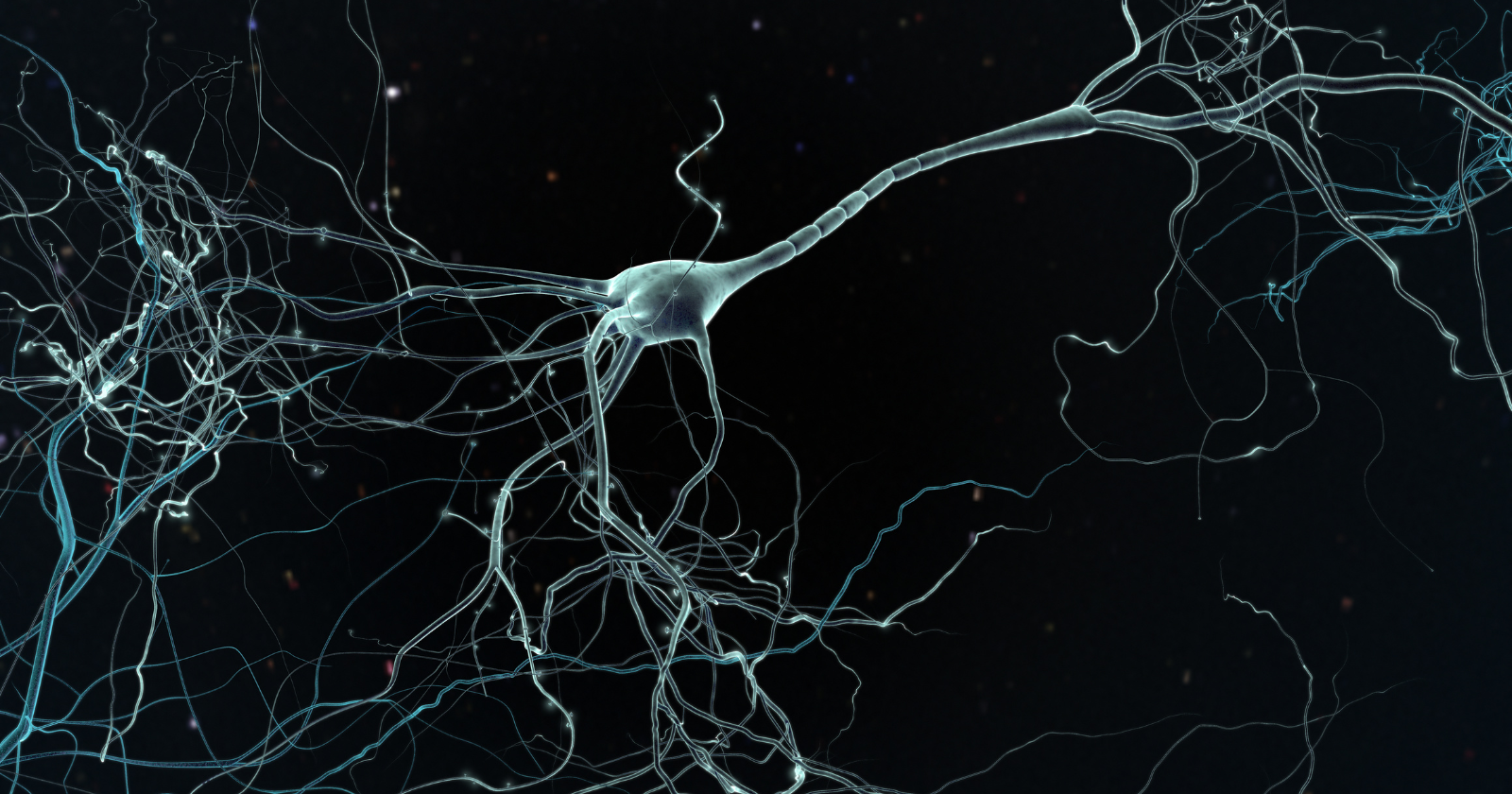
The human brain contains roughly 86 billion neurons. That number appears in almost every popular account of memory and intelligence, and it tends to carry an implicit argument: that the scale of human cognition follows from the scale of this cell count. What is less often mentioned is that the brain contains a roughly comparable number of a different cell type entirely, one that researchers have treated, for most of the history of neuroscience, as little more than biological scaffolding.

A paper published on 23 May in the Proceedings of the National Academy of Sciences puts forward a new hypothesis about what those cells, called astrocytes, might actually be doing. The work comes from a team at MIT: lead author Leo Kozachkov, Jean-Jacques Slotine, a professor of mechanical engineering and brain and cognitive sciences, and Dmitry Krotov of the MIT-IBM Watson AI Lab, who is the paper’s senior author. Their claim is not that astrocytes have been misunderstood in any dramatic sense; it is the more careful suggestion that they may be doing computational work that neurons, on their own, cannot account for.

This is a hypothesis supported by a mathematical model. The experimental work needed to test it has not yet been done.

The storage problem

The standard model for thinking about memory storage in neural networks is the Hopfield network, formalised by John Hopfield in his influential 1982 paper and drawing on earlier independent work by Shun-Ichi Amari in the early 1970s. Hopfield networks store information as patterns across connections between neurons, and they have been used as a working model for how the brain encodes and retrieves memories. The problem is that they can only store a limited amount of information, far less than what the human brain demonstrably holds. A modified version, known as dense associative memory, can store considerably more, but it requires couplings between more than two neurons at a time. Conventional synapses connect exactly two neurons: one presynaptic, one postsynaptic. There is no obvious biological mechanism for the higher-order coupling that dense associative memory requires.

Astrocytes are where the MIT team’s argument begins. These are star-shaped cells with long, thin extensions called processes, each of which can wrap around an individual synapse. An astrocyte can contact hundreds of thousands of synapses. When an astrocyte process wraps around a synapse, it creates what is called a tripartite synapse: a three-way junction involving the astrocyte process, the presynaptic neuron, and the postsynaptic neuron. Astrocytes cannot fire electrical action potentials the way neurons do, but they communicate through calcium signalling and can release signalling molecules called gliotransmitters into the synaptic junction.

The key move in the MIT model is to treat each tripartite synaptic domain not as a passive structural unit but as a computational one. Rather than thinking of an astrocyte as a single entity, the researchers treat it as a collection of semi-independent processes, each capable of sensing neural activity and feeding information back. The coupling this creates is not between two neurons but between the astrocyte process and the two neurons it connects. That is precisely the higher-order coupling that dense associative memories require.

What the model actually shows

“By conceptualising tripartite synaptic domains as the brain’s fundamental computational units,” says Maurizio De Pitta, an assistant professor of physiology at the Krembil Research Institute at the University of Toronto who was not involved in the study, “the authors argue that each unit can store as many memory patterns as there are neurons in the network. This leads to the striking implication that, in principle, a neuron-astrocyte network could store an arbitrarily large number of patterns, limited only by its size.”

The phrase “arbitrarily large” is worth pausing on. It does not mean infinite. It means that the model does not hit the ceiling that traditional neuron-only networks hit, and that the practical limit appears to scale with the network’s own dimensions. In this reading, the reason human memory has no known upper bound is not that the brain has found some exotic mechanism; it is that the brain may be exploiting a storage architecture that neuroscience has not, until recently, thought to look for.

The model also has something to say about energy efficiency. Because the ratio of stored information to computational units is high, and grows with network size, the system stores more per unit than a conventional Hopfield architecture. The authors suggest this fits with what is known about the brain’s actual energy budget.

What recent neuroscience has supported

The case for taking astrocytes seriously as more than support cells has been building for some years, though it has not yet hardened into consensus. Within the past few years, experimental work has begun to suggest a more active role. Studies disrupting astrocyte-neuron connections in the hippocampus have reported impairments in both memory storage and retrieval, and advances in calcium imaging resolution have made it possible to observe astrocytes and neurons coordinating their activity in real time. These findings establish that something is happening without settling what, and the field has not yet reached consensus on their interpretation.

“Originally, astrocytes were believed to just clean up around neurons,” Slotine says in the MIT release, “but there’s no particular reason that evolution did not realise that, because each astrocyte can contact hundreds of thousands of synapses, they could also be used for computation.”

The question the Kozachkov et al. paper is trying to answer is a narrower one: given what astrocytes do, what kind of computation could they plausibly be performing? The answer the model gives is memory encoding via dense associative memory, with information stored in the spatiotemporal patterns of calcium flow within the astrocyte, conveyed back to neurons through gliotransmitter release.

What the paper does not establish

The authors are direct about the speculative status of their work. “We hope that one of the consequences of this work could be that experimentalists would consider this idea seriously and perform some experiments testing this hypothesis,” Krotov says. The path from a plausible model to a confirmed mechanism is long, and many plausible models do not survive experimental contact. There is currently no way to test this hypothesis by reading the paper; what the paper does is make the case that testing it is worth the effort.

There is also a risk in reading the model too expansively. The dense associative memory architecture predicts certain mathematical properties of memory storage, but mapping those properties onto the full range of human memory, its emotional colouring, its selectivity, its susceptibility to distortion, requires considerably more work. The model addresses storage capacity. It does not address what gets stored, or why some memories persist, and others do not.

The Hopfield network context is worth keeping in mind here. John Hopfield received the Nobel Prize in Physics in 2024, shared with Geoffrey Hinton, for foundational work on artificial neural networks — work recognised for shaping the development of modern machine learning. The MIT paper extends that framework into a domain Hopfield’s original model could not reach. Whether the extension accurately describes what the brain is doing is, as yet, an open question.

The implication for how the brain is studied

There is a tendency in accounts of the brain to treat it as a neuron-first system, with everything else as secondary infrastructure. The attention given to neurons is not arbitrary; they are the cells that fire, that carry electrical signals, that form the visible substrate of perception and movement and speech. But a brain that uses half its cell count for functions that remain poorly understood is a brain with an incomplete accounting.

What the Kozachkov et al. paper adds to that picture is a specific, testable claim: that the three-way synaptic junction formed by an astrocyte and two neurons may be doing memory work that neuron-to-neuron connections alone cannot. If experiments bear that out, the implication is not just that astrocytes matter. It is that the unit of computation we have been studying, the synapse between two neurons, is not the brain’s actual basic unit of memory storage.

That would require some revision to a great deal of what has been written about the brain. It would not require discarding it.

The post Scientists identify a cell type in the brain that was previously ignored and it may explain why human memory has no known upper limit appeared first on Space Daily.

  •  

The more I work with AI, the less interested I am in whether it’s conscious and the more interested I am in what happens to human consciousness around it

Today, I came across a note on Substack by Karly V Studio that stopped me mid-scroll.

It was a single sentence: The more I work with AI, the less interested I am in whether it’s conscious and the more interested I am in what happens to human consciousness around it. 

That was it. No elaboration. Just the sentence sitting there. I read it three times, put my phone down, and spent the next hour thinking. This piece is the result.

There was a period when the question of AI consciousness felt genuinely live to me.

I have a background in psychology, I’ve spent years thinking about cognition and inner experience, and the question — does anything like experience accompany what these systems do? — seemed like one of the most interesting open problems of our moment.

I read the papers. I followed the debates. I found myself, occasionally, genuinely unsure.

At some point, without quite deciding to, I stopped. Not because the question got answered — it didn’t, and it may not for a very long time. But because a different question had started to feel more urgent, more observable, more real in my day-to-day life. Less philosophical, more immediate. The question I couldn’t stop turning over wasn’t about what’s happening inside AI. It was about what’s happening inside us when we’re around it constantly.

The question that displaced the other one

What happens to human consciousness when it operates alongside AI — not in the speculative sense, not the sci-fi sense, but in the specific, textured, daily sense? What happens to attention? What happens to the capacity to sit with uncertainty long enough to let it resolve into something? What happens to the experience of thinking something through, fully, from start to finish, when you know that a machine can generate fifty variations of your half-formed idea in the time it takes you to finish a sentence?

These aren’t rhetorical questions. I notice things now that I didn’t notice three years ago. A faint impatience when my own thinking feels slow. A slight deflation when I’ve worked something out and find that the AI had already gone there. A recalibration — gradual, unannounced — in what I expect thinking to feel like, and how long it should take.

Nicholas Carr documented something adjacent to this in The Shallows, his examination of how internet use rewires the neural pathways involved in reading and sustained attention. His argument, drawing on neuroscience and media theory, was that the medium isn’t just a vessel for content — it actively reshapes how the brain processes information. We adapted to search engines. We adapted to hyperlinks. The adaptation happened quietly, at the level of habit and expectation, and most of us noticed the change only in retrospect, if at all. AI is a different order of tool, but the principle holds — and may hold more sharply.

Cognitive offloading, turbocharged

There’s a well-established phenomenon in cognitive science called cognitive offloading — the tendency to stop retaining information you know you can retrieve later. We’ve done this with phone numbers for twenty years. We do it with dates, addresses, facts that used to live in memory and now live in a search bar. The research on this has been building for years, examining how external memory storage affects internal cognition and what we lose (and gain) when we outsource recall to devices.

What AI introduces is something more radical than retrieval offloading. It’s what I’d call reasoning offloading. You can now hand off not just “what is the capital of Portugal” but “work through the implications of this argument for me” or “tell me what I’m probably missing here.”

The cognitive steps between question and answer — the searching, the synthesizing, the holding of multiple possibilities in tension — can be skipped. The result arrives. The journey doesn’t happen.

I don’t think this is simply bad. There are genuinely liberating things about having a capable thinking partner available at all times. But I’d be lying if I said I hadn’t noticed a change in the texture of my own reasoning on the days I lean into AI heavily versus the days I work without it. There’s something different about the feel of an idea you arrived at slowly, on your own, compared to one you arrived at quickly, with assistance. I can’t prove that difference matters. But I notice it, and I think the noticing is worth something.

AI as an unexpected mirror

Here is the thing that has surprised me most, working with these tools as extensively as I do: being around AI has made me more aware of my own cognition, not less. The consciousness debate about AI centers almost entirely on whether the machine has inner experience. But there’s an underexplored symmetry at play. Being around something that processes, generates, retrieves, and responds at speed — without (apparently) any of the friction of genuine uncertainty, any of the experience of reaching for a word and not quite finding it — throws your own processing into relief.

I have started to notice the seams in my own cognition in ways I didn’t before. The moments where I’m genuinely generating something versus where I’m retrieving a cached response I’ve given a hundred times. The difference between thinking through a problem and pattern-matching to a solution I already hold. I had, before this, a vague sense that these were different activities. Working with AI has made the distinction feel specific and detectable. The tool, unexpectedly, became a mirror.

The observer the tool created

There’s something else specific that I’ve noticed, and it’s difficult to articulate without sounding either precious or alarmed, when really it’s neither. It’s more like: a thing worth paying attention to.

When you use AI for thinking tasks regularly, you start to notice the moment just before you think — the moment when you’re about to engage with a problem — and you catch yourself reaching for the AI instead. That pause, that noticing, is a form of metacognitive awareness that many people didn’t have access to before. The friction created the observer.

Metacognition — thinking about thinking — has a substantial research base linking it to better learning outcomes, improved self-regulation, and stronger decision-making, particularly when explicitly developed. What’s interesting about AI as a metacognitive prompt is that it’s not deliberate at all. It’s incidental. You reach for the tool. You notice yourself reaching. You get a brief, clear view of what you were about to do and why. That view is new. It wasn’t forced by a therapist or a mindfulness practice. It was forced by the availability of an alternative.

I don’t want to romanticize this. The pause doesn’t always lead anywhere useful. Plenty of times I notice it, ignore it, and hand the task over anyway — because that’s the right call, because the AI will do it better, because I have seventeen other things competing for the same attention. But sometimes the pause leads to a realization that I actually want to think this one through myself. That I’d lose something by not doing so. That the thinking is the point, not just the output.

What I’m watching

I’m not worried, exactly. I find all of this more interesting than alarming. The relationship between humans and cognitive tools has always been generative and strange — writing changed memory, printing changed authority, the internet changed attention, and we’re still sorting out what those changes mean. AI is the next chapter of that story, not a rupture from it.

But I’d rather pay attention to it than not. Because if the tool is changing the nature of thinking — changing what it feels like to have an idea, what it means to understand something, what we expect from our own minds — and we’re not watching that happen, we’ll notice the change only after it’s already settled in. Only after the new baseline has become invisible, the way all baselines eventually do.

The question of whether AI is conscious is still genuinely open. Smart people are still working on it, and I don’t dismiss it. But it has, for me, become the less pressing question. The pressing one is what’s happening in here — in the human mind that now has, available to it at all times, something that thinks alongside it, faster and without fatigue. What that does to attention, to patience, to the felt sense of cognition. What it makes visible that was always there. What it quietly changes that we won’t see clearly for years.

I’d rather be watching now.

And I’m grateful to the author of the Subtstack note for putting it into one sentence so cleanly that I had no choice but to think it through.

The post The more I work with AI, the less interested I am in whether it’s conscious and the more interested I am in what happens to human consciousness around it appeared first on Space Daily.

  •  

Neuroscientists found a region of the brain specialized for recognising faces that activates in as little as 50 milliseconds and it develops even in people who have been blind since birth

brain decision making

Somewhere on the ventral surface of the temporal lobe, in a region called the fusiform gyrus, there is a small area of cortex that responds far more strongly to faces than to almost anything else. The area is known as the fusiform face area, and two papers published roughly six years apart have each added something precise and somewhat counterintuitive to what we know about it.

The first finding, from a 2014 paper in Nature Communications, concerns timing. Using electrodes placed directly on the fusiform face area of four patients undergoing epilepsy monitoring, neuroscientist Avniel Singh Ghuman and colleagues at the University of Pittsburgh recorded electrical activity while participants viewed images of faces, bodies, houses, hammers, shoes, and phase-scrambled faces. What Ghuman’s team found was that the region was responding selectively to faces within 50 to 75 milliseconds of a face appearing on screen. That is faster than this region had previously been shown to respond to any visual category in humans, and faster than most other categories reach the temporal cortex at all.

The second finding, from a 2020 paper in the Proceedings of the National Academy of Sciences by N. Apurva Ratan Murty, Nancy Kanwisher, and colleagues at MIT, concerns development. When people who have been blind since birth handle three-dimensional printed models of faces, the fusiform face area becomes active. Visual experience with faces, it turns out, is not what builds the area’s preference for them.

These are findings from two separate papers, each with its own design, sample, and limits. Neither should be read as a settled account of how face perception works. But together they describe something worth sitting with.

What the Ghuman paper actually measured

The electrode method Ghuman’s team used is called intracranial electrocorticography, or ECoG. It involves recording directly from the brain’s surface at very high temporal resolution, far finer than what fMRI allows. The four participants in the study were epilepsy patients who already had electrodes implanted as part of their clinical care. The researchers used a machine learning algorithm to decode, on a trial-by-trial basis, whether the brain signal from the fusiform face area at any given moment was consistent with the participant viewing a face.

Face-selective activity appeared in the 50-to-75-millisecond window after stimulus onset and remained distinguishable from responses to other categories through to about 350 milliseconds. Crucially, phase-scrambled faces, which preserve the spatial frequency structure of a face but destroy its recognisable shape, did not produce the same early signal. This argues against the early response being driven simply by the visual statistics of a face-shaped image rather than by something more specific to face recognition.

The study was conducted on four participants. That is a small sample by the standards of most research, though the intracranial recording method compensates partly for sample size with signal precision that non-invasive imaging cannot approach. The authors are careful about what they claim: the early activity shows that face-specific information is present in the fusiform face area at 50 to 75 milliseconds, and they argue this is consistent with the region playing a role in initial face detection. They do not claim to have resolved all debates about the temporal architecture of face perception. There is ongoing disagreement in the field about when and where in the brain face selectivity first arises, and this paper contributes to that debate rather than closing it.

Beyond face detection, the same paper also found that the fusiform face area encodes which specific face someone is viewing, but this individuation happened considerably later, between 200 and 500 milliseconds, and was stable across changes in facial expression. And a late-sustained signal, broadband gamma activity lasting more than 500 milliseconds, tracked how long it took participants to respond in a gender-classification task. Longer gamma activity corresponded to slower responses. The area appears to be doing several different things at different moments, and not all at once.

A feature the area may not need to acquire

The MIT study took a different approach to a different question. Kanwisher and her colleagues wanted to know whether the fusiform face area develops its preference for faces because people spend years looking at faces, or whether the region has something more like a predetermined role that does not depend on that visual history.

To test this, they recruited people who had been blind from birth and had therefore never had visual experience with faces or anything else. Using fMRI, they scanned participants while they handled 3D-printed objects including faces, hands, chairs, and mazes. The fusiform face area was active during face handling, in roughly the same location it occupies in sighted people, and the selectivity for faces over other objects was comparable.

The finding does not mean visual experience is irrelevant to how the area functions in sighted people. Kanwisher has been quoted in MIT News as saying precisely that: visual input probably does play a role in sighted subjects. What the study shows is that visual experience is not necessary for the area to develop face selectivity in the first place. The researchers propose that long-range connectivity, the area’s structural relationships to other parts of the brain, may be what positions it to become selective for faces regardless of the sensory route through which face information arrives.

This finding builds on earlier work. A 2017 study from researchers in Belgium, published in the Proceedings of the National Academy of Sciences, scanned congenitally blind participants while they listened to face-related sounds such as laughing or chewing, and found elevated activity in the vicinity of the fusiform face area compared to non-face sounds. The MIT paper extended this with the more direct test of haptic face recognition.

What these two findings put together

Reading these papers alongside each other draws out something the standard account of the fusiform face area tends to flatten. It is easy to describe the area as a face-recognition module and leave it there. But Ghuman’s data show it operating at least three distinct processing stages, on three different timescales, doing different things with face information at different moments. And Murty and Kanwisher’s data show the area claiming its face selectivity without any visual faces ever having been seen.

What the area appears to have is something like a structural commitment to faces as a category, one that exists prior to, and independent of, a lifetime of looking. That does not mean it is a rigid or fixed processor. The late gamma activity Ghuman’s team found appears tied to working memory and task demands, suggesting the area is also responsive to what someone is trying to do with a face, not only to the presence of one.

The question of what this means for people with face recognition difficulties, or for understanding how face perception varies across individuals, is not something either paper directly addresses. Neither is clinical in that sense. Both are asking about the fundamental architecture of a region, not about what goes wrong when it malfunctions.

The limits worth naming

Ghuman et al. worked with four participants. That is small. The electrode placement was determined by clinical need, not experimental design, which means the precise location varied across subjects. The authors acknowledge their method is more sensitive to information encoded in temporal patterns than to information encoded spatially, so absence of a signal in their analysis does not necessarily mean absence of processing in the region.

The MIT haptic study relied on fMRI, which captures activity integrated over seconds rather than milliseconds. It tells us that the fusiform face area is involved when blind people handle face-shaped objects; it does not tell us precisely what computations are occurring or at what speed. The researchers are also working with a small group of congenitally blind participants, a population that is difficult to recruit in large numbers. The finding is worth taking seriously, but replication and extension will matter.

The broader question about what specifies the location and function of cortical areas is active and not resolved. The connectivity hypothesis is plausible and consistent with the data; it is not yet a confirmed account of development. Future work may complicate or qualify it.

What the research does not do

Neither paper suggests that the 50-millisecond finding represents the full story of how quickly the brain begins to recognise a face. Other regions contribute to face perception, and the signal Ghuman’s team recorded is from one area of the processing network. The fusiform face area appears to be unusually fast compared to how quickly the temporal cortex responds to non-face categories, but the authors are careful to frame this as a finding from this dataset with this method, not a universal statement about the speed of human face recognition.

Similarly, the MIT result about blindness does not mean the fusiform face area functions identically in people who have and have not had visual experience. Kanwisher says explicitly that visual input probably does shape the area in sighted people; the study only shows that such input is not required for face selectivity to emerge. These are different claims, and the difference matters.

The region continues to be studied, and the picture that has accumulated is more layered than a simple face-recognition box in the temporal lobe. It is active very early, it handles individual faces later, it maintains information in support of decisions, and it manages to do all of this without requiring the owner ever to have seen a face. How those capacities fit together is still being worked out.

The post Neuroscientists found a region of the brain specialized for recognising faces that activates in as little as 50 milliseconds and it develops even in people who have been blind since birth appeared first on Space Daily.

  •  
❌