Reading view

Scientists Discover Mysterious Creature Living in the Great Salt Lake – and It Exists Nowhere Else on Earth

Tree Stump Ice Antelope Island Great Salt LakeA tiny worm discovered in the Great Salt Lake could help scientists better understand the origins and resilience of life in extreme environments. Its story remains largely a mystery. The Great Salt Lake is famous for brine shrimp, brine flies, and water so salty that few animals can survive in it. Now scientists have added [...]
  •  

A Tiny Bright-Blue Octopus Found in the Galápagos Is Completely New to Science

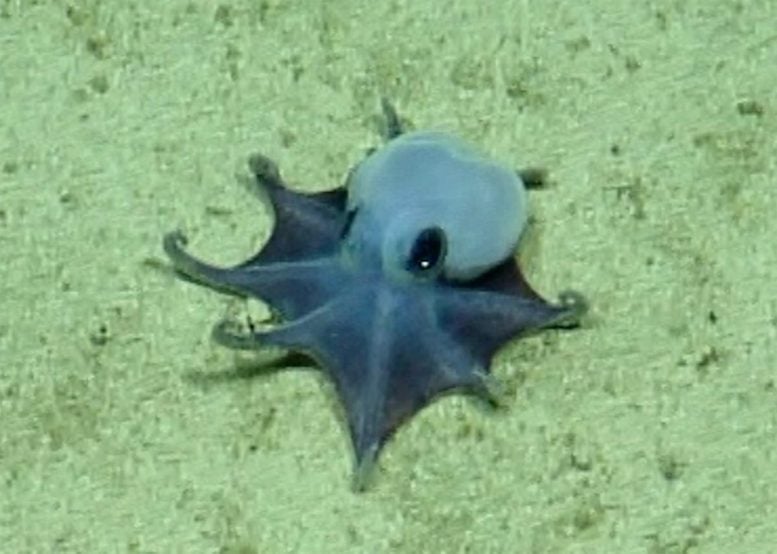
Blue Octopus Galápagos IslandsA newly discovered tiny blue octopus from the Galápagos is a striking reminder that the deep ocean still holds countless secrets. The Galápagos Islands, located off the coast of Ecuador, are famous for their remarkable wildlife. More than a thousand species of plants and animals found there exist nowhere else on Earth, including giant tortoises [...]
  •  

For Honduran coffee growers, EUDR compliance means changing old habits

CONCEPCIÓN DE SOLUTECA, Honduras — In the 1970s, the Honduran government granted a piece of land in the mountains of Concepción de Soluteca to Roberto González’s parents. They duly grabbed a chainsaw and a machete to clear the forest. On the 12 hectares (30 acres) they received as part of a land reform, they planted corn, beans and bananas, the basic staple foods. It was a hard life up in the mountains, allowing the farmers and their families to just survive. There wasn’t much public infrastructure, and most children had to help with farmwork early on. This included González, who only attended elementary school for three years. When González inherited the land 20 years later, coffee cultivation was just taking off. Middlemen promised the farmers good money for the export crop, and the banks provided loans for cultivation. At first, this worked well, González, now 39, remembers. Coffee helped the farmers to generate income and improve living conditions. But it didn’t last long. They grew coffee much the same way they did other crops, without adequate soil or shade management. When harvests dwindled, they expanded their area, cutting the last standing forests and damaging water sources. Around 2012, they faced an outbreak of coffee rust, a fungal disease. It was a complete disaster: many farmers were thrown into poverty and forced to migrate. “We destroyed the foundations of our livelihoods, but it was out of ignorance; we just didn’t know better,” González tells Mongabay. Under the EUDR, coffee farmers step…This article was originally published on Mongabay

  •  

How much suffering do invasive species cause? Researchers are measuring that

Avian vampire flies (Philornis downsi) were not discovered in the Galápagos Islands for almost three decades after they were thought to have arrived from mainland Ecuador in the 1960s. Even then, the first were found by accident. Birgit Fessl, a landbird ecologist, was surveying for native species on the island of Santa Cruz in 1997 when she reached into the branches of a tree to take down the huge, domed nest of a woodpecker finch. Inside was a surprise. “We found one dying chick, another dead one which just looked sucked dry and 20 large maggots full of blood,” said Fessl, who now leads the Charles Darwin Foundation’s Landbird Conservation program. “I was stunned — the first dead baby in my hands. Then I realized it wasn’t an accident: It was everywhere,” she told Mongabay over a WhatsApp call. Across each of the Galapagos’ human-inhabited islands, vampire flies had already wrought havoc, killing some chicks in nests they infiltrated and leaving others maimed for life. “But it went unseen because people didn’t really know what to look for.” Around the world, more than 37,000 invasive species have been introduced to new environments. Many of these cause suffering, from vampire flies maiming finches to yellow crazy ants (Anoplolepis gracilipes) spraying acid at the eyes of shrikes (Laniidae) on Minami-Daitō Island, Japan, and Australian quolls (Dasyurus) bleeding from the nose after eating toxic cane toads (Rhinella marina). But none of these are measured by the current global standard for assessing the impact…This article was originally published on Mongabay

  •  

How did land plants change rivers?

The evolution of land plants about 450 million years ago altered many of Earth’s geologic processes, like weathering and erosion. Due to the lack of evidence for meandering rivers before then, past scientists hypothesized that plants could have caused straight rivers to meander. However, in recent decades, researchers have challenged this idea. They’ve suggested that plants could have changed rivers without causing them to meander.

To understand how vegetation changed rivers in the past, researchers recently studied 49 modern meandering rivers. They sorted these rivers into 3 categories – vegetated, unvegetated, and semi-vegetated – by analyzing color images taken of them from the air. They identified 18 vegetated rivers located in South America, 24 unvegetated rivers in the western United States, and 7 semi-vegetated rivers in China and the Eastern United States. 

To examine the impact of plants on these rivers, the researchers quantified how much each river channel curves, known as its sinuosity. They used opposite banks of each river bend to find its center point, then, using digital maps, drew a line along the river’s trajectory at an equal distance between the bend center points. They used this line to calculate the angle between the river’s curve and the center point. This angle, called the migration angle, shows how a river bend relates to the river’s downstream direction. By measuring it, researchers can tell whether a river is developing more vertically or horizontally, and how sharp its bends are, either of which could be influenced by plants. 

The researchers compared migration angles across each river system to determine how river bends varied between vegetated and unvegetated rivers. They found that vegetated rivers tend to deposit sediments in the river bend, leading to curvier bends that develop horizontally and widen over time. In contrast, unvegetated rivers deposit sediment downstream, which means the rivers bend less and have greater variability in bend width.

The question remained whether plants were the primary cause of these differences or whether other factors were at play. To resolve this, the researchers investigated 3 additional factors. The first was the natural fluctuations in water flow across a river system, called its flow variability. They found that during storms, flow variability caused river bends to move downstream in unvegetated rivers, but not in vegetated rivers. This result suggested that flow variability alone didn’t drive downstream migration, although it can directly impact vegetation. 

The second variable the researchers analyzed was the amount of sediment a river can carry, or its sediment flux. They found that rivers carrying more sediment can erode more banks, also shifting river bends. However, rivers with more sediment but the same level of plant coverage had statistically similar bend angles. Thus, the researchers concluded that sediment flux alone can’t drive bend development, and that the changes were instead dependent on vegetation cover. 

The third variable they analyzed was riverbank strength. The researchers observed rivers with strong banks, made of rock or compacted sediment, and weak banks, made of loose sediment. They observed no difference in river bends with the same vegetation cover but different bank strengths. The researchers concluded that bank strength is also not the primary driver of bend migration in vegetated or unvegetated rivers. 

Of the 4 variables the researchers examined – flow variability, sediment flux, bank strength, and vegetation cover – vegetation cover consistently had the greatest impact on the appearance of meandering rivers. They concluded that meandering rivers could have existed before plants, but would have looked different. Like modern unvegetated rivers, ancient meandering rivers likely had lower-angle bends. As plants evolved and grew on river banks, the bends would have developed differently, becoming curvier like modern vegetated rivers. They suggested that understanding this process provides insight into life on Earth before plants evolved 450 million years ago. 

The post How did land plants change rivers? appeared first on Sciworthy.

  •  

Does the Arctic Ocean regulate or amplify global warming?

Greenhouse gases trap heat within the atmosphere. One such gas that exists beneath the ocean floor is methane. Ice-like substances on the seafloor that contain methane, known as methane hydrates, can break apart or melt, releasing methane gas into the ocean, risking further global warming. Melting permafrost, active tectonics, daily tidal patterns, and changing sea levels can similarly trigger methane’s escape from sediments. However, scientists don’t understand how these triggers will respond to future climate change.

A team of researchers hypothesized that future global warming could actually accelerate methane’s escape into the ocean. To investigate this hypothesis, they focused on an ancient global warming event approximately 56 million years ago, called the Paleocene-Eocene Thermal Maximum or PETM. Arctic Ocean temperatures at times exceeded 20°C (68°F) during this event. These elevated temperatures serve as an analog for today’s rapidly warming conditions. 

Once methane enters seawater, its fate is largely determined by 2 sets of biological processes. Today, 90% of methane released into the ocean from the seafloor is consumed by tiny organisms called microbes via a process known as anaerobic methane oxidation. During this process, microbes consume methane alongside sulfate, producing a solid iron-sulfur mineral, pyrite. Anaerobic methane oxidation prevents methane from escaping into the atmosphere by trapping it in minerals. In this case, the ocean becomes a reservoir, or sink, for methane. 

Despite this, too much methane could overwhelm the sulfate-dependent cycle. If that occurs, a different set of microbes consumes methane alongside oxygen in a process known as aerobic methane oxidation. Aerobic methane oxidation produces carbon dioxide, a potent heat-trapping greenhouse gas that escapes from the ocean. Aerobic oxidation accounts for 10% of methane consumption in oceans today, though this could have been different in the past. 

To determine how much anaerobic versus aerobic methane oxidation occurred during the PETM, the team extracted data from sediments retrieved from the Arctic Ocean floor. As sediment piles up on the seafloor, it compacts. Scientists can drill deep into the seafloor to extract a cylindrical sample, or core, of this compacted sediment. 

The age of sediments in a core increases with depth. Therefore, younger sediments exist at the top of the core, and older sediments exist at the bottom. For this project, the team used a previously extracted core from the Arctic Ocean that contained sediments dating back 100 million years. They found 56-million-year-old sediments from the PETM at a depth of 386 meters, or 1,266 feet, in this core. 

The researchers explained that microbes leave behind unique carbon-based molecules called organic biomarkers when they decompose. These organic biomarkers accumulate in seafloor sediments. The 2 different types of methane-consuming microbes leave behind 2 different biomarkers, one for anaerobic methane oxidation and one for aerobic methane oxidation. This team measured the amount of each biomarker in the sediment core to determine which microbes were dominant during the PETM. 

The biomarker left behind from microbes performing aerobic methane oxidation is called hop(17)21-ene. The researchers noticed that the amount of hop(17)21-ene increased by a factor of 4 during the PETM. At the same time, the biomarker left behind from microbes performing anaerobic methane oxidation, called glycerol dialkyl tetraether, decreased to half. They interpreted these trends to reflect the rise of aerobic methane cycling and the shutdown of anaerobic methane cycling, respectively. They attributed this transition to the release of enough methane to overwhelm the sulfate-dependent methane cycle under warming conditions.

To estimate the amount of carbon dioxide produced by aerobic methane oxidation during the PETM, the researchers located another biomarker in the sediment core, called phytane. Phytane is produced by organisms that consume carbon dioxide during photosynthesis, and its structure preserves clues to the amount of carbon dioxide available at the time. The researchers found that during and well after the PETM, the concentration of carbon dioxide in the Arctic Ocean was 4 times greater than modern levels. They concluded that the Arctic Ocean became a prolonged source of carbon dioxide to the atmosphere, even after the PETM.

The team suggested that the uptick in aerobic methane oxidation during the PETM serves as an analog for the modern Arctic Ocean, which continues to warm rapidly in the face of modern climate change. Their results highlight how the transformation of methane into carbon dioxide poses a threat. More carbon dioxide in the atmosphere warms the air, which heats the oceans, causing more methane to escape from the seafloor and eventually be converted into additional carbon dioxide. When triggered, this feedback would continue to amplify and could become difficult to recover from.  

The post Does the Arctic Ocean regulate or amplify global warming? appeared first on Sciworthy.

  •  

‘Ocean with David Attenborough’ – masterpiece and call to action

Wake-up call, and a call to arms The spectacular feature-length documentary ‘Ocean with David Attenborough’ is his very first partnership with National Geographic, now showing on Disney+ channel in Australia. With the great...

The post ‘Ocean with David Attenborough’ – masterpiece and call to action first appeared on Science Illustrated.

  •  
❌