Reading view

Even “Safe” Air Pollution Levels Pose Health Risks

In a groundbreaking review set to reshape public health policies, researchers at the University of Mississippi have presented compelling evidence that ambient air pollution levels deemed safe by current Environmental Protection Agency (EPA) standards may nonetheless pose a significant risk to cardiovascular health. This extensive review, recently published in the scientific journal Environmental Pollution, synthesizes decades of global research, underscoring the urgent need to revisit and potentially lower regulatory thresholds for fine particulate matter, specifically PM2.5.

PM2.5 refers to microscopic particulate matter with a diameter less than 2.5 microns—around 20 times smaller than a human hair—which makes them capable of penetrating deep into the respiratory tract and entering the bloodstream. These particles originate from diverse sources such as vehicular emissions, industrial manufacturing, biomass burning, and dust from agricultural activities. Their diminutive size allows them to circumvent the body’s natural defense mechanisms, reaching vital organs and triggering systemic health effects.

The review meticulously analyzed 95 peer-reviewed studies that addressed cardiovascular impacts related to low-level PM2.5 exposures worldwide. Strikingly, approximately two-thirds of these studies demonstrated significant associations between PM2.5 exposure and adverse cardiovascular outcomes, including heart attacks, strokes, and increased arterial plaque accumulation. Such findings suggest that even concentrations below the EPA’s current allowable limits can compromise cardiovascular function and contribute to disease progression.

One of the most alarming revelations from the review is the heightened vulnerability of specific demographic groups. Older adults, infants, individuals with preexisting heart conditions, socioeconomically disadvantaged communities, and marginalized populations bear a disproportionate burden of the health consequences posed by low-level PM2.5 exposure. The underlying reasons include a combination of biological susceptibility, existing comorbidities, and environmental inequities that result in unequal pollution exposures.

Experts leading the study emphasize that the source of PM2.5 plays a pivotal role in its health impact. Traffic-related pollution, industrial emissions, and rural dust each possess unique chemical compositions and particle characteristics that influence toxicity. For instance, black carbon—a key component of soot prevalent in urban areas—has been linked to respiratory and cardiovascular morbidity. Understanding these nuances is critical for tailoring regulatory actions and mitigation strategies.

Technological advances in air quality monitoring have highlighted the dynamic nature of pollution exposure. Daily fluctuations in PM2.5 concentrations, even within previously considered ‘safe’ ranges, can exacerbate risk. The lack of widespread public awareness regarding these subtleties hampers proactive health protection. Consequently, researchers call for enhanced education campaigns to inform communities about real-time air quality risks and personal protection measures.

Cardiovascular disease remains the leading cause of mortality on a global scale, and these findings carry profound implications for public health. The pathophysiological mechanisms implicate PM2.5 in accelerating atherosclerosis, fostering systemic inflammation, and enhancing thrombogenic potential. These processes collectively escalate the likelihood of acute cardiovascular events. The pervasiveness of PM2.5 exposure across urban, industrial, and rural environments necessitates a broad-reaching response.

Current public health recommendations to mitigate individual risk include monitoring localized air quality indices and adopting practical interventions on high-exposure days. Utilization of high-efficiency particulate air (HEPA) filtration systems within indoor environments, combined with the use of adequately rated masks such as N95 respirators, can substantially reduce personal particulate inhalation. These tools are particularly vital for sensitive populations engaging in outdoor activities during episodes of elevated pollution.

The review underscores the critical interplay between environmental science and clinical health disciplines. Healthcare providers are encouraged to integrate pollution exposure assessments into routine cardiovascular risk evaluations. Furthermore, temporal spikes in air pollution should prompt heightened clinical vigilance among patients with known cardiovascular vulnerabilities.

While treatment modalities for pollution-induced cardiovascular damage remain limited, prevention through regulatory intervention and public engagement is paramount. This study advocates for policy reforms that reflect emerging scientific evidence—ideally, lowering the maximum allowable PM2.5 levels to afford more comprehensive protection for population health. Robust air quality enforcement accompanied by community education initiatives constitutes the frontline defense.

Mississippi’s unique environmental landscape, marked by a blend of rural, industrial, and urban pollution sources, exemplifies the broader challenges in managing fine particulate exposure. Researchers at the University of Mississippi have specifically documented elevated black carbon concentrations across various locations within the state, correlating these findings with increased respiratory admissions. Such regional data, when synthesized with global research, bolster the call for targeted policy improvements.

This collective body of work spotlights the critical need for multi-sectoral collaboration spanning environmental regulation, healthcare, urban planning, and public advocacy. Addressing the insidious cardiovascular risks posed by low-level PM2.5 pollution demands concerted efforts to enhance air quality monitoring infrastructure, refine healthcare response frameworks, and cultivate informed, empowered communities.

Ultimately, the path forward rests on reimagining air quality standards rooted in rigorous health evidence. By recognizing and acting upon the risks associated with fine particulate pollution at even low concentrations, society can better safeguard cardiovascular health and reduce the burden of pollution-related morbidity on a global scale.


Subject of Research: Health impacts of low-level ambient fine particulate matter (PM2.5) exposure and cardiovascular outcomes

Article Title: A systematic review of low-level ambient fine particulate matter (PM2.5) exposures and adverse cardiovascular health outcomes

Web References:

References:
University of Mississippi Review in Environmental Pollution, DOI: 10.1016/j.envpol.2026.127978

Image Credits: Photo illustration by John McCustion/University Marketing and Communications

Keywords: Air pollution, PM2.5, cardiovascular health, fine particulate matter, environmental toxicology, public health, pollution regulation, black carbon, respiratory health, environmental epidemiology, pollution exposure, air quality monitoring

  •  

Grifters, cynics, and true believers: The family tree of vaccine opponents

Stanley Plotkin, 93, was instrumental in developing a number of vaccines over the course of his career. He recently said that he’s “beginning to regret having lived so long—because we’re going downhill.” How could we possibly have gotten here?

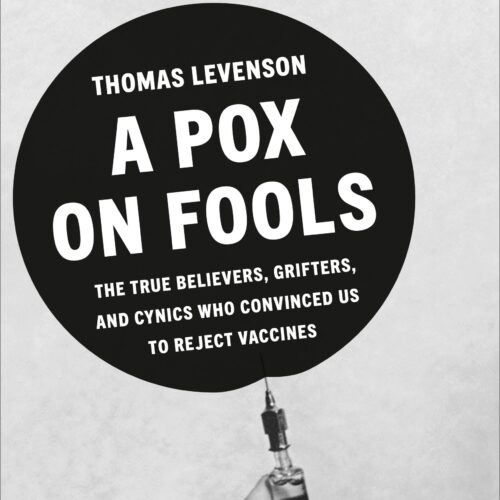
Maybe we’ve always been here. It turns out that the anti-vaccine arguments currently flooding the Internet have been around for as long as vaccines have. In his new book A Pox on Fools, Thomas Levenson breaks them down into three categories, as made clear in the book’s subtitle: “The True Believers, Grifters, and Cynics Who Convinced Us to Reject Vaccines.” The accusations these people levy against vaccines can just as easily be used to categorize the arguments themselves: They are wrong, they are bad, and they are intolerable.

Wrong

As Levenson tells it, in the early 18th century, a couple of forward-thinking Westerners learned about inoculations against smallpox from Ottoman women and an enslaved African. At that point, infectious disease was by far the leading cause of death, as it had been forever. In the 19th century, roughly 40 percent of babies died of infection before they turned 5.

Read full article

Comments

© Penguin Randomhouse

  •  

Feeble Little Horse leans into digital weirdness on bitknot

Cover of Feeble Little Horse’s bitknot
Even the cover revels in a low-bit digital aesthetic. | Image: Saddle Creek / Feeble Little Horse

From the opening moments of bitknot, it's obvious that Feeble Little Horse has found an entirely new gear. Where on Girl with Fish the blown-out textures were more '90s indie rock and shoegaze, on their latest LP, there's a more modern edge to the distortion and the riffs cut cleaner. Similarly, where the digital glitchiness was mostly relegated to window dressing on their sophomore record, on bitknot it's integral to the arrangements and a core part of their emerging, distinct sound.

We got a preview of this new direction on the one-off single, and one of my favorite songs of 2025, "This Is Real." It blended blast beats, Sonic Youth-esque …

Read the full story at The Verge.

  •  

Grifters, cynics, and true believers: The family tree of vaccine opponents

Stanley Plotkin, 93, was instrumental in developing a number of vaccines over the course of his career. He recently said that he’s “beginning to regret having lived so long—because we’re going downhill.” How could we possibly have gotten here?

Maybe we’ve always been here. It turns out that the anti-vaccine arguments currently flooding the Internet have been around for as long as vaccines have. In his new book A Pox on Fools, Thomas Levenson breaks them down into three categories, as made clear in the book’s subtitle: “The True Believers, Grifters, and Cynics Who Convinced Us to Reject Vaccines.” The accusations these people levy against vaccines can just as easily be used to categorize the arguments themselves: They are wrong, they are bad, and they are intolerable.

Wrong

As Levenson tells it, in the early 18th century, a couple of forward-thinking Westerners learned about inoculations against smallpox from Ottoman women and an enslaved African. At that point, infectious disease was by far the leading cause of death, as it had been forever. In the 19th century, roughly 40 percent of babies died of infection before they turned 5.

Read full article

Comments

© Penguin Randomhouse

  •  

Grifters, cynics, and true believers: The family tree of vaccine opponents

Stanley Plotkin, 93, was instrumental in developing a number of vaccines over the course of his career. He recently said that he’s “beginning to regret having lived so long—because we’re going downhill.” How could we possibly have gotten here?

Maybe we’ve always been here. It turns out that the anti-vaccine arguments currently flooding the Internet have been around for as long as vaccines have. In his new book A Pox on Fools, Thomas Levenson breaks them down into three categories, as made clear in the book’s subtitle: “The True Believers, Grifters, and Cynics Who Convinced Us to Reject Vaccines.” The accusations these people levy against vaccines can just as easily be used to categorize the arguments themselves: They are wrong, they are bad, and they are intolerable.

Wrong

As Levenson tells it, in the early 18th century, a couple of forward-thinking Westerners learned about inoculations against smallpox from Ottoman women and an enslaved African. At that point, infectious disease was by far the leading cause of death, as it had been forever. In the 19th century, roughly 40 percent of babies died of infection before they turned 5.

Read full article

Comments

© Penguin Randomhouse

  •  

Grifters, cynics, and true believers: The family tree of vaccine opponents

Stanley Plotkin, 93, was instrumental in developing a number of vaccines over the course of his career. He recently said that he’s “beginning to regret having lived so long—because we’re going downhill.” How could we possibly have gotten here?

Maybe we’ve always been here. It turns out that the anti-vaccine arguments currently flooding the Internet have been around for as long as vaccines have. In his new book A Pox on Fools, Thomas Levenson breaks them down into three categories, as made clear in the book’s subtitle: “The True Believers, Grifters, and Cynics Who Convinced Us to Reject Vaccines.” The accusations these people levy against vaccines can just as easily be used to categorize the arguments themselves: They are wrong, they are bad, and they are intolerable.

Wrong

As Levenson tells it, in the early 18th century, a couple of forward-thinking Westerners learned about inoculations against smallpox from Ottoman women and an enslaved African. At that point, infectious disease was by far the leading cause of death, as it had been forever. In the 19th century, roughly 40 percent of babies died of infection before they turned 5.

Read full article

Comments

© Penguin Randomhouse

  •  

2027 Audi RS5 first drive: A performance PHEV with split personalities

SAALFELDEN, Austria—Audi may have built a reputation for technology over the years, either pioneering or early-adopting things like all-wheel drive, direct-injection engines, and so on. But it's also true that along the way it has earned a bit of a reputation for cars that look good inside and out but maybe aren't the most exciting things on four wheels. Not so for the models reworked by Audi Sport, the company's motorsports division, which now also spends its time building the company's new Formula 1 power units.

And like those latest F1 cars, its newest RS5 road car also marries together a turbocharged V6 and an electric motor. How convenient.

The underlying chassis of the new RS5 is shared with the A5 that we first drove last summer, but the only common body panels between the lesser A5 and this car is the hood; everything else is RS5-specific. Aggressive wheel arch blisters add more than 3.5 inches (90 mm) of width compared to the A5, and massive air intakes dominate the front fascia. At the rear, a pair of large oval exhaust pipes are set into a diffuser. Oh, and you don't get those kinds of carbon-fiber accents on a regular A5. Perhaps my favorite styling detail? The rear OLED tail lights have a checkered flag pattern (as do the daylight running lights up front).

Read full article

Comments

© Tobias Sagmeister/Audi

  •  

2027 Audi RS5 first drive: A performance PHEV with split personalities

SAALFELDEN, Austria—Audi may have built a reputation for technology over the years, either pioneering or early-adopting things like all-wheel drive, direct-injection engines, and so on. But it's also true that along the way it has earned a bit of a reputation for cars that look good inside and out but maybe aren't the most exciting things on four wheels. Not so for the models reworked by Audi Sport, the company's motorsports division, which now also spends its time building the company's new Formula 1 power units.

And like those latest F1 cars, its newest RS5 road car also marries together a turbocharged V6 and an electric motor. How convenient.

The underlying chassis of the new RS5 is shared with the A5 that we first drove last summer, but the only common body panels between the lesser A5 and this car is the hood; everything else is RS5-specific. Aggressive wheel arch blisters add more than 3.5 inches (90 mm) of width compared to the A5, and massive air intakes dominate the front fascia. At the rear, a pair of large oval exhaust pipes are set into a diffuser. Oh, and you don't get those kinds of carbon-fiber accents on a regular A5. Perhaps my favorite styling detail? The rear OLED tail lights have a checkered flag pattern (as do the daylight running lights up front).

Read full article

Comments

© Tobias Sagmeister/Audi

  •  
❌