In the book "Bitter Honey," writer and researcher Jennie Durant explores how industrial agriculture is destroying bees — and what can be done to stop them.
Mosquitoes may have surprisingly overcome one of humanity’s best defenses against them, coming to associate the smell of DEET with a nearby meal, an international team of researchers says.
In a recent paper published in the Journal of Experimental Biology, the researchers identified that repeated exposure reduced DEET’s repellent effect on mosquitoes. However, their findings don’t end there; the team also discovered that under certain conditions, DEET may actually begin to attractmosquitoes rather than repel them, offering a strange glimpse into nature’s adaptive qualities.
DEET and Mosquitoes
DEET, the common name for diethyltoluamide, is a clear or slightly yellow liquid used to ward off insects, such as ticks, fleas, and mosquitoes. It has been used by the US military since 1949 and by civilians since 1957.
Claudio Lazzari of France’s University of Tours and Clément Vinauger of Virginia Tech led the international study, rooted in Ivan Pavlov’s famous 1890 study of conditioning, in which he noted that any indication that a dog was about to be fed, such as the ringing of a bell, would cause it to salivate, even without the sight of food.
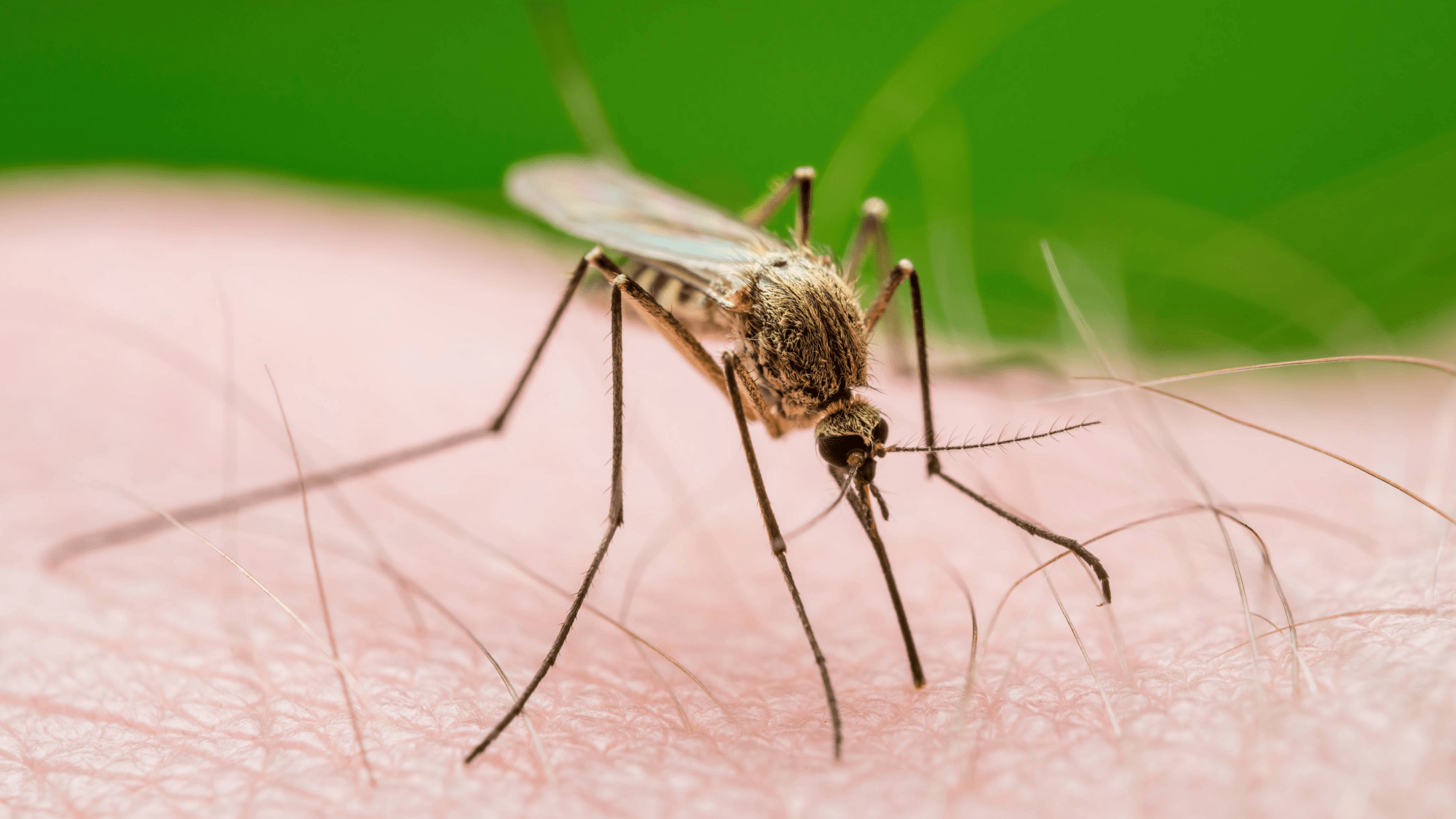
Yellow fever mosquitoes (Aedes aegypti) were the subjects of the team’s research. This particular species is known to infect millions of humans with deadly diseases such as dengue fever, Zika, yellow fever, and chikungunya every year.
Feeding Them Blood
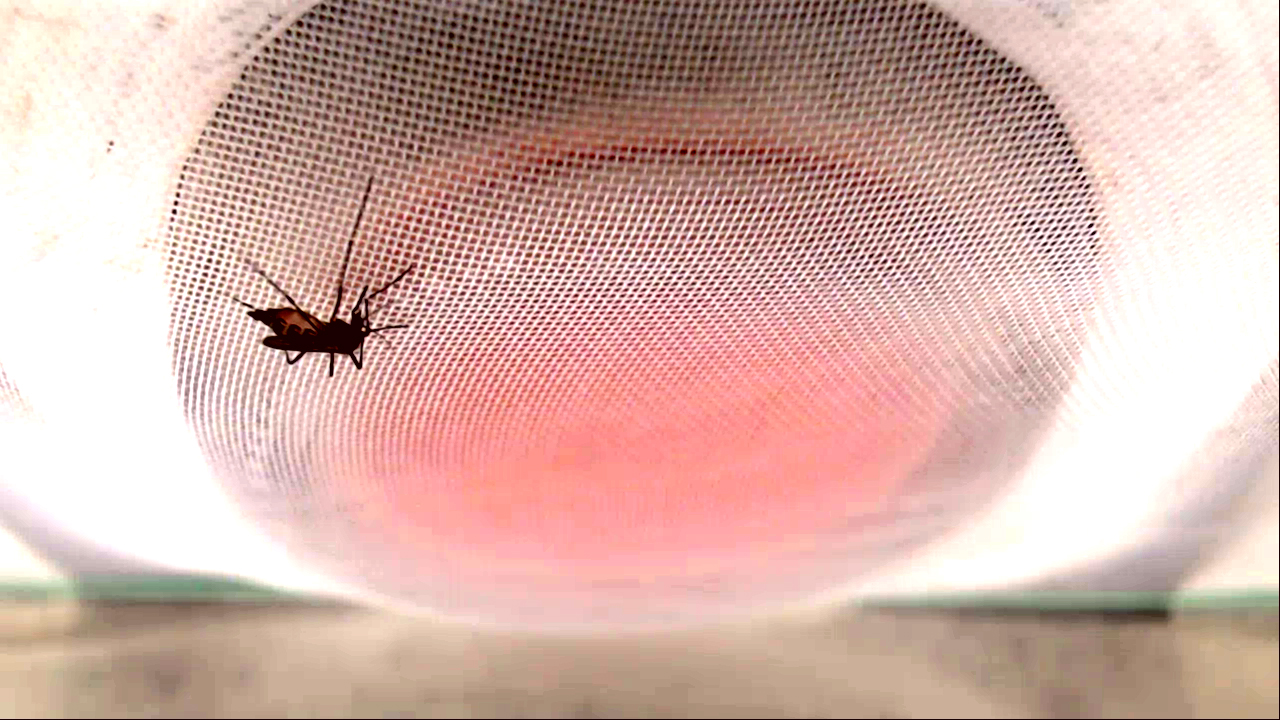
Since the insects feed on blood, the team first tested their attraction by placing a bag of warm blood on the other side of a fabric mesh restraining the mosquitoes, to observe how much effort the creatures would expend attempting to stab through to the meal. They found that insects were extremely enthusiastic, yet backed off when the smell of DEET was introduced.
They next devised an experiment to see if that could produce Pavlovian conditioning in the mosquitoes, getting them to associate the smell of DEET with feeding time. In a remarkably short time, the researchers observed a positive result. They began the experiment with 30-second feeding periods, during which the last 10 seconds introduced DEET. After a mere four repetitions of this tactic, the team found that 60% of the mosquitoes attempted to feed solely in response to the smell of DEET.
Lending further confirmation to the finding, the team offered one of their colleagues, Ayelén Nally, from the University of Buenos Aires, Argentina, a free meal to the insects. One of Nally’s hands was sprayed with DEET, while the other was clean. Surprisingly, the mosquitoes showed a strong preference for the DEET-covered hand over the clean one, once they had been conditioned to associate the scent with food.
DEET Remains Useful
The team repeated the process, next training the mosquitoes to associate DEET with receiving a sugary treat, producing the same effect. The team says their findings indicate that, in the right scenario, DEET may shift from a repellent to an attractant for pests.
“If a mosquito bites someone who applied DEET to their skin several hours earlier and the concentration of the repellent is too low to repel the mosquito,” Lazzari said, “but still strong enough for the insect to smell it, the mosquito may be more likely to bite people who smell of DEET.”
The researchers say that their work is only the beginning of efforts to better understand how insect repellents work, demonstrating that learned behavior may play a role. Despite their findings, they note that DEET generally works and saves lives by reducing insect-borne illnesses.
“If someone applies DEET and the concentration fades over time, but a mosquito still manages to feed, the insect may begin associating that smell with a reward,” Vinauger concluded. “That’s a possibility we should take seriously when we think about how repellents are used in the real world.”
Ryan Whalen covers science and technology for The Debrief. He holds an MA in History and a Master of Library and Information Science with a certificate in Data Science. He can be contacted at ryan@thedebrief.org, and follow him on Twitter @mdntwvlf.
Sunburn and mosquito bites go together in the summer like a hot dog and ketchup. To keep from becoming a mosquito buffet, most of us turn to bug sprays with DEET. An acronym built from its scientific identification (diethyltoluamide), DEET was developed for the United States Army in 1946 and entered civilian use in 1957. It is generally considered safe when used as directed.
However, mosquitoes can learn to associate the repellant with food. They may even become attracted to it. The findings are detailed in a study published today in the Journal of Experimental Biology.
“If someone applies DEET and the concentration fades over time, but a mosquito still manages to feed, the insect may begin associating that smell with a reward,” Clément Vinauger, a study co-author and biochemist at Virginia Tech, said in a statement. “That’s a possibility we should take seriously when we think about how repellents are used in the real world.”
Ace processors
Like it or not, Earth’s over 3,500 known mosquito species are pretty smart and an evolutionary wonder. They use sensory information to find hosts and can adapt to changing environments.
“Mosquitoes are remarkable at processing information about their environment,” Vinauger said. “What we are trying to understand is not only how they detect us, but how their brains interpret those cues and turn them into behavior.”
A DEET-covered dinner bell?
In this new study, the team focused on the yellow fever mosquito (Aedes aegypti). This species spreads several diseases to tens of millions of people each year, including dengue fever, Zika, yellow fever, and chikungunya.
The mosquitoes were restrained behind a piece of fabric mesh. They then offered the mosquitoes a bag of warm blood (yum) that was just out of the insects’ reach to see how enthusiastically the insects stabbed at it with their proboscises. As expected, the mosquitoes were interested in the blood, particularly when the team rewarded them by lowering the bag within reach. Things changed a bit once DEET entered the experiment. When the team offered the insects blood when surrounded by the scent of DEET, they initially stayed away from the potential feast.
A female yellow fever mosquito (Aedes aegypti), feeding on a bag of warm blood. Image: Romina Barrozo.
To see if they could be trained to associate that smell with the dinner bell, the team fed the mosquitoes warm blood for 20 seconds, squirting the scent of DEET into the enclosure in the final 10 seconds of dining. They repeated the procedure three more times before noting how the mosquitoes responded to only the scent of DEET. In this trial, over 60 percent of mosquitoes tried to bite when they smelled DEET.
To examine further, the mosquitoes were given a choice between two human hands. The hand belonged to study co-author Ayelén Nally of the University of Buenos Aires. One of Nally’s hands was coated with DEET at normal concentrations and the other was bare. The untrained mosquitoes avoided the DEET-treated hand, while the trained mosquitoes were drawn to it.
Interestingly, the mosquitoes could form that same association when sugar, instead of blood, was used as the reward.
According to the team, they are seeing how the mosquito’s brain can rewrite its response based on their experiences. What they have learned matters just as much as what a chemical like DEET does.
“If mosquitoes are repeatedly exposed to DEET, it becomes less effective as a repellent,” study co-author Claudio Lazzari from University of Tours in France added.
Keep the bug spray
Importantly, this does not mean you should stop using DEET completely. It is still one of the most effective ways to keep the dangerous insects away, particularly where mosquito-borne disease is common.
“If you’re in tropical regions where disease risk is real, you should use it,” Vinauger said. “Instead of applying a lot at once, you may want to reapply regularly so it’s always active and providing continuous protection.”
Treated clothing may also be a challenge since DEET concentrations in fabric decline over time. Additional study to understand their behavior is crucial for public health as mosquito-borne illnesses increase due to climate change.
“We need to understand how mosquitoes keep outsmarting our control strategies,” Vinauger concluded. “And that takes understanding how they work—at the molecular level, the neural level, the behavioral level.”
In the book "Bitter Honey," writer and researcher Jennie Durant explores how industrial agriculture is destroying bees — and what can be done to stop them.
In the book "Bitter Honey," writer and researcher Jennie Durant explores how industrial agriculture is destroying bees — and what can be done to stop them.
National Geographic’s series ‘A Real Bug’s Life’ returns on January 15th to Disney+ for a second season, this time including an episode dedicated to our unique Australian insect life. The production team shared...

 Login
Login