Reading view

Exclusive: Leaked documents show BHP’s climate backtrack - podcast

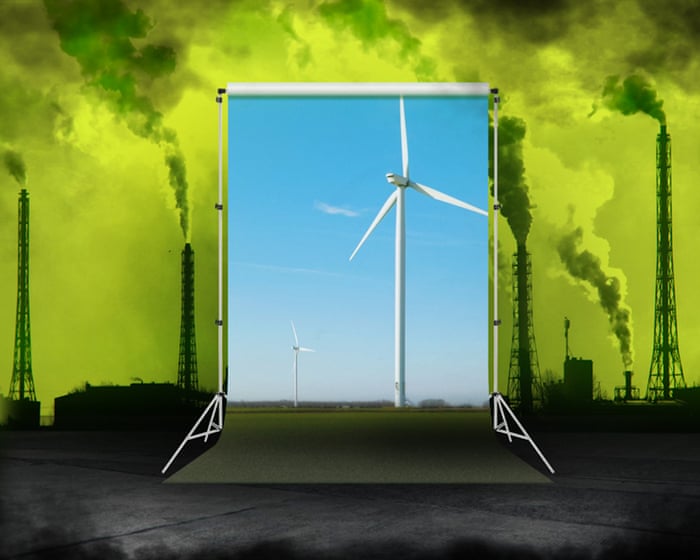
Nour Haydar speaks with Christopher Knaus about the BHP files – the cache of internal documents leaked to the Guardian and the ABC’s Four Corners – which show that the world’s biggest miner has war-gamed ways to massively delay decarbonisation

Additional audio in this episode was sourced by Financial Times Live

Read more:

Continue reading...

© Composite: Victoria Hart/Guardian

© Composite: Victoria Hart/Guardian

© Composite: Victoria Hart/Guardian

  •  

Handyman adapts Barbie Dream Camper to handle soaring gas prices

There are over 283 million cars cruising the United States, and over 90 percent of them are still guzzling gas. Apart from the obvious environmental problems, fuel prices also continue to skyrocket thanks to the ongoing war in Iran. The average price for gas is currently around 33 percent higher than it was before the crisis, and there is little sign that those numbers are going down anytime soon.

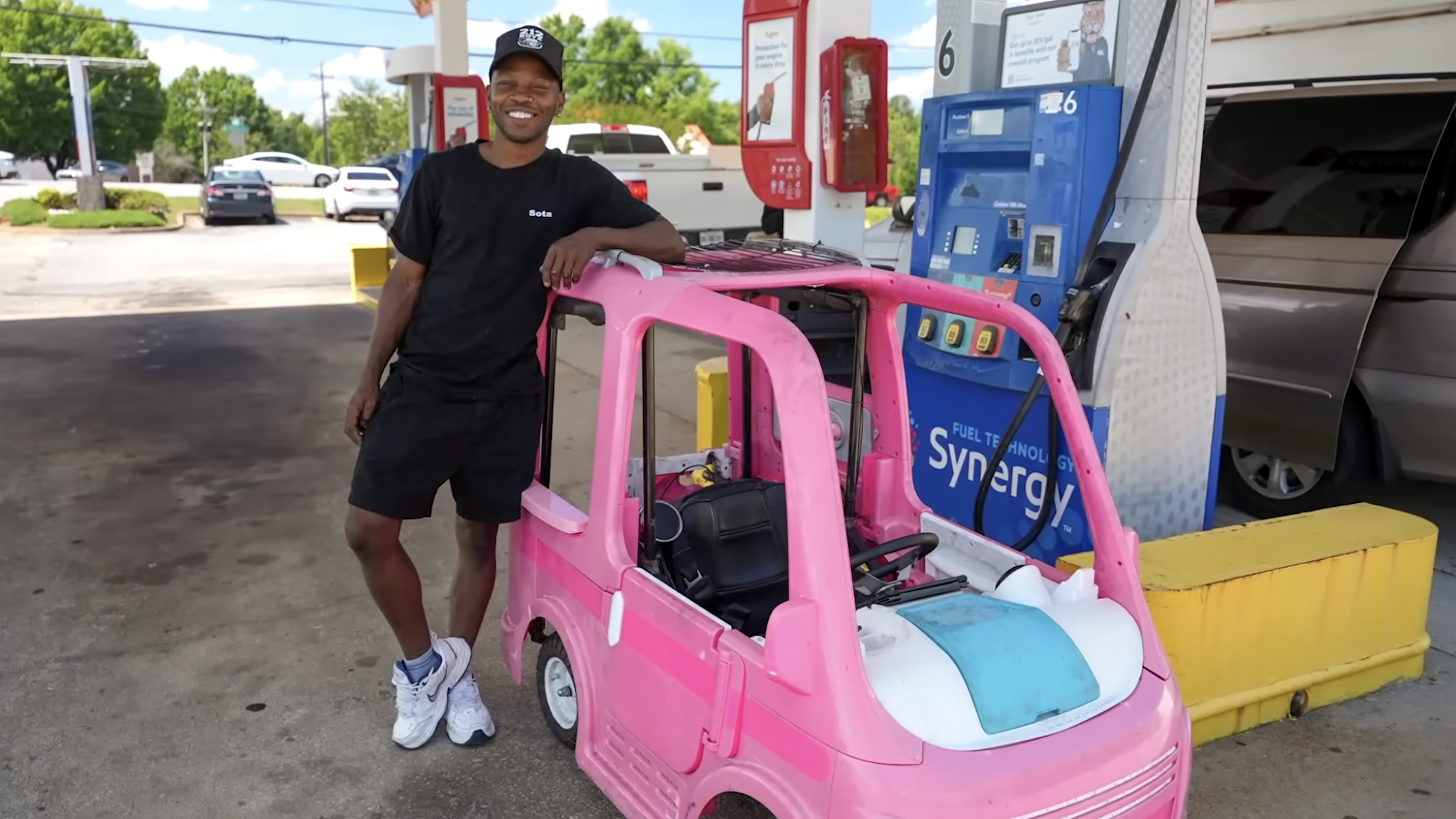
The strain is forcing many drives to reconsider how they get around—and they’re getting creative with it. In Georgia, a 30-year-old handyman is showing everyone how to properly adapt to uncertain times. According to a recent Reuters profile, Mali Hightower has retrofitted a discarded, bright pink Power Wheels Barbie Dream Camper with a two-gallon, one-piston engine for his shorter commuting needs.

“I drive this when I can,” Hightower said on May 19. 

To get it going, a driver simply pulls the rip cord that’s attached to the former power washer engine. At less than four-feet-tall, the Dream Camper may not be the most comfortable ride for a full-grown adult,but it’s definitely cheaper. Hightower likely still prefers driving his 1996 Mercedes-Benz convertible, but with a full tank costing him around $90 right now, he’s more than willing to use his Power Wheels alternative for errands like grocery runs.

While somewhat surreal to see at a gas pump, the DIY solution underscores a more important issue: the need for more people to divest from fossil fuel rides in favor of public transportation and electric vehicles (EVs). Unfortunately, that’s easier said than done for many people. The U.S. is dramatically underfunded when it comes to options like commuter bus routes and trains, while EVs are still out of many people’s price ranges. The Dream Barbie Camper may be one-of-a-kind right now, but there’s a good chance that similar, intentionally constructed alternatives are on the way. At least those will be able to comfortably fit the driver.

The post Handyman adapts Barbie Dream Camper to handle soaring gas prices appeared first on Popular Science.

  •  

BHP defies its own climate strategy to spend hundreds of millions on polluting diesel trucks in Pilbara

Exclusive: Mining giant says technology is not yet advanced enough to run a fully electrified fleet but experts say it is hooked on federal fuel tax credits

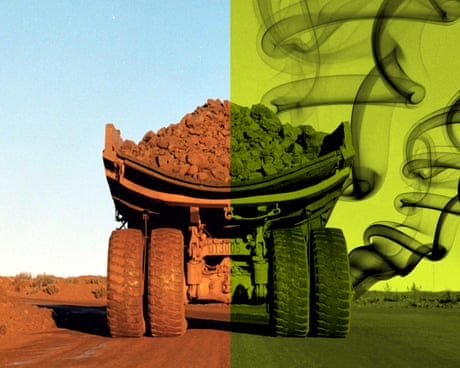
BHP has continued to spend hundreds of millions of dollars buying diesel trucks in the Pilbara despite internal documents suggesting it would increase emissions and be “misaligned” with its decarbonisation goals.

The mining giant is Australia’s biggest consumer of diesel and trucks are its biggest single source of diesel emissions. Replacing the fleet with battery-electric trucks is considered a critical step in the multinational’s efforts to decarbonise.

Continue reading...

© Composite: Guardian

© Composite: Guardian

© Composite: Guardian

  •  

E.P.A. to Repeal Some Limits on ‘Forever Chemicals’ in Drinking Water

The rules were established by the Biden administration after research linked the compounds to a range of serious health problems.

© Haiyun Jiang/The New York Times

Lee Zeldin, the E.P.A. administrator, has argued that the agency made a procedural error when it established the drinking water standards in 2024.
  •  

BHP ‘laughing’ at Australia’s key climate policy while pocketing hundreds of millions in tax breaks, Pocock says

Outrage as leaked documents reveal mining giant’s backsliding on commitments to slash emissions

The independent senator David Pocock says leaked BHP documents show that the mining giant is “laughing” at Australia’s key climate policy while pocketing hundreds of millions of dollars through a generous diesel tax break.

An exclusive investigation based on documents leaked to by the Guardian and the ABC show BHP has scrapped a project to significantly reduce global emissions, delayed vast renewables projects in the Pilbara and war-gamed options to push the electrification of its polluting diesel truck and train fleets into the next two decades.

Continue reading...

© Photograph: Lukas Coch/AAP

© Photograph: Lukas Coch/AAP

© Photograph: Lukas Coch/AAP

  •  

The BHP files: World’s biggest miner BHP backtracks on climate action with key projects put on ice, leaked documents reveal

Exclusive: Cache of internal documents leaked to the Guardian and the ABC’s Four Corners show multinational has war-gamed ways to massively delay decarbonisation

The world’s biggest miner has halted or delayed projects to cut vast amounts of emissions and has quietly war-gamed options to push major climate investments in its Western Australian iron ore operations into the next two decades, internal documents show.

An exclusive investigation based on documents leaked to the Guardian and the ABC’s Four Corners can reveal that BHP, one of Australia’s biggest historic emitters, has dumped plans for a facility that could have significantly reduced emissions and has put on ice renewable projects designed to power its iron ore operations in the vast, resource-rich Pilbara region.

Continue reading...

© Illustration: Guardian Design

© Illustration: Guardian Design

© Illustration: Guardian Design

  •  

Revealed: the internal BHP memo that slammed the brakes on world’s biggest miner’s climate push

Exclusive: BHP once dubbed climate change an ‘existential’ threat. But leaked documents show it has backtracked on decarbonisation at a vast network of mines

In the middle of 2019, London was sweltering through a heatwave.

Temperature records tumbled. Frail, ill and elderly people died in their hundreds.

Continue reading...

© Composite: Guardian

© Composite: Guardian

© Composite: Guardian

  •  

Trump Eases Restrictions on Climate ‘Super Pollutants’

The administration is delaying a phaseout of hydrofluorocarbons, potent planet-warming chemicals used in air-conditioning and refrigeration.

© Gene J. Puskar/Associated Press

Replacing an air conditioning unit outside a home in western Pennsylvania during a heat wave last June.
  •  

Fish and Wildlife Service Clears a Weedkiller, Saying It Won’t Cause Extinction

The finding effectively paves the way for continued use of atrazine, a widely used herbicide that has been linked to birth defects and cancer in humans.

© Julie Ingwersen/Reuters

Test plots at a Syngenta research site in Junction City, Kan. Atrazine is made primarily by Syngenta.
  •  

Tesla’s Semi Truck could Jolt the Trucking Industry

California truckers have expressed strong interest in the Tesla Semi because it costs much less and can travel further on a charge than electric trucks sold by established manufacturers.

Screens on either side of a Tesla Semi’s steering wheel provide a view of the traffic around the vehicle.
  •  

Upcycling polystyrene with sunlight and sulfur

Over 20 million tons of polystyrene plastic are produced annually, yet only a small fraction is recycled worldwide. Current recycling methods consume large amounts of energy and often rely on harsh and toxic chemicals to break the strong molecular chains that make up polystyrene. One possible solution is the use of sulfur, which is an inexpensive byproduct formed when refining crude oil. Its unique chemical structure allows it to break up strong chemical chains in long plastic molecules. Despite its abundance, sulfur has very limited applications, and converting it into more usable forms tends to require a lot of heat, rendering it unused for long periods of time. 

Researchers at the Dalian Institute of Chemical Physics hypothesized that sulfur could help break down polystyrene waste to form more valuable chemicals. To power this reaction, they converted sunlight into heat energy through a process called photothermal conversion. They used this heat to transform polystyrene and sulfur into valuable chemicals like 2,4-diphenylthiophene, or chemical D, and 1,3,5-triphenylbenzene, or chemical T, which are used to make semiconductors and chemical sensors

To test this, the team mixed ground polystyrene and sulfur at a molar ratio of 1:0.5 in a glass test tube. They sealed the tube with a balloon and secured it onto an iron stand. Then, they focused sunlight onto the bottom of the tube using a curved mirror. As the mixture heated up, the yellow-white solids gradually melted and transformed into a reddish-black liquid after 2 minutes. After heating, the researchers removed the mirror and allowed the system to cool before collecting the gaseous products from the balloon and dissolving the remaining solids for further purification and analysis. 

The researchers then adjusted the reaction conditions to understand what factors influenced their results. They tested the reaction without sulfur, varied the sulfur ratios from 0.2 to 0.8, and replaced elemental sulfur with other sulfur-containing compounds. They also explored adding known photothermal agents, specifically metal oxide additives, to the mixture. 

To compare the difference between sunlight and artificial light, the researchers repeated the experiment indoors using a 100 Watt LED bulb and monitored temperature changes with a thermal camera. They also ran a control experiment using only polystyrene to check how sulfur affected the yield under LED light. They also tested exposure times from 1 to 6 minutes in 1-minute increments to determine how long it took to achieve the highest yields under LED. The researchers used these tests to identify which conditions were necessary for the reaction to occur and how different factors influenced its outcome.

They found that without sulfur or with alternative sulfur-containing compounds, the reaction did not produce chemical D or T under sunlight. In contrast, reactions that included sulfur successfully produced these target products, with the highest yields of 34% for D and 16% for T at a sulfur ratio of 0.5. When they added metal oxides, the chemical yields decreased to 22% and 12%, respectively, suggesting that these additives interfered with the desired reactions. In addition, when the researchers switched from sunlight to LED, the reaction yields dropped to 26% for D and 13% for T. 

Next, they examined how reaction time influenced product formation. They found that yields increased gradually before reaching the maximum at 4 minutes and leveling off. They also noted that mixtures containing sulfur heated up from room temperature to 320°C (608°F), while the control setup only showed a slight temperature increase. The researchers interpreted these results as confirmation of sulfur’s dual role as a reactant and a light-to-heat converter that enables the conversion of polystyrene to useful chemicals.

Taking it a step further, the researchers tested their method on real-world polystyrene wastes, including food packaging, cup lids, and foamed plastics. They successfully produced chemicals D and T from these materials, demonstrating that their process works beyond laboratory samples.

The team concluded that their study presents a simple, fast, and solvent-free approach to converting 2 abundant waste materials into valuable chemicals using sunlight. By combining polystyrene waste and excess sulfur, the researchers offer a new pathway for sustainable polymer upcycling that uses clean energy and is broadly applicable to everyday plastics.

The post Upcycling polystyrene with sunlight and sulfur appeared first on Sciworthy.

  •  
❌