Mars Minerals Reveals an Ancient Ocean's Potential For Life - and a Possible Way to Make Oxygen
Read more of this story at Slashdot.
To effectively travel on Mars, rovers need to deal with a lot of sand. German engineers have created a new kind of ground rover that uses swimming motions to push through sand that may otherwise cause the wheels to get stuck. Its inspiration: the African sandfish (Scincus scincus), a lizard known for burrowing into the Sahara Desert and literally swimming through its sand like a fish. It’s one of the animal kingdom’s strangest methods of propulsion, but it may help shape the future of Mars exploration.
A video of the rover, released this week by the University of Würzburg, shows a mini-fridge-sized, silver rover making its way through a sandy, Martian-mimicking test floor. Rather than rolling forward, each of its four wheels cuts through the sand in what looks like a figure-eight motion. The rover pushes on several yards and then cuts a corner and returns to where it started.
“The wheels mimic the animal’s [sandfish’s]characteristic interaction with the ground, generating both longitudinal and lateral forces,” University of Würzburg researcher Amenosis Lopez said in a statement. “The rover leaves sinusoidal tracks in the sand.”
Though most people likely associate space rovers with round wheels or tracks reminiscent of those on WALL-E, neither design is ideal for dealing with Mars’s uniquely harsh and sandy environment. Sand is unique because it’s a material with both solid and liquid-like qualities. On top of sand’s mixed texture, rovers roaming on the Red Planet have to deal with steep slopes and uneven terrain, where varying levels of slipperiness can cause imbalance. Patches of softer sand are also a nightmare for wheels, making the prospect of a rover getting stuck never far from mind
But nature figured out a solution to this issue millions of years ago, and it’s called the sandfish. Contrary to its name, the Sahara Desert native is a lizard in the skink family. Above ground, the sandfish uses its tiny legs to scrabble around much the same as any lizard. Things get more interesting when it burrows down into the sand. X-ray imaging shows the sandfish propelling itself forward under the sand, using a powerful waving motion to generate thrust and overcome drag. The result looks like an animal swimming through the sand, remarkably similarly to how a fish would oscillate its body to move through water
Engineers at Georgia Tech took those observations and used them to create their own sandfish robot in 2011. Testing with their robots showed that the little lizard’s oddly wedged shaped head may also help it generate lift forces and more easily swim through sand.
Researchers working on the sandfish-inspired robot said it outperformed a wheeled version when navigating through a sandy test track. Where the round wheels would wobble and weave, the oscillating wheels stayed relatively stable. That’s not to say the new approach worked right out of the gate. Early models of the design were reportedly so heavy that the rover literally sank into the sand. The team went back to the drawing board and made a second version, this time increasing each wheel’s width and reducing overall mass
It’s unlikely these oddball new wheels will become the main chassis system for NASA rovers, at least not in the immediate future. More work still needs to be done to increase their overall controllability and account for slippage that can occur in complicated, real-world environments. There are also the added variables of accounting for scientific instruments and other cargo a rover might have to carry.
More than anything, the wheel design is a testament to the sandfish’s innate ingenuity and evolutionary gifts. Many scientists only recently began to truly appreciate these traits and what other technology they could inspire.
The post New Mars rover could swim through sand like a desert lizard appeared first on Popular Science.

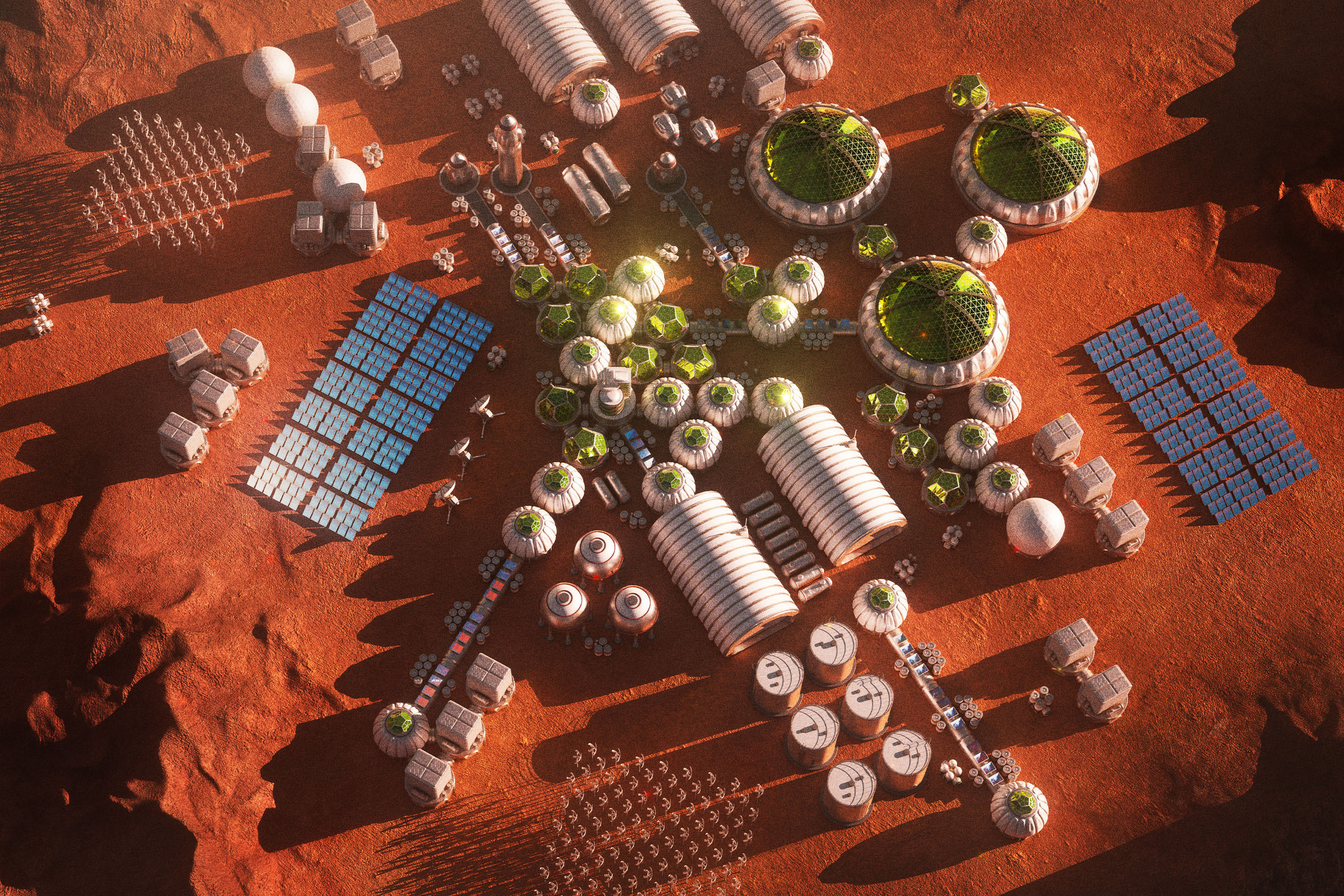
Once the first human settlers reach the surface of Mars, they’ll have to get extremely creative to turn the desolate and hostile environment into land that can support a permanent human presence. Like in Andy Weir’s blockbuster sci-fi novel “The Martian,” the local regolith would need plenty of manipulation to allow plants to grow.
But according to recent research, there may be much better alternatives to relying on biofuel and human waste, like the stranded protagonist in “The Martian.” As detailed in a paper published in the journal Frontiers in Astronomy and Space Sciences and spotted by Universe Today, an international team of researchers argue that special fungi could be used to convert the hostile Martian regolith into crop-friendly soil that could even be home to beneficial microbes and other organisms.
On their own, the researchers point out in their paper, regolith on the Moon and Mars aren’t exactly great candidates. They have a high alkaline pH, are riddled with toxic elements like aluminum and manganese, and are devoid of many important nutrients plants need to grow.
However, specific fungal species, such as trichoderma, a prevalent genus in soils here on Earth, have previously been shown to metabolize these toxic elements while also producing phosphates and other nutrients that are key to organic life.
Some extreme fungi, like Cryomyces antarcticus, which researchers have demonstrated can survive the harshness of outer space while strapped to the outside of the International Space Station, could be used to promote plant growth under “abiotic stress,” or negative impacts from environmental factors.
Other mycorrhizal fungi, species that are mutually beneficial to plant roots, can “enhance iron uptake, mitigate oxidative stress, and improve soil structure,” the researchers argue, in “mechanisms that may be applicable to regolith systems.”
Of course, plenty of questions remain whether Martian regolith will prove useful in growing plants on the surface of a hostile planet. We don’t know whether the final crops will be safe to eat or how they will react to radiation exposure, let alone how to validate the concept ahead of time, the researchers point out.
But anything that could sidestep the need to ship soil or other growing media all the way to Mars is worth looking into; it could potentially lower the costs enormously of future efforts to create a permanent presence on Mars.
And there are early positive signs that it may just work. Researchers at the University of Bremen and the German Aerospace Center successfully developed a algae-based fertilizer that can be produced exclusively with Martian resources — bringing us one step closer to growing food on Mars.
More on growing stuff on Mars: Scientists Identify Plant That Could Grow on Mars
The post Scientists Say They’ve Found Fungi That Turn Dead Martian Soil Into Fertile Cropland appeared first on Futurism.

The future of space travel is pay to play, but that might not be a bad thing.
During the final 15 minutes counting down to SpaceX’s aborted Starship V3 mission on Thursday, Elon Musk’s space company revealed a fascinating tidbit: the man who’s going to lead SpaceX’s first crewed mission to Mars.
Spotted by Gizmodo, broadcasters on the company’s live feed announced that crypto billionaire Chun Wang has been tapped to lead humanity’s first interplanetary human flight.
At first glance, Wang might seem like an unlikely candidate for such a monumental task. A software developer who dropped out of college, Wang made his fortune by developing one of China’s first and most successful Bitcoin mining pools — striking it rich just before the Chinese government shut all of that crypto stuff down in 2021.
However, his resume includes another space flight, SpaceX’s April 2025 Fram2 mission, which he personally funded in order to secure a spot as mission leader. Though the media made a spectacle of that brief trip, Christopher Combs, associate dean of research at the University of Texas’ Klesse College of Engineering and Integrated Design described it as a “notch above a gimmick, but not exactly a groundbreaking milestone.”
The Mars trip, which would take up to two years, would be a vastly greater challenge on the billionaire’s mind and body — though Wang seems pretty gung-ho about it.
“I can stare at the map view on airplanes all the way from takeoff through landing, so I think I’m going to enjoy the trip,” Wang told viewers on Thursday.
It’s unknown who else will be making the Mars trip alongside Wang, and whether or not he’s funding it. Either way, the prospect that a billionaire could be willfully catapulting himself around 140 million miles from Earth left some critics buzzing on social media.
“This is the first time I have been 100 percent behind a SpaceX decision,” journalist David Perry wrote on Bluesky. “I hope they launch really soon.”
Writer Dara Moskowitz Grumdahl joked that it’s a “great start.”
“But,” she concluded, “I think all the crypto billionaires should go, it’s important and will bring America hope.”
More on SpaceX: SpaceX Stock May Actually Be a Horrendous Investment
The post SpaceX Announces Plans to Put Billionaire on First Rocket to Mars appeared first on Futurism.

Not quite halfway through a six-year sojourn through the Solar System, a NASA spacecraft used a close encounter with Mars last week as a dress rehearsal for its arrival at the Solar System's largest metal asteroid in 2029.
The Psyche mission launched more than two-and-a-half years ago, in October 2023, from Kennedy Space Center, Florida, to kick off a journey of some 2.2 billion miles (3.6 billion km) to reach its unexplored namesake, the asteroid Psyche. The robotic research mission got an initial lift from a powerful SpaceX Falcon Heavy rocket. It uses plasma engines to gradually build up the impulse needed to reach its destination in the asteroid belt, between the orbits of Mars and Jupiter.
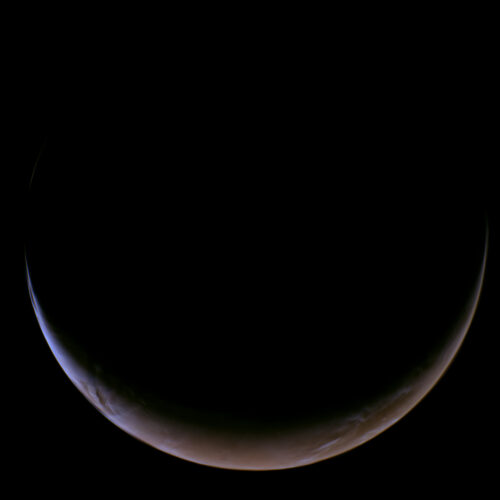
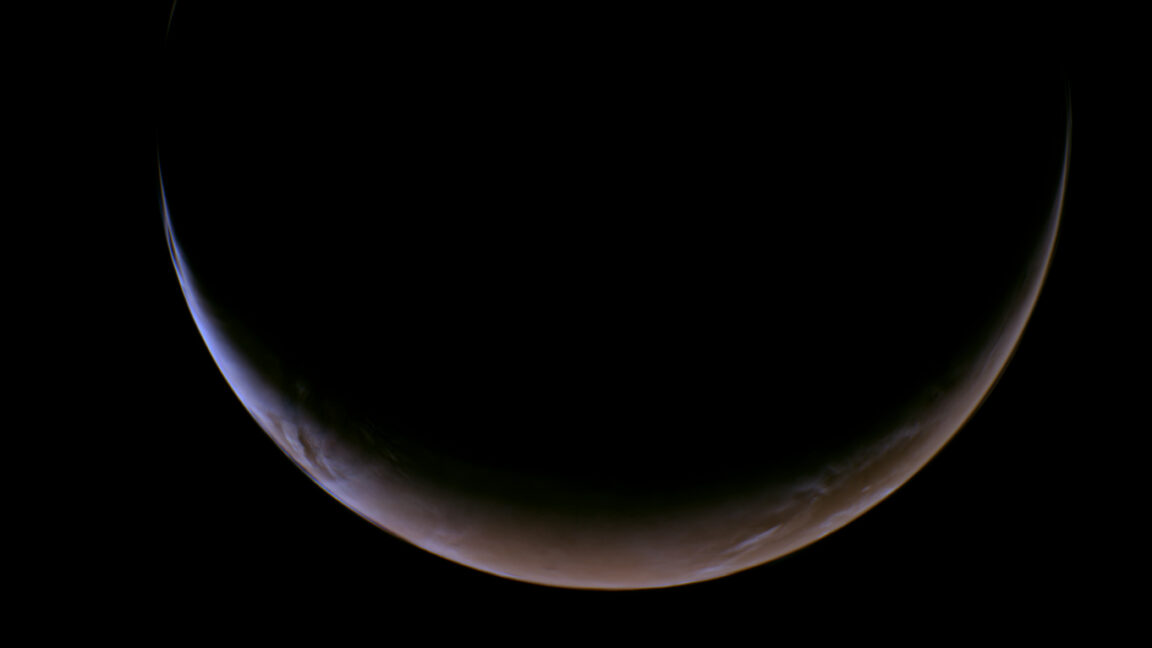
A flyby of Mars last Friday gave the spacecraft its most significant boost since launch. Navigators at NASA's Jet Propulsion Laboratory in California set up the spacecraft for a course taking it 2,864 miles (4,609 km) from the Martian surface, well above the planet's tenuous atmosphere. Psyche used Martian gravity like a slingshot to gain enough speed to reshape its orbit around the Sun, putting the probe on a path to intercept its asteroid target.


© NASA/JPL-Caltech/ASU
Not quite halfway through a six-year sojourn through the Solar System, a NASA spacecraft used a close encounter with Mars last week as a dress rehearsal for its arrival at the Solar System's largest metal asteroid in 2029.
The Psyche mission launched more than two-and-a-half years ago, in October 2023, from Kennedy Space Center, Florida, to kick off a journey of some 2.2 billion miles (3.6 billion km) to reach its unexplored namesake, the asteroid Psyche. The robotic research mission got an initial lift from a powerful SpaceX Falcon Heavy rocket. It uses plasma engines to gradually build up the impulse needed to reach its destination in the asteroid belt, between the orbits of Mars and Jupiter.
A flyby of Mars last Friday gave the spacecraft its most significant boost since launch. Navigators at NASA's Jet Propulsion Laboratory in California set up the spacecraft for a course taking it 2,864 miles (4,609 km) from the Martian surface, well above the planet's tenuous atmosphere. Psyche used Martian gravity like a slingshot to gain enough speed to reshape its orbit around the Sun, putting the probe on a path to intercept its asteroid target.


© NASA/JPL-Caltech/ASU
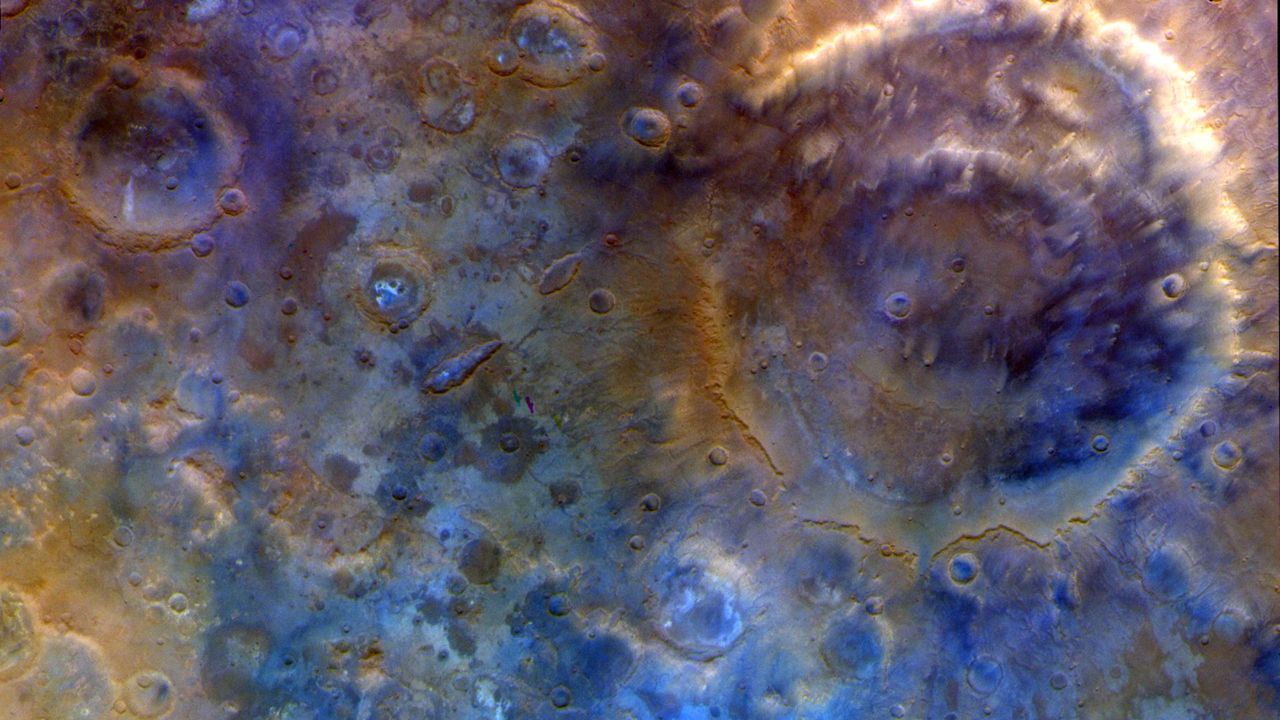
Most people think of Mars as a big red dustball, but researchers recently found Martian mineral deposits suggesting it was once warm and humid. The team used the Compact Reconnaissance Imaging Spectrometer aboard NASA’s Mars Reconnaissance Orbiter to analyze specific wavelengths of visible and near-infrared light from minerals on Mars’s surface to determine their chemical composition from afar.
Past researchers identified layered silicate minerals, called clays, across the Martian surface. Clays form when water interacts with rock, and record the amounts and chemical compositions of the waters that formed them. As water interacted with Martian surface rocks, it picked up more mobile elements like magnesium and iron and carried them to lower depths in the Martian soils, while less mobile elements like aluminum stayed in place. This process, called leaching, created 2 distinct layers of clays in the Martian rocks.
Scientists have proposed 2 main hypotheses for how these layered clays formed on Mars. The first is that they formed through underwater leaching in pools or lakes sometime in Mars’ past. The second is that they formed across the Martian surface, where a widespread humid environment provided the moisture needed to leach them.
To evaluate these hypotheses, a team led by researchers at Purdue University recently estimated the “true” thicknesses of Martian clay layers with a method scientists had previously only used on Earth. Rock layers containing clays can become tilted, making them appear thicker or thinner than they actually are. To address this discrepancy, the team used the High Resolution Imaging Science Experiment (HiRISE) tool on the Mars Reconnaissance Orbiter to create high-resolution elevation maps of the Martian surface. Then they combined these maps with surface composition data from the Compact Reconnaissance Imaging Spectrometer to create 3D composition maps.
Using the 3D composition maps, the researchers found where each clay layer was exposed at the surface and traced it underground to estimate an angle of tilt. They then used trigonometry to calculate the true thicknesses of each clay layer. They analysed 46 regions across the Martian surface, and found that the combined thickness of both clay layers was around 20 to 680 feet (6 to 200 meters), with an average of about 190 feet (60 meters). That’s a maximum thickness as high as a 60-story building!
Next, the researchers tested the extent of the clay deposits in a large ancient Martian valley known as the Mawrth Vallis Region. They focused on this region because it had large elevation changes, and scientists in the past had already collected high-resolution chemical composition and elevation data there.
They explained that if the clay layers were restricted to the lowest parts of the valley where water once existed, and had changing thicknesses and boundaries between layers, this would provide strong evidence in favor of the “underwater leaching” hypothesis. In contrast, if the clay layers were more widespread, with consistent layer boundaries and thicknesses, this would provide strong evidence of a humid surface environment, in favor of the “surface leaching” hypothesis.
The researchers found that the clay layers extended beyond the lowest parts of the valley and had consistent layer boundaries across more than half a mile (about a kilometer) of elevation change. Thus, they concluded that the clay layers formed by surface leaching in a humid environment.
These findings conflict with climate models of early Mars, which generally suggest that the Martian surface rarely got above freezing temperatures. To address this discrepancy, the team proposed that these deposits could have formed over a long period of time rather than in a consistently warm and wet environment. If the surface was frozen most of the time, but got above freezing in short bursts, these clay deposits could still have formed, just over a much longer time period. In this case, the Mars climate models and the researchers’ findings would agree.
The researchers acknowledged that their study has some limitations, particularly regarding the sparse sample locations. Though they found strong evidence for a widespread humid environment on early Mars, more in-depth studies of locations like Mawrth Vallis could better constrain the specific surface environmental conditions under which these clays formed and potentially reconcile their data with Martian climate models.
The post Clay minerals suggest a warm, wet past for Mars appeared first on Sciworthy.
Not quite halfway through a six-year sojourn through the Solar System, a NASA spacecraft used a close encounter with Mars last week as a dress rehearsal for its arrival at the Solar System's largest metal asteroid in 2029.
The Psyche mission launched more than two-and-a-half years ago, in October 2023, from Kennedy Space Center, Florida, to kick off a journey of some 2.2 billion miles (3.6 billion km) to reach its unexplored namesake, the asteroid Psyche. The robotic research mission got an initial lift from a powerful SpaceX Falcon Heavy rocket. It uses plasma engines to gradually build up the impulse needed to reach its destination in the asteroid belt, between the orbits of Mars and Jupiter.
A flyby of Mars last Friday gave the spacecraft its most significant boost since launch. Navigators at NASA's Jet Propulsion Laboratory in California set up the spacecraft for a course taking it 2,864 miles (4,609 km) from the Martian surface, well above the planet's tenuous atmosphere. Psyche used Martian gravity like a slingshot to gain enough speed to reshape its orbit around the Sun, putting the probe on a path to intercept its asteroid target.


© NASA/JPL-Caltech/ASU