Reading view

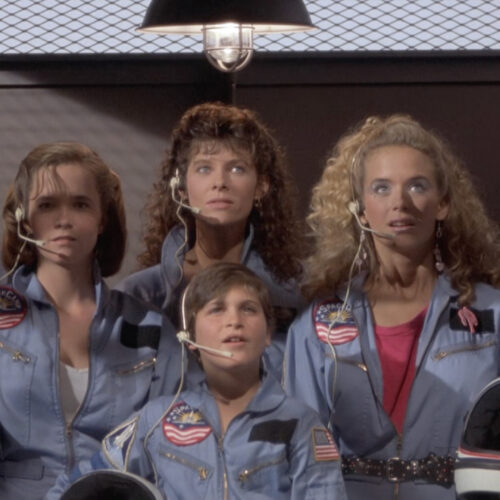
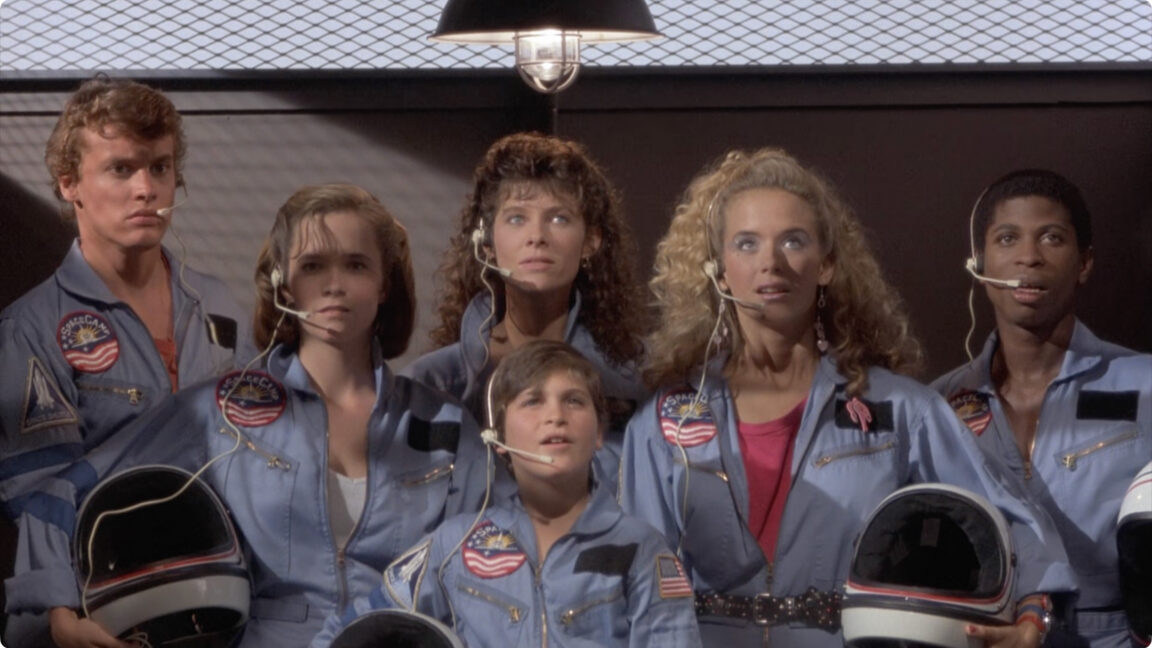
On its 40th anniversary, we reassess 1986's SpaceCamp

Forty years ago, the future seemed just around the corner—and the vehicle that was going to take us there was NASA's Space Shuttle. Originally envisioned as part of a larger integrated space transportation system, the shuttle was billed as a fully reusable vehicle, totally unlike the one-and-done capsules of the fading Apollo era, capable of making monthly (and perhaps even weekly) ferry flights to low Earth orbit.

The shuttle, it was hoped, would transform human space flight from extraordinary to mundane. Brands like Coke and Pepsi were quick to hop aboard and expand the Cola Wars into space, and there were even plans to blast Sesame Street's Big Bird into orbit.

The loss of Challenger in January 1986—carrying educator Christa McAuliffe, who would have been the first private citizen in space—put the kibosh on all of that. The shuttle, while fantastically advanced, would never be the vehicle to help humankind slip all of our surly bonds, so to speak. Even operating at its most frantic peak in 1985 just before Challenger's loss, the shuttle hardware managed a maximum of nine flights in one calendar year; for most of the 1990s, it performed at five or six flights per year. Civilians in space—to say nothing of Big Bird—would have to wait.
Read full article

Comments

© 20th Century Fox

  •  

On its 40th anniversary, we reassess 1986's SpaceCamp

Forty years ago, the future seemed just around the corner—and the vehicle that was going to take us there was NASA's Space Shuttle. Originally envisioned as part of a larger integrated space transportation system, the shuttle was billed as a fully reusable vehicle, totally unlike the one-and-done capsules of the fading Apollo era, capable of making monthly (and perhaps even weekly) ferry flights to low Earth orbit.

The shuttle, it was hoped, would transform human space flight from extraordinary to mundane. Brands like Coke and Pepsi were quick to hop aboard and expand the Cola Wars into space, and there were even plans to blast Sesame Street's Big Bird into orbit.

The loss of Challenger in January 1986—carrying educator Christa McAuliffe, who would have been the first private citizen in space—put the kibosh on all of that. The shuttle, while fantastically advanced, would never be the vehicle to help humankind slip all of our surly bonds, so to speak. Even operating at its most frantic peak in 1985 just before Challenger's loss, the shuttle hardware managed a maximum of nine flights in one calendar year; for most of the 1990s, it performed at five or six flights per year. Civilians in space—to say nothing of Big Bird—would have to wait.

Read full article

Comments

© 20th Century Fox

  •  

On its 40th anniversary, we reassess 1986's SpaceCamp

Forty years ago, the future seemed just around the corner—and the vehicle that was going to take us there was NASA's Space Shuttle. Originally envisioned as part of a larger integrated space transportation system, the shuttle was billed as a fully reusable vehicle, totally unlike the one-and-done capsules of the fading Apollo era, capable of making monthly (and perhaps even weekly) ferry flights to low Earth orbit.

The shuttle, it was hoped, would transform human space flight from extraordinary to mundane. Brands like Coke and Pepsi were quick to hop aboard and expand the Cola Wars into space, and there were even plans to blast Sesame Street's Big Bird into orbit.

The loss of Challenger in January 1986—carrying educator Christa McAuliffe, who would have been the first private citizen in space—put the kibosh on all of that. The shuttle, while fantastically advanced, would never be the vehicle to help humankind slip all of our surly bonds, so to speak. Even operating at its most frantic peak in 1985 just before Challenger's loss, the shuttle hardware managed a maximum of nine flights in one calendar year; for most of the 1990s, it performed at five or six flights per year. Civilians in space—to say nothing of Big Bird—would have to wait.

Read full article

Comments

© 20th Century Fox

  •  

In stunning display of stupid, secret CISA credentials found in public GitHub repo

Security researcher Brian Krebs brings us the news that America's Cybersecurity & Infrastructure Agency (CISA) has had a large store of plaintext passwords, SSH private keys, tokens, and "other sensitive CISA assets" exposed in a public GitHub repo since at least November 2025.

The now-offline public repo—named, somewhat aspirationally, "Private-CISA"—was brought to Krebs' attention by GitGuardian's Guillaume Valadon, who was alerted to the repo's presence by GitGuardian's public code scans. Krebs says that Valadon approached him after receiving no responses from the Private-CISA repo's owner.

In an email to Krebs, Valadon claimed that the repo's commit logs show that GitHub's default protections against committing secrets—protections designed to protect unwitting or unskilled developers against exactly this kind of stupidness—had been disabled by the repo's administrator.

Read full article

Comments

© Dzmitry Skazau / Getty

  •  

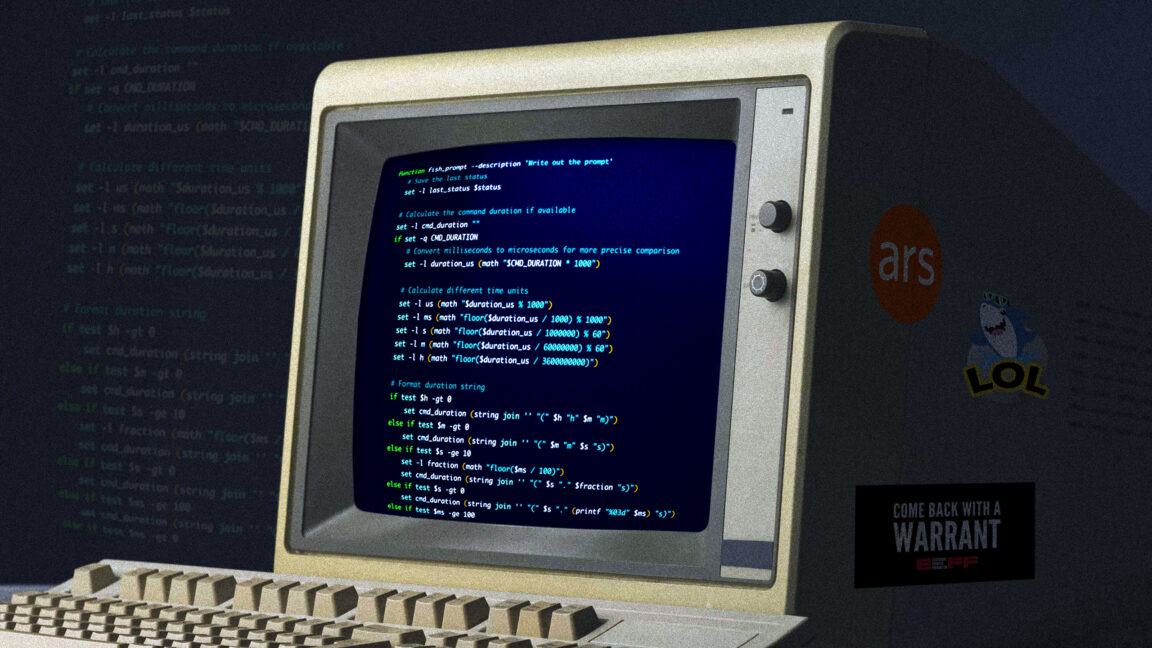
Ars Asks: Share your shell and show us your tricked-out terminals!

I spend more time today than ever before interacting with terminal windows, which is something I don't think Past Me would have believed in the early '90s. Back then, poor MS-DOS was the staid whipping boy of the industry, and at least on the consumer side, graphical environments like Windows (and maybe even odder creatures like AmigaOS) seemed poised to stamp the command line into oblivion, leaving text interfaces behind as we all blasted into the ooey-GUI future.

As it turns out, though, the command line is still the best tool for some jobs—many jobs, in fact. I read a wise post some years ago (probably on Slashdot) arguing that a mouse-driven point-and-click interface essentially reduces the user to pointing at something on the screen and grunting, "DO! DO THAT!" at the computer. (The rise of right-click context menus adds the ability for the user to also grunt "MORE THINGS!" but doesn't otherwise add vocabulary.)

The command line, by contrast, gives the user the opportunity to precisely tell the computer what they want done, using words instead of one or two gestalts that the computer must interpret based on context.

Read full article

Comments

© Aurich Lawson | Getty Images

  •  
❌