When a scientist says, “We don’t know yet,” it can sound like a shrug. In reality, it often means the opposite: We are worried enough to be careful. The public can reasonably ask why some climate risks, especially tipping points, don’t arrive with alarm and immediate action. George Monbiot recently voiced a frustration many people feel: Why has the possibility of an Atlantic Meridional Overturning Circulation (AMOC) shift not prompted a bigger political and media response? Climate scientists are trained to avoid overclaiming and, instead, to communicate what the evidence shows, what it suggests, and what remains unresolved. That approach underpins my team’s recent research on ocean acidification, supported by the Frontiers Planet Prize. In that work, published in Global Change Biology, we found that large parts of the global ocean have already crossed into a “zone of risk” for ecosystem change. That caution can serve to downplay the threat, but the latest research on the AMOC should be understood as a warning sign: The potential outcomes could be even more severe than projected, and the uncertainty around timing and thresholds is not a reason to delay, but an argument for action now. Ocean life depends on AMOC The AMOC is often described as a giant conveyor belt of Atlantic currents. Warm, salty surface waters flow north from the tropics to the subpolar North Atlantic. On its way, the water releases heat to the atmosphere, so that by the time it reaches the subpolar region, it has cooled and become…This article was originally published on Mongabay
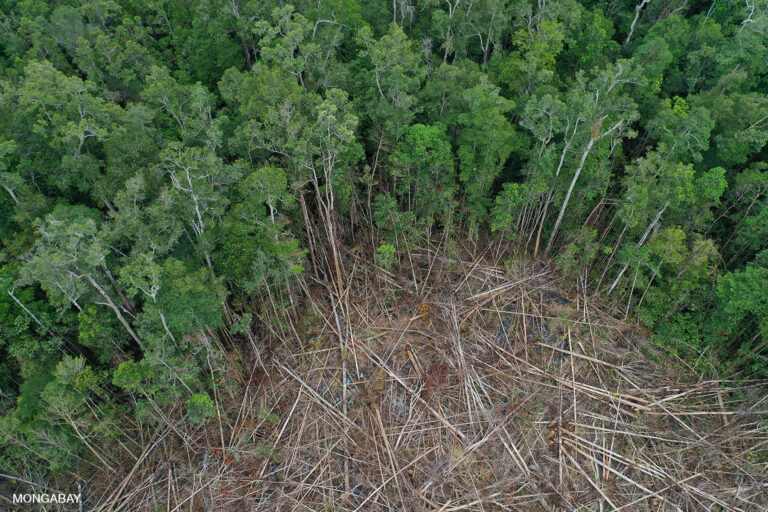
The price of financial stability should not be environmental destruction. Yet when countries turn to the International Monetary Fund (IMF) for help, their forests may quietly suffer. The IMF is currently reviewing the design of its lending programs, and it is time for change. Its recipe for getting economies back on track often features required reforms such as cutting government expenditure, increasing revenue collection through taxes or utility tariff increases, winding down public ownership of state-owned enterprises and encouraging the private sector to step up: austerity in other words. These policies are meant to restore stability in times of crisis, but growing evidence shows that IMF programs often fall short in helping countries break out of the cycle of economic and financial distress. Instead, they can trigger collateral damage in the form of negative health outcomes, worsened poverty and inequality and eroded social protection. Image by Forster et al., 2026 (CC BY 4.0). Our new research provides evidence that these programs also have an important and often overlooked environmental dimension, revealing that countries experience 9.2% higher annual tree cover loss during years in which they are under an IMF program. In a typical three-year IMF program, this amounts to forest loss the size of Barbados. This finding comes as no surprise as IMF programs are known to generally cut government spending, and environmental protections are often the first to go. These conditions that come in exchange for financial assistance are a major shortcoming when it comes to effects on forests,…This article was originally published on Mongabay
Why do we need deep-sea mining? Given the potential consequences for the health and biodiversity of the ocean, that seems a vital question to answer before any commercial mining starts. The question is even more important as the economic case for deep-sea mining is being increasingly undermined by financial evidence, and is nowhere near strong enough to justify the risks to ecosystems we barely understand. Deep-sea mining in international waters is a unique proposition given that the international seabed is not owned by any state. Instead, it is considered the ‘global commons,’ belonging to all of us, so that any extraction should be justified for the benefit of all humankind. Given deep-sea mining companies also have financially-mandated deadlines, the arguments for it also have to address why there is a supposed urgency. This is especially true given that scientists stress the many unknowns, both about the deep-sea environment itself and the likely cumulative impact of the industry. Over the years, those proposing deep-sea mining have come up with a number of reasons why such mining is necessary and urgent, beyond potential profit. The arguments have evolved to claim that minerals will primarily feed into the energy transition away from fossil fuels. A squat lobster in the deep sea. Image by Schmidt Ocean Institute (CC BY-NC-SA 4.0). As covered by Mongabay, effective counter-arguments have questioned how necessary the specific minerals from deep-sea mining are for the energy transition, including whether ongoing changes in battery technology and demand will negate any estimated…This article was originally published on Mongabay

 Login
Login