Login
Login
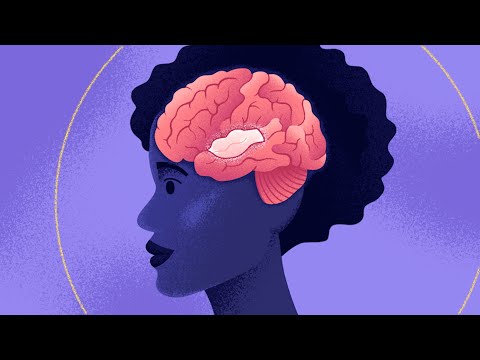
Experimental Brain 'Pacemakers' May Rewire Circuits Linked to Depression
Every year, more than 2 million people in the United States are diagnosed with treatment-resistant depression.
Desperate for solutions, some brave patients are now volunteering to undergo surgery to place experimental 'pacemakers' into their brains.
These implanted electrodes are part of a treatment known as deep brain stimulation, which is currently used to address some cases of Parkinson's disease and epilepsy.
Now, clinical trials are starting to test if the therapy can treat severe cases of major depressive disorder, too.
The initial results are promising, albeit inconsistent.
In 2021, a patient treated with one of these brain pacemakers said that after the surgical procedure, her depressive symptoms disappeared abruptly.
"I wasn't sure if it would last," she reported at the time. "But it has… "
Now, neuroscientists at the Icahn School of Medicine at Mount Sinai have used the brains of three monkeys to show how this therapy might exert such lasting effects.
It appears to restructure key brain regions involved in depression.
"What is exciting about our findings is that they change how we think about deep brain stimulation," says neuroscientist Peter Rudebeck.
"For the first time, we show that deep brain stimulation does not simply alter electrical activity in the brain in the short term; it can actually remodel white matter structure, essentially rewiring brain circuits associated with depression."

Whether deep brain stimulation can trigger similar white matter changes in human brains remains to be seen. But these signs in a close primate relative are telling.
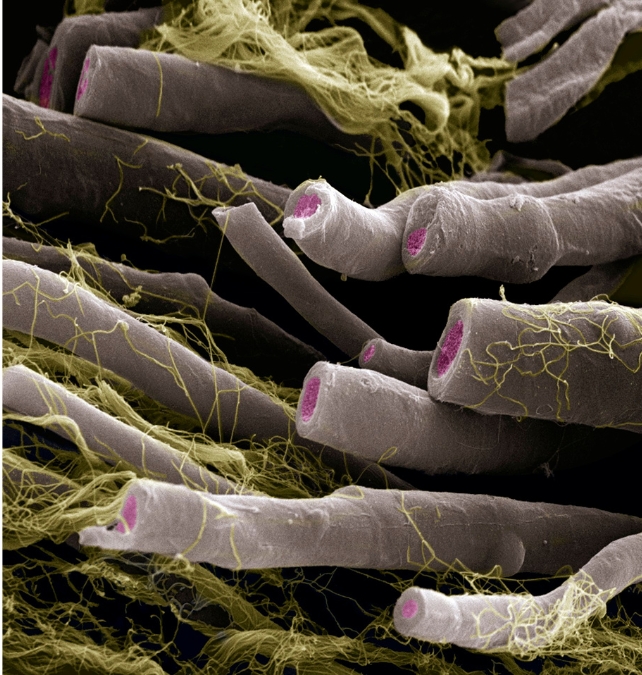
White matter in the brain contains nerve fibers, the 'arms' of neurons, which are protected in a fatty sheath called myelin. This protective layer helps conduct electrical messages between brain cells more quickly and efficiently.
Patients with depression typically show a decay of white matter in their brains.
While it is unclear if this association between depression and white matter has anything to do with behavioral symptoms, the link keeps showing up in study after study.
In monkeys, researchers at Mount Sinai have found that deep brain stimulation increases myelination of brain cells in brain regions involved in mood regulation.
The therapy also changes the way that neurons interact across various other brain networks, "most notably the default mode network that has been implicated in depression," the authors write in their published paper.
An overactive default mode network is linked to depression.
"Overall," the team concludes, "our data indicate that white matter remodeling as well as selective changes in multiple brain networks may contribute to deep brain stimulation's therapeutic efficacy."
To this day, no one knows why depression arises, or why its symptoms vary so widely from person to person, though there are some known risk factors.
Many standard treatments for depression are based on hypotheses about what causes the mental health disorder, such as a lack of serotonin in the brain.
For up to a third of patients with major depressive disorder, however, standard treatments like antidepressants or therapy don't seem to work.
Until recently, electroconvulsive therapy has been one of the only available alternatives.
This treatment involves electrically stimulating the brain to trigger controlled seizures under anesthesia, and it seems to be very effective at treating episodes of mental illness. But it is not necessarily a long-term solution.
It also comes with risks and negative side effects, such as nausea, headache, fatigue, confusion, and temporary memory loss, and it doesn't work for everyone.
That's why some researchers are turning to deep brain stimulation.

A brain implant that works sort of like a neurological 'pacemaker' could be a more precise alternative to electroconvulsive therapy.
Once the device is implanted in the brain, it sends high-frequency electrical pulses, usually without the patient feeling the stimulation.
For cases of epilepsy or Parkinson's, deep brain stimulation targets gray matter, or the bodies of neurons, in parts of the brain involved with motor control.
But for depression, the best results in clinical trials so far tend to be when the implants target white matter.
One potential target has been white matter tracts adjacent to the subcallosal anterior cingulate cortex, an area implicated in mood regulation.
"Previously, it was not clear how deep brain stimulation affected brain structure and function," explains neurologist Helen Mayberg.
But research on monkeys is changing that.
"This study addresses a major gap in our understanding and points to an unappreciated mechanism contributing to sustained long-term recovery," adds Mayberg, "something we have observed in our deep brain stimulation depression clinical research over many years."
Related: A Common Arthritis Drug Appears to Work When Antidepressants Don't
Researchers at Mount Sinai were some of the first in the US to test how deep brain stimulation might treat depression.
Their follow-up research among monkeys is now digging deeper to figure out what may be driving these symptoms in the brain.
"Now that we know deep brain stimulation can drive structural plasticity in white matter, we can begin thinking about how to optimize stimulation approaches and potentially develop novel therapies that target these mechanisms through nonsurgical means," says Mayberg.
The study is published in Nature Neuroscience.
 But the changes could be reversible.
 What does it mean to be alive?