Reading view

Microsoft Claims New Quantum Chip 1,000 Times Better Than Before

Microsoft says its new Majorana 2 quantum chip is 1,000 times more reliable than its predecessor, with qubits lasting about 20 seconds instead of milliseconds, and claims it could have a commercially useful quantum machine by 2029. The BBC reports: "We will have a quantum machine in 2029 that can solve commercially viable, reasonable problems," said Zulfi Alam, corporate vice president of Microsoft Quantum. That would still require huge further advances as such a device would require millions of qubits - the current chip, Alam said, has 12. Assessing the firm's claims are difficult because it does not release the full details of what it has discovered publicly, citing commercial confidentiality. Microsoft has spent 20 years pursuing an approach to quantum computing known as "topological." The firm's approach to this is based on exploiting the properties of a so-called quasi-particle, which had existed only in theory, since it was first predicted in the 1930s by Italian physicist Ettore Majorana. To do this it had to exploit a novel state of matter - different from the three familiar states of liquid, solid or gas. Paul Stevenson, a physics professor at the University of Surrey, said the tech giant's timeline sounded plausible - if its research lived up to its claims. "Microsoft appears to have made a leap in their attempt to produce viable topological qubits," he said. "If they succeed, they will leap from being a player with no production quantum computer, to being a serious player in the race to make the next generation of fault-tolerant machines."

Read more of this story at Slashdot.
  •  

Feds failing in bid to take a supercomputer from a climate research center

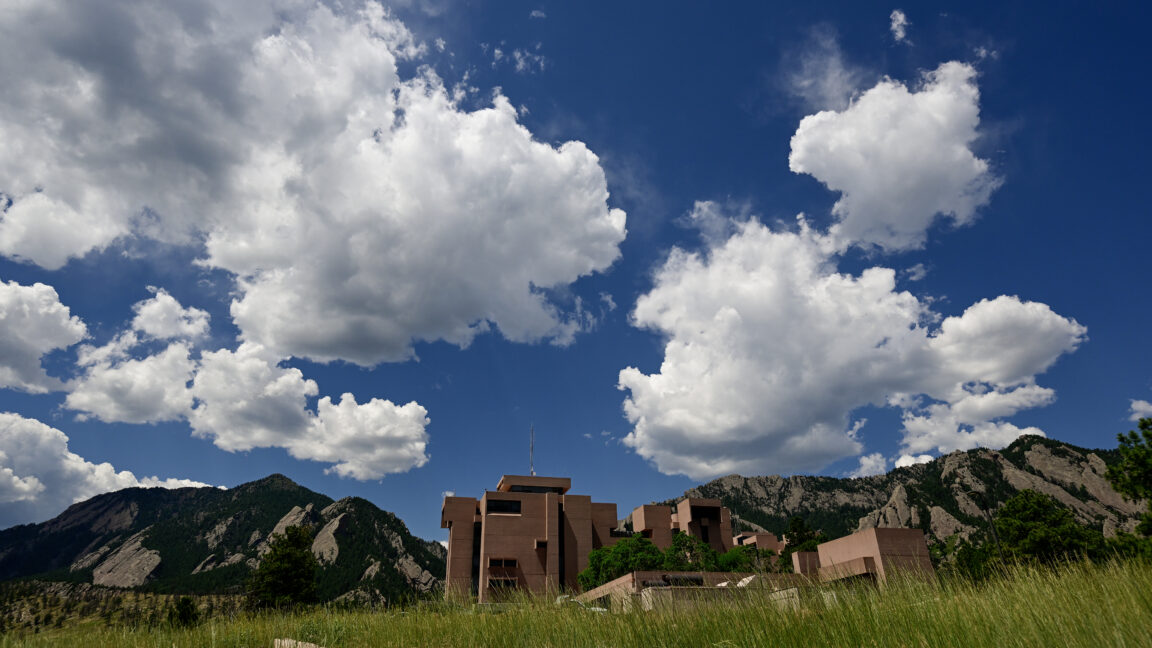
In December, the Trump administration abruptly announced it would shut down the National Center for Atmospheric Research (NCAR), a Boulder, Colorado-based facility that helps researchers perform studies of weather, climate, atmospheric chemistry, and more. The news came as a shock, given that the government had never identified serious deficiencies in the management of NCAR and its associated supercomputing center in Wyoming.

Nevertheless, the government ordered the University Consortium for Atmospheric Research (UCAR), which manages NCAR on behalf of the National Science Foundation, to help it prepare to transfer the Wyoming facility to a different operator. UCAR sued the government and, on Monday, won a preliminary injunction that places the transfer of the facility on hold.

Is that your final decision?

NCAR is what is termed a "Federally-Funded Research and Development Center" meant to support researchers in the academic community. Rather than having its own research agenda, it provides facilities, equipment, and expertise to support projects that are too large or complex for researchers to pursue on their own. NCAR has been around since the early 1960s and has become a critical resource for the global atmospheric science community.

Read full article

Comments

© Matthew Jonas/MediaNews Group/Boulder Daily Camera via Getty Images

  •  

Feds failing in bid to take a supercomputer from a climate research center

In December, the Trump administration abruptly announced it would shut down the National Center for Atmospheric Research (NCAR), a Boulder, Colorado-based facility that helps researchers perform studies of weather, climate, atmospheric chemistry, and more. The news came as a shock, given that the government had never identified serious deficiencies in the management of NCAR and its associated supercomputing center in Wyoming.

Nevertheless, the government ordered the University Consortium for Atmospheric Research (UCAR), which manages NCAR on behalf of the National Science Foundation, to help it prepare to transfer the Wyoming to a different operator. UCAR sued the government and, on Monday, won a preliminary injunction that places the transfer of the facility on hold.

Is that your final decision?

NCAR is what is termed a "Federally-Funded Research and Development Center" meant to support researchers in the academic community. Rather than having its own research agenda, it provides facilities, equipment, and expertise to support projects that are too large or complex for researchers to pursue on their own. NCAR has been around since the early 1960s and has become a critical resource for the global atmospheric science community.

Read full article

Comments

© Matthew Jonas/MediaNews Group/Boulder Daily Camera via Getty Images

  •  

Feds failing in bid to take a supercomputer from a climate research center

In December, the Trump administration abruptly announced it would shut down the National Center for Atmospheric Research (NCAR), a Boulder, Colorado-based facility that helps researchers perform studies of weather, climate, atmospheric chemistry, and more. The news came as a shock, given that the government had never identified serious deficiencies in the management of NCAR and its associated supercomputing center in Wyoming.

Nevertheless, the government ordered the University Consortium for Atmospheric Research (UCAR), which manages NCAR on behalf of the National Science Foundation, to help it prepare to transfer the Wyoming facility to a different operator. UCAR sued the government and, on Monday, won a preliminary injunction that places the transfer of the facility on hold.

Is that your final decision?

NCAR is what is termed a "Federally-Funded Research and Development Center" meant to support researchers in the academic community. Rather than having its own research agenda, it provides facilities, equipment, and expertise to support projects that are too large or complex for researchers to pursue on their own. NCAR has been around since the early 1960s and has become a critical resource for the global atmospheric science community.

Read full article

Comments

© Matthew Jonas/MediaNews Group/Boulder Daily Camera via Getty Images

  •  

Feds failing in bid to take a supercomputer from a climate research center

In December, the Trump administration abruptly announced it would shut down the National Center for Atmospheric Research (NCAR), a Boulder, Colorado-based facility that helps researchers perform studies of weather, climate, atmospheric chemistry, and more. The news came as a shock, given that the government had never identified serious deficiencies in the management of NCAR and its associated supercomputing center in Wyoming.

Nevertheless, the government ordered the University Consortium for Atmospheric Research (UCAR), which manages NCAR on behalf of the National Science Foundation, to help it prepare to transfer the Wyoming facility to a different operator. UCAR sued the government and, on Monday, won a preliminary injunction that places the transfer of the facility on hold.

Is that your final decision?

NCAR is what is termed a "Federally-Funded Research and Development Center" meant to support researchers in the academic community. Rather than having its own research agenda, it provides facilities, equipment, and expertise to support projects that are too large or complex for researchers to pursue on their own. NCAR has been around since the early 1960s and has become a critical resource for the global atmospheric science community.

Read full article

Comments

© Matthew Jonas/MediaNews Group/Boulder Daily Camera via Getty Images

  •  
❌