 Login
Login
Topic Hub: Satellite – Direct to Device
The post Topic Hub: Satellite – Direct to Device appeared first on Mobile World Live.

The post Topic Hub: Satellite – Direct to Device appeared first on Mobile World Live.
SpaceX has won a lucrative contract to provide the US military with a means of distributing space-based sensing and targeting data, forming the "backbone" of a rearchitected network after separate Pentagon initiatives stalled, officials announced Tuesday.
Space Systems Command, the Space Force's primary procurement and acquisition center, announced the $2.29 billion firm-fixed-price agreement, confirming long-simmering reports that the Pentagon was likely to tap SpaceX for a new communications network in low-Earth orbit. SpaceX's selection for the Space Data Network (SDN) Backbone contract "accelerates the delivery of a resilient, high-speed communications network in space," Space Systems Command said in a statement.
The network will be based on technology originally developed for SpaceX's Starlink global Internet constellation. SpaceX already builds and launches specially designed satellites, called Starshield, for military applications. The SDN Backbone network in low-Earth orbit (LEO) will presumably use the Starshield platform.
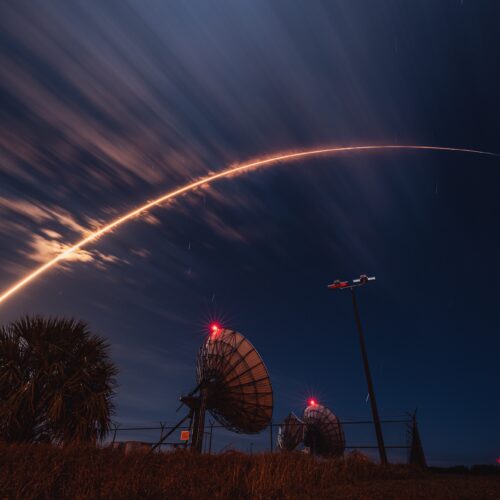
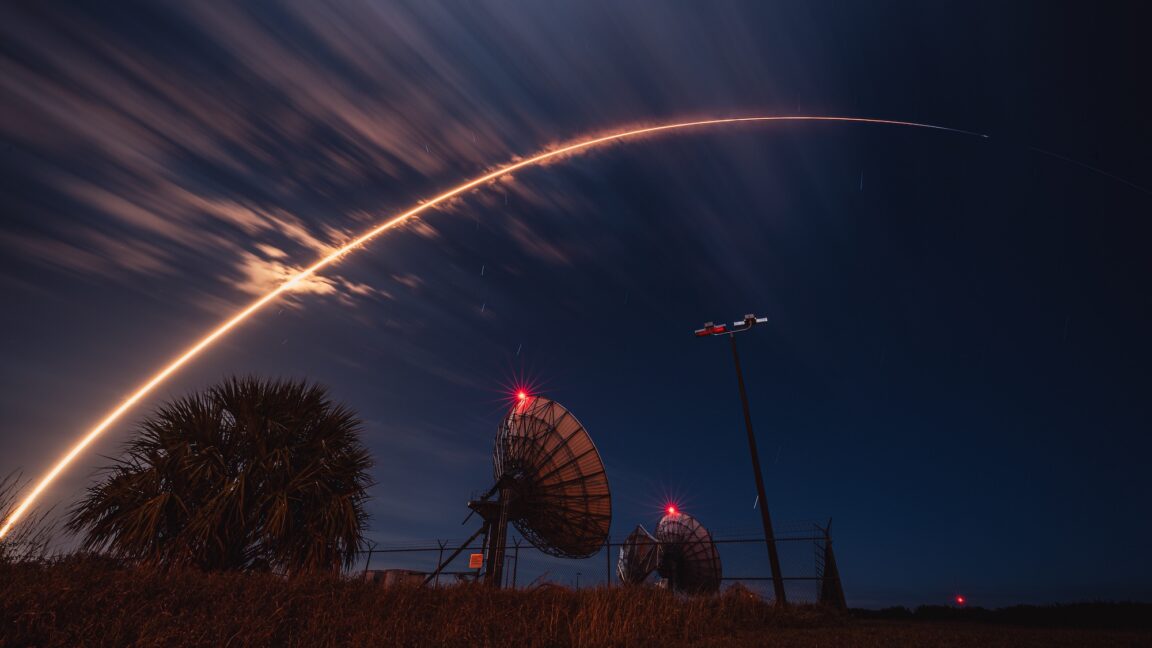
© US Space Force/Gwendolyn Kurzen
SpaceX has won a lucrative contract to provide the US military with a means of distributing space-based sensing and targeting data, forming the "backbone" of a rearchitected network after separate Pentagon initiatives stalled, officials announced Tuesday.
Space Systems Command, the Space Force's primary procurement and acquisition center, announced the $2.29 billion firm-fixed-price agreement, confirming long-simmering reports that the Pentagon was likely to tap SpaceX for a new communications network in low-Earth orbit. SpaceX's selection for the Space Data Network (SDN) Backbone contract "accelerates the delivery of a resilient, high-speed communications network in space," Space Systems Command said in a statement.
The network will be based on technology originally developed for SpaceX's Starlink global Internet constellation. SpaceX already builds and launches specially designed satellites, called Starshield, for military applications. The SDN Backbone network in low-Earth orbit (LEO) will presumably use the Starshield platform.
© US Space Force/Gwendolyn Kurzen
Mobile World Live brings you our top three picks of the week as the European Commission (EC) earmarked a large proportion of mobile satellite spectrum for homegrown players, Telenor unveiled a restructured operating model and SpaceX secured a $2.3 billion US military deal.
EC proposes local players get bulk of MSS spectrum
What happened: EC EVP Henna Virkkunen set out the regulator’s proposal to allocate the 2GHz mobile satellite services spectrum band across the European Union, with a large slice potentially being allocated to local players.
Why it matters: Under the plan, one third of the band would be reserved for government and critical communications with the rest allocated to commercial D2D and IoT services. Non-EU companies would only be able to apply for half of the allocation for commercial services and none of the public sector portion.
Virkkunen said the watchdog aims to “boost Europe’s competitiveness”, “strengthen Europe’s security” and embrace “new technological possibilities”, adding the plan reflects “the current changing geopolitical context”.
She rejected suggestions the move disproportionately targets US companies, stating the process is “very transparent and fair”. Yet, BNP Paribas Equity Research senior analyst Sam McHugh told Reuters the plan could leave US players including SpaceX in a “structurally inferior” position. He added it is “a small positive for European telecom operators” because it further reduces the odds of SpaceX competing head-to-head with them.
Telenor pursues top-line gains with restructure
What happened: Telenor unveiled a group-wide restructure, replacing its Nordics, Asia, Amp and Infrastructure business units with a model focused on individual countries.
Why it matters: The plan aims to move decision making closer to customers and local markets. The operator stated the shift aligns with its long-term goals of pursuing top-line growth, greater efficiency and operational improvement. Under the new set-up, the chiefs of Telenor’s Nordics businesses will join group management, removing the current regional layer.
Telenor described the restructure as “simplified and sharpened”, adding it would “substantially reduce administrative costs” and accelerate long-term growth by improving cash flow and capital return in the coming years.
SpaceX bags $2.3B US military comms deal
What happened: The US Space Force (USSF) awarded SpaceX a $2.3 billion contract to build the backbone for a Space Data Network (SDN), a satellite communications system designed to connect military platforms and sensors.
Why it matters: USSF stated the SDN backbone will use low Earth orbit satellites to provide global connectivity for armed forces, acting as “an integrated network” delivering “robust, resilient, high-capacity and low-latency data transport”.
USSF acting portfolio acquisition executive for space-based sensing and targeting Colonel Ryan Frazier said the system would use “the best of commercial innovation” and provide “a strong foundation for the SDN mission” by acting as “a core communications layer” for USSF systems, delivering continuous, secure connectivity.
The deal comes at a pivotal moment for Elon Musk’s satellite venture, which recently submitted a Securities and Exchange Commission (SEC) filing detailing plans to launch a long-awaited IPO as early as next month.
The post The Friday File: MSS spectrum; Telenor; SpaceX appeared first on Mobile World Live.
SpaceX has won a lucrative contract to provide the US military with a means of distributing space-based sensing and targeting data, forming the "backbone" of a rearchitected network after separate Pentagon initiatives stalled, officials announced Tuesday.
Space Systems Command, the Space Force's primary procurement and acquisition center, announced the $2.29 billion firm-fixed-price agreement, confirming long-simmering reports that the Pentagon was likely to tap SpaceX for a new communications network in low-Earth orbit. SpaceX's selection for the Space Data Network (SDN) Backbone contract "accelerates the delivery of a resilient, high-speed communications network in space," Space Systems Command said in a statement.
The network will be based on technology originally developed for SpaceX's Starlink global Internet constellation. SpaceX already builds and launches specially designed satellites, called Starshield, for military applications. The SDN Backbone network in low-Earth orbit (LEO) will presumably use the Starshield platform.
© US Space Force/Gwendolyn Kurzen

AMSTERDAM – A former senior Ukrainian defense official called on SpaceX to tighten controls on Starlink terminals that she said are reaching Russian forces through third-party countries or intermediaries. Kateryna […]
The post Former Ukraine official calls for stricter restrictions on Russian use of Starlink appeared first on SpaceNews.
American Airlines detailed a plan to install Starlink satellite internet service across more than 500 narrowbody aircraft starting in early 2027.
The deal will cover much of its Airbus domestic and short-haul international aeroplanes including A321neo and A321XLR aircraft entering the fleet.
Starlink’s Aero Terminal delivers up to 1Gb/s per antenna, enabling streaming, gaming and real-time collaboration tools for passengers.
American Airlines chief customer officer Heather Garboden said the partnership is as much about reliability and low latency as raw speed, promising passengers an at-home level of Wi-Fi connectivity.
Jason Fritch, VP of Starlink enterprise sales at SpaceX, said the service would deliver a fully connected experience for passengers and crew, “making every flight smoother and more enjoyable”.
The partnership arrives as Starlink rival Amazon LEO is building its own airline momentum. JetBlue became the first carrier to commit to the service in September 2025, with a rollout planned to start in 2027.
Earlier this year, Delta Air Lines followed with a multi-year agreement to equip 500 aircraft with Amazon Leo starting in 2028
The post Starlink scores American Airlines Wi-Fi deal appeared first on Mobile World Live.
