
Reading view

Innovative AI Technique Predicts Radiation Dosage Prior to Treatment in Advanced Prostate Cancer

A groundbreaking advancement in the realm of metastatic castration-resistant prostate cancer (mCRPC) therapy has emerged from a recent study involving machine learning and molecular imaging. Researchers have developed an innovative predictive model capable of estimating the radiation dose that tumors and critical organs might absorb during ^177Lu-PSMA radiopharmaceutical therapy, a leading treatment modality for mCRPC. This pioneering approach leverages data derived from pre-therapy ^18F-PSMA PET/CT scans, fundamentally transforming treatment planning by enabling more accurate, patient-specific predictions prior to the commencement of therapeutic intervention.

Dosimetry—the precise measurement of absorbed radiation dose—remains an indispensable component in refining and optimizing radionuclide therapies such as ^177Lu-PSMA. Traditionally, dosimetric evaluation relies heavily on imaging conducted post-treatment, which poses significant challenges due to its labor-intensive nature and the extensive resources required. The advent of a pre-therapy predictive tool utilizing widely available ^18F-PSMA PET/CT imaging represents a major leap forward by potentially circumventing these constraints. This shift not only promises to streamline clinical workflows but also extends the possibility of tailoring treatment intensity to individual patient profiles, thus maximizing therapeutic benefit while minimizing adverse effects.

The research, spearheaded by Dr. Amit Nautiyal and colleagues at the University Hospital Southampton and the University of Southampton, UK, employs a sophisticated machine learning framework combining mixed-effects modeling with multi-parametric data inputs. The model assimilates PET uptake metrics, radiomic features—which capture spatial and textural heterogeneity of lesions—and relevant clinical biomarkers. By integrating these multidimensional variables, the algorithm can accommodate inter-patient variability and predict absorbed dose distributions in tumors alongside vital organs such as salivary glands and kidneys with promising accuracy.

This proof-of-concept study analyzed data from nine mCRPC patients undergoing ^177Lu-PSMA therapy. Across these individuals, 57 tumors, 36 salivary glands, and 18 kidneys were evaluated, offering a robust dataset for model training and validation. The comparison of predicted absorbed doses with those calculated via conventional post-therapy imaging demonstrated the model’s potential in accurately forecasting dosimetric outcomes prior to treatment initiation. Such validation underscores how comprehensive image-derived quantitative features, when harnessed through machine learning techniques, can revolutionize personalized treatment planning in nuclear medicine.

One of the critical advantages of this approach lies in its capacity to inform patient selection. By predicting which patients are likely to receive optimal radiation doses in tumors while sparing normal tissue, clinicians can better stratify candidates for ^177Lu-PSMA therapy. This strategic selection inherently reduces the risk of treatment-associated toxicity and enhances the likelihood of favorable clinical responses. Furthermore, this predictive capacity may serve as an invaluable decision support tool during multidisciplinary team discussions, where tailored therapeutic regimens are formulated based on individual risk-benefit assessments.

The integration of radiomics—a burgeoning field that quantitatively analyzes medical images beyond conventional visual interpretation—marks a significant step forward in nuclear oncology. The nuanced information extracted from texture, shape, and intensity patterns within the ^18F-PSMA PET/CT images provides a rich dataset that machine learning algorithms can exploit to uncover complex relationships correlating with dosimetric parameters. When combined with patient-specific clinical biomarkers, this multifaceted modeling embodies the essence of precision medicine, ensuring treatment is dynamically adapted to each patient’s unique biological landscape.

Dr. Nautiyal emphasizes the transformative potential of this methodology, suggesting that, pending corroboration through larger cohort studies, it could redefine pre-treatment assessment strategies globally. Such validation would not only affirm the reproducibility and scalability of the model but also encourage its adoption into routine clinical practice. The ability to anticipate radiation dose distributions before therapy confers tangible benefits, including reduced need for extensive post-therapy imaging, diminished patient burden, and expedited initiation of treatment cycles.

The current research represents a foundational step in a comprehensive five-year initiative aimed at expanding the training dataset, refining the predictive accuracy of the model, and conducting rigorous external validation using multi-center patient cohorts. This longitudinal program aspires to establish a robust, clinically deployable tool capable of stratifying patients effectively and personalizing ^177Lu-PSMA radiopharmaceutical therapy. Importantly, the ongoing collaboration across institutions highlights the multidisciplinary nature of this endeavor, spanning nuclear medicine, radiology, oncology, and data science.

From a technical perspective, the employment of mixed-effects models within the machine learning framework allows for the accommodation of both fixed effects related to PET and clinical features and random effects capturing patient-specific variabilities. This statistical architecture enhances the model’s flexibility and adaptability across heterogeneous patient populations, which is paramount given the variability inherent in tumor biology and organ susceptibility. It also mitigates potential biases that might arise from limited sample sizes, fostering generalizability.

The implications of this work extend beyond prostate cancer and ^177Lu-PSMA therapy. The demonstrated feasibility of using pre-treatment imaging combined with advanced computational analytics to predict treatment dosimetry could inspire similar approaches across various theranostic applications. This positions imaging not merely as a diagnostic modality but as a dynamic, integral component of personalized therapy planning, bridging the gap between molecular visualization and actionable clinical insights.

In conclusion, this compelling study from the University of Southampton consortium delivers a visionary framework for enhancing the precision and efficacy of radionuclide therapy in advanced prostate cancer. By harnessing routinely acquired ^18F-PSMA PET/CT data through machine learning innovation, the research charts a path toward individualized treatment strategies that promise to improve patient outcomes significantly. As this technology progresses toward clinical translation, it heralds a paradigm shift in nuclear medicine, where therapy is foreseen and optimized well before a radioactive agent is administered.

Subject of Research: Machine learning for pre-therapy prediction of tumor and organ absorbed dose in ^177Lu-PSMA radiopharmaceutical therapy using ^18F-PSMA PET/CT radiomics and clinical biomarkers.

Article Title: Machine Learning-Based Pretherapy Prediction of Tumor and Organ Absorbed Dose in ^177Lu-PSMA Therapy Using ^18F-PSMA PET/CT Radiomics and Biomarkers

News Publication Date: 2026 (presented at SNMMI 2026 Annual Meeting)

Web References:

References:

  • Nautiyal A., Crabb S., Martinez Camacho R., Sundram F., Saad Z., Michopoulou S., Dewaraja Y., Dickson J. Machine Learning-Based Pretherapy Prediction of Tumour and Organ Absorbed Dose in ^177Lu-PSMA Therapy Using ^18F-PSMA PET/CT Radiomics and Biomarkers. SNMMI 2026 Annual Meeting, Abstract 262138.

Image Credits: Courtesy of SNMMI

Keywords: molecular imaging, positron emission tomography, radiopharmaceutical therapy, prostate cancer, ^177Lu-PSMA therapy, ^18F-PSMA PET/CT, dosimetry, machine learning, radiomics, personalized medicine, metastatic castration-resistant prostate cancer, nuclear medicine
  •  

Daily QA 4 Pro redefines machine quality assurance for next-generation radiotherapy

For radiotherapy centres, daily quality assurance (QA) provides the final safety check before each day of patient treatments – ensuring that all linear accelerators (linacs) deliver radiation safely, accurately and as expected.

But as radiotherapy technologies evolve, the required QA procedures become increasingly complex, with verification tests often performed in isolation using multiple phantom set-ups. New treatment techniques – such as surface-guided radiotherapy (SGRT), which is more widely used now than ever – also introduce new QA requirements. And the ongoing adoption of adaptive radiotherapy, where measurement-based pre-treatment QA is not possible, increases the emphasis on machine QA, in which daily QA plays a key role.

What’s needed is a comprehensive QA approach that incorporates the dosimetry, imaging and positioning checks required for all radiotherapy modalities. Addressing this challenge, US manufacturer Sun Nuclear has launched Daily QA 4 Pro, a new device that simplifies daily machine QA by combining dosimetry and positioning verification via imaging into a single indexed, imageable platform.

“The main motivation for launching the Daily QA 4 Pro was to create a product that not only met the current needs of clinicians, but also future needs, based on our vision of the radiotherapy QA field,” explains Rajiv Lotey, technical product manager for the Daily QA 4 Pro.

The next-generation platform builds on the company’s Daily QA 3 beam quality analysis product, which was introduced more than a decade ago and is now standard in many radiotherapy departments. “The biggest difference between the Daily QA 4 Pro over the Daily QA 3 is the end-to-end QA functionality – representing the patient workflow – achieved by integrating a 3D high-resolution array, fiducials, an SGRT-compatible surface, an imageable architecture, and the ability to correlate all imaging and mechanical isocentres together onto one device,” says Lotey.

Enabling new modalities, expanding clinical applications

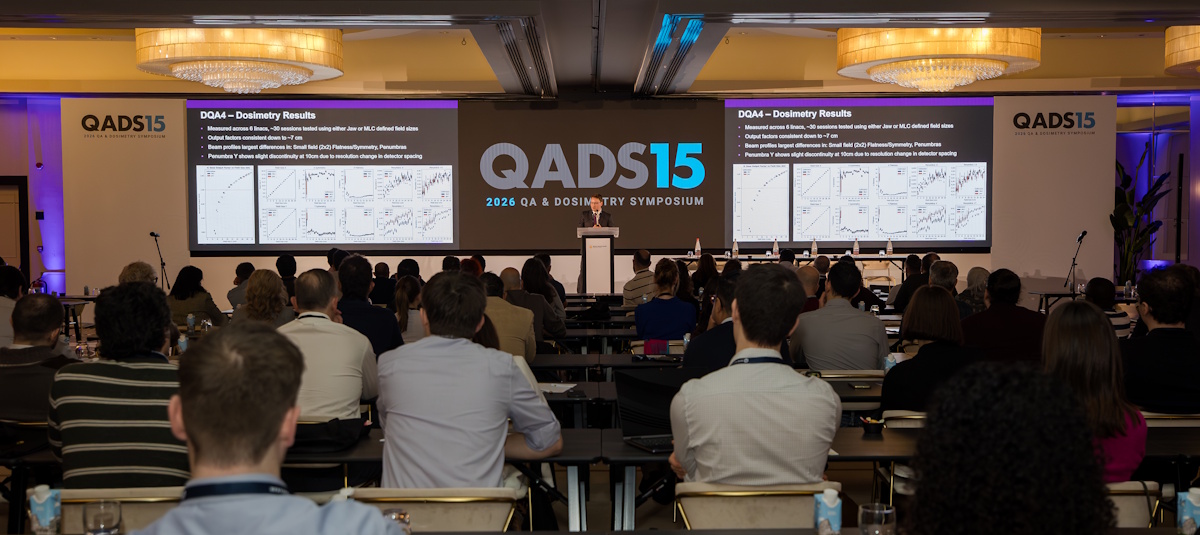
David Barbee, Director of Technology and Innovation in Radiation Oncology at NYU Langone Health, was one of the first to adopt this technology. Speaking at the recent QA & Dosimetry Symposium (QADS) hosted by Sun Nuclear, he described his early experiences of using the next-generation Daily QA 4 Pro.

“The first thing I wanted to do was evaluate surface-guided radiation therapy, because we don’t currently do this during daily QA,” Barbee explained.

To perform this test, the team defined a region-of-interest in the hospital’s VisionRT SGRT system that covered the entire surface and edges of the Daily QA 4 Pro and tested it over the full range of couch motion. The maximum translation range that it could detect was about ±4.5 cm in the lateral (side to side) and longitudinal (along the couch length) directions, and +13 to –17 cm vertically.

“For pitch and roll, we tested the 3°/3 mm limits and 90° couch rotations, and it observed them perfectly,” he added. “This is the first time we’ve ever run this test and compared our SGRT system to our image guidance system,” he noted. “This is very, very helpful.”

The QADS15 event
Quality and patient safety in radiotherapy Attendees at the QADS15 event shared best practice strategies and clinical insights with colleagues practicing worldwide. (Courtesy: Sun Nuclear)

For dosimetry, Barbee noted that many parameters are carried over from the Daily QA 3 – including the output profile constancy, the field size and shift, and the flatness and symmetry – but added that the Daily QA 4 Pro can measure at a much wider range, anywhere from 2 to 20 cm square fields. “There are also new metrics, such as the penumbra, beam shape constancy for FFF [flattening filter-free] fields, the beam centre and the dose-per-pulse,” he explained. “And there’s a new dose output correction factor for when you need to move this device to a different unit.”

Barbee and colleagues performed a range of dosimetry assessments using the Daily QA 4 Pro, measuring 30 sessions on six linacs using both jaw- and multi-leaf collimator (MLC)-defined field sizes. They found that the output factors were consistent down to about 7 mm, after which the MLC gave slightly higher output factors, while the largest beam profile differences were seen in flatness and symmetry for very small fields.

Integrating Winston–Lutz

The Daily QA 4 Pro incorporates active measurement Winston-Lutz tests – a standard procedure for evaluating isocentre accuracy – using the system’s onboard 3D detector array to directly measure the radiation isocentre. The NYU Langone team used the Daily QA 4 Pro to quantitatively assess the mechanical isocentres and their response to gantry, collimator and couch motion for six linacs, again using both jaw- and MLC-defined fields.

Barbee noted that the system runs the gantry and collimator checks automatically. “You can basically hit play on SunCHECK and then you don’t touch anything again until you get to the couch, which you have to move from the console,” he explained.

To test the accuracy of the results, Barbee compared them with two years’ worth of Machine Performance Check (MPC) and traditional Winston-Lutz measurements of all of the centre’s linacs. Daily QA 4 Pro measurements agreed well with previous isocentre results across all machines tested. “It’s a little bit early to say, but it looks commensurate, there are no concerns,” he noted.

A look inside the device

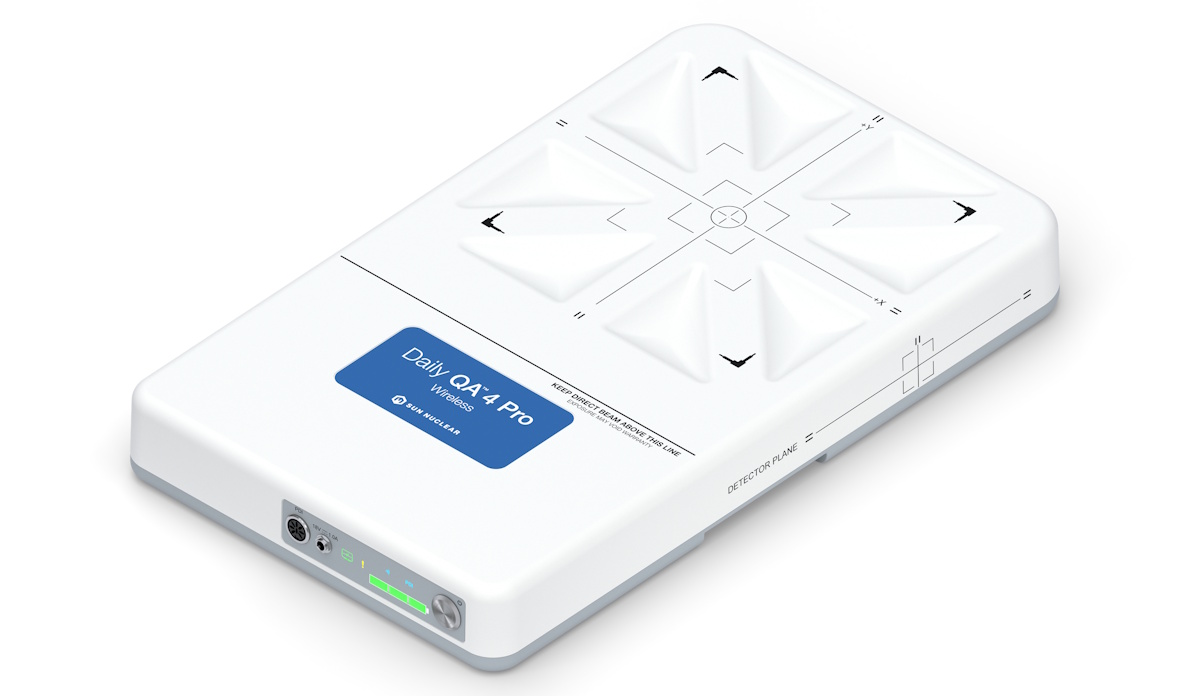
The Daily QA 4 Pro measures 30 x 50 x 6 cm, weighs 6.2 kg and sits on a 4.1 kg six degrees-of-freedom base. It incorporates four ion chambers that measure field sizes down to 5 x 5 cm, as well as 249 diodes spaced at high resolution in the x– and y-directions, the diagonals and along both sides. There are also eight 3 mm tungsten carbide BBs positioned off-axis, factory-calibrated to enable micron-level corrections.

The Daily QA 4 Pro.
The Daily QA 4 Pro.

Externally, the device incorporates scribed laser alignment marks with 2 mm tolerance on its sides and surfaces, plus a crosshair for collimator alignment. There are also field size markings for 5 x 5, 10 x 10 and 20 x 20 cm fields, as well as eight symmetric reliefs designed specifically for SGRT.

The Daily QA 4 software is designed to integrate into the SunCHECK environment and can be controlled using either SunCHECK Local via a standalone laptop or (starting in version 6.0) the SunCHECK Server.

The team also ran active imaging Winston-Lutz tests, which evaluate system geometry by analysing the position of a known target in images acquired using the linac’s imaging panels. The Daily QA 4 Pro device detects the image fiducials (tungsten carbide BBs) and compares their positions to expected values for each gantry angle. These tests allow users to assess factors such as device positioning, gantry angle accuracy and overall alignment.

“This is all summarized into a report showing the maximum error in any one of those parameters across all gantry angles,” explained Barbee. “It will tell you which gantry angle was the worst and what the value there was.”

Used together, the two Winston-Lutz methods combine direct radiation measurement with imaging-based verification to provide a more complete understanding of system health and to help identify, quantify and correct any errors.

Efficiency analysis

Barbee notes that while the Daily QA 4 Pro generates a comprehensive set of dosimetry and positioning verification data, at first glance, it looks like a lot more work. An efficiency analysis, however, proved the opposite – demonstrating significant gains in workflow efficiency.

Currently, Daily QA 3 and IGRT tasks take about 16 min to perform. “Daily QA 4 Pro cuts about five minutes off that time, because you’re not going in and out of the room and doing multiple setups,” he explained. “Adding Winston-Lutz currently doubles the time to over half an hour. But with Daily QA 4 Pro, you only add five minutes. And it’s a simple setup that your therapist can run as part of their morning QA.”

“The Daily QA 4 Pro integrates image-guided radiotherapy, SGRT, beam dosimetry and Winston-Lutz verification into a single device, enabling comprehensive daily QA in a single setup and session,” Barbee concluded. “This provides an independent, interpretable alternative to vendor black-box QA systems, with comparable isocentre and imager tests, and superior beam quality constancy tests. It really can consolidate a lot of phantoms that you might not need anymore.”

The post Daily QA 4 Pro redefines machine quality assurance for next-generation radiotherapy appeared first on Physics World.

  •  
❌