Depuis quelques années, c’est un sujet qui suscite de vifs débats : l’utilisation de l’Intelligence Artificielle (IA) présente-t-elle un vrai risque pour l'environnement ? Pour répondre à cette question, les Nations Unies ont compilé toutes les données scientifiques et techniques disponibles...
The figure for a single email comes from a 2025 peer-reviewed paper in Communications of the ACM by Pengfei Li, Shaolei Ren, and colleagues at the University of California, Riverside. The paper, titled “Making AI Less Thirsty,” sets out the methodology by which the per-query water footprint of large language models can be estimated. The figure for the 100-word email is approximately 519 millilitres, which is close enough to the volume of a standard bottle of water for the bottle to be the practical comparison. The number includes both the direct water used to cool the data centre’s servers and the indirect water used to generate the electricity those servers consume.
The 519 millilitre figure assumes a single response. Most users do not send a single response. They have conversations.
The same research group estimates that a single sustained conversation with a chatbot, defined as somewhere between ten and fifty exchanges, consumes approximately the same 500-millilitre order of magnitude. The figure scales by a factor of one each time the conversation extends.
Why AI needs water at all
Data centres generate heat. The servers processing AI queries are essentially small radiators running at high intensity for as long as the workload continues. The chips at the heart of contemporary AI training and inference, the high-end graphics processing units manufactured primarily by Nvidia, dissipate between 300 and 700 watts each, depending on the model. A single training run for a large language model uses tens of thousands of these chips simultaneously, for weeks or months at a time. The heat has to go somewhere.
The most common method for moving that heat out of a data centre is evaporative cooling. Water is pumped through pipes that run alongside or directly across the heat-producing equipment, absorbs the heat, and is then exposed to the air. A portion of the water evaporates, carrying the heat into the atmosphere as water vapour. The remaining water cycles back through the system. Approximately 80 per cent of the water drawn into an evaporative cooling system is lost to evaporation. The rest returns to local water systems, sometimes at higher temperatures and with chemical residues from the cooling process.
The newer generation of data centres built specifically for AI workloads are larger, more dense, and more thermally intense than the data centres built for general cloud computing in the 2010s. A single large hyperscale AI campus can now consume more water in a day than a town of ten thousand people uses for everything: drinking, washing, cooking, sanitation, agriculture, and irrigation combined.
This video explains exactly what big tech promised and how AI is doing the opposite of that.
How much, in actual numbers
Google’s most recent Environmental Report, covering the 2024 financial year, sets out the water consumption of the company’s global operations in detail. The combined figure for 2024 was approximately 8.1 billion gallons, of which approximately 95 per cent was used at data centres. The 2024 figure was an 8 per cent increase on 2023. The 2023 figure had been a 17 per cent increase on 2022. The 2022 figure had been a 20 per cent increase on 2021. The cumulative result is that Google’s water consumption nearly doubled between 2021 and 2024, with the company itself naming AI workload growth as the primary driver in successive environmental reports.
Microsoft’s figures are similar in shape, smaller in absolute scale. The company reported water consumption of approximately 1.7 billion gallons in 2022, a 34 per cent year-on-year increase. The growth has continued. The independent investigative reporting on Microsoft’s data centre cluster in West Des Moines, Iowa, where the GPT-4 training runs were conducted in 2022, has documented that a single training run consumed 11.5 million gallons of water in July 2022 and another 13.4 million gallons in August. The same cluster has, in subsequent years, expanded to five separate facilities collectively drawing 68.5 million gallons annually from the West Des Moines municipal water system, more than any other industrial user in the metropolitan area.
Meta consumed approximately 813 million gallons globally in 2023, with 95 per cent of that volume used at data centres. Amazon, which operates the largest cloud infrastructure in the world, does not publish aggregate water consumption figures.
The Lawrence Berkeley National Laboratory’s 2024 Data Center Energy Usage Report, prepared for the United States Department of Energy under the Energy Act of 2020, estimated that data centres in the United States consumed approximately 17.4 billion gallons of water directly through cooling in 2023. The same report estimated that an additional 211 billion gallons of water were consumed indirectly through the electricity required to power the same data centres. The indirect figure is approximately twelve times larger than the direct figure. The report projects that the direct figure could double or quadruple by 2028. The indirect figure scales in the same proportion.
Where the water comes from
The Li and Ren paper projects that global AI demand will require somewhere between 4.2 and 6.6 billion cubic metres of water withdrawal annually by 2027. The lower estimate is approximately the total annual water withdrawal of four Denmarks. The higher estimate approaches half the total annual water withdrawal of the entire United Kingdom. Both estimates assume current trajectories of AI workload growth and current water-efficiency practices. Neither estimate accounts for the possibility that AI demand continues to grow faster than the modelled trajectory.
The water has to come from somewhere. In Microsoft’s 2023 sustainability report, the company acknowledged that approximately 42 per cent of its water consumption that year came from regions classified as “water-stressed” under the World Resources Institute’s standard rating system. Google’s equivalent figure for 2023 was 15 per cent of freshwater withdrawals from regions of “high water scarcity.” Both figures, on the trajectory of the past three years, are likely to increase rather than decrease.
The concrete consequences of those abstract percentages are now visible in specific locations. In September 2024, Google announced it was pausing its planned 200-million-dollar data centre in Cerrillos, near Santiago, Chile, after a Chilean environmental court partially reversed the project’s original 2020 permit. The court ruled that the company had not adequately accounted for the impact on the Central Santiago Aquifer in a country that had been in a continuous drought for fifteen years and had begun rationing residential water in 2022. The project is now under revision.
In Querétaro, Mexico, where 32 new data centres are currently planned, the state suffered its worst drought in a century in 2024, with seventeen of eighteen municipalities affected and the drinking water supply for thousands of families at risk. Microsoft has secured rights to approximately 25 million litres of water annually from a local aquifer that is currently running a 60-million-litre annual deficit. In Uruguay, currently experiencing its worst drought in 70 years, Google’s proposed data centre in Canelones would, in its first operational phase, consume approximately 7.6 million litres of water per day, equivalent to the daily residential water needs of 55,000 people. In Goodyear and Buckeye, Arizona, a 14-billion-dollar data centre project was withdrawn in 2024 after local resident organisations successfully pressed elected officials to deny the necessary rezoning. In Aragón, Spain, multiple data centre projects are advancing in regions where agricultural water rights are already contested.
The pattern, on the available evidence, is that the cooling infrastructure for global AI is being built preferentially in regions where freshwater is cheap, regulatory oversight is loose, and the local population is least positioned to negotiate.
What companies don’t disclose
The figures cited above are the figures the companies have made public. The full water footprint of the AI industry is, by every available assessment, larger than the figures voluntarily disclosed in sustainability reports.
Three specific gaps recur across the disclosure landscape. The first is the gap between water withdrawal, which is the volume drawn from local sources, and water consumption, which is the volume permanently lost to evaporation. Most corporate reports name only one of these figures, and the choice between them can shift the apparent footprint by a factor of three or more depending on which is reported. The second is the gap between direct cooling water and indirect electricity-generation water. Almost no corporate report includes the indirect figure, despite the Lawrence Berkeley estimate that the indirect figure is approximately twelve times the direct one. The third is the gap between aggregate global figures and facility-level figures. A company-wide annual total tells a stakeholder nothing about whether the company’s data centre in a drought-stressed Arizona town is straining the local aquifer.
The reasons for the disclosure gaps are several. Some are methodological: the per-facility water footprint of a data centre depends on cooling technology, local climate, electricity-grid mix, and seasonal demand variation, none of which the company necessarily measures with precision. Some are competitive: detailed facility-level water disclosure could give competitors useful intelligence about a company’s infrastructure plans. Some are reputational: a company that discloses its full water footprint and is then criticised for the size of it is exposed to public-relations risk in a way that a company reporting only aggregate figures is not.
The Li and Ren paper’s contribution to the literature is, in significant part, that it produces credible estimates of the gaps. The figures that the AI industry has not been willing to publish are figures that academic researchers, using publicly available proxies for cooling efficiency and electricity-grid water intensity, are now able to estimate within reasonable bounds.
What is at stake
The global infrastructure for processing AI queries is being built faster than any new technology infrastructure in modern history, on a financing trajectory that McKinsey has projected at approximately 5.2 trillion US dollars by 2030. The physical buildings the trillion-dollar investment is producing are, in their fundamental operational requirements, large industrial-scale evaporative cooling systems with computing equipment inside them.
Each query is small. The aggregate is not.
Half the United Kingdom’s annual water withdrawal, evaporating into the atmosphere from cooling towers across the world’s data centres by 2027, is not a marginal correction to a global water balance that is otherwise stable. Global freshwater scarcity is increasing on every measured trajectory. Approximately one-quarter of the world’s population, by United Nations projections, will face severe water stress by 2030. The water the AI industry is now drawing from aquifers, rivers, and reservoirs, increasingly in the regions least able to spare it, is competing directly with that population.
The technologies the AI industry is developing have, by any reasonable analysis, the potential to contribute to solving some of the same water-management problems they are now exacerbating, through better climate modelling, more efficient irrigation, more accurate weather prediction, and more sophisticated drought response. Whether the contribution arrives at scale faster than the consumption does is the open question that determines whether the trade-off, on the long view, is worth it.
On the present trajectory, the answer is unclear.
What the trajectory will look like by 2027 depends on decisions being made, in board rooms and government offices and local zoning meetings, now.
Le Parlement devrait adopter le mardi 2 juin 2026 une proposition de loi visant à reconnaître la "part de responsabilité" de l'État dans le scandale du chlordécone aux Antilles, malgré une ambition amoindrie en cours d'examen au Sénat.
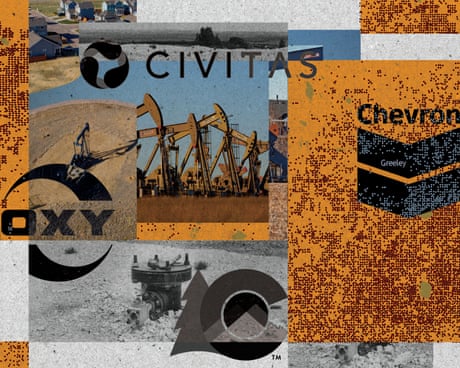
Investigation reveals regulator let firms off the hook on cleanup bonds despite backlog that will take decades to clear
When Christiaan van Woudenberg moved to Erie, Colorado, in 2007, he never imagined he would become an anti-fracking activist. He simply thought he was buying his dream home – a four-bedroom with a panoramic mountain view, 30 minutes north of downtown Denver.
Then, in 2014, the drilling started. Oil and gas rigs sprang up, some just 800ft (240m) from his bedroom window. The dream turned to nightmare: loud noises rumbled all night long, and the air stank like exhaust. Neighbors started getting headaches and nosebleeds, and Van Woudenberg developed new respiratory issues. He kept his windows shut and worried about his daughters going outside.
TV personality and businessman Kevin O’Leary is looking to construct a mammoth data center facility more than twice the size of Manhattan in Utah’s broader Salt Lake City region.
As Slate reports, the megalomaniac plans for the “Stratos Hyperscale Data Center” would see dozens of data center buildings, research facilities, and even worker housing be constructed across 40,000 acres of unincorporated land in Box Elder County, which is home to over 60,000 residents.
Given the widespread backlash to data centers across the entire country, it shouldn’t come as a surprise that many of these residents are now rushing to council meetings to forcefully refute the plans. After all, they’ve watched as other areas that welcome the facilities struggle with rising electricity prices, stressed water systems, and noise pollution.
Worse yet, the Great Salt Lake is already in crisis: it’s rapidly disappearing amid devastating droughts across the state. An extremely resource-intensive data center could place a massive new strain on it, regardless of the many reassurances from developers.
Despite initially setting aside a vote on the Stratos construction project, county commissioners eventually pushed forward, arguing that they had the “obligation” to start building, as Slate reports.
The debate drew thousands of negative comments, with hundreds of angry residents piling into a May 4 commission meeting, an all-too-familiar sight as countless Americans are desperately trying to publicly denounce plans for similar data centers in their counties.
Behind closed doors, Box Elder County commissioners eventually approved the data center, triggering an even louder outcry. Meanwhile, county attorneys argue that voters don’t have a legal say in the matter, rejecting a push for a referendum. As the Salt Lake Tribune reported last week, opponents said they were looking to take legal action after being shut out of the approval process.
“To me, and to other people I’ve talked to, it felt like it was done in the dark: backroom deals and assurances made with no transparency or government accountability,” Salt Lake City resident Larry Curtis told Slate.
Stratos remains adamant that the data center will be a boon for the region, creating 2,000 permanent jobs. Critics, though, say that figure is far too small for the sheer scale of the operation.
It’d be a fraught debate anywhere, but the backdrop here is grim: residents have been watching as the Great Salt Lake continues to shrink, with snow and rain becoming extremely sparse.
“In the past, one thing I could’ve agreed with [Utah governor Spencer Cox] on was that we need to save the lake,” resident Stephen Otterstrom told Slate. “Now this puts into question whether there is any sincerity in that.”
Yet the tides could soon start to change as the public blowback grows. The outcry has been loud enough for local politicians to backpedal after initially supporting the data center, as they realize it’s a major liability that could endanger their chances of being reelected.
Nour Haydar speaks with Christopher Knaus about the BHP files – the cache of internal documents leaked to the Guardian and the ABC’s Four Corners – which show that the world’s biggest miner has war-gamed ways to massively delay decarbonisation
Additional audio in this episode was sourced by Financial Times Live
There are over 283 million cars cruising the United States, and over 90 percent of them are still guzzling gas. Apart from the obvious environmental problems, fuel prices also continue to skyrocket thanks to the ongoing war in Iran. The average price for gas is currently around 33 percent higher than it was before the crisis, and there is little sign that those numbers are going down anytime soon.
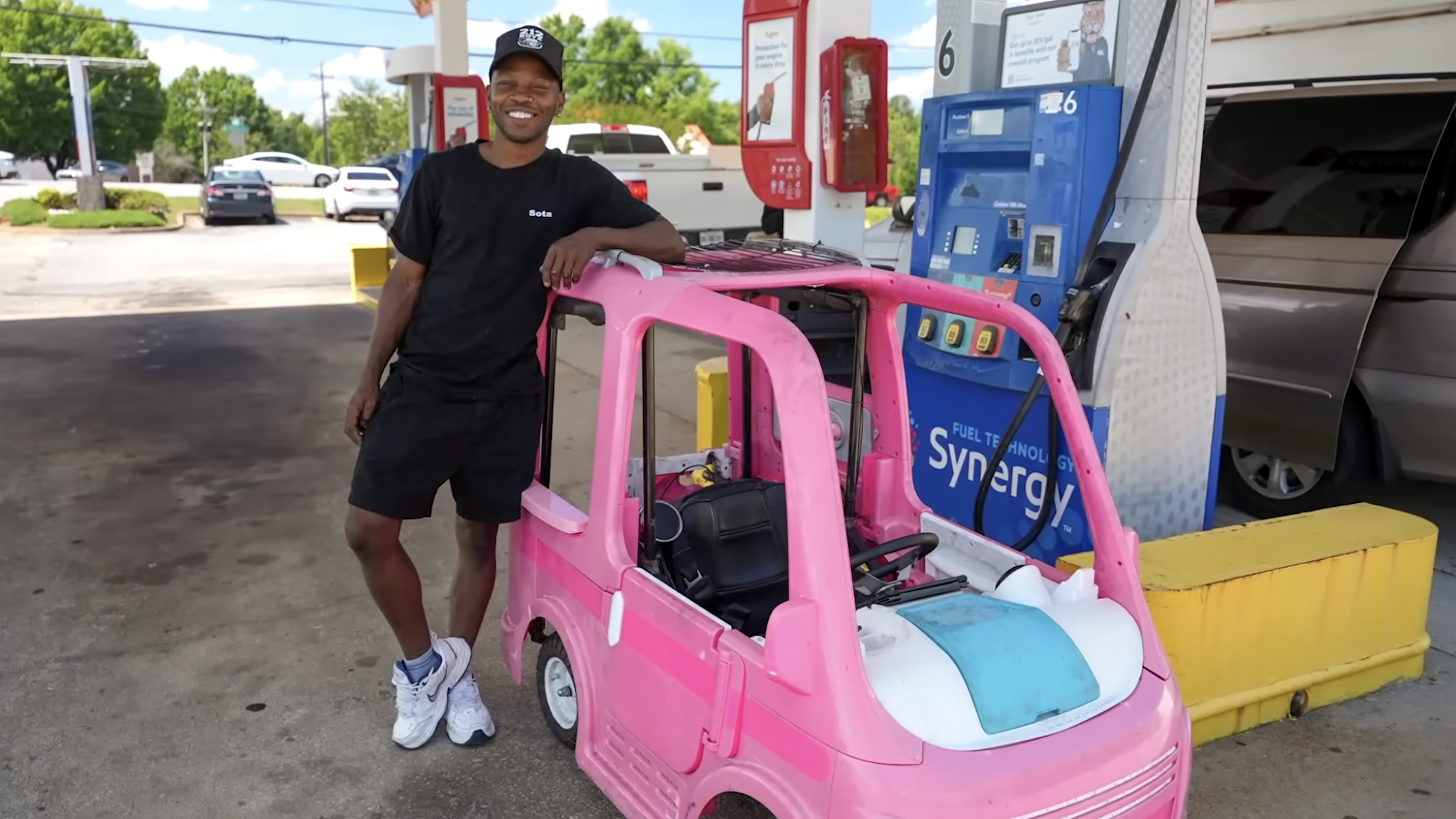
The strain is forcing many drives to reconsider how they get around—and they’re getting creative with it. In Georgia, a 30-year-old handyman is showing everyone how to properly adapt to uncertain times. According to a recent Reuters profile, Mali Hightower has retrofitted a discarded, bright pink Power Wheels Barbie Dream Camper with a two-gallon, one-piston engine for his shorter commuting needs.
“I drive this when I can,” Hightower said on May 19.
To get it going, a driver simply pulls the rip cord that’s attached to the former power washer engine. At less than four-feet-tall, the Dream Camper may not be the most comfortable ride for a full-grown adult,but it’s definitely cheaper. Hightower likely still prefers driving his 1996 Mercedes-Benz convertible, but with a full tank costing him around $90 right now, he’s more than willing to use his Power Wheels alternative for errands like grocery runs.
While somewhat surreal to see at a gas pump, the DIY solution underscores a more important issue: the need for more people to divest from fossil fuel rides in favor of public transportation and electric vehicles (EVs). Unfortunately, that’s easier said than done for many people. The U.S. is dramatically underfunded when it comes to options like commuter bus routes and trains, while EVs are still out of many people’s price ranges. The Dream Barbie Camper may be one-of-a-kind right now, but there’s a good chance that similar, intentionally constructed alternatives are on the way. At least those will be able to comfortably fit the driver.
Exclusive: Mining giant says technology is not yet advanced enough to run a fully electrified fleet but experts say it is hooked on federal fuel tax credits
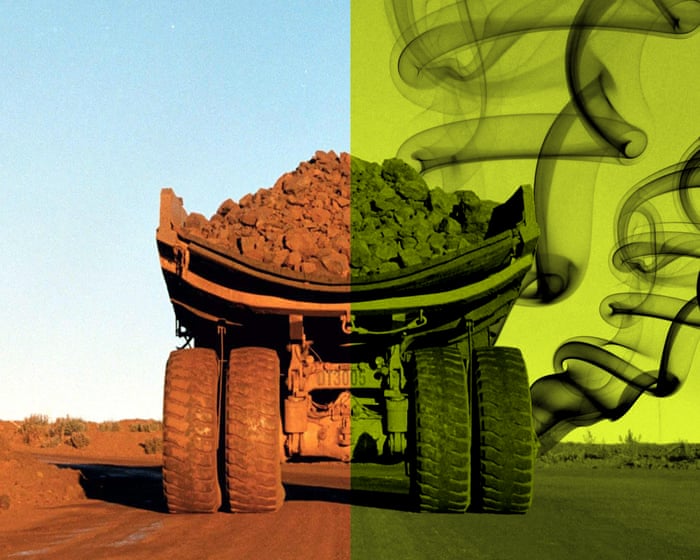
BHP has continued to spend hundreds of millions of dollars buying diesel trucks in the Pilbara despite internal documents suggesting it would increase emissions and be “misaligned” with its decarbonisation goals.
The mining giant is Australia’s biggest consumer of diesel and trucks are its biggest single source of diesel emissions. Replacing the fleet with battery-electric trucks is considered a critical step in the multinational’s efforts to decarbonise.
The independent senator David Pocock says leaked BHP documents show that the mining giant is “laughing” at Australia’s key climate policy while pocketing hundreds of millions of dollars through a generous diesel tax break.
Exclusive: Cache of internal documents leaked to the Guardian and the ABC’s Four Corners show multinational has war-gamed ways to massively delay decarbonisation
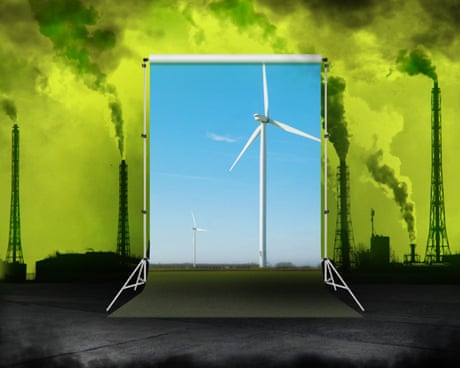
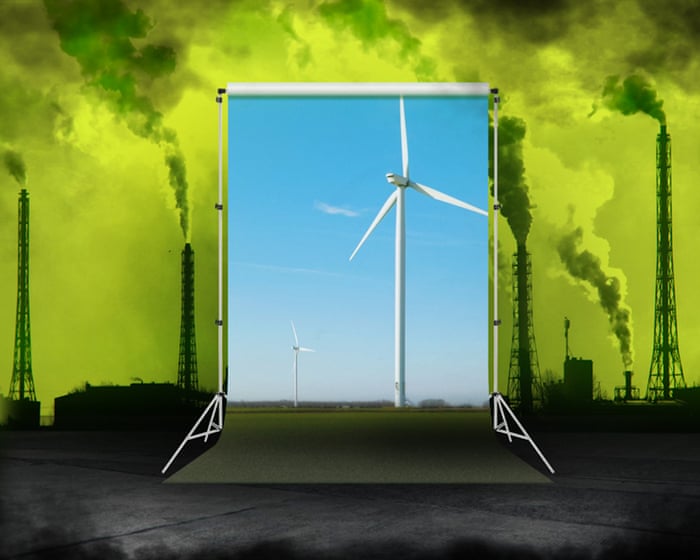
The world’s biggest miner has halted or delayed projects to cut vast amounts of emissions and has quietly war-gamed options to push major climate investments in its Western Australian iron ore operations into the next two decades, internal documents show.
An exclusive investigation based on documents leaked to the Guardian and the ABC’s Four Corners can reveal that BHP, one of Australia’s biggest historic emitters, has dumped plans for a facility that could have significantly reduced emissions and has put on ice renewable projects designed to power its iron ore operations in the vast, resource-rich Pilbara region.
Exclusive: BHP once dubbed climate change an ‘existential’ threat. But leaked documents show it has backtracked on decarbonisation at a vast network of mines
The finding effectively paves the way for continued use of atrazine, a widely used herbicide that has been linked to birth defects and cancer in humans.
California truckers have expressed strong interest in the Tesla Semi because it costs much less and can travel further on a charge than electric trucks sold by established manufacturers.
Screens on either side of a Tesla Semi’s steering wheel provide a view of the traffic around the vehicle.
Over 20 million tons of polystyrene plastic are produced annually, yet only a small fraction is recycled worldwide. Current recycling methods consume large amounts of energy and often rely on harsh and toxic chemicals to break the strong molecular chains that make up polystyrene. One possible solution is the use of sulfur, which is an inexpensive byproduct formed when refining crude oil. Its unique chemical structure allows it to break up strong chemical chains in long plastic molecules. Despite its abundance, sulfur has very limited applications, and converting it into more usable forms tends to require a lot of heat, rendering it unused for long periods of time.
Researchers at the Dalian Institute of Chemical Physics hypothesized that sulfur could help break down polystyrene waste to form more valuable chemicals. To power this reaction, they converted sunlight into heat energy through a process called photothermalconversion. They used this heat to transform polystyrene and sulfur into valuable chemicals like 2,4-diphenylthiophene, or chemical D, and 1,3,5-triphenylbenzene, or chemical T, which are used to make semiconductors and chemical sensors.
To test this, the team mixed ground polystyrene and sulfur at a molar ratio of 1:0.5 in a glass test tube. They sealed the tube with a balloon and secured it onto an iron stand. Then, they focused sunlight onto the bottom of the tube using a curved mirror. As the mixture heated up, the yellow-white solids gradually melted and transformed into a reddish-black liquid after 2 minutes. After heating, the researchers removed the mirror and allowed the system to cool before collecting the gaseous products from the balloon and dissolving the remaining solids for further purification and analysis.
The researchers then adjusted the reaction conditions to understand what factors influenced their results. They tested the reaction without sulfur, varied the sulfur ratios from 0.2 to 0.8, and replaced elemental sulfur with other sulfur-containing compounds. They also explored adding known photothermal agents, specifically metal oxide additives, to the mixture.
To compare the difference between sunlight and artificial light, the researchers repeated the experiment indoors using a 100 Watt LED bulb and monitored temperature changes with a thermal camera. They also ran a control experiment using only polystyrene to check how sulfur affected the yield under LED light. They also tested exposure times from 1 to 6 minutes in 1-minute increments to determine how long it took to achieve the highest yields under LED. The researchers used these tests to identify which conditions were necessary for the reaction to occur and how different factors influenced its outcome.
They found that without sulfur or with alternative sulfur-containing compounds, the reaction did not produce chemical D or T under sunlight. In contrast, reactions that included sulfur successfully produced these target products, with the highest yields of 34% for D and 16% for T at a sulfur ratio of 0.5. When they added metal oxides, the chemical yields decreased to 22% and 12%, respectively, suggesting that these additives interfered with the desired reactions. In addition, when the researchers switched from sunlight to LED, the reaction yields dropped to 26% for D and 13% for T.
Next, they examined how reaction time influenced product formation. They found that yields increased gradually before reaching the maximum at 4 minutes and leveling off. They also noted that mixtures containing sulfur heated up from room temperature to 320°C (608°F), while the control setup only showed a slight temperature increase. The researchers interpreted these results as confirmation of sulfur’s dual role as a reactant and a light-to-heat converter that enables the conversion of polystyrene to useful chemicals.
Taking it a step further, the researchers tested their method on real-world polystyrene wastes, including food packaging, cup lids, and foamed plastics. They successfully produced chemicals D and T from these materials, demonstrating that their process works beyond laboratory samples.
The team concluded that their study presents a simple, fast, and solvent-free approach to converting 2 abundant waste materials into valuable chemicals using sunlight. By combining polystyrene waste and excess sulfur, the researchers offer a new pathway for sustainable polymer upcycling that uses clean energy and is broadly applicable to everyday plastics.

 Login
Login