Reading view

Iron-Enhanced Biochar Transforms Soil Oxygen to Break Down Antibiotic Pollution

Antibiotic contamination in agricultural soils is increasingly recognized as a critical environmental issue, threatening soil health, crop productivity, and contributing to the global rise in antimicrobial resistance. A groundbreaking study, published in the forefront journal Biochar, unveils an innovative solution: an iron-modified biochar capable of exploiting soil’s intrinsic oxygen and iron redox chemistry to effectively degrade sulfamethoxazole (SMX), a widely prevalent antibiotic pollutant. This novel approach sidesteps reliance on harsh chemical oxidants, instead harnessing natural soil processes to achieve sustained, in situ remediation.

The research team engineered a functional biochar material, designated BC-Fe, using waste sawdust as the base feedstock. The preparation involved a meticulous sequence of pyrolysis, iron impregnation, and a secondary pyrolysis step, resulting in a highly active Fe-loaded biochar. Unlike traditional advanced oxidation processes that demand external chemical inputs, BC-Fe utilizes the molecular oxygen ubiquitously present in soils, catalyzing its activation through a sophisticated iron redox cycling mechanism. This activation leads to the generation of hydroxyl radicals, potent reactive oxygen species capable of decomposing complex organic contaminants including antibiotics.

Crucially, the standout variant named HBC-Fe400 emerged as the most efficacious catalyst, optimized in terms of iron content and the proportion of reduced iron species, Fe(II). Its unique structural and electronic properties enable it to serve simultaneously as an electron conduit—an “electron highway”—and a dynamic redox modulator. This dual functionality underpins a “charging and discharging” system where electrons are stored and transferred by the carbon matrix of biochar, while iron continually oscillates between Fe(II) and Fe(III) states. This cyclic interplay sustains long-lasting oxygen activation and continuous production of hydroxyl radicals, ensuring prolonged pollutant oxidation in soil environments.

Laboratory-scale soil incubation experiments revealed that HBC-Fe400 enhanced hydroxyl radical production by an extraordinary factor of 4.2, yielding concentrations as high as 881.6 micromolar. When tested under real-world field conditions, the biochar catalyst maintained a remarkable 3.58-fold increase in hydroxyl radical generation, underscoring its practical applicability outside controlled experimental settings. This resilience firmly establishes the material’s potential for scalable, long-term antibiotic remediation in agricultural soils.

The catalytic degradation of sulfamethoxazole proceeded through multiple intricate pathways, involving molecular transformations such as isoxazole ring opening, hydroxylation, and cleavage of the sulfur-nitrogen bond. These pathways collectively facilitate the breakdown of the complex antibiotic structure into less harmful intermediates. Importantly, toxicity assessments alongside germination and growth experiments with cherry radish plants confirmed that these degradation products are significantly less toxic, with treated soils supporting improved seed germination rates, greater fresh biomass, and enhanced stem growth compared to soils contaminated with untreated SMX.

Mechanistically, the system operates via two synergistic pathways. The first is a direct catalytic route where HBC-Fe400 activates oxygen through its iron centers. The second is indirect but equally vital: the biochar stimulates native microbial processes that drive soil iron cycling, particularly promoting microbial Fe(III) reduction, thereby maintaining a steady pool of Fe(II). This microbial-electrochemical collaboration fosters a self-reinforcing Fenton-like reaction that dramatically elevates oxidative degradation capacity in situ without requiring added chemicals.

This strategy heralds a significant advance in sustainable soil remediation technologies, positioning iron-modified biochar as a multifunctional remediation agent that integrates carbon material chemistry with biogeochemical cycling. By converting waste sawdust into a high-performance catalytic biochar, the approach embodies a circular economy model that valorizes agricultural residues for environmental cleanup applications, reducing reliance on expensive or environmentally detrimental chemical oxidants.

The research team emphasizes that the development of HBC-Fe400 exemplifies the broader potential of biochar materials to transcend their conventional roles as inert sorbents or soil amendments. With appropriate design, biochars can be engineered as active catalysts mediating electron transfer reactions and stimulating native soil microbial metabolism, thereby unlocking new degraded pathways for persistent organic pollutants such as antibiotics. This paradigm shift opens avenues for multifunctional soil conditioners that simultaneously improve soil health and pollutant cleansing efficacy.

Looking forward, the authors advocate for extensive field validation studies encompassing diverse soil types, climatic conditions, and agricultural practices to verify long-term stability and catalytic performance under variable real-world settings. Further investigations into the fate and ecotoxicology of the various transformation products formed during remediation will be critical to ensure environmental safety. Nonetheless, the present study lays a robust foundation for designing advanced iron-based biochar catalysts tailored for sustainable pharmaceutical pollution control.

By leveraging naturally abundant resources—oxygen and native iron cycling—and marrying them with engineered biochar platforms, this research proposes a low-impact, durable, and environmentally integrative methodology for soil antibiotic remediation. The innovative catalyst design unlocks the potential for broad implementation of Fenton-like advanced oxidation in agricultural lands, enhancing food safety, safeguarding soil ecosystems, and mitigating antibiotic resistance dissemination.

The results presented by Lei Zhang and colleagues emerge as a timely contribution to the growing focus on mitigating emerging contaminants with green materials. Their findings call for a reevaluation of biochar’s functional scope, suggesting a future where carbon-rich waste-derived catalysts become central players in environmental protection and sustainable agriculture, harnessing biogeochemical redox processes for cleaner, healthier soils.

This study thus represents a visionary step towards circular, nature-inspired solutions addressing the pressing global challenge of antibiotic pollution. With continued innovation and interdisciplinary collaboration, iron-modified biochar could soon be integral to a new generation of soil remediation technologies that empower farmers, conserve ecosystems, and promote safer crop production worldwide.


Subject of Research: Experimental study on iron-modified biochar for in-situ degradation of antibiotic sulfamethoxazole in soil.

Article Title: In-situ and long-enduring oxidation of SMX by Fe-modified biochar activated O2 in soil: bridging Fe-redox cycling and electron transfer modulation.

News Publication Date: 11-Mar-2026

Web References:

References:
Du, H., Zhang, L., Liu, W. et al. In-situ and long-enduring oxidation of SMX by Fe-modified biochar activated O2 in soil: bridging Fe-redox cycling and electron transfer modulation. Biochar 8, 76 (2026).

Image Credits: Hongying Du, Lei Zhang, Wenbo Liu, Yuyang Xie, Xueyan Hou, Junkang Guo & Qixing Zhou

Keywords

Iron redox cycling, biochar catalyst, sulfamethoxazole degradation, soil remediation, hydroxyl radical production, advanced oxidation, electron transfer, Fenton-like reaction, antibiotic pollution, soil health, microbial Fe(III) reduction, waste-to-remediation.


  •  

Magnetic Biochar Gel Prevents Arsenic and Antimony Contamination in Rice

In the quest to secure global food safety amidst rising environmental contamination, researchers have pioneered a transformative approach targeting the persistent problem of toxic metalloid contamination in paddy soils. Rice, sustaining over half the world’s population, is at risk because arsenic (As) and antimony (Sb) present in mining-affected soils readily translocate into rice grains, posing substantial health hazards. Recent advancements reported in the journal Biochar reveal a cutting-edge remediation material—a magnetic silicon-enriched biochar gel—that shows exceptional efficacy in immobilizing these toxins, ultimately mitigating their bioaccumulation in rice and enhancing crop health.

The core innovation stems from the engineering of FeRBG, a functional biochar composite synthesized by integrating rice husk-derived biochar, iron oxides, and graphene into a three-dimensional porous gel network. Rice husk, an abundant agricultural byproduct, is distinguished by its natural silicon content, a mineral known to bolster plant stress resistance and potentially curtail metalloid uptake. The strategic incorporation of iron oxides and graphene amplifies reactive surface sites and structural stability, facilitating stronger affinity and retention of arsenic and antimony within paddy soils.

The significance of this approach is underscored by the system-level testing conducted in soils sourced from the heavily contaminated Qinglong Antimony Mine in Guizhou Province, China. This locale represents a critical case study for dual metalloid contamination. Employing greenhouse pot trials, researchers benchmarked FeRBG’s performance against untreated soil and soils amended with either unmodified rice husk biochar or iron-loaded biochar. The results definitively highlighted FeRBG as the premier amendment capable of simultaneously diminishing the bioaccessible pools of both arsenic and antimony.

Quantitative geochemical analyses demonstrated that FeRBG reduced phosphate-extractable arsenic and antimony concentrations by approximately 22.3% and 23.1%, respectively. These reductions correspond to a substantial shift of contaminants into more stable residual and iron oxide-bound soil fractions. Such chemical sequestration minimizes mobilization pathways, thereby limiting metalloid uptake by rice plants during growth. This mechanism employs the formation of stable Fe-O-As and Fe-O-Sb complexes on the biochar surfaces, effectively locking these harmful metalloids in place.

Crucially, the study reports a pronounced decline in arsenic and antimony concentrations within rice grains themselves, a pivotal marker of improved food safety. FeRBG treatment achieved a 34.0% reduction in grain arsenic and a 16.1% decrease in grain antimony relative to controls. Notably, the arsenic content in rice grains under FeRBG application fell to 0.14 mg kg⁻¹, placing it well below China’s national regulatory threshold for brown rice. These findings herald a transformative advance in the mitigation of toxic metalloid transfer through the soil-rice continuum.

Beyond contaminant immobilization, FeRBG exhibits pronounced agronomic benefits that directly impact rice productivity and resilience. Enhanced root system architecture was observed, characterized by increased total root length, surface area, mean diameter, and root tip abundance. These morphological improvements translate to a robust root network capable of optimizing nutrient and water uptake. Consequently, rice plants cultivated in FeRBG-amended soils showed higher fresh biomass in roots, stems, and panicles, alongside a significant 13.1% increase in thousand-grain mass.

The multifunctional efficacy of FeRBG is attributed to synergistic mechanisms operating at geochemical, microbial, and phytophysiological levels. Silicon release from the biochar matrix may interfere with arsenic transport pathways in rice, mitigating uptake at the root-shoot interface. Additionally, the porous gel architecture ensures a high density of adsorption sites facilitating effective metalloid binding. On the microbial front, soil bacterial community profiling revealed shifts favoring taxa involved in nutrient cycling and environmental stress mitigation, indicating that FeRBG fosters a more resilient and health-promoting rhizosphere.

Integrating these diverse functional attributes, FeRBG transcends conventional soil amendments by simultaneously addressing pollutant immobilization and crop health enhancement. This integrated remediation strategy not only secures safer rice production pathways but also promotes sustainable agricultural practices in mining-impacted regions. The magnetism inherent to FeRBG adds a practical dimension, potentially enabling targeted recovery and recycling of the biochar material, optimizing field management approaches.

The implications of this research extend to environmental engineering, soil science, microbiology, and agronomy, providing a template for leveraging biochar-based technologies to tackle complex co-contamination challenges. While promising, broader deployment initiatives require comprehensive field-scale trials to evaluate long-term stability, cost-effectiveness, and ecological safety under varied climatic and farming scenarios. These future investigations will be pivotal for translating laboratory efficacy into real-world agricultural sustainability.

Overall, this pioneering work elevates functionalized biochar beyond a mere sorbent to an integrated soil amendment that enhances the biogeochemical dynamics of paddy ecosystems. By locking toxic elements securely in soil matrices and simultaneously bolstering plant physiological functions, FeRBG exemplifies the next generation of environmentally conscious remediation technologies tailored for food safety and ecosystem health.

Subject of Research: Magnetic silicon-enriched biochar gel for remediation of arsenic and antimony contamination in soil-rice systems.

Article Title: Magnetic silicon-enriched biochar for effectively mitigating As and Sb in soil-rice continuum: from integrated geochemical, microbial, and phytophysiological insights.

News Publication Date: March 10, 2026.

Web References: DOI Link

References: Gao, Y., Chen, H., Wang, F. et al. Biochar 8, 74 (2026).

Image Credits: Yurong Gao, Hanbo Chen, Fenglin Wang, Jiayi Li, Zheng Fang, Xiaokai Zhang, Xing Yang, Jin Wang, Juan Liu, Caibin Li & Hailong Wang.

Keywords

Biochar, arsenic remediation, antimony remediation, soil contamination, rice safety, magnetic biochar gel, silicon-enriched biochar, iron oxides, graphene, soil microbiology, phytophysiology, environmental remediation.

  •  

There are thousands of dirty old drill sites in Colorado. The state gave oil firms a $1bn pass

Investigation reveals regulator let firms off the hook on cleanup bonds despite backlog that will take decades to clear

When Christiaan van Woudenberg moved to Erie, Colorado, in 2007, he never imagined he would become an anti-fracking activist. He simply thought he was buying his dream home – a four-bedroom with a panoramic mountain view, 30 minutes north of downtown Denver.

Then, in 2014, the drilling started. Oil and gas rigs sprang up, some just 800ft (240m) from his bedroom window. The dream turned to nightmare: loud noises rumbled all night long, and the air stank like exhaust. Neighbors started getting headaches and nosebleeds, and Van Woudenberg developed new respiratory issues. He kept his windows shut and worried about his daughters going outside.

Continue reading...

© Composite: Rita Liu/The Guardian/Getty Images/Civitas/Chevron/OXY

© Composite: Rita Liu/The Guardian/Getty Images/Civitas/Chevron/OXY

© Composite: Rita Liu/The Guardian/Getty Images/Civitas/Chevron/OXY

  •  

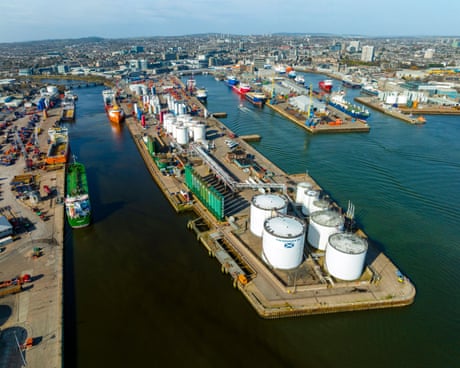
The Guardian view on the Aberdeen South byelection: the politics of energy take centre stage | Editorial

While Westminster’s attention is focused on Andy Burnham and Makerfield, another pivotal byelection is taking place in Scotland’s north-east

The coming byelection in Makerfield, from where Andy Burnham aspires to make rapid progress towards Downing Street, is perhaps the most consequential in British political history. But the decision by the Scottish National party’s former Westminster leader, Stephen Flynn, to relocate to Holyrood means that another pivotal contest is taking place more than 350 miles to the north. If Makerfield is a test case for Mr Burnham and Labour’s ability to see off Reform UK, Mr Flynn’s old constituency of Aberdeen South is on the frontline of the increasingly fraught politics of North Sea oil.

Labour, despite finishing second in the 2024 general election thanks largely to anti-Tory tactical voting, will not be expecting much this time round. The ramifications of Donald Trump’s reckless war in Iran have exposed Britain’s ongoing vulnerability to fossil-fuel-related energy shocks, highlighting the practical benefits of moving to a green economy. But the knock-on effects of the closure of the strait of Hormuz have also been a gift for the Scottish Conservatives and Reform, who are framing the byelection as a local referendum on reviving oil and gas production beyond Westminster-imposed limits.

Continue reading...

© Photograph: Iain Masterton/Alamy

© Photograph: Iain Masterton/Alamy

© Photograph: Iain Masterton/Alamy

  •  

Wes Streeting backs calls for national insurance cut and North Sea drilling

Labour leadership hopeful says NI reduction for firms could ‘incentivise’ hiring, particularly of younger people

Wes Streeting has backed calls for national insurance cuts for businesses, and for the government to drill for oil and gas in the North Sea.

The former health secretary and potential Labour leadership candidate told the Sunday Times there should be a “targeted reduction” of employers’ national insurance contribution as a way to “actively incentivise” hiring, particularly of young people.

Continue reading...

© Photograph: Thomas Krych/Zuma Press Wire/Rex/Shutterstock

© Photograph: Thomas Krych/Zuma Press Wire/Rex/Shutterstock

© Photograph: Thomas Krych/Zuma Press Wire/Rex/Shutterstock

  •  

The race for oil: will Jamaica be the next country to drill and what does that mean for its green pledges?

With early tests suggesting the presence of crude oil, the Caribbean island has begun to debate whether it could justify becoming a producer

Jamaica is closer than ever to drilling for oil. Tests on samples from the seabed off the Caribbean island’s south coast earlier this year identified hydrocarbons, which suggest the presence of crude oil below ground.

Jamaica imports all its fuel, which costs about $1.5-2bn (£1.1bn-1.5bn) annually, depending on global oil prices. It is a persistent drag on an economy that generated $4.3bn from tourism, its biggest earner, in 2024.

Continue reading...

© Illustration: Eleanor Shakespeare

© Illustration: Eleanor Shakespeare

© Illustration: Eleanor Shakespeare

  •  

Loopholes undermine palm oil industry’s antideforestation pledges

JAKARTA — More than a decade after the palm oil industry embraced a pledge to not deforest, clear tropical peatlands, or use exploitative practices, policies to that end now cover most of the global palm oil trade, as major traders, refiners and consumer brands have pledged to keep deforestation-linked palm oil out of their supply chains. However, deforestation linked to palm oil continues, particularly in Indonesia, the world’s largest producer of the commodity. Satellite analysis by forest-mapping initiative TheTreeMap shows 31,073 hectares (76,783 acres) of forest were cleared for palm oil in Indonesia in 2025, slightly higher than the 30,956 hectares (76,494 acres) recorded in 2024 — highlighting persistent gaps in how the industry enforces its zero-deforestation pledges. In some cases, palm oil from newly cleared land still enters supply chains that companies describe as deforestation-free. “No Deforestation, No Peat, No Exploitation” (NDPE) policies aim to eliminate three major sources of harm in palm oil production: clearing natural forests, developing plantations on carbon-rich peatlands, and exploiting workers or local communities. By 2020, these commitments covered roughly 83% of palm oil refinery capacity in Indonesia and Malaysia, the world’s main producing region. In recent years, companies have also built systems to enforce these pledges. Many now publish grievance mechanisms where violations can be reported, while third-party monitoring groups use satellite imagery to track forest loss and flag suspicious activity. Large-scale corporate deforestation in Indonesia has fallen compared to the mid-2010s, when some plantation companies were clearing vast areas of rainforest. Deforestation for…This article was originally published on Mongabay

  •  
❌