Reading view

What physicists can do to support the green economy

From heatwaves to extreme rainfall, the impact of climate change is rapidly becoming a reality in our daily lives and a danger to our planet. But physicists are in a great position to help, with physics-based research bringing about practical, real-world solutions, whether it’s more efficient solar cells, better climate models, or novel materials for capturing carbon dioxide from the atmosphere.

There are huge economic and commercial benefits from such work too. A 2023 report from the Institute of Physics (IOP), entitled Physics Powering the Green Economy, estimates there are almost 1800 companies in the UK and Ireland taking green technologies to market with a combined turnover of £750bn.

Last year a follow-up IOP Impact report entitled Unleashing Physics to Power the UK Energy Sector identified the most promising physics technologies for transforming the UK’s energy system. These fall into three main areas: energy generation (nuclear power, photovoltaics), storage (batteries) and transmission (high-temperature superconductors).

The clean-energy revolution will not be easy, however. As the IOP report points out, the UK has a strong research base, good international collaborations, and a growing pipeline of spin-out and early-stage companies. But the country doesn’t invest enough in technology scale-up facilities, faces critical skill shortages, and isn’t great at recycling either.

To discuss how physicists are supporting the green economy – and what more they can do – a panel debate was recently held at the IOP in central London. Attended by Prince Edward, the Duke of Edinburgh, as well as about 100 business leaders, policy chiefs, senior physicists, and IOP and IOP Publishing staff, it was chaired by Tara Shears, the IOP’s vice-president for science and innovation.

The panel featured ex-BP boss John Browne, who now works in green energy, Emily Nurse from the UK’s Climate Change Committee, former Sizewell C energy-strategy director David Cole, solar-cell physicist Jenny Nelson from Imperial College, and Nellie Technologies founder Stephen Milburn. The following is an edited extract of the discussion.

Physicists for a greener future
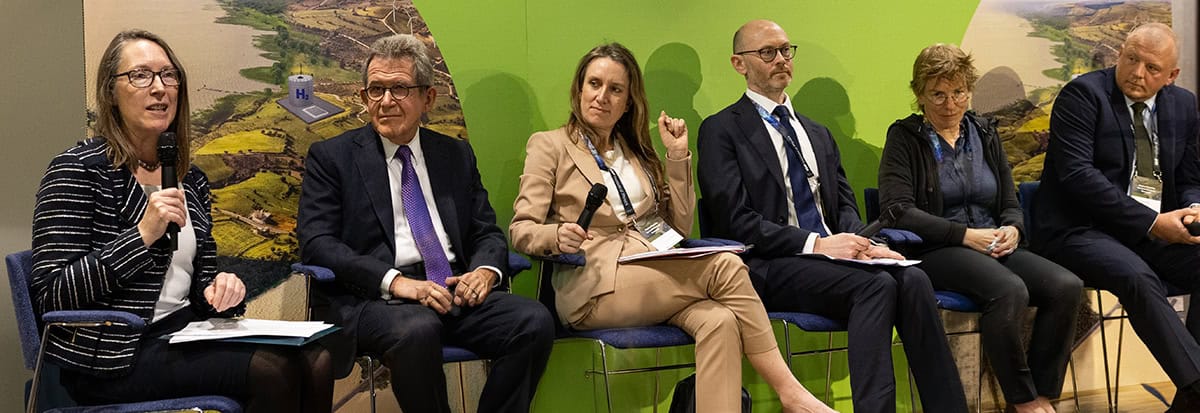
Tara Shears, John Browne, Emily Nurse, David Cole, Jenny Nelson and Stephen Milburn
Green game-changers Tara Shears (far left) chairing the panel debate at the Institute of Physics in London on how physics can support the green economy. It featured (from left to right) John Browne, Emily Nurse, David Cole, Jenny Nelson and Stephen Milburn. (Courtesy: Carmen Valino)

John Browne is chair of BeyondNetZero, a climate-growth equity venture firm. He was group chief executive of energy giant BP from 1995–2007, having joined the firm in 1966 after studying natural sciences.

Emily Nurse, who was originally an experimental particle physicist, is the director of net zero at the UK’s Climate Change Committee, which advises the UK government on reducing emissions and adapting to the impacts of climate change.

David Cole, an engineer by training, was at the time of the discussion director of energy strategy at the Sizewell C nuclear-power plant, which is being built in Suffolk in the UK. When complete, it is expected to meet up to 7% of the UK’s total electricity demand. He is now executive president, consulting, at energy firm Wood.

Jenny Nelson is a physicist at Imperial College London, where she has spent almost 30 years developing advanced materials for photovoltaic solar cells. She is also mitigation programme lead at the Grantham Institute of Climate Change and the Environment.

Stephen Milburn is a physicist who is founder and chief executive of the firm Nellie Technologies in South Wales. It removes carbon dioxide form the atmosphere using biomass, which can then be used as animal feed or construction material.

What role are physicists currently playing in our quest for a greener economy?

John Browne: I made a wonderful decision 60 years ago, when I was 18, which was to read physics. After graduating, I became an engineer, but over the last 30 years physics has come back in to my life as I’ve found myself doing something very important – trying to get to net zero. Physics, you see, touches absolutely everything.

All that I’ve ever done – whether it’s renewable energy or “old energy” [fossil fuels] in my old life – starts with physics. Whether you’re involved in chemistry, biology, electronics or engineering, it could not exist without a much deeper understanding of physics. We have to make sure everybody knows that – but I don’t think people currently do. They tend to think engineering is the only enabler for commercialization, but physics is there.

Emily Nurse: I started out as a particle physicist working at CERN on the Large Hadron Collider but for the last four years, I’ve been involved in climate policy and now work with the UK’s Climate Change Committee. We are the UK government’s official advisers on its climate targets – and assessing progress towards meeting those targets. As we celebrate global decarbonization to date, we need to remember it’s all underpinned by physics.

Take the rise of solar power for example, which has been the fastest growing source of global electricity generation for the last 20 years in a row. Solar installations in 2024 were double those in 2022. Along with wind, solar has led to a reduction in electricity from fossil fuels. We’re seeing the costs of solar plummeting and they just keep falling further.

In the UK, solar power has been growing more slowly, but it’s starting to pick up and is going to be a really important part of the electricity mix. We’ve also got a lot of wind here in the UK – it’s a very windy island after all. I would also like to give a shout out to heat pumps: as a physicist, how can you not love their efficiency?

David Cole: I am an engineer, not a physicist, but I’ve spent my career in lots of different sectors and been fascinated with the role that energy plays in creating a better society. What’s really interesting at Sizewell C is the ownership structure, which involves both state and private investment. It’s the first time private investment has been used for a new nuclear build in the UK.

I hope it leads to a virtuous circle, in which the more plants we build, the more we can reap from that investment

David Cole

Getting this hybrid financial structure over the line was not trivial – it took a lot of effort – but I think it will drive great performance. We’re also trying to use as much UK content in the plants as possible, whether that’s materials, skills or technology. I hope it leads to a virtuous circle, in which the more plants we build, the more we can reap from that investment. Sizewell C will, in other words, bring down energy costs, which is fundamental to economic growth.

Jenny Nelson: I have been active in research into solar photovoltaic (PV) materials and devices for over 30 years and we should celebrate how much has happened in the field during that time. In the last 10 years, we have seen capacity increase globally by more than a factor of 10, we’ve seen the efficiency of solar cells increase, and we’ve seen the cost come down almost by a factor of eight, all of which is remarkable.

Those innovations are firmly rooted in physics – whether it’s changes in device structure… or of the optical properties of materials

Jenny Nelson

The cheapest form of electricity globally, in other words, is now from solar PV, which was not the case 30 years ago. These developments have come partly from economies of scale and partly from technological innovations that have now fed through into production. Those innovations are firmly rooted in physics – whether it’s changes in device structure due to our understanding of semiconductor physics or new developments in the optical properties of materials.

The next generation of PV cells, which are likely to be silicon-based tandem devices, will also depend on scientific breakthroughs and innovations.

Stephen Milburn: I’m chief executive of Nellie Technologies, which is based in South Wales on the site of a former chemical-weapons storage facility. We’re using biomass waste for removing atmospheric carbon dioxide, and if you visit us, you’ll see all kinds of activity: in one corner there’s chemistry, in another engineering and in the next there’s biology and biochemistry. But physics is at the heart of the technology. Physicists are a bit arrogant when we say we think we can do everything, but the fact is we probably can.

But we should also celebrate the work that has gone on to create a market in which carbon-emission credits can be bought and sold. Trading carbon credits has been a bit of a dark activity over the last 10 years, with double counting and bad things happening purely by firms wishing to make a profit. However, the market does have the power to regulate itself – in fact the alignment we’re starting to see between the UK and the EU will help greatly.
Graphic illustration of the concept of the green economy
Challenging times Technologies to store, generate or transmit energy are rooted in physics. (Courtesy: iStock/Galeanu Mihai)

What are the biggest growth opportunities for the green-economy sector?

John Browne: First, we can do much more with what we’ve already got – for example we could increase our offshore wind or rethink whether we should go back into onshore wind. Second, we can improve what we’re doing – for instance, by increasing the efficiency of solar panels to their theoretical maximum, which would make rooftop solar economically attractive. Third, there are new opportunities, such as metallic organic frameworks and nuclear fusion.

What we do here in the UK needs to move the needle globally, which means thinking about how to scale and finance it properly

John Browne

However, the UK needs to avoid doing things that others are doing much better. The race for the best battery in the world is, for example, probably going to be won elsewhere. What we do here in the UK needs to move the needle globally, which means thinking about how to scale and finance it properly. The UK shouldn’t end up as a secondary player.

Emily Nurse: The UK has made a lot of progress in our quest to reach net zero by 2050. Since 1990, for example, we’ve halved our carbon emissions, mainly by decarbonizing electricity – phasing out coal, reducing gas generation, while significantly increasing wind, solar and other renewables. Electricity generation now accounts for only around 7% of UK emissions, which are dominated by transport (cars and vans) and heating (oil and gas boilers).

Reducing emissions still further will predominantly come from moving to electric technologies, including electric vehicles and heat pumps, and by further decarbonizing the electricity supply. There will be a backbone of wind and solar, but to ensure a secure supply, we’ll need nuclear, carbon capture and storage, hydrogen and batteries. We’ll have to reduce emissions from agriculture and land use too.

A report from the Confederation of British Industry (CBI) last year estimated that the net-zero economy grew by 10% in 2024, which is three times faster than the rest of the UK. But we’ll need more innovations to continue to bring costs down – and we’ll also need to provide incentives to boost the take-up of electric technologies. If we do that, there’ll be an overall saving to the UK economy in about 15 years’ time, our analysis suggests. There are huge opportunities for green growth to come from this investment.

David Cole: I agree that for the UK to be competitive, the cost of energy has to come down – not just for domestic customers but businesses too. In fact, there are two main opportunities First, we have to adopt a “whole-systems” approach. If we’re building a power station, for example, can we use every bit to its maximum potential?

Let’s say I’m running a direct air-capture plant operating at 25–30 ºC – can I use the waste flow from my coolant system to encourage new industries? Can it support nearby hydrogen generation plants or companies making, say, synthetic aviation fuel? Those questions involve thinking about physics and engineering as well as materials science, which is also super important.

Whichever way you look at it, we’re talking about building a lot of hardware, which involves materials. How much energy per unit mass are they using? Can we recycle those materials? What can we do with the waste products? Ultimately, what is really important is energy security: where does your energy come from, who made it and what impact does it have on the environment?

Jenny Nelson: The net-zero economy is growing significantly faster than the rest of the economy and I think that will continue. But decarbonizing the power sector only addresses part of the problem and we’re going to see a big transition across the rest of industry, agriculture and elsewhere that will generate a wide range of opportunities and stimulate the economy too. I’m not just talking about rolling out more renewables, but about integration – bringing together the generation and storage of energy, ensuring that we are managing demands and have the right infrastructure.

As for my area of photovoltaics, we’ve seen great ideas and technologies come out of the UK that are very likely going to be developed outside the UK because the manufacturing capacity isn’t here. Nevertheless, those ideas and innovations can still benefit the country through licensing, partial manufacturing and new technology.

One thing to remember about solar power is it’s distributed. You can have solar generation without being connected to the grid. That not only opens some markets for certain applications where you want to generate electricity locally, but it also provides a route to energy security through back-up generation, towards which solar power will be an important part.

Stephen Milburn: Having a strong green-technology manufacturing base is a huge opportunity for the UK. My company is based in South Wales, where we have lots of highly skilled people who used to work in traditional industries but now don’t have many places to go. Yes, there’s a fantastic semiconductor industry here, but when it comes to deploying green technology we cannot outsource that responsibility to other parts of the world.

Green tech needs to be deployed in the UK’s industrial heartlands… if we don’t nurture jobs and skills here there’s a real risk they will be gone forever

Stephen Milburn

Green tech needs to be deployed in the UK’s industrial heartlands to take advantage of the skills we already have, but which we are at risk of losing. In fact, if we don’t nurture those jobs and skills here there’s a real risk they will be gone forever. Having a strong green-technology manufacturing base is a huge opportunity for the UK.
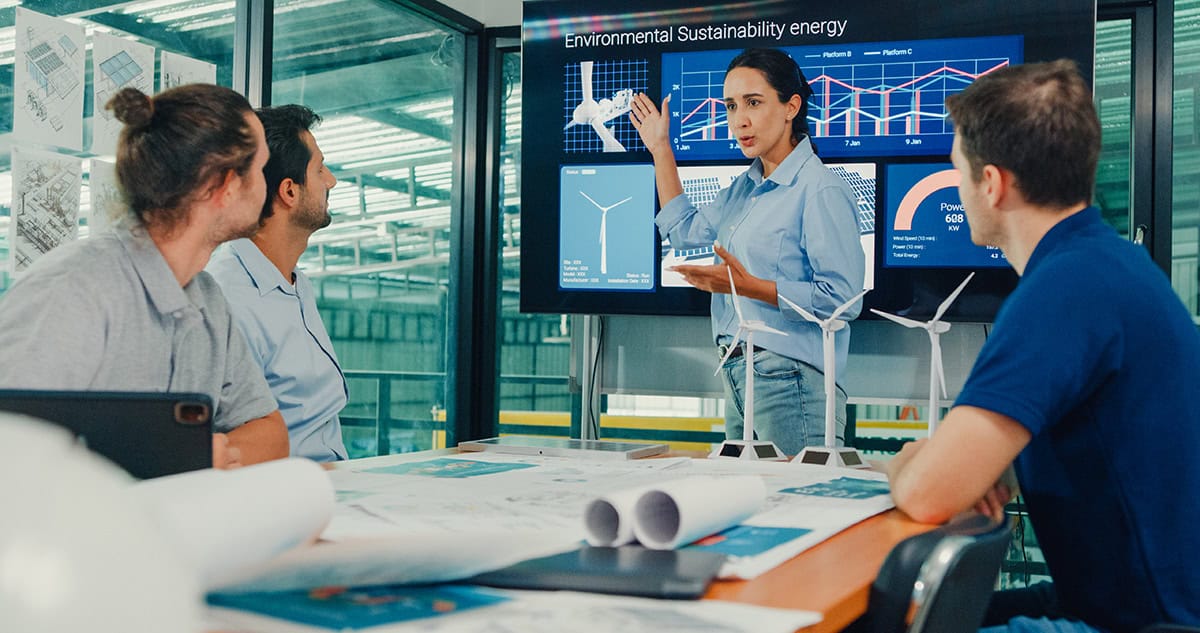
Team of industrial engineers meeting of renewable energy working on an innovative more efficient solar panel battery in manufacturing factory. Engineering and sustainable manufacturing plant concept.
Deep thinkers Combining analytical minds with great problem-solving skills, physicists are well placed to tackle the challenges of climate change. (Courtesy: iStock/MTStock Studio)

What needs to happen so that these opportunities can be put into practice?

Stephen Milburn: Many science graduates leave university equipped with solid academic rigour and a great scientific understanding, but they often lack practical green-technology skills. This summer my company is therefore hoping to launch a climate apprenticeship programme, which will allow graduates to pick up those skills. We need to build green-tech skills in the real economy, in particular those that will deal with climate change.

Jenny Nelson: The UK must do more to support its own innovations. We need better regulations to avoid unnecessary bottlenecks. We need to invest in infrastructure like the grid. We should completely avoid subsidizing fossil fuels and instead divert any subsidies into alternative economies. Finally, we need to train and educate people, showing the public the potential of green technology so that they become part of the transition, for example by generating their own electricity.

David Cole: We need to integrate our policies on industry, energy, land use and AI so that we can invest in them all as growth areas. In particular, I’d like to see a long-term nuclear programme in which we build a fleet of new reactors all of the same design, which will drive down costs by letting us replicate a particular technology. It’s also vital that we get a high proportion of UK content and technology into these reactors, which will lead to a virtuous circle, with money coming back into the economy that we can re-invest in industrial and academic partnerships.

Emily Nurse: What’s vital is consistency in policies; we need certainty. In the UK, we are fortunate to have world-leading climate legislation in the form of the 2008 Climate Change Act, which does not just make it a legal requirement to reach net zero by 2050 but also gives us targets along the way. It means we know what we need to do in both the medium- and long-term, which gives certainty to investors, businesses, innovators and consumers.

What’s really important is communication – supporting communities through the transition and making sure they realize the benefits

Emily Nurse

So the first thing we need to do is keep the Climate Change Act. Then, of course, we’ve got to address barriers to delivery, including having the right incentives to electrify the economy. And what’s really important is communication – supporting communities through the transition and making sure they realize the benefits, not just in terms of reducing carbon production but of having cleaner, better and more efficient technologies too.

John Browne: First, we must never stop investing in people who can discover things and translate them into real commercial products. Second, we need to understand how to scale things, which means focusing on the winners and getting rid of things that are “nice to have” but aren’t going anywhere. That’s not easy because you have to push people to say, “You’ve done great work, but you’ll have to stop”.

What’s more, to scale new technology, people have to learn what it takes. When I’m in the US, I often speak to chief executives who can explain their technology to the financier who’s supporting it, whereas here in the UK that often doesn’t happen.

Third, we need to maintain confidence in what we’re doing. I often talk to people who think that it’ll be really expensive to get to net zero, but in fact estimates suggest that each household would only have to spend an average of about £150 a year to get there. So it’ll be less than the cost of a TV licence to get to net zero.

Of course the investment needed will be “lumpy” – it’s not as simple as just levying a fee – but the point about governments is that they can smooth things out. That is what they have done in the past and it’s what they should continue to do.

The post What physicists can do to support the green economy appeared first on Physics World.
  •  

Is LMFP the next big thing for EV batteries?

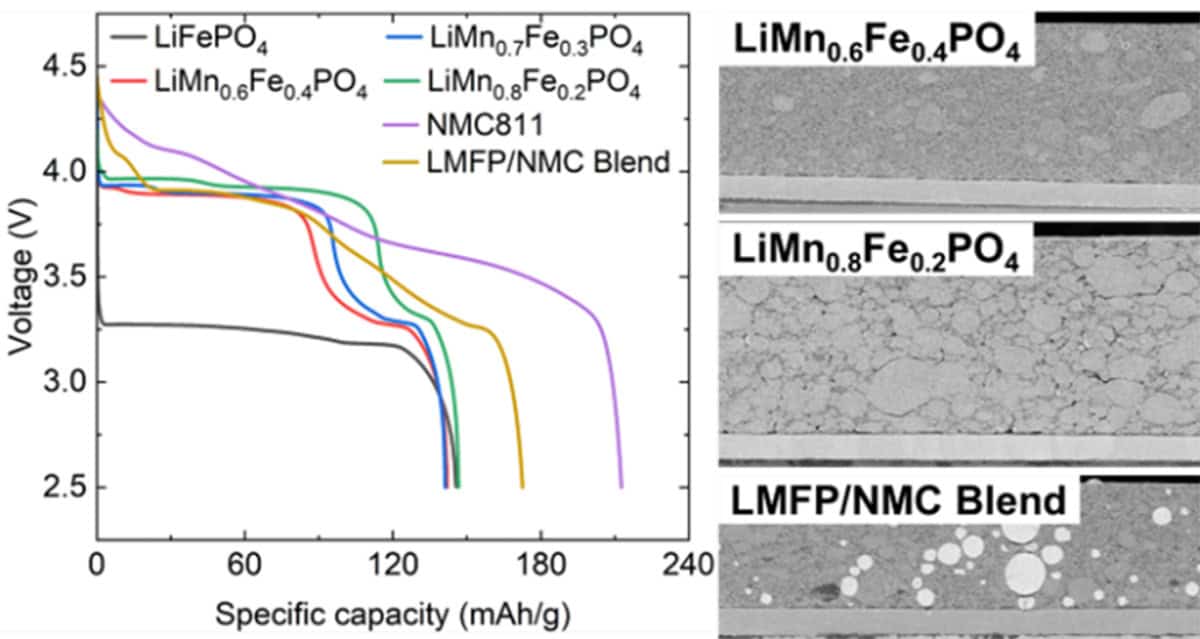
While LiMnxFe1-xPO4 (LMFP) cathode materials have been investigated academically for decades, they have been adopted by dominant battery manufacturers only in the past three years. What has prompted this sudden commercial interest? What market share might LMFP gain, can it outpace LFP and NMC? What are the outstanding limitations, and how might these be overcome?

In this webinar, we aim to answer these questions, covering challenges ranging from the fundamental characteristics of LMFP to large-format cell manufacture and industry trends. We will also showcase recent research carried out at WMG to better understand LMFP behaviour and how AI can be used to design improved LMFP electrode microstructures to enable fast charging.

Join this webinar to find out how this emerging material may alter the EV and battery manufacturing landscape.

Gerald Bree
Gerard Bree

Gerard Bree is an assistant professor in the battery materials and cells (BMAC) research group at WMG at the University of Warwick, where he carries out research to better understand how lithium-ion battery performance can be improved so that batteries provide more energy over a longer lifetime at a lower cost. He is interested in the interaction between academia and the battery industry and works on many projects supporting companies to build a battery supply chain in Europe. Bree received his undergraduate degree from Trinity College Dublin and his PhD from the University of Limerick.

The post Is LMFP the next big thing for EV batteries? appeared first on Physics World.

  •  

Coffee with a splash of physics: how to make the most out of your brew

Espresso, flat white, cappuccino, cortado – there are dozens of ways you can get your coffee fix. Every day more than two billion cups of coffee are brewed worldwide, making it one of the most traded products on Earth. In fact, it is the seventh most traded commodity on the planet (after crude oils, natural gas, gold, silver and copper).

Produced mainly in south and central America, south-east Asia and east Africa, coffee sustains the livelihoods of more than 25 million farming households. But its future is increasingly precarious. Coffee plants need the right temperature range, rainfall patterns and altitude to thrive, but climate change is disrupting it all.

This has led to falling yields and rising prices. For example, the price of Arabica beans – the most dominant coffee variety – rose by more than 80% in 2024. In the UK, this led to the price of beans at supermarkets rising 20% and the cost of some instant coffee surging by 40%, while coffee shop prices were up 30% from 2021 to 2024.

And it’s not just that coffee is affected by climate change – the climate is impacted by coffee. It has one of the largest carbon footprints of any plant-based product, mainly due to the clearing of tropical forests, fertilizer and water use, and processing techniques.

So how can those of us making the drinks help with the coffee and climate crisis?

At-home scientists

Coffee is an unusual drink. Unlike products such as whisky, wine and beer, it is brewed at the point of consumption, whether that’s in a café or restaurant, or in a home. “The very last step, which is probably the most complicated, is all done by untrained scientists,” says Christopher Hendon, a computational materials chemist and coffee expert at the University of Oregon.

A woman on a coffee farm checking by hand if the coffee beans are ripe
From farm to cup A cup of coffee starts with the coffee farm workers planting the seeds and picking coffee berries – but climate change is starting to affect crop yields. (Courtesy: iStock/SupawadeeAdam)

It is estimated that it takes 155 people to make a cup of coffee – all the way from the farmer who plants the seed in the ground, to the barista who hands you your cup of coffee. “154 people can do their job perfectly,” says Dan Pabst, manager of innovations and product development at coffee provider Melitta North America. “But if that last person doesn’t pay attention, does something wrong and the coffee doesn’t taste right, they’ve just ruined all that hard work.”

This is where physics can help. Beyond longer-term, large-scale solutions such as re-engineering coffee plants or tackling climate change, physics can actually tell us a lot right now about what happens during the seconds and minutes it takes to brew a cup of coffee. It is a surprisingly complex process and by understanding it, we can improve the quality of the drink and even reduce the amount of coffee needed, cutting waste and helping the environment.

Under pressure

Let’s start with the espresso – those concentrated coffee “shots” you get in tiny cups that also form the base for your latte, americano or cappuccino (and many more).

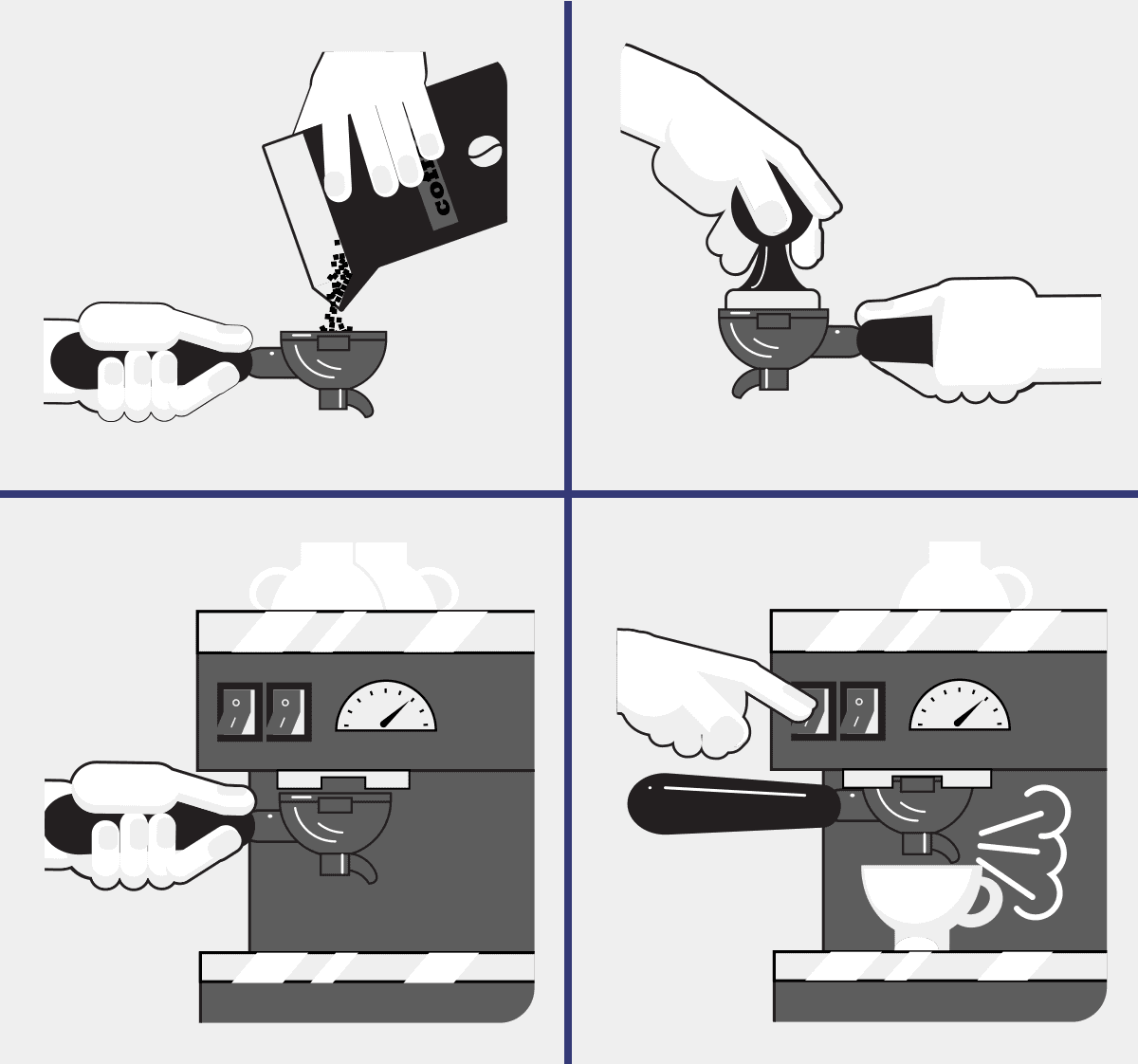
The Specialty Coffee Association (SCA) has historically defined an espresso as a 25–35 ml beverage prepared from 7–9 g of coffee through which water heated to 90–96 °C is forced at 9–10 bars of pressure for 20–30 seconds. “While brewing, the flow of espresso will appear to have the viscosity of warm honey and the resulting beverage will exhibit a thick, dark golden crema,” states the SCA. This can be achieved using an espresso machine (figure 1), or with smaller contraptions at much lower pressures such as a moka pot or AeroPress.

1 Espresso basics

Black and white illustration of 4 of the steps of making an espresso with a machine
(Courtesy: iStock/GerasimovSergey)

If you’ve ever had an espresso-based coffee, you’ll know that making that base shot of concentrated caffeine is more than just putting some beans in a machine and pressing go.  Like with any experiment in a lab, there is a strict process with a range of variables (and a bunch of lingo). Here’s a quick and very basic guide to making an espresso with an espresso machine:

  1. The coffee beans are ground down into a powder-like substance
  2. The ground coffee is then measured out in a “basket” at the end of a “portafilter” (top left)
  3. To ensure this coffee is evenly distributed, baristas then lightly tap the basket, and some may manually move it around
  4. Next the coffee is pressed down in the basket using a “tamper” to make it tightly and evenly compacted (top right), creating the coffee “puck”
  5. Before the portafilter is attached, it’s a good idea to purge the machine with water to ensure no contamination from the previous brew
  6. Now it’s time to actually “pull the shot”. The portafilter clicks into place (bottom left) and, if following the historical definition, high-pressure hot water (9–10 bars, 90–96 °C) is pushed through the puck for 20–30 seconds resulting in 25–35 ml of espresso (bottom right)

In 2017 the SCA and the Barista Guild of America surveyed baristas around the world to see how they were preparing their cups of espresso and if they were following the historical definition. Turns out that the average barista brews an espresso with 18–20 g of coffee in 25–30 seconds using water heated to 93 °C at 9 bars of pressure. This produces an average shot of 36.5 g.

Go online and you’ll also find all sorts of claims about how to produce a perfect coffee. “From a scientific point of view, this advice is often given with no substantial evidence,” says Maciej Lisicki, a physicist at the University of Warsaw. Keen to understand the real science behind a good espresso, Lisicki and his colleagues looked at the complexity of flow in coffee brewing (arXiv:2512.21528).

One frequent claim by coffee experts is that the optimal brewing pressure for an espresso is around 6–9 bars, and that pushing it higher yields diminishing returns. To find out why, Lisicki’s team rigged a café-grade espresso machine with a pressure sensor at the pump outlet, and a precision scale under the coffee cup so they could calculate flow rate. They prepared the puck using a high-spec coffee grinder and automatic tamper to ensure consistency, and then brewed shots of espresso at pressures ranging from 1 to 12 bars. “We strive for our espresso to be the same every time,” says Lisicki. To visualize their structure, the researchers also took X-ray micro-computed tomography (micro-CT) scans of the coffee pucks before and after brewing.

Fluid flowing through a porous medium, such as sand, glass beads or packed soil, usually follows Darcy’s law, with flow rate increasing linearly with the pressure of the liquid. But the researchers found that this was only true for coffee up to around 5 bars.  Above that, the flow rate flattened and then fell as pressure increased.

The team observed that as the coffee is brewed, the puck starts compacting under mechanical load, causing its pores to collapse and its permeability to decrease faster than the rising pressure can increase the flow. “The dynamics of espresso brewing is governed by this poroelastic effect,” Lisicki says. “There is an interplay between the porosity and the elasticity of the coffee matrix.”

Ultimately, the work confirmed what the coffee experts had observed. There is no point pushing the pressure beyond about 8 or 9 bars as the flow rate has already peaked.

The coffee in your coffee

Next, to explore how coffee dissolves over time, the team separated an espresso into different vials every five seconds as it brewed. An optical refractometer then measured the total dissolved solids in each vial. This, says Lisicki, tells you “how much coffee is in your actual coffee”.

The work showed that the first few drops of coffee that fall into your cup are very concentrated, but there aren’t many of them because flow rate is initially low. The flow rate then increases, but the amount of dissolved solids falls. This creates a sweet spot at around 15 to 20 seconds where the dissolved solids entering the cup peak, due to the balance between the increasing flow and decreasing solids.

Again, this tallies with expert opinion. “What we see is that most of the substance, the solubles, go into your cup within the first 30 to 35 seconds,” Lisicki says.

After talking to a friend who works as a barista, Lisicki and his colleagues also explored an annoying problem in coffee brewing known as channelling. This happens when the water finds a path of least resistance in the puck and forms a “channel” through the coffee grains. When they brewed coffees with artificially induced channels in the puck, the researchers found that the flow rate was as expected but the total amount of dissolved solids that were extracted was very low. Essentially, the water doesn’t permeate the rest of the puck, so you can’t extract all its coffee.

In fact, the team found that the more careless you are about preparing your coffee puck, the higher the chances of channelling. To mitigate this, you should stir the coffee grounds to make the puck as homogenous as possible and tamp it evenly. “You don’t need to tamp it very strongly, but tamping is important because if you don’t tamp then it’s easier for the water under high pressure to find a preferential flow path,” Lisicki says.

More from less

But even before you tamp your puck, how you prepare your coffee grains affects your drink’s quality. This is where grind size matters (figure 2). Back in 2020 Hendon and an international team were funded by the Coffee Science Foundation – the research arm of the SCA – to study ways to make highly reproducible espresso (Matter 2 631).

The group started by looking at what happens in the coffee grinder. You might think that a more finely ground coffee will maximize the surface area exposed to water, thereby maximizing extraction. Hendon and his colleagues discovered, however, that this was not the case.

2 Infiltrating the puck

16 images showing absorption data of coffee pucks
(CC BY 4.0 NC Physics of Fluids 37 013383)

When water is initially pushed through a dry espresso puck, it can take up to one-third of the brewing time to permeate the entire bed of ground coffee. But according to mathematician Ann Smith and colleagues, this process remains relatively neglected by mathematical models of coffee extraction.

“Understanding the infiltration process gives insights into the extraction rate across the coffee bed,” says Smith, who is based at the University of Huddersfield in the UK. “Over-extracting coffee results in bitter taste while under-extraction leads to both weak brews and wasted resources.”

To study infiltration dynamics through both a coarse and a fine grind, the researchers set up an espresso machine at the centre of a rotating X-ray tomography system, which allowed them to build 3D reconstructions of the pucks (Physics of Fluids 37 013383). They found that water travels more slowly but more uniformly through a fine grind (left) than a coarse grind (right), which can be seen in the above cross sections of the coffee pucks showing the absorption data for the first 8 seconds of brewing time. The researchers also built a flow model of the water permeation, which showed a good fit to the experimental data.

The team plans to build on the model by looking at other infiltration influences, such as brewing temperature and pores in the puck. “We have pioneered a new technique for experimentally validating coffee models, opening up several interesting avenues of future research,” the team says.

As grind size decreases, from coarse to fine, the amount of coffee that gets extracted initially rises but then peaks and falls. If the grind is too fine, the coffee bed clogs so that water can no longer percolate uniformly through it. Much like with channelling, some areas are over-extracted, while others are barely touched

“If you find the tipping point, you’ll realize the amount that you’re extracting on average [with a coarser grain] is actually much higher than if you ground finer,” Hendon explains. This means you also need less coffee to make an espresso of the same concentration.

The bottom line of the team’s experiments and mathematical modelling is that to get the most reproducible shots just use less coffee and grind it more coarsely.

Pabst echoes that advice: “My recommendation for people at home, without knowing anything they are doing, 90% chance that if you use less coffee and grind a little coarser [your coffee] will actually taste better.”

Hendon and his team trialled their “waste reduction protocol” at a small café in Eugene, Oregon in the US. By grinding more coarsely and reducing the dry coffee mass by 25%, from 20 g to 15 g, the business increased its revenue by more than $3000 over a year, without sacrificing drink strength or flavour.

Based on estimated US espresso consumption figures from the time, Hendon and his colleagues suggested that if their findings were implemented across the entire US, it could save the country about a billion dollars per year.

Volcanic coffee

It was not until Hendon teamed up with a volcanologist that he figured out why finer grinds clog the coffee bed and reduce extraction. Joshua Méndez Harper at Portland State University studies electrification in volcanic eruptions, where magma fragments charge up as they grind together in the plume, generating lightning. Coffee grinding, it turns out, creates a similar phenomenon (Matter 7 266, iScience 27 110639).

Together, Hendon and Harper found that friction between beans and the fracturing of beans during grinding generates static electricity. By passing coffee through a grinder a second time at a coarse setting, which removes fracturing from the process, the researchers discovered that most of the static charge arises from fracturing rather than friction.

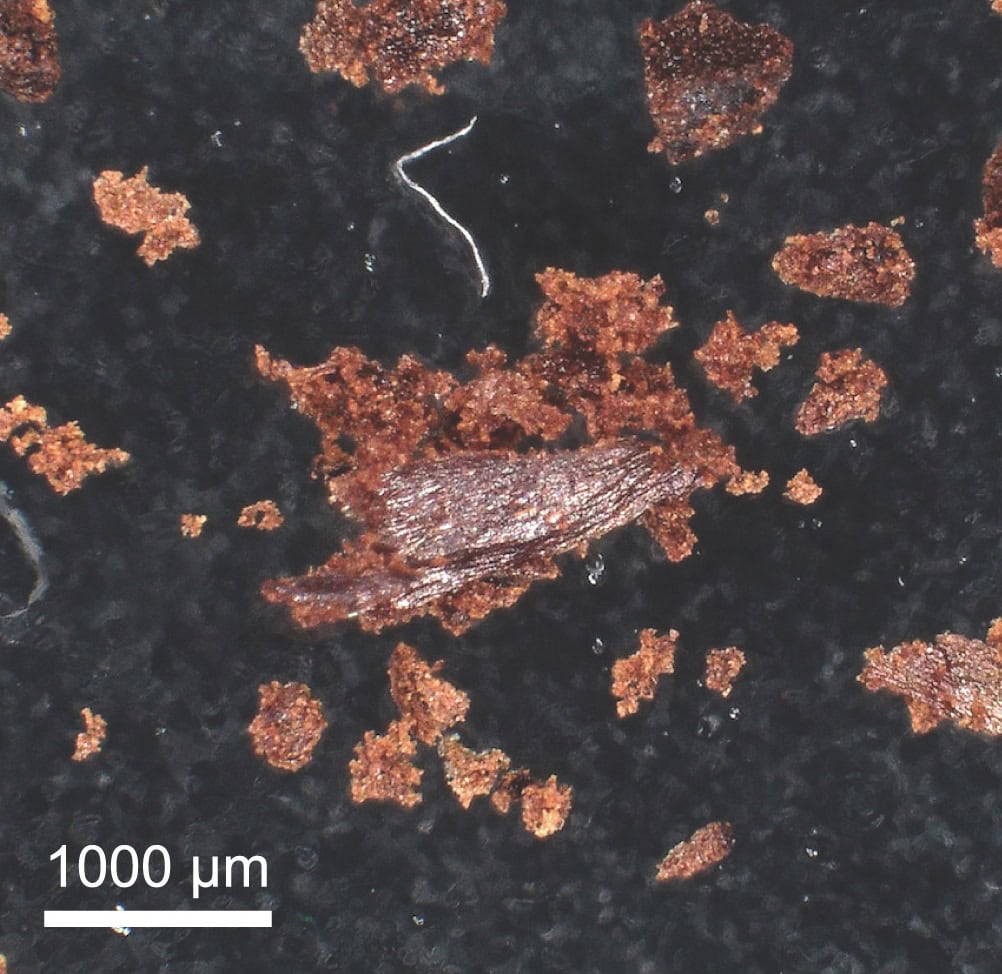
According to Hendon, the more times you fragment your coffee, the more static electricity you generate. “You’re making lots of small particles when you grind finer, but they clump together to form an aggregate [because of static], which is effectively impermeable to water,” he adds (figure 3).

3 Caffeinated static

Microscope image showing clumps of coffee have formed aggregates
(CC BY NC Matter 7 266)

A team of scientists including coffee expert Christopher Hendon found that pores in a coffee puck clog if the coffee is ground too finely. After teaming up with volcanologist Joshua Méndez Harper, he discovered this was due to the grinding process introducing static charge, which caused the coffee to form aggregates, like those shown, that blocked water flow.

The solution, the researchers found, is to squirt a little bit of water on the beans before you grind them. “That totally suppresses the static accumulation,” Hendon says. Wetting whole beans with less than 0.05 ml of water per gram of coffee – or about 0.5 ml for an average espresso shot – resulted in a marked shift in particle size distribution by preventing clump formation.

But again, the coffee experts got here first. In the coffee industry, this is known as the Ross droplet technique and was anecdotally thought to reduce static charge, even if the physics wasn’t well understood. Pabst says that a lot of the recent findings “are not necessarily newer ideas, they are validating what we have taught in the industry for many years”. But he describes it as an exciting time, with science providing deep insight into industry knowledge.

Moisture content of the beans is another key variable, Hendon’s team found, with drier, darker roasts charging most strongly and therefore benefiting most from pre-wetting. The researchers also found that the right amount of water results in near-zero grounds being retained by the coffee grinder, again due to the reduced static charge.

They note that their findings have implications for waste reduction and drink quality. Hendon says that adding water during grinding allows you to reduce coffee mass by about 25%, while maintaining espresso concentration.

Pour-over science

Coffee is not just espresso.

Among the myriad of coffee-making techniques available, pour-over coffee is increasingly popular with enthusiasts due to its reputation for being better able to extract the unique characteristics of different coffee beans. A popular set-up uses a conical filter or “dripper” containing a filter paper, and the process is simple – you put coffee grounds in the filter, pour in hot water, and let the coffee drip out into a cup. There is a wealth of variables – such as grain size, water temperature and water speed – that allows whoever is holding the kettle to experiment and vary the process.

Pouring water from a small black kettle onto coffee in a filter over a glass jug
Drip drip drop Pour-over coffee allows the brewer to experiment with variables such as water temperature and grind size. (Courtesy: iStock/ArtRachen01)

However, Arnold Mathijssen, a physicist at the University of Pennsylvania, has been studying exactly how they should be pouring that kettle (Physics of Fluids 37 043332).

As with an espresso, the challenge is to bring the water into uniform contact with every particle in the coffee bed. If the stream is too slow, for instance, it might run to the edges of the cone, flow through the filter paper and drain away without touching the grains in the centre.

To investigate how pouring technique affects this, Mathijssen and colleagues used a transparent glass cone similar in shape to a popular pour-over filter, and ultrathin filter paper. They then filled it with silica gel particles as a transparent model for coffee grains, and illuminated the set-up with a laser sheet while filming it with a high-speed camera.

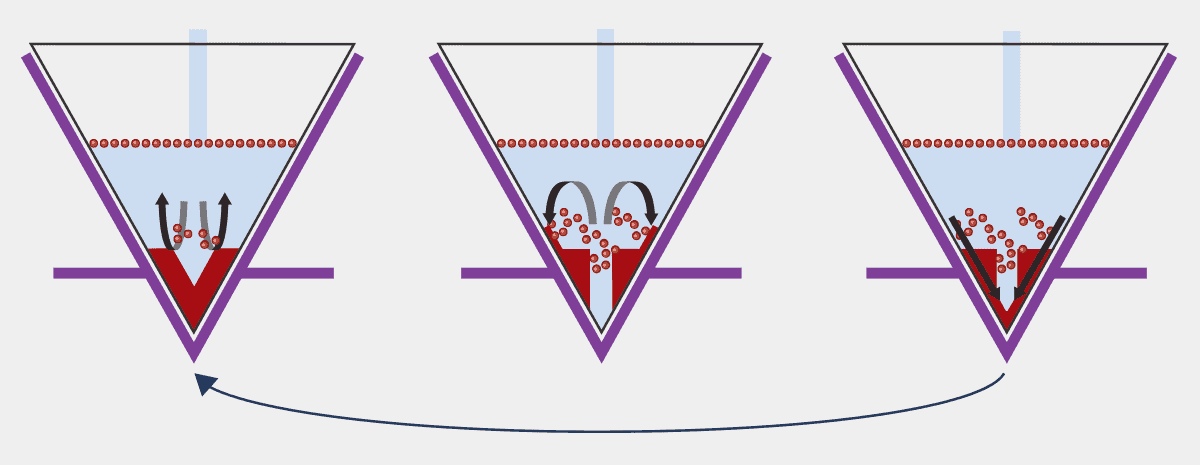
The experiment revealed the importance of pour height for a static kettle. Pour from close range and the slow stream fails to effectively disturb the coffee bed. Lift the kettle to around 20 cm above the filter and something different happens. “We found that as you increase the height of the kettle this kind of avalanche dynamic emerges,” describes Mathijssen.

The increased energy in the stream enables it to dig deep into the coffee bed, suspending the particles and creating a hole in the middle. Particles around the side then slide into the centre and are themselves suspended, establishing a recirculating vortex (figure 4).

4 Avalanche dynamics

Three diagrams of water moving through coffee in a filter
(Reused from Phys. Fluids 37 043332. By permission of AIP Publishing.)

The stages of coffee grinds moving in a pour-over coffee set-up. First, a water jet starts to erode the coffee bed, causing the granules to become suspended and mixed into the water (left). These then accrete outwards towards the edge of the coffee bed (centre). The movement of granules from the bottom to the top edge causes the bed to collapse inwards (right), and the entire process repeats while the water jet continues.

“Every single particle in that cone is moving up and down through this vortex, so you get very nice and even extraction,” explains Mathijssen. “All of the particles see the water for an equal amount of time.”

But go too high, above about 30 cm, and surface tension breaks the stream into droplets – a process known as the Rayleigh–Plateau instability. The drops fail to dig deep into the bed, so the vortex does not form and coffee extraction falls. There is a sweet spot at a height of around 15–20 cm, Mathijssen says.

When the researchers switched back to coffee, they found that higher pours did indeed create stronger coffees with more total dissolved solids.

One cup at a time

These studies highlight a common theme. Decent coffee extraction is about creating uniform fluid contact with a porous medium that tends to be heterogeneous. And if it goes wrong, it is probably due to some failure of that uniformity.

As climate change squeezes yields and pushes prices higher, the coffee industry faces growing pressure to do more with less. Physics cannot protect vulnerable growing regions from drought and rising temperatures, but its insights can ensure that coffee is not wasted in the final seconds or minutes by a poorly prepared puck, a clumped grind or a lazy kettle lift.

“The best thing we can do,” says Hendon, “to be good custodians of any agricultural product is figure out how to use less of it so that more people can enjoy it.”

The post Coffee with a splash of physics: how to make the most out of your brew appeared first on Physics World.
  •  

Invisible force of nature: what the wind does for us

In recent years the news has been dominated by devastating hurricanes, cyclones, tornadoes, wildfires and floods, and data show that these hazardous events are increasing in frequency and strength. It is clear that our weather is becoming more extreme, with a warming world adding more energy to the atmosphere and increasing the power of these wind-fuelled events.

With this in mind, Simon Winchester’s opening question in The Breath of the Gods: the History and Future of the Wind might surprise readers: are Earth’s winds slowing down? There was, indeed, a decrease in wind speeds over land between the 1980s and 2010, which was ominously dubbed the Great Stilling. In fact, observations show a decrease in average wind speeds over land of between 5 and 15% over the last 50 years. So what is going on?

Winchester – a writer and journalist with a background in geology – starts his quest to discover more atop the windiest place in the world, the summit of Mount Washington. With delicious irony, he finds the anemometers are still and a very rare calm hangs in the air.

He goes on to build the case for exceptional weather becoming the norm. He covers recent examples of extreme wind events, such as the exceedingly hot and dry Santa Ana winds of January 2025, which fed the dramatic and devastating wildfires that ripped through suburbs of Los Angeles; the record-breaking storms that pounded Europe during 2024 and 2025; and the freak tornado in March 2023 that killed 17 people and razed the town of Rolling Fork, Mississippi, to the ground.

Ever-present element

This book isn’t simply a tour of wind-related disasters, however. Winchester takes us back through thousands of years of human history, to explore how wind influenced some of the earliest civilizations. The first recorded mention of the wind arose 5000 years ago and comes from the ancient kingdom of Sumer (now south-eastern Iraq). People there identified four different prevailing winds and attributed their characteristics to four different gods. This classification system persists to this day, with our familiar north, east, south and west winds originating from these mythological four Mesopotamian winds.

For much of history humans have made use of the wind: from propelling pioneering populations in tiny boats across the Pacific Ocean some 5000 years ago, to enabling human flight; from milling grain and pumping water with windmills, to using them to generate energy. But it is only in more recent times that we have started to map and understand the major winds on our planet and the role they play in making it habitable.

Winchester romps through the science. We learn how the wind has pummelled, shaped and moulded the Earth since time immemorial, and how the winds work in tandem with the oceans, constantly transporting energy from equator to poles and preventing the planet from overheating. He also introduces key characters along the way, such as Brigadier Ralph Bagnold, a British army engineer. Bagnold used wind tunnel experiments and his extensive desert experience to understand the physics of windblown grains and the circumstances that create everything from tiny ripples in sand, to mighty marching barchan dunes.

Not quite blown away

But it is when the wind works against us that its might is truly revealed, and Winchester devotes an entire chapter to inclement winds. He starts by transporting us into the wretched five years of the American Great Depression in the 1930s, when terrible dust storms tore the topsoil from the prairie states of Oklahoma, Texas, Kansas, Colorado and Nebraska, resulting in starvation and mass migration. We hear how the arrival of the settlers and farming technology triggered this tragedy, with steel-bladed ploughs ripping through the soil and tearing up the grasses that had previously glued the soil to the land.

However, this is a tale that ends well, with President Roosevelt taking sound advice and devising an audacious plan to fix it. As a result, some 220 million trees were planted in a series of windbreaks stretching from the Canadian border down to central Texas. These restored prosperous and stable farmland to the American Midwest, and survive to this day.

Writing a book about this invisible force of nature could be stuffy, but Winchester brings his trademark curiosity and storytelling to the fore. He whisks readers through history and around the world, inserting himself into the story and pulling out the human impacts that bring the topic alive.

But while it’s a thoroughly enjoyable read, The Breath of the Gods lacks a thread to hold the book together. And most frustratingly, it fails to really return to answer the opening question about what’s behind the slowing winds. I would have liked a bit more science – particularly in understanding the impact that climate change is having on the wind – but for those looking for an accessible read with lots of fascinating weather anecdotes to regale friends with, this book won’t disappoint.

  • 2025 William Collins 416pp £25hb £11.99ebook

The post Invisible force of nature: what the wind does for us appeared first on Physics World.

  •  
❌