Built to allow up to 52 guests to explore the frozen wilderness of Alberta’s Jasper National Park in serene, environmentally responsible silence, the new Electric Ice Explorer joining Pursuit Banff’s Columbia Icefield Adventure fleet is a machine that’s packed with firsts.
Prime Minister Mark Carney's government in Canada is accelerating a proposal to criminalize certain biblical passages as part of an anti-hate speech initiative. This move has raised concerns about free speech and perceived attacks on traditional Christian morality, as critics warn of broader authoritarian implications.
A recent fossil discovery in Canada is reshaping scientists’ understanding of early animal evolution.
Deep in the Canadian Northwest Territories, researchers from the American Museum of Natural History and Dartmouth College have uncovered more than 100 fossils belonging to the Ediacaran biota, a group of soft-bodied organisms that lived over 500 million years ago.
The new finding suggests evolutionary developments such as movement, sexual reproduction, and complex body structures appeared millions of years earlier than previously thought.
The Ediacaran Period, which lasted from about 635 to 538 million years ago, marks an important stage in Earth’s history when multicellular life first became widespread. Before then, life mainly consisted of microscopic organisms.
The newly discovered fossils give scientists a closer look at this complex transition from simple microbial life to large, complex marine animals.
Found in the Mackenzie Mountains (traditional lands of the Sahtú Dene and Métis peoples), scientists researching the area discovered fossils belonging to the White Sea assemblage, a group of Ediacaran organisms previously found only in Europe, Asia, and Australia.
A First-of-Its-Kind Discovery in North America
What makes the discovery even more impressive is the age of the fossils. Some scientists estimate the specimens are about 567 million years old, making them 5–10 million years older than any previously known White Sea fossils. The time overlap with the Avalon assemblage points to communities that existed earlier than researchers suggested.
Among the most important fossils found was Dickinsonia, a flat, oval-shaped organism believed to move across the seafloor while feeding on bacteria and algae. Scientists consider it one of the earliest animals capable of movement. Another fossil, Funisia, provides the oldest known evidence of sexual reproduction. This is a tubular organism that releases sperm and eggs into the water during reproduction.
A fossil of Dickinsonia, a flat organism that moved around on the sea floor, lacking a mouth and instead absorbing bacteria and algae through its entire bottom surface
“For 3 billion years, life on Earth was dominated by microbes,” said the study’s lead author, Scott Evans, in a statement. “Then, all the sudden, we get these strange-looking marine animals big enough to see and capable of behaviors we would find familiar today.”
Evans, who is the assistant curator of invertebrate paleontology at the American Museum of Natural History, also emphasized the site’s importance in advancing understanding of the changes organisms were undergoing during this period in our planet’s deep history.
“If we want to understand this transition, when life first became large, complex and unmistakenly animal, this new site has tremendous potential,” Evans said.
Researchers also uncovered Kimberella, an organism thought to be an early relative of mollusks. It has a muscular foot used for scraping food from the ocean floor and could be the oldest known bilaterian. Another interesting fossil is the Eoandromeda, which may be an ancient comb jelly with eight spiral arms.
“Not only is this new site highly diverse, but also it is from a part of the rock succession where we have previously lacked fossil remains,” said study co-author Justin Strauss, an associate professor of Earth and Planetary Sciences from Dartmouth. “This is really exciting. Given our understanding of the regional geology in northwestern Canada, there is great potential here to revisit our understanding of Ediacaran Earth history.”
The fossils also challenge assumptions about where early animals first evolved. Scientists had previously believed shallow coastal waters were the main environment for early animal life. However, the Canadian fossils suggest otherwise, indicating that these organisms lived in deeper marine settings.
Evans believes the results “suggest a pattern where evolutionary innovation begins in deeper environments and later spreads toward the coast.”
“We think of the deep ocean as a dark, inhospitable place, but it is also relatively stable, with few fluctuations in things like temperature and oxygen essential to most animal life,” Evans said. “This stability may have provided key opportunities to support early animal life.”
Chrissy Newton is a PR professional and the founder of VOCAB Communications. She currently appears on The Discovery Channel and Max and hosts the Rebelliously Curious podcast, which can be found on YouTube and on all audio podcast streaming platforms. Follow her on X: @ChrissyNewton, Instagram: @BeingChrissyNewton, and chrissynewton.com. To contact Chrissy with a story, please email chrissy @ thedebrief.org.
A remarkable archaeological discovery in Canada is offering new insights into North America’s early Indigenous civilizations, challenging long-held ideas about early human settlement.
Unearthed near the vicinity of Sturgeon Lake First Nation, archaeologists say the remains of an 11,000-year-old settlement could represent one of the earliest Indigenous habitation sites ever found in North America.
The discovery, according to researchers at the University of Saskatchewan, was made along the North Saskatchewan River, approximately 5 kilometers north of Prince Albert.
While an abundance of archaeological evidence from this period in North American prehistory exists, the discovery of habitation sites from such early periods in the continent’s deep history is much rarer.
Evidence at the site now suggests the presence of more highly organized societies in the region at the time, pushing back the timescales for such discoveries and challenging past ideas about some of the earliest human settlements from the period.
A Chance Discovery
Echoing many of history’s most important archaeological discoveries, the North Saskatchewan River site was first located by Dave Rondeau, an avocational archaeologist who had been surveying the area and spotted artifacts exposed by an eroding portion of the riverbank.
For Rondeau, it was a surprising—and deeply exciting—moment of discovery.
“I saw the layers of history peeking through the soil,” Rondeau said about the discovery, adding, “I felt the weight of generations staring back at me.”
“Now that the evidence has proven my first instincts, this site is shaking up everything we thought we knew and could change the narrative of early Indigenous civilizations in North America.”
The unprecedented discovery was made along the North Saskatchewan River, approximately five kilometers north of Prince Albert (Image Credit: Sturgeon Lake First Nation)
Earlier this year, a meeting at Sturgeon Lake’s Cultural Center between archaeologists from the University of Saskatchewan and council leaders with Sturgeon Lake First Nation discussed the importance of the discoveries at the site. Primarily, rather than a hunting camp used only seasonally, evidence suggests the site discovered by Rondeau was a long-term settlement.
Among the evidence supporting this conclusion is the presence of charcoal layers indicating fire management, which the University of Saskatchewan research team says aligns with oral traditions from the region.
Dr. Glenn Stuart from the University of Saskatchewan said the site’s amazing state of preservation has been game-changing for him and his colleagues.
“This discovery challenges the outdated idea that early Indigenous peoples were solely nomadic,” Dr. Stuart said in a statement. “The evidence of long-term settlement and land stewardship suggests a deep-rooted presence,” Stuart added.
However, according to Stuart, there could also be a few controversialimplications for the discovery.
“It also raises questions about the Bering Strait Theory,” Stuart said, a possibility that he says could offer additional support for “oral histories that [say] Indigenous communities have lived here for countless generations.”
Oral Traditions Confirmed
Such oral traditions from the region have long maintained that the region’s earliest inhabitants thrived here, and that the area was strategically significant for early trade and prehistoric culture.
Chief Christine Longjohn called the discovery “a powerful reminder that our ancestors were here, building, thriving, and shaping the land long before history books acknowledged us.”
Longjohn said that, despite such a deep presence being conveyed in oral traditions over time, this knowledge had been largely overlooked previously.
“For too long, our voices have been silenced, but this site speaks for us, proving that our roots run deep and unbroken,” Longjohn said.
Presently, the Âsowanânihk Council hopes to continue efforts to preserve the site alongside archaeologists from the University of Saskatchewan and the University of Calgary, and plans for the construction of a new interpretive center at the site have been put forward. Additional protective measures to ensure the site is not endangered by logging or other activities are also being undertaken.
For members of the Indigenous community like Longjohn, the site is more than just a window to Canada’s ancient history: it offers a direct connection to the ancestry of Canada’s First Nations residents.
“It carries the footsteps of our ancestors, their struggles, their triumphs, and their wisdom,” Longjohn said.
“Every stone, every artifact is a testament to their strength,” she added. “We are not just reclaiming history—we are reclaiming our rightful place in it.”
Micah Hanks is the Editor-in-Chief and Co-Founder of The Debrief. A longtime reporter on science, defense, and technology with a focus on space and astronomy, he can be reached atmicah@thedebrief.org. Follow him on X @MicahHanks, and at micahhanks.com.
Pacific Palisades, Calif., on Jan. 7, 2025. Fires in the Los Angeles area last year burned at least 90 square miles, killing at least 31 people and displacing more than 150,000.
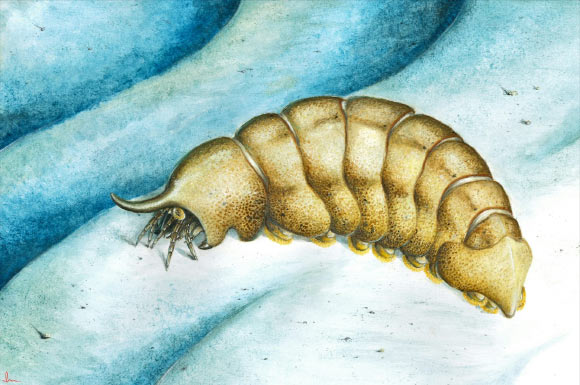
A new species of corcoraniid arthropod that lived during the Furongian epoch, between 497 and 487 million years ago, has been identified from an exceptionally preserved specimen found near Québec, Canada.
Monday would have been Aimee Walton’s 25th birthday. But in 2022, the lover of music and art from Southampton took her own life after being groomed by another user on an online forum that glorified and enabled suicide. On Friday, 3,500 miles away, the man who sold her a toxic substance pleaded guilty in a Canadian courtroom to his part in 14 other fatal poisonings.
Kenneth Law, 60, is linked to at least 131 deaths worldwide, after using a collection of digital storefronts to target vulnerable youth. Investigators in the province of Ontario say Law shipped more than 1,200 packages – many containing a toxic substance – from his local post office to people in more than 40 countries; the vast majority went to the United Kingdom and the United States.
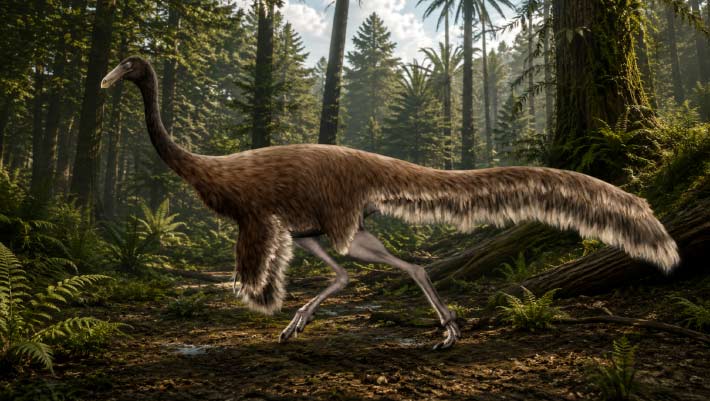
Paleontologists in Canada say they have recovered a dinosaur tail vertebra from 75- to 80-million-year-old marine rocks on a small island off the coast of British Columbia, providing the clearest evidence yet that bird-like ornithomimosaurs once roamed the ancient Pacific coastline of North America.

 Login
Login