It’s four in the morning and you wake from a dream. It wasn’t a nightmare exactly, but it was vivid and unsettling—a circus of imagery in which the other commuters stuck in gridlock beside you were all octopi or your feet were transformed into a pair of horse hooves while going through airport security.
Maybe you don’t often remember your dreams but this one, this episode that fused the mundane with the outlandish, it sticks. Even days later, you can still see those tentacles gripping the steering wheels or feel the awkwardness of your gait running to catch your flight.
It couldn’t have been that joint you smoked before bed, could it? Science says maybe.
How weed effects sleep cycles
Reports of vivid dreams are “very well known” in cannabis and neuroscience research, says Andrew Kesner, assistant professor of psychology at Indiana University in Indianapolis. But “we still don’t really know the neurobiology of dreaming and what sort of features make you remember your dreams better or worse.”
Cannabinoids are found naturally in the brain in a non-psychoactive form called endocannabinoids. Endocannabinoids control our sleep/wake cycle, aka our circadian rhythms, by modulating and maintaining the brain’s biological balance through an abundant receptors neuroscientists call CB1.
“When people fall asleep, the brain makes its own cannabinoids that increase and decrease throughout the sleep-wake cycle, and throughout the day,” explains Kesner.
Marijuana contains a different form of cannabinoid than the one naturally produced by the brain, THC or tetrahydrocannabinol. THC also works on the brain’s CB1 receptors but, unlike endocannabinoids, it is psychoactive, meaning it makes users feel high by producing feelings like euphoria and paranoia.
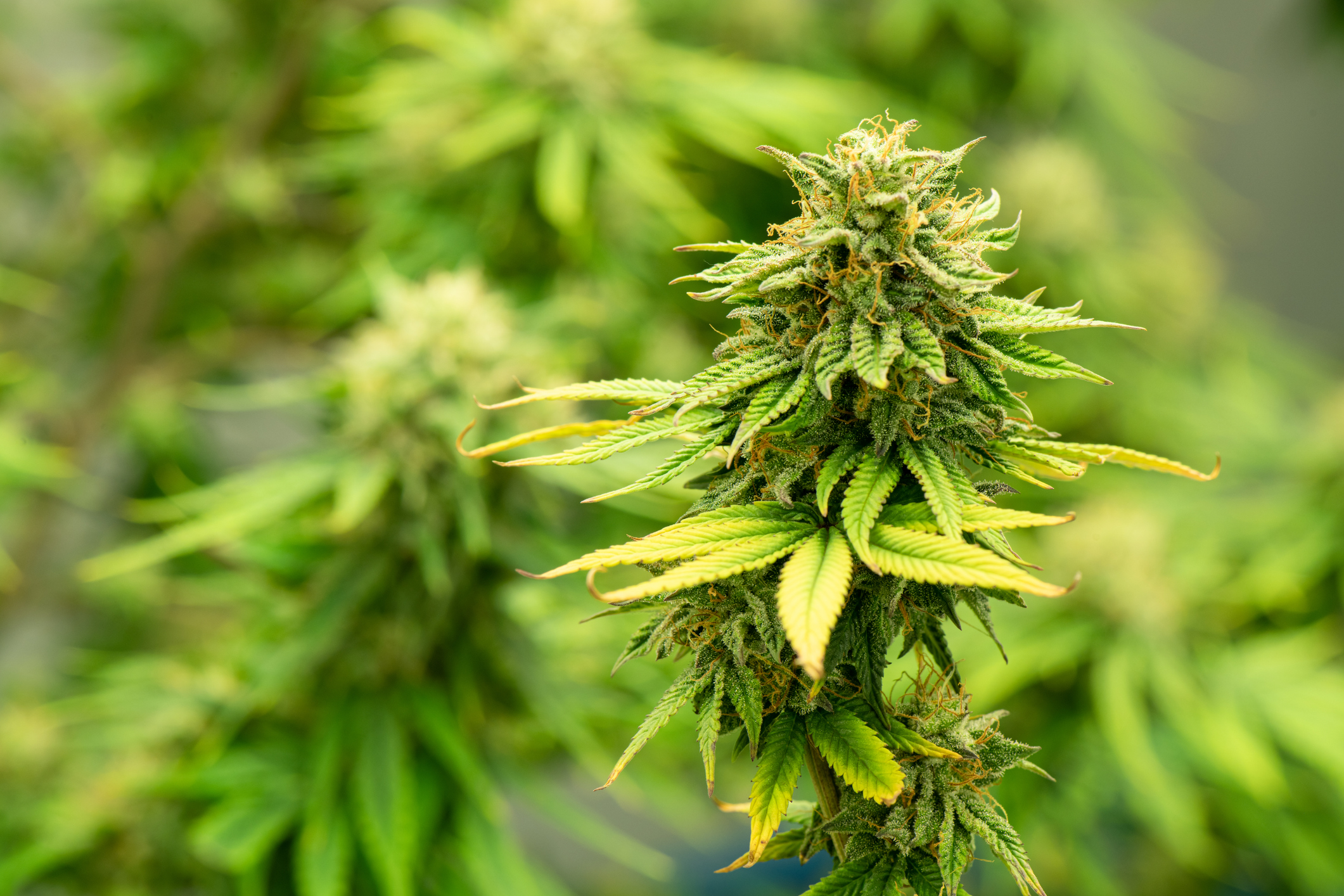
Blooming cannabis plant ready to be harvested into various THC-based products. Image: Sunan Wongsa-nga / Getty Images Sunan Wongsa-nga
When you smoke weed before bed, the THC added to the brain’s natural endocannabinoids sends the brain’s CB1 receptors into overdrive. And when those CB1 receptors are in overdrive, they change the way you sleep.
Natural sleep in healthy adults begins with a short period of nodding off followed by a stage of “slow-wave” sleep, that deep sleep from which it’s hard to wake someone up. Cycles of lighter sleep punctuated by bouts of REM (rapid eye movement) sleep follow, growing longer and longer throughout the night.
“REM sleep is classically the time when you’re dreaming,” says Kesner, when “your brain acts like it’s awake but the brain stem paralyzes your body so you can’t act out your dreams.”
Consuming THC appears to suppress REM sleep: It causes it to arrive later in the sleep cycle and to make up less of the overall percentage of sleep. THC also causes more frequent interruptions to REM sleep. That, says Kesner, may be the origins of its reputation for causing weird dreams.
“We know if you wake someone up in REM sleep, that’s when they have the highest chance to remember their dreams,” he explains. So, while there’s no evidence that dreams under the influence of THC are any different than THC-free dreams, the ability to remember them more easily may make the sleeper believe they are more bizarre or intense.
“It’s possible that the THC could be making dreams more intense by changing cortical activity [the way the brain functions], making them wonkier and maybe adding some variability to what you’re dreaming about,” Kesner continues. But the huge variability among individuals in both sleep and the effects of THC use makes objectively studying weed-induced dreams “kind of a nightmare”—pun not intended.
Researchers still don’t even know exactly what dreams are or why they happen—though there’s a good chance that it may be the brain coming up with different learning scenarios, according to Kesner. Someone who plays with puppies all day may, for example, dream that night about being chased by wolves. That way, if it ever happens in real life, the dreamer is better prepared to react to them.
Whether the weed was smoked or taken in edible form is probably also important; THC immediately affects the brain when smoking while edibles take time for the body to metabolize. One study in which participants reported weird dreams after smoking weed before bedtime, therefore, may have had to do more with the way REM sleep “rebounds,” or immediately returns to longer and more robust natural cycles, when the brain experiences THC withdrawal than with THC’s psychoactive effects.
It’s well documented, says Kesner, that chronic THC users experience more intense REM sleep after they stop using it. The same might happen in occasional users, whose REM sleep could theoretically become more intense as the acute effects of weed wears off during the night. In other words, you don’t sleep as well while weed’s psychoactive THC is bouncing around your brain but it becomes much more restorative as soon as its effects wear off.
Ultimately, there probably is no “one-size-fits-all for what cannabis does to sleep or how it affects dreams,” Kesner concludes. As of now, there’s simply not enough data to come to any meaningful verdict. THC or not, dreams are, by their very nature, weird.
In Ask Us Anything, Popular Science answers your most outlandish, mind-burning questions, from the everyday things you’ve always wondered to the bizarre things you never thought to ask. Have something you’ve always wanted to know? Ask us.
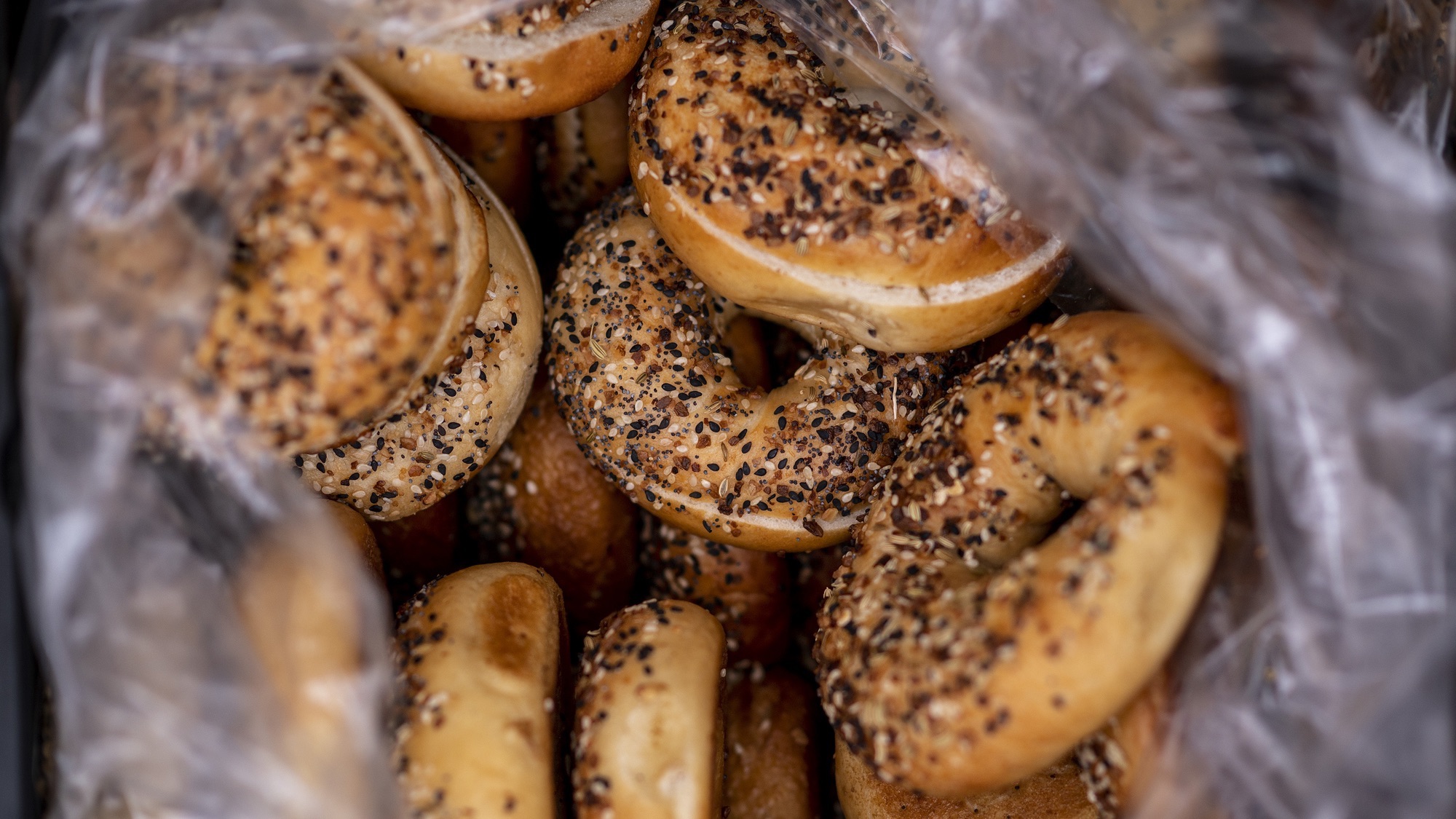
The opium poppy (Papaver somniferum) has a weird double life. The plant’s seeds give a tasty, nutty flavor to bagels, breads, and cakes in bakeries around the world. But the plant’s seed pods also give the class A drug heroin its numbing and euphoric effects.
That’s because the seed pods exude a milky substance called latex, which is rich in natural chemicals called opiates, such as morphine. Dried-out poppy latex is called opium, and the chemicals it contains can be used as medical-grade painkillers or processed to make street drugs like heroin.
This doesn’t mean that your next deli bagel is going to send you into a stupor, because processed poppy seeds are carefully washed of any residual latex. But the washing process isn’t so thorough as to remove all traces of opiates from your body. Here’s why anyone in a job that requires random drug tests should try their next bowl of porridge without adding any black little poppy seeds.
Processing a poppy plant
The round structure that sits on top of a poppy plant’s stem is called a capsule. This is a pod that contains hundreds of tiny poppy seeds. The plant produces opiates, like morphine, codeine, and thebaine, within the capsule to help it grow. These are contained in the milky latex, which will drip from the pod if it’s broken or cut.
A single poppy pod typically holds hundreds of tiny poppy seeds. Video: Poppy Seed Harvest!, @Freedom_Flare
During harvesting, poppies that have died and dried out are mechanically harvested, removing the above-ground portion of the plant. Crushing, sieving, or other cleaning techniques separate the seeds from the seed capsules. The seeds that later end up on our bagels and breads are washed seeds, meaning they are carefully cleaned after being separated from their seed capsules to remove any opiate-containing latex.
Urbah Viqar, a doctor at Central and Northwest London NHS Foundation Trust, says that if you eat “one to two teaspoons” of poppy seeds, then you could return a positive opiate result. Given that some poppy seed bagel recipes recommend sprinkling a teaspoon of seeds on a single bagel, these breakfast treats should be treated with caution if you might be tested for drugs.
But this isn’t the whole story. If you eat unwashed poppy seeds, the effects are radically different.
Yes, you get high off unwashed poppy seeds
In 2023, Viqar heard reports that men were reporting to their family doctors complaining of constipation. These patients, mainly from the local Indian Punjabi community, weren’t blocked up by a lack of fiber. Instead, their symptoms were a consequence of their unwashed poppy seed addiction.
Viqar explains that in some communities, unwashed poppy seeds have been a traditional remedy for generations. Without washing, the seeds retain the opiate-rich latex released during harvesting. As a result, consuming them can make you feel sleepy and relaxed.
But opiates are, of course, highly addictive. Viqar and her colleague Noah Stanton, who is also a doctor at Central and Northwest London NHS Foundation Trust, wrote a review summarizing the cases of 16 men, nearly all from the Indian Punjabi community, who had become addicted to unwashed poppy seeds.
“They start with a very small amount, maybe they’re just taking half a teaspoon,” explains Viqar. Many of the men would grind the seeds and consume them as a dry powder, or mixed with water, or brew them as tea.
The effects of the unwashed seeds are milder than a powerful opioid like heroin, but that made the patients’ addiction more “insidious,” says Stanton. “It took place over a much more gradual time period,” he adds. The unwashed seeds produce a drowsy, sedative effect.
But by the time Viqar and Stanton saw them, some of the men had seriously ramped up their poppy habit. Two men, who had each been consuming unwashed poppy seeds for over 15 years, were taking 20 tablespoons of seeds every single day. That dose would contain enough opiates to make someone without a strong tolerance overdose, said Viqar.
An opiate overdose would likely slow breathing until the heart stopped. Viqar wasn’t able to point to any cases she was aware of where people had died from unwashed poppy seeds, but said that there was little research into what a safe limit might be.
“You don’t know how much is a safe amount, how much is a lethal amount,” she explained. Long-term addiction could also impact a patient’s social life and relationships, said Stanton. Several of the men in the study worked with heavy machinery, which tends not to play well with opiate-related drowsiness.
Both Viqar and Stanton said that better regulation was badly needed. Unwashed poppy seeds can be purchased in bulk in the United Kingdom and the United States at low prices. Awareness among clinicians would also help, they added. Drug screening questionnaires regularly ask about alcohol and drug consumption. A new question to add to the list, Viqar says, is “Have you ever used poppy seeds?”
In Ask Us Anything, Popular Science answers your most outlandish, mind-burning questions, from the everyday things you’ve always wondered to the bizarre things you never thought to ask. Have something you’ve always wanted to know? Ask us.
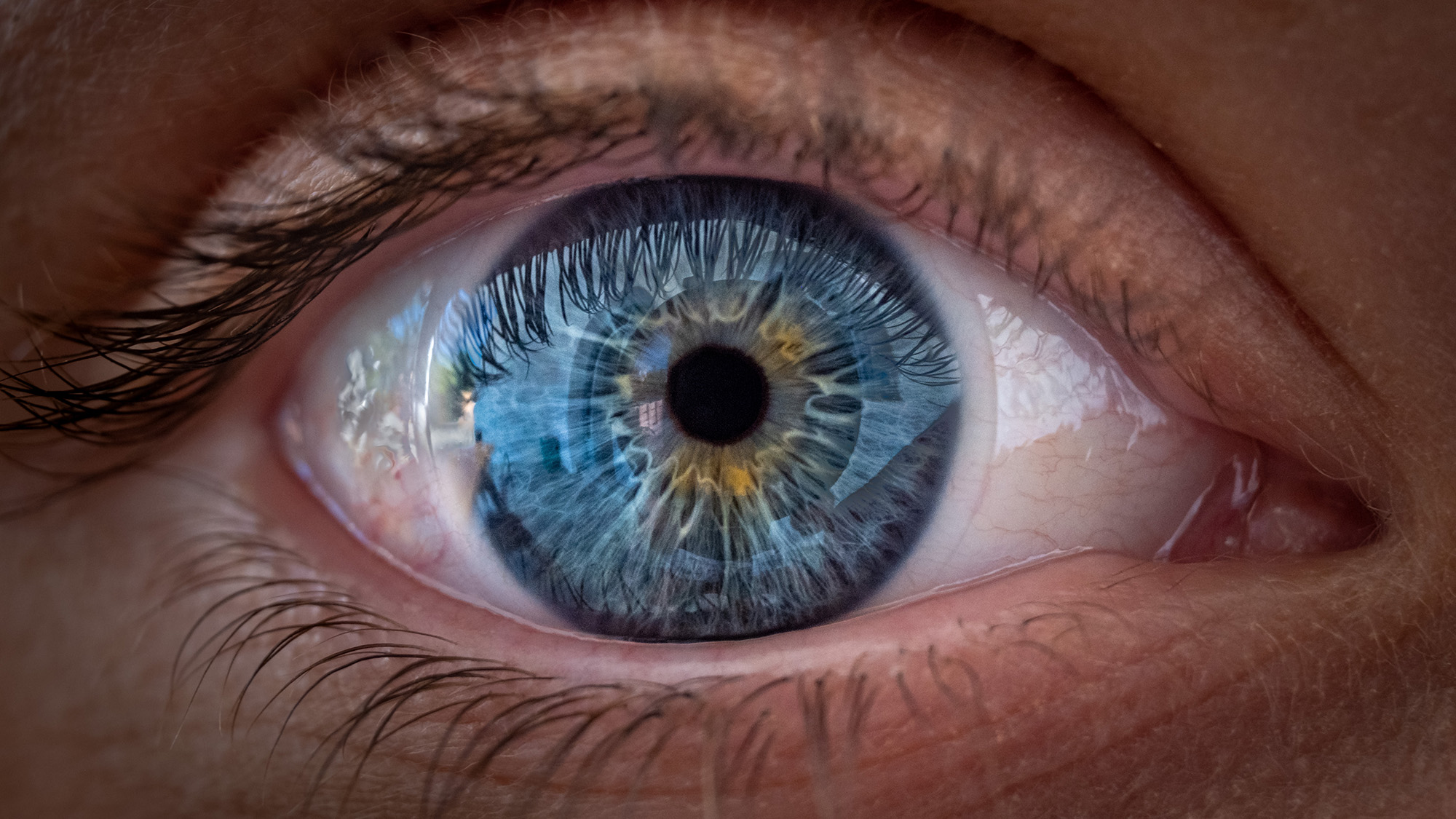
Blue, green, amber: Someone’s eye color immediately attracts our attention. But there’s something unusual about human eyes: We have a large visible area of white that surrounds the iris. Most other mammals have entirely dark eyes with almost indistinguishable pupils. So why are we different? What is the white part of our eyes actually for?
The whites of our eyes help us connect
Scientists paid little attention to that question until 1997, when Shiro Kohshima, a Japanese biologist at Kyoto University, decided to take a closer look. He compared the eyes of nearly half of existing primates and found that only humans had white in their eyes.
His theory was that the white part of the eye (the sclera) helps us communicate because it makes it easier to tell where someone is looking. The contrast between the white sclera and dark pupil makes the outline of the eye more visible. We also have more elongated eyes than other animals, which makes it even easier to tell where someone may be looking.
Following someone’s gaze is surprisingly powerful. It can indicate if they’re telling the truth, draw attention to something, and even help us bond. Language, after all, can be complicated and ambiguous. “It’s important to build up a fast communicative step,” says Fumihiro Kano, a cognitive scientist at Kyushu University in Japan. “White sclera help towards that.”
The cooperative eye hypothesis
In 2007, Michael Tomasello, a psychologist at Duke University, expanded on Kohshima’s earlier ideas to develop the cooperative eye hypothesis. He argued that the white sclera are particularly useful for human collaboration.
For instance, the whites of our eyes help us figure out what someone is focused on. It may even have helped our ancestors hunt together and share resources. Central to his idea was the theory that humans are unusually sensitive to where others are looking.
To test this, he conducted an experiment involving human infants and gorillas, chimpanzees and bonobos. A scientist looked at the ceiling with only his eyes, only his head, or both.
In an experiment, gorillas rely primarily on head movement rather than eye gaze to know where someone is looking. Image: Shutterstock
Human infants primarily followed the eye direction of the scientist. They looked up nearly three times more often when he glanced towards the ceiling using only his eyes than when he just raised his head with his eyes shut.
Apes did the opposite, relying primarily on head movement rather than eye gaze. They looked towards the ceiling roughly 2.5 times more often when the researcher lifted his head but closed his eyes.
Why eye contact is so important for babies
From an early age, humans are particularly sensitive to eye contact. In a study of newborns, within the first five days of their lives, researchers found that babies looked longer at faces whose gaze was directed at them. The ability to actively follow where others look emerges between two and four months, and by eight months it becomes consistent behavior.
“Eye gaze is a natural pointer which makes it easier to understand each other,” says Kano. “If you look at a human infant, then that infant becomes interested in you.”
“The cooperative eye hypothesis taps into the bias of human exceptionalism,” says Perea-García. “That’s why it’s so compelling.” Since Tomasello’s 2007 study that proposed the theory, research has shown there are other primates with white sclera.
Perea-García also points out that, for some people from South Asia, Africa, and Australia, their sclera is not uniformly white but more pigmented. So he argues that it’s not the whiteness of the eyes that’s important for communication, but the contrast between the sclera and the iris. Chimpanzees also have dark sclera with bright irises which could serve a similar purpose.
But this may not be the whole story. While human sclera are not always uniformly white, we tend to show considerably more of the whites of our eyes than most primates and experiments suggest that difference matters.
Kano and his team compared how humans and chimpanzees interpreted images of human and chimp eyes. They found that both species were better able to discriminate gaze direction from humans. They then made both images smaller and darker. Chimp eyes became even harder to read than humans.
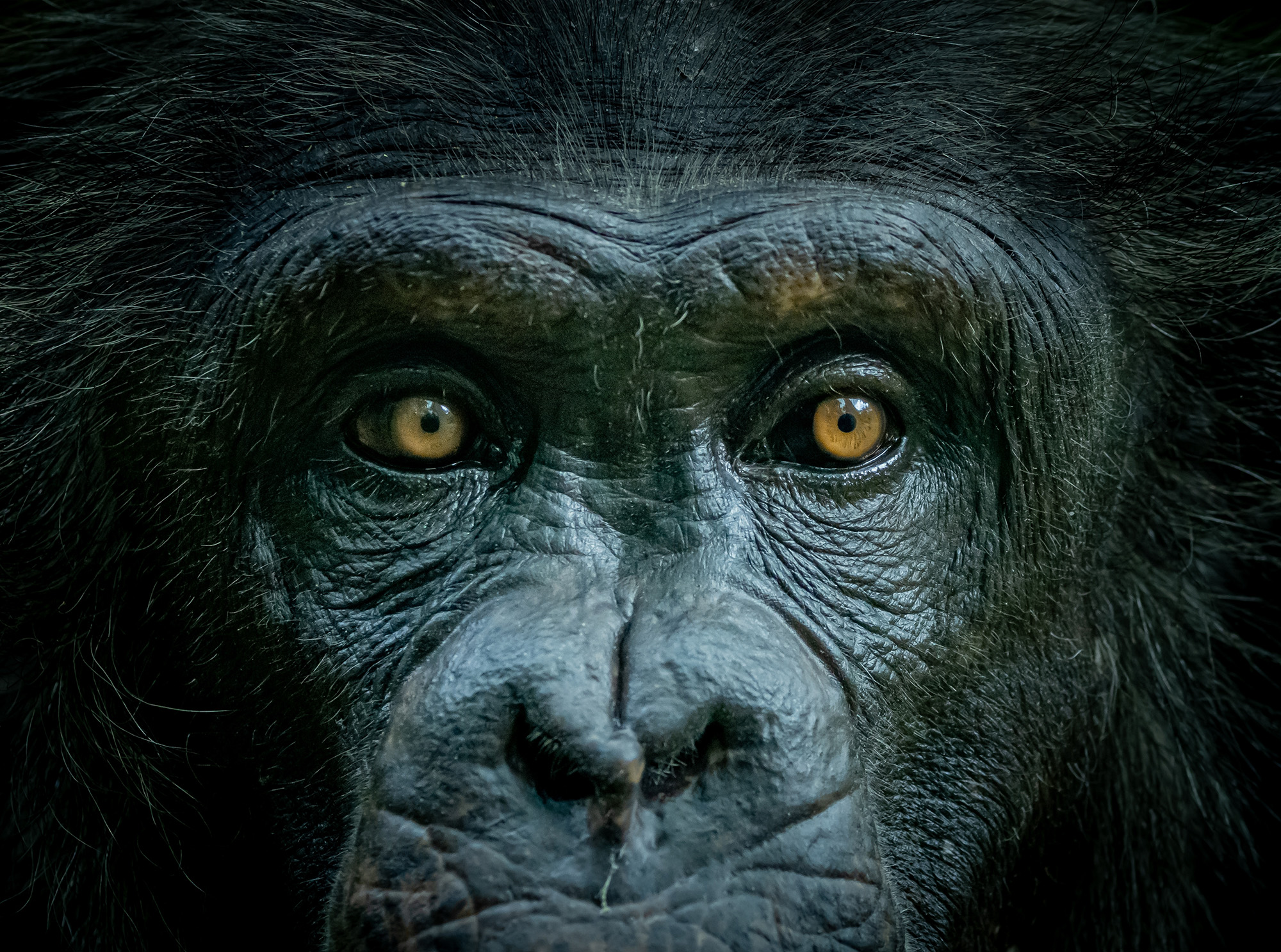
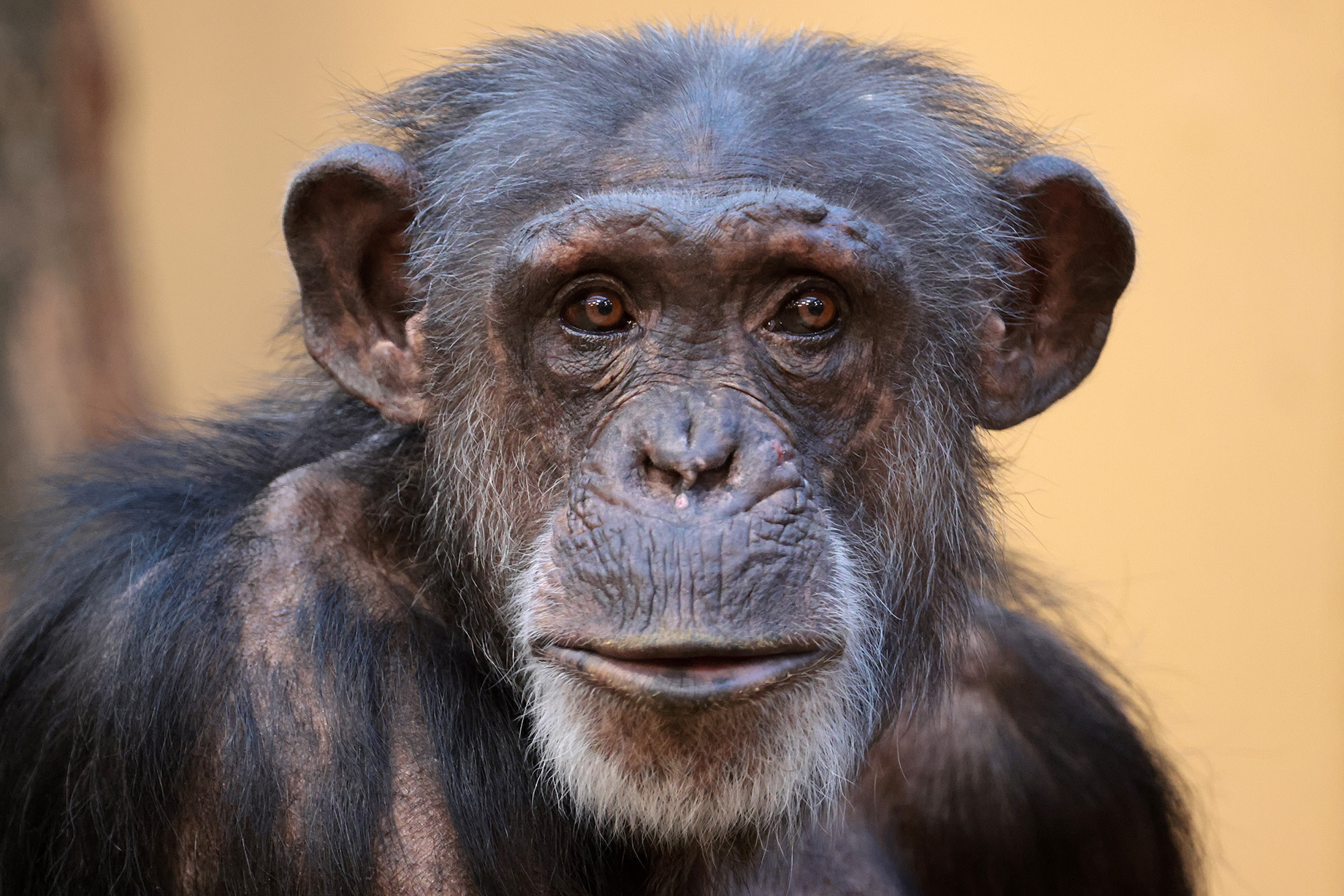
Chimpanzees, one of our closest relatives, have almost no white in their eyes. Image: Shutterstock
The team even digitally altered chimpanzee eyes to have white sclera and found that gaze discrimination immediately improved.
“Our work suggests that gaze visibility depends not only on iris-sclera contrast, but also on the visibility of the overall eye outline,” Kano says. In other words, it’s not just about how well the iris stands out. The white sclera makes the whole shape of the eye more visible against the face, something that’s difficult to discern in the dark eyes of chimpanzees. It’s these features working together that seems to make it easier to follow our gaze direction in poor visibility conditions.
The whites of our eyes also indicate health and age
White eyes may also have another purpose: They make it easier to notice changes in eye color which can indicate significant information about health or age.
As we get older, the whites of the eyes gradually become more yellow or red because of fatty deposits and more blood vessels around our eyes. This shift can occur more rapidly with poor health or diet.
However, if the sclera suddenly changes color, it can signal more serious health problems. Severe yellowing is closely related with jaundice, a failure of the liver to filter blood properly, while acute reddening may indicate an eye infection. A yellow or red sclera also affects how healthy others think you are.
Researchers tested this by digitally manipulating pictures of eyes to be more red or yellow. Individuals with yellow or red eyes were seen as less healthy, older, and less attractive. It’s an immediate frame of reference that shows how much information we get from our eyes.
So, next time you catch the eye of someone across the room and smile, take a second to appreciate the importance of the white in their eyes. Without it, that connection might never have happened.
In Ask Us Anything, Popular Science answers your most outlandish, mind-burning questions, from the everyday things you’ve always wondered to the bizarre things you never thought to ask. Have something you’ve always wanted to know? Ask us.
We’ve all seen the movies. Scientists gear up to chase tornadoes across the Oklahoma plains, competing with each other to get there first. But is the reality of storm chasing anything like the movies? In a new episode of Popular Science’s Ask Us Anything podcast, we ask real life storm chaser, Cyrena Arnold, to untangle fact from fiction and break down what it’s really like to go speeding after tornadoes.
Sarah Durn: It’s a balmy Saturday afternoon in Kansas, and you’re driving along a wide open road. You glance in the rear view mirror and your heart skips a beat. Huge, black storm clouds are building in the sky behind you. Lightning flashes. Thunder rumbles. On the radio, an alert blares. A tornado has been spotted not far away.
As you drive as fast as you can away from the storm, a caravan of 10 SUVs whizzes by. What the heck are they doing? Why would anyone drive towards a tornado?
Little do you know, that caravan is packed with hardened storm chasers, just like Helen Hunt’s character in the 1996 classic film Twister. But is real storm chasing anything like the movies?
Laura Baisas: And hello, I’m news editor Laura Baisis.
SD: Here at Popular Science, we can’t stop thinking about all the world’s strangest questions, and this week, we have a special interview episode of Ask Us Anything delving into all things storm chasing. Woo-hoo. What is it? Who does it? And is it anything like the movies? Laura, you actually interviewed real-life storm chaser and meteorologist Cyrena Arnold for this episode.
LB: I did. Cyrena is the absolute coolest.
SD: Ah, I wanna go storm chasing with her so bad.
LB: Kinda do and kinda don’t. Kind of a little afraid of it, but also if I’m gonna go storm chasing with anybody, I think a seasoned meteorologist is kind of the perfect person to go with.
SD: Yeah, I don’t know. I might get too scared, but the idea of it seems fun.
LB: The idea of it’s great. Sounds great on paper.
SD: Sounds great. And you also wrote a story for Popular Science all about storm chasers, so before we get into your interview with Cyrena, let’s lay a bit of groundwork here. Can you tell us what exactly is storm chasing?
LB: So it’s a term that’s evolved quite a bit over the years, but Hollywood tornado movies basically get a lot of it right.
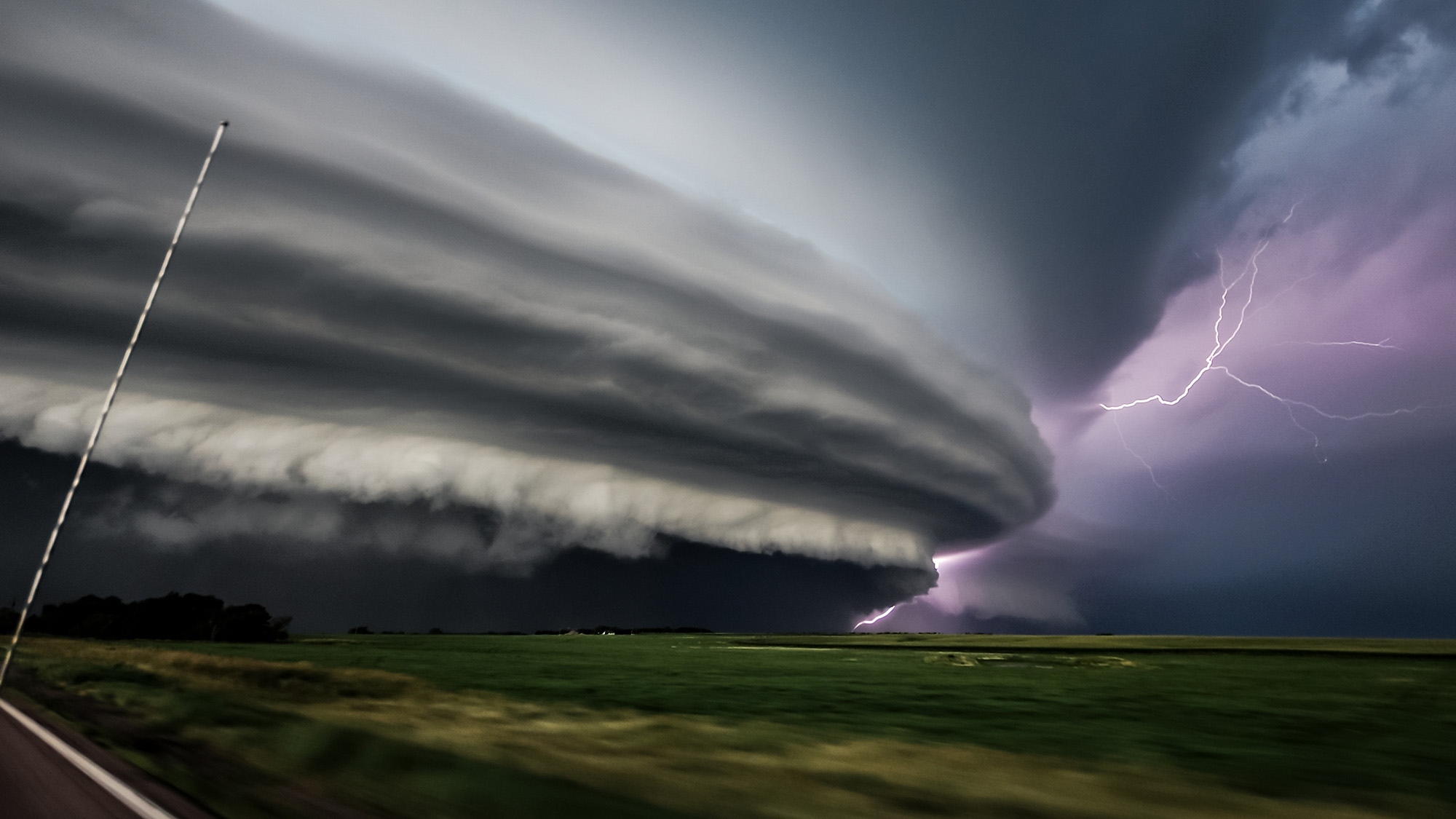
In general, storm chasing means tracking a severe thunderstorm where a tornado is likely to form.
SD: So badass. So where do chasers typically go to track these storms?
LB: It varies, but tornadoes primarily happen here in the United States.
SD: Really, you don’t get tornadoes elsewhere?
LB: You do. While tornadoes happen in China, Canada, and even Australia, nowhere has tornadoes like the good old U.S. of A.
We have by far the most frequent tornadoes, as well as the most dangerous storms.
SD: I don’t know if that’s an award you want.
LB: No.
SD: And when and where do most of these tornadoes happen in the U.S.?
LB: So it can vary a bit. Peak tornado season for the Southern Plains, so that’s Texas, Oklahoma, and Kansas, is from May into early June.
On the Gulf Coast, it’s earlier in the spring, and in the Northern Plains and Upper Midwest—so think North and South Dakota, Nebraska, Iowa, Minnesota—tornado season is more June and July.
SD: And what are chasers actually doing when they go out?
LB: So that’s cool. That all depends on the specific chaser. For a lot of hobby storm chasers, it’s all about getting that great picture or video of a tornado.
SD: Kinda like Glenn Powell’s character in Twisters?
LB: Exactly. So then you have storm chasers with more of a meteorology background. These chasers can collect really important data on these storms, so things like wind speed, direction, precipitation. All of this helps weather forecasters get on-the-ground data that even the most advanced radar might not see.
SD: Okay, so it’s a little more like Daisy Edgar-Jones’s character in Twisters, or Helen Hunt’s character in the original film.
LB: Exactly.
SD: And I imagine the fact that these real-life storm chasers can report things that radars can’t see is really important, right?
LB: Absolutely. Storm chasers in the field can radio back in to the National Weather Service about what they’re seeing, and from there, the Weather Service can issue potentially life-saving warnings.
SD: Wow, so storm chasers are actually saving lives.
LB: Absolutely, and that’s not something I necessarily even realized until I spoke with Cyrena and she talked about how important that is. Storm chasers are able to be the eyes and ears on the ground and help keep people safe.
SD: No pressure.
LB: Yeah, yeah. None whatsoever.
Now, before we get into my interview with real-life storm chaser Cyrena Arnold, we want to hear from you. What questions are rotating around in your brain? Submit your question by clicking the “Ask Us” link at popsci.com/ask. Again, that’s popsci.com/ask, and click the “Ask Us” link.
SD: We’ll be right back with Laura’s interview with a real storm chaser, after this quick break.
LB: And welcome back. Today, we have a very special guest interview. With us is Cyrena Arnold, a meteorologist, author, and host of the Storm Front Freaks podcast. She’s currently based in New Hampshire, where she is the director of product marketing at Atmospheric G2, and importantly, has 20 years of chasing storms.
Cyrena, thank you so much for joining.
Cyrena Arnold: Yeah, you’re welcome.
LB: So first, tell me, how did you get into storm chasing?
CA: Ah, that’s a very good question, and how I got into storm chasing was accidentally storm chasing. So I was born in the southern Caribbean where they don’t even get hurricanes, where the weather is really nice.
And when I was five, we moved to Denver, Colorado, or a suburb of Denver, and all of a sudden one day there was this thunderstorm, and I’d never seen a thunderstorm before, and then there’s hail, and I’d never seen hail before, and there was lightning, and I hadn’t seen that, and then a funnel cloud formed.
LB: Ah.
CA: And it formed a tornado, and the tornado just went across this big field, and I so vividly remember standing in the doorway of my house, looking out at that and going, “Wow.” That’s, that’s cool.
And a switch flipped in me when that happened. And so I just, I just loved weather, and I have really dedicated my entire life to it, you know, all of my education and every science fair project and everything like that.
So I knew I wanted to study severe weather. I knew I wanted to go to the University of Oklahoma, and when you’re out there at the meteorology school. It was wonderful. My first big storm chase was Cordell, Oklahoma, October 9th of 2001, where we saw seven tornadoes. One was a F3 tornado.
LB: Wow.
CA: And that’s the beginning.
LB: And one thing I think, like, me, myself, and anybody that watches some sort of a sci-fi or some sort of fictional take on a very real thing has to wonder: What do the actual scientists think about this portrayal? So can you tell me, what do you think about the Twister films specifically? Are they at all accurate?
CA: Yes and no.
LB: Right.
CA: There are some things about them that are super accurate.
LB: Mm-hmm.
CA: And there are some things about them that are not. I think the, for me, the funniest thing is how successful they are in storm chasing. They make it seem so easy.
LB: Right.
CA: You, you know, we’re out, oh, we’re gonna get in the car, and you drive 30 minutes, and there’s a tornado, and there’s another tornado, and, and no. No. No, no, no, no. The, the real story—
LB: Hmm…
CA: —is that you see a tornado on average about one out of every 10 of your storm chases.
SD: Wow.
CA: So you have a very low percentage rate. And then in order to do that, you’ve gotta forecast this right. You’ve gotta set yourself up in the right place. You’re possibly driving hundreds of miles, and you’re putting in a tremendous amount of time for a couple seconds.
Most tornadoes are very short-lived. They’re small, and there are some bigger ones, but you spend a lot of time and work to be successful, and I’ll go entire years and not see one. That’s probably one of the biggest things is that they just make it look so easy and, and so simple, and it’s not. Some other things that they get right or wrong, there’s always, like, a rivalry, right?
Yeah. Like in Twister, you know, it was Jo and, you know, Jonas and, and they fought. And, in the Twisters movie, same thing, right? You know, these competitive chase teams. This is a hobby that has some of the greatest camaraderie out there, and if you don’t believe me check out a gas station any time you see a whole bunch of storm chasers there.
They’re not fighting in the parking lot. They’re doing stuff together, looking at weather models together. They’re taking pictures together, laughing, joking, playing, like, football together. This is a like, a group thing. And I know when we’re out there with the Storm Front Freaks, we’ll see people that we’ve interviewed on our podcast and that we know and talk to, and you, like, run up to these people and give them hugs and high fives.
You know? You know these people, and we have this common bond.
LB: Yeah.
CA: So there is a lot more camaraderie in it, and very, very little competition.
LB: What about some things if it’s like your group, where you’re going out there and you’re, you’re not necessarily doing pictures and video, you’re doing more research and data.
How is that portrayed in the movies, that side of it?
CA: Yeah. It’s funny because in the movies it seems like everyone’s out there for research purposes. And that’s really cool, and in the 1980s and ’90s, that was absolutely true. Most of the people who went storm chasing were meteorologists. It was for scientific purposes, stuff like that.
Today because of those movies, they’ve made it a lot more popular where a vast majority of the storm chasers that are out there now have absolutely no meteorological credentials. And that’s totally cool. That’s fine as long as you go through a lot of training education, ’cause this is still an, this is an incredibly dangerous thing to be doing.
You can’t just walk out your front door and say, “I’m gonna go chase a tornado today,” or you’re gonna get yourself hurt. So most of the people who are out there are hobbyists. They do it for fun. They’ve taken a lot of chaser education courses and talked with other chasers, and a lot of those people who are doing it for fun or into photography.
They, maybe they want a picture of a tornado. Maybe they want really great storm structure. There are still researchers out there. There are still research projects. You have mobile radar on wheels teams out there with remote mesonet sites, so cars or stations you can move to have weather sensors on the ground, and they are collecting data, and we are still trying to understand how tornadoes form.
And that’s a part of it as well. And then you have the small sliver, fraction of a percent of, let’s just call them YouTuber using yahoos or stuff like that like wanna try to touch a tornado and bring you as close to it as possible, but that’s a real small sliver, so—
LB: Okay.
CA: —storm chasing is an incredibly wide spectrum of what’s out there, and, and I’d say a vast majority of them are out there to witness the beauty of nature and actually don’t have any degree or credentials or education in meteorology at all.
LB: And you mentioned the danger. How dangerous is it really?
CA: That can vary. If you wanna stay back from the storms, and you’re wanting to get storm structure, you wanna see the mammatus, and you wanna see the anvil. Maybe you’re far enough back you can see, like, an overshooting top. That’s, that’s pretty good.
LB: Yeah.
CA: You’ll find yourself okay there. But the hazards aren’t just the tornado. The hazards are downbursts. The hazards are lightning. The hazards are hail. The hazards are flooding, flash flooding. Water and flooding kills more people in weather than all of the different weather perils combined.
LB: Wow.
CA: So flooding is incredibly dangerous.
But if you have properly educated yourself, you understand the storm structure and where these different things are located and understand storm motion and dynamics and thermodynamics—
LB: Mm-hmm …
CA: —it can be done in a relatively safe way.
LB: Have you ever been caught up in a situation that you’ve thought, “Maybe I shouldn’t have gotten myself into this,” or, you know, any, um, dangerous storms?
CA: Absolutely. Absolutely. Uh, I got caught one time in a wet microburst of a storm structure that I didn’t understand, and I have never felt wind and rain like that in my life. I was stuck inside my truck. I couldn’t see anything. It was rocking like I was in a hurricane, and the bed liner in the back of my truck was bowing from how much wind was going through there.
I thought it was gonna pop out and go flying away. My ears popped from this wet microburst. It was crazy.
LB: Mm-hmm. Wow.
CA: I remember when this happened, I was like, “I’ve messed up. This is not a safe place.” I’ve been way too close to lightning. When you’re out storm chasing, that’s just inevitable as well.
So I got a car stuck in the mud one time because the mud out there is a special kind of mud that when it gets wet, that turns into the slickest stuff you’ve ever seen, and unless you have four-wheel drive, you’re not getting out of it. Learned that the hard way, and while running to safety, almost got hit by lightning.
I’ve chased tornadoes at night, ’cause I thought that would be fun, and then I realized I couldn’t see anything. So in, in my early days, in my college days, I’ve made a ton of mistakes, and I’m really lucky to say that I, you know, I learned from all of those experiences.
LB: Do you have… I, I know that this might be like asking, you know, what’s your fav- who’s your favorite kid, but do you have a favorite chase?
CA: Ooh. There was a storm in Clovis, New Mexico May of 2003 that was probably the angriest storm I’ve ever seen, and it was actually, it’s funny, we called her Tina because it was the day we chased her was either the day of or the day after Tina Turner passed away. And you know, and she was a, like, powerhouse, right?
And so this storm was just ferocious. And so we called her Tina, and so I’ll always remember Storm Tina. It had inflow winds blowing into the storm at, like, 67 miles an hour sustained. This thing was just sucking up air from the lower atmosphere and throwing it up high like I had never seen in a storm before.
The teals and the green colors you saw inside the storm from the hail that it was producing in the places that I didn’t wanna be were incredible. This storm was just, it was angry, and it was ferocious.
There’s also a storm, God, in the early 2000s. I was in, like, Okarche, Oklahoma, and this one, I, was hilarious ’cause we have our old-school video cameras. We’re filming it. We know we’re in the right area. We’re looking at the storm structure. The sirens in the town go off, which gives you goosebumps, and when you’re a storm chaser, is one of the coolest sounds in the world. If you’re living there, that’s terrifying. And we’re looking for it, looking for it, and we, you know, kind of, kind of finally see it at the end, but then we gotta drive away and get to safety.
We go back and watch our video that night, and with the resolution of the video camera, the contrast was better, and there was a funnel and a tornado in front of us the whole time, and we couldn’t see it because of—
LB: Whoa …
CA: —the way the light was and the brightness and the contrast. We were in, like, just this weirdest place.
LB: Just the whole time, it was there? Just—
CA: The whole time, yep.
LB: Hanging out.
CA: Just hanging out, had no idea, and so it was, yeah, and that one was, that, like, that’s just one that, uh, me and, and my friends from college, we just look back at and laugh. Like, to this day, we’re still like, “Oh, yep, you know? That Okarche day, man.”
LB: So when you’re actually out there, how is that whole team setup and dynamic different than it is in the movies?
CA: The movies are funny ’cause it’s almost like there’s the set day. Yeah. Where, where all of a sudden, hey, on the calendar, oh my God, it’s May 1st, tornado season is, is opening. You know, and that’s not how it is at all.
There are opportunities where chasers can get together. There’s storm chasing conferences. They usually happen in the off-season in, like, February, which is nice. But with a changing climate too, we have changing storm times, and we’re actually seeing Tornado Alley shift further east, and the seasons are longer.
We’re seeing it fall more into, uh, February, March in, in the southeastern parts of the U.S.. So people just start showing up, and you start chasing on their own. And once you really start getting into the severe season, yeah, you meet up, and you see other people when you’re out there, and in the gas station parking lots, people are there, and you see each other and can hang out for a bit while you’re staging and waiting for storm initiation or whatever.
But it’s not like they show in the movies where it’s like, “Oh my God, everyone mark your calendar for this day and we’re all gonna meet at this gas station in this small Oklahoma town.” It doesn’t work that way at all, and there’s days you can have a line of storms that form from Texas through the Dakotas, and so storm chasers just spread out all along across that line naturally, and it’s just a very natural sort of process. That’s not as scheduled and not as quick and easy as they make it look in the movies.
LB: There you go. Last question, but I love to ask scientists this one, whether it be from movie, TV, comic books, books, favorite fictional scientist?
CA: Miss Frizzle. Does she count?
LB: Oh, 100%. She, she definitely has a PhD, but is also teaching elementary school as a scientist, yes.
CA: You know she’s a teacher—
LB: Mm-hmm.
CA: But man, Miss Frizzle embodies everything about science, the curiosity, the willing to learn, making mistakes and trying again, and also, like, rocking outfits.
LB: Yes.
CA: Like, really cool science-y dresses and stuff while doing it, and making science fun, and I think that is awesome. I am so … I’m game. That’s great. Sign me up. She’s amazing.
LB: Cyrena, thank you so much for joining us. Now, if people wanna find you on the internet, where should they look?
CA: Everything for me is at wxcyrena, and Cyrena is spelled really unusually. Thank you, Mom and Dad. Love you so much. It’s C-Y-R-E-N-A, so W-X-C-Y-R-E-N-A on all the social media platforms.
My website, everything is at wxcyrena. And find me. Find me on social media. We’re gonna be talking about the storm chase while we’re out doing it, so check in and see what’s going on there. And we were just talking about Miss Frizzle. She’s one of my favorite people, and I am trying to be her, I think, more and more every day.
I’ve written three children’s books about weather, too, and so you can find those through the links in trying to find me. I have The Weather Story, The Hurricane Story, and The Tornado Story, which are factual books, real meteorology, but in a nice, lyrical, easy to understand way for kids, and it’s just so important to me that science communication and science education piece is a cornerstone of what I do, so go check those out, too, if you’re looking me up.
LB: Awesome. Well, thank you, and good luck chasing.
CA: Thank you. I hope you find some wonderful, what we, other people call terrible, weather.
SD: What an interview. Now I really wanna go storm chasing with her.
LB: I know. I’m more convinced now.
And that’s it for this episode, but don’t worry, we’ve got more episodes of Ask Us Anything live in our feed right now. Follow or subscribe to Ask Us Anything by Popular Science wherever you enjoy your podcasts.
And if you like our show, leave a rating and review.
SD: Our producer is Alan Haburchak. This week’s episode was based on an article written for Popular Science by Laura Baisis.
LB: Thank you, team. Thank you, meteorologists and storm chasers, and thanks everyone for listening.
SD: And one more time, if you want something you’ve always wondered about explained on a future episode, go to popsci.com/ask and click the “Ask Us” link.
Until next time, keep the questions coming, and listen to those storm warnings.
A pleasant swim at the beach or pool can quickly turn deadly. Every year, over 4,000 people die from unintentional drowning across the United States.
Swim safety experts say drowning is highly preventable. They recommend learning basic swimming skills, designating “water watchers” to keep an eye on children in the water, and avoiding swimming alone or under the influence.
But what if your outfit could stop you from drowning? Swim safety experts say wearing the right color on your next beach day is a good way to stay visible and out of harm’s way—especially for inexperienced swimmers and kids.
So what are the safest swimsuit colors?
Lisa Zarda, Executive Director of the U.S. Swim School Association, says people wearing bright, neon colors are easiest to spot in pools, lakes, and oceans, while blue, black, white, and gray swimsuits blend into the water.
“When the water is moving and reflecting the sunlight, certain colors just disappear under the water,” she said. “Especially in open water, where it can be kind of murky and hard to see: The brighter the color, the better.”
Wearing bright colors helps lifeguards and other safety officials identify and rescue people who are at risk of drowning. Vivid orange and super-bright, highlighter yellow are two standout colors for swim safety.
“Think safety vests and traffic cones,” Zarda said. “Those are bright colors also for a reason—so that they can be easily seen.”
An informal study by Alive Solutions, a public safety group, tested swimsuit visibility in three different conditions: in a pool with a standard light bottom, a pool with a dark bottom similar to dark blue ocean environments, and in an outdoor lake with brown-gray water.
Across the board, the study identified bright, neon orange as the most visible color. But there was some slight variation of which colors stood out best in different environments. Against a dark pool bottom, neon yellow, green, and orange were the most eye-catching, while even brighter reds and pinks appeared darker, and both light and dark colors faded into the water.
In a pool with a light bottom, most colors stood out, while light colors like white and light blue disappeared almost instantly.
In a lake, only neon colors were visible while all other colors quickly blended. So bottom line: stick to a neon orange swimsuit if you want to be sure to be seen.
Dark colored swimsuits can be especially hard to spot in open water. Image: mrs / Getty Images / MARTINS RUDZITIS
What makes neon stand out?
All visible color is the result of reflected light. A red apple, for instance, absorbs many wavelengths along the light spectrum, but bounces back red wavelengths. So to the human eye, an apple appears red.
Ordinary colors, like the red of an apple, only reflect the light they receive, but fluorescent pigments do more than that. They also absorb incoming nonvisible ultraviolet and some visible blue light and then re-emit part of that energy as intensely visible light. This is why fluorescent colors almost seem to glow.
Fluorescent shade’s high-contrast is why traffic safety signs, protective gear, and safety and rescue objects, like buoys, are often made with neon materials. It’s also what makes fluorescent swimsuits extra safe.
Swim safety for kids
As summer comes into full swing, Zarda says wearing a neon swimsuit is just one piece of the puzzle to prevent drowning, particularly for kids.
Children are extremely vulnerable to drowning accidents. Kids between ages one to four die from drowning more than any other cause of death, according to the Centers for Disease Control and Prevention. For children aged five to 14, drowning is the second leading cause of unintentional injury.
“Choosing the right swimsuit color doesn’t replace any of the other important layers of protection.” Zarda said.
“Always having undistracted adult supervision, having a fence around your pool, enrolling your child in swim lessons so that they know how to swim and navigate in the water—those are all still very important.”
In Ask Us Anything, Popular Science answers your most outlandish, mind-burning questions, from the everyday things you’ve always wondered to the bizarre things you never thought to ask. Have something you’ve always wanted to know? Ask us.
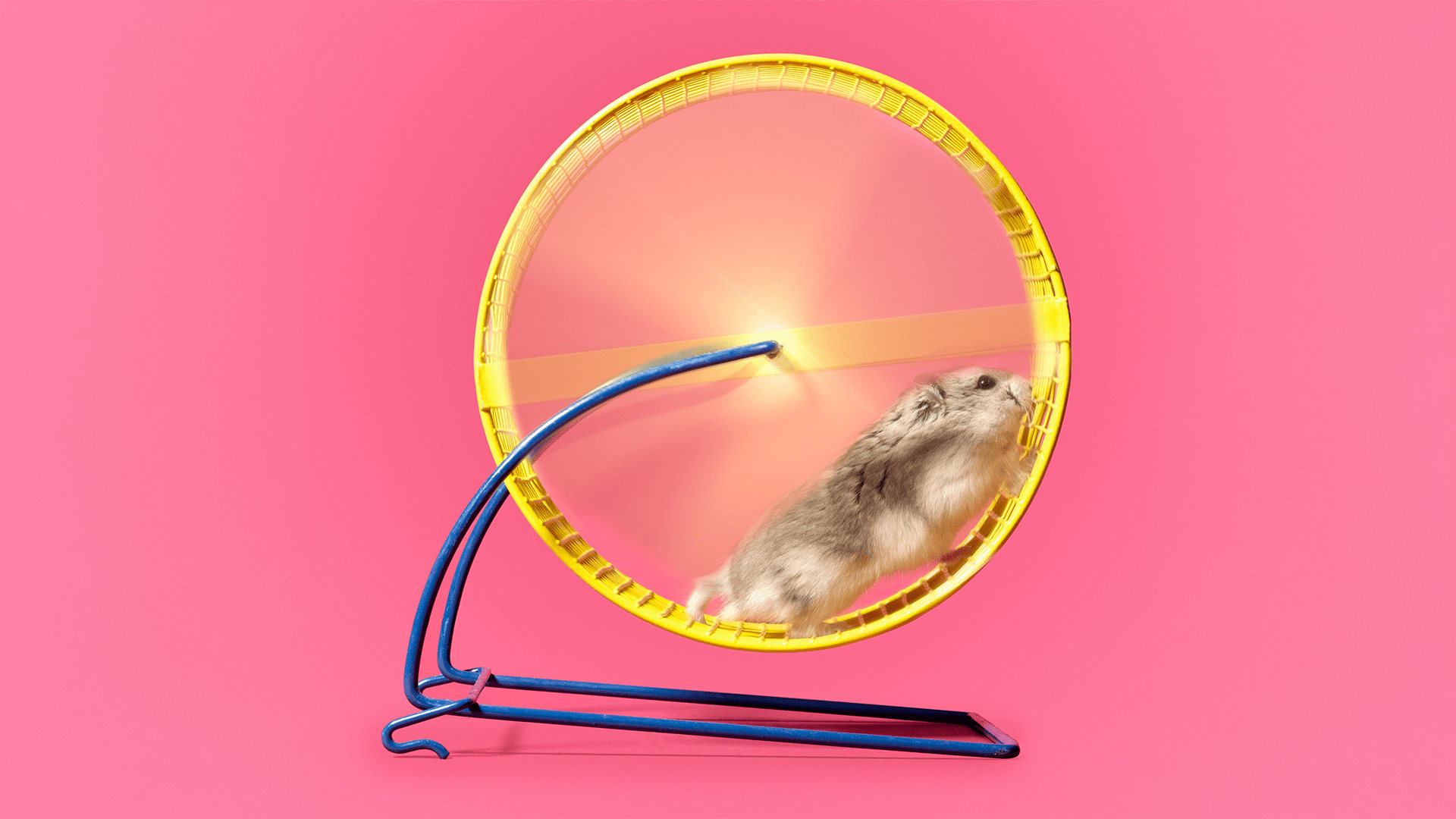
Everyone who has ever owned a hamster knows the sound: the small, relentless squeak of the exercise wheel, usually starting around two in the morning.
As you watch your cute furball running toward no destination whatsoever, you might wonder: What’s going on here? Is little Hammy acting out of restlessness or boredom?
For decades, scientists assumed it was exactly that: a neurosis, an artifact of captivity, the hamster equivalent of doing push-ups in prison.
But in 2014, researcher Johanna Meijer conducted a study that suggested a less depressing scenario. When wild mice came across a wheel in their natural habitat, they got on the wheel and ran—sometimes for up to 18 minutes at a stretch.
So if it’s not boredom or neurosis (wild mice surely have plenty of more important tasks than wheel running), what is it?
Dr. Theodore Garland Jr., a professor of biology at UC Riverside, has spent more than 30 years trying to figure that out.
“There’s still a lot of controversy about what, exactly, wheel running means to an organism,” Garland says. “What is it? What is the organism trying to do?”
Why wild mice run on wheels just like your hamster
In Meijer’s 2014 study, published in Proceedings of the Royal Society B, she and her colleagues placed exercise wheels in two different locations: a green urban area and a dune area not accessible to the public. For more than three years, they recorded wildlife activity at both locations.
They found that wild mice closely mirrored the behavior of their cage-dwelling counterparts. At both locations, the mice frequently ran on the wheels—often for lengths of time equal to the “workout” durations of captive mice.
Although food was initially used to attract animals to the wheel, the researchers found that wheel running continued even after the food was removed. This suggests that the animals not only ran voluntarily on the wheel, but did so without any external reward.
The wheels attracted more than just mice, too. Shrews, frogs, and even slugs were recorded using the equipment (a few snails were excluded from the study due to “haphazard” movements on the wheel). But wild mice used the wheel far more than another animal, accounting for 88 percent of all wheel runners.
Hamsters aren’t the only creatures that like running on wheels. Video: Wild Animals Caught On Hamster Wheel, Live Science
So, why do rodents specifically enjoy a run to nowhere? Are slugs simply less committed to their cardio?
According to Garland, rodents are simply built for it—bigger home ranges, faster metabolisms, and the aerobic capacity to sustain speed over distance.
“A toad isn’t going to be running 10 kilometers in a day,” Garland says. “Whereas a chipmunk could be.”
Dopamine keeps mice and hamsters coming back for more
But that’s only part of the story. The more interesting question is why any animal would choose to do it at all.
According to Garland, the drive to run on wheels among free-ranging animals is not fully understood, but the behavior is likely tied to the reward centers of the brain.
“Dopamine is viewed as the final common denominator,” Garland says, referencing the neurotransmitter that delivers a sense of pleasure to the brain’s reward system. Similar to a human working out at the gym, mice get a dopamine boost every time they run on their trusty wheel.
In Garland’s own lab, mice placed in larger, rat-sized wheels will sometimes slow down mid-run and rather than jumping off as the wheel keeps spinning, complete a full 360, and keep going. It serves no obvious purpose. It looks, for all the world, like a bit of acrobatics, as if the little mouse is creating its very own roller coaster.
“I’m hesitant to use the ‘F-word’ about lower vertebrates,” he says, “but it’s hard to ignore the idea that they’re getting some sort of pleasure or enjoyment out of it.”
The reward system may explain the drive, but Garland sees something even more elemental at work—something similar to the “zoomies” dogs and other young animals get.
A baby horse, Garland notes, will sometimes just tear around a field for no apparent reason—solo, unprompted, burning energy for the sheer joy of it. “We used to call it nip-norting,” he says, “just going crazy, even without another individual to egg it on.”
Exercising at a young age leads to lifelong habits, even for hamsters
Rodents’ love of running on wheels might even have implications for humans. Some of Garland’s work suggests that, when introduced at a young age, wheel running can become a lifelong habit.
In his study, Garland found that mice given access to a running wheel immediately after weaning, at just three weeks old, ran significantly more as adults.
“It’s got to be something up here,” Garland says, indicating the brain. “Their reward system has been permanently tweaked.”
Whatever it is keeping these little guys running, an early start seems to predict an ongoing practice. The implications, Garland believes, extend well beyond mice. For instance, cutting physical education from school curricula, he says, could be “a huge public policy disaster,” leading to adults who aren’t used to exercising.
“If you’re a kid who never gets to play basketball or tennis,” he says, “and then you get to college, and your friends are playing pickup games, it’s probably not even on your radar to do that kind of thing.”
Of course, none of this is on your hamster’s radar at all. They’re just galloping away, keeping you awake with the endless rotation of their squeaky wheel. But all that running can also lead to some good: Recently, a resourceful young YouTuber rigged his brother’s hamster wheel to charge his phone.
But no need to worry—the clever teen isn’t exploiting the toil of a joyless captive. Hammy, it seems, is just doing what comes naturally.
In Ask Us Anything, Popular Science answers your most outlandish, mind-burning questions, from the everyday things you’ve always wondered to the bizarre things you never thought to ask. Have something you’ve always wanted to know? Ask us.
For a woman in her mid-40s to mid-50s, it arrives without warning. She wakes up, overheated, wondering why it’s so hot in the house—until she sees the thermostat is set for 70 degrees, same as always. Or, she’s midway through a work presentation when heat rises from her chest to her face, and she wonders if the flush on her cheeks is visible to everyone in the room.
It’s a hot flash—a rite of passage for the majority of women in either perimenopause, the years leading up to menopause, or the years beyond it. Menopause itself is diagnosed after 12 consecutive months without a period, but the hot flashes don’t always get the memo.
Here’s everything doctors currently know about hot flashes.
What is a hot flash, and who gets them?
Hot flashes are a sudden heat flare up often paired with flushed skin and sweating. They don’t usually last long, between a minute and five minutes in duration.
Most women experience a hot flash about four and a half to five years after their last period, Dr. Monica Christmas, an OB/GYN at University of Chicago Medicine and director of its menopause program tells Popular Science. She also is the associate medical director of the nonprofit Menopause Society, which provides healthcare professionals with tools and resources to support women through the transition.
Women have grappled with hot flashes—whether simply annoying or genuinely debilitating—for centuries. In 1582, Dr. Jean Liebault of France was among the first to document the phenomenon. But while we know much more about hot flashes and night sweats than Liebault ever did, one question still stumps experts.
“What we can’t answer is why doesn’t everybody get them,” Christmas says. “Because everybody doesn’t get them. I have patients that will say, ‘I don’t know,’ if I say, ‘Are you having any hot flashes or night sweats?’ And as soon as they say that, I’m like, ‘You’re not having them.’”
What’s actually happening inside women’s bodies during a hot flash?
During a hot flash, a woman might feel like she’s spiking a high fever, but physiologically, that’s not what is happening. As women approach menopause and the ovaries begin to make less estrogen, the brain’s internal thermostat—the hypothalamus—becomes hypersensitive to even small shifts in temperature, Christmas says.
The body “thinks” it’s overheating, even when the actual temperature hasn’t changed much. In response, our bodies try to cool us down. Blood vessels dilate, which is supposed to help dissipate some of that heat, but then that triggers a sweating reflex.
“Many people will say, ‘I feel this out of nowhere, this surge of warmth that typically is from the nipple line up,’” she says. “And then as soon as the heat came on, and I felt like I was internally heated up or on fire, I start to sweat.”
Exactly how an individual woman experiences hot flashes varies wildly. Some describe very mild symptoms. Others grapple with profuse sweating. Some experience only hot flashes during the day, while some have regular night sweats. About four in five women experience them at some point during the menopause transition, according to the American College of Obstetricians & Gynecologists.
“There’s a lot of variability,” Christmas says. Common triggers include alcohol, caffeine, high-sugar and highly processed foods, along with stress.
Black women also are more likely to experience more severe and longer-lasting symptoms, sometimes up to 11 years, she says. And research also shows that women with more severe, longer-lasting hot flashes and night sweats appear to be at higher risk of cardiovascular disease.
That doesn’t mean treating hot flashes automatically lowers heart risk, Christmas says. But it does reinforce that these women deserve particularly careful attention to blood pressure, cholesterol, and lifestyle. “I want to make sure I’m doing everything possible to minimize that risk,” she says when she treats her patients.
There’s more to hot flashes than hormonal changes
For decades, the entire process was blamed purely on estrogen loss, Christmas says. But that explanation left some unanswered questions.
“That doesn’t explain why every menopausal woman doesn’t have night sweats,” she says. “And it also doesn’t quite explain why we can sometimes start to experience them during the perimenopause transition because during perimenopause, people still have some estrogen.”
Newer research now is telling a more complex story. When the brain recognizes that a woman’s estrogen levels are low, nerve cells in the hypothalamus called KNDy neurons (pronounced “candy”) become overactive, releasing neurotransmitters, which are chemical signals the brain uses to send messages throughout the body. These neurotransmitters include kisspeptin, dynorphin, and neurokinin B.
“It’s actually those neurotransmitters that seem to have more of an impact on our ability to regulate our internal temperature,” Christmas says. “They’re not hormones.”
What to do if you get a hot flash
For women in the middle of their hot flash years—along with the 10 percent of menopausal women who continue to experience them—there are treatments.
Estrogen-based hormone therapy can help, but not every woman, including those with a history of blood clots or breast cancer, can take hormone therapy.
Hormone therapy can help alleviate hot flashes. Video: Hormone therapy – Four things a Mayo Clinic women’s health specialist wants you to know., Mayo Clinic
Fortunately, researchers’ new understanding about the role of KNDy neurons has allowed for new treatments that block the brain signals that trigger hot flashes in the first place. The FDA approved a new drug called Veozah (it’s chemical name is fezolinetant) in 2023. It targets the neurokinin 3 receptor, which plays a key role in regulating body temperature.
Lynkuet, another drug (with the chemical name elinzanetant), came along in 2025. It blocks both the neurokinin 1 and neurokinin 3 receptors, interrupting the process that triggers hot flashes at two points instead of one.
Other medications can also provide relief, though weren’t originally developed for hot flashes, Christmas says. Some SSRIs and SNRIs; gabapentin, a neurologic medication; and oxybutynin, used for overactive bladder, are all used off-label for hot flashes and night sweats.
Cognitive behavioral therapy and hypnosis also have been shown to reduce hot flashes. “I’m menopausal, too, so I know if I’m under a lot of stress or in a stressful situation, I’m going to probably have more hot flashes than not,” Christmas says.
“So there’s certainly something about being able to calm our central nervous system down that seems to have an impact, too.”
If you’re struggling with hot flashes, Christmas recommends seeing your healthcare provider for help. Treatments are available. What’s more, in some cases, hot flashes or night sweats could signal other issues, including thyroid disorders, cancer, and infections, among others.
But bottom line, when it comes to hot flashes, you don’t have to sweat them out.
In Ask Us Anything, Popular Science answers your most outlandish, mind-burning questions, from the everyday things you’ve always wondered to the bizarre things you never thought to ask. Have something you’ve always wanted to know? Ask us.

 Login
Login