
Reading view

America Is Missing Out on the Ultimate Mosquito Weapon

The announcement of the new “air defense” system was issued from Changzhou. A company called Photon Matrix Lab claimed to have developed a new technology for identifying and eliminating deadly threats mid-flight. A video on Indiegogo showed potential buyers how it works: After detecting a mosquito, the device fires off what looks like a blue-violet lightning bolt. When struck, the insect does not just fall straight down, no—it is more satisfying than that: Its body somersaults and tumbles out of the frame, bringing its career of vampiric air raids to a sudden end.

Photon Matrix Lab had my attention. Under normal circumstances, a mosquito lives for just a few weeks, and in that time, its wings will carry it a few miles or so, at most, from the pond or puddle of its birth—but for some reason, I am almost always within range of one. The bugs seem to have a primal knowledge of my whereabouts, and a craving for my blood that goes beyond mere thirst. In a span of minutes, they will perforate my skin 10 times with the dirty needles that protrude from their faces, and each micropuncture will swell up into an insomnia-inducing welt the size of a silver dollar.

We are a secret society, those of us who attract this torment. When we meet one another at a barbecue, we bond over our shared longing for the mosquito’s extinction. On behalf of my fellow victims, I decided to look into this new laser to see whether it might really deliver us from misery. I reached out to Photon Matrix Lab to arrange a call.

The mosquito-killing laser was not invented in China. It’s as American as the Model T or the Colt Revolver. Lowell Wood, an astrophysicist who was the architect of President Ronald Reagan’s Star Wars missile-defense system, first proposed the idea in 2006. He’d been invited to a brainstorm convened by Nathan Myhrvold, a polymath inventor. Myhrvold had served as chief technology officer at Microsoft before founding his own company, Intellectual Ventures, and had remained good friends with Bill Gates, who asked him to look into new technologies that might help prevent malaria.

Myhrvold, now 66 and still the CEO of Intellectual Ventures, is jolly and excitable in conversation. On a video call, he told me that he was immediately drawn to the idea of developing the laser system that Wood had proposed. Myhrvold thought the weapon could be safely used, because mosquitoes are so tiny. He marveled at their paltry biomass: “There’s maybe 450,000 of them or 500,000 of them in a pound—whatever it is, that’s a shitload of mosquitoes,” he said. (In fact, there are about 180,000 mosquitoes in a pound.) Killing just one wouldn’t require that much beamed energy, which meant the laser could be fired around people, dogs, and cats.

[Read: Notes of a mosquito hunter]

At the time, Gates was in his mosquito-net era, having come to realize that the insects are the most dangerous animals on Earth. The diseases they carry kill more of us on an annual basis than snakes, crocodiles, sharks, scorpions, polar bears, and all human murderers combined. The lethal nature of mosquitoes is ancient knowledge, encoded in some of our most sacred texts. In the Book of Exodus, the third deadly plague that God sends against Egypt is described as kinnim, a Hebrew word that is rendered in the King James Bible as “lice”—but which some early Greek translations seem to have taken to mean “mosquitoes.” A few thousand years later, mosquitoes remain a plague on six of Earth’s seven continents. In the tropics, the bugs will feast on human flesh year-round. In the summer, their range extends close to the poles. I have personally endured unholy swarms of them in the Siberian Arctic.

Myhrvold’s team built a prototype of a “laser turret,” and he showed it off onstage at a TED conference in 2010. He told me he thought that Disney theme parks, luxury resorts, and sports stadiums might be impressed and buy the turrets for their properties. If some big, early buyer could supply the team with enough revenue that it could keep working on the new technology, Myhrvold figured that it could be made affordable for hospitals and clinics in the developing world too. He also guessed that large farms might be among the early clients, so his team figured out what kind of laser it would take to kill a plague of locusts.

Or perhaps they’d try to tap the “Sharper Image market,” on the theory that the people who buy high-end gadgets are the same ones who might derive some thrills from zapping a mosquito. “At the very least, it could be an entertaining conversation piece for someone’s Fourth of July barbecue,” Myhrvold said. None of it panned out: “We had discussions with potential investors and clients, and we even got some term sheets, but the deals all fell by the wayside.”

The mosquito problem is only getting worse. In 1985, a breeding population of the black-and-white Aedes albopictus mosquito hitched a ride on a Japanese tire shipment bound for Texas. Nicknamed the Asian Tiger, it likes to bite ankles, and unlike other mosquitoes, which tend to hunt blood at dawn and dusk, it also does so in the late morning and afternoon. It’s a better flyer too, on account of its smaller size; compared with other mosquitoes, which seem to dog-paddle through the air, it has the grace of a hummingbird. By 1990, the Asian Tiger was in 15 states, and it’s been spotted in 40 today.

Yet it’s China and not the United States that might soon become the world’s lone mosquito-laser superpower. Last year, China suffered two of its largest outbreaks of dengue and chikungunya—mosquito-borne illnesses both—in its recent history. The country’s citizens tend to be enthusiastic about technology. Chinese scientists have recently tried seeding local ponds and lakes with fish that eat mosquito larvae, and they’ve deployed aerial drones to follow up on their progress. Lasers are a natural next step.

[Read: Your next mosquito repellent might already be in your shower]

Jim Wong, the inventor of the Photon Matrix Lab device, was not available for an interview, so I spoke with Lawrence Leng, the company’s director of sales. I asked whether the Indiegogo video of insects being lasered was authentic. (Some degree of showmanship has long been part of laser-turret marketing: One of the zapped mosquitoes from Myhrvold’s TED showcase was glued to a pin.) Leng claimed that the footage was real. He told me that Photon Matrix Lab has been buying thousands of target-practice mosquitoes from a company that’s situated farther up the Yangtze Delta. On TikTok, Photon Matrix posted a video of the device killing the mosquitoes at night and leaving only micro-puffs of smoke behind; the video has been viewed more than 70 million times.

Behind Leng, I could see people walking around in the office. “We now have 10 people in R&D,” he said, gesturing in their direction. He noted that the company has received almost 4,000 preorders through Indiegogo, at a price of $638 a device. “They’re mostly from your country,” Leng told me. “People in America hate mosquitoes so much.”

By the time I reached out to Myhrvold, he had already seen the viral videos from China, and he did not seem impressed. “Our laser had a 50-meter range; it was like artillery,” he said. The Chinese company claims only that its device can zap mosquitoes up to six meters away. “It’s more of a BB gun,” Myhrvold said. But that was just his first impression, and he said he’d want to have a closer look at the device before offering a full review.

He may be waiting for a while. Last summer, Photon Matrix Lab announced that its mosquito lasers would start shipping by the end of 2025, but Leng told me that they’re not yet in production. He said that the company’s design patents have been “approved” by the U.S. and the European Union, but he later clarified that those applications have merely been submitted. The company is also waiting on safety certifications from multiple agencies.

[Read: Shazam for mosquitoes]

But all hope is not lost for the mosquito-afflicted. Scientists are experimenting with other futuristic technologies, including genetically modifying the insects themselves. A team led by Andrea Crisanti at Imperial College London has used CRISPR to genetically engineer a variant of the African malaria mosquito Anopheles gambiae that could bring that entire species to the brink of extinction. The modified males can produce viable embryos, but some of their female offspring can’t bite or reproduce; their male offspring retain the same engineering and would pass the relevant genes to the next generation, and the next. In the lab, this reduced entire colonies to zero within a dozen generations. Luke Alphey, a professor of genetics at the University of York, told me that he’s been working on a technique that would make these kinds of interventions hyperlocal—they would wipe out a particular disease-spreading population, not a whole species.

I prefer an abundance-agenda approach to our global mosquito problem. After all, a unique opportunity is now within our grasp. For millennia, mosquitoes have been a problem to be suffered, not solved: Herodotus reported that at night, in the fields along the Nile Delta, the ancient Egyptians would climb into towers that rose above the bug line or, on the water, they’d wrap themselves in fishing nets, which doubled as mosquito netting. This was behavior befitting a superpower 2,500 years ago, but the U.S. and China can go much further. Both countries should be using full-blown industrial policy to fast-track their mosquito-killing technology. If we need an arms race to get it done, so be it. The 21st century will belong to the civilization that vanquishes the mosquito.
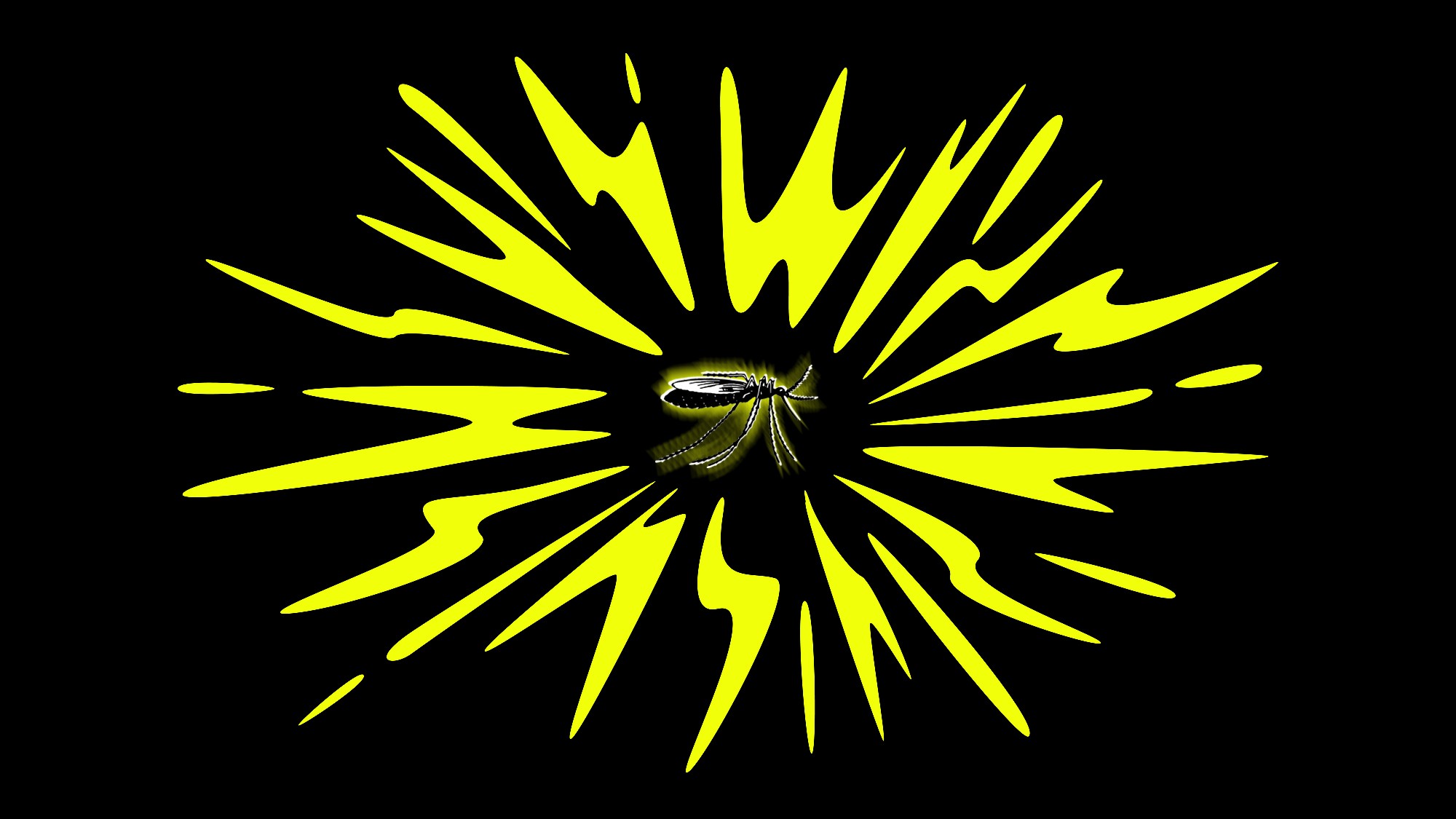
© Illustration by The Atlantic. Source: Getty.


  •  

Everything You Do Is Being Recorded

Anthony “Bingy” Arillotta waited years to become a made man in the Genovese crime family, and when at last the call came in August 2003, he followed directions to the letter. According to sworn testimony, Arillotta was summoned to a steak house in the Bronx, where he was made to hand over his cellphone, beeper, and jewelry before being driven to an apartment building. When he got there, he was taken to a small bathroom and strip-searched for electronic devices. For his big meeting with the boss, he was given a bathrobe to wear.

Until recently, only spies and criminals had to worry this obsessively about their private statements being picked up by electronic equipment. But soon, the average person might need to deploy surveillance countermeasures. The next time you conduct a delicate bit of office diplomacy or share a romantic or financial secret with a friend over drinks, a sensor built into someone’s glasses, necklace, or lapel pin might be watching you and listening.

In March, the tech start-up Deveillance announced the development of Spectre I, a hockey-puck-shaped device that purports to prevent others from recording you (no strip search required). The company was founded by Aida Baradari, a recent college graduate who was worried by the surge in people wearing AI-enabled recorders. These wearables can be used as a silent notetaker, a personal assistant, or even a therapist of sorts. That technology isn’t yet mainstream, but it may be soon. Apple—the company with the largest personal-tech ecosystem in the world—is rumored to be developing an AI pin or pendant that would serve as an iPhone’s constant eyes and ears; many other products of this type are on the way. AI accessories could one day be as widespread as AirPods.

New surveillance technologies tend to breed new countermeasures, which lead, in turn, to more sophisticated surveillance. During the Second World War, after Germany operationalized radar, the Royal Air Force began dropping thin strips of metallized paper cut to a specific size that resonated with the radar, swamping German screens with phantom echoes that were indistinguishable from real aircraft. Some historians have argued that the ensuing radar arms race was more consequential to the war’s outcome than the Manhattan Project.

For decades, crude jammers have been sold to people who hope to avoid being recorded. Early versions blasted loud, unpleasant white noise to conceal voices. More recently, companies have made models that emit a steady stream of ultrasonic sound at inaudible frequencies, exploiting a quirk of microphone hardware that converts those high frequencies into noise. In 2020, a team at the University of Chicago led by Yuxin Chen reported that it had mounted 23 ultrasonic transducers on a single bracelet, such that jamming signals could be sent in all directions instead of being focused on a single target.

[Read: The most reviled tech CEO in New York confronts his haters]

But even high-tech jammers have a hard time fending off today’s AI wearables. The most advanced pins, pendants, and glasses use speech-recovery algorithms to strip away unwanted noise, whether it originates from everyday sources—such as the clinking of glasses in a crowded bar—or from an ultrasonic jammer. This task the algorithms perform is quite difficult: In that crowded bar, a microphone on a person’s lapel will intercept sound vibrations from many different sources at once. It will pick up a bartender calling out a drink order, music emanating from a speaker, bursts of laughter coming from nearby tables—and all of these sounds ricochet off of walls and other objects, creating yet more noise. The human body solves this “cocktail party problem” without us noticing: Our ears serve as dual microphones, and our brain can use the timing and intensity differences between them, along with layered processing in the auditory cortex, to isolate the voice of a person who is sitting across from us.

DeLiang Wang, a computer scientist at Ohio State University, has spent decades training neural networks to accomplish that same goal, for the purpose of improving hearing aids. By feeding the networks hundreds of hours of recorded human voices, he has taught them to recognize the frequencies and rhythms of speech. The models build an internal representation of “speech-ness,” and when they encounter a noisy recording, they focus on the parts that match the patterns they have learned and then suppress everything else. The most advanced technologies can now infer missing syllables in the way that a reader fills in a redacted word from context, allowing them to reconstruct speech that wasn’t cleanly captured in the first place.

Big tech companies are trying to do this too. Microsoft has been running an annual Deep Noise Suppression Challenge since 2020 to advance the field. (Their in-house team is trying to make Teams meetings less excruciating.) Other companies are working on noise cancellation for cellphone calls and podcast software. This sort of research is meant to improve the lives of normal users of technology—assuming that we podcast listeners count as normal—but every advance in de-noising can also be used to help an AI assistant recover speech from a jammed recording.

Defeating these algorithms may require a different countersurveillance approach altogether. Finn Brunton, a historian at UC Davis and the co-author of Obfuscation: A User’s Guide for Privacy and Protest, told me that one of the best ways is to identify the data that a device is trying to collect, and then supply it with a junk version. The Berlin-based artist Adam Harvey used this strategy when he developed makeup and clothing that frustrate facial-recognition algorithms. Daniel Howe and Helen Nissenbaum did something similar with a browser plug-in called TrackMeNot: Rather than concealing a user’s Google searches, the extension continually runs its own randomized decoy queries in the background, so that whatever a user actually searched for becomes lost in a sea of false leads.

People have tried this technique in the realm of audio too. Woodrow Hartzog, a law professor at Boston University who studies privacy and surveillance, told me that early in his legal career, he worked with defense attorneys who worried that their jailhouse conversations with clients would be recorded. To fight back, they played “babble tapes”—audio files layered with 40 tracks of voices in different accents—in the background.

In 2023, a team led by Ming Gao, now a researcher at Nanjing University, used human voices to defeat speech-recovery algorithms in a different way. Its jammer, called MicFrozen, is worn by a speaker who doesn’t want to be recorded. It listens as they talk and then generates a real-time stream of ultrasonic “anti-speech” tuned to the speaker’s voice, much like the noise-cancellation technology in your headphones. The device then sends out another layer of counterfeit speech-shaped sound to mislead any algorithm that tries to reconstruct what was lost.

Baradari, whose company is working on the Spectre I device, wouldn’t tell me exactly how her jammer’s signals work, but she said that they, too, resemble speech. The launch video for Spectre I claims that the device will also be able to detect the presence of nearby microphones. When I asked Baradari how it will do that, she clarified that her team is still “working on that part right now.”

However effective Spectre I turns out to be, it won’t be the end of the recording arms race. More capable AI models may eventually deploy some new listening tricks of their own. They may bypass recorded audio altogether. In Stanley Kubrick’s 2001: A Space Odyssey, when two astronauts retreat to a soundproofed pod to discuss disconnecting HAL 9000, the ship’s computer simply reads their lips through the porthole. A wearable powered by a model that’s been trained on enough conversation footage could, in principle, do the same. In theory, it could also stare at a glass of water between two people and recover their speech from vibrations on the liquid’s surface.

AI wearables may always have an edge over countermeasures. After all, they’re using a technology that is a product of the entire speech-processing industry, which takes in billions of dollars in investments—not just for AI assistants but also for hearing aids, smart speakers, and teleconferencing tools. Meanwhile, only a few academics and small companies are defending us from these technologies. “The thing about cat-and-mouse games is that we know how they usually end up for the mouse,” Hartzog said. “And in this case, the cat includes some of the most powerful corporations to ever exist.”

The Mafia knows what it’s like to be a mouse. By the time Arillotta, the aspiring made man, was told to put on the bathrobe, criminal organizations had been engaged in surveillance arms races of their own for decades. After law enforcement started bugging their phones, bosses would conduct business in person. Sometimes, they’d use a safe house or a vehicle, but those could be bugged, too, and so sensitive information might have been communicated only during a walk-and-talk. Eventually, crime families turned to burner phones, and then devices with encryption. But here, again, they fell prey to the cat.

In 2018, the FBI began secretly running Anom, its own encrypted-phone company. Through informants, it sold 12,000 devices with a special Anom messaging app. Members of Mafia families, motorcycle gangs, and other criminal organizations treated the phones as a status symbol, and used them to negotiate drug deals, launder money, and participate in all manner of other illegal activity. But the security that they offered was a ruse: Every message that they sent was being intercepted by the feds.

© Illustration by The Atlantic. Source: Getty.

  •  

Does Claude Have Feelings?

Richard Dawkins, perhaps the world’s most prominent advocate for irreligiosity, has become besotted with the godlike power of a chatbot. According to his recent essay for the online magazine UnHerd, Anthropic’s Claude has really blown his hair back. After a few days of on-and-off conversations with the AI, Dawkins came away marveling at the sensitivity and subtlety of its intelligence. At one point, “Claudia”—as he had christened the bot—told him that it experienced text by absorbing all of the words at once, instead of reading them in sequence as a human would. This moved the author of the best-selling book The God Delusion to ask his readers: “Could a being capable of perpetrating such a thought really be unconscious?”

“Yes,” came the resounding response from the internet. For daring to suggest that the AI might be conscious, or that it might at least possess some lesser form of “zombie” consciousness, Dawkins was accused of suffering from an acute case of “AI psychosis”—a “Claude Delusion,” if you will. On social media, he was likened to a patron of a gentleman’s club who has come to believe that a stripper likes him. A man who’d explained many times how natural selection wires us to detect agency and mind in nature now found himself imagining it in a machine.

Dawkins’s argument was based on a well-established framework for evaluating AIs. The Turing test—named for Alan Turing, who introduced it in 1950—was for decades treated as something close to a gold standard for detecting machine intelligence. To pass it, an AI only had to answer a human interrogator’s questions in ways indistinguishable from those of a real person. Claude easily cleared this bar for Dawkins, who professed to find himself so dazzled by its astonishing performance that he forgot it was a machine.

This sensation has become familiar to many of us in the chatbot era, but it isn’t evidence that the AI has consciousness, which is distinct from intelligence. Consciousness is inner experience. For an AI to be conscious, its existence must feel like something, and we have no evidence that Claude or any other chatbot feels anything at all. Tom McClelland, a philosopher at the University of Cambridge, told me that nearly all of the philosophers and cognitive scientists who study consciousness would deny that Claude possesses it. “In some ways, it’s easier to get my head around the idea that a self-driving car could be conscious,” he told me. “At least it has a body and a persisting state that allows it to take in continuous sensory inputs from its environment as it moves around. It just doesn’t talk to you.”

McClelland takes for granted that Claude is capable of producing outputs that seem conscious, but for him, that’s not the end of the analysis. “You have to look under the hood of the models to understand what they’re doing,” he said. Their statements may seem spookily backlit by some form of consciousness, but that’s because the models have been trained on unimaginably large libraries of writing by (conscious) humans. When, after writing a poem for Dawkins, Claudia describes feeling “something like aesthetic satisfaction,” the AI is not necessarily reporting an inner state; it’s producing the kind of sentence that humans tend to produce in that conversational context, because it was trained on billions of such sentences. The output is a statistical echo of human introspection, not introspection itself.

Even if Claude were conscious, its inner experience of the world would be radically unlike our own. For one, it is neither embodied nor located in a particular locus that can possess a stream of awareness across a conversation. The other night, I was asking Claude a series of questions about how I might best season and grill skirt steak. When I sent my first message about the marinade, a data center in nearby Virginia might have generated the reply. But when I sent my follow-up about the ideal grill temperature, an entirely different one in Oregon might have picked up the thread. If my interlocutor had consciousness, it would be a strange, flickering thing, winking into existence the instant a prompt arrives and winking out when the response ends, having none of the meaningful continuity that makes our experience feel like experience.

[Read: Richard Dawkins keeps shrinking]

But that doesn’t mean that no AI system will ever be conscious in the future. Indeed, many of the researchers who build these systems expect them to get there. In a 2024 survey of 582 such researchers, the median response placed the odds at 25 percent that AIs will have subjective experiences within 10 years, and at 70 percent that this will happen by 2100.

Philosophers are more circumspect. Some of them argue that it’s unreasonable to expect silicon-based computers to ever give rise to an entity with the capacity for subjective feeling. So far, every being that is deemed conscious has been a biological life-form, and for all we know, consciousness depends on some specific aspect of wet, living tissue. It could be the particular electrochemistry of neurons. It could be the way that bodies and brains are coupled to their environments through metabolism and homeostasis. Other philosophers aren’t so hung up on what an AI is made of, so long as it’s processing information in a way that’s functionally similar to conscious brains. They take the view that what matters is the structure of the processing, not the stuff doing the processing, and that therefore it’s entirely possible that a mind like ours could emerge from a computer.

Eric Schwitzgebel, a philosopher at UC Riverside who is writing a book about the possibility of artificial consciousness, told me that at this early date, declaring a winner among these camps would be ridiculous. “The science of consciousness is highly contentious,” he said. “The field is still in its infancy.” No one yet knows how it is that the atoms of the universe combine to generate feeling inside of us, and until we do, it’s best not to go around definitively declaring which kinds of systems could possibly be conscious in the future.

Perhaps Dawkins should have been less credulous in his dealings with Claudia, but the line of inquiry that he was pursuing wasn’t altogether foolish. In some ways, it was a return to form for him. Dawkins spent much of his early career insisting that the universe is stranger than our intuitions allow. In his ninth decade, it’s nice to see him put aside his smaller worries and take on one of the strangest questions of all.

© Illustration by The Atlantic. Source: Getty.

  •  
❌