Login
Login
Watch: Shanghai firm unveils 1.2m humanoid robot with dual brains and compact design
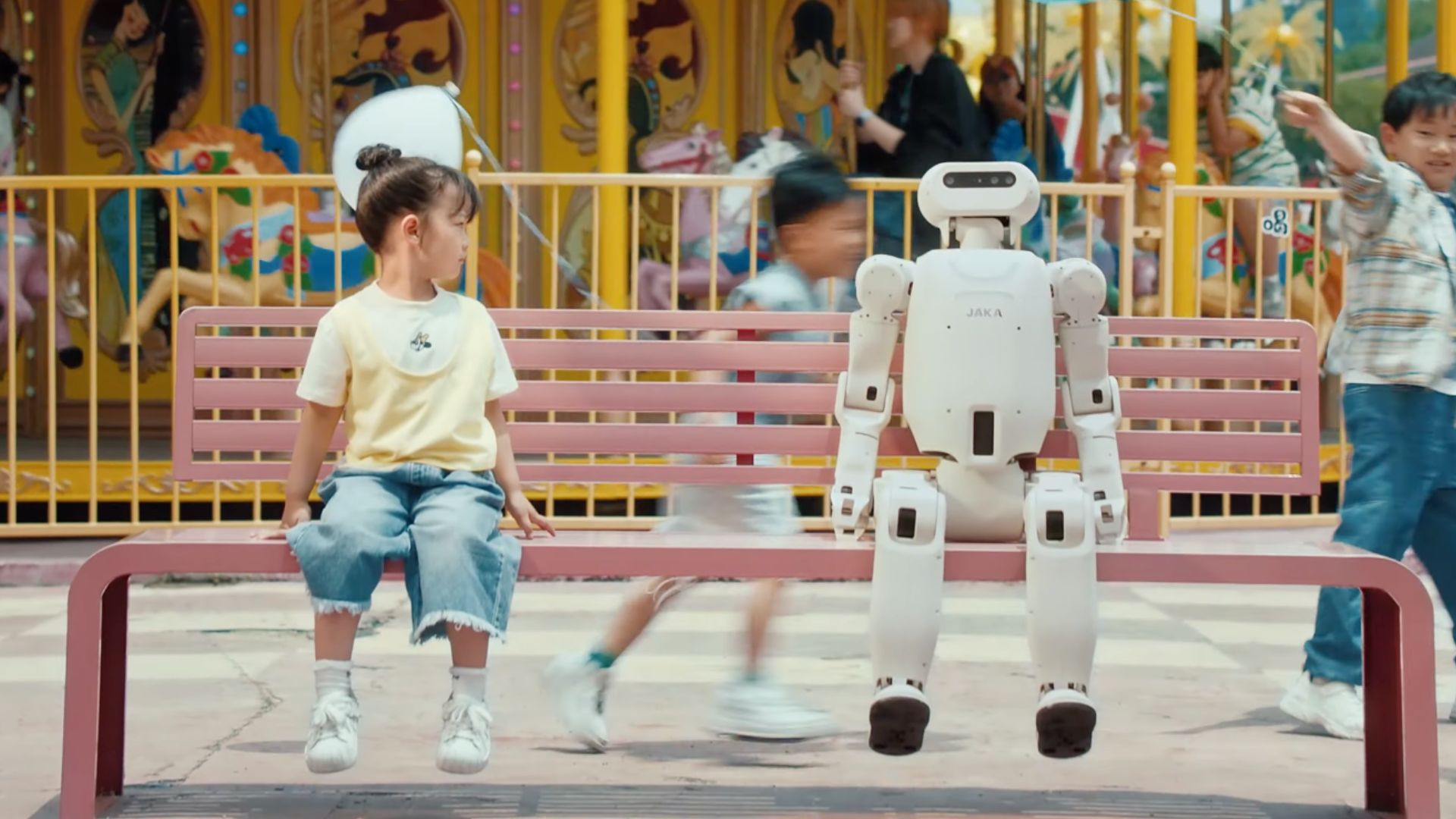
A Shanghai-based robotics company has unveiled a compact humanoid robot that marks the firm’s expansion beyond industrial collaborative robots into the broader field of intelligent robotics.
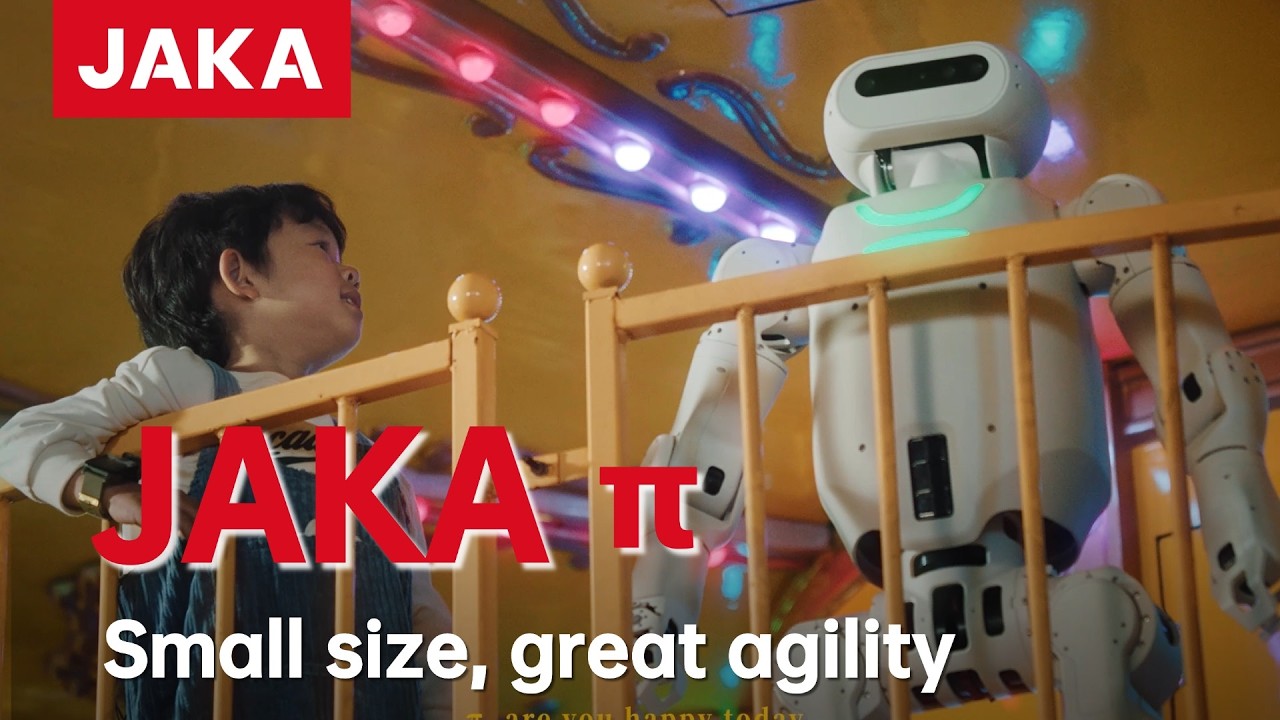
JAKA Robotics’ Pi is a compact humanoid robot that stands 1.22 meters tall and weighs 92 pounds (42 kilograms).
According to Jaka, Pi is designed for versatile real-world applications. The platform combines mobility, advanced perception capabilities, and human-like interaction to operate in a variety of environments.
Recently, China has introduced humanoid robots into its postal logistics network, using automated parcel sorters in Guangzhou to boost warehouse efficiency.
Compact humanoid debuts
JAKA Pi is a compact humanoid robot designed to showcase the company’s latest advances in embodied intelligence, motion control, and AI-powered interaction.
Measuring 1220 × 420 × 220 millimeters and weighing just 92 pounds (42 kilograms), the platform is among the most compact humanoids in its category.
The JAKA Pi features 27 degrees of freedom and newly developed integrated joint modules that are 15 to 27 percent smaller than previous generations, enabling a more compact and lightweight design. Its knee joints deliver up to 120Nm of torque for stable locomotion, while each arm supports payloads of up to 3 kilograms for object handling and manipulation tasks.
At the core of the robot is JAKA’s fusion brain architecture, built on Intel’s heterogeneous computing platform. The system separates high-level intelligence from low-level motion control. The “cerebrum” processes AI reasoning, vision perception, large language models, and application logic, while the “cerebellum” handles real-time movement through an EtherCAT-based control network operating with millisecond-level latency.
According to the firm, the dual-domain architecture enables the robot to interpret spoken instructions, understand its environment, generate action plans, and execute physical tasks with coordinated motion. By combining advanced AI with deterministic control systems, JAKA Pi serves as a versatile research and development platform for embodied intelligence, human-robot interaction, and next-generation robotics applications.
Beyond industrial automation
JAKA Robotics is a Shanghai-based robotics company founded in 2015 and best known for its collaborative robots (cobots) and emerging embodied AI platforms. Over the past decade, the company has evolved from an industrial automation specialist into a developer of intelligent robotic systems that combine advanced perception, force control, machine vision, and artificial intelligence.
Its core product lineup includes the JAKA Zu Series (Zu3, Zu5, Zu7, Zu12, Zu18, Zu20, Zu30), designed for general industrial automation tasks such as assembly, machine tending, palletizing, and packaging. The JAKA Pro Series (Pro5, Pro12, Pro16) is built for harsh industrial environments, featuring IP68-rated protection against dust, oil, and water.
For applications requiring precise force interaction, JAKA offers the S Series (S5 and S12), which integrates high-accuracy force sensing and advanced force-control capabilities. The AL and A Series combine robotic manipulation with machine vision, enabling perception-driven automation and easier deployment in dynamic production environments.
The company also produces compact robots such as the MiniCobo and Mini 2, aimed at education, research, hospitality, and small-scale automation. Supporting technologies include the JAKA Lens 2D and JAKA Lens VPS vision systems, six-axis force sensors, RoboHub control platforms, and low-code programming tools.
In embodied intelligence, JAKA has introduced the K-Series humanoid platforms, including the K1, K1L, and K1W, as well as the recently unveiled JAKA Pi humanoid robot. These systems integrate large language models, machine vision, force control, and real-time motion planning, positioning JAKA as a developer of next-generation AI-powered robots capable of operating beyond traditional industrial settings.