
Reading view

CATL eyes 12,000 Wh/kg theoretical limit lithium-air EV battery to end range anxiety
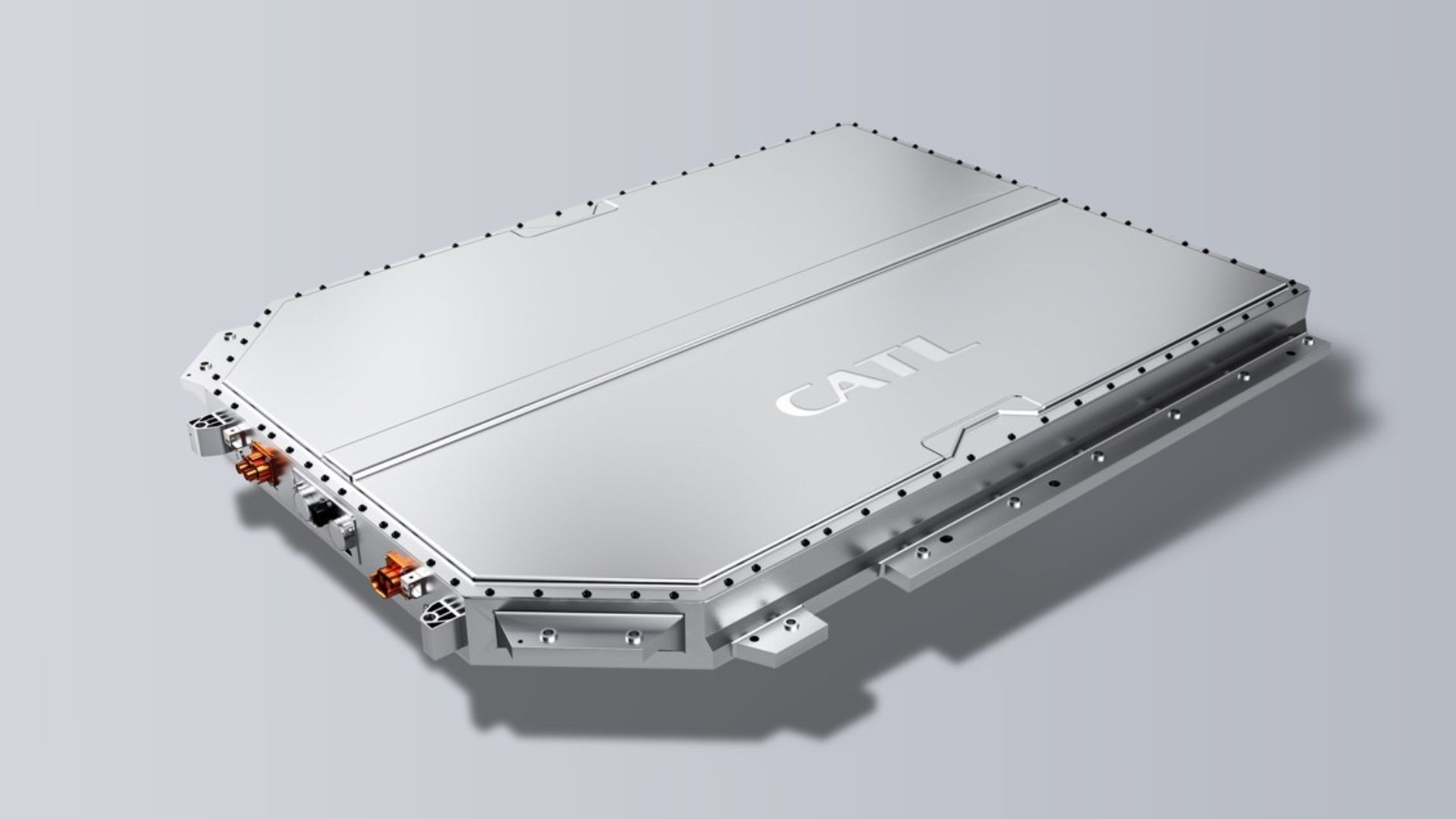
A major shift in the long-term direction of global energy storage has been established as Chinese battery giant CATL has formally selected its next-generation development path.

Recently, speaking at the 2026 Equipment Power Forum, Wu Kai, the company’s Chief Scientist and an academician of the Chinese Academy of Engineering, identified lithium-air battery technology as the primary focus for the company’s future research. 

The shift toward a lithium-air framework alters the structural design that has governed electric transport for decades. Standard lithium-ion batteries are sealed systems that depend on heavy transition metals such as nickel, cobalt, and manganese to form the crystalline structures that host lithium ions.

Conversely, lithium-air batteries eliminate the need for heavy internal cathode hosts.  The system features an open architecture that pairs a pure lithium metal negative electrode directly with ambient oxygen drawn from the surrounding atmosphere to act as the positive electrode reactant.

Because the cell effectively breathes gas during operation, it eliminates considerable dead weight from the battery pack layout.  This massive reduction in structural mass yields a major increase in energy potential.

Presenting a massive theoretical energy density limit

Mainstream lithium-ion batteries function with an energy density of approximately 250 to 270 Wh/kg, while future solid-state alternatives are expected to achieve roughly 500 Wh/kg.

Lithium-air configurations present a theoretical energy density limit of 12,000 Wh/kg, a ceiling that matches the energy capacity of conventional gasoline. Current laboratory prototypes have surpassed 1,200 Wh/kg, which is over four times the performance of today’s production electric vehicles.

Successful commercial scaling of this capacity would alter automotive ranges, allowing consumer vehicles to travel more than 1,600 kilometers (about 1,000 miles) on a single charge, as reported by CarNewsChina.

However, open-cell lithium-air reactions are sensitive to ambient moisture and carbon dioxide, which typically leads to rapid cell degradation, unstable catalyst behavior, and low cycle life. 

Breakthroughs for commercial implementation

A foundational mechanism to bypass these limitations was demonstrated in 2025 by a research group from the Illinois Institute of Technology and Argonne National Laboratory.

Traditional iterations of the battery were constrained because their chemical reactions generated lithium superoxide or lithium peroxide, compounds that restricted total energy efficiency. The research team enabled a room-temperature, four-electron chemical reaction path that forms and decomposes lithium oxide, which expands available energy storage. 

To address safety and longevity, the researchers replaced flammable liquid electrolytes with a solid-state composite matrix made of ceramic-polyethylene oxide polymer infused with lithium-rich nanoparticles. 

This solid layer isolates the reactive processes, stopping leaks and stabilizing the cell during high-energy cycles. CATL’s decision to pursue this long-term research path coincides with the commercial stabilization of its intermediate technologies. 

These lower-cost sodium packs are currently being deployed in passenger vehicles such as the GAC Aion UT and Changan Oshan 520, with wider integration across platforms from Geely, Chery, and FAW scheduled. 

With sodium-ion production managing the entry-level automotive sector, CATL is reallocating long-term engineering resources to address the physical bottlenecks of lithium-air technology, aiming at heavy-duty transport and the stabilization of solar and wind electrical grids.
  •  

US: 5th-gen VELA nuclear reactor fleet to get 3D-printed parts with new deal

Industrial additive manufacturing is entering the commercial nuclear power sector through a new production agreement between two Midwestern companies.

NX Atomics, an Indiana-based small modular reactor (SMR) developer, will utilize technology from Chicago’s Sciaky to manufacture components for its upcoming reactor fleet.

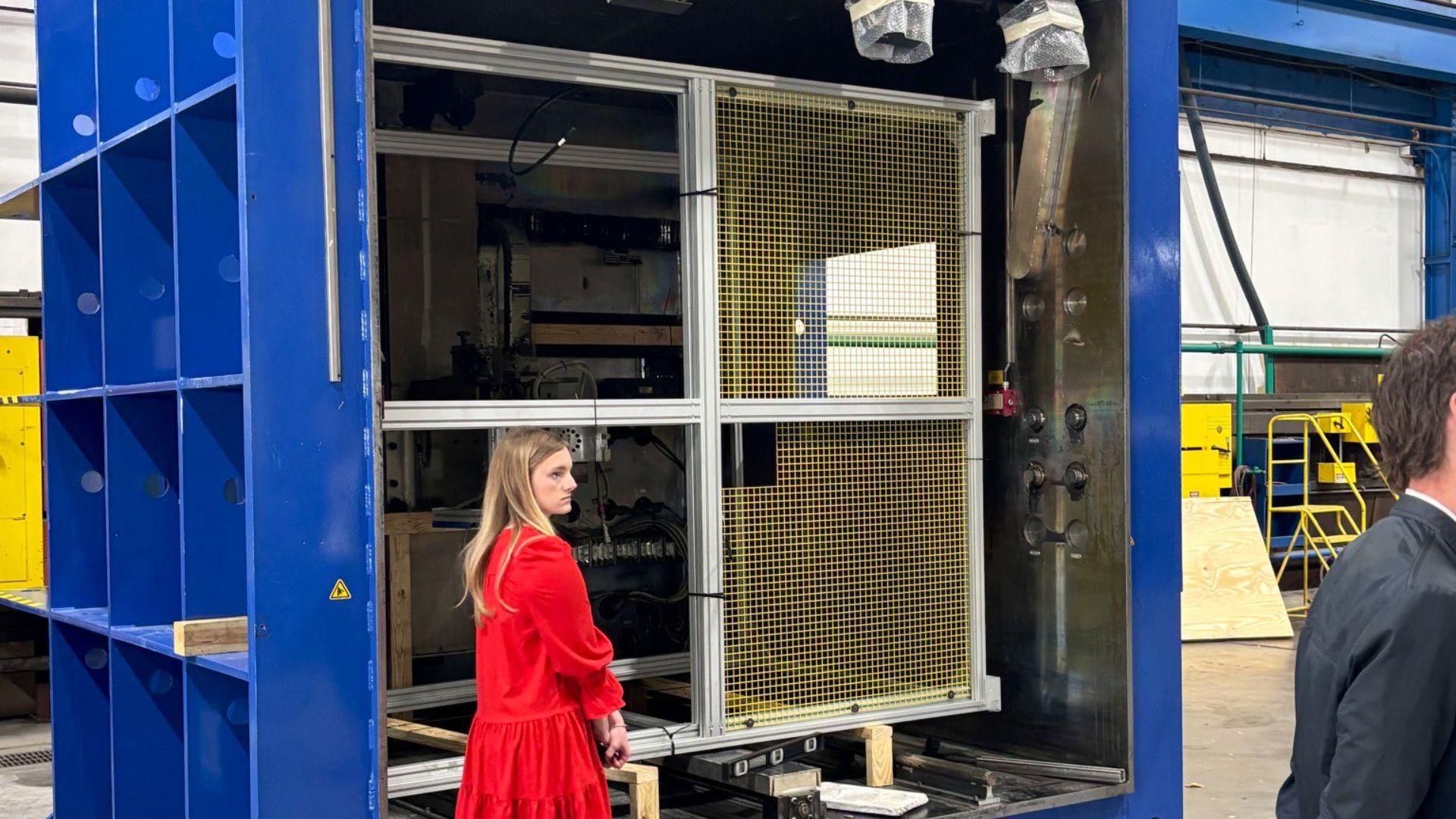
The agreement centers on integrating Sciaky’s Electron Beam Additive Manufacturing (EBAM) process into the production line of NX Atomics’ VELA reactor platform.

NX Atomics is developing the fifth-generation VELA reactor to bypass traditional electrical grid infrastructure. Instead, the company is positioning the system to provide direct baseload electricity and high-temperature process heat to localized, power-intensive operations.

The strategy is aimed directly at the rapid expansion of artificial intelligence data centers and heavy industrial facilities, with a target production cost of under $20/MWh.

Overcoming cost barriers with advanced architecture

Traditional nuclear energy projects frequently face economic hurdles due to the extensive lead times and high capital requirements of manufacturing heavy components.

The partnership intends to alter this dynamic by replacing conventional fabrication methods with industrial 3D printing.

Beyond faster initial production, the VELA platform introduces an unconventional operational model: rather than designing every internal component to endure for the entire lifecycle of the reactor, the system utilizes an interchangeable architecture.

Certain parts are engineered to be systematically replaced during routine maintenance, which lowers initial manufacturing constraints and reduces long-term operational overhead.

“This is what bringing nuclear manufacturing into the modern era actually looks like,” said John Warden, CEO of NX Atomics.

“3D printing opens up the potential for us to produce nuclear-qualified parts faster and at lower cost, where appropriate swap them out through life, and meaningfully reduce the unit cost of every small modular reactor we build.”

Transitioning proven aviation tech to energy infrastructure

The production technique has already transitioned from experimental prototyping to standardized use in other heavy industries. Over the last ten years, aerospace and defense manufacturers have used the EBAM process to supply structural titanium and specialized alloy components for commercial aircraft, naval ships, and defense systems.

The technology has also assisted space flight, providing printed propulsion elements for orbital platforms and lunar landing vehicles.

“Our EBAM process produces parts that fly on commercial aircraft, sail on naval vessels, and orbit the earth,” concluded John Criso, CEO of Sciaky.

“Bringing that capability into America’s clean energy infrastructure with NX Atomics is a natural next step, and we are proud that two Midwestern companies are leading this transition.”

US’ advanced microreactor deployment plans

In a separate domestic nuclear development, the US Nuclear Regulatory Commission (NRC) has accepted a Construction Permit Application (CPA) to deploy NANO Nuclear Energy’s KRONOS micro modular reactor at the University of Illinois Urbana-Champaign (U. of I.). 

This acceptance transitions the project from the initial planning stage to a formal regulatory evaluation, allowing the NRC to begin its detailed technical, safety, and environmental reviews.

The KRONOS reactor is a stationary, fourth-generation nuclear energy system built to provide carbon-free electricity and process heat directly to co-located infrastructure. In a single-unit layout, the installation generates up to 45 MWth of power, while multi-unit configurations can scale up to deliver gigawatt-level output.

Designed to be transported by road and assembled directly on site, the modular system allows operators to deploy multiple units concurrently to expand capacity and reduce the levelized cost of electricity.

  •  
❌