Login
Login
Scientists say the gold in wedding rings, teeth, and family heirlooms was forged in cosmic catastrophes long before our sun existed
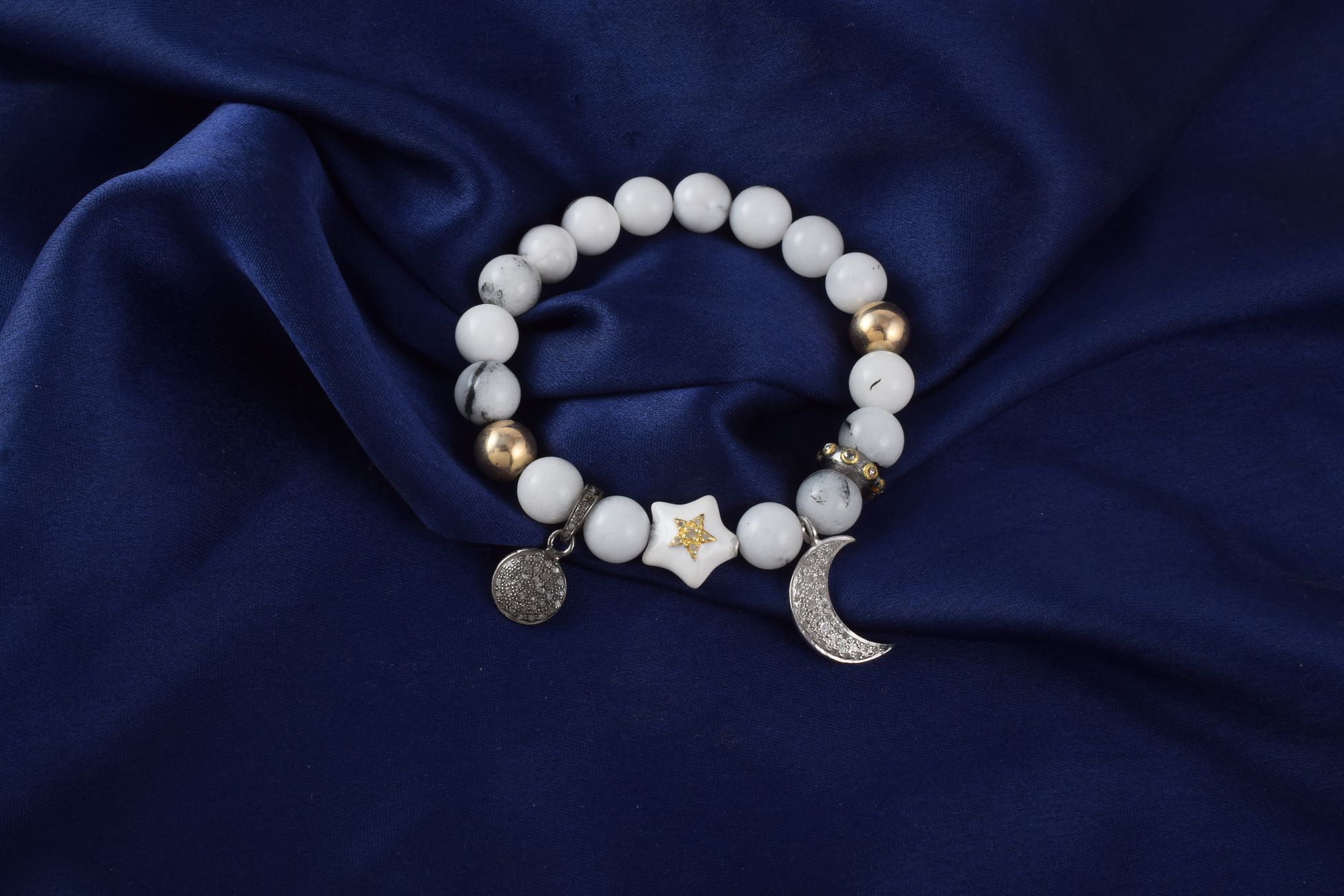
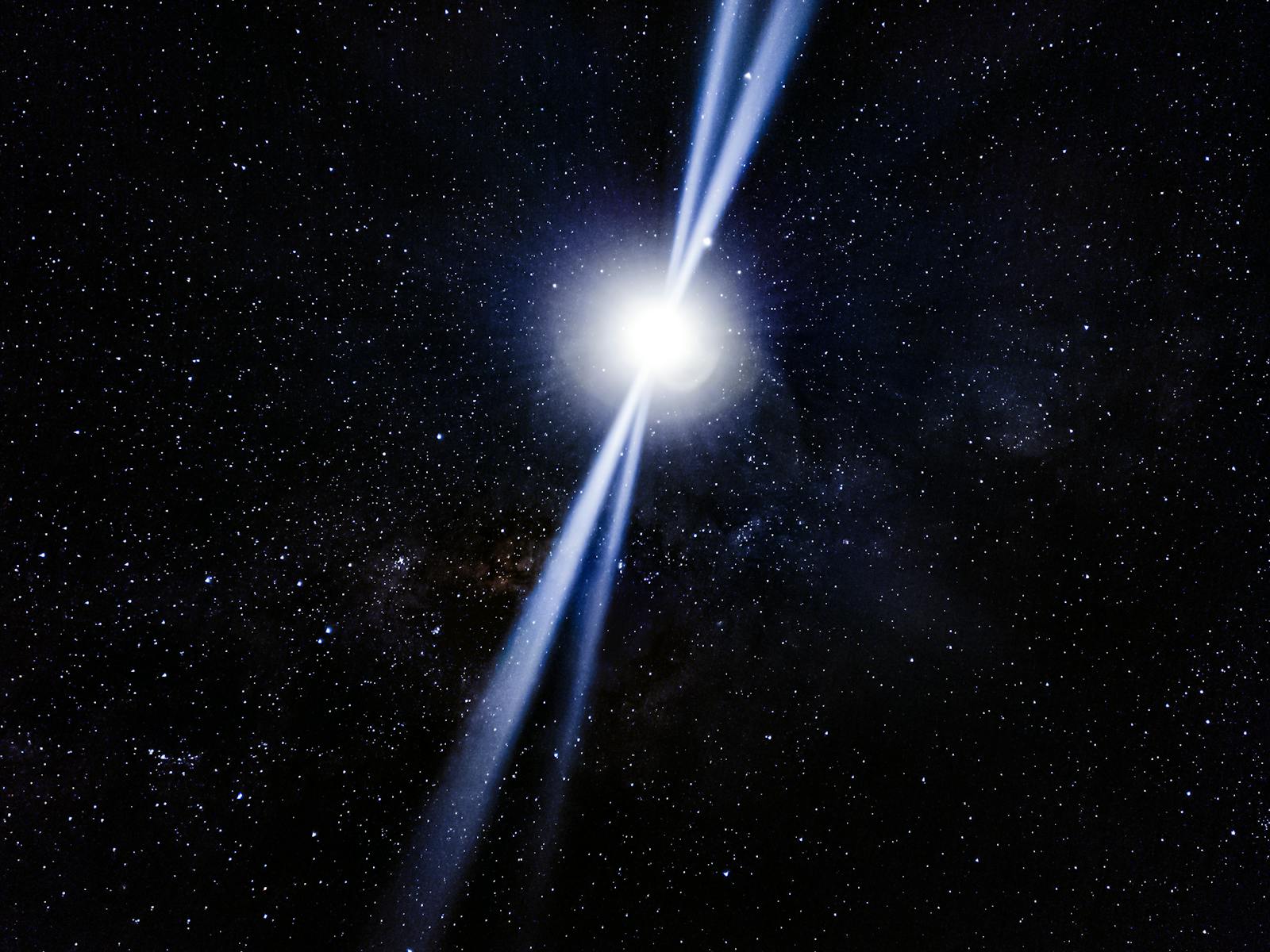
The wedding band on a human finger is older than the Sun. So is the gold filling in a back molar, the chain on a great-grandmother’s pendant, and the platinum prongs holding a diamond in place. The atoms themselves were forged in an event so violent that physicists struggle to describe it without sounding like they are exaggerating: two collapsed stellar corpses, each roughly the mass of the Sun crushed into a sphere roughly 20 kilometers in diameter, spiraling into each other at a meaningful fraction of the speed of light and detonating. That collision, repeated across billions of years in distant corners of the Milky Way and its predecessor galaxies, is where almost every gold and platinum atom on Earth came from.
This is not the story most people grew up with. For decades, popular science explained heavy elements as the work of ordinary supernovae — giant stars exploding at the end of their lives, seeding the cosmos with the periodic table. That account is partly right and largely incomplete. Supernovae do produce many elements. They do not, it turns out, produce most of the gold.
What ordinary stars cannot make
Stars are nuclear furnaces. In their cores, hydrogen fuses into helium, helium into carbon, and so on up the periodic table, each step releasing energy. The chain stops at iron. Fusing iron into anything heavier costs more energy than it releases, which is why even the largest stars cannot manufacture gold, platinum, uranium, or the other heavy elements through normal stellar fusion.
Getting past iron requires something the inside of a normal star cannot provide: a flood of free neutrons so dense that atomic nuclei can capture them faster than they can decay. This is called the rapid neutron-capture process, or r-process. The r-process needs conditions so extreme — temperatures of billions of degrees, neutron densities trillions of times denser than anything on Earth — that the question for most of the twentieth century was where in the universe such an environment could possibly exist for long enough to matter.
The leading candidate for decades was the core-collapse supernova. The math, eventually, did not work. Supernova models could produce some heavy elements, but not nearly enough to account for the abundance of gold and platinum observed in the solar system and in old stars across the galaxy. Something else had to be doing most of the work.

Two dead stars, one collision
The other candidate was a neutron star merger. Neutron stars are what remains after a massive star explodes and its core collapses — not into a black hole, but into a sphere of matter so dense that a teaspoon of it would weigh roughly a billion tons. Pairs of them sometimes orbit each other, losing energy to gravitational waves over hundreds of millions of years, spiraling inward until they touch and tear each other apart.
The collision lasts milliseconds. In that interval, an enormous quantity of neutron-rich material is flung outward at roughly a tenth the speed of light. Inside that expanding cloud, the r-process runs to completion. Gold, platinum, iodine, uranium, the lanthanides used in smartphone screens — all of it is synthesized in the space of a heartbeat, then scattered into interstellar space to drift, cool, and eventually become incorporated into new stars and planets.
This was theory until August 17, 2017. On that date, the LIGO and Virgo gravitational-wave observatories detected a signal designated GW170817, the unmistakable chirp of two neutron stars merging roughly 130 million light-years away in the galaxy NGC 4993. Telescopes around the world swung to the location and watched the afterglow — a kilonova — fade across the spectrum over the following days. The spectral fingerprints matched the prediction. Heavy elements, including gold and platinum, were being forged in real time. Analysis of the event estimated that a single merger of this kind produces a mass of gold and platinum measured in Earth-masses.
How the gold reached Earth
The Sun and its planets formed roughly 4.6 billion years ago from a collapsing cloud of gas and dust. That cloud was not pristine. It had been enriched, over the preceding nine billion years, by the deaths of earlier generations of stars and by the occasional neutron star merger somewhere in the galactic neighborhood. The heavy elements in that pre-solar cloud — including the gold — were already old when the Sun ignited.
Some of that gold settled into Earth as the planet accreted. Much of it sank to the core during the molten early period. The gold accessible to human mining is largely thought to have been delivered later, during the Late Heavy Bombardment, when asteroids and meteorites struck the cooling crust and embedded their heavy-element content in the upper layers. Every nugget pulled from a riverbed in California or a mine shaft in South Africa is, in this sense, a piece of an ancient stellar collision delivered by a much more recent impact.
The timing matters. The most productive neutron star mergers in the Milky Way’s history occurred billions of years before the Sun formed. The atoms in a modern wedding ring were synthesized billions of years ago, drifted through interstellar space for an unknown duration, were incorporated into the solar nebula, sorted by planetary differentiation, redelivered by impacts, concentrated by hydrothermal activity in Earth’s crust, mined by humans, refined, and shaped. The chain of custody is improbable. The atoms are the same.
What the heirloom actually is
This reframing has consequences for how to think about jewelry. Gold has been valued across nearly every human civilization for reasons that are usually explained culturally — its rarity, its resistance to tarnish, its workability, its color. The cultural framing is real. Jewelers and historians have long traced the symbolic weight of wedding rings through centuries of tradition, with the metal itself serving as a stand-in for permanence and continuity across generations.
The physical basis for that permanence is now clear in a way it was not a century ago. Gold does not tarnish because its outer electron shell is unusually stable. That stability is a consequence of relativistic effects in the atom’s heavy nucleus — the same nucleus that could only have been assembled in the neutron-rich aftermath of a stellar corpse collision. The metal’s resistance to corrosion, the property that allowed a ring buried in a Bronze Age grave to emerge intact three thousand years later, is inseparable from where the atoms were made.
A gold tooth, in this framing, is a small archive. The atoms have been on Earth for 4.5 billion years and in existence for considerably longer. They were briefly part of a planetary core, then a crustal vein, then a refining process, then a dental crown. They will outlast the person wearing them and most of the institutions currently in operation.
What remains uncertain
The neutron-star-merger account is not yet considered fully settled. Researchers continue to debate the relative contributions of mergers versus a rare class of supernova called a collapsar, in which a rapidly spinning massive star collapses directly into a black hole and produces its own r-process burst. Modeling suggests collapsars may account for a meaningful fraction of the galaxy’s heavy elements, particularly the heaviest ones. The percentages remain contested.
What is no longer contested is that ordinary stars and ordinary supernovae cannot do the job alone. The gold required an environment that existed only inside catastrophes of a specific kind. Whether those catastrophes were exclusively neutron star mergers, or a mix of mergers and collapsars, the implication for the wedding ring is the same. The atoms came from somewhere that no longer exists, in events that lasted milliseconds, billions of years before there was anyone to wear them.
The Milky Way is estimated to host roughly one neutron star merger every ten to one hundred thousand years. Most have already happened. A few are still to come. Somewhere in the galaxy, a pair of neutron stars is currently spiraling inward, shedding gravitational waves, headed toward a collision that will manufacture, in a fraction of a second, more gold than has ever been mined on Earth. That gold will drift for billions of years before it has the chance to become anything. The gold already on Earth has simply finished that journey.
The post Scientists say the gold in wedding rings, teeth, and family heirlooms was forged in cosmic catastrophes long before our sun existed appeared first on Space Daily.